Written by: Matthew Timmins, Founder and Managing Director, Leva Sleep | Last updated: July 19, 2026
Key Takeaways for Canadian Snorers
- An anti-snore adjustable bed raises the head section 7–12° to keep the airway more open and reduce snoring using gravity.
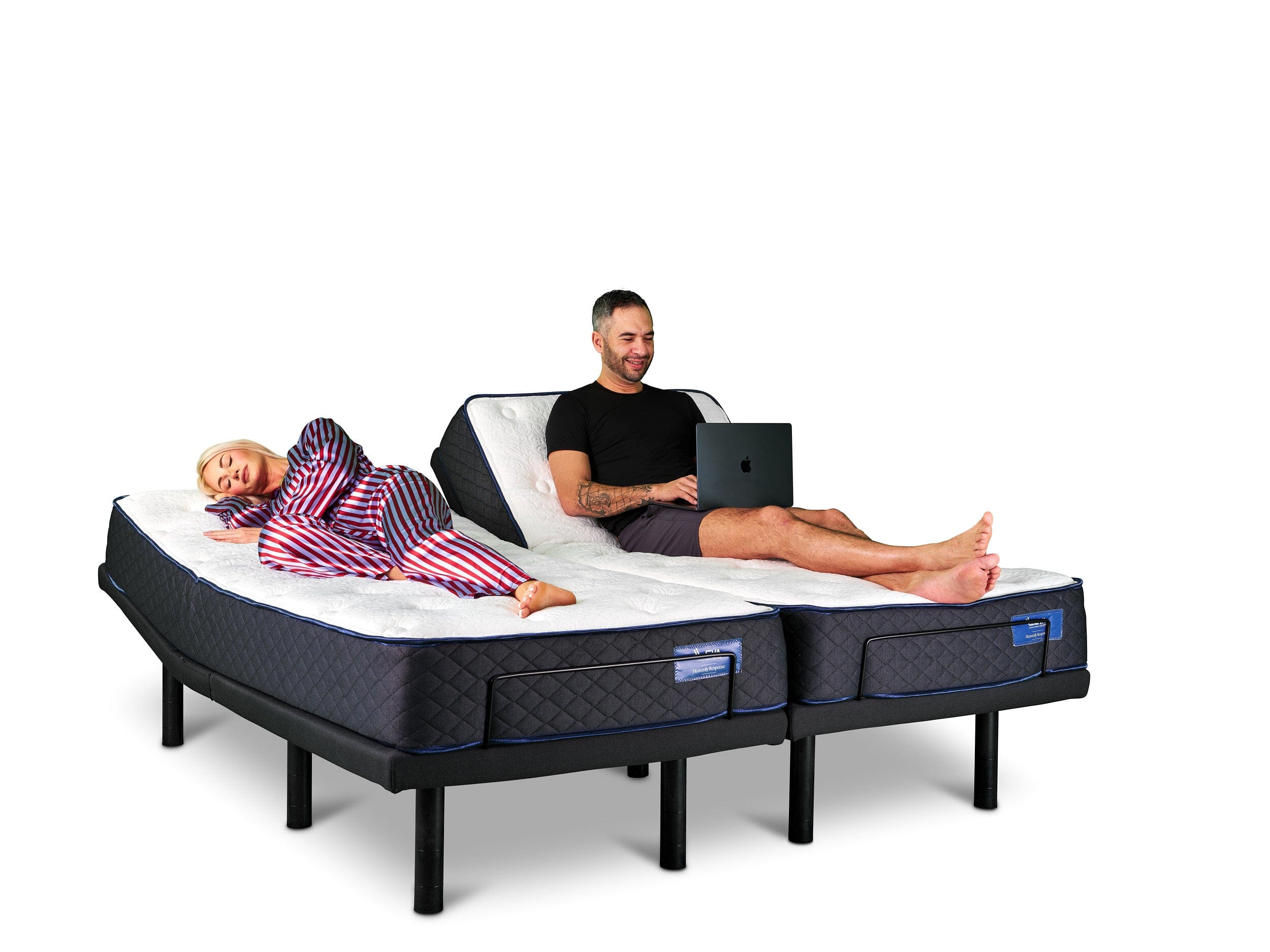
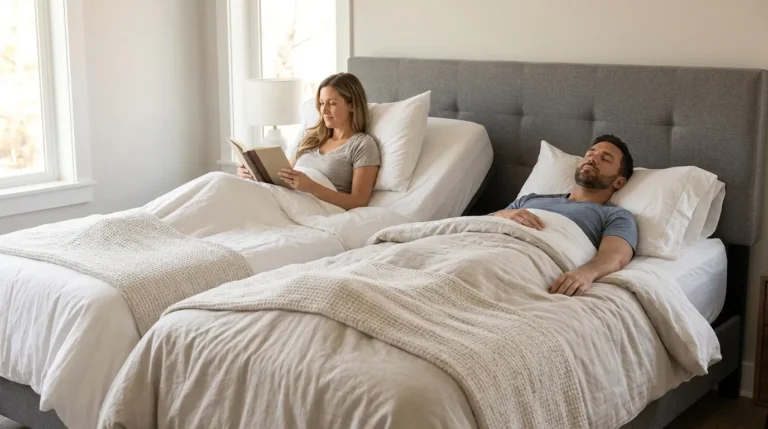
- Split Queen and Split King configurations let each partner adjust independently, so one side can stay flat while the other elevates.
- Leva Sleep stands out in Canada with both Split Queen and Split King options, whisper-quiet German motors, and an app-controlled micro-adjustment anti-snore mode launching in spring 2026.
- Clinical studies show head-of-bed elevation between 7–12° can reduce snoring duration and breathing disruptions and can improve deep sleep for mild-to-moderate cases.
- Leva Sleep offers a full range of premium adjustable bed packages, including Split Queen and Split King solutions tailored to Canadian households.
2026 Comparison of Premium Anti-Snore Adjustable Bases
The comparison below covers six brands available to Canadian shoppers. Every figure comes from publicly available brand pages or third-party reviews. CAD prices reflect current Queen-size list pricing and can change over time.
| Brand / Model | Anti-Snore Mode | Split Queen / King | Motor Noise | CAD Price Range (Queen) | White-Glove Delivery |
|---|---|---|---|---|---|
| Tempur-Pedic TEMPUR-Ergo Smart Base | Automatic Snore Response™ via Sleeptracker-AI, raises head ~12° | Multiple sizes including Twin XL, Queen, King, Cal King, and Split King | Not independently rated, marketed as quiet | ~$2,099–$2,599+ USD (approx. $2,900–$3,600+ CAD) | Included |
| Malouf Altitude | Manual anti-snore preset with head elevation, no automatic detection | Split King available | Whisper-quiet motors (brand claim) | ~$1,800–$2,800 CAD (varies by retailer) | Varies by retailer |
| Casper | Manual head elevation, no dedicated anti-snore preset listed | Not available | Not independently rated | ~$1,500–$2,200 CAD | Threshold delivery standard |
| GhostBed Adjustable Base | Manual anti-snore preset included | Split King only | Not independently rated | ~$1,600–$2,400 CAD; white-glove add-on $150–$250 CAD | Add-on fee ($150–$250 CAD) |
| Sleep Country Private Label | Manual head elevation on select models, anti-snore preset varies by SKU | Split King on select models | Not independently rated | ~$1,500–$2,500 CAD | Included on in-store purchases over $200 |
| Leva Sleep | Manual anti-snore preset plus app-controlled micro-adjustment anti-snore mode (spring 2026), whisper-quiet German motors | Split Queen and Split King, unique in Canada | Whisper-quiet German motors (brand specification) | From $1,899 USD (or CA$4,699 in one listed example) to over $4,499 USD — view current pricing | In-house white-glove included (fee), old bed removal, full setup, tutorial |
Compare Leva Sleep’s Split Queen and Split King pricing to see how the features in the table above translate to current CAD costs.
Best Adjustable Bed Features for Snoring Relief
A study published in Sleep & Breathing (Souza et al., 2017) found that elevating the head of the bed by 7.5 degrees can reduce apnea and hypopnea events, and clinical sleep-medicine studies show snoring reduction at a 7–15° angle.
When you compare bases for snoring relief, focus on a few core criteria.
- Check that the anti-snore preset reaches the clinically studied 7–12° range.
- Review how reliable automatic snore detection is. In 2026, many users disable automatic systems within months because of false triggers from coughing, traffic noise, or partner movement, and response times of 3–5 minutes.
- Confirm that a split configuration lets the non-snoring partner remain flat.
- Ask about motor noise level, since a loud adjustment in the night can undo the benefit.
Head-of-bed elevation does not replace CPAP for severe sleep apnea. Individuals with diagnosed OSA should consult a physician before relying on positional therapy alone.
How Anti-Snore Adjustable Beds Perform in Studies
The 7–12° elevation range cited earlier is supported by this in-home research. The snoring- and apnea-reducing benefit of head elevation is most pronounced in people with mild to moderate sleep apnea. Ravesloot et al. (2017) in Sleep and Breathing concluded that positional therapy via head elevation is undervalued for position-dependent snoring and mild-to-moderate OSA, with consistent evidence that it reduces snoring intensity and frequency.
The mechanism described earlier, where gravity shifts the tongue and soft tissues forward, is supported by this peer-reviewed in-home research. Sleep apnea clinics in Canada refer patients to adjustable bed specialists, including Leva Sleep, as a complementary positional intervention for mild to moderate cases.
When you compare value in the mid-range category, look at whether a base priced at $1,000–$2,000 CAD provides reliable manual anti-snore presets and quiet motors without the extra cost of automatic detection systems.
Why Split Anti-Snore Configurations Help Couples Sleep Together
Habitual snoring is common among adult men and women in Canada. Surveys show that many couples have considered or already use separate sleeping arrangements because of snoring.
On a standard single-base King adjustable bed, raising the head section elevates both sides together, so a non-snorer cannot remain flat if their partner needs a 10–30 degree incline for snoring relief. A split configuration solves this directly by separating control.
A Split Queen adjustable bed uses two 30-inch by 80-inch bases placed side by side to create a standard 60-inch by 80-inch queen footprint while allowing each sleeper to adjust their side independently. This configuration suits couples in smaller master bedrooms, and Leva Sleep offers it uniquely in Canada.
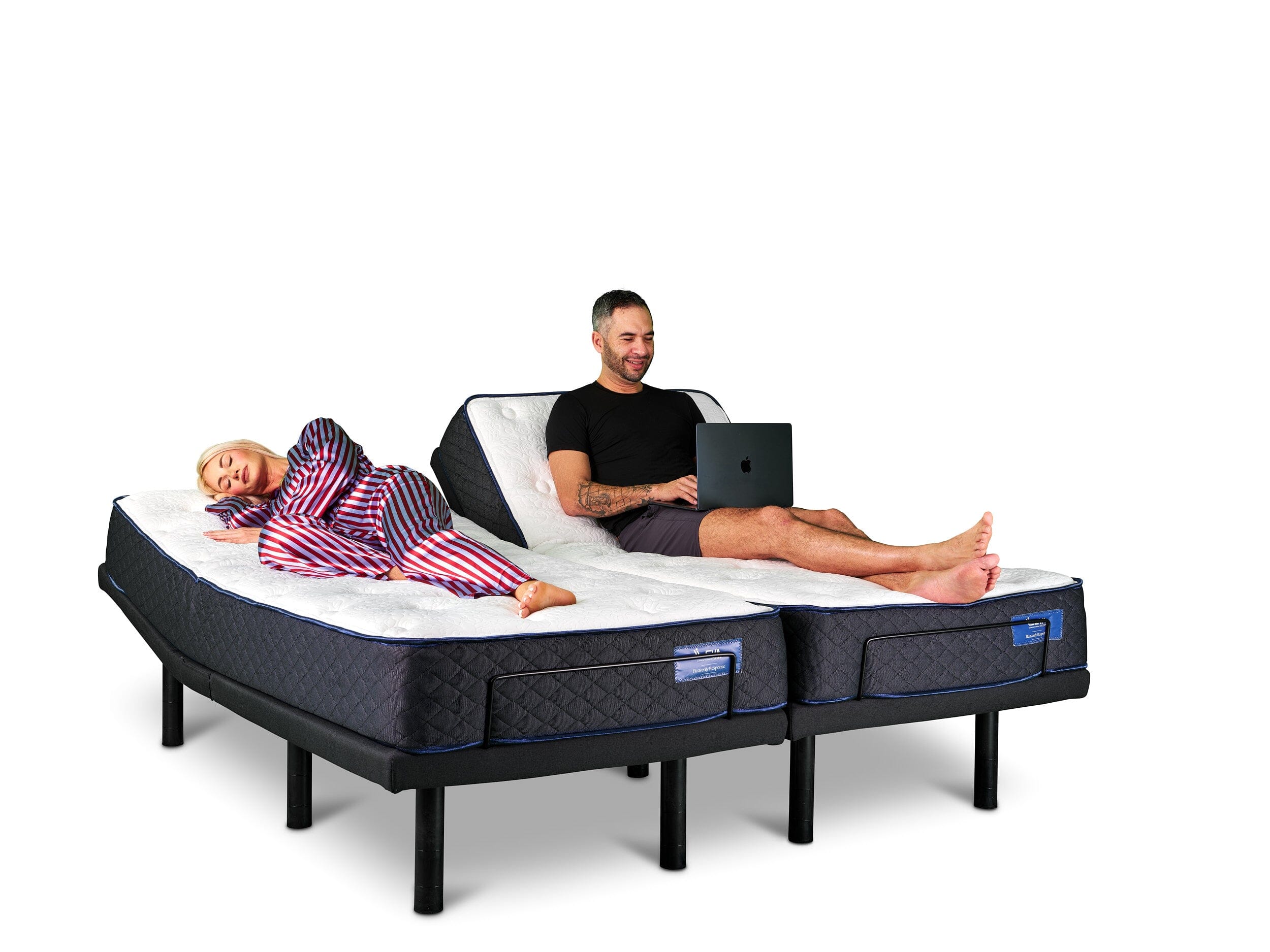
With a Leva Sleep Split Queen or Split King, each partner controls key comfort and anti-snore settings.
- Head elevation in the 7–12° range for snoring relief, or higher for reading.
- Foot elevation and zero-gravity positioning.
- Massage intensity and vibration settings.
- Temperature regulation through the integrated heating and cooling pad.
Elevating the head of the bed 10–15 degrees on an adjustable base opens the airway and reduces snoring for many partners within the first week. Couples who previously slept in separate rooms because of snoring often return to the same bed after switching to a split adjustable configuration, a pattern Leva Sleep reports consistently across its 25,000+ Canadian customers.
Once you identify the right split configuration for your household, the next step is understanding the full investment, including delivery, setup, and long-term ownership costs that affect snoring relief. Explore Leva Sleep’s Split Queen and Split King packages with independent controls for each partner.
Total Cost of Ownership for Anti-Snore Bases in Canada
Adjustable bed bases in Canada vary in price for a Queen size, with advanced-feature models at the higher end. Leva Sleep Queen adjustable bed packages are priced from $1,899 USD (or CA$4,699 in one listed example) to over $4,499 USD, and the direct-to-consumer model removes retail markup so the effective value runs 30–50% stronger than comparably specified luxury brands.
Total cost of ownership for an anti-snore system involves more than the base price. Each factor below influences long-term snoring relief and sleep quality.
- Delivery and setup: When white-glove delivery is purchased as an add-on from online brands, Canadian customers may pay $100–$250 CAD. Leva Sleep’s in-house white-glove service includes bedroom delivery, full assembly, leg-height adjustment, a product tutorial, and old bed removal. Proper setup helps prevent noisy operation or misalignment that could interrupt anti-snore performance.
- Accessory compatibility: Standard fitted sheets often slip off adjustable bases during elevation, which can wake a light sleeper and disrupt snoring relief. Leva Sleep designs its own deep-pocket sheets with extra elastic, duvet clips, and mattress protectors for adjustable bases, reducing both frustration and replacement costs.
- Mattress compatibility: A mattress that bunches or gaps during head elevation can create pressure points that disturb sleep. Leva Sleep’s all-foam and hybrid pocket-coil mattresses are engineered to flex with the base, and the company also carries Tempur-Pedic, Simmons, Beautyrest, Serta, and Kingsdown mattresses paired with Leva bases.
- Warranty and longevity: A base that fails after a short period forces a return to flat sleep and renewed snoring. Leva Sleep’s bases use whisper-quiet German motors and precision fabrication, with warranty terms listed on product pages.
For Ontario and Alberta couples investing $2,000–$5,000 CAD in a sleep system, the Leva Sleep model of local assembly, in-house delivery, specialist expertise across 15–20 adjustable models, and no retail intermediary creates a different value profile than buying a single-model base from a general mattress retailer.
See Leva Sleep’s full CAD pricing and white-glove delivery details to calculate your total cost of ownership.
Frequently Asked Questions
- What warranty does Leva Sleep offer on its adjustable bases?
Leva Sleep’s warranty terms appear on individual product pages and vary by model. The company’s 8-year track record, $50M in lifetime sales, and 25,000+ customers mean warranty support comes from an established Canadian operation rather than an overseas fulfilment centre. Contact Leva Sleep directly for model-specific warranty details before purchasing.
Most all-foam and pocket-coil hybrid mattresses work with adjustable bases, as long as they are not innerspring-only or pillow-top models with rigid borders. Leva Sleep’s team can advise on compatibility during the purchase process. For the most consistent performance, Leva’s all-foam and hybrid mattresses are engineered to flex with the base through the full elevation range without delaminating or bunching.
Leva Sleep uses whisper-quiet German motors across its adjustable base lineup. The adjustment produces a low hum audible only in a very quiet room, similar to a refrigerator at distance. This differs from older or budget adjustable bases, where motor noise during a mid-sleep anti-snore adjustment can wake a light sleeper. When you evaluate any base, ask the retailer for a live motor demonstration before purchasing.
Return and trial policies appear on Leva Sleep’s website and can vary by product. Because adjustable bases are large, motorized items, buyers should understand the return window and any associated fees before purchase. Leva Sleep’s direct-to-consumer model means return logistics are handled in-house rather than through a third-party carrier, which usually results in a more straightforward process. Confirm current policy terms at levasleep.com or by contacting the team directly.
Head-of-bed elevation has clinical support for mild to moderate positional snoring and positional obstructive sleep apnea. It does not replace CPAP therapy for moderate to severe OSA. Consult a physician or sleep specialist if snoring comes with gasping, choking, witnessed breathing pauses, excessive daytime sleepiness, or morning headaches. These signs suggest OSA and require formal diagnosis. An adjustable bed can serve as a complementary tool alongside medical treatment, and Leva Sleep notes that sleep apnea clinics do refer patients to adjustable bed specialists as part of a broader positional therapy plan.
How to Choose the Right Premium Anti-Snore Base
Selecting a premium anti-snore adjustable bed for a Canadian household works best when you follow a clear decision order. Start with the features that most affect snoring relief, then move to comfort and logistics.
- Elevation range: Confirm the base reaches the 7–12° range supported by clinical evidence, with the option to go higher for reading or zero-gravity positioning.
- Split configuration: If two partners have different elevation needs, a Split Queen or Split King becomes necessary. A standard single-base Queen or King raises both sides together and removes independent control.
- Anti-snore mode type: Manual presets stay reliable and consistent. Automatic snore detection adds cost and, in 2026, carries a documented risk of false triggers and disruptive adjustments. Decide whether the automation benefit justifies the premium for your situation.
- Motor noise: Request a live or video demonstration of the motor during elevation. Whisper-quiet motors are a common specification, and verification before purchase protects sleep quality.
- Delivery and setup: Adjustable bases require in-room assembly. Confirm whether white-glove delivery is included, available as an add-on, or unavailable in your postal code.
- Mattress and accessory compatibility: A base without compatible bedding often leads to sheets that slip off during elevation. Evaluate the full system, including mattress and accessories, not just the base.
- Specialist versus generalist retailer: A retailer carrying 15–20 adjustable models can match a buyer to the right configuration. A general furniture store with 3–5 models cannot offer the same depth of guidance.
- CAD pricing transparency: Confirm list prices in Canadian dollars, including delivery fees, before you compare brands. USD-listed prices from U.S. brands carry exchange-rate and import cost implications.
Leva Sleep meets these criteria for Ontario and Alberta couples, with Split Queen and Split King configurations, whisper-quiet German motors, an app-controlled anti-snore mode, in-house white-glove delivery, purpose-built accessories, and CAD pricing that runs 30–50% below comparable luxury brands through a direct-to-consumer model backed by over 8 years of Canadian market experience.