Written by: Matthew Timmins, Founder and Managing Director, Leva Sleep | Last updated: June 18, 2026
Key Takeaways for Snoring Couples
- Partner snoring can disrupt sleep for up to an hour each night and often pushes Canadian couples into separate bedrooms.
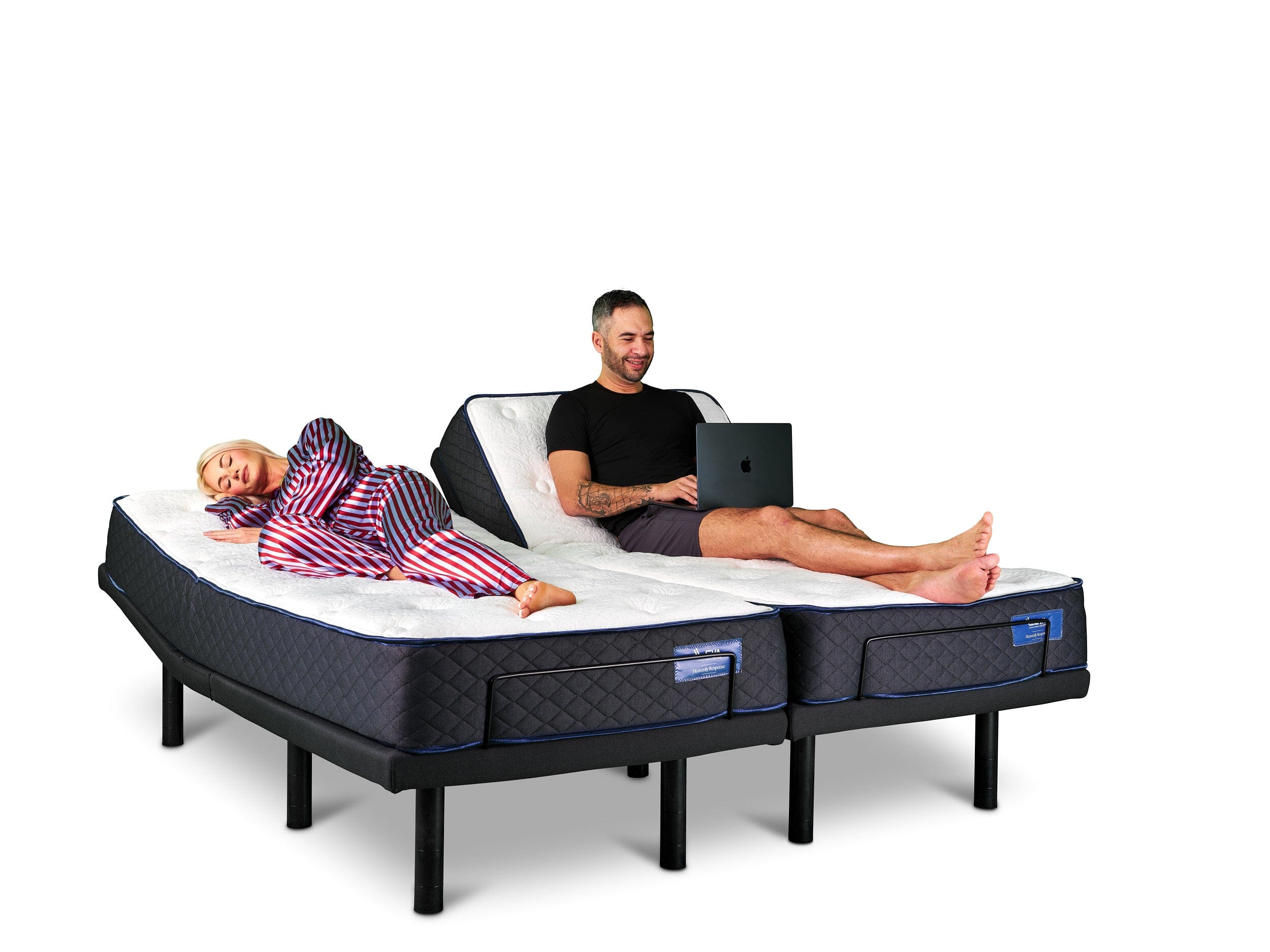
- Dual adjustable bases with independent motors let the snoring partner raise their head to an anti-snore angle while the other stays flat.
- Automatic snore-response technology and whisper-quiet German motors keep adjustments smooth, silent, and barely noticeable.
- Split Queen fits standard queen-sized bedrooms, while Split King offers extra width. Leva Sleep is one of the few Canadian retailers offering both.
- Leva Sleep provides premium dual adjustable packages with in-house white-glove delivery in Ontario and Alberta at 30–50% below luxury brands in Canada. Explore Leva Sleep’s dual adjustable packages to restore shared, restful sleep.
The Problem: How Partner Snoring Pushes Couples into Separate Beds
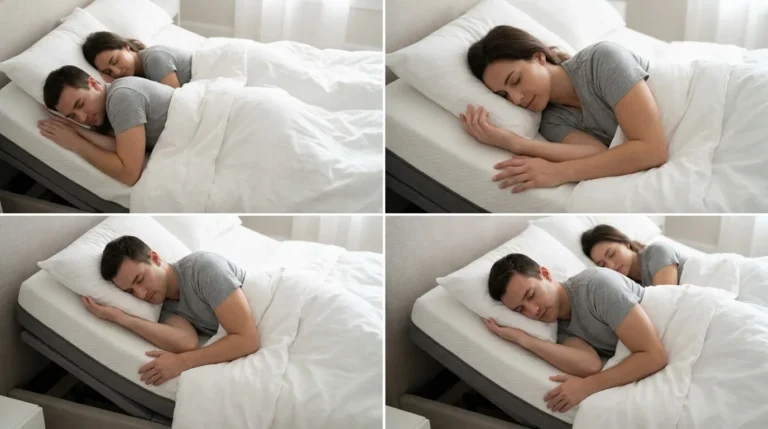
Partner snoring regularly drives couples into separate rooms because it disrupts sleep and builds resentment over time. Bed partners of snorers lose about an hour of sleep per night, which compounds into chronic fatigue, irritability, and relationship strain.
The scale of the problem is significant. About 51% of men and 40% of women snore, and up to 70% of snorers have been diagnosed with sleep apnea. Obstructive sleep apnea affects many adults worldwide, and a high proportion of cases remain undiagnosed.
A flat bed offers no mechanical solution to airway collapse or snoring-related vibration. Basic adjustable bases appear to solve the problem by adding elevation capability, but models with a single motor or shared platform force one partner’s position change onto the other, which creates a new problem while solving the first. Effective snoring relief requires independent angle management for each person, which neither a flat bed nor a shared-platform base can provide.
How Dual Adjustable Bases Help Snoring Couples Share a Bed Again
A dual adjustable base uses two independent motorised platforms placed side by side within a shared bed frame. Each partner controls their own head and foot elevation separately, without any mechanical transfer to the other side.
The physiological mechanism behind snoring relief is well established. Elevating the head of the bed by 7.5 to 12 degrees keeps airways more open by using gravity to prevent the tongue and soft palate from falling backward, while also improving nasal drainage and reducing acid reflux that can cause throat tissue swelling. A 2021 study published in Sleep Health found that elevating the head of the bed by 7.5 degrees reduced obstructive sleep apnea severity, improved oxygen saturation, and decreased apneic events in patients with mild to moderate sleep apnea. A 2022 JMIR Formative Research study found that participants using an adjustable base in a preprogrammed 12-degree anti-snore position experienced measurably reduced snoring and found the position comfortable for sustained use. Head and shoulder elevation reduced the apnea-hypopnea index (AHI) by 31.8% and showed clinical applicability for a broad range of patients.
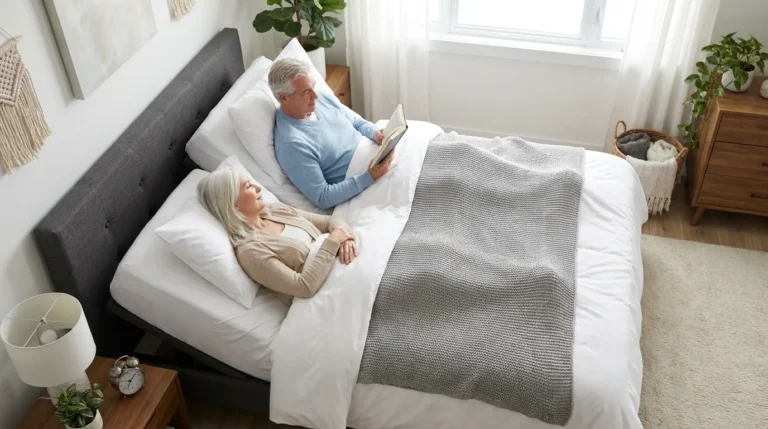
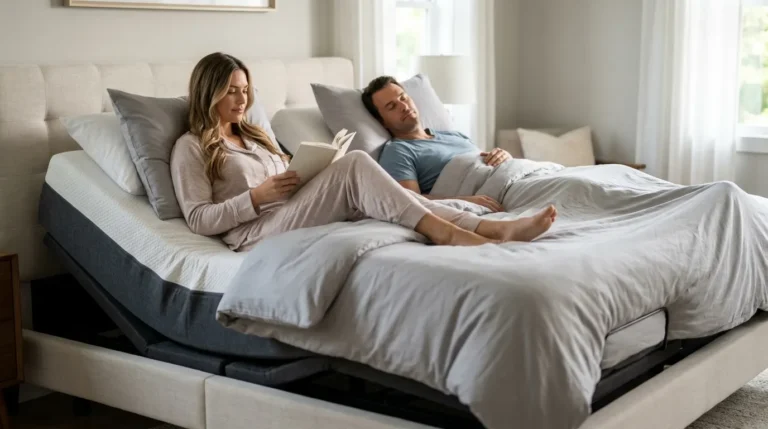
Most sleepers achieve snoring relief with a head elevation of 10 to 30 degrees; 10–15 degrees suits light snoring while 20–30 degrees addresses moderate to heavy snoring. On a dual base, the snoring partner reaches that angle while the non-snoring partner stays completely flat.
Anti-Snore Response Technology on Modern Adjustable Bases
Achieving the right elevation angle is only half of the solution. The other half is how that adjustment happens during the night without waking anyone.
Anti-snore features on adjustable bases fall into two categories: manual presets and automatic detection. Manual presets, which use a dedicated button or app shortcut that raises the head to a fixed anti-snore angle, are now standard on many mid-range and premium bases. They still require the snoring partner to activate the position before sleep or the non-snoring partner to trigger it mid-night, which interrupts sleep for at least one person.
Automatic detection represents the more advanced tier. Leva Sleep offers an auto-snore mode that adjusts the head of the base automatically without requiring either partner to wake up or interact with the remote. This feature closes the gap between knowing elevation helps and actually maintaining it consistently through the night.
When evaluating any base for anti-snore capability, consider whether the feature is a manual preset or automatic, the degree range of the anti-snore position, how smooth and gradual the adjustment feels, and whether the feature is controllable independently per side on a dual configuration.
Motor Noise and Motion Isolation for Light-Sleeping Partners
A dual adjustable base must keep the non-snoring partner asleep while the snoring partner changes position. Motor noise and motion transfer therefore become critical evaluation criteria for couples.
Leva Sleep’s bases use whisper-quiet German motors engineered for smooth, near-silent operation. Independent testers have noted that the quietest adjustable bases allow smooth and nearly silent position changes, which sets a clear standard when comparing any model.
When assessing a base in person or through verified reviews, listen for motor noise during initial movement and while the bed holds an elevated position. Confirm that each side of a dual configuration operates on a fully independent motor so that one partner’s adjustment produces no noticeable mechanical vibration on the other side.
Split King vs Split Queen: Matching the Base to Your Room
A Split King measures 76 inches wide by 80 inches long and uses two Twin XL mattresses (38″ × 80″ each) placed side by side. A Split Queen uses two independent 30″ × 80″ halves that together form a standard 60″ × 80″ queen footprint.
A Split King requires enough floor space for its wider footprint, plus extra room for comfortable access around the bed. A Split Queen fits any bedroom that accommodates a standard queen frame, which matters in many older Ontario or Alberta homes where primary bedrooms were built for queen, not king.
Split Queen configurations remain rare in the Canadian market. Leva Sleep is one of the only providers offering a Split Queen adjustable base built to customer specifications, which makes it a practical choice for couples who need independent elevation but cannot accommodate a king footprint. Split Queen setups suit couples with differing firmness preferences, body weights, medical conditions such as sleep apnea or acid reflux, or one partner who needs an elevated position while the other sleeps flat.
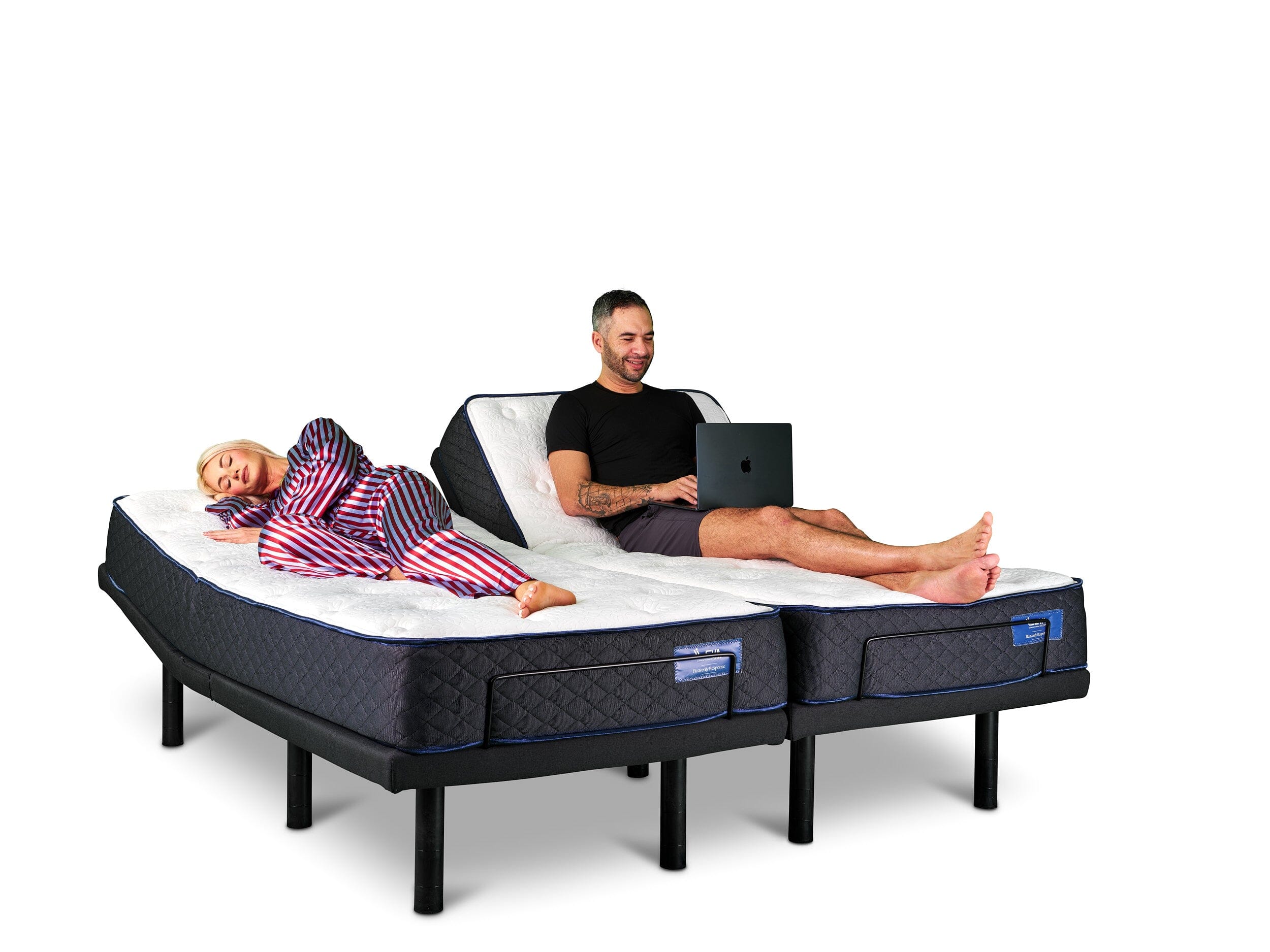
Compare Split King and Split Queen dual bases at Leva Sleep to see which configuration fits your room and sleep habits.
Mattress and Bedding Compatibility with Dual Bases
Mattress construction must match the movement of an adjustable base to avoid damage and discomfort. All-foam and hybrid pocket-coil constructions are compatible, while Bonnell or offset coil innersprings are not designed for repeated articulation and will wear out prematurely. Leva Sleep designs its own all-foam and hybrid mattresses specifically for use with its adjustable bases, which removes compatibility guesswork.
When split mattresses move independently on adjustable bases, a single fitted sheet will not function properly, and a visible centre gap typically less than one inch becomes more noticeable during independent movement. Practical solutions include mattress connector straps, foam gap filler pads, and specialised bridge pads.
Leva Sleep addresses this directly with purpose-built bedding accessories. These include fitted sheets with deep pockets and extra elastic, duvet clips that keep bedding in place when positions differ, and remote pockets integrated into the design. The company sells these accessories as part of a complete sleep system rather than as afterthoughts.
Canadian Pricing, Delivery, and Total Ownership Cost
Comparable dual adjustable base packages from brands such as Tempur-Pedic often carry significant retail markups from multi-layer distribution. Leva Sleep’s vertically integrated model, which covers design, assembly, and delivery, removes those markups and passes savings directly to customers. The result is pricing that sits about 30–50% lower than equivalent luxury competitors in Canadian dollars.
Delivery quality affects long-term satisfaction as much as purchase price for large adjustable systems. Leva Sleep offers in-house white-glove delivery across Ontario and Alberta. Trained professionals deliver to the bedroom, assemble the base and accessories, adjust leg heights, provide a product tutorial, and remove the old bed. This service does not rely on a third-party courier. For couples investing in a complete sleep system, the setup experience becomes part of the total ownership value.
When calculating total cost, factor in base price per side, mattress compatibility and potential replacement, specialised bedding, delivery and setup fees, and warranty length with coverage terms.
Neutral Comparison Checklist for Dual Adjustable Bases
Use the following criteria when evaluating any dual adjustable base for snoring couples. The checklist helps structure your comparison without ranking specific products.
| Criterion | What to Look For | Why It Matters | Leva Sleep Position |
|---|---|---|---|
| Independent elevation per side | Fully separate motors and platforms, with no shared articulation | One partner elevates to an anti-snore angle without affecting the other | Standard on all split configurations |
| Anti-snore feature type | Manual preset at minimum, automatic detection preferred | Automatic mode adjusts without waking either partner | Auto-snore mode |
| Motor noise level | Whisper-quiet operation verified by independent reviews or in-person testing | Silent operation prevents adjustment from waking the non-snoring partner | Whisper-quiet German motors |
| Configuration availability | Split King (76″ × 80″) or Split Queen (60″ × 80″) based on room size | Split Queen fits standard queen bedrooms, while Split King requires a larger room | Both configurations available, with Split Queen as a unique Canadian offering |
| Delivery and setup | In-home white-glove assembly rather than third-party courier drop-off | Adjustable bases require professional setup for correct function and safety | In-house white-glove delivery in Ontario and Alberta |
Frequently Asked Questions
What is the best adjustable bed for couples?
The best adjustable bed for couples uses a dual adjustable base with fully independent controls for each side, not a single shared base with limited articulation. Each partner needs to raise or lower their own head and foot position without affecting the other side. Key features to prioritise include independent motors per side, a whisper-quiet operation rating, anti-snore elevation capability, and a configuration that fits the bedroom, such as Split Queen for standard queen rooms and Split King for larger spaces. Leva Sleep’s dual bases meet these criteria and are available in both configurations, with in-house white-glove delivery across Ontario and Alberta.
Do adjustable beds help reduce snoring?
Adjustable beds can reduce snoring by using gravity to keep the airway more open. Elevating the head and upper torso helps prevent the soft palate and base of the tongue from collapsing backward into the throat, which widens the airway and reduces the vibrations that produce snoring sounds. Research has shown that even modest elevation angles, as low as 7.5 degrees, can reduce sleep apnea severity and improve oxygen saturation in mild to moderate cases. A 2022 study in JMIR Formative Research also found that a preprogrammed 12-degree anti-snore position on an adjustable base measurably reduced snoring. Most snorers find relief at 10 to 30 degrees of head elevation depending on severity. On a dual adjustable base, the snoring partner achieves this elevation independently while the non-snoring partner remains flat.
What adjustable base has a snore response?
Several adjustable bases include anti-snore features that range from manual presets to automatic detection. A manual anti-snore preset raises the head to a fixed angle at the touch of a button or via an app. Automatic snore response uses onboard sensors to detect snoring and trigger gradual micro-adjustments to the head position without requiring either partner to wake up. Leva Sleep offers an auto-snore mode that operates in this automatic detection category, which makes it one of the more current implementations available in Canada. When evaluating any base for snore response, confirm whether the feature is manual or automatic, whether it operates independently per side on a dual configuration, and whether the adjustment motion feels smooth enough to avoid waking the non-snoring partner.
Conclusion: Choosing a Dual Base That Keeps You in the Same Bed
Partner snoring can cost couples about an hour of sleep per night and often pushes them into separate bedrooms. A flat bed cannot address this, and a single-platform adjustable base cannot solve it independently for both partners. A dual adjustable base with independent head elevation, automatic snore response, whisper-quiet motors, and the right split configuration for the bedroom provides a complete mechanical solution.
Leva Sleep focuses on this category for Canadian couples, with Split Queen availability that is rare in Canada, auto-snore technology, and in-house white-glove delivery across Ontario and Alberta at 30–50% less than comparable luxury brands.
Find your ideal dual adjustable base at Leva Sleep and give both partners the chance to sleep comfortably in the same bed again.