
Written by: Matthew Timmins, Founder and Managing Director, Leva Sleep | Last updated: July 19, 2026
Key Takeaways
- Partner snoring pushes many Canadian couples toward separate sleeping, yet structured steps can often restore shared rest.
- Screening for obstructive sleep apnea is the first priority before trying lifestyle or positional changes.
- Low-effort shifts such as side-sleeping aids, alcohol timing, weight changes, and head-of-bed elevation often reduce snoring intensity.
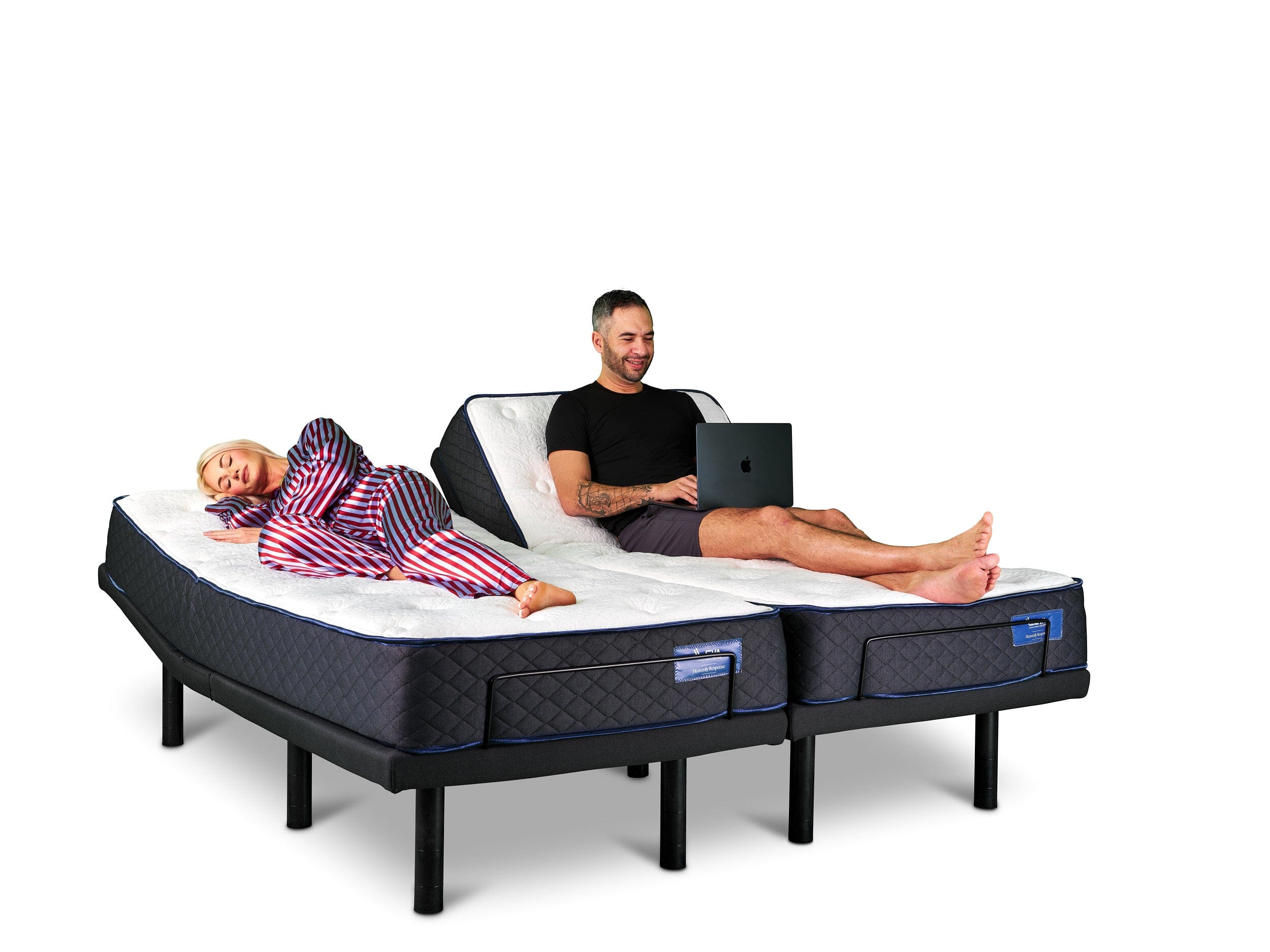
- When snoring continues, a split adjustable base with independent head elevation lets couples stay together while each partner customizes their position.
- Leva Sleep’s Split Queen and Split King adjustable bed packages provide whisper-quiet, app-controlled elevation for Canadian couples. Explore split configurations for couples to reclaim restorative shared sleep.
Sleep Divorce as a Temporary Strategy, Not a Final Outcome
Sleep divorce describes partners sleeping in separate beds or rooms to cut down on mutual sleep disruption. The American Academy of Sleep Medicine’s 2023 national survey of 2,005 U.S. adults found that 35% of American adults sleep separately from their partner sometimes or always, with 15% doing so on a regular basis.
Separate sleeping can protect health in the short term, yet it creates risk when it becomes permanent without treating the cause. This guide treats sleep divorce as a temporary bridge back to shared sleep, not a destination.
Step 1: Rule Out Sleep Apnea Before Anything Else
The snoring partner needs screening for obstructive sleep apnea (OSA) before any lifestyle or positional intervention. When snoring drives separate sleeping, the arrangement treats a symptom while leaving undiagnosed OSA unaddressed, which carries documented cardiovascular and metabolic risk for the snorer. Screening for sleep apnea is recommended when snoring motivates a sleep divorce, as snoring is commonly a symptom of the disorder along with gasping during sleep, daytime fatigue, and irritability.
Key symptoms that warrant a formal sleep study include:
- Loud, chronic snoring audible through walls
- Observed pauses in breathing during sleep
- Waking with headaches or a dry mouth
- Excessive daytime sleepiness despite adequate time in bed
- Irritability or difficulty concentrating
The STOP-Bang questionnaire is a validated first-line screening tool. A positive result routes to a formal sleep study rather than separate rooms. In Ontario and Alberta, family physicians can refer patients to accredited sleep clinics. Treat this screening step as non-negotiable before investing in other interventions.
Step 2: Use Low-Effort Lifestyle and Positional Tweaks First
Targeted lifestyle changes and positional therapy often reduce snoring for people with mild to moderate symptoms. The interventions below are ordered by effort compared with typical impact.
- Side-sleeping aids: Positional therapy can reduce snoring or mild apnea for people who snore mainly on their backs. Positional pillows, body wedges, or wearable vibration devices that discourage back-sleeping are practical, low-cost first steps.
- Alcohol timing: Avoiding alcohol within three hours of bedtime reduces throat muscle relaxation, a key mechanical trigger for snoring. Effort stays low, and impact appears quickly for alcohol-related snoring.
- Weight management: A 10% reduction in body weight can lower sleep-disordered breathing measures. Effort is high and results arrive gradually, yet the health benefit extends far beyond snoring.
- Head-of-bed elevation: A peer-reviewed in-home study found that participants sleeping at a 12° incline using an adjustable bed base for four weeks experienced a 7% relative reduction in objective snoring duration compared to four weeks of flat sleep.
Common mistakes to avoid at this stage include:
- Using a single pillow to elevate the head, which flexes the neck forward and can worsen airway restriction. The entire head of the bed should ideally be raised to an incline of 7.5 to 20 degrees.
- Stopping lifestyle changes after fewer than four weeks, before measurable physiological adaptation occurs.
- Skipping the sleep apnea screen and moving straight to lifestyle fixes.
Step 3: Decide Between Sound Blocking and Source Reduction
Snoring noise can be managed by blocking sound for the non-snoring partner or by reducing snoring at its source. Each approach suits different snoring patterns and severities.
Sound-blocking approaches include foam earplugs, custom-moulded earplugs, white noise machines, and sleep headphones. These tools work well as short-term relief while source-focused strategies take effect or when snoring is mild and intermittent. They have limits, since earplugs can feel uncomfortable over full nights, and white noise does not remove the physical vibration that can still trigger micro-arousals.
Source-elimination approaches target the mechanical cause of snoring. Mandibular advancement devices (MADs) can reduce snoring intensity. Head-of-bed elevation can reduce snoring duration and related awakenings, and it can also reduce apnea events in patients with obstructive sleep apnea.
Sound blocking and source reduction work well together. A white noise machine combined with a MAD or adjustable base elevation offers a practical, layered strategy.
Step 4: Use Separate Beds Safely While Protecting Your Bond
Severe snoring-related sleep loss that causes resentment, cognitive problems, or health issues can justify a temporary sleep divorce. Fifty-three percent of people who try sleep divorce report improved sleep quality and gain an average of 37 extra minutes of sleep per night. A 2024 Sleep Medicine Reviews meta-analysis found that the quality of and satisfaction in a romantic relationship are significantly associated with a couple’s sleep quality and duration.
Couples protect their relationship best when they frame separate sleeping as a shared health decision, not a rejection. Sleep experts Wendy M. Troxel, Ph.D., and Jade Wu, Ph.D., describe this as a deliberate “sleep alliance,” a joint choice to prioritize both partners’ health rather than a sign of relationship failure.
Strategies to preserve intimacy during a temporary sleep divorce fall into three themes.
First, replace passive proximity with active rituals. Establish a shared wind-down routine before separating for sleep each night. Schedule a non-negotiable morning check-in, such as coffee together, to maintain daily physical connection.
Second, make intimacy deliberate rather than incidental. Plan intentional physical closeness instead of relying on chance moments that disappear when you no longer fall asleep side by side.
Third, treat the arrangement as temporary and monitored. Book a sleep apnea screening within the first 30 days of separation and treat the setup as a bridge with a clear review window. Schedule two-week and eight-week relationship check-ins after any sleep arrangement change to monitor emotional intimacy and prevent the arrangement from masking unprocessed conflict.
Many couples who try a sleep divorce eventually return to sharing a bed. The shared goal remains a return to one bed once the source of disruption is managed.
Step 5: Bring Shared Sleep Back with the Right Technology
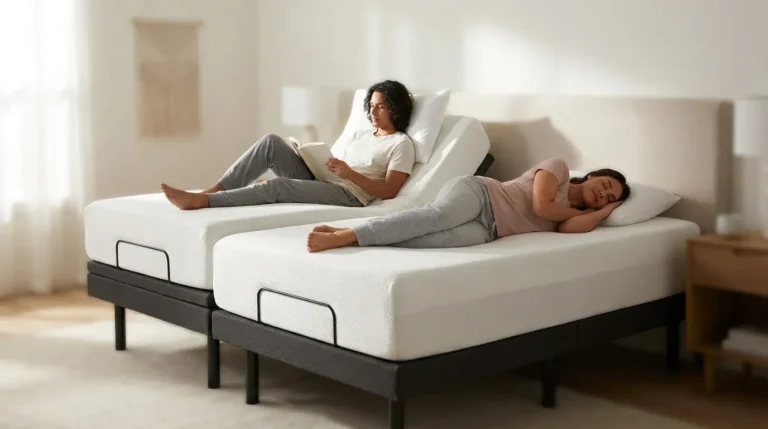
When lifestyle changes and positional aids help but do not fully solve the problem, a split adjustable base with independent head elevation offers a direct technological fix. Elevating the head of an adjustable bed 10–15 degrees in zero-gravity position opens the airway and reduces snoring for many partners, with noticeable improvement often reported within the first week. A split king adjustable base lets one partner use head elevation for anti-snore positioning while the other remains flat, without disturbing the second sleeper.
Browse independent-control adjustable bases. Leva Sleep’s Split Queen and Split King systems are purpose-built for this scenario. Each side of the bed runs on independent controls, so the snoring partner can elevate their head to the clinically supported 7.5–20 degree range while the other partner stays flat or chooses a different position.
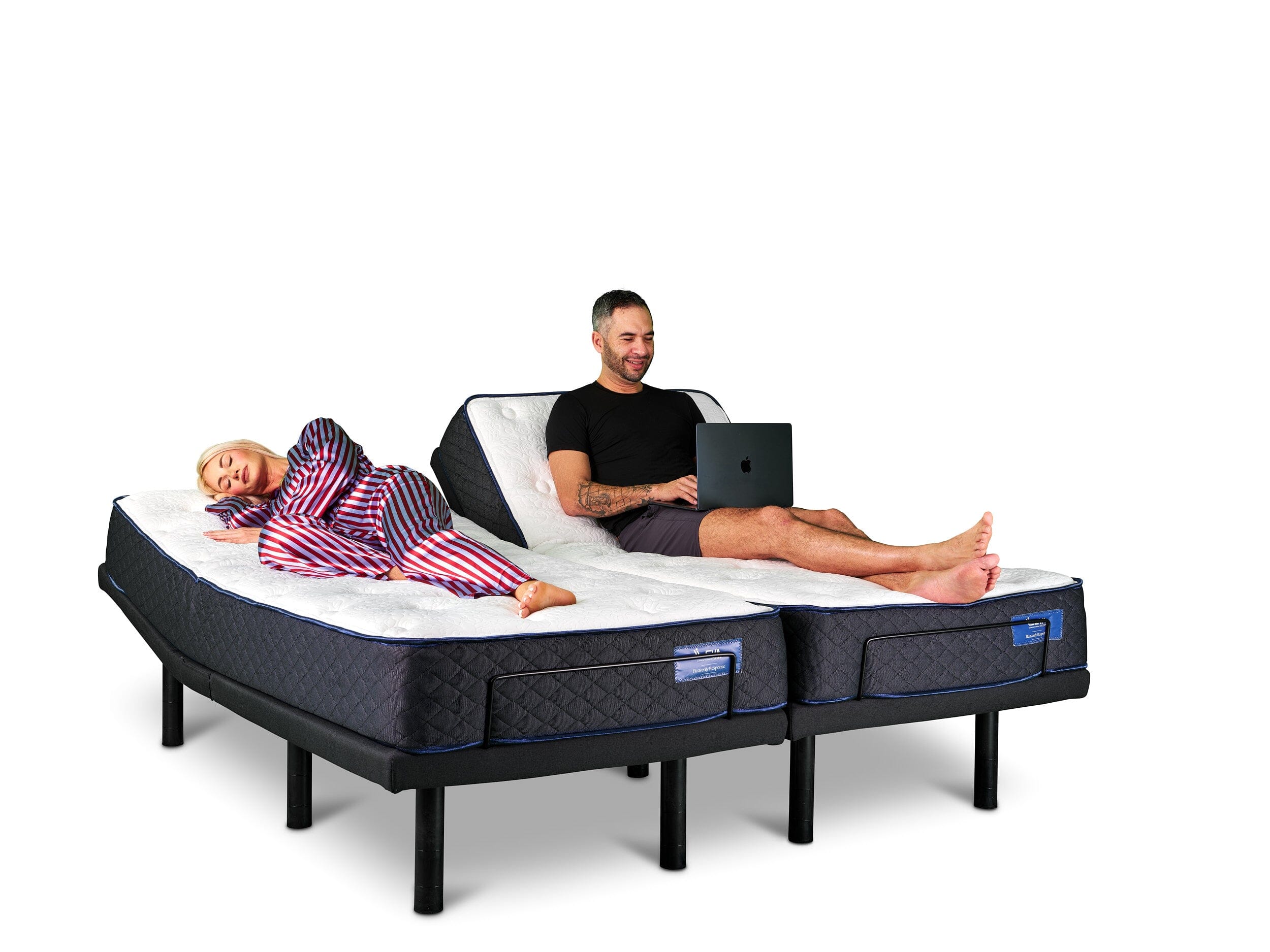
Key features include:
- Whisper-quiet motors: Position changes do not audibly disturb the sleeping partner.
- Lumbar support and pillow tilt: Fine-tuned adjustments for lower back comfort and head positioning beyond simple head elevation.
- Anti-snore mode (arriving spring 2026): Detects snoring and makes micro-adjustments to the head of the bed automatically via the Leva Sleep app.
- Temperature regulation: Dual-zone heating and cooling pads support different temperature preferences on each side.
- App control: Full Bluetooth app control with custom sleep position presets and vibrating alarms that wake one partner without disturbing the other.
- Split Queen availability: A rare option in the Canadian market for couples who want independent control in a smaller footprint.
Leva Sleep delivers to Ontario and Alberta through an in-house white-glove service that includes bedroom delivery, full assembly, leg-height adjustment, a product tutorial, and removal of the old bed. With a direct-to-consumer model and local assembly, Leva Sleep’s systems are priced 30–50% below comparable luxury competitors, which makes independent-control adjustable sleep technology more attainable.
Compare Split Queen and Split King options designed specifically for Canadian couples.
Intervention Effectiveness Comparison
The table below compares snoring interventions by typical snoring reduction, effort level, and relationship impact. All figures come from cited clinical sources, and only like-for-like metrics are compared within each row.
| Intervention | Typical Snoring Reduction | Effort Level | Relationship Impact |
|---|---|---|---|
| Positional therapy (side-sleeping aids) | Can reduce snoring for back-sleepers | Low | Allows continued bed-sharing; immediate relief for positional snorers |
| Weight loss (10% body weight reduction) | Can lower sleep-disordered breathing measures | High; results gradual over months | Broad health benefit; no immediate relief for bed partner |
| Over-the-counter mandibular advancement device (MAD) | Can reduce snoring intensity | Low-moderate; requires nightly use and adjustment period | Moderate improvement to shared sleep; fit and comfort vary |
| Dentist-fitted MAD | Can reduce snoring intensity | Moderate; requires dental appointments and fitting | Significant improvement; suitable for mild to moderate OSA |
| Head-of-bed elevation at 12° (adjustable base, 4 weeks) | 7% relative reduction in objective snoring duration | Low once base is installed; no nightly effort required | Couples remain in the same bed; independent control preserves partner comfort |
| Head-of-bed elevation (OSA patients, 7.5° incline) | 31.8% average reduction in AHI | Low once base is installed | Clinically meaningful reduction in apnea events; supports continued bed-sharing |
| CPAP therapy | High success rate at normalizing AHI to fewer than 5 events/hour in positional OSA patients | High; requires nightly mask use, cleaning, and acclimatization | Highly effective for OSA; mask discomfort and noise can affect partner; requires medical prescription |
| Split adjustable base with anti-snore elevation | Combines positional therapy benefits | Low ongoing effort; one-time setup | Both partners remain in the same bed with independent comfort settings; highest relationship-preservation outcome |
Frequently Asked Questions
How effective is head-of-bed elevation for snoring?
Head-of-bed elevation uses gravity to reduce collapse of soft tissue at the back of the throat, the main mechanical cause of snoring. Clinical research supports elevating the entire head of the bed to an incline between 7.5 and 20 degrees. As noted earlier, this requires lifting the whole frame rather than stacking pillows, which flex the neck forward and can worsen restriction. Studies in OSA patients show average reductions in apnea-hypopnea index of about 31.8%. For general snoring without diagnosed OSA, studies show measurable reductions in snoring duration with consistent elevation, and the 7% improvement mentioned earlier was observed at 12 degrees over four weeks. An adjustable base offers the most reliable way to maintain a consistent, clinically relevant incline throughout the night without effort from the snorer.
Can couples maintain intimacy during a temporary sleep divorce?
Couples can maintain intimacy during a temporary sleep divorce when they frame the change as a health decision and stay intentional about connection. Research shows that risk to intimacy comes less from separate rooms and more from avoidance of conflict or failure to replace passive closeness with planned alternatives. Helpful strategies include a shared wind-down routine before separating each night, a non-negotiable morning ritual such as coffee together, scheduled physical intimacy independent of sleep, and relationship check-ins at two and eight weeks to assess emotional closeness. Couples who talk openly about the biological reasons for the arrangement and treat it as temporary and flexible report better outcomes than those who drift into it reactively. The shared aim remains a return to one bed once the disruption is resolved.
What should I expect during Leva Sleep white-glove delivery in Ontario or Alberta?
Leva Sleep’s white-glove delivery service is available for a fee in Ontario and Alberta. A trained delivery team brings the adjustable base and mattress directly to the bedroom instead of leaving items at the door. The team completes full assembly of the base, sets leg heights to the customer’s preferred bed height, connects and tests all motors and app controls, and provides a hands-on product tutorial so both partners understand independent controls, preset positions, and app features before the team leaves. Old bed removal is included, with items donated or recycled when possible. Because Leva Sleep designs and assembles its systems locally, the delivery team has direct product knowledge rather than relying on third-party logistics. Customers in Ontario and Alberta can confirm delivery availability and scheduling at the time of purchase.
How soon after purchase can anti-snore mode be used?
Leva Sleep’s anti-snore mode is arriving in spring 2026. Once available, customers will access it through the Leva Sleep app, which will use snoring detection to trigger automatic micro-adjustments to the head of the bed. These adjustments will reduce snoring without requiring the snoring partner to wake or change position manually. In the meantime, the adjustable base’s manual head elevation controls and preset anti-snore positions are available immediately after delivery and setup. Customers who purchase before the spring 2026 launch will receive anti-snore mode through an app update once it is released. Leva Sleep recommends starting with manual head elevation in the 7.5–20 degree range as a first-line positional intervention while the automated feature rolls out.
Conclusion: Bring Shared Sleep Back on Your Terms
Partner snoring places couples in a difficult position, yet separate beds do not represent the only path forward. The structured approach outlined here starts with sleep apnea screening, moves through lifestyle and positional changes, weighs sound-blocking against source-focused strategies, and treats temporary sleep divorce as a bridge rather than a permanent state. This framework gives Canadian couples a clear, evidence-based way to stay connected.
For couples who have worked through earlier steps and still face nightly disruption, a split adjustable base with independent head elevation offers a direct way to keep both partners in the same bed with personalized comfort. Leva Sleep’s Split Queen and Split King systems, with whisper-quiet motors, app control, temperature regulation, and the forthcoming anti-snore mode, are built specifically for this purpose and are priced significantly below luxury competitors through a direct-to-consumer model with in-house white-glove delivery across Ontario and Alberta.
Find your split configuration and bring your shared sleep back.