
Written by: Matthew Timmins, Founder and Managing Director, Leva Sleep | Last updated: July 2, 2026
Key Takeaways for Canadian Couples
-
Serta retailer-exclusive models often develop sagging, weak edges, and high motion transfer after the first year, which quickly affects couples sharing one bed.
-
Canadian DTC flat mattresses from Douglas, Silk & Snow, and Logan & Cove improve foam density and coil design, yet still cannot elevate or isolate positions.
-
Snoring, sleep apnea, reflux, and differing firmness needs often require positional elevation that only an adjustable base can provide.
-
Leva Sleep’s split adjustable systems deliver independent head, foot, and lumbar controls plus integrated temperature regulation at 30–50% below comparable luxury pricing.
-
Couples ready to move beyond flat mattresses can explore Leva Sleep’s adjustable bed packages designed for shared beds with personalized sleep positions.
Flat Mattress Limits for Couples with Positional Issues
Canadian direct-to-consumer (DTC) mattress brands have grown substantially over the past several years. Douglas, Silk & Snow, and Logan & Cove each offer hybrid constructions that differ meaningfully from retailer-exclusive Serta lines in foam density, coil type, and cooling materials. All of these options still share one fundamental constraint: they remain flat surfaces that cannot change position.
When you evaluate any flat mattress, whether Serta or Canadian DTC, focus on a few core criteria. Foam density above about 1.8 lb/ft³ in comfort and support layers resists compression better over time. Individually wrapped pocket coils isolate motion more effectively than Bonnell or offset coil systems. Cooling layers such as gel-infused memory foam and phase-change materials behave differently than standard open-cell foam. Edge support systems that use high-density perimeter foam or reinforced coil edges extend the usable sleep surface for couples.
The table below presents publicly listed Queen pricing and general construction information for reference. Verify current pricing directly with each retailer before purchasing, because promotional pricing changes frequently.
|
Brand |
Queen Price (CAD) |
Construction |
Trial / Warranty |
|---|---|---|---|
|
Serta (retailer-exclusive, mid-range) |
~$1,200–$2,000 (varies by retailer) |
Innerspring or hybrid; foam density varies by model |
Varies by retailer; typically 10-year limited |
|
Douglas |
C$599 to C$1,299 depending on the model |
all-foam with cooling features and no coil system, as well as a hybrid model |
365-night trial / 15-year warranty |
|
Silk & Snow |
approximately $900–$1,100 CAD depending on retailer, firmness option and promotions |
pocketed coil construction with a quilted or anti-microbial fabric cover |
365-night trial and 15-year warranty |
|
$1,199–$1,899 CAD |
365-night trial and 15-year warranty |
Note: All pricing figures are approximate based on publicly listed retail prices. Verify current pricing directly with each brand. Serta pricing reflects typical Canadian retail ranges and varies by retailer and model.
While the brands above show competitive pricing and trial periods, each option still functions as a flat surface. These mattresses offer a legitimate upgrade over a worn or poorly constructed bed, yet they cannot elevate the head of the bed to reduce snoring. They cannot raise the foot independently for lumbar decompression. They also cannot give each partner a different position at the same time. For couples with positional or medical sleep problems, the mattress category itself becomes the limiting factor.
Why Split Adjustable Systems Solve Positional Problems
Positional sleep therapy relies on a base that moves. Elevating the head opens the airway. Raising the foot reduces lower-back pressure. Tilting the lumbar zone supports spinal alignment. Sleep apnea clinics often refer patients to adjustable bed systems as a non-invasive complement to positional management. Couples where one partner snores or requires medical elevation cannot resolve these needs with any flat mattress, regardless of construction quality or price.
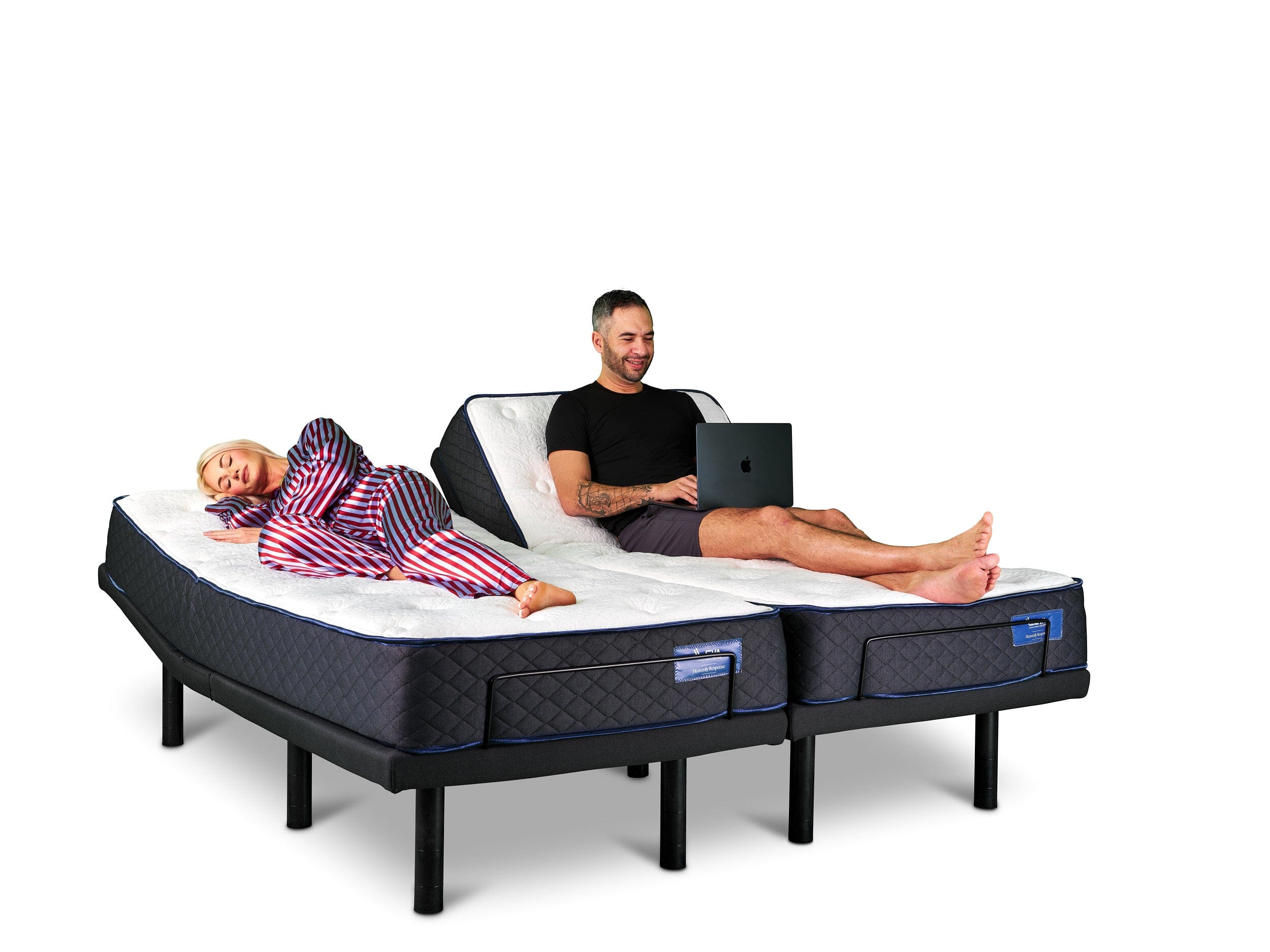
Leva Sleep has operated in this category for over eight years and has served more than 25,000 Canadian customers through a direct-to-consumer model that removes retail markup. This structure supports pricing that runs 30–50% below comparable luxury adjustable systems. Leva’s split configurations, including Split Queen and Split King, give each partner independent control over head elevation, foot elevation, lumbar support, pillow tilt, and massage intensity. One partner’s adjustment does not affect the other side.
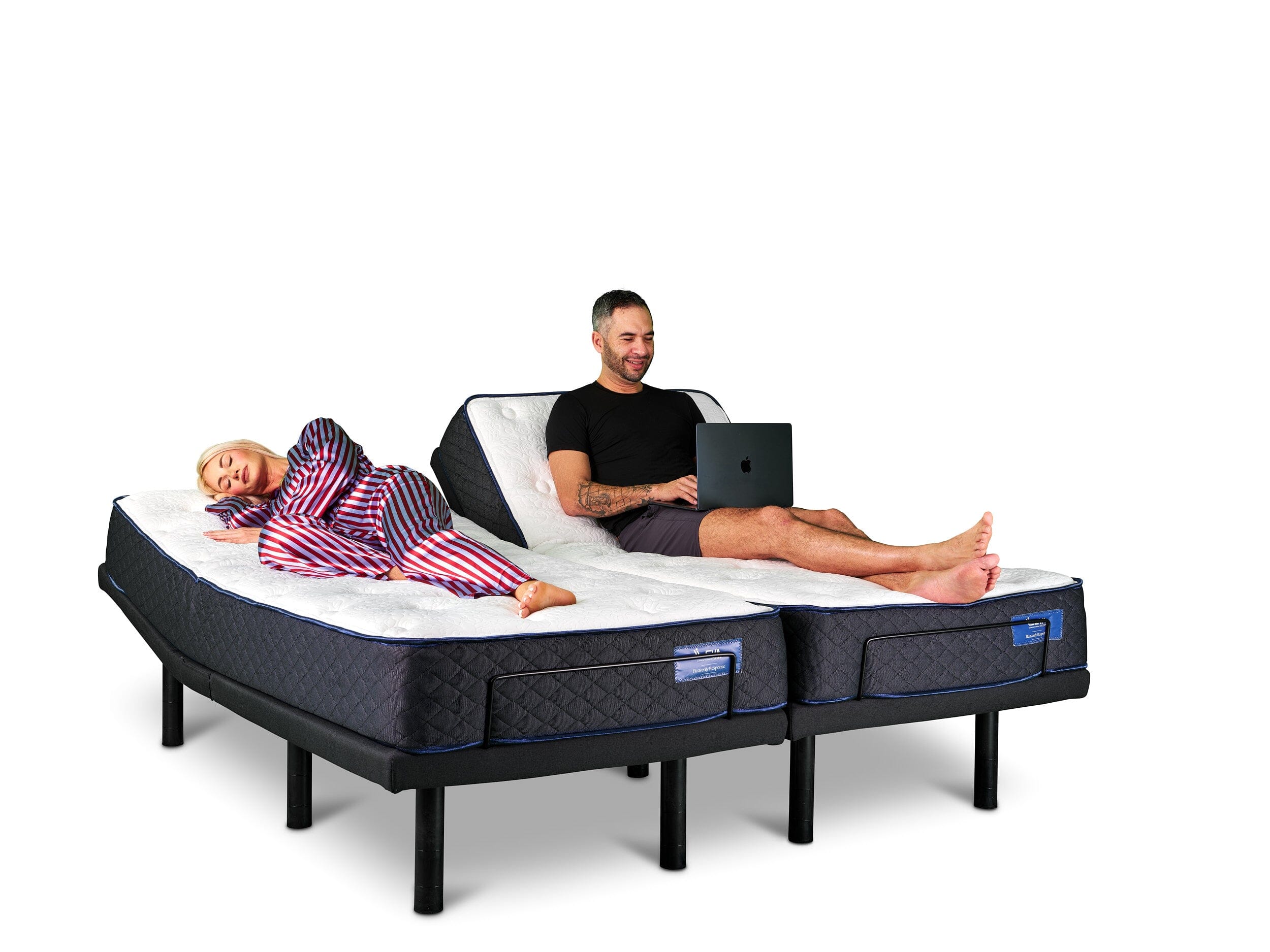
Leva’s whisper-quiet German motors reduce the mechanical noise associated with older adjustable bases. An integrated heating and cooling pad tackles temperature regulation for two people who run at different temperatures. A single mattress layer rarely solves that problem for both partners. Leva also offers 15–20 adjustable base models, while general mattress retailers typically stock three to five options in this category.
Compare Split Queen and Split King adjustable packages to find the independent control setup that fits your relationship.
Key Comfort and Support Checks Before You Buy
Whether you plan to stay with a flat mattress or move to an adjustable system, confirm a few technical details before you buy. Start with structural durability by requesting the actual lb/ft³ rating for foam density in comfort and support layers. Avoid brands that list only “high-density” without a numeric value.
Next, review coil construction to understand motion isolation. Lower gauge numbers indicate thicker, more durable wire. Pocket coil systems with individually wrapped springs isolate motion more effectively than interconnected coil designs. Then look at temperature management. Ask whether cooling layers such as gel-infused foam, copper-infused foam, or phase-change materials sit only at the surface or extend through the comfort layer.
Edge support deserves its own quick test. Sit on the edge of any mattress you are evaluating. Significant compression signals weak perimeter support and reduces usable sleep surface over time. Finally, confirm adjustable-base compatibility if you plan to use or add a moving base. All-foam and thin pocket-coil hybrids usually flex better on adjustable bases than thick pillow-top or Euro-top constructions.
Adjustable base owners also need bedding that stays in place during elevation. Standard fitted sheets often pull free when the head or foot section rises. Leva Sleep designs its own fitted sheets with deep pockets and extra elastic specifically for adjustable bases. The brand also offers duvet clips that keep each side in place when partners use different elevation settings.
How to Decide: Flat Mattress Upgrade vs Split Adjustable Bed
A simple checklist can clarify which direction fits your situation.
-
Stay with a flat mattress if: Both partners agree on firmness level, neither partner snores or requires positional elevation for a medical condition, motion transfer remains manageable, and budget is the primary constraint while a DTC hybrid meets the construction criteria above.
-
Upgrade to a split adjustable system if: One or both partners snore or have been advised to sleep elevated for sleep apnea, acid reflux, or post-surgery recovery. Partners have meaningfully different firmness or elevation preferences. Motion transfer from a shared coil system causes regular sleep disruption. Previous flat mattress swaps have not resolved the core problem.
Ontario and Alberta customers can use Leva Sleep’s in-house white-glove delivery service. This service includes bedroom delivery, full assembly, leg-height adjustment, a product tutorial, and removal of the old bed. The team handles the setup burden that usually comes with large-item purchases and ensures the system works correctly from the first night.
Review adjustable bed packages with white-glove delivery available in Ontario and Alberta.
Frequently Asked Questions
Split Queen Adjustable Beds and Space Requirements
Leva Sleep offers Split Queen adjustable bases, which remain relatively rare in the Canadian market. A Split Queen uses two 30-inch-wide bases placed side by side, totalling the standard 60-inch Queen width. The length remains 80 inches. The primary space requirement matches a standard Queen bed frame. The two-base configuration does require a frame or platform designed to accommodate split bases. Leva builds Split Queen systems to customer specifications and can advise on compatible frame options during the purchase process.
Compatibility with Existing Bedding and Bed Frames
Standard bed frames usually do not work with adjustable bases, which need a flat, supportive platform or a frame built for articulating bases. Leva Sleep’s systems include legs and can operate without a traditional frame. Existing flat-mattress bedding, especially standard fitted sheets, often fails to stay in place when the base elevates. Leva designs its own fitted sheets with extra-deep pockets and reinforced elastic for this purpose, along with duvet clips and other accessories built for adjustable use.
Motor Noise and Movement Quality
Leva Sleep uses whisper-quiet German motors across its adjustable base lineup. Motor noise during elevation stays low enough to remain non-disruptive for most sleepers. This contrasts with older or entry-level adjustable bases that rely on louder mechanical systems. These motors also operate smoothly without the jerky movements associated with basic adjustable frames, so position changes during the night are less likely to wake a sleeping partner.
Sharing a Split Adjustable Bed with Different Sleep Needs
Split adjustable configurations are built specifically for couples with different sleep needs. Each side of the bed operates independently, so one partner can sleep flat while the other elevates the head for snoring reduction or raises the foot for lumbar decompression. Massage intensity, lumbar support, and pillow tilt are also controlled independently on each side. The Leva Sleep app allows each partner to save preferred position settings and recall them without adjusting the other side. Many couples who had moved to separate rooms due to snoring or comfort conflicts have returned to sharing a bed using Leva’s split systems.
Conclusion: Matching Your Bed to Your Relationship’s Needs
Canadian DTC mattress brands like Douglas, Silk & Snow, and Logan & Cove deliver real construction improvements over many retailer-exclusive Serta models. They often provide better foam density, stronger pocket coil motion isolation, and longer trial periods. Couples whose sleep problems relate only to mattress quality can evaluate these options using the criteria outlined above.
Couples dealing with positional issues such as snoring, sleep apnea, back pain, or different elevation needs require more than a flat surface. Leva Sleep’s split adjustable systems address these problems directly with independent controls, quiet operation, app-controlled anti-snore technology, and integrated temperature regulation. As the established specialist in this category, Leva Sleep focuses on helping couples stay in the same bed while still sleeping the way each person’s body needs.
Find the split adjustable configuration that lets both partners sleep better together.