Written by: Matthew Timmins, Founder and Managing Director, Leva Sleep | Last updated: July 10, 2026
Key Takeaways
- Most Serta mattresses feel supportive for several years, yet many owners notice softening and support loss within 1 to 3 years.
- Support lifespan depends on construction. Innerspring, hybrid, and memory foam models usually fall within a similar multi‑year range under normal use.
- Body weight over 230 lbs speeds up wear and shortens lifespan because comfort layers and coils compress more deeply every night.
- Using a protector, rotating the mattress, and pairing it with a sturdy, compatible foundation all help a Serta mattress stay supportive longer.
- When a Serta wears out, upgrading to an adjustable base can improve long-term comfort and support. Leva Sleep offers adjustable bed packages tailored for Canadian sleepers.
Real Owner Lifespans: What 2024–2026 Reports Say
Recent owner reports from Reddit, review aggregators, and consumer complaint boards between 2024 and 2026 often describe support loss within 1 to 3 years, well before the 10-year warranty ends. Some owners also report denied sagging claims because the mattress did not meet eligibility criteria or purchase records were missing.
These accounts show a clear pattern. Real-world comfort loss and warranty eligibility sit at different thresholds. A mattress can feel softer, sag slightly, and cause waking pain while still falling below the sag depth required for a valid claim.
How Long Different Serta Mattress Types Stay Supportive
Supportive lifespan varies meaningfully by construction. All three major types share a similar multi‑year range, yet they tend to fail in different ways. Coils lose tension, foam develops impressions, and hybrids combine both issues. The following estimates are drawn from independent review sources:
- Innerspring: Standard innerspring mattresses often last several years, with coils degrading faster under heavier loads or stress. Serta’s Q4 Support System uses 920-density 4-in-1 linked coils that distribute weight more evenly and resist sagging.
- Hybrid: Most quality hybrid mattresses like the Serta Perfect Sleeper X provide reliable support for many years with proper care.
- Memory foam: Memory foam mattresses also tend to remain supportive for several years under normal use. Thick pillow-top designs with extra comfort foam are more prone to body impressions over time.
Mattress Clarity notes that the average mattress lifespan typically falls within a multi‑year range, which aligns with these estimates.
How Body Weight Changes Longevity
Body weight strongly influences how quickly a mattress loses support. Sleepers over 230 lbs usually see faster wear and shorter lifespans because each night places greater compression on comfort layers and coils.
Reviewers frequently express concern that comfort layers may not hold up well over time for heavier sleepers. Deeper impressions and uneven surfaces then develop, which reduces long-term support and comfort.
Maintenance Steps That Actually Extend Life
Several simple habits consistently help a mattress stay supportive longer and delay sagging.
- Use a mattress protector from day one. Serta recommends a mattress protector on the Perfect Sleeper X Hybrid to guard against stains and spills. A waterproof protector is identified as the single most important maintenance step because it blocks sweat, body oils, and moisture that break down foam and coil materials.
- Rotate every 3 to 6 months. Serta recommends regular rotation for the Perfect Sleeper X, which cannot be flipped. Rotating 180 degrees head to foot spreads out pressure and slows uneven compression and premature sagging.
- Use a compatible, sturdy foundation. An improper base can void the warranty and speed up aging. Serta has denied warranty claims due to foundation incompatibility. Slats should sit no more than 3 inches apart, and queen or king sizes need a centre support bar.
- Vacuum and air out regularly. A mattress can collect over a kilogram of dead skin cells and more than 26 gallons of sweat per year. This buildup accelerates material breakdown. Vacuuming every 2 to 3 months and airing out every 3 to 6 months slows that process.
Visible Signs Your Serta Mattress Needs Replacing
Specific measurements and pain patterns reveal when a mattress has lost structural support. These signs form a progression from early warnings to clear failure.
- Sagging of 0.75 to 1.0 inch signals early structural sagging. Dips under 0.75 inches usually reflect normal wear, while sags of 1 inch or more indicate structural sagging that often requires replacement. To measure, place a straightedge across the bare mattress and measure vertically at the deepest point in the hip and torso zone.
- Sagging of 1.5 inches or more significantly disrupts spinal alignment. Visible sagging at this depth strongly affects alignment and sleep quality.
- Waking pain that resolves within 30 to 60 minutes of movement often points to support-related issues. This pattern becomes especially concerning when it continues for several weeks.
- Rolling toward the centre at night, permanent body impressions that do not rebound after several hours, and new or worsening back, shoulder, or hip pain upon waking all point to structural sagging.
- Sleeping better in hotels or guest rooms than at home serves as a strong comparative signal that your current mattress no longer meets your needs.
Canadian Warranty Reality Check
Serta’s 10-year limited warranty applies to original purchasers and covers manufacturing defects. Coverage usually starts with full replacement in the early years and shifts to prorated terms later.
Canadian Warranty and Delivery Details
Canadian owners face several practical limitations that affect how the warranty works in real life.
- Sagging threshold: Serta requires a minimum visible sag depth before a replacement qualifies. Sagging below this level, even when it causes back pain, often counts as normal wear.
- Normal softening is not covered: Gradual softening and body impressions that remain below the required depth are treated as expected aging, not defects.
- Transportation costs: Customers pay transportation and handling fees for warranty service.
- Foundation requirements: Using an incompatible foundation or skipping a centre support leg on queen or king sizes can void the warranty entirely.
The practical gap is significant. A mattress can lose comfort and begin to sag within the manufacturer’s acceptable limits long before it qualifies as defective under warranty. This gap raises a practical next step: when comfort fails but the warranty does not apply, you need to decide whether to replace the mattress with another flat model or address deeper sleep compatibility issues.
When to Replace vs. Upgrade to an Adjustable Base
Replacing a worn Serta with another flat mattress addresses material wear but leaves many compatibility issues untouched. Differing firmness preferences, snoring, and the need for elevated positions often persist. For couples where one or both partners wake sore, snore, or have started sleeping separately, a flat replacement usually restarts the same cycle without solving the root problem.
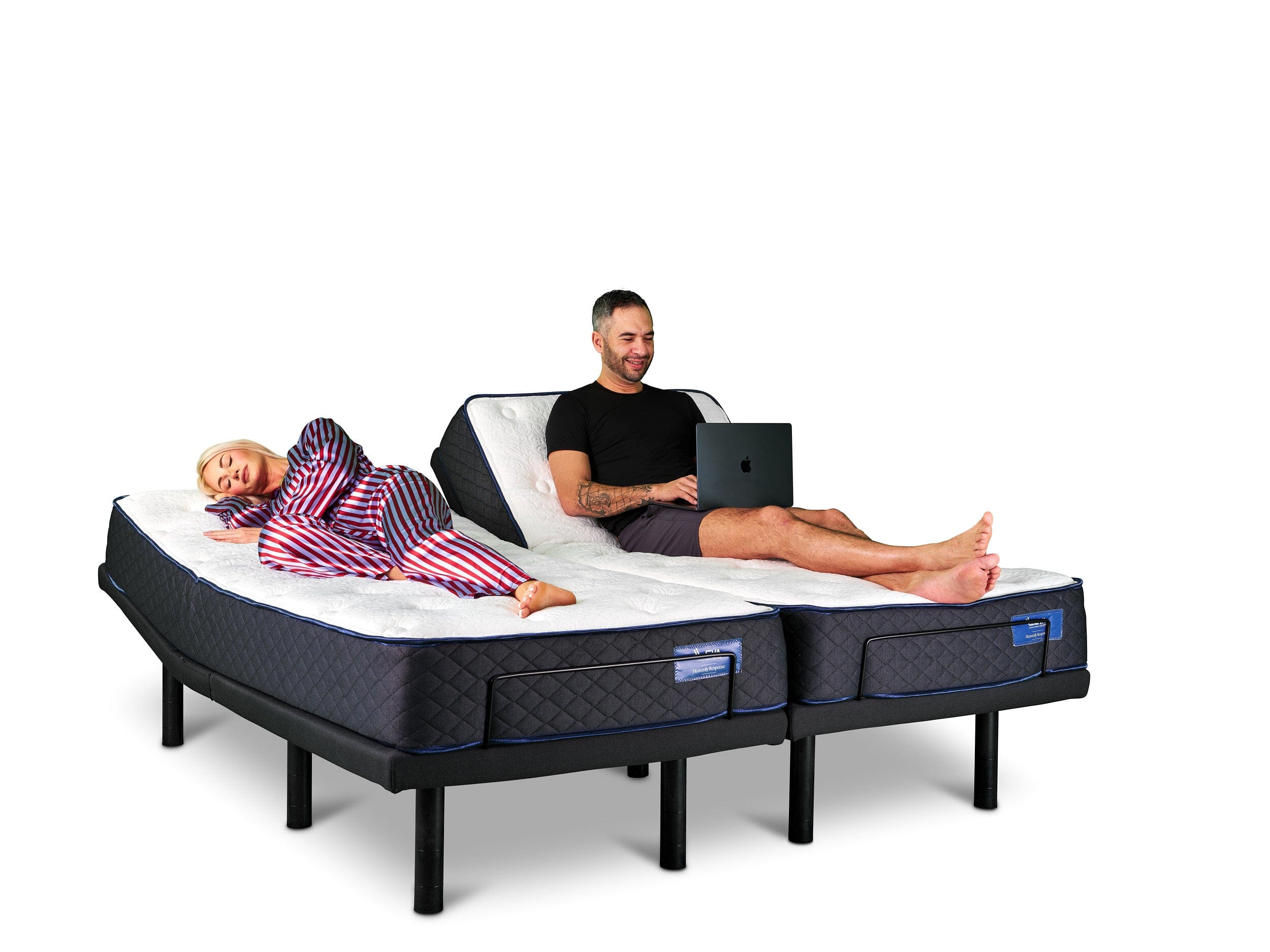
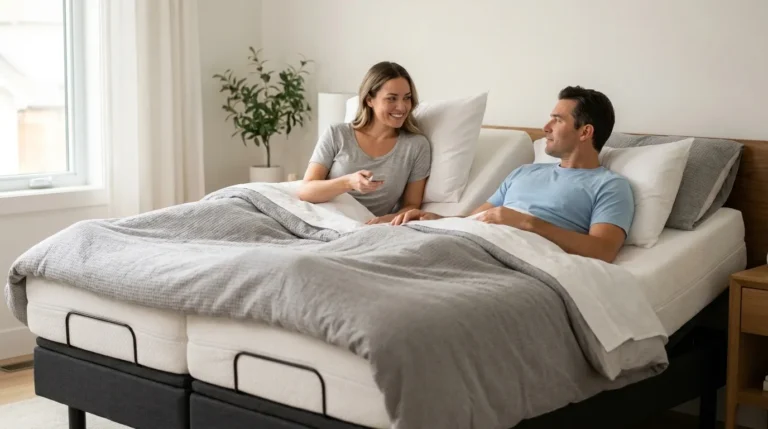
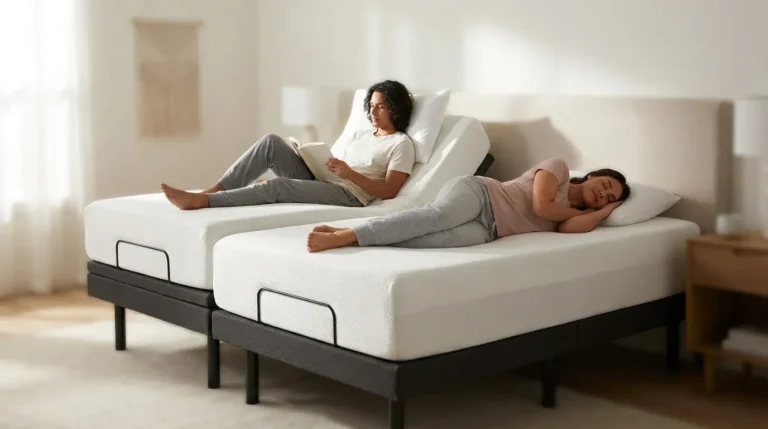
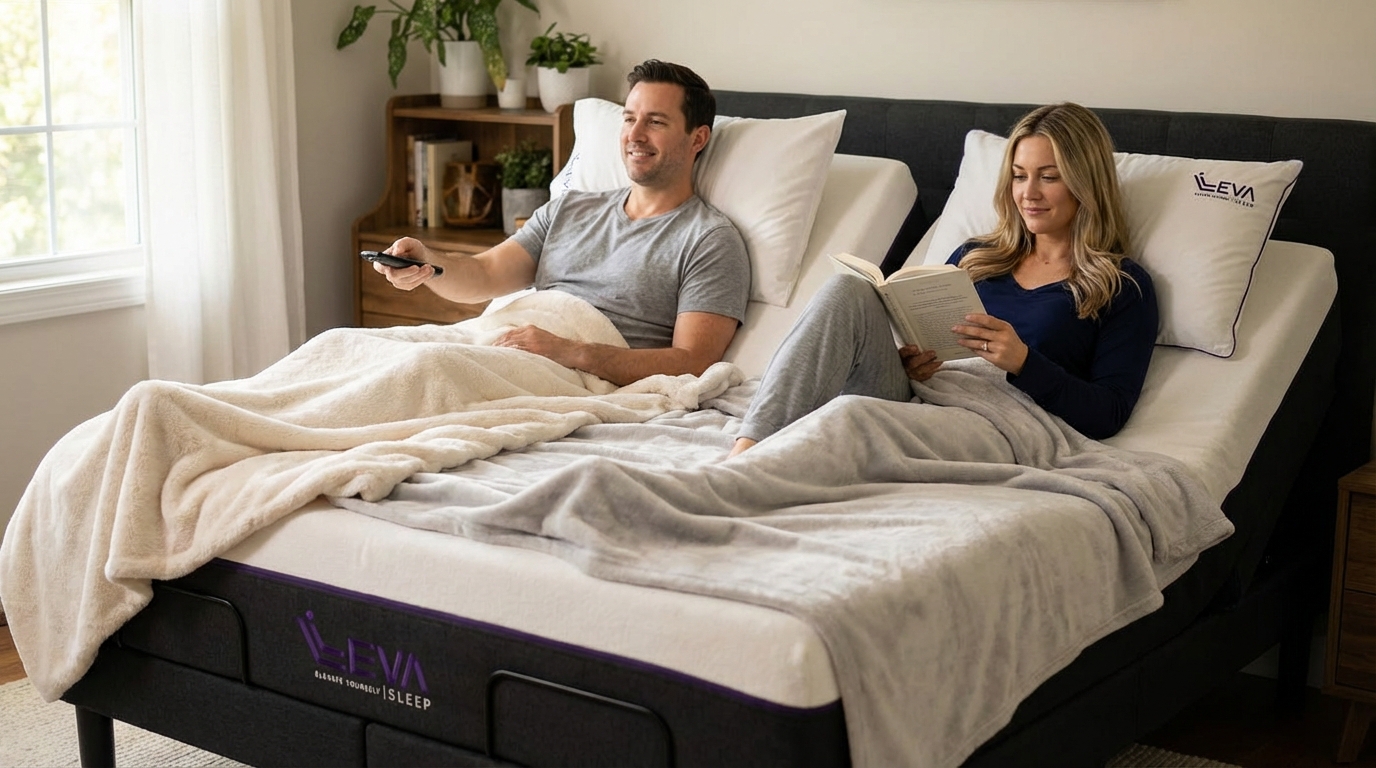
An adjustable base with independent split controls, where each side operates separately, lets each partner set their own elevation and position without affecting the other. This setup directly supports couples dealing with sleep divorce and helps people who need elevation for sleep apnea, acid reflux, or hip and knee pain.
Shop Leva Sleep’s adjustable beds. Leva Sleep is a Canadian adjustable bed specialist with over 8 years of experience, more than 25,000 customers, and $50M in lifetime sales. The company offers Split Queen and Split King configurations with independent app-controlled bases, quiet motors, anti-snore positioning, and in-house white-glove delivery across Ontario and Alberta. Pricing typically runs 30 to 50% below comparable luxury competitors through a direct-to-consumer model with local assembly.
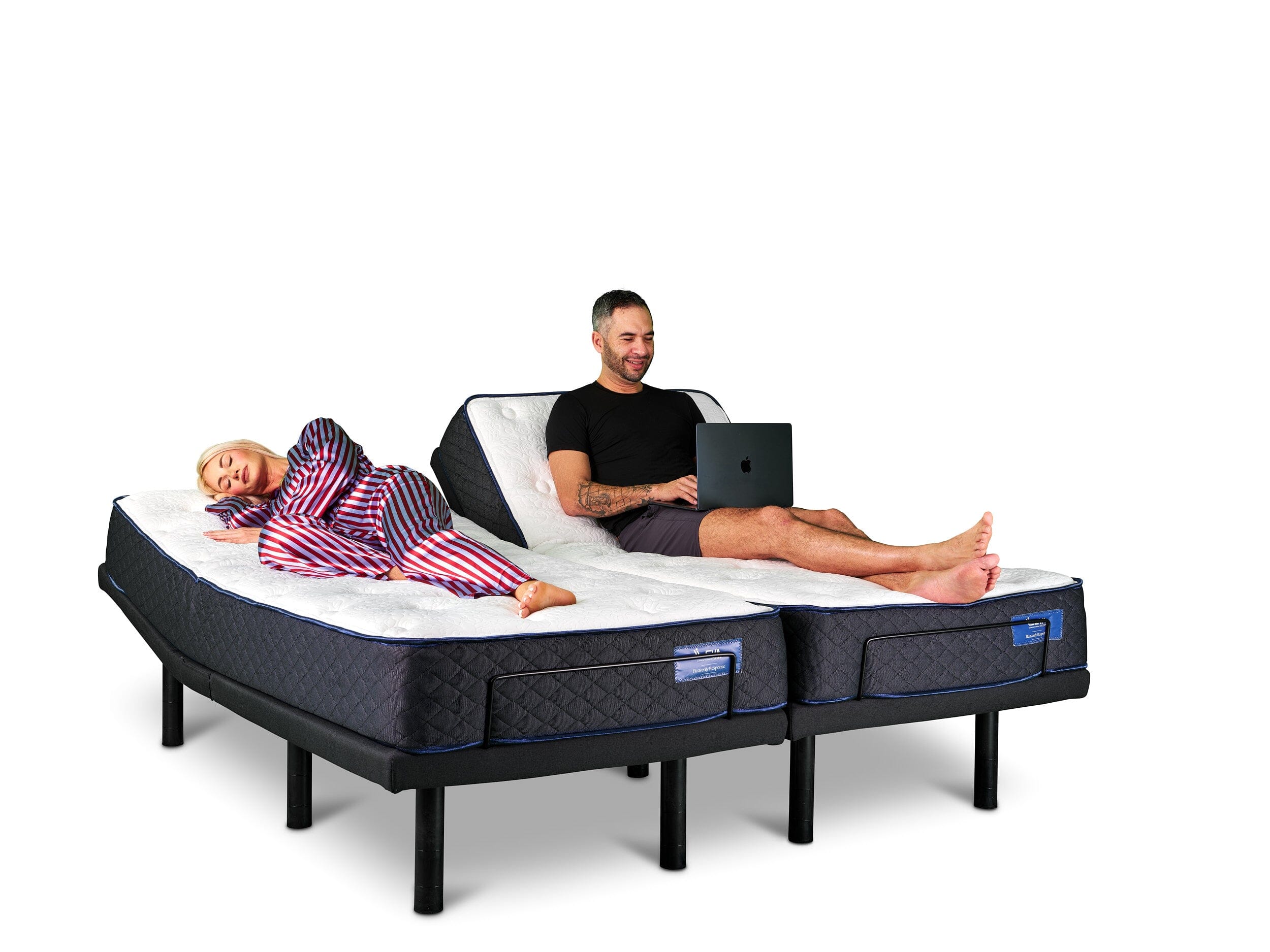
The decision framework follows a simple sequence that builds from basic condition checks to upgrade choices.
- First, decide whether the mattress has failed. If sagging is under 1 inch and both partners sleep well, maintenance and rotation may extend its useful life, so replacement can wait.
- Next, look for clear failure signs. If sagging exceeds 1 inch, waking pain is consistent, or the mattress is past 7 years of regular use, replacement becomes a practical choice.
- Finally, choose the right replacement path. If replacement is warranted and partners have differing firmness needs, snoring is present, or sleep divorce has occurred, an adjustable base system can deliver results that a flat mattress cannot.
Evaluate your current sleep quality against the measurable thresholds above, including sag depth, waking pain patterns, and years of use, before choosing between a direct replacement and an upgrade. Compare Split Queen and Split King configurations designed specifically for Canadian couples.
Frequently Asked Questions
How long does a Serta mattress typically stay supportive before needing replacement?
Most Serta mattresses remain meaningfully supportive for the 7–10 year range discussed earlier, although this varies by model, maintenance, and sleeper weight. Real-world reports show that comfort and support often decline before the 10-year warranty ends. Sleepers over 230 lbs usually see a shorter useful lifespan because comfort layers compress more deeply.
Does Serta’s 10-year warranty cover sagging in Canada?
Serta’s 10-year limited warranty covers manufacturing defects rather than gradual softening or comfort changes. In Canada, sagging must exceed the minimum depth specified by the manufacturer before a claim qualifies. Sagging that causes pain but does not reach this depth usually counts as normal wear. Coverage may be prorated in later years, so customers may pay part of the replacement cost. Transportation and handling fees remain the customer’s responsibility, and coverage applies only to the original purchaser.
What are the clearest signs a Serta mattress has lost support?
The clearest signs match the sagging thresholds and waking pain patterns described in the “Visible Signs Your Serta Mattress Needs Replacing” section. In brief, sags of 0.75 inches or more, permanent impressions, and pain that fades within 30 to 60 minutes of waking all signal support loss. Rolling toward the centre and consistently sleeping better away from home reinforce that conclusion. Support often declines before sagging becomes obvious, so tracking pain and sleep disruption helps you catch problems earlier.
Can body weight significantly shorten a Serta mattress’s lifespan?
Body weight can shorten lifespan in a meaningful way. Sleepers over 230 lbs place greater sustained compression on comfort layers and coils, which speeds up material breakdown. Reviewers have raised concerns about support for heavier sleepers on some models, noting deeper body impressions over time. Couples where one or both partners exceed 230 lbs should plan for replacement at the lower end of typical ranges and consider firmer configurations to slow wear.
When does it make more sense to upgrade to an adjustable base than to replace a worn Serta with another flat mattress?
A flat replacement usually works when only one person uses the bed, both partners share the same firmness preference, and no medical conditions require elevation. An adjustable base becomes the more practical choice when partners need different firmness or elevation, when snoring or sleep apnea is present, when a doctor recommends sleeping elevated for hip, knee, or acid reflux issues, or when sleep divorce has already occurred. In these situations, a flat mattress replacement repeats the same pattern without fixing compatibility problems. Leva Sleep’s Split Queen and Split King adjustable systems target this exact scenario, with independent controls for each side, pricing 30 to 50% below comparable luxury competitors, and in-house white-glove delivery across Ontario and Alberta.
Compare models built for Canadian couples with differing sleep needs.