Written by: Matthew Timmins, Founder and Managing Director, Leva Sleep | Last updated: June 17, 2026
Key Takeaways
-
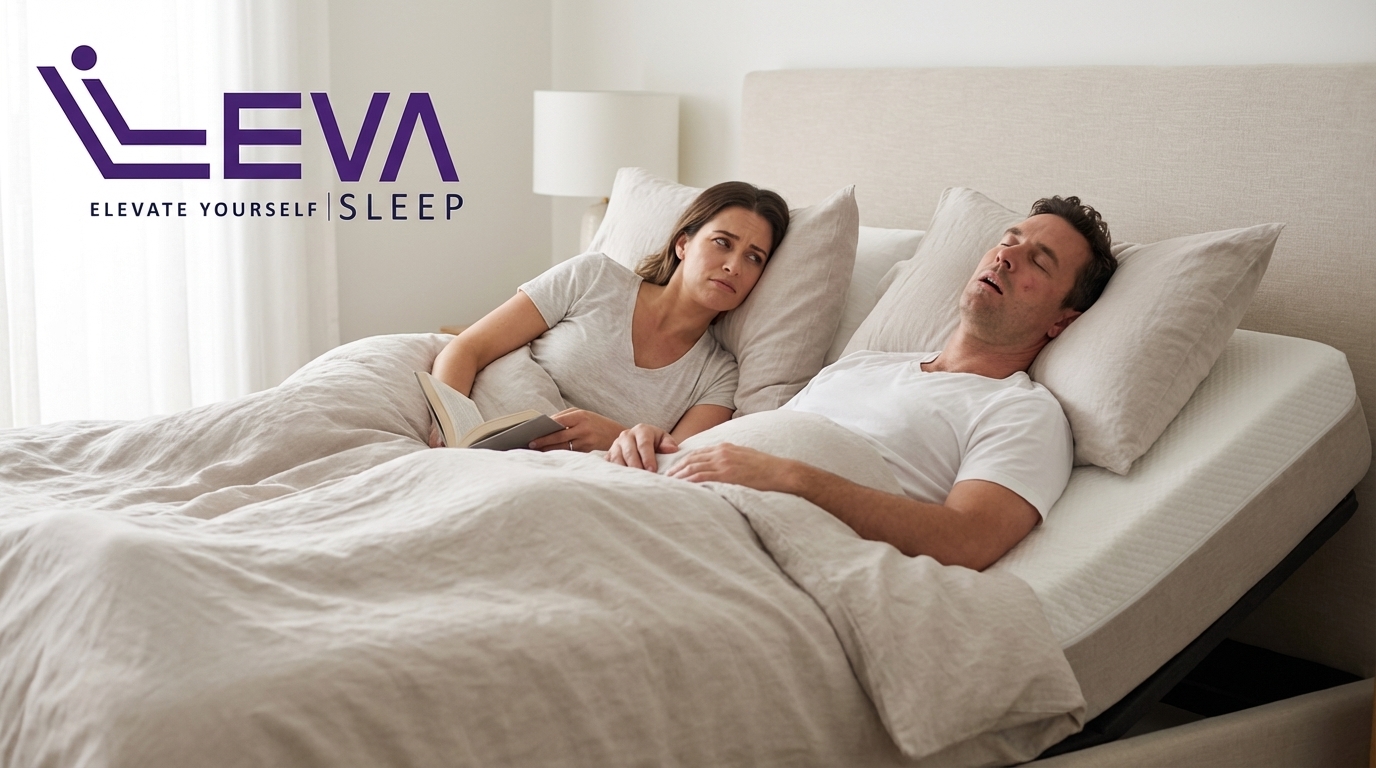
Snoring disrupts shared sleep and strains relationships, often leading to fatigue, irritability, and long-term health risks like high blood pressure for both partners.
-
Common causes include back sleeping, alcohol, nasal congestion, and excess weight, all of which narrow the airway and increase vibration during sleep.
-
Traditional fixes like pillows, nasal strips, and lifestyle changes often lack sustainability, so couples eventually look for more reliable solutions.
-
Head elevation via adjustable beds offers a consistent, non-invasive way to keep airways open, with independent controls that let each partner customize their position.
-
For couples ready to improve sleep together, explore Leva Sleep’s adjustable bed packages designed specifically for snoring relief and shared comfort.
Section 1: Why Snoring Happens and Why It Often Gets Worse
Snoring occurs when airflow causes the soft palate, tonsils, adenoids, or tongue to vibrate during partial airway obstruction. Snoring occurs in about 30% of men and 10% of women overall, with prevalence increasing significantly with age. Several factors worsen it. Sleeping on the back allows gravity to pull soft tissues into the airway. Alcohol before bed causes excessive relaxation of throat muscles, narrowing the airway further. Nasal congestion forces mouth breathing. Excess weight adds tissue pressure around the throat.
Snoring is a common contributor to nighttime sleep problems for couples. Persistent, loud snoring, especially when accompanied by gasping, choking, or witnessed pauses in breathing, requires medical evaluation to rule out obstructive sleep apnea. As sleep physician Abhinav Singh, MD, MPH, FAASM, puts it: “Snoring is like potholes on a road. Frequently seen but never good for any car. If you repeatedly hit them, the car will eventually need repairs.”
Explore adjustable bed packages from Leva Sleep designed for Canadian couples dealing with snoring and different sleep needs.
Section 2: Why Common Snoring Fixes Often Do Not Last
Most couples start with lifestyle adjustments such as side sleeping, reducing alcohol, managing weight, and treating nasal congestion. These steps are legitimate first-line interventions. A systematic review published in the Journal of Personalized Medicine confirmed that positional therapy reduces snoring by maintaining a larger airway cross-sectional area, and nasal dilators show measurable benefit for nose-based snoring.
These steps are worth trying, yet sustainability becomes the challenge. Pillows shift. Partners roll over. Nasal strips fall off. Mouthguards cause jaw discomfort and are often abandoned within weeks. Earplugs help the non-snoring partner sleep but do not address the snoring itself.
Separate sleeping arrangements are sometimes necessary, but they carry a real cost. Couples often experience reduced intimacy, relationship tension, and a slow erosion of shared routines. Recent research has linked sleep problems with earlier onset of cardiovascular disease, so a “just live with it” approach no longer aligns with medical guidance. Basic lifestyle changes create a foundation, yet they rarely solve the problem on their own.
Section 3: Head Elevation as a Reliable, Non-Invasive Intervention
Head elevation provides consistent help for many snorers by using gravity to keep the airway more open. Sleeping with the upper body inclined can reduce airway obstruction and soften snoring vibrations. A wedge pillow can approximate this position, but it shifts, slides, and cannot be adjusted once you are asleep.
An adjustable bed base delivers consistent, precise, motorised head elevation that holds its position all night and can be modified instantly through an app without waking a partner. When basic lifestyle modifications prove insufficient, adjustable bed bases that automatically raise the head are positioned as the next technological escalation, as even a slight incline can open airways and reduce snoring vibrations. For couples, independent adjustability matters most because each partner controls their own side without affecting the other.
See how Leva Sleep’s adjustable systems use split controls and anti-snore modes to support couples who share a bed.
Section 4: Features That Matter in a Couples’ Adjustable Sleep System
-
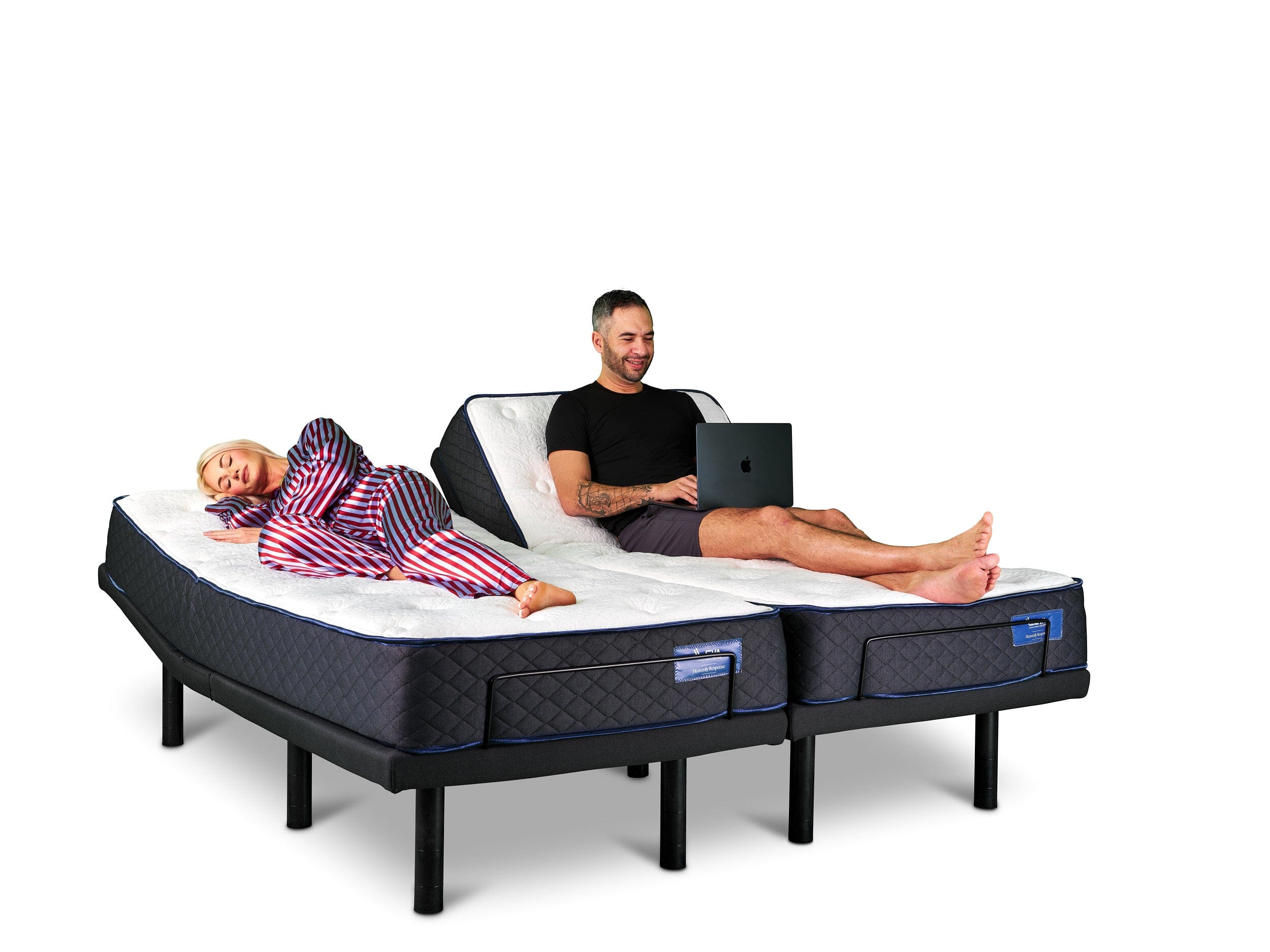
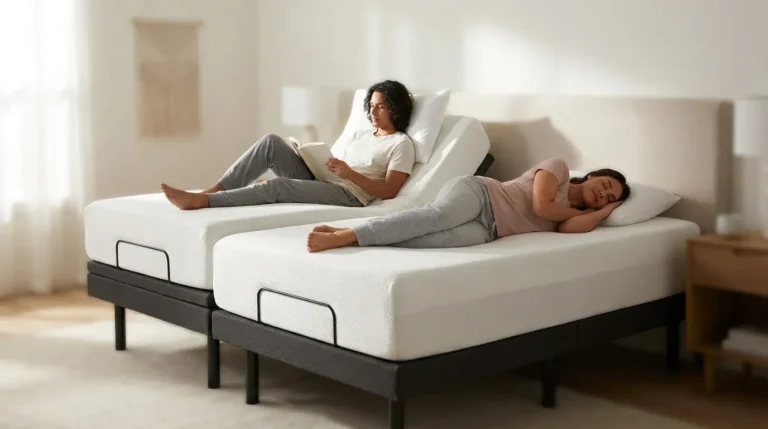
Independent split adjustability: Each side of the bed, Split Queen or Split King, adjusts separately so the snoring partner can elevate their head without disturbing the other.
-
Anti-snore automation: Systems with snore-detection technology make automatic micro-adjustments to head elevation during the night, which reduces snoring without either partner waking.
-
Whisper-quiet motors: Motor noise often frustrates users of basic adjustable bases. Quiet, precision-engineered motors protect a calm, shared sleep environment.
-
Pillow tilt and lumbar support: Pillow tilt fine-tunes head and neck alignment. Lumbar support improves lower back comfort while sleeping in an elevated position.
-
Mattress compatibility: The mattress must flex smoothly with the base. All-foam and hybrid pocket-coil mattresses designed for adjustable bases perform far better than standard innerspring models.
-
Temperature regulation: Integrated heating and cooling pads let each partner set their own temperature, which addresses another common cause of nighttime awakenings.
-
App control: Bluetooth app control enables custom sleep positions, subtle overnight adjustments, and vibrating alarms that wake one partner without disturbing the other.
-
White-glove delivery and setup: Professional in-home assembly, old-bed removal, leg-height adjustment, and a product tutorial help couples use every feature correctly from the first night.
-
Specialist expertise: A retailer with 15–20 adjustable models and deep technical knowledge can match couples to the right configuration more effectively than a general furniture store.
Section 5: Real Gains Couples See With Split Adjustable Systems
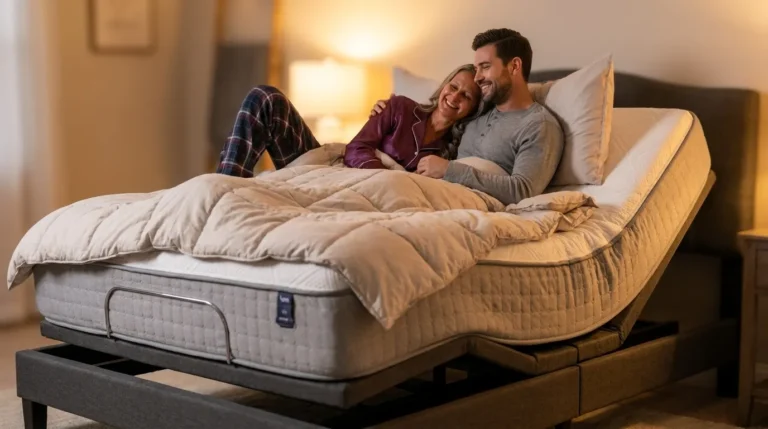
A well-configured split adjustable system delivers benefits that extend far beyond lower snoring volume. Couples who had been sleeping in separate rooms often return to a shared bed. Sleep deprivation from partner snoring contributes to irritability, depression, low libido, and relationship strain. These issues often ease when both partners finally sleep through the night.
Head elevation addresses airway obstruction without masks, mouthpieces, or strict behavioural rules. Each partner keeps full control of their own side, which removes the nightly compromise that can lead to a “sleep divorce.” Leva Sleep’s direct-to-consumer, vertically integrated model delivers this technology at 30–50% less than comparable luxury competitors, so a premium, medically informed sleep environment becomes realistic for more households.
With in-house white-glove delivery available across Ontario and Alberta, the move from a flat bed to a fully configured split adjustable system requires no assembly effort from the customer. The system arrives, gets set up, and works that same night.
Find a Leva Sleep split adjustable package that fits your bedroom, budget, and relationship and start planning your shared sleep upgrade.
Section 6: Comparing Common Snoring Solutions
|
Option |
Snoring Reduction |
Partner Independence |
Sustainability |
Invasiveness |
|---|---|---|---|---|
|
Flat bed + lifestyle tips |
Partial, inconsistent |
None |
Low, habits lapse |
None |
|
Basic adjustable base (single control) |
Moderate with elevation |
None, one position for both |
Moderate |
None |
|
CPAP machine |
High for sleep apnea cases |
Full, only affects one partner |
High if tolerated |
Moderate, mask, hose, noise |
|
Split adjustable system with anti-snore mode |
High, consistent motorised elevation at the recommended incline |
Full, each side independent |
High, automated, no compliance required |
None, no masks or devices worn |
Frequently Asked Questions
Can both partners benefit from a split adjustable bed, or is it only useful for the snoring partner?
Both partners benefit independently. In a Split King or Split Queen configuration, each side of the bed has its own motor, controls, and elevation settings. The snoring partner can raise their head to the clinically recommended incline for airway support. The other partner can sleep flat, elevated, or at any position they prefer.
Additional features such as lumbar support, pillow tilt, massage, and temperature regulation are also independently controlled. Differing firmness preferences, back pain, acid reflux, or temperature sensitivity on either side can be addressed at the same time. Leva Sleep designs every product to help couples keep sleeping together instead of forcing one partner to adapt to the other’s medical or comfort needs.
Will my current mattress work with a Leva Sleep adjustable base?
Most standard innerspring mattresses are not designed to flex with an adjustable base and will resist elevation or wear out quickly under repeated movement. Leva Sleep designs and sells all-foam and hybrid pocket-coil mattresses built specifically to work with adjustable bases. These mattresses maintain comfort and structural integrity even at significant head or foot elevation.
Leva also partners with brands including Tempur-Pedic, Simmons, Beautyrest, Serta, and Kingsdown, pairing them with its adjustable bases where compatibility exists. During the purchase process, Leva’s specialists confirm mattress compatibility and recommend the right pairing for each customer’s needs and budget.
How long does setup take, and do I need to assemble it myself?
Leva Sleep offers in-house white-glove delivery for a fee across Ontario and Alberta. Trained professionals deliver the system directly to the bedroom, handle full assembly, adjust leg heights to the customer’s preferred bed height, and provide a complete product tutorial covering app setup and feature use. They also remove the old bed through donation or recycling.
Customers do not need to handle any part of the assembly. The entire process is designed so the bed is fully operational on the night of delivery, with no tools, instructions, or effort required from the customer beyond being present for the appointment.
Is head elevation from an adjustable bed a substitute for a CPAP machine if my partner has been diagnosed with sleep apnea?
Head elevation is a clinically supported non-invasive intervention for snoring and mild positional sleep apnea. It does not replace CPAP therapy in cases of moderate to severe obstructive sleep apnea. A formal diagnosis from a sleep physician determines the appropriate treatment plan.
Leva Sleep’s adjustable bases are often used by customers referred by sleep apnea clinics as a complementary or supportive tool, especially for those who find CPAP masks intolerable or for partners managing positional snoring without a confirmed apnea diagnosis. Anyone experiencing witnessed pauses in breathing, gasping, or excessive daytime sleepiness should seek medical evaluation before relying solely on positional therapy.
What is the difference between a Split Queen and a Split King, and which is right for a Canadian bedroom?
A Split King consists of two Twin XL mattresses side by side, totalling 76 inches wide, which matches the width of a standard King. A Split Queen consists of two narrower mattresses side by side, totalling 60 inches wide, which matches the width of a standard Queen.
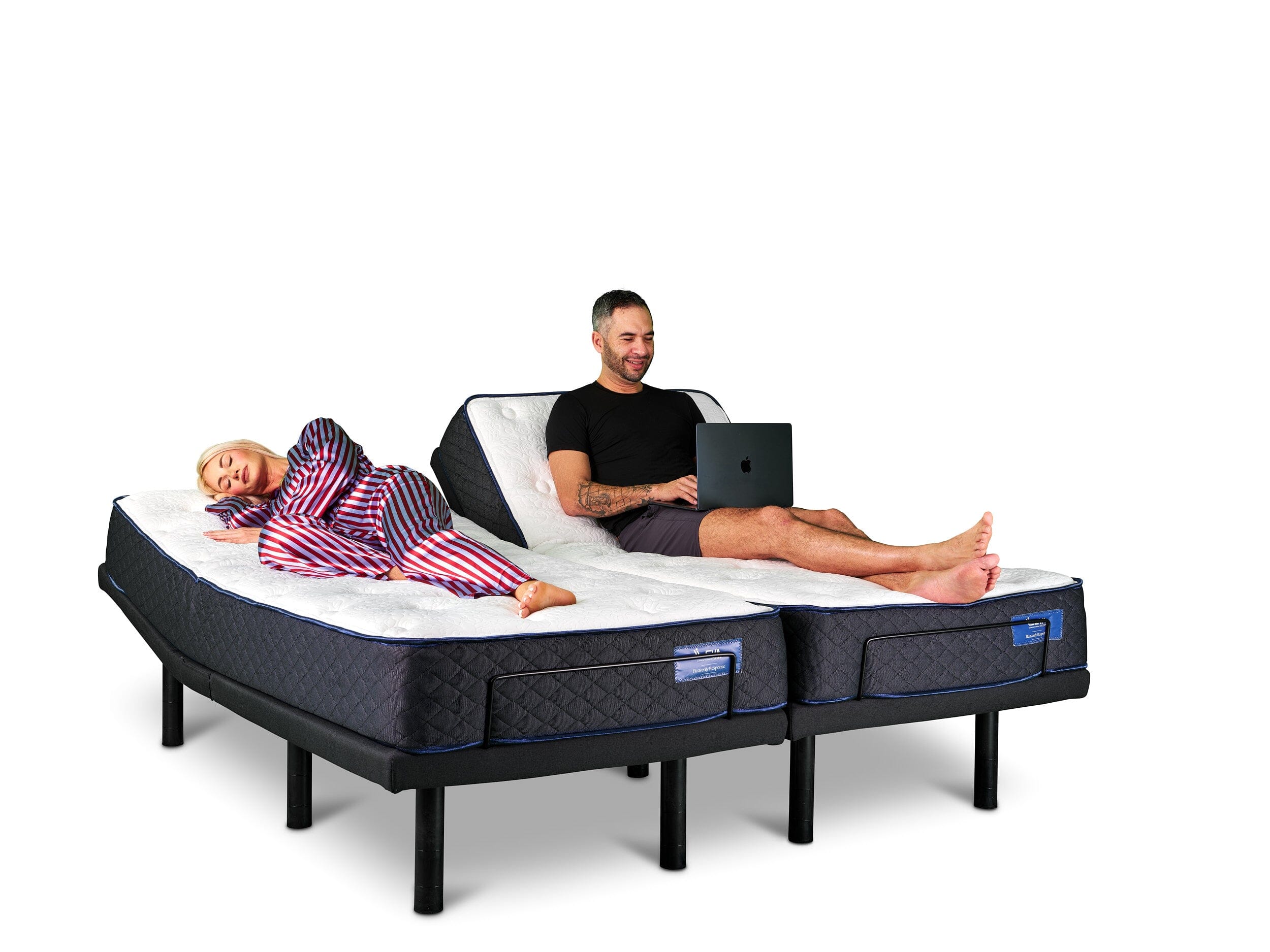
Split Queen is a less common configuration that Leva Sleep offers as a unique product built to customer specifications. It suits couples who want independent adjustability but have a bedroom that cannot accommodate a King-sized footprint. Both configurations provide fully independent head and foot elevation, motor controls, and feature access for each partner.
The choice depends mainly on room dimensions, existing bed frame size, and personal space preference. Leva Sleep’s specialists guide customers through this decision as part of the purchase process.
Conclusion
Snoring disrupts sleep, strains relationships, and, when ignored, creates measurable long-term health risks for both partners. Tonight’s checklist of side-sleeping support, nasal clearing, alcohol timing, pillow propping, and a consistent wind-down routine offers a meaningful starting point. When those measures do not go far enough, evidence consistently highlights head elevation as the most effective non-invasive intervention available.
A split adjustable sleep system with independent controls and anti-snore automation delivers that elevation reliably and automatically, without requiring either partner to wear a device, change a long-standing habit, or move to another room. Leva Sleep has spent over eight years and served more than 25,000 Canadian customers building this type of system at 30–50% less than comparable luxury competitors, with white-glove delivery across Ontario and Alberta.
Shared sleep deserves protection. Find the Leva Sleep split adjustable package that keeps you both in bed, sleeping well, every night.