Visit One Of Our 6 Showrooms Located Across Canada!
No Payments, No Interest Until 2027
Free Delivery & In-Home Set Up
How to Use Elevated Sleep Positions to Reduce Snoring
Content
Written by: Matthew Timmins, Founder and Managing Director, Leva Sleep | Last updated: July 19, 2026
Key Takeaways
Snoring is primarily positional. Elevating the full torso 12–30 degrees keeps the airway open more effectively than stacking pillows.
Side sleeping at a 15–30 degree incline, or 12 degree torso elevation, can reduce snoring duration and awakenings.
Wedge pillows offer a low-cost starting option but can slide and restrict movement. Adjustable bases provide stable, full-torso support.
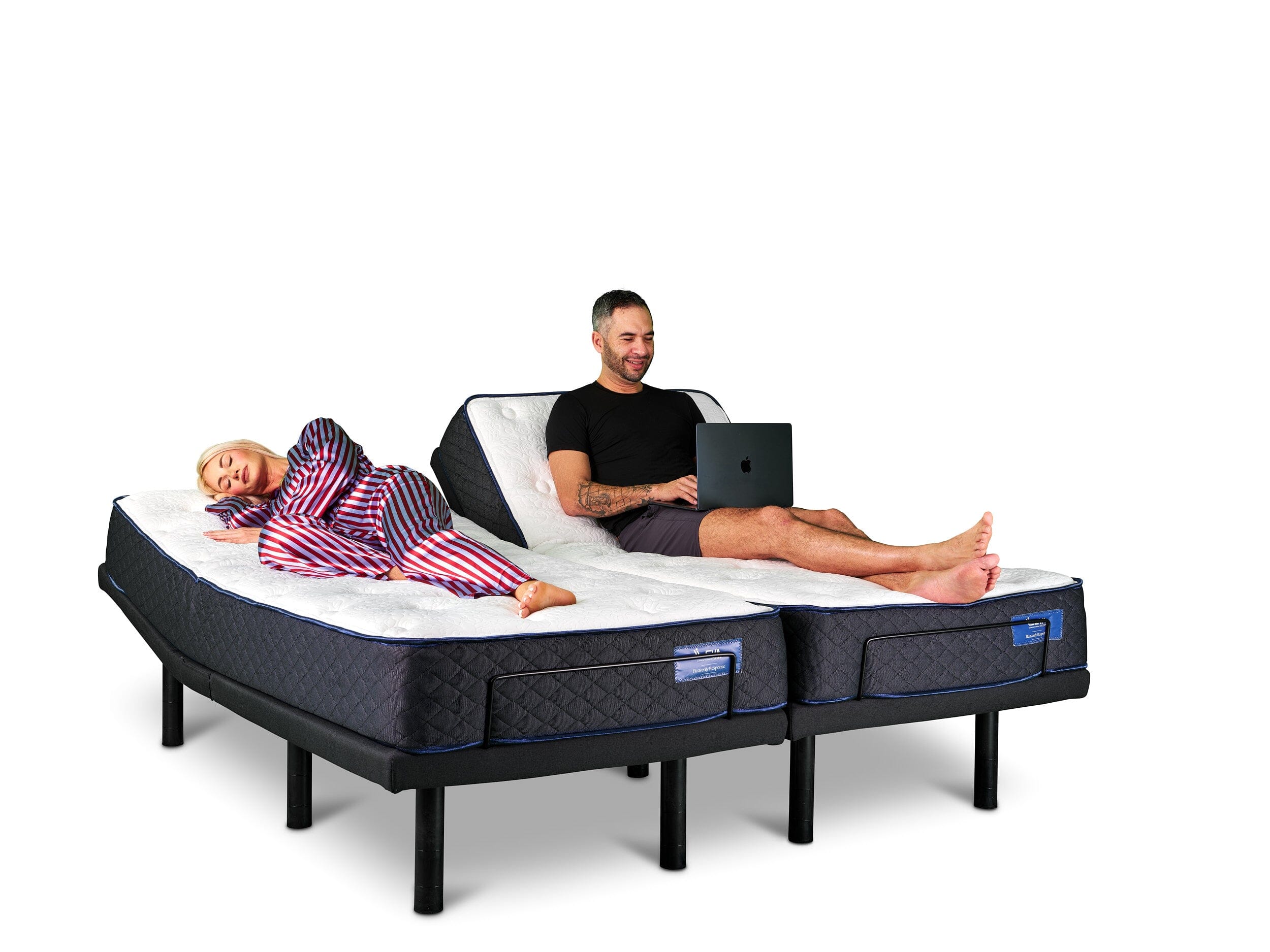
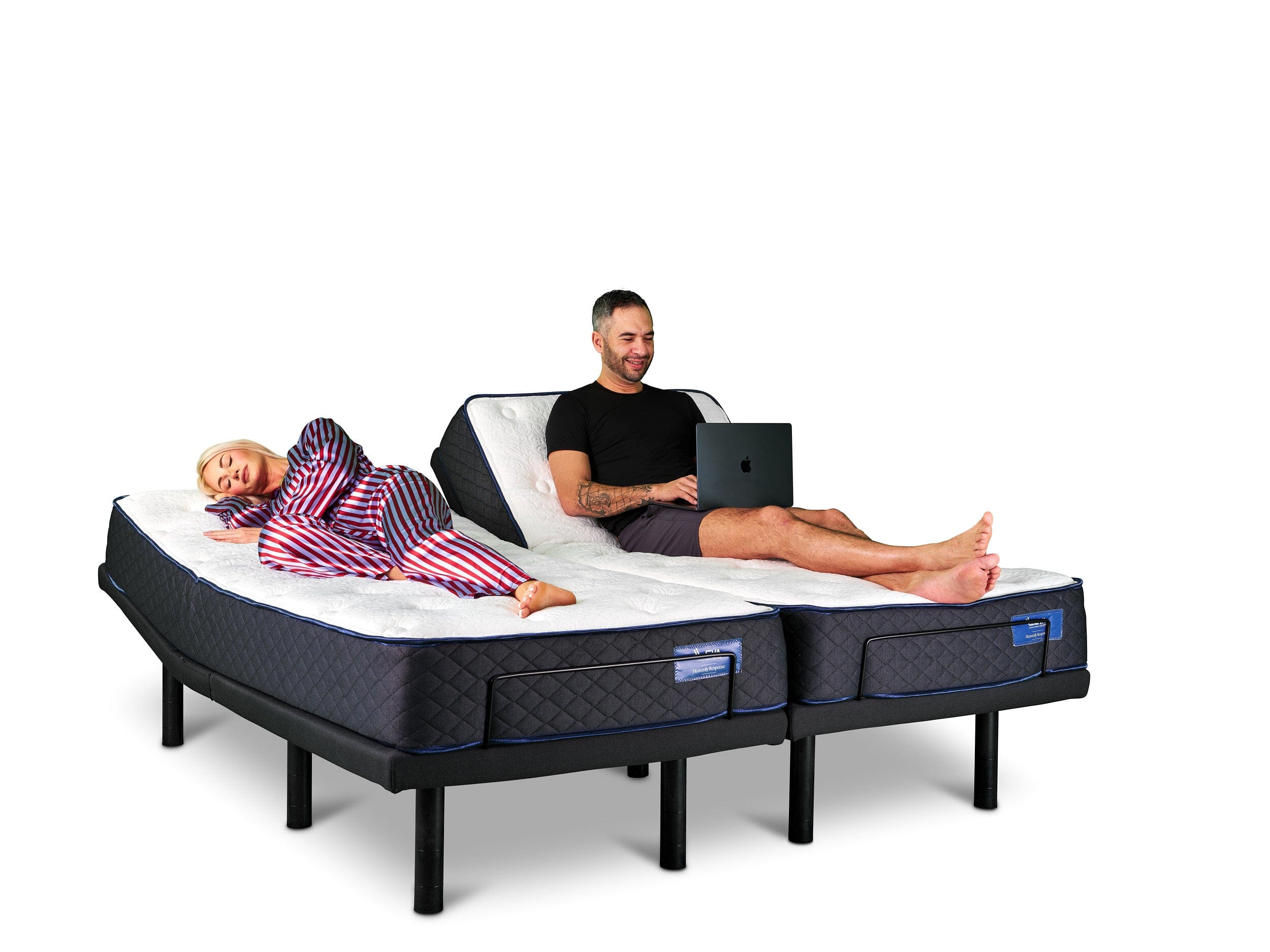
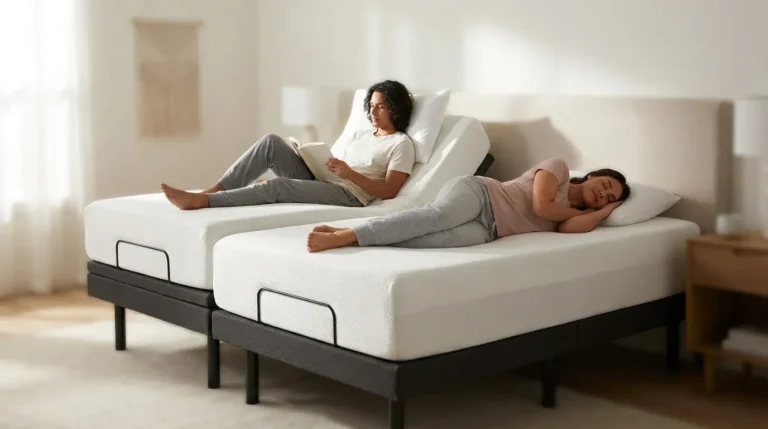
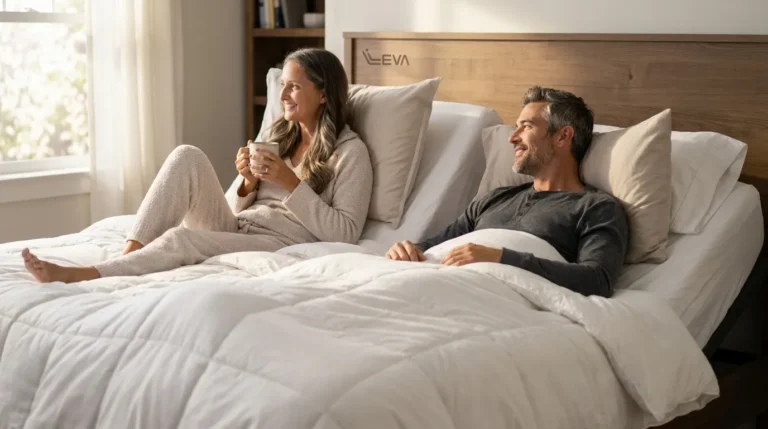
Split adjustable bases let each partner control their own angle, so one can use the optimal incline while the other sleeps flat.
Leva Sleep’s split adjustable bed packages combine independent elevation, app-controlled anti-snore presets, and white-glove delivery for Canadian couples.
Does Elevated Sleeping Stop Snoring?
Step 1: Evaluate your current sleep position and snoring patterns
To evaluate your own pattern, track whether snoring worsens when you lie flat on your back. Notice whether it improves when you roll to one side and whether a partner reports that snoring stops when you shift positions. These observations highlight positional snoring, which responds most reliably to elevation therapy.
Step 2: Use side sleeping plus a 15–30 degree incline or 12 degree torso elevation
Sleep medicine experts recommend side sleeping as the most effective natural position to reduce snoring, because it prevents the tongue and soft tissues from collapsing backward into the throat. Studies show that switching from back sleeping to side sleeping can reduce snoring.
Sleep apnea patients often require higher angles. Sleep apnea patients who struggle to avoid back sleeping may reduce breathing disruptions by elevating the head of the bed 30 to 60 degrees, which limits gravity’s effect on the tongue and other tissues blocking the airway. Any suspected sleep apnea requires a formal sleep study before you rely on positional therapy alone.
How to Stop Snoring at Night with Elevation
Step 3: Choose between wedge pillows and full-torso adjustable bases
Two practical tools deliver consistent torso elevation: wedge pillows and adjustable bed bases. Your choice depends on symptom severity, budget, and whether both partners need independent control.
Wedge pillows provide a fixed incline, typically 30 to 45 degrees for a 10–12 inch wedge, at a lower upfront cost. A 10–12 inch wedge pillow is recommended for significant snoring, while a 7-inch wedge is suitable for milder cases. Their main limitation is stability. Many users slide down during the night and end up crunched at the bottom of the bed with a sore back.
Adjustable bases lift the mattress itself rather than placing a wedge on top. This prevents sliding and maintains consistent elevation. Elevating the entire head of the bed is more effective for reducing snoring than using wedge pillows, which only elevate the head and may not sufficiently open the airway.
Step 3.5: Compare wedge pillows and adjustable bases before you commit
Wedge pillows suit mild positional snoring and work well as a starting point before you commit to a larger purchase. They are portable, require no installation, and cost about $40–$80. Their drawbacks include a fixed angle that cannot be adjusted, a tendency to slide on smooth mattress surfaces, and restricted movement during side sleeping.
Adjustable bases address each of those limitations. For nightly elevation needs such as snoring or reflux, adjustable bases provide meaningfully better sleep quality than wedge pillows because they support consistent elevation across the entire body rather than relying on a surface that can slide or shift. The angle is variable and precise, the elevation is maintained by the frame, and the base can return to flat for daytime use without moving any accessories.
Beyond the stability advantage mentioned earlier, adjustable bases also avoid the waist-folding problem common with wedges, which can increase abdominal pressure and worsen reflux symptoms. For couples, the decisive advantage of a split adjustable base is independent control. The snoring partner uses the required 20–30 degree incline while the other sleeps completely flat.
When to Upgrade to a Smart Split Adjustable System
Step 4: Decide if you need independent control and anti-snore micro-adjustments
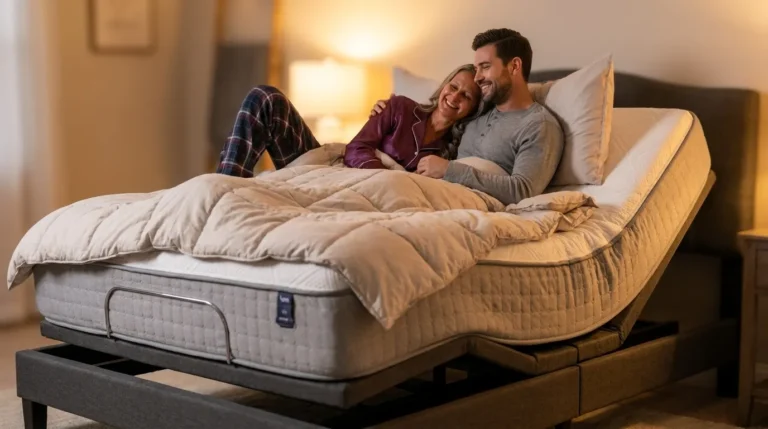
Leva Sleep’s Split Queen and Split King adjustable bases are built specifically for this scenario. Each side operates independently through whisper-quiet motors, with full app control over elevation, massage, and position presets. The anti-snore mode, arriving spring 2026, detects snoring and makes automatic micro-adjustments to the head of the bed. This maintains the optimal airway-opening angle without requiring the snoring partner to wake up and adjust manually.
Leva Sleep designs, assembles, and sells its systems directly, without retail intermediaries. As a result, the price sits 30–50% below comparable luxury competitors. The Split Queen configuration is a particularly rare offering. Most retailers carry only Split King, which uses two Twin XL bases, while Leva builds Split Queens to customer specifications for couples in smaller rooms.
Accessories and White-Glove Setup for Better Results
An adjustable base works best with bedding designed to move with it. Standard fitted sheets often pop off when the head section rises. Deep-pocket sheets with reinforced elastic stay in place through the full range of motion. Leva Sleep designs its fitted sheets specifically for adjustable bases, with extra elastic and side remote pockets integrated into the design.
Split configurations where each partner uses a different elevation benefit from duvet clips. These clips prevent the shared duvet from bunching or sliding to one side. A lumbar support cushion or pillow tilt accessory can further refine spinal alignment at higher incline angles.
Leva Sleep’s in-house white-glove delivery service handles the full setup process. The team delivers to the bedroom, assembles the base, adjusts leg height, provides a product tutorial, and removes the old bed. This matters for adjustable bases, which require correct assembly and calibration to function as intended. Bed-in-a-box delivery models leave that entire process to the customer.
What Success Looks Like with Elevated Sleeping
Consistent 12–30 degree torso elevation on a split adjustable base produces a clear pattern of results. Observable outcomes include:
Reduced partner awakenings caused by snoring noise
Maintained elevation throughout the night without sliding or pillow adjustment
Both partners remaining in the same bed with independent comfort settings
Decreased morning reports of snoring from the non-snoring partner
Improved subjective sleep quality for both sides of the bed
Together, these outcomes show a stable, comfortable setup that both partners can maintain long term. Leva Sleep’s customer base includes couples who had been sleeping in separate rooms due to snoring and are now sharing a bed again after switching to a split adjustable system. Sleep apnea clinics in Canada also refer patients to Leva when positional elevation is part of a recommended management plan.
Advanced Features for Personalized Sleep
App-controlled micro-adjustments extend the benefit of elevation beyond a fixed preset. Leva Sleep’s system allows custom position saving, so each partner’s preferred anti-snore angle is stored and recalled with a single tap. The app also supports vibrating alarms that wake one partner without disturbing the other. This feature helps couples with different sleep schedules.
Temperature regulation also affects sleep quality. Leva Sleep’s higher-end bases integrate a heating and cooling pad with individual zone control, which addresses the common couple conflict of one partner sleeping hot and the other cold. Combined with independent elevation, this setup creates a fully personalized sleep environment on each side of the same bed.
Beyond static comfort settings, advanced bases also offer dynamic interventions. Anti-snore presets, for example, use automatic detection to raise the head or pulse the bed when snoring is detected. Leva Sleep’s anti-snore mode brings this capability to its Split Queen and Split King lineup at a price point significantly below comparable systems from brands like Tempur-Pedic.
Frequently Asked Questions
Is elevation suitable for mild sleep apnea?
Head-of-bed elevation can reduce the frequency of breathing disruptions in mild to moderate positional obstructive sleep apnea, but it does not replace a formal diagnosis or prescribed treatment. Studies suggest that head-of-bed elevation can reduce the apnea-hypopnea index in mild-to-moderate OSA patients. For positional OSA, where events occur predominantly during back sleeping, elevation combined with side sleeping produces the strongest results. Anyone with suspected sleep apnea should complete a sleep study before relying on positional therapy alone. Leva Sleep’s adjustable bases are compatible with CPAP use and can complement prescribed therapy by maintaining the recommended elevation angle throughout the night.
What space does a Split Queen require?
A Split Queen adjustable base occupies the same footprint as a standard Queen mattress: 60 inches wide by 80 inches long. The split configuration divides this into two 30-inch-wide independent bases side by side. This makes it the most space-efficient couple-specific adjustable option available and suits master bedrooms where a Split King, at 76 inches wide, would be too large. Leva Sleep builds Split Queens to customer specifications, which remains a rare offering in the Canadian market where most retailers stock only Split King configurations.
What are delivery timelines in Ontario and Alberta?
Leva Sleep’s in-house white-glove delivery service operates in Ontario and Alberta. Delivery timelines vary by location and current scheduling, so the most accurate lead time is available directly from Leva Sleep at the time of purchase. The white-glove service includes delivery to the bedroom, full assembly, leg-height adjustment, a product tutorial, and removal of the existing bed. This end-to-end process is handled by trained Leva Sleep staff rather than third-party couriers, which helps ensure the base is correctly set up and calibrated before the team leaves.
How do you maintain an adjustable base?
Adjustable bases require minimal maintenance compared to most mechanical furniture. The main steps include keeping the motor area clear of debris, avoiding loads beyond the rated weight capacity, and periodically checking that all cable connections remain secure. Leva Sleep’s whisper-quiet motors are engineered for long-term durability and do not require lubrication under normal use. The Leva Sleep app provides diagnostic feedback and can flag performance issues before they affect sleep. For any mechanical concerns, Leva Sleep’s specialist team, the same team that handles delivery and setup, provides post-purchase support. This level of expertise is a meaningful advantage over general mattress retailers where adjustable base knowledge is limited.
Conclusion
Snoring is a positional problem with a positional solution. Clinical evidence points consistently to 12–30 degrees of full-torso elevation, not head-only pillow stacking, as the effective range for reducing snoring duration, decreasing awakenings, and increasing deep sleep. For couples, the challenge is delivering that elevation to one partner without forcing the other into the same incline or into a separate room.
A split adjustable base resolves that conflict directly. Each partner controls their own side independently, the elevation is maintained by the frame throughout the night, and Leva Sleep’s anti-snore mode automates the micro-adjustments that keep the airway open without manual intervention. White-glove delivery and setup in Ontario and Alberta, combined with pricing 30–50% below comparable luxury competitors, create a complete solution for Canadian couples.