
Written by: Matthew Timmins, Founder and Managing Director, Leva Sleep | Last updated: July 9, 2026
Key Takeaways for Canadian Couples
- Medical-grade anti-snore options in Canada include oral appliances and adjustable bed systems that use head elevation to keep airways open.
- Mouthpieces often fail couples because they focus only on the snorer, can cause jaw discomfort, and leave partners exposed to residual noise and movement.
- Head elevation with an adjustable base is a doctor-recommended, non-invasive option that works passively without anything worn in the mouth.
- Split adjustable bases let each partner control their side independently, which prevents vibration transfer and disturbance during adjustments.
- Shop Leva Sleep’s adjustable beds for split configurations with anti-snore mode and white-glove delivery in Ontario and Alberta.
The Problem: Why Mouthpieces Often Fail Couples
Mandibular advancement devices (MADs) and tongue-retaining devices (TRDs) are the most widely marketed medical-grade anti-snore products in Canada. They reposition the jaw or tongue to prevent airway collapse, yet their limitations for shared sleep are well documented.
Dustin Cotliar, MD, MPH, advises reconsidering an anti-snoring mouthpiece if ongoing jaw soreness, tooth pain, or no improvement in sleep quality occurs after several weeks of consistent use. MADs are also contraindicated for a wide range of dental conditions. Anti-snoring mouthpieces are not recommended for individuals with TMJ disorders, jaw pain, active orthodontic treatment, braces, retainers, dental implants, loose teeth, crowns, fillings, dentures, bridges, severe gum disease, or exceptionally narrow palates.
Cost and efficacy gaps add another layer of frustration. Over-the-counter MADs such as SnoreRx do not tend to work as well as custom dentist-made versions, according to Dr. Andrew Varga, neuroscientist and physician at the Mount Sinai Integrative Sleep Center. Custom dentist-designed versions can cost more than $1,000 if insurance does not cover them, says Dr. Paul Chung, physician and instructor of neurology and sleep medicine at Northwestern University.
For couples, the biggest drawback is that mouthpieces address only the snorer. The non-snoring partner still shares a bed with residual noise, jaw-clicking, and device-related movement. An estimated 45 percent of adults snore occasionally, while 25 percent snore regularly, often disturbing their bed partner’s slumber. Mouthpieces do nothing to reduce that disturbance independently for the partner’s side of the bed.
What Is the Doctor Recommended Snoring Device?
Sleep medicine specialists increasingly recommend positional therapy and head elevation as first-line, non-invasive interventions, particularly for positional snorers who worsen when lying flat on their backs. That limitation of mouthpieces for couples has pushed clinicians toward solutions that support both partners’ sleep at the same time.
Many sleepers who snore find relief by using an adjustable mattress base to sleep in an inclined position, as head and neck position can play a significant role in snoring. This is supported by intervention data. A 2022 in-home product intervention study by Danoff-Burg et al. found that sleeping in an inclined position reduces snoring and improves sleep quality.
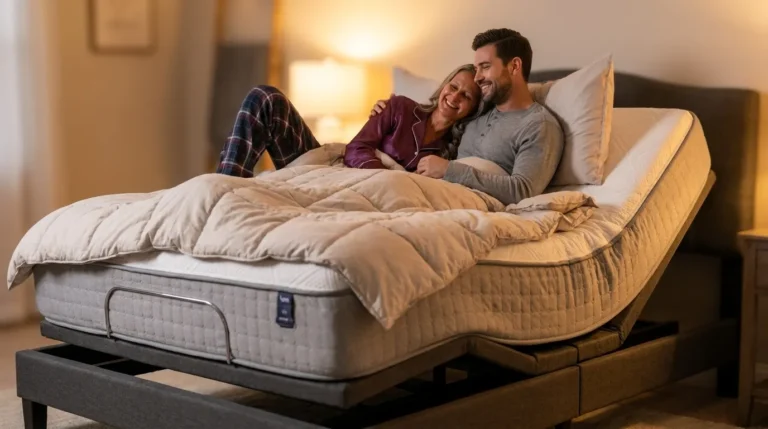
Adjustable beds can benefit snoring back sleepers by raising the head to keep the tongue closer to the front of the mouth and maintain airflow. Unlike oral appliances, head elevation operates passively, so no device is worn, no jaw is repositioned, and no partner interaction is required to activate it. This approach suits shared sleep environments where one partner’s device use should not disturb the other.
Shifting from back sleeping to side sleeping is often an effective first step for reducing snoring, according to sleep position research. Adjustable bases that allow quiet, incremental head elevation can support this positional shift without requiring the snorer to consciously change position mid-sleep.
For snoring associated with confirmed obstructive sleep apnea (OSA), CPAP remains the clinical gold standard. However, custom oral appliances have shown significant success for OSA patients who are intolerant to CPAP or prefer less invasive methods, according to Dr. Sandip Sachar’s dental sleep medicine practice. Bed elevation works best as a complement or a standalone solution for primary snoring without confirmed apnea.
The Solution: Bed-Elevation Alternatives for Shared Sleep
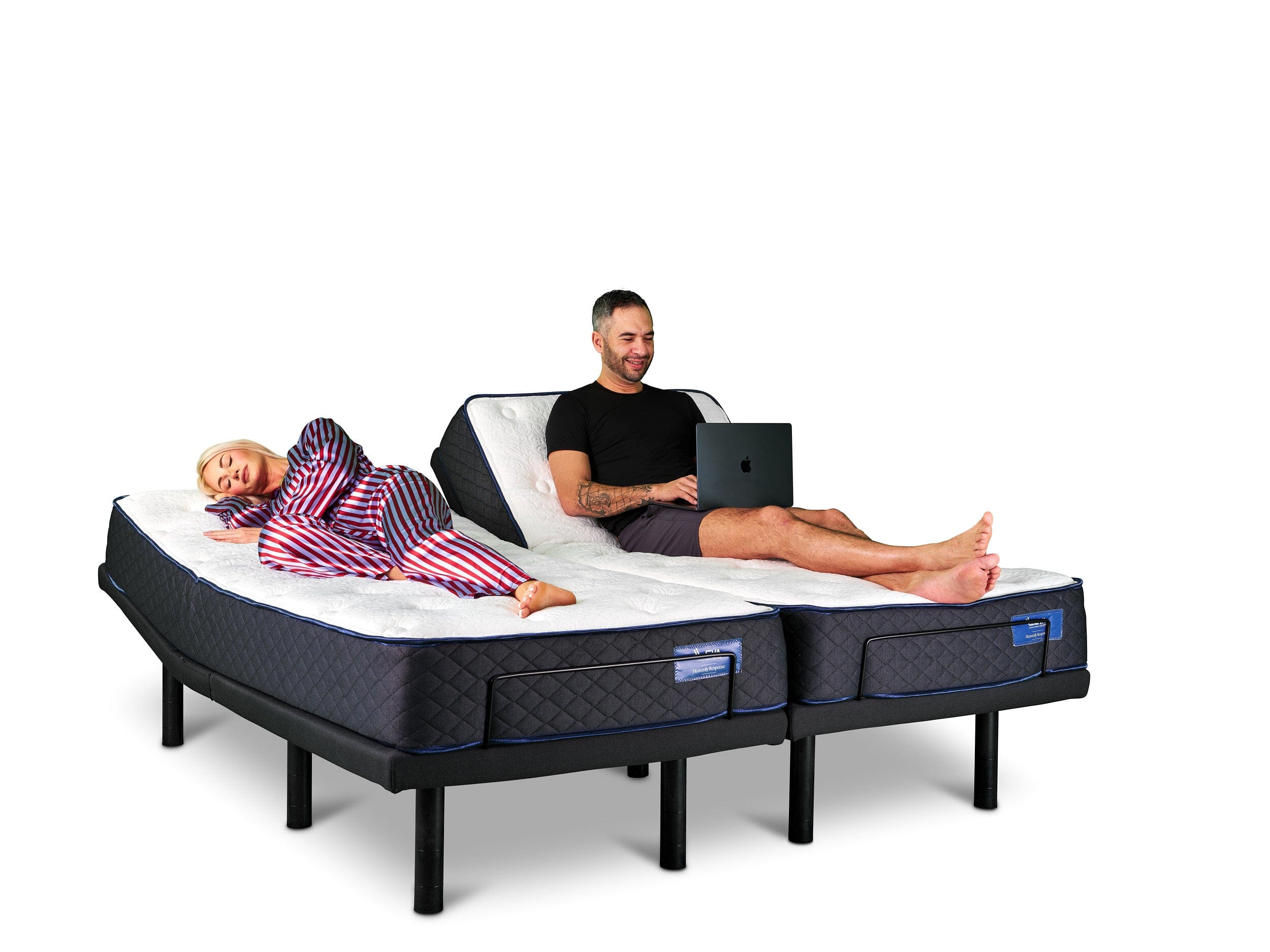
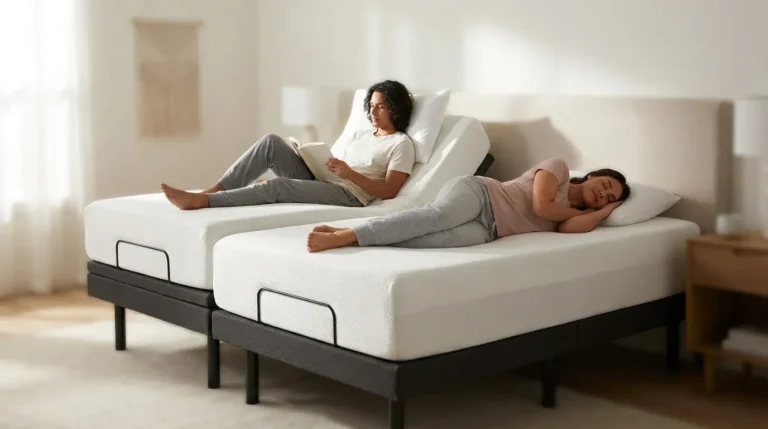
Split adjustable bases solve the core failure of wearable anti-snore devices for couples by helping the snorer without creating a new problem for the partner. Each side of the bed operates independently, so one partner can elevate their head while the other lies flat, with no physical contact between the two sides.
Leva Sleep’s split adjustable bases use whisper-quiet German motors engineered to prevent vibration transfer between the two independent bases. This engineering choice addresses a common pain point, because basic adjustable beds with loud or jerky motors can wake a partner even when the adjustment is meant to help them sleep.
Leva Sleep is launching an anti-snore mode in spring 2026 that will use onboard sensors to detect snoring sounds and automatically make micro-adjustments to the head of the bed to open the airway. The adjustment will be gradual and silent, designed to resolve the snoring episode without waking either partner. The system will be controlled via the Leva Sleep app, which also supports custom sleep positions, vibrating alarms, and real-time manual adjustments.
Leva offers both Split King and Split Queen configurations, with the Split Queen providing full independent adjustability in a more space-conscious footprint that is rare in the Canadian market. Mattresses are designed in-house (all-foam or hybrid pocket coil) to flex with the adjustable base, and all bedding accessories, including deep-pocket fitted sheets with extra elastic and duvet clips, are engineered to stay in place during elevation changes.
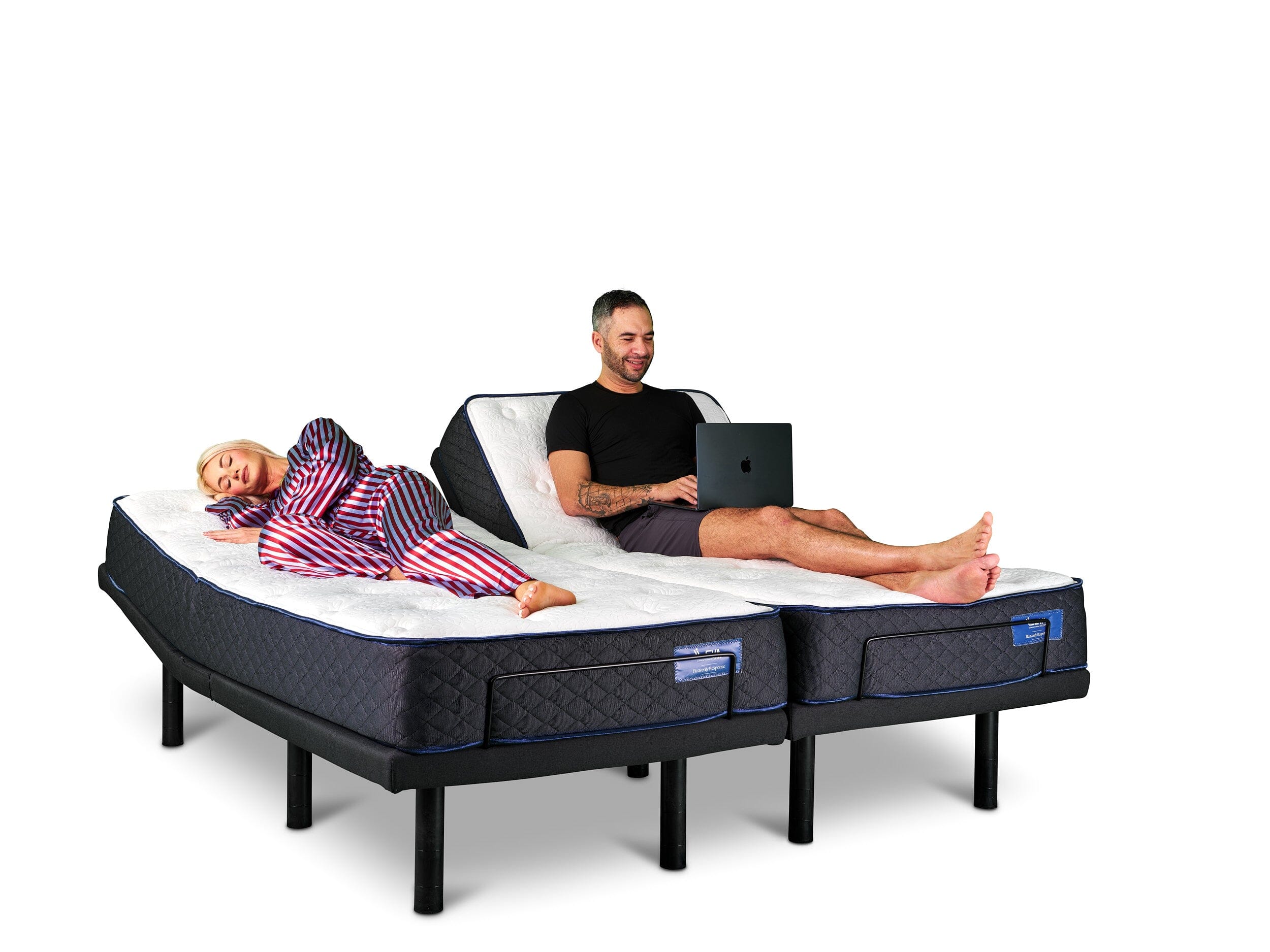
With over 8 years in business, $50M in lifetime sales, and 25,000+ customers, Leva Sleep operates as a vertically integrated direct-to-consumer brand. That structure allows it to offer luxury-grade adjustable sleep systems at 30–50% less than comparable competitors. In-house white-glove delivery to Ontario and Alberta includes bedroom setup, leg-height adjustment, product tutorial, and old-bed removal.
Doctor Guidance and a Canada-Focused Buying Checklist
When Canadians evaluate medical-grade anti-snore solutions, sleep physicians usually suggest starting with the least invasive, most reversible option. For couples, that order typically places positional therapy and head elevation before oral appliances, and oral appliances before CPAP.
Use the following checklist to rule out incompatible solutions before you buy. Each point helps eliminate at least one device category so you can narrow to an option that fits both partners’ needs.
- Confirm snoring type: Positional snorers who worsen when supine often respond well to head elevation. Snorers with confirmed OSA should consult a sleep physician before relying solely on positional devices.
- Assess dental contraindications: Rule out TMJ disorders, dental implants, dentures, or active orthodontic treatment before purchasing any MAD or TRD.
- Evaluate partner disruption: If the device itself, such as noise, movement, or jaw-clicking, disturbs the partner, it is not a couples-compatible solution even if it helps the snorer.
- Check motor noise ratings: For adjustable bases, confirm whisper-quiet motor specifications. Loud motors undermine the goal of silent positional adjustment.
- Verify independent controls: Even with quiet motors, split configurations must allow each side to adjust independently without mechanical linkage or vibration transfer, or one partner’s adjustment will still disturb the other through mattress movement.
- Confirm delivery region: In Canada, white-glove adjustable bed delivery is not universally available. Leva Sleep currently serves Ontario and Alberta with in-home setup included.
- Review return and trial policies: Medical-grade devices should include a meaningful trial period. Confirm the policy before purchase.
Comparison: Choosing Anti-Snore Devices That Work for Both Partners
The table below highlights how different anti-snore device categories affect the non-snoring partner. Notice that only split adjustable bases with independent controls keep partner disruption consistently low, while mouthpieces can leave residual snoring and smart pillows can introduce new pump noise. Data points are drawn from published expert and clinical sources, and no proprietary scoring system is applied.
| Device Category | Partner Disruption Risk | Noise During Use | Couples Compatibility Notes |
|---|---|---|---|
| OTC Mouthpieces (e.g., SnoreRx, ZQuiet) | Low for partner; high discomfort risk for wearer | Silent | Lower efficacy than custom versions (see above). Residual snoring may persist, continuing partner disruption. |
| Smart Nora (positional pillow insert) | Moderate, as the pump unit produces audible inflation sounds | Audible pump activation | The Nitetronic Z6 Smart Anti-Snore Pillow uses sensors and airbags that quietly inflate to gently reposition the user’s head. Pump noise varies by model and may disturb light-sleeping partners. |
| Split Adjustable Base with Anti-Snore Mode (e.g., Leva Sleep) | Low, because independent sides prevent mechanical transfer | Whisper-quiet motors | The 2022 Danoff-Burg study (cited above) supports this approach for positional snorers. Independent controls mean the non-snoring partner’s side is unaffected. |
Frequently Asked Questions
How does Leva Sleep’s anti-snore mode work?
Leva Sleep’s anti-snore mode uses onboard sensors integrated into the adjustable base to detect snoring sounds in real time. When snoring is detected, the system makes incremental micro-adjustments to the head elevation of the snoring partner’s side of the bed. These adjustments gently open the airway without waking either partner. The feature is managed through the Leva Sleep app via Bluetooth and can be customized for sensitivity and elevation range. Because the Split King and Split Queen bases operate as two fully independent units, the adjustment affects only the snorer’s side.
How do you set up and maintain a Leva Sleep split adjustable base?
Leva Sleep offers in-house white-glove delivery to Ontario and Alberta. Trained delivery professionals bring the base to the bedroom, assemble both independent units, adjust leg heights to the customer’s preference, connect the app, provide a full product tutorial, and remove the old bed. Ongoing maintenance is minimal. The whisper-quiet German motors are engineered for long-term durability, and the Leva Sleep app provides firmware updates. Leva’s specialized bedding, including deep-pocket fitted sheets with extra elastic and duvet clips, is designed to stay in place during elevation changes, which reduces the need for daily re-making.
When should couples in Canada seek a sleep apnea referral instead of using an anti-snore device?
Snoring combined with witnessed breathing pauses, gasping, choking sounds, excessive daytime sleepiness, morning headaches, or difficulty concentrating warrants a referral to a sleep physician rather than self-treatment with an over-the-counter device. In Canada, a family physician can refer patients for a polysomnography (sleep study) through the provincial health system. Ontario and Alberta both have publicly funded sleep clinics. If obstructive sleep apnea is confirmed, CPAP therapy remains the clinical gold standard, though oral appliances and positional therapy may be appropriate for mild-to-moderate cases under physician guidance. Leva Sleep’s adjustable bases are used as a complement to medical treatment and are not a substitute for diagnosed OSA management.
What are the delivery timelines for Ontario and Alberta?
Leva Sleep currently serves Ontario and Alberta with in-home white-glove delivery. Delivery timelines vary by location and current order volume, so customers should contact Leva Sleep directly at the time of purchase for a confirmed delivery window. Because Leva designs and assembles its systems locally and manages its own delivery teams, scheduling is handled in-house rather than through third-party couriers, which allows greater flexibility and real-time coordination compared to standard freight delivery.
Conclusion: Keeping Canadian Couples in the Same Bed
Snoring-induced sleep disruption is one of the most common and underaddressed threats to shared sleep in Canadian couples. The ResMed 2025 Global Sleep Survey found that 18% of couples sleep separately because of snoring or restlessness. Mouthpieces and nasal devices focus on the snorer in isolation and introduce their own discomforts and contraindications, which leaves the partner’s sleep quality largely unchanged.
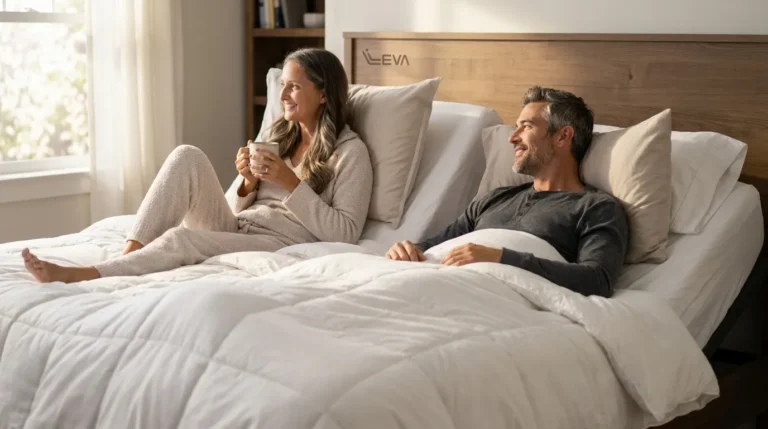
Split adjustable bases with silent, independent head-elevation technology solve the problem at the system level. The snorer’s airway is supported passively and automatically, the partner’s side remains undisturbed, and both partners stay in the same bed. Leva Sleep’s anti-snore mode, launching in spring 2026, will add real-time detection and micro-adjustment to this framework, creating one of the most integrated bed-based anti-snore solutions available to Canadian couples in Ontario and Alberta.