
Written by: Matthew Timmins, Founder and Managing Director, Leva Sleep | Last updated: July 18, 2026
Key Takeaways
- The 20-minute rule retrains your brain to link bed with sleep by leaving the room if you are still awake after 20 minutes.
- Standard sleep advice often fails couples because it ignores snoring, temperature conflicts, and mismatched firmness preferences in shared beds.
- The 10-3-2-1-0 rule gives a simple countdown for caffeine, food, work, screens, and snoozing that protects sleep quality.
- Consistent wake times, morning light, early caffeine cutoffs, and screen-free wind-downs are daily habits that support both partners.
- Leva Sleep offers split adjustable bed packages that address snoring, temperature, and positioning issues for couples. Explore configurations for your needs.
Why Generic Sleep Tips Fail Couples
A 2025 AASM survey found that 31% of U.S. adults have tried sleeping in a separate bed or room to accommodate a partner, rising to 39% among adults aged 35–44. The reasons are predictable. One partner snores, another runs hot, one needs a firm surface while the other prefers soft. Standard sleep hygiene articles address a single sleeper in a controlled environment. They rarely account for the reality that 75% of people with snoring partners report it impacts their sleep quality, or that many couples have mismatched firmness preferences. For Canadian couples in Ontario and Alberta who have already tried earplugs and separate duvets, a more structured approach and sometimes a hardware upgrade becomes necessary.
Browse split adjustable base packages designed specifically for couples with differing sleep needs.
How the 10-3-2-1-0 Rule Supports Better Sleep
The 10-3-2-1-0 rule, popularized by Canadian fitness coach Craig Ballantyne around 2016, turns established sleep-hygiene evidence into a simple countdown. Each number represents a cutoff before bedtime.
- 10 hours: No more caffeine. A study in the Journal of Clinical Sleep Medicine found that caffeine consumed six hours before bed can reduce total sleep time by blocking adenosine receptors. The 10-hour window gives slow metabolizers extra protection.
- 3 hours: No food or alcohol. Mayo Clinic advises avoiding heavy meals within a couple of hours of bedtime, and avoiding alcohol for at least 3 hours before bed prevents REM suppression and adenosine rebound that fragments sleep in the second half of the night.
- 2 hours: No work. Finishing mentally demanding tasks two hours before bed allows cortisol to drop before lights-out.
- 1 hour: No screens. HelpGuide recommends avoiding bright screens within 1–2 hours of bedtime because blue light suppresses melatonin production.
- 0: No snooze button. Consistent wake time often matters more than a perfect zero-snooze record. However, hitting snooze interrupts a new sleep cycle and causes prolonged grogginess.
Canadian couples who apply this rule together by aligning caffeine cutoffs and screen-free wind-downs remove many individual sleep disruptors before tackling shared-bedroom conflicts.
Daily Habits That Protect Shared Sleep
- Set a consistent wake time. The single most powerful sleep hygiene habit is a consistent wake time every day, including weekends, because it anchors the entire circadian rhythm. Both partners benefit when wake times stay within 30 minutes of each other.
- Get morning light within 30 minutes of waking. Bright light exposure within 30 minutes of waking helps set the circadian rhythm and times melatonin release 12–14 hours later. About ten minutes outdoors usually works well.
- Cut caffeine by early afternoon. Caffeine has a half-life of 5–7 hours in most adults, and up to 10 hours for slow metabolizers, so cutting all sources after 2 PM is a high-impact habit. This includes tea, energy drinks, and dark chocolate.
- Stop screens 60 minutes before bed. Blue light from digital devices disrupts circadian rhythms, especially within an hour of turning in. Replace scrolling with a printed book. University of Sussex research found that six minutes of reading reduced stress levels by 68%.
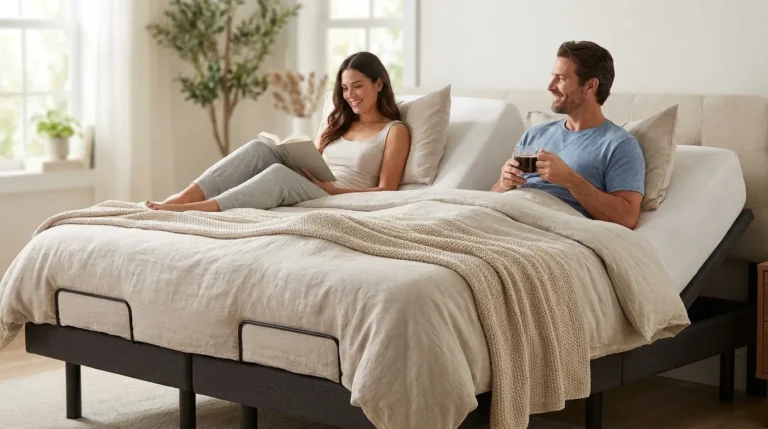
- Build a shared wind-down routine. NCOA recommends a quiet, calming bedtime routine that may include reading, soft music, meditation, or journaling. Couples who wind down together reinforce each other’s sleep schedule.
- Keep the bedroom cool. Most people sleep best in a cool room around 65°F (18°C) with good ventilation. Many couples disagree here, which the troubleshooting section below addresses.
Why Your Shared Sleep Feels So Restless
For most couples, three issues usually drive poor sleep at the same time. First comes snoring. Partners of snorers lose at least one hour of sleep per night, accumulating nearly 15 full days of lost sleep annually. Second comes temperature conflict. One partner sleeps hot while the other feels cold, so a single thermostat setting becomes a constant compromise. Third comes differing positions and firmness needs. Sleep issues can cause some couples to question their relationship, and firmness disagreement often plays a major role.
Snoring prevalence increases steadily with age, and approximately 40–50% of adults in their 60s snore, which makes this a pressing issue for Canadian couples aged 35–70. Adults age 65 and over are at high risk for developing sleep apnea, which can lead to chronic fatigue, heart disease, and Type 2 diabetes. If snoring appears with gasping sounds or daytime sleepiness, a physician referral for a sleep study should come before any bedroom changes.
Couples Sleep Troubleshooting
Once medical causes have been ruled out or addressed, many couples still face sleep disruption from snoring, temperature conflicts, and positioning needs. Basic sleep hygiene resolves many individual sleep problems but has clear limits in a shared bedroom. The following sections outline where standard advice ends and where adjustable-base technology begins.
Snoring and sleep apnea: Side sleeping reduces snoring significantly. Research indicates side sleeping can reduce snoring compared to back sleeping. When positional changes alone do not help enough, head-of-bed elevation has been shown to reduce the apnea-hypopnea index in patients with positional obstructive sleep apnea. Leva Sleep’s adjustable bases gently elevate the head to open airways. Whisper-quiet German motors keep the adjustment itself from becoming a new disruption.
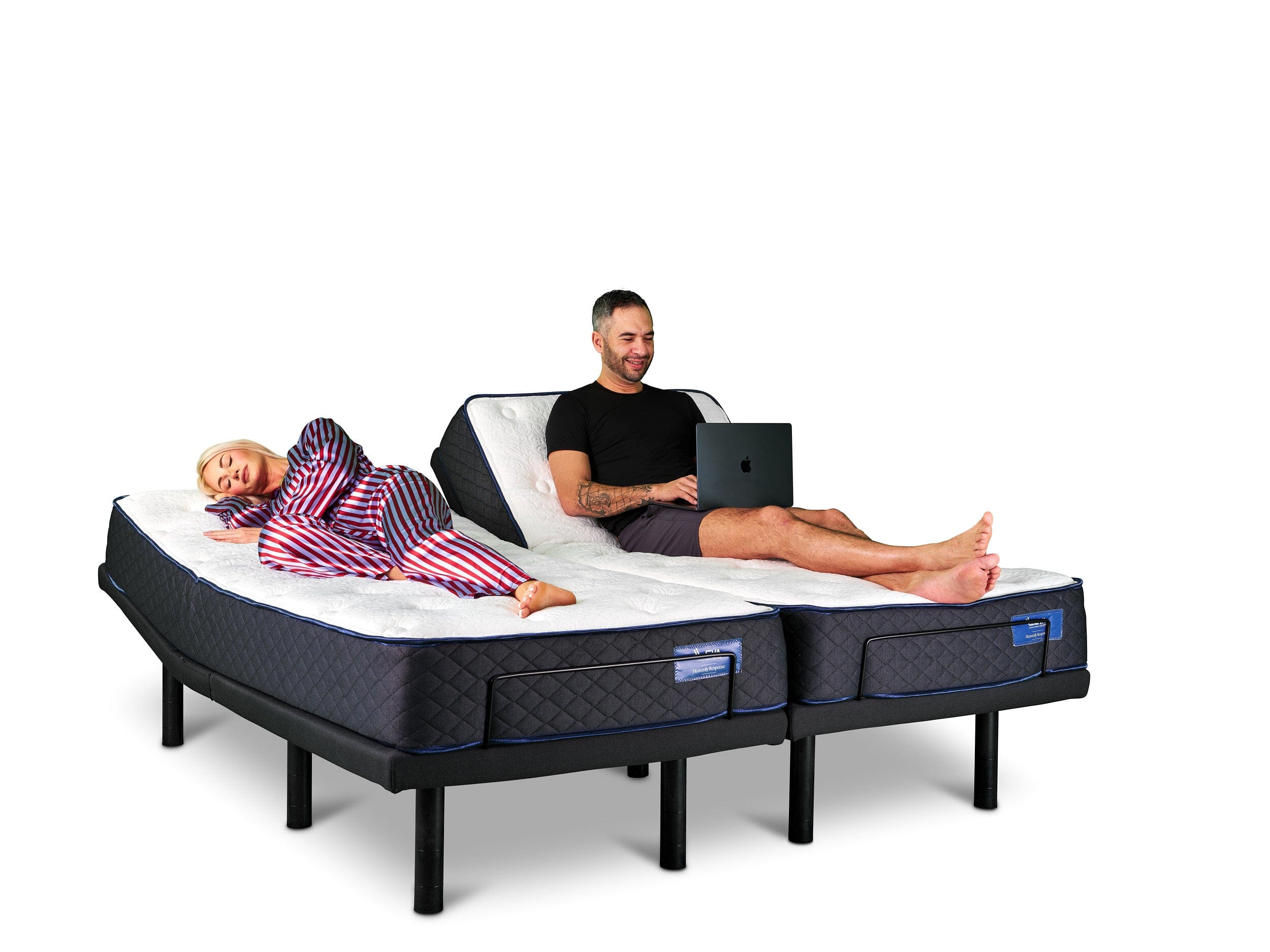
Temperature conflicts: When one partner sleeps hot and the other cold, a split adjustable base paired with Leva’s heating and cooling pad system lets each side maintain an independent temperature. This setup removes the nightly thermostat negotiation.
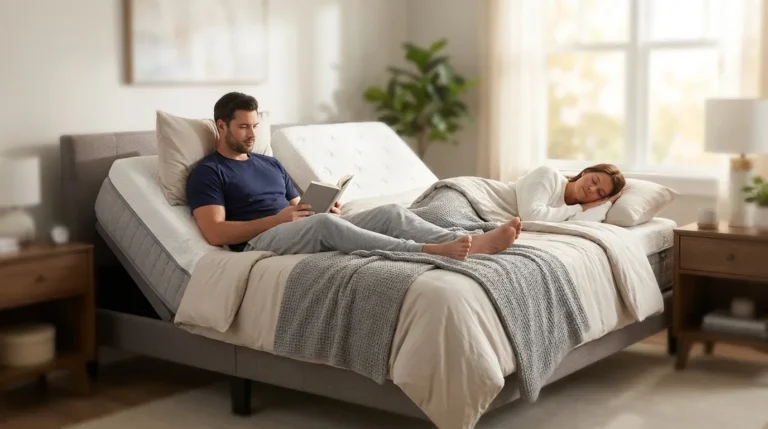
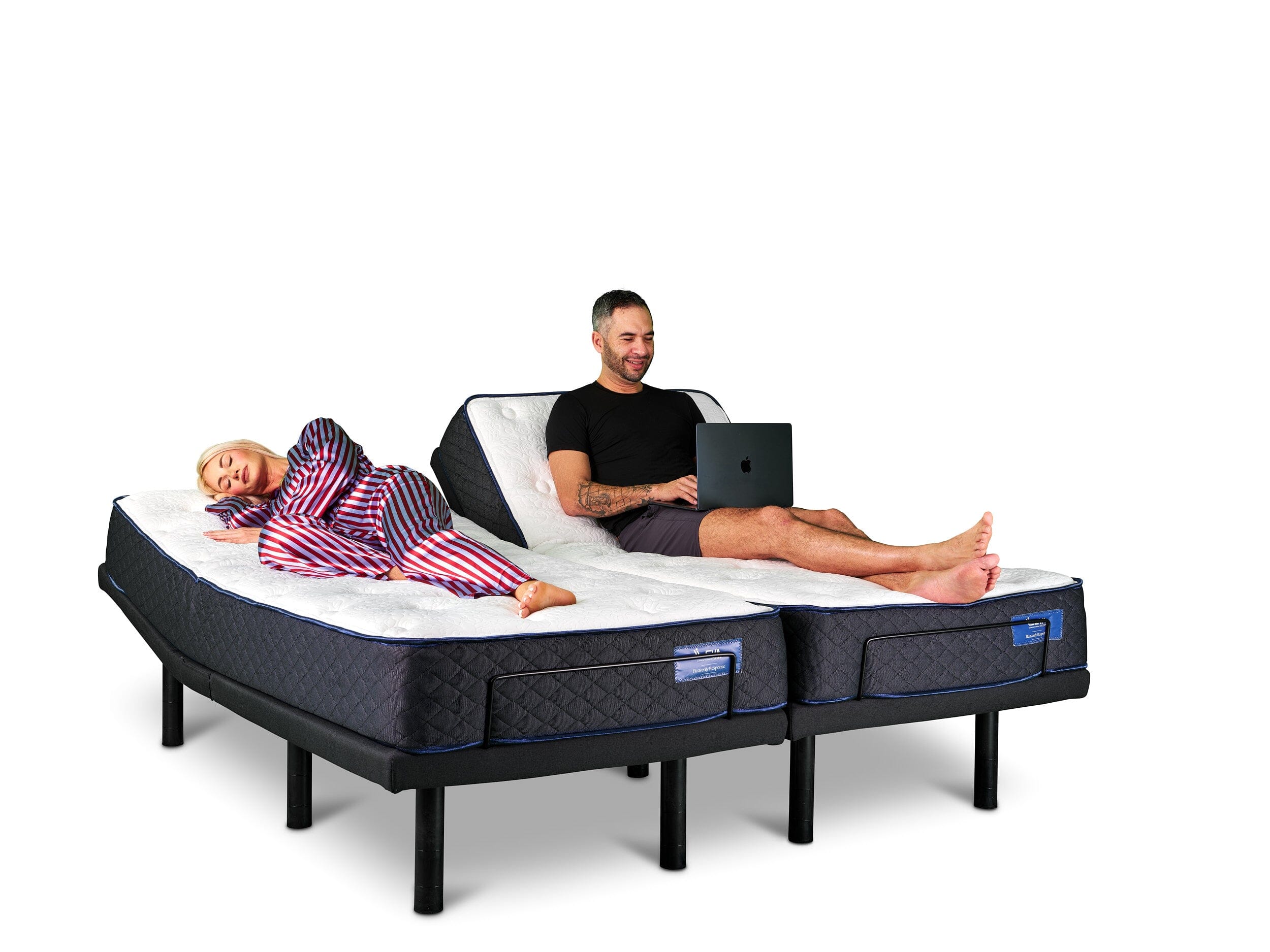
Hip and knee pain: Adjustable beds allow elevation of the head or feet, enabling slightly bent positions that many arthritis patients find most comfortable. NCOA recommends adjustable beds for older adults experiencing pain or sleep apnea. With Leva’s Split Queen and Split King configurations, one partner can elevate the foot of the bed for knee relief while the other remains flat. Each side adjusts independently through app control without disturbing the other.
Leva Sleep offers 15–20 adjustable models compared to the 3–5 found at general mattress retailers, at 30–50% less than comparable luxury competitors, through a vertically integrated, direct-to-consumer model that removes middleman markups.
Daily Sleep Quality Checklist
- Set a consistent wake time for both partners, within 30 minutes every day including weekends.
- Get 10 minutes of outdoor morning light within 30 minutes of waking.
- Cut all caffeine sources by 2 PM to support the 10-3-2-1-0 rule.
- Finish the last meal or alcohol at least 3 hours before bed.
- Stop all screens 60 minutes before bed and replace them with reading or soft music.
- Maintain the recommended bedroom temperature or use independent temperature controls if preferences differ.
- Apply the 20-minute rule. If sleep has not arrived within 20 minutes, leave the bedroom and return only when drowsy.
Success Metrics: Signs Your Sleep Is Improving
You can measure progress without clinical equipment. Both partners can track time to fall asleep, aiming for under 20 minutes. They can also track the number of nighttime awakenings and how alert they feel within 30 minutes of waking. People who use sleep trackers are more likely to report waking up feeling very alert compared to non-users. Leva Sleep’s app-controlled bases include AI-powered sleep tracking that logs position data and sleep continuity, giving couples an objective baseline within the first week. If morning pain has decreased, nighttime awakenings have dropped, and neither partner retreats to the couch, the system delivers meaningful results.
Find the split base configuration that fits your bedroom size and sleep needs.
Advanced Setup and Bedding Details
If you invest in an adjustable base but continue using standard bedding, you will likely see fitted sheets pop off during elevation and duvets bunch awkwardly. Leva Sleep designs all accessories specifically for adjustable bases. The line includes fitted sheets with deep pockets and extra elastic, duvets with clips that maintain separation when each side sits at a different angle, and remote pockets integrated into the base design.
The average lifespan of a mattress is 8–10 years. Couples replacing an aging mattress have an opportunity to move to a system that accommodates future needs such as post-surgical recovery, changing pain patterns, or a sleep apnea diagnosis without replacing the entire setup. Leva Sleep’s vertical integration means the company designs, assembles, and delivers its systems locally in Ontario and Alberta. White-glove delivery includes trained professionals who handle old bed removal, full assembly, leg-height adjustment, a product tutorial, and real-time customization before they leave. Leva also partners with brands including Tempur-Pedic, Simmons, Beautyrest, Serta, and Kingsdown, pairing partner mattresses with Leva’s own adjustable bases for couples who have a specific mattress preference.
Explore split queen and split king packages with white-glove delivery across Ontario and Alberta.
Frequently Asked Questions
Do split adjustable bases work with our existing mattress?
Compatibility depends on the mattress type and age. Adjustable bases require a flexible mattress. All-foam and hybrid pocket-coil mattresses are generally compatible, while traditional innerspring mattresses with rigid border wires are not. Leva Sleep’s team assesses compatibility during the consultation process. If your current mattress is not suitable, Leva offers its own all-foam and hybrid options designed to flex with the base, as well as mattresses from partner brands including Tempur-Pedic, Simmons, and Beautyrest.
What is a Split Queen, and why is it different from a Split King?
A Split Queen consists of two 30-inch mattresses side by side on independent adjustable bases within a queen-sized frame. Each partner receives full independent control of elevation, massage, and temperature in a more space-conscious footprint than a Split King. Leva Sleep is one of the few Canadian providers offering Split Queen configurations built to customer specifications, while most retailers carry only Split King. The Split Queen suits couples in smaller bedrooms who want independent adjustment without moving to a king-sized frame.
Does Leva Sleep deliver and set up in my area?
Leva Sleep currently offers white-glove delivery and setup in Ontario and Alberta. The service includes delivery to the bedroom, full assembly, leg-height adjustment for optimal comfort, a product tutorial, and removal of the old bed through donation or recycling. Scheduling is handled directly with Leva’s in-house team rather than a third-party courier, which allows for real-time adjustments on delivery day.
Can an adjustable base replace a CPAP machine for sleep apnea?
No. An adjustable base is not a medical device and cannot replace CPAP therapy for diagnosed obstructive sleep apnea. Head elevation on an adjustable base can reduce snoring and may reduce the frequency of apnea events in some positional cases, but anyone with a sleep apnea diagnosis should follow their physician’s or sleep specialist’s treatment plan. Leva Sleep’s anti-snore mode, arriving spring 2026, is designed to reduce snoring disruption for the affected partner and their bed partner. It functions as a comfort feature, not a clinical treatment. Some sleep apnea clinics do refer patients to Leva for positional support as a complement to prescribed therapy.
How much does a Leva Sleep split adjustable base cost compared to competitors?
Leva Sleep’s direct-to-consumer, vertically integrated model delivers the pricing advantage mentioned earlier, so split adjustable base packages cost significantly less than comparable luxury competitors such as Tempur-Pedic’s adjustable systems. Because Leva designs and assembles its bases locally and sells directly without retail markup, the savings go to the customer rather than a distribution chain. Pricing varies by model and configuration, and the full range of packages appears on the Leva Sleep collections page.