Written by: Matthew Timmins, Founder and Managing Director, Leva Sleep | Last updated: July 19, 2026
Key Takeaways for Snoring Couples
- Split adjustable beds let each partner control head elevation independently, so couples can share a bed without masks or separate rooms.
- Flat beds, single-zone bases, MADs, positional devices, and nasal strips often leave one partner uncomfortable or introduce new issues.
- Clinical evidence shows 30–60% snoring reduction when the head is elevated 7–15 degrees, which quality split adjustable systems can maintain all night.
- Key buying factors include independent controls, quiet motors, mattress compatibility, temperature control, and dependable Canadian delivery and service.
- Leva Sleep offers Split King and Split Queen configurations with white-glove delivery in Ontario and Alberta. Explore split adjustable bed packages to find a solution tailored for couples.
The Problem: Snoring, Sleep Divorce, and Strain on Shared Sleep
Habitual snoring is common among Canadian adults and often strains relationships. A significant proportion of couples affected by obstructive sleep apnea (OSA) sleep in different rooms, and many adults report sleeping in a separate location on occasion. ResMed’s 2025 Global Sleep Survey of 30,026 people found that 18% of couples reported sleeping in separate rooms due to snoring and restlessness.
Bed partners of untreated OSA patients lose approximately one hour of sleep per night, and snoring negatively affects the well-being of 77% of individuals sharing a bed with someone who snores. Snoring associated with OSA can be loud, comparable to heavy traffic or a food blender.
Snoring can signal obstructive sleep apnea, which carries serious cardiovascular risks. Anyone who has witnessed breathing pauses, experiences excessive daytime sleepiness, or wakes with frequent morning headaches should seek a formal sleep study before relying on any non-CPAP intervention. In Ontario, sleep studies are often covered by OHIP with a referral.
Why Common Snoring Fixes Fail Couples
Most familiar workarounds focus on the snorer and ignore the second partner. In a shared bed, each option brings specific trade-offs.
- Traditional flat beds: Provide no positional adjustment. The snorer must stack pillows, which flex the neck forward and can worsen snoring instead of easing it.
- Basic adjustable bases (single-zone): Elevating a shared single-zone base raises both partners at once. The non-snoring partner often ends up uncomfortable or wakes during adjustments.
- Mouthguards and MADs: Custom-fitted MADs significantly reduce snoring frequency and partner-reported severity, but they help only the snorer and can cause jaw soreness and discomfort. Over-the-counter versions usually fit poorly and work less reliably.
- Positional therapy devices: Neck-worn vibrotactile devices reduced AHI by 34% relative to sham in a 2024 Thorax RCT, but daytime sleepiness results were inconsistent, and some insurers classify positional therapy devices as experimental because long-term evidence remains limited.
- Nasal dilators and strips: Nasal dilators produce no meaningful improvement in apnea-hypopnea index and are not a treatment for OSA. They help only when snoring starts in the nasal passages, not the throat.
- Separate rooms: Remove snoring noise for the non-snoring partner but end shared sleep. Many couples then notice declines in relationship quality and intimacy.
The Shared-Bed Solution: Split Adjustable Sleep Systems
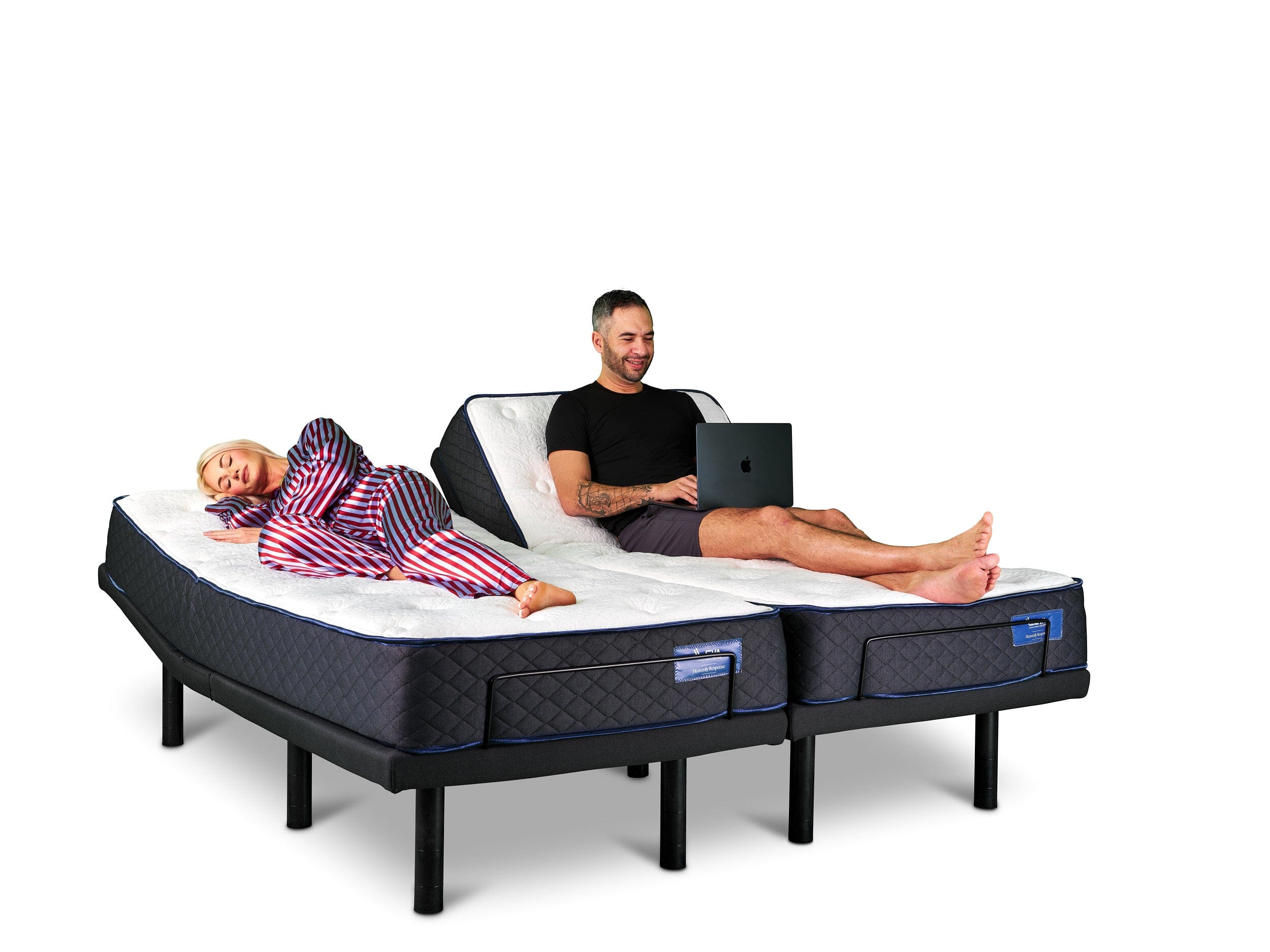
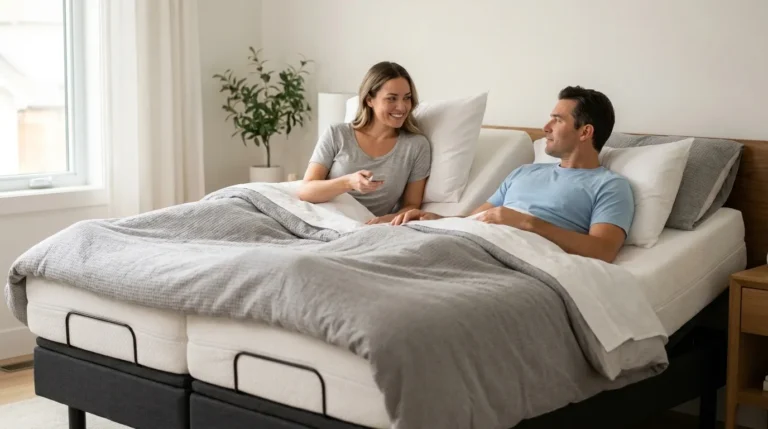
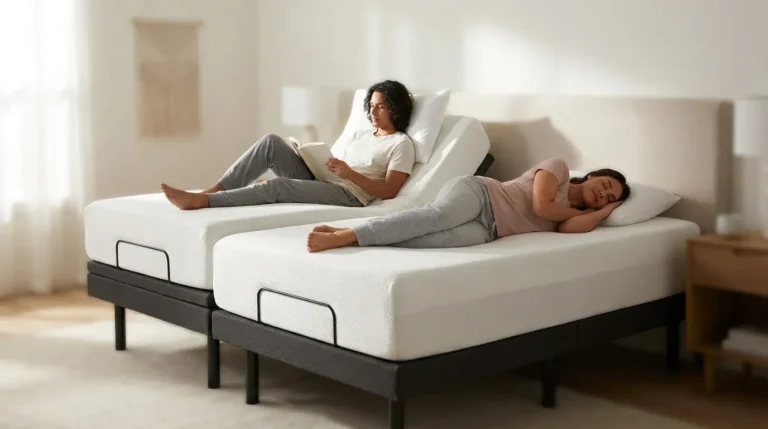
Split adjustable sleep systems give both partners control while staying in the same bed. Each side of the base operates independently, so the snoring partner can elevate their head to the clinically supported 7–15 degree range while the other partner stays flat or chooses a different position. Split king adjustable frames enable independent head-and-foot tilt on each Twin XL side, with motor noise isolated so it does not transfer across the frame. Couples avoid masks, separate rooms, and one-sided compromises.
Leva Sleep designs and assembles split adjustable systems, including a unique Split Queen configuration, specifically for Canadian couples in Ontario and Alberta. White-glove in-home delivery and setup are available as an added service.
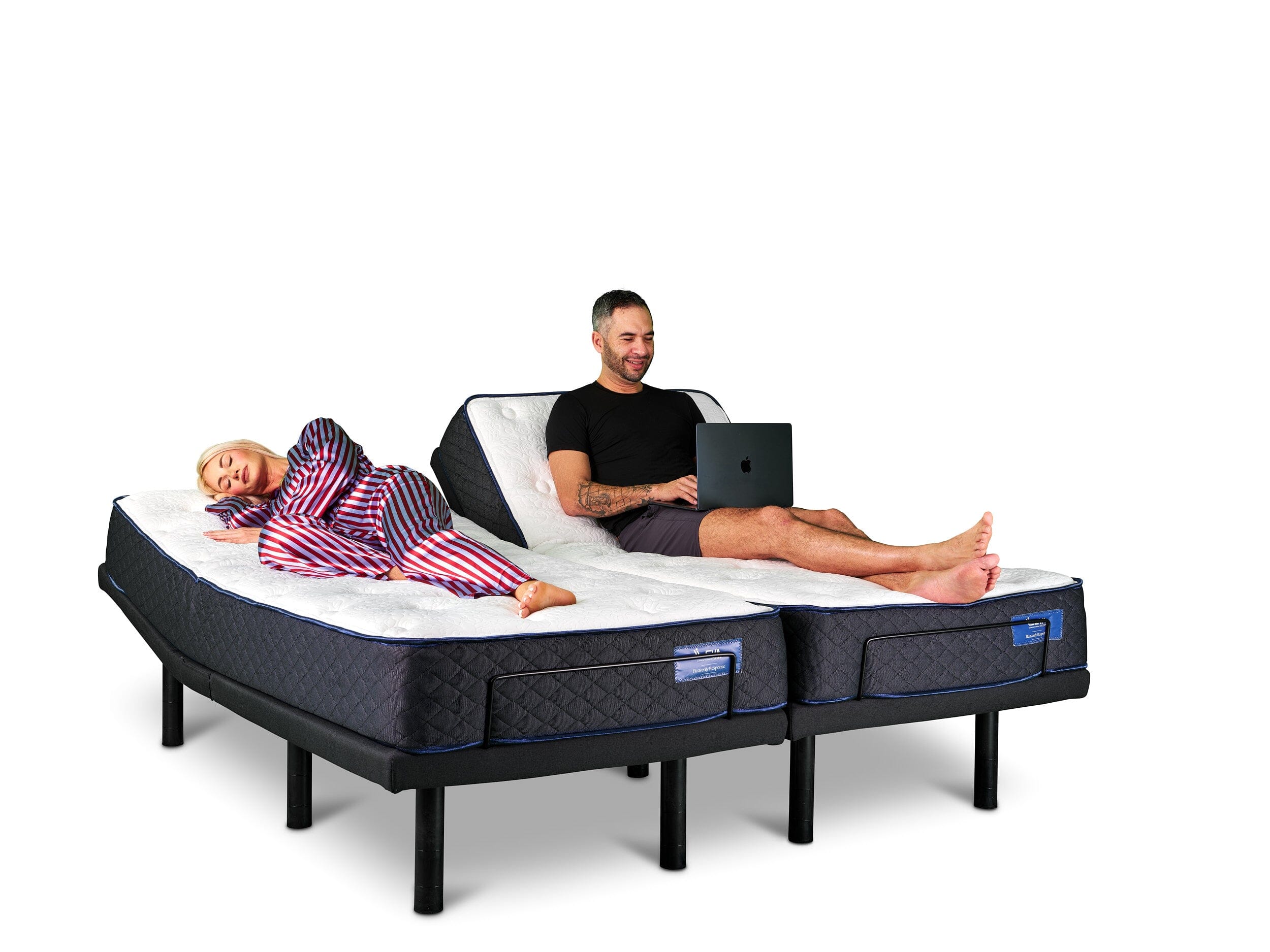
Browse Leva Sleep’s split configurations and pricing
How to Evaluate Split Adjustable Systems Before You Buy
Split adjustable beds vary widely in motor quality, control options, and long-term reliability. Couples can use the following criteria to choose a system that reduces snoring without creating new frustrations.
Independent Left/Right Controls That Truly Separate Movement
Each side of the base should move on its own. Confirm that head elevation, foot elevation, massage, and any anti-snore preset can differ for each partner, with no mechanical linkage between sides. Leva Sleep’s split configurations, available in both Split King and Split Queen, include app-based Bluetooth controls so each partner can save custom positions.
Head Elevation and Responsive Anti-Snore Features
Clinical sleep-medicine studies consistently show snoring reduction of 30–60% at a head elevation angle of 7–15 degrees. The anti-snore preset on quality bases uses a gentle 12-degree head elevation that opens the airway without lifting the torso enough to cause sliding, a frequent problem with wedge pillows. Leva Sleep’s anti-snore mode, available in spring 2026 on select models, detects snoring and makes small automatic adjustments to the snoring partner’s head position.
Whisper-Quiet Motors for Nighttime Adjustments
Motor noise often frustrates owners of older or entry-level adjustable bases. Review decibel ratings and look for verified owner reviews that mention nighttime adjustments. Leva Sleep uses whisper-quiet German motors designed to avoid waking the partner who is not moving.
Mattress and Bedding That Support an Open Airway
A mattress that sags in the centre pulls the body into a hammock shape that can close the airway even on the side. A firm, supportive mattress keeps the spine level and the airway more open. Leva Sleep designs all-foam and hybrid pocket-coil mattresses specifically for adjustable bases, and its bedding accessories, including fitted sheets with deep pockets and extra elastic, are built to stay in place during elevation.
Per-Side Temperature Control for Different Sleep Preferences
Couples with different temperature needs sleep better when each side can run warmer or cooler. Leva Sleep integrates a heating and cooling pad into its sleep system, allowing independent temperature settings for each partner.
White-Glove Canadian Delivery and Reliable Service
Professional setup helps ensure correct leg height, frame alignment, and app pairing. The white-glove service mentioned earlier includes bedroom delivery, full assembly, old-bed removal, and a product tutorial so both partners understand the controls before their first night. With more than eight years in business and over 25,000 customers, Leva Sleep provides ongoing Canadian service support instead of routing issues through overseas call centres.
Model Range and Specialist Guidance for Couples
General mattress retailers usually stock only a few adjustable base models. Leva Sleep offers 15–20 models, so couples can match snoring severity, firmness preference, temperature needs, and budget more precisely.
Real-World Outcomes for Canadian Couples Using Split Systems
Couples who move from a flat bed or single-zone adjustable base to a split system often describe three main improvements. First, the snoring partner’s head elevation, maintained all night without pillow drift, provides the 30–60% snoring reduction documented earlier with reliability that wedge pillows cannot match. Second, the non-snoring partner keeps full control of their own side, which reduces resentment when one partner’s solution previously disrupted the other. Third, couples who had moved to separate rooms frequently return to shared sleep and notice better connection and intimacy.
For couples where the snoring partner has mild positional OSA, head-of-bed elevation of about 20–30 degrees has reduced AHI by up to 45% in patients with positional obstructive sleep apnea. This approach supports, but does not replace, a physician’s treatment plan. Some sleep apnea clinics refer patients to Leva Sleep’s adjustable systems for this reason.
Leva Sleep’s vertically integrated, direct-to-consumer model, which combines local design and assembly with international manufacturing, delivers luxury-specification adjustable bases at 30–50% less than comparable competitors such as Tempur-Pedic’s Ergo line. These savings do not come at the expense of motor quality, app features, or mattress engineering.
Side-by-Side Comparison of Non-CPAP Options
The table below compares non-CPAP options on three points that matter most to couples: impact on both partners, strength of clinical evidence, and long-term cost.
| Option | Couple Impact | Evidence Level | Ongoing Cost (CAD) |
|---|---|---|---|
| Split adjustable base with anti-snore elevation | Both partners adjust independently, shared bed preserved | 30–60% snoring reduction at 7–15° elevation in clinical sleep-medicine studies | $1,000–$2,500+ per base, no consumables |
| Custom mandibular advancement device (MAD) | Snorer only, partner unaffected but snoring may persist | Significantly reduces snoring frequency and partner-reported severity per 2019 Cochrane review | Replacement every 3–5 years |
| Positional therapy device (vibrotactile) | Snorer only, vibration may disturb partner | 34% relative AHI reduction in 2024 Thorax RCT, daytime sleepiness outcomes inconsistent | Battery or subscription costs vary |
| Nasal dilators / strips | Snorer only, no effect on partner’s sleep environment | Effective only for nasal-obstruction-origin snoring, no meaningful AHI improvement per 2016 Camacho meta-analysis | $10–$40 per box or device, recurring purchase |
Frequently Asked Questions
Can a split adjustable bed replace CPAP therapy for sleep apnea?
No. CPAP remains the gold-standard treatment for moderate-to-severe obstructive sleep apnea and should not be stopped without a physician’s guidance. Head elevation on an adjustable base can reduce snoring intensity and, in mild positional OSA, may lower apnea-hypopnea index as a complementary measure. Anyone with suspected or confirmed OSA should complete a sleep study and follow their physician’s treatment plan. Leva Sleep’s adjustable systems support comfort and positional therapy but do not replace medical treatment.
Is a Split Queen adjustable bed available in Canada, and what size is it?
Split Queen adjustable beds remain uncommon in Canada, but Leva Sleep offers this configuration and builds it to customer specifications. A Split Queen uses two Twin-sized bases placed side by side within a Queen-sized frame, giving each partner independent elevation and massage controls in a smaller footprint than a Split King. This layout suits couples in compact bedrooms or those who prefer a Queen-sized surface. Leva Sleep can advise on mattress pairing and bedding compatibility for this setup.
Does Leva Sleep deliver and set up adjustable beds across Canada?
Leva Sleep’s white-glove delivery and setup service currently operates in Ontario and Alberta. The service includes delivery to the bedroom, full assembly, leg-height adjustment, old-bed removal, and a product tutorial so both partners understand the controls before their first night. Customers outside these provinces can contact Leva Sleep directly to discuss available options.
What mattress works best with a split adjustable base for snoring?
A mattress on an adjustable base must flex repeatedly without damaging its internal structure. All-foam and hybrid pocket-coil mattresses usually perform best. Leva Sleep designs both types specifically for its adjustable bases so the mattress maintains support at the elevation angles used for snoring reduction. Traditional innerspring mattresses with interconnected coils generally do not suit adjustable frames. Leva Sleep also designs fitted sheets with deep pockets and extra elastic to prevent slippage during elevation.
How much does a split adjustable bed system cost compared to other non-CPAP options?
A split adjustable base system from Leva Sleep costs more upfront than most single-device solutions, yet the five-year total cost often compares favourably. Custom MADs require replacement every three to five years. Positional therapy devices involve ongoing battery or subscription costs. Nasal dilators seem inexpensive but add up with repeated purchases. A split adjustable base has no consumables, serves both partners at once, and helps with issues beyond snoring, including acid reflux, back pain, and temperature control. Leva Sleep’s direct-to-consumer model prices its systems at 30–50% less than comparable luxury competitors, which brings this category within reach for more Canadian couples.
Conclusion: Choosing a Snoring Solution That Works for Both Partners
For Canadian couples comparing non-CPAP snoring solutions, partner compatibility and long-term cost matter most. Nasal dilators and positional devices focus on the snorer alone and show limited evidence beyond mild nasal-origin snoring. Custom MADs help many snorers but leave the partner’s sleep environment unchanged. Split adjustable sleep systems stand out because they give both partners independent control in the same bed, align with clinical evidence for head-elevation-based snoring reduction, and are available in Canada with specialist support and local assembly.
Leva Sleep has spent more than eight years and over $50M in sales refining split adjustable systems for couples with different sleep needs. With 15–20 models, a unique Split Queen option, whisper-quiet German motors, anti-snore mode arriving in spring 2026, and white-glove delivery in Ontario and Alberta, it operates as a comprehensive adjustable sleep specialist for Canadian couples.