
Written by: Matthew Timmins, Founder and Managing Director, Leva Sleep | Last updated: June 28, 2026
Key Takeaways for Canadian Couples
- Traditional flat beds and basic adjustable bases rarely meet both partners’ needs for snoring relief, temperature, and pain, which often pushes couples into separate beds.
- Zero-gravity positioning elevates the head and knees together to reduce spinal pressure, improve airway alignment, and ease hip or back pain.
- Split Queen and Split King setups let each partner adjust their side independently with quiet motors, app control, and personal presets.
- Leva Sleep pairs flexible mattresses with lumbar support, temperature control, and anti-snore features tailored for Canadian couples.
- Explore split adjustable bed packages at Leva Sleep’s adjustable bed collection with local Canadian support and direct-to-consumer pricing.
How a Zero Gravity Bed Supports Your Body
A zero gravity bed uses an adjustable base that raises the head and foot sections together to create a neutral-body posture. NASA research inspired this position, which helps astronauts distribute launch forces more evenly across the body. In a bedroom, this translates to the torso resting at about 120 degrees relative to the thighs, with the knees slightly above the heart.
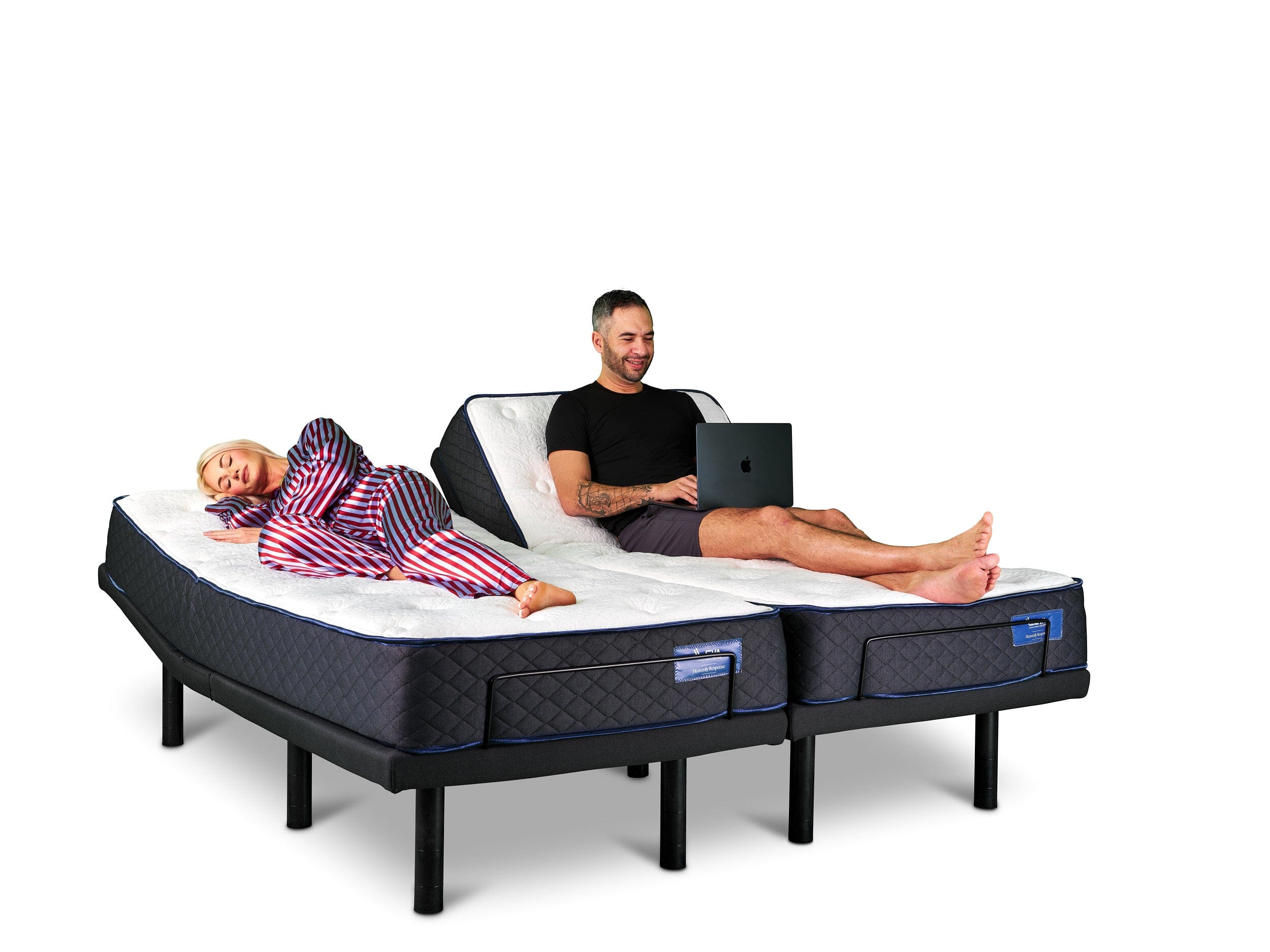
For couples with different sleep needs, this position becomes even more helpful when used on a split configuration. In a Split Queen or Split King, the mattress divides into two independent halves, each on its own motorized base. Each partner controls their side through an app or remote, adjusting head and foot elevation, lumbar support, and massage without moving the other side. Leva Sleep uses whisper-quiet German motors, so late-night adjustments stay discreet.
Nightly Zero Gravity: What to Expect
Many buyers consider zero-gravity positioning as a nightly setup rather than an occasional feature. The following points outline common benefits and considerations, not medical guarantees.
- Pressure relief: Distributing body weight across a larger surface area reduces pressure on hips, shoulders, and the lower back compared with lying flat.
- Airway positioning: Gentle head elevation shifts the jaw and soft palate forward, which can lessen airway restriction linked to snoring and mild sleep apnea.
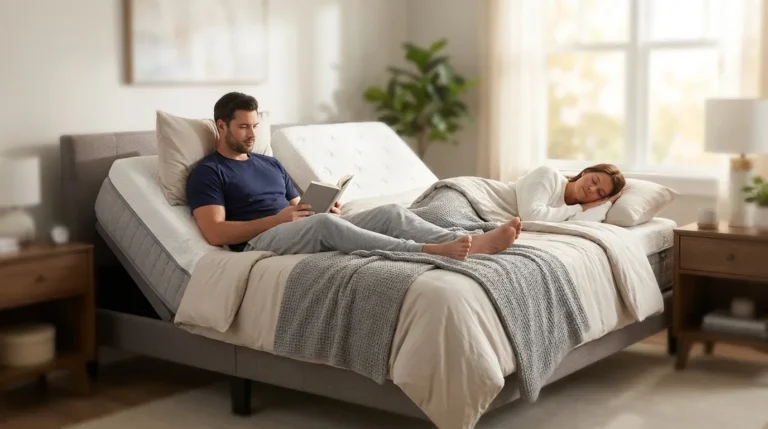
- Independent control: On a split base, one partner can stay flat while the other uses zero gravity, so neither person has to compromise.
- Quiet operation: Low-noise motors allow mid-night position changes without waking a sleeping partner.
- Temperature regulation: Leva Sleep’s heating and cooling pad connects with the base so each side can choose a different sleep temperature, easing one of the most common couple conflicts.
- Mattress compatibility: Zero-gravity positioning works best with a flexible mattress, such as all-foam or hybrid pocket coil, that bends at the head and foot zones without damage. Leva designs its mattresses with this articulation in mind.
Some people notice neck stiffness when they keep the head elevated for long periods without adjusting pillow height. To avoid this issue, test pillow tilt settings and pillow thickness before settling on a nightly angle.
Zero Gravity Bed Support for Back Pain
The lumbar spine carries continuous compressive load in a flat position, especially for back sleepers. Zero-gravity positioning eases this load by tilting the pelvis slightly and allowing the natural lumbar curve to decompress. Leva Sleep’s higher-end bases include a dedicated lumbar motor that inflates and deflates a lumbar pad separately from head and foot elevation. This design lets users fine-tune lower back support to their own anatomy instead of relying on a fixed foam shape.
Zero gravity can also help with lower-body discomfort. For buyers managing hip or knee pain, foot elevation reduces pressure on the knee joint and supports circulation in the legs. When you compare adjustable bases for back pain, confirm that the lumbar zone adjusts independently, that the mattress has no rigid internal frame that resists bending, and that the motor range covers the elevation angles your clinician recommends.
Side Sleeping in a Zero Gravity Position
Most people associate zero gravity with back sleeping, yet side sleepers can also benefit with the right setup. Elevating the head section by 15 to 30 degrees keeps a side sleeper’s upper airway more open than a flat position, which can reduce snoring frequency.
Side sleepers usually need two key adjustments. First, pillow height should decrease as head elevation increases. A pillow designed for flat sleeping can push the neck sideways when the head section rises, which creates tension instead of relief. Leva Sleep’s pillow tilt motor lets you adjust the pillow zone separately from the main head section to support a neutral neck position.
Second, shoulder pressure often increases when the upper body rises without a softer shoulder zone. A hybrid pocket coil mattress with a gentler shoulder area usually handles this better than a uniformly firm foam mattress. Leva Sleep’s hybrid options include shoulder zoning for this specific use.
Zero Gravity Beds in Canada: Pricing and Delivery
In Canada, queen-size adjustable bases typically range from about $700 for basic single-motor units to $2,500 or more for fully featured split systems with app control, lumbar support, and massage. Leva Sleep’s direct-to-consumer, vertically integrated model, with design and assembly in Ontario and Alberta and no retail middlemen, positions its systems at 30 to 50 percent below comparable luxury competitors at similar feature levels.
Mattress flexibility plays a central role in zero-gravity performance. The mattress must bend at the head and foot zones without cracking or delaminating. All-foam and hybrid pocket coil designs usually meet this requirement, while traditional innerspring mattresses with rigid border wires typically do not.
Bedding must also move with the base. Deep-pocket fitted sheets of at least 15 inches with strong elastic help them stay in place when the base articulates. Because standard bedding often slips on adjustable bases, Leva Sleep designs its own accessories, including sheets, duvets with clips, and mattress protectors, so the full system works together.
White-glove delivery is available for a fee in Ontario and Alberta. Leva’s delivery team brings the system to the bedroom, assembles the base, sets leg height, removes the old bed for donation or recycling, and walks you through the controls before leaving.
Best Zero Gravity Setup for Couples
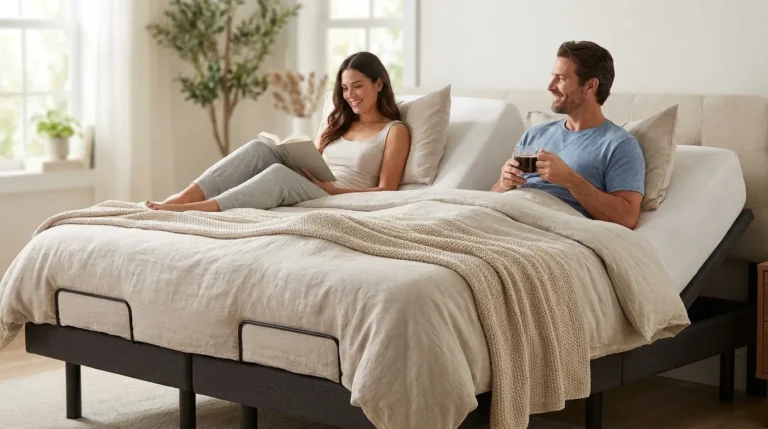
Independent adjustability matters most for couples. A single-base queen, even with zero-gravity presets, moves both partners at once. Split Queen and Split King systems use the split configurations described earlier so each partner can move their side without affecting the other. Leva Sleep is one of the few Canadian suppliers that builds Split Queen systems to order, which helps couples who want independent control in a room that cannot fit a King footprint.
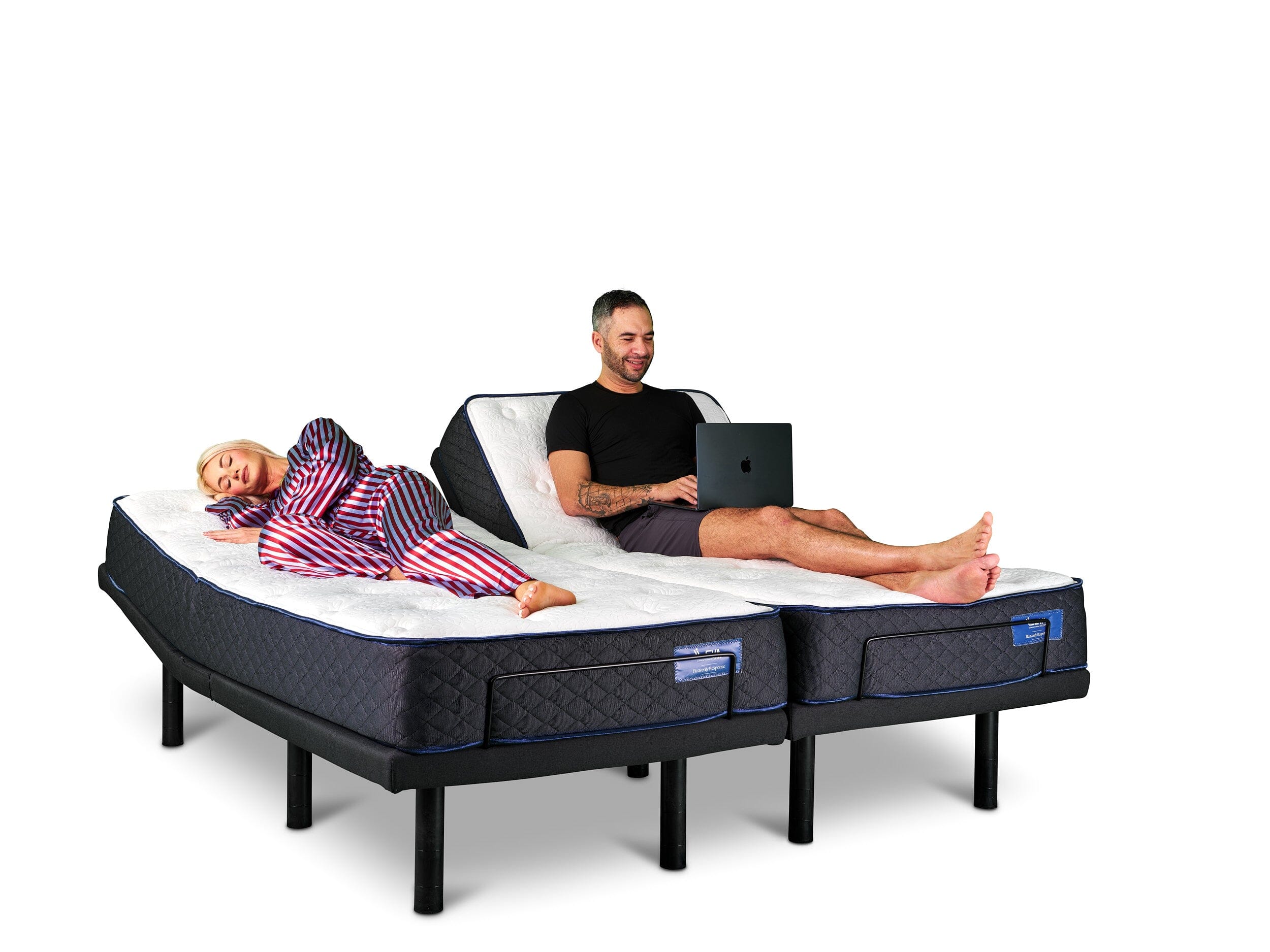
Leva Sleep’s app lets each partner save custom positions, set vibrating alarms that do not wake the other person, and use automatic anti-snore adjustments. The heating and cooling pad adds separate temperature zones on each side.
| Feature | Traditional Flat Bed | Basic Adjustable Base | Leva Sleep Zero-Gravity Split System |
|---|---|---|---|
| Independent partner control | None | Limited (single motor, shared movement) | Full, each side adjusts independently via app |
| Noise level during adjustment | N/A | Audible motor noise common | Whisper-quiet German motors |
| Mattress compatibility | Any mattress | Requires flexible mattress, standard bedding often slips | Leva-designed foam or hybrid mattresses and purpose-built bedding included |
| Delivery and setup | Standard delivery, self-assembly typical | Varies, often self-assembly or basic drop-off | Optional white-glove delivery, assembly, tutorial, and old-bed removal |
Compare split configurations with independent controls to see which setup fits your room and sleep preferences.
Canadian couples who move from flat beds or basic adjustable bases to split zero-gravity systems often report similar outcomes. The snoring partner’s elevation reduces disturbance, the partner with hip or knee pain finds a sustainable position, and both people stay in the same bed. Quieter engineering addresses complaints about loud, jerky motors on basic bases, while Leva’s direct-to-consumer pricing softens concerns about luxury-brand costs.
How to Choose a Zero Gravity Bed: Three Key Checks
Three practical checks help separate systems that truly solve couple sleep issues from those that only help a little.
- Independent adjustability: Confirm that each side of the base runs on its own motor and control system. Ask whether one partner’s movement triggers any motion on the other side.
- Proven mattress compatibility: Verify that the recommended mattress has been tested on that specific base at full elevation. Confirm that the mattress warranty remains valid on an adjustable base.
- Local delivery and support: Check that the supplier has a presence in your province, offers in-home setup, and provides post-purchase support. A complex system that arrives unassembled without guidance undercuts the value of a premium purchase.
Conclusion: Keeping Couples in the Same Bed
Traditional flat beds and single-motor adjustable bases rarely meet two partners’ different needs for elevation, firmness, temperature, and snoring relief. Zero-gravity split systems, especially Split Queen and Split King setups with independent app control, quiet motors, and compatible mattresses, give Canadian couples a realistic way to share a bed without nightly negotiation. Leva Sleep combines this approach with local Ontario and Alberta assembly, direct-to-consumer savings mentioned earlier, and optional white-glove delivery.
Find your ideal split configuration based on your bedroom size and sleep needs.
Frequently Asked Questions
Is it safe to sleep in zero gravity every night?
For most adults, nightly zero-gravity sleep is considered safe and often recommended for lower back pain, hip or knee discomfort, snoring, or mild sleep apnea. The position spreads body weight more evenly than lying flat, which reduces pressure on the lumbar spine and major joints. Most people mainly need to adjust their pillow, since higher head elevation usually calls for a thinner pillow to keep the neck neutral. Side sleepers may also benefit from a mattress with a softer shoulder zone to prevent pressure buildup. Anyone with a specific medical condition should confirm suitable elevation angles with a physician before choosing a long-term position.
What mattress works best with a zero-gravity adjustable base?
A suitable mattress must flex at both the head and foot zones without cracking, delaminating, or voiding its warranty. All-foam and hybrid pocket coil mattresses usually meet this requirement. Traditional innerspring models with rigid border wire frames often do not flex enough and can suffer damage from repeated articulation. Mattress thickness also matters. Heights between 10 and 14 inches tend to perform well, while very thick mattresses can limit elevation range. Leva Sleep designs its foam and hybrid mattresses specifically for its adjustable bases, and Leva mattress warranties remain valid on Leva bases.
What is the difference between a Split Queen and a Split King adjustable bed?
A Split King uses two Twin XL mattresses on two independent bases, for a total width of 76 inches, which matches a standard King. A Split Queen uses two narrower mattresses on two independent bases, totalling 60 inches, which matches a standard Queen. The Split Queen suits couples who want independent adjustability in a room that cannot accommodate a King footprint. Leva Sleep is one of the few Canadian suppliers that builds Split Queen systems to customer specifications. Both configurations let each partner control elevation, massage, lumbar support, and temperature independently.
Can a zero-gravity bed help with snoring without a CPAP machine?
Head elevation shifts the jaw and soft palate slightly forward, which can reduce airway restriction that causes snoring and contributes to mild obstructive sleep apnea. For some people, this positional change meaningfully lowers snoring frequency and intensity. It does not replace CPAP therapy for moderate or severe sleep apnea, and anyone with a diagnosed sleep disorder should follow their physician’s plan. For couples where snoring is the main disturbance rather than a diagnosed apnea condition, head elevation on an adjustable base offers a practical first step. Leva Sleep’s anti-snore mode detects snoring sounds and makes small automatic head adjustments during the night, and some sleep apnea clinics have recommended these elevation features as a complement to positional therapy.
How does Leva Sleep’s pricing compare to other adjustable bed brands in Canada?
Leva Sleep’s direct-to-consumer, vertically integrated model, with local design and assembly in Ontario and Alberta and no retail intermediaries, supports lower pricing than many luxury competitors at similar feature levels. A fully featured Split Queen or Split King adjustable base from a premium brand like Tempur-Pedic typically costs $2,000–$4,600 for the base alone in Canada. Leva Sleep offers comparable functionality at a lower price point while providing 15 to 20 adjustable base models, compared with the 3 to 5 models often found at general mattress retailers, plus optional white-glove delivery and setup in Ontario and Alberta.