Written by: Matthew Timmins, Founder and Managing Director, Leva Sleep | Last updated: June 26, 2026
Key Takeaways for Leg Circulation and Sleep
- Adjustable beds support leg circulation by raising the legs above heart level, which assists venous return and reduces swelling for adults 40–70.
- Traditional flat beds and single-zone adjustable bases rarely provide consistent or independent elevation, so couples often end up uncomfortable or compromising.
- Zero-gravity positioning and split-zone systems allow sustained, personalized elevation that supports venous conditions such as chronic venous insufficiency and restless legs syndrome.
- Elevation therapy benefits venous circulation but does not suit arterial disease such as peripheral arterial disease without medical guidance.
- Explore tailored solutions for independent leg elevation at Leva Sleep to improve nighttime comfort and circulation.
Why Nighttime Leg Circulation Becomes a Problem After 40
Long periods of lying flat allow blood and interstitial fluid to pool in the lower legs, especially in adults over 40 whose venous valve function gradually declines with age. Common symptoms include ankle swelling that worsens through the day, nighttime leg cramps, a heavy or aching feeling in the calves, and the restless, crawling discomfort linked to restless legs syndrome. Prolonged sitting or standing, pregnancy, obesity, varicose veins, and chronic venous insufficiency all increase the likelihood of these symptoms.
These symptoms go beyond simple discomfort. Disrupted sleep from leg pain or swelling can increase cardiovascular and metabolic risk over time. Sudden swelling, swelling in one leg only, or swelling with pain, redness, or warmth requires prompt medical attention to rule out deep vein thrombosis or arterial disease before trying positional changes.
Why Flat Beds and Basic Adjustable Bases Often Disappoint
A flat mattress offers no gravitational help for venous return. Pillows used under the legs shift during sleep, so elevation becomes inconsistent and often causes lower-back strain. Entry-level adjustable bases improve this slightly, yet most single-zone models still force both partners into the same position.
Couples where one partner needs foot elevation and the other prefers a flat surface face constant compromise. Many basic adjustable bases also use motors that are loud enough to wake a light sleeper. Standard fitted sheets rarely stay secure during significant articulation, which adds more disruption when one partner adjusts position at night.
How Adjustable Sleep Systems Support Venous Return
Leg elevation above heart level uses gravity to lower hydrostatic pressure in the leg veins. This shift helps blood move back toward the heart and limits fluid buildup in ankle and calf tissues. Hospitals use the same principle when positioning patients in Trendelenburg or modified Trendelenburg postures after surgery.
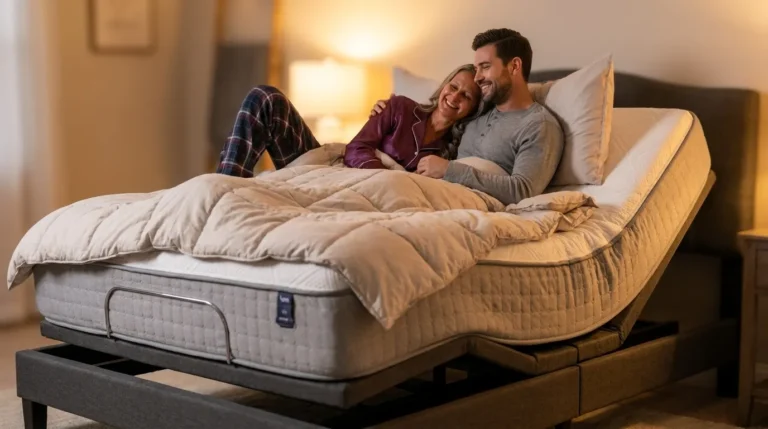
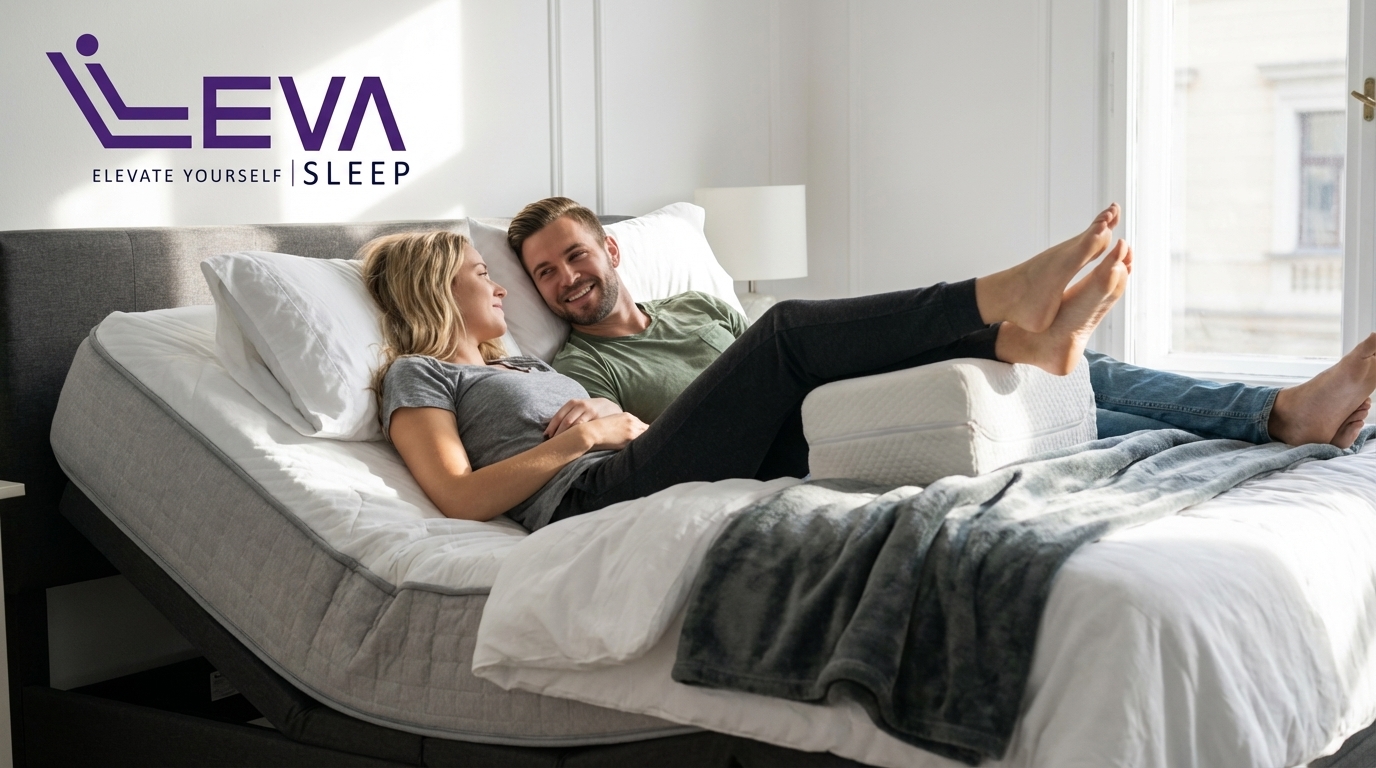
Zero-gravity positioning, a preset on many quality adjustable bases, raises both the head and the feet together. This position spreads body weight across the lumbar region and thighs while keeping the legs elevated. It reduces pressure on the inferior vena cava and often helps people managing oedema, varicose veins, or post-surgical recovery. Split-zone adjustable systems extend this benefit to couples, because each partner can choose a different elevation. One side can stay in zero-gravity while the other remains flat.
Practical Nighttime Setup to Improve Leg Circulation
- Elevate the foot of the bed between 15 and 30 centimetres (6–12 inches) so the legs rest above heart level. This baseline elevation uses gravity to assist venous return.
- If your base includes a zero-gravity preset, use it instead of foot-only elevation. The combined head raise and foot raise distributes weight across your lumbar region and thighs, which maintains elevation while reducing lower-back strain.
- Avoid elevating the feet while leaving the head completely flat. That combination can exaggerate lumbar curvature and increase back discomfort.
- Once you find a comfortable angle, maintain it through the night. Sustained elevation supports better fluid drainage than the intermittent support you get from shifting pillows.
- Wear graduated compression stockings during the day so daytime compression and nighttime elevation work together.
Venous vs Arterial Issues: When Elevation Helps and When It Hurts
The difference between venous and arterial circulation matters when you consider elevation therapy. Chronic venous insufficiency involves damaged or weakened valves that allow blood to pool in the leg veins. Elevation directly targets this gravitational problem, so conditions such as dependent oedema and varicose veins often respond well.
Peripheral arterial disease (PAD) involves reduced arterial blood flow to the limbs because of atherosclerotic narrowing. Elevating the legs in PAD can worsen symptoms by further lowering arterial perfusion pressure. PAD usually appears as cramping pain during walking, called claudication, rather than swelling or heaviness at rest. Anyone with these symptoms should seek medical assessment before using leg elevation as a sleep strategy.
Adults Who Gain the Most from Adjustable Bed Elevation
Adults with venous-related problems such as chronic venous insufficiency, varicose veins, or dependent oedema gain clear benefits from elevation-based sleep support. Post-surgical patients, especially after lower-limb orthopaedic procedures, are often told to keep the operative limb elevated. An adjustable base makes that instruction realistic through the night without constant pillow stacking.
People with restless legs syndrome may notice fewer pooling-related sensations when the legs stay elevated. Older adults often benefit more than younger adults because venous valve competence declines with age and sedentary time tends to increase.
Adjustable Beds Compared with Leg Exercises
Leg elevation and physical exercise support circulation in different ways. Exercise, especially calf-focused movement such as walking, cycling, or ankle pumping, activates the skeletal muscle pump. This active pumping pushes venous blood upward through the deep veins and produces a stronger effect than passive elevation alone.
Elevation becomes most useful during hours when exercise is not realistic, particularly during sleep. It works best as a partner to daytime activity, not a replacement. People with mobility limits, post-surgical restrictions, or conditions that prevent vigorous exercise rely more heavily on nighttime elevation. A practical approach combines regular low-impact exercise during the day with consistent leg elevation at night.
How Doctors Use Adjustable Beds with Older Patients
Vascular specialists and general practitioners often advise patients with venous insufficiency and oedema to elevate their legs during rest. Elevation serves as a conservative, non-drug strategy for managing venous symptoms. Adjustable beds are not usually prescribed as formal medical devices, yet they offer the most realistic way to keep legs elevated through a full night of sleep.
Sleep apnea clinics in Canada also refer some patients to adjustable bed specialists when head elevation supports positional therapy. Many physicians endorse adjustable bases for seniors who manage several issues at once, such as back pain, acid reflux, and venous oedema, because one platform can address all three through position changes.
What Research Shows About Swelling Reduction
Leg elevation reduces oedema by lowering capillary filtration pressure and supporting lymphatic and venous drainage. Clinicians regularly observe reduced ankle circumference after sustained overnight elevation in people with venous insufficiency. Elevation, however, does not repair the underlying valve damage that drives chronic venous insufficiency.
Elevation also does not replace compression therapy, medication, or surgery when those treatments are needed. Swelling that returns quickly after waking, or that fails to improve after several weeks of consistent elevation, should prompt a review with a vascular specialist. Elevation works as a management tool rather than a cure.
Split Adjustable Systems for Couples with Different Needs
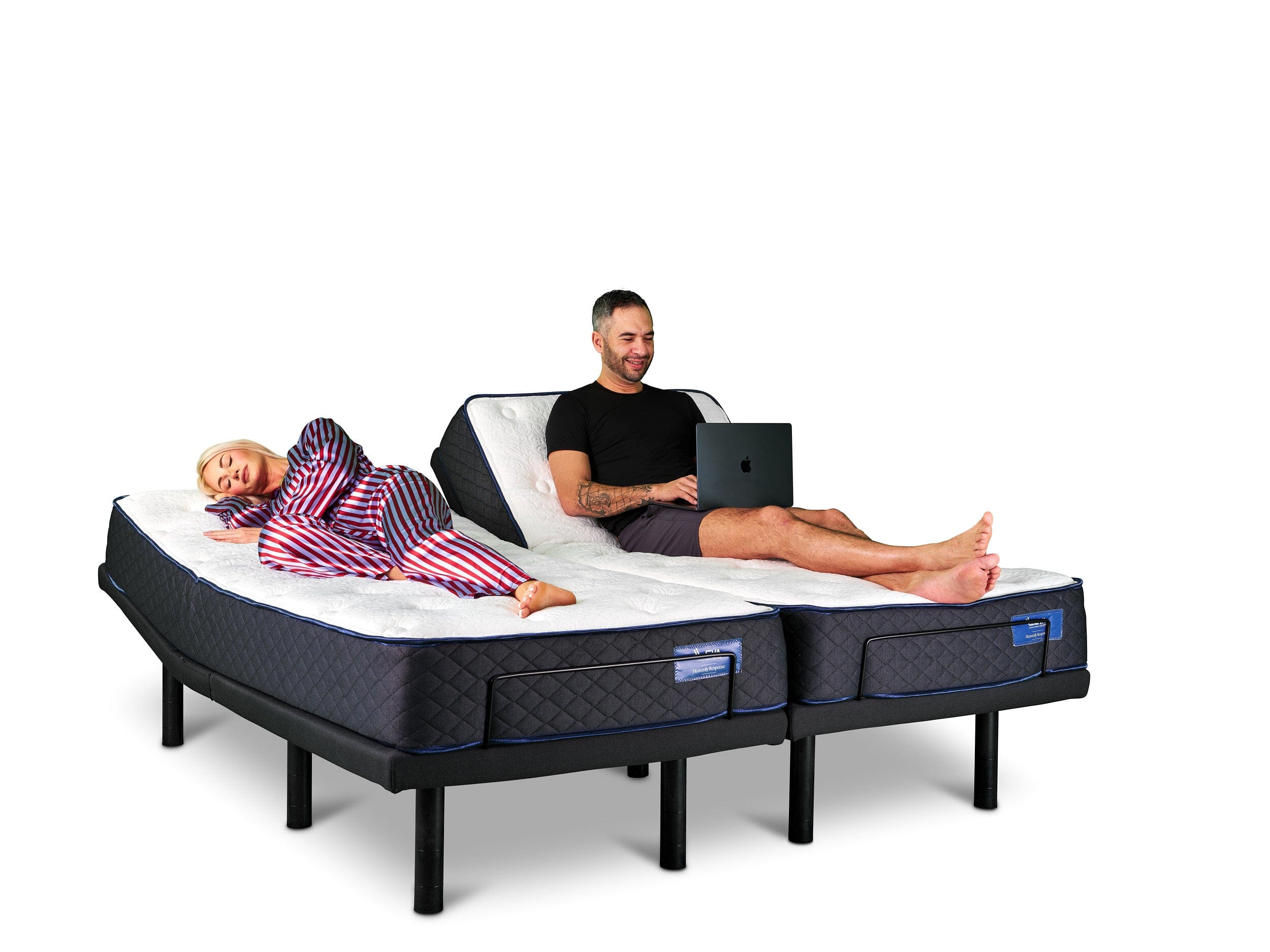
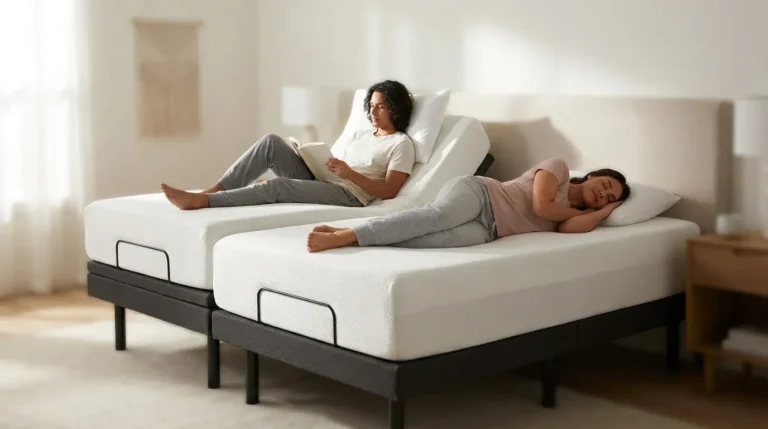
Couples where one partner needs leg elevation and the other does not, or where each partner needs a different angle, benefit most from a split adjustable system. This configuration avoids nightly negotiation and sleep disruption. Leva Sleep’s Split Queen and Split King adjustable bases provide fully independent head and foot elevation on each side, controlled through a whisper-quiet motor system and a dedicated app.
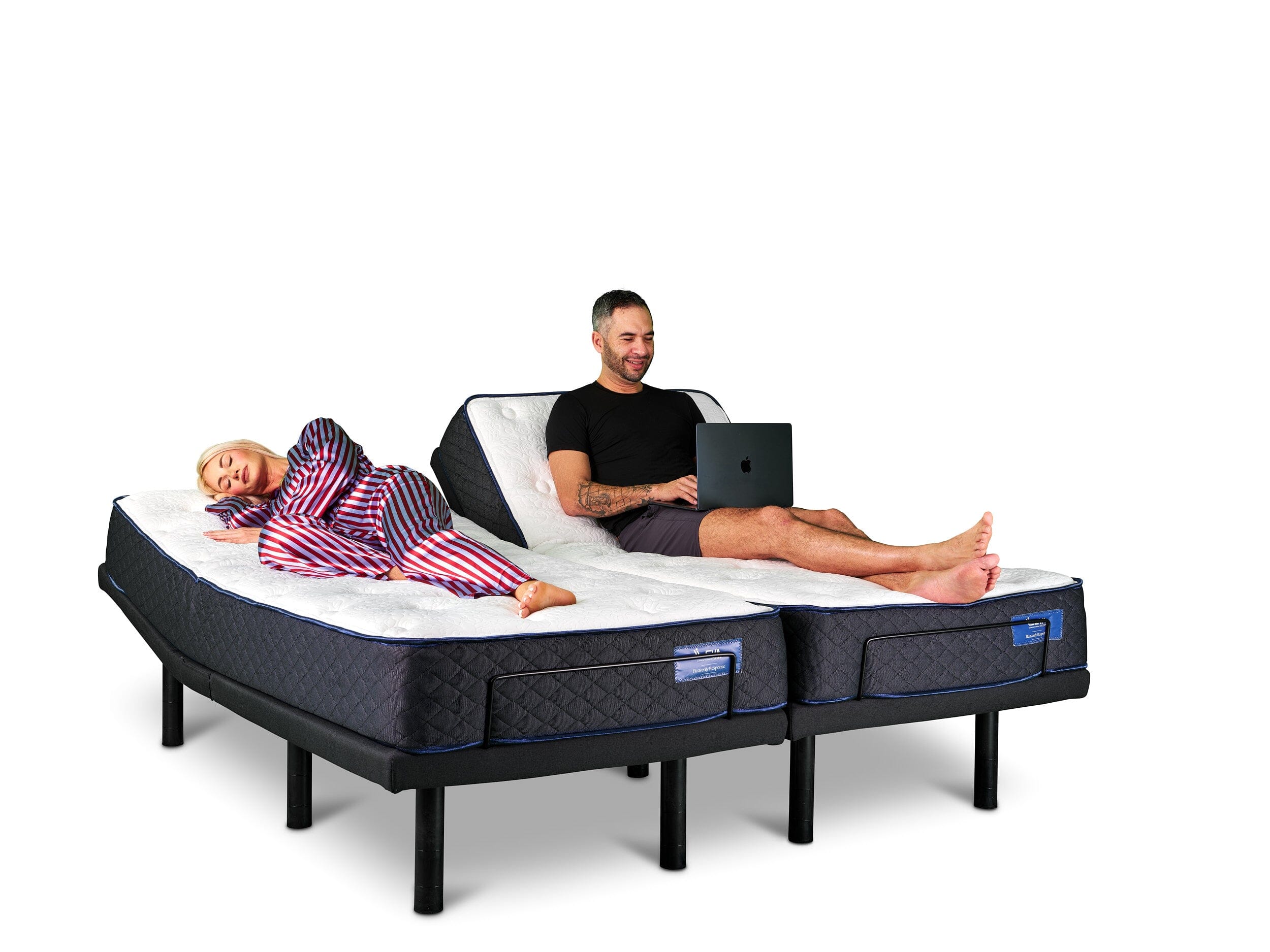
Each partner can save custom positions, including zero-gravity presets, and adjust silently without waking the other. Leva’s purpose-designed bedding, including fitted sheets with reinforced elastic and duvet clips, keeps a smooth surface across both zones even when each side sits at a different angle.
Leva Sleep offers 15–20 adjustable base models, compared with the 3–5 models usually found at general mattress retailers. Prices run 30–50% below comparable luxury competitors through a direct-to-consumer, vertically integrated model. White-glove delivery includes in-home setup, height adjustment, and a product tutorial, which removes the usual assembly burden.
Frequently Asked Questions
How should I set up my adjustable bed for leg elevation?
Raise the foot section to reach the 15–30 centimetre elevation described earlier. If your base includes a zero-gravity preset, use it to reach the head and foot angles that spread weight evenly and reduce lower-back strain. Keep this position steady through the night so you gain the full benefit of continuous elevation.
Can couples with different circulation needs share one adjustable bed?
Yes, but only with a split configuration. As explained in the couple-focused section, Split Queen and Split King bases provide the independent controls required when partners need different elevations.
Do Canadian doctors recommend adjustable beds for circulation issues?
Canadian vascular and general practitioners often recommend leg elevation as a first-line approach for venous insufficiency and dependent oedema. Adjustable beds offer a practical way to maintain that elevation during sleep. They are not classified as medical devices, yet many physicians, including those in sleep apnea clinics, suggest them as positional therapy tools. Anyone with diagnosed vascular disease should confirm elevation safety with a physician before changing their sleep setup.
Who is most likely to benefit from leg elevation during sleep?
Adults with venous-related problems such as dependent oedema, restless legs syndrome, or post-surgical lower-limb recovery usually benefit the most. Older adults often gain extra benefit because venous valve function declines with age. People with peripheral arterial disease should avoid leg elevation without medical guidance, since it can reduce arterial blood flow to the limbs. Those with mixed venous and arterial disease need specialist input before adopting any positional strategy.
What maintenance does an adjustable base need over time?
Quality adjustable bases need little maintenance. Check cable connections occasionally and keep the frame clear of debris that could block movement. Whisper-quiet motor systems, such as those in Leva Sleep bases, are sealed and do not need lubrication. Mattresses designed for adjustable bases, using flexible foam or individually pocketed coils, tolerate repeated bending better than standard innerspring mattresses, which can wear out at flex points.
Conclusion: How to Judge an Adjustable Base for Circulation
Adjustable beds support leg circulation through a simple gravitational effect. Sustained elevation lowers venous pressure, assists fluid drainage, and helps blood return to the heart during hours when the skeletal muscle pump rests. The benefit is real and clinically supported for venous conditions, but it does not replace exercise, compression therapy, or medical care. Elevation can also be unsafe for arterial disease without physician guidance.
When you compare adjustable bases for circulation support, focus on four criteria. Look for sustained elevation at an appropriate angle, independent zone control for couples, quiet operation that protects sleep, and bedding that stays secure during movement. A system that meets these standards delivers the full value of positional therapy without unnecessary trade-offs.