
Written by: Matthew Timmins, Founder and Managing Director, Leva Sleep | Last updated: July 17, 2026
Key Takeaways for Snoring and Sleep-Disturbed Couples
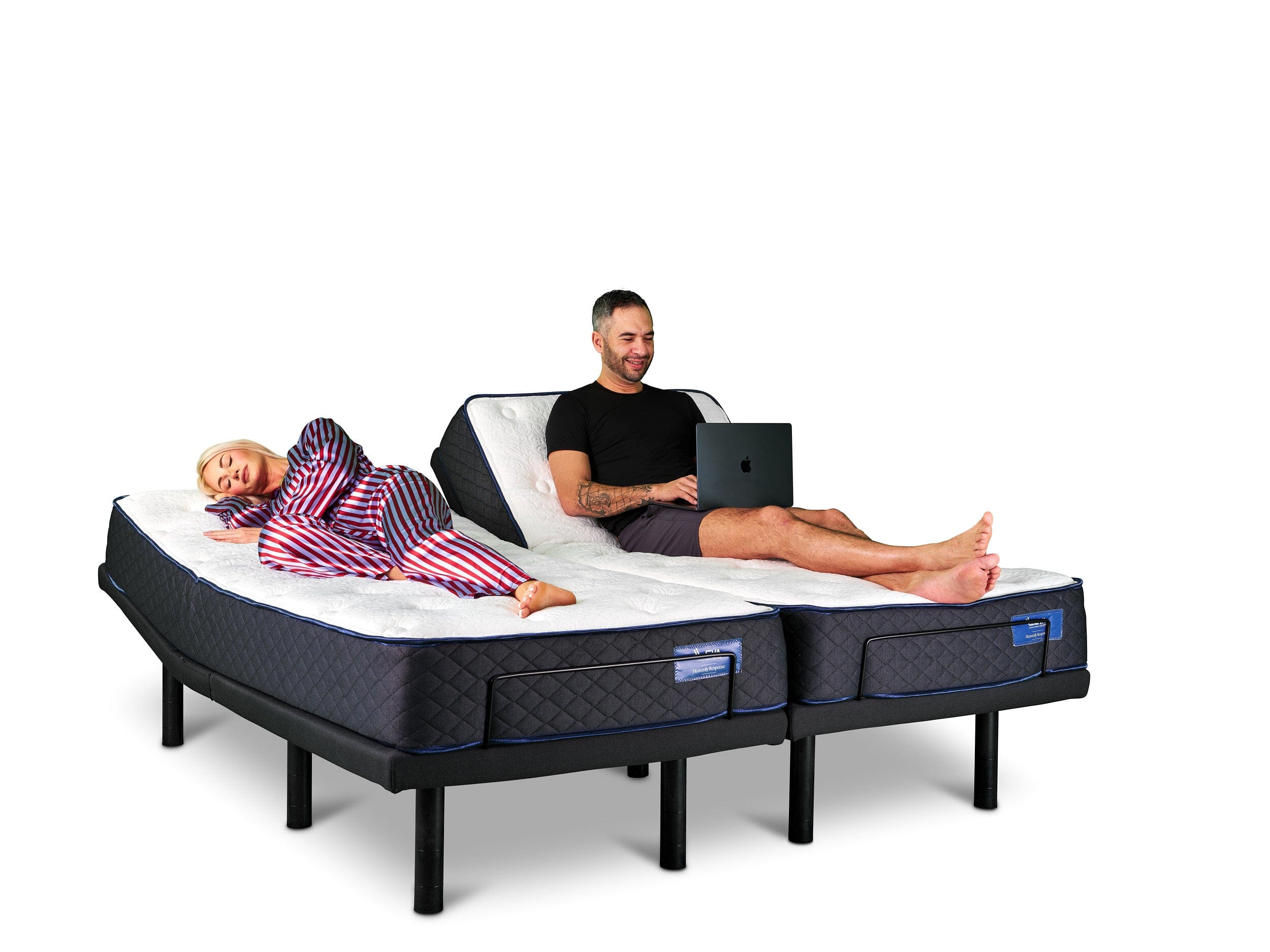
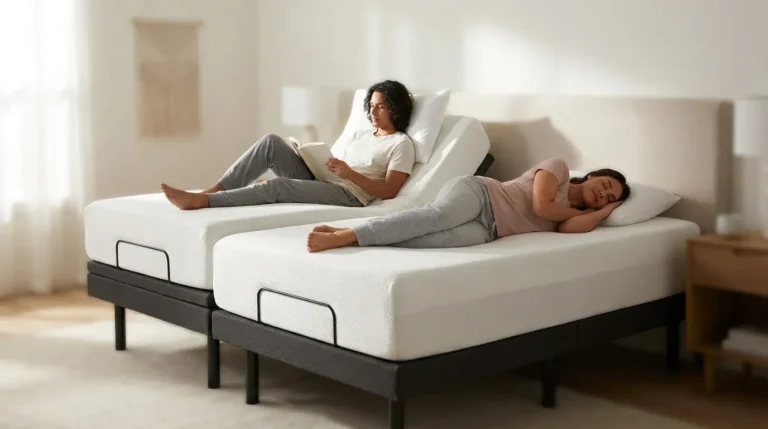
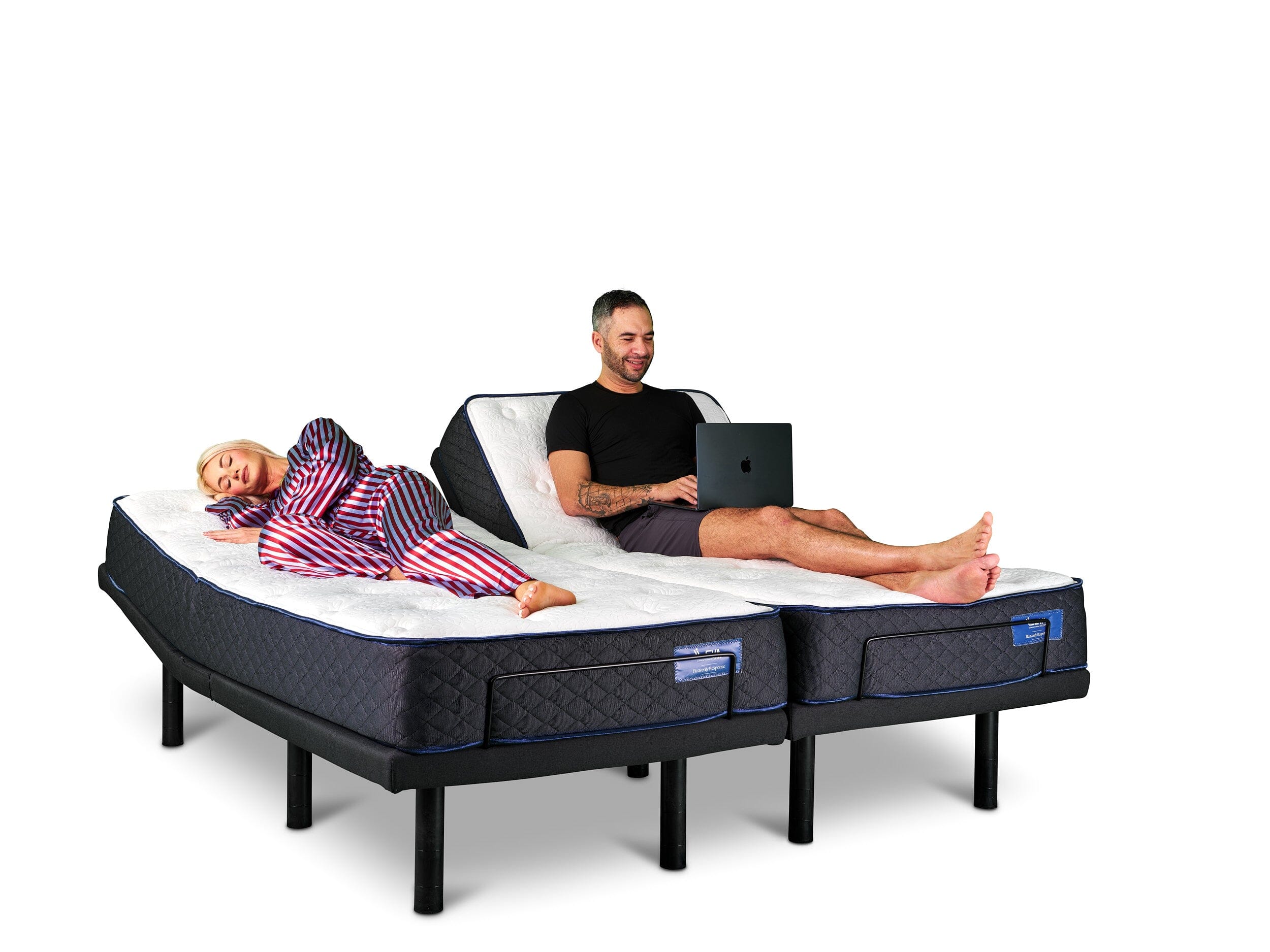
- Sleep divorce is often avoidable. Split adjustable bases, independent climate control, and positional therapy can solve snoring, motion transfer, and temperature mismatches while you stay in the same bed.
- Separate rooms may reduce sleep disruption in the short term but often lower relationship satisfaction. Sharing a properly configured bed preserves emotional closeness and REM synchronization.
- Clear diagnosis of the four main disruptions (snoring, motion transfer, temperature mismatch, medical conditions) guides the right mattress and base configuration.
- Measuring room size, doorway clearance, and budget before purchase prevents costly mistakes and confirms that a Split Queen or Split King system fits your space.
- Leva Sleep offers Split Queen and Split King adjustable bed packages with white-glove delivery that solve sleep divorce without separate bedrooms. Explore split adjustable bed packages to protect both your sleep and your relationship.
Does Sleep Divorce Lead to Divorce?
Evidence on sleep divorce and relationship outcomes is mixed but points in a clear direction. A 2025 study of 860 Taiwanese couples found that separate-room sleepers had significantly lower psychological well-being, including reduced happiness, life satisfaction, and fulfilment. A poll of 2,000 recently divorced Britons found that snoring was a factor in 47% of break-ups.
Couples where both partners sleep adequately report higher relationship satisfaction, regardless of sleeping arrangement. The shared bed is not the core problem. Unresolved disruption is the problem. A study published in Social Psychological and Personality Science found that participants reported more conflict in their romantic relationships following poor nights of sleep. Solving the disruption while staying in the same bed protects both sleep and the relationship.
Pros and Cons of Sleep Divorce for Snoring Couples
Separate sleeping can create measurable short-term sleep gains. A 2023 Sleep Foundation survey found that 52.9% of respondents who started a sleep divorce reported improved sleep quality and an average of 37 extra minutes of sleep per night. For snoring couples, removing the noise source from the room often feels like the fastest fix.
The drawbacks are significant. Separate rooms remove the spontaneous physical closeness and pillow talk that experts warn help anchor long-term relationships. Co-sleeping is associated with lower levels of stress, depression, anxiety, and cortisol, and with increased and stabilized REM sleep. For snoring couples, a more durable solution treats the root cause with positional therapy, head elevation, or medical screening while you remain in the same bed. Treating underlying obstructive sleep apnea improves the partner’s sleep more reliably than sleep divorce.
Before investing in any solution, couples benefit from understanding exactly what is disrupting their sleep. The following six steps guide you from diagnosis through setup so you can stay together in one room.
Step 1: Diagnose Your Specific Sleep Disruptions
Effective solutions start with clear problem identification. The four primary categories of partner-related sleep disruption each call for different interventions.
- Snoring: Snoring affects approximately 40% of men and 30% of women, and Mayo Clinic research found that bed partners lose at least one hour of sleep per night, or more than 365 hours annually. Note whether snoring is position-dependent, such as loudest on the back, or constant in every position.
- Motion transfer: A 2020 Flinders University and Monash University study found that partner movement can cause wake transmissions. Pay attention to how often you wake when your partner turns, gets up, or returns to bed.
- Temperature mismatch: Surveys report temperature disagreements affecting 26–75% of couples depending on region and methodology, with no data on equal effects across generations. Track whether one partner regularly feels too hot while the other feels too cold.
- Medical conditions: Sleep apnea affects about 6% of Canadian adults. Consult a physician before relying on positional solutions for diagnosed or suspected apnea.
Common mistake: Many couples underestimate motor noise. Basic adjustable bases use loud, jerky actuators that create a new disruption while solving the original one. Leva Sleep’s whisper-quiet German motors are engineered to operate without waking a sleeping partner.
Step 2: Measure Your Room, Doorways, and Budget Realities
Accurate measurements prevent configuration mistakes. Before selecting a setup, gather three measurements: bedroom floor space, doorway clearance including any hallway turns, and a realistic budget range. These measurements determine which configuration will physically fit your space.
A Split Queen fits rooms where a standard queen currently sits but uses two independent bases side by side. A Split King requires the footprint of a king. Leva Sleep’s white-glove delivery team can advise on clearance requirements before purchase.
Expert tip: Measure doorway clearance and any hallway turns before purchase. Adjustable bases with articulating frames can be more difficult to manoeuvre than flat mattresses. Confirm dimensions with Leva Sleep’s team during the consultation process.
Budget planning should include the full system. Consider the base, mattress or one per side for split configurations, specialized bedding, and optional accessories such as temperature-regulation pads. Leva Sleep’s vertically integrated, direct-to-consumer model delivers comparable systems at 30–50% less than top-tier competitors by removing retail markups.
Step 3: Compare Split Queen and Split King Configurations
Configuration choice shapes comfort, space use, and motion isolation. The table below compares the two primary split setups available from Leva Sleep using criteria that matter most to couples managing sleep disruption.
| Feature | Split Queen (2 × Narrow Queen) | Split King (2 × Twin XL) |
|---|---|---|
| Motion isolation | Complete between sides, and split configurations eliminate cross-partner motion transfer entirely | Complete between sides, using the same principle |
| Independent head/foot elevation | Yes, each partner controls their own side via app | Yes, each partner controls their own side via app |
| Market availability | Rare. Leva Sleep is a unique Canadian provider offering Split Queen configurations built to customer specifications. | No data on market share for any brand or product type is available in reports on the adjustable bed frames market. Split King refers to a bed size option. |
| Snoring benefit via head elevation | Head elevation can reduce the apnea-hypopnea index in positional OSA patients | Same elevation capability, so the same clinical benefit applies |
Once you have chosen between Split Queen and Split King based on room size and personal space needs, the next decision is mattress type. For mattress type, all-foam options provide strong motion isolation and pressure relief. Hybrid pocket-coil options add airflow for warmer sleepers while maintaining the low motion transfer established by the split configuration. Each coil is individually wrapped and moves independently, preserving isolation even within a single mattress. Leva Sleep offers both all-foam and hybrid configurations paired with its adjustable bases.
Step 4: Test Controls and Plan for Seasonal Changes
Expert tip: Test app controls before purchase. Confirm that the Bluetooth connection is stable, that preset positions such as zero-gravity and anti-snore elevation are easy to recall in the dark, and that the vibrating alarm feature operates independently per side.
Canadian seasons create significant temperature swings. A system that feels perfect in January may feel too warm by July. Plan ahead by pairing the adjustable base with Leva Sleep’s heating and cooling pad accessories, which provide independent thermal regulation per side without a separate device purchase.
Common mistake: Many couples ignore bedding slippage. Standard fitted sheets often pop off articulating bases during elevation. Leva Sleep designs all bedding, including fitted sheets with deep pockets and extra elastic, duvet clips, and mattress protectors, specifically for adjustable bases to solve this problem before it starts.
Step 5: Talk to Your Partner Using Supportive Scripts
Framing shapes how your partner hears the conversation. The conversation about a sleep arrangement may be more meaningful than the arrangement itself. How you introduce the topic influences whether your partner hears criticism or a shared problem to solve. The following scripts open the discussion without blame and keep the focus on shared outcomes.
- If your partner is dismissive of the problem: “I have been waking up exhausted and I know it is affecting how I show up for you during the day. I would like us to look at some options together, not separate rooms, just a smarter bed.”
- If your partner feels accused: “This is not about anything you are doing wrong. Temperature and movement are just physical realities. There is technology that lets us each set our own side without affecting the other.”
- If cost is the objection: “I looked at what the top brands charge. Leva Sleep builds the same quality in Canada and sells direct, so it is 30–50% less. It is an investment in both our health.”
- If your partner prefers separate rooms: “I want us to try the adjustable base first. If it does not solve the problem after a few weeks, we can revisit. I would rather stay in the same bed if we can.”
Step 6: Use White-Glove Delivery and Setup
A split adjustable system includes two independent bases, two mattresses, specialized bedding, and app configuration. Setup errors such as misaligned bases, incorrect leg heights, or unpaired remotes can undermine the investment from the first night.
Common mistake: Skipping white-glove setup often leads to frustration. Leva Sleep’s in-house delivery team brings everything to the bedroom, assembles both bases, adjusts leg heights to your preference, removes and donates or recycles your old bed, and provides a full product tutorial before leaving. This service goes far beyond a drop-at-the-door delivery.
Schedule white-glove adjustable bed delivery and select white-glove service at checkout for a fully managed setup experience in Ontario and Alberta.
Observable Success Markers After Implementation
Within the first one to two weeks of using a properly configured split adjustable system, many couples notice clear changes.
- Uninterrupted sleep through the night, with fewer or no wake transmissions from partner movement
- Reduced morning back, hip, or knee pain from independent elevation and lumbar support settings
- Quieter nights for the non-snoring partner, especially when the snoring partner uses the anti-snore head elevation preset
- Restored morning energy and improved daytime mood, which directly reduces conflict and improves emotional regulation between partners
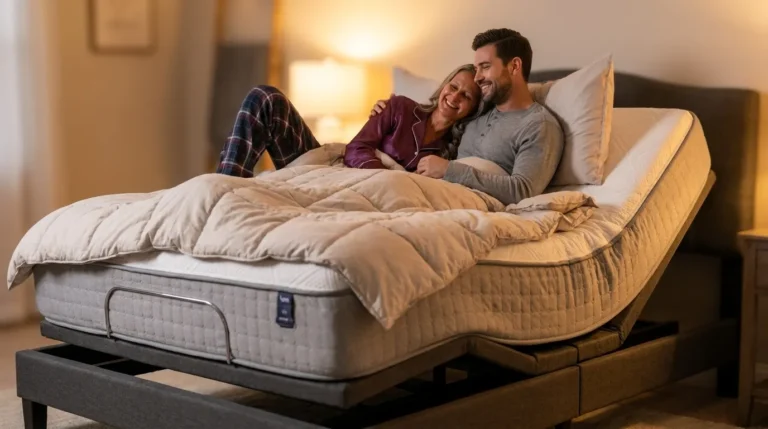
- Maintained physical closeness and intimacy without the relationship costs associated with separate rooms
Advanced Considerations for Long-Term Use
A split adjustable system functions as a long-term piece of sleep infrastructure. Several features extend its value over many years.
- Temperature-regulation pads: Dual-zone systems compatible with Leva Sleep’s bases provide independent side-by-side thermal control, addressing the temperature mismatches identified earlier without requiring seasonal bedding changes.
- AI sleep tracking: Leva Sleep’s system integrates AI-powered sleep tracking for real-time micro-adjustments. The base responds to sleep-stage data instead of relying only on manual preset changes.
- Mobility future-proofing: The Canadian Sleep Society recognizes positional therapy via adjustable bases as a legitimate adjunct treatment for GERD, positional sleep apnea, chronic snoring, and edema. As health needs evolve with age, the base adapts without replacement.
- Anti-snore mode: Leva Sleep’s anti-snore mode, arriving spring 2026, detects snoring and makes micro-adjustments to the head of the bed automatically, which reduces the need for manual intervention during the night.
Leva Sleep’s direct-to-consumer model, with local design, assembly, and in-house delivery, removes retail markup for the customer. With over 8 years in business, $50M in lifetime sales, and 25,000+ customers, the company offers a proven track record. Compare Split Queen and Split King packages at direct-to-consumer pricing.
Frequently Asked Questions
Are Leva Sleep adjustable beds suitable for sleep apnea?
Leva Sleep’s adjustable bases work well as a complementary tool for managing mild-to-moderate positional sleep apnea. Head elevation of 10–30 degrees opens the airway by reducing gravity’s pull on the tongue and soft palate, and clinical research has found meaningful reductions in apnea-hypopnea index scores with this approach. Adjustable bases do not replace CPAP therapy or other physician-prescribed treatments for diagnosed obstructive sleep apnea. Leva Sleep recommends consulting a sleep physician before relying on positional therapy alone. Sleep apnea clinics have referred patients to Leva Sleep as a complementary solution alongside prescribed medical treatment.
What are the delivery timelines for Ontario and Alberta?
Leva Sleep currently delivers to Ontario and Alberta, the two provinces where its in-house white-glove delivery service operates. Delivery timelines vary by location and current order volume. Leva Sleep’s team provides confirmed scheduling windows at the time of purchase. White-glove delivery includes bedroom placement, full assembly of both bases, leg-height adjustment, old-bed removal, and a product tutorial. Customers can contact Leva Sleep directly for current lead times in their specific city or region.
What is Leva Sleep’s return policy?
Return and trial policies are best confirmed directly with Leva Sleep at the time of purchase, as terms may vary by product configuration and promotional period. Leva Sleep’s direct-to-consumer model means customers deal with the manufacturer rather than a third-party retailer, which typically streamlines any post-purchase support. Prospective buyers can ask about trial periods and return conditions before completing their order.
How do I maintain a Leva Sleep adjustable base over time?
Leva Sleep’s adjustable bases use whisper-quiet German motors engineered for long-term durability. Routine maintenance is minimal. Keep the base clear of debris around the motor housing, ensure the app firmware is updated when prompted, and check that the mattress retainer bar remains properly positioned. Leva Sleep’s specialized bedding, including fitted sheets with extra elastic and mattress protectors designed for articulating bases, reduces wear on both the mattress and the base surface. For any mechanical concerns, Leva Sleep’s in-house team provides post-purchase support directly without routing customers through a third-party service network.
What makes the Split Queen different from a Split King, and which is right for us?
A Split King consists of two Twin XL mattresses on independent adjustable bases within a king-sized frame. This configuration is the most widely available split option on the market. A Split Queen uses two narrower mattresses on independent bases within a queen-sized frame, which suits couples who want full independent control but have a bedroom that cannot accommodate a king footprint. Leva Sleep is a unique Canadian provider offering Split Queen configurations built to customer specifications, which makes it a genuinely distinctive option for couples in smaller master bedrooms. Both configurations deliver complete motion isolation between sides, independent head and foot elevation, and individual app control. The choice depends on room dimensions and personal space preference.
Conclusion: Protect Your Relationship by Protecting Your Sleep
Sleep divorce reflects an unsolved engineering problem, not an inevitable relationship outcome. Canadian couples in Ontario and Alberta can access split adjustable sleep systems that address snoring, motion transfer, temperature mismatch, and medical sleep needs while sharing the same bed. The six steps above move from accurate diagnosis through room measurement, configuration selection, partner communication, and white-glove setup to a sleep environment where both partners get what their bodies need without compromise or separation.
Leva Sleep has spent over eight years and served more than 25,000 customers building the expertise, product range, and delivery infrastructure to make this transition straightforward. With 15–20 adjustable models, specialized bedding, whisper-quiet German motors, and pricing 30–50% below comparable luxury competitors, the system is designed to be the last bed a couple needs to buy.
Find the Split Queen or Split King package that fits your room, your budget, and your relationship.