Written by: Matthew Timmins, Founder and Managing Director, Leva Sleep | Last updated: July 16, 2026
Key Takeaways for Couples Considering Sleep Divorce
- Sleep divorce is rising in Canada, with one in three adults aged 35–64 reporting insufficient sleep from partner disruptions like snoring and temperature conflicts.
- Chronic sleep deprivation from unresolved issues increases cardiovascular, metabolic, and emotional health risks for both partners.
- Permanent separation can reduce relationship satisfaction, intimacy, and well-being, while treating the root cause helps preserve closeness.
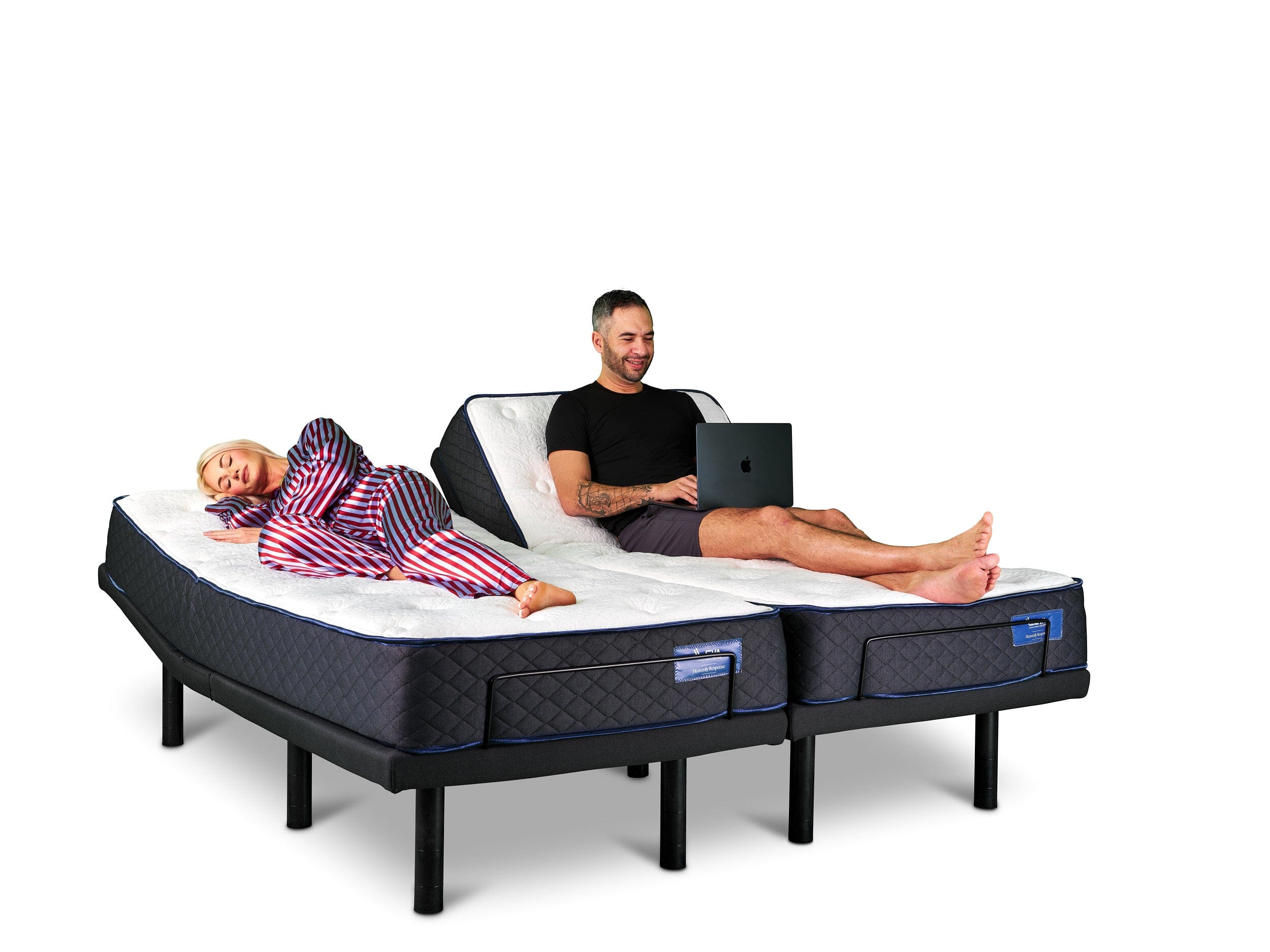
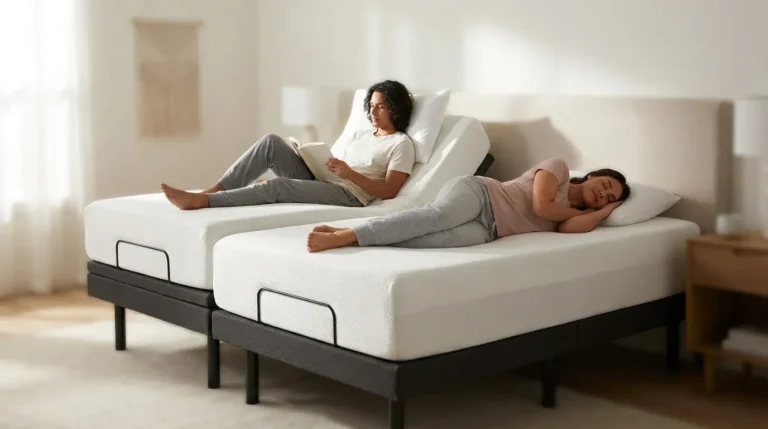
- Split adjustable beds give each partner independent control over position, temperature, and noise reduction without moving to separate rooms.
- Leva Sleep’s split adjustable bed packages combine these benefits with whisper-quiet motors, anti-snore technology, and white-glove delivery across Ontario and Alberta.
The Problem: How Sleep Divorce Affects Health and Connection
Health Tradeoffs When Couples Sleep Apart
Health outcomes depend on what drives the separation and whether underlying conditions receive proper treatment. Adults sleeping five hours or less per night face a higher likelihood of diabetes, heart attack, and new-onset depression compared to those sleeping seven to eight hours, according to NIH-compiled studies including the Sleep Heart Health Study and the Nurses’ Health Study. Adults sleeping less than six hours per night also face a higher risk of coronary heart disease and stroke compared with those meeting sleep recommendations.
When sleep divorce truly resolves chronic sleep deprivation, those risks decline. When it simply moves the problem to another room, especially when snoring-driven obstructive sleep apnea (OSA) remains untreated, cardiovascular and metabolic risks for the snorer continue. Untreated OSA carries documented cardiovascular and metabolic risk per Jordan et al. (2014) in The Lancet. Treating the root cause, rather than separating, remains the evidence-based priority. When couples choose permanent separation instead of addressing the underlying issue, new health and relationship costs often appear.
How Sleeping Apart Can Affect Emotional Closeness
Physical separation introduces measurable biological and emotional costs. A 2020 polysomnography study published in Frontiers in Psychiatry found that couples sharing a bed can have higher REM sleep and fewer REM disruptions compared to sleeping apart. Research also suggests couples’ breathing and heart rates can synchronise during sleep, which supports feelings of safety and security, while sleeping together reduces stress and increases oxytocin production.
Some people feel less emotionally connected after sleeping separately for extended periods, and long-term couples who sleep separately may experience higher rates of depressive symptoms. A 2025 study of 860 Taiwanese couples found that sleeping in separate rooms was associated with significantly lower well-being, including reduced happiness, life satisfaction, and fulfilment, even after controlling for prior relationship quality.
Sleep Divorce Pros and Cons for Real Couples
Evidence on sleep divorce shows both benefits and drawbacks. On the benefit side, 52.9% of adults who started a sleep divorce reported better sleep quality, gaining an average of 37 extra minutes per night. When separation genuinely improves sleep, couples often report better sleep quality, reduced daytime irritability, fewer resentment-driven arguments, and improved individual health markers such as lower stress hormone levels.
On the cost side, the losses are also documented:
- Couples sleeping separately can report lower relationship satisfaction.
- Some report less frequent sex when sleeping separately.
- Some sleep-separated couples fear that sleeping apart could contribute to divorce.
- A 2017 study in Psychoneuroendocrinology found that couples reporting shortened sleep showed greater inflammatory responses during marital conflict.
Links Between Sleep Divorce and Relationship Breakdown
Research shows a connection between sleep disruption, sleep divorce, and relationship breakdown, even though causation is not fully established. A 2026 British survey of 2,000 recently divorced individuals found that 47% identified their partner’s snoring or sleep apnoea as a contributing factor to their separation, and 85% of those who moved to separate rooms stated the arrangement directly contributed to their divorce. A Portuguese hospital study found that 72.4% of couples who had adopted sleep divorce resumed sleeping together after the snoring partner received OSA treatment. These findings point toward treating the underlying disruption, not normalising permanent separation.
Why Untreated Sleep Apnea Makes Sleep Divorce Risky
A substantial number of Canadian adults have been diagnosed with sleep apnea. Treating separate rooms as the answer when snoring drives the conflict may resolve the partner’s complaint but leaves undiagnosed OSA untreated, where it carries real cardiovascular and metabolic risk per AASM diagnostic guidelines. Couples where snoring is the primary driver of separation should pursue a sleep medicine evaluation before accepting permanent room separation as the long-term solution.
Common Workarounds Couples Try Before Changing the Bed
Couples facing sleep incompatibility often cycle through several workarounds before considering a structural change to the bed itself. The table below compares four common approaches across three practical criteria.
| Approach | Independent Position Control | Snoring / Noise Mitigation | Specialized Bedding Compatibility |
|---|---|---|---|
| Traditional flat bed | None, both partners share a fixed surface | None built in, earplugs or white noise required separately | Standard bedding fits, no adjustability to accommodate |
| Basic adjustable base (single zone) | Partial, one shared elevation setting affects both partners | Head elevation can reduce snoring, but both sides move together | Requires adjustable-compatible sheets, standard fitted sheets slip off at elevation |
| Scandinavian sleep method (separate duvets) | None, surface and elevation remain shared | None, addresses temperature and cover conflicts only | Works with any bed, no structural modification needed |
| Separate rooms | Full, each partner controls their own environment entirely | Complete noise isolation achieved | Standard bedding per room, no compatibility constraints |
Each workaround addresses one dimension of incompatibility while leaving others unresolved. Separate rooms offer the most independence but come with the relational costs outlined above. Split adjustable beds allow each partner to set their preferred firmness and base position while remaining within the same bed frame, with head elevation on one side often reducing snoring and motion isolation reducing the impact of restless movement on the other partner. Explore split systems that address these limitations without requiring separate rooms.
The Solution: Split Adjustable Sleep Systems for Shared Beds
A split adjustable sleep system places two independently motorized bases within a single shared frame, each controlled separately. When evaluating any split adjustable system, couples can group key features into three categories: those that resolve disruptions, those that protect comfort, and those that support long-term use.
First, look for features that directly address sleep incompatibilities:
- Independent head and foot elevation: Each side can be adjusted separately, so one partner can elevate for comfort or medical needs while the other remains flat.
- Lumbar support and pillow tilt: Precision lower-back adjustment and independent pillow-angle control let each partner address their specific pain profile without affecting the other side.
- App-controlled anti-snore mode: Systems that detect snoring acoustically and make micro-adjustments to head elevation target the most common sleep divorce trigger without waking either partner.
- Temperature regulation: Dual-zone thermal systems allow each partner to set an independent sleep temperature, which resolves one of the most frequently cited incompatibilities.
Next, evaluate comfort-preservation features that prevent the solution from creating new disruptions:
- Whisper-quiet motors: Motor noise is a primary complaint with basic adjustable bases, so couples should review decibel ratings and request a live demonstration before purchasing.
- Specialized bedding: Standard fitted sheets often pull free at elevation. Deep-pocket sheets with reinforced elastic and duvet clips designed for adjustable bases keep bedding secure.
Finally, assess practical considerations that determine whether the system will work in your home over time:
- Mattress compatibility: The mattress should flex with the base. Not all foam or hybrid mattresses tolerate repeated articulation without degrading.
- Delivery and setup experience: Large adjustable systems usually require professional assembly, so couples should confirm whether white-glove in-home setup is included or available.
- Long-term support: Warranty terms on motors, frames, and mattresses should be reviewed separately, and Canadian service capacity should be confirmed.
See how Leva’s systems meet these evaluation criteria.
How Leva Sleep’s Split Queen and Split King Systems Help Couples Stay Together
Leva Sleep has spent over eight years and more than $50 million in sales refining split adjustable systems specifically for couples. The Split King and the uniquely available Split Queen configurations give each partner fully independent control over elevation, lumbar support, pillow tilt, massage, and temperature, all managed through the Leva Sleep app. Whisper-quiet German motors keep position adjustments from waking the other partner. An anti-snore mode detects snoring and makes subtle head-elevation adjustments automatically. Every mattress and bedding accessory, including deep-pocket fitted sheets with reinforced elastic, duvet clips, and remote pockets, is designed in-house to work with the adjustable base, which prevents the fitted-sheet slippage that frustrates owners of generic systems.
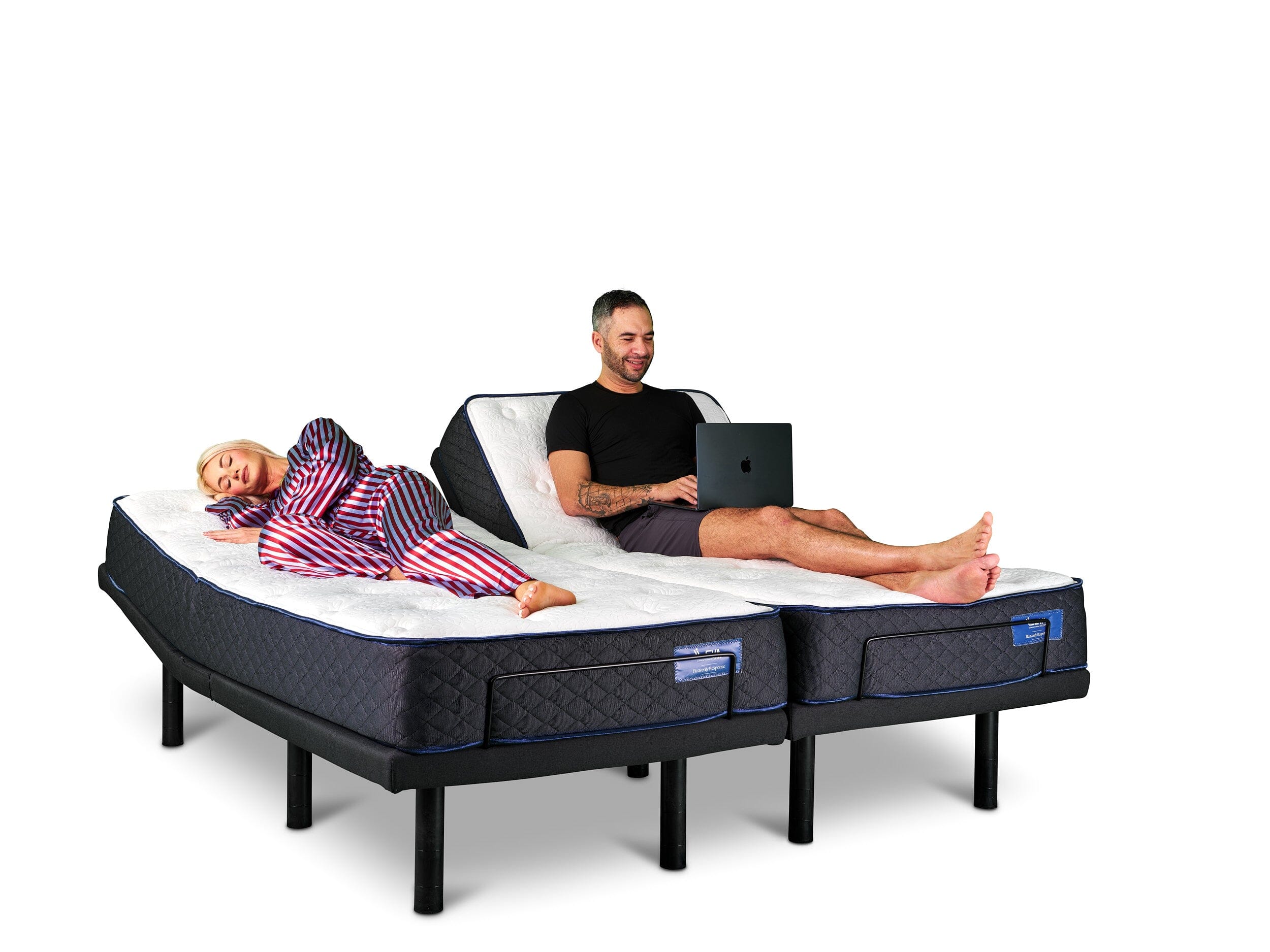
Couples who had been sleeping in separate rooms due to snoring or pain incompatibility have returned to a shared bed after switching to Leva’s split systems, with sleep apnea clinics in Ontario and Alberta now including Leva in their patient education materials. Leva’s direct-to-consumer, vertically integrated model, with local design, assembly, and in-house white-glove delivery, removes the retail markup and positions these systems at 30–50% below comparable luxury competitors. In-home white-glove delivery to Ontario and Alberta includes bedroom setup, leg-height adjustment, a full product tutorial, and removal of the old bed.
Configure your split system and schedule white-glove delivery.
Frequently Asked Questions
Can a split adjustable bed work for couples with very different firmness preferences?
Yes. Split Queen and Split King configurations use two separate mattresses, one per partner, within a shared frame. Each partner selects their own mattress type, whether all-foam or hybrid pocket coil, at their preferred firmness level. One partner can sleep on a firm surface for back support while the other sleeps on a softer surface for pressure relief, with no compromise required on either side.
Is a split adjustable bed suitable for someone with sleep apnea?
A split adjustable base can serve as a positional therapy complement for mild obstructive sleep apnea by gently elevating the head to open the airway and reduce apnea events and snoring. It does not replace a formal sleep medicine evaluation or CPAP therapy in moderate to severe cases. Leva Sleep’s anti-snore mode adds an additional layer by detecting snoring acoustically and making automatic micro-adjustments to head elevation. Couples where one partner has suspected sleep apnea should pursue a clinical diagnosis first. Leva’s systems are designed to work alongside, not instead of, medical treatment.
What bedding is needed for a split adjustable bed, and does Leva supply it?
Standard fitted sheets are not designed to stay in place when a mattress is elevated, and standard duvets bunch and shift when the two sides of a split bed sit at different angles. Leva Sleep designs and sells a full suite of bedding accessories specifically for adjustable bases, including deep-pocket fitted sheets with reinforced elastic to prevent slippage, duvet clips that maintain separation between the two sides, mattress protectors, and pillows engineered for spinal alignment at elevation. Every accessory is available as part of a complete sleep system package.
Does Leva Sleep deliver and set up the bed, or is assembly left to the customer?
Leva Sleep offers in-house white-glove delivery to Ontario and Alberta for a fee. This service includes delivery to the bedroom, full assembly of the base and mattress, leg-height adjustment to the customer’s preference, a complete product tutorial covering app setup and all features, and removal of the old bed through donation or recycling. No component of setup is left to the customer.
Is a Split Queen available, and how does it differ from a Split King?
Leva Sleep is one of the few providers offering a Split Queen configuration, built to customer specifications. A Split Queen uses two smaller independent bases within a queen-sized footprint, which suits couples who want full independent adjustability but have a bedroom that cannot accommodate a king-sized frame. A Split King uses two Twin XL mattresses within a king-sized footprint and is the better option when space allows and maximum surface area per partner is the priority. Leva’s sleep specialists can advise on which configuration suits a specific room layout and sleep profile.
Making the Right Choice for Your Relationship
Evidence shows that chronic sleep deprivation from partner disruption carries real physical and relational costs, while permanent room separation introduces its own documented risks to intimacy, emotional connection, and long-term well-being. The most durable approach addresses the root cause, such as snoring, pain, temperature conflict, or positional incompatibility, within a shared sleep environment. When evaluating split adjustable systems, couples can prioritize fully independent elevation controls, whisper-quiet motor engineering, mattress and bedding compatibility, app-based anti-snore functionality, and a white-glove Canadian delivery experience that handles setup from start to finish. Leva Sleep’s Split Queen and Split King packages are built specifically to meet each of those criteria, with in-house delivery across Ontario and Alberta.
Find the system that keeps you together while letting you sleep apart.