Written by: Matthew Timmins, Founder and Managing Director, Leva Sleep | Last updated: July 19, 2026
Key Takeaways for Hot-Sleeping Couples
- Cooling gel mattress toppers feel cool at first, but that sensation usually fades within 30–90 minutes as the foam warms up.
- Passive gel, copper, graphite, and PCM toppers all have limited cooling capacity and cannot manage temperature all night or separately for each partner.
- Thicker toppers trap more heat. Hot sleepers usually do best with 2–4 inches of foam at a density of at least 3 lb/ft³, and split toppers suit adjustable bases.
- Active cooling systems with separate controls on each side provide continuous, all-night temperature regulation that passive toppers cannot deliver.
- Couples who need reliable, independent temperature control can explore Leva Sleep’s adjustable bed packages built for hot-sleeping partners.
The Problem: One Hot Sleeper Disrupts the Whole Night
A familiar scene plays out in many homes in Mississauga or Calgary. One partner kicks off the covers at midnight, fans themselves with a pillow, and eventually moves to the couch. The other wakes up every time the mattress shifts. By morning, both feel exhausted, and the frustration goes beyond temperature.
This pattern is increasingly common. A global study of over 165 million nights from more than 317,000 adults found that high ambient temperatures were associated with an approximately 40% relative increase in the probability of short sleep under six hours. Many couples buy a cooling gel mattress topper as their first fix. Research shows that this purchase often softens the problem for a short time rather than solving it for the full night.
Why Gel Cooling Fades After the First Few Hours
Gel foam works in a simple way. Manufacturers embed gel particles in viscoelastic foam to increase the material’s heat capacity, which is the amount of energy it can absorb before its temperature rises. At first contact, the gel pulls heat away from the skin faster than plain foam, creating that cool-to-touch feel.
The capacity of the gel is limited. Gel infusions in memory foam reach thermal equilibrium with a sleeper after a period of time. Once that happens, the cooling effect disappears. In warmer Canadian bedrooms, which are common during Ontario and Alberta summers, gel-infused mattresses can even turn into heat reservoirs after a few hours.
This theoretical limit shows up clearly in real-world experience. Forum threads about hot sleeping repeat the same story: “feels great when I first lie down, but I’m roasting after midnight.” That pattern does not signal a defective product. It reflects how a passive heat sink behaves when it has absorbed as much heat as it can.
A gel layer on dense foam functions as a compensating measure that reduces the symptom of surface heat without addressing the source of heat accumulation in the underlying foam, as the cooling additive cannot alter the core material’s heat retention behaviour. The dense closed-cell polyurethane beneath the gel keeps trapping heat regardless of the cooling layer on top.
How Gel Compares to Copper, Graphite, and PCM
Cooling toppers use different technologies, and each behaves in a distinct way. The table below compares the four main material types on initial cooling duration and approximate 2026 Canadian queen-size pricing. Every figure comes from cited sources.
| Material | Initial Cooling Duration | 2026 Queen CAD Range |
|---|---|---|
| Gel-infused foam | 30–90 minutes before saturation | $80–$400 CAD |
| Copper-infused foam | 30–90 minutes, similar initial window to gel | $80–$300 CAD |
| Graphite-infused foam | Modest initial cool touch, conducts rather than absorbs | $300–$663 CAD |
| Phase-change material (PCM) | Strong initial cooling as it absorbs heat during solid-to-liquid transition at ~28–30°C | $400–$1,200 CAD |
Copper and graphite focus on moving heat away through conduction rather than soaking it up like gel. PCM stores heat as it changes phase and can regulate temperature for several hours before it resets when the sleeper leaves the bed. These differences affect how long each topper feels effective, especially later in the night.
Independent thermal-gun test results from verifiable sources give a clearer picture than marketing claims. Look for published temperature-rise figures instead of vague promises about “sleeping cool.”
One key caveat applies to every passive cooling layer. Both PCM and graphite cooling layers perform significantly better over a pocket-coil core with air circulation than over dense all-foam bases, as the latter traps heat with nowhere for conducted or absorbed energy to dissipate.
Picking Thickness and Density When You Sleep Hot
Topper thickness has a direct effect on how much heat gets trapped. For hot sleepers, 2–4 inches is the optimal topper thickness range because thicker foam retains more ambient heat regardless of gel or graphite infusion.
Thickness also affects how well a topper works on an adjustable base. Flex compatibility matters because adjustable bases bend at hinge points during elevation. Thicker toppers face a higher risk of creasing at steep incline angles, especially in head-up positions, and those folds can hold warm air close to the body.
Density plays an equally important role. For foam cooling mattress toppers, memory foam or gel comfort layers should have a density of at least 3 lb/ft³. This level balances support, durability, and pressure relief for most hot sleepers.
2026 Canadian Price Ranges by Cooling Technology
Canadian shoppers can expect the following approximate queen-size price ranges in 2026:
- Gel memory foam toppers: $80–$400 CAD, with budget options from Zinus and Walmart at the low end and Sleep Country’s Bloom line at the high end
- Copper-infused foam toppers for queen size in Canada in 2026 typically range from $80–$300 CAD.
- Graphite or graphite-gel toppers: $300–$663 CAD [queen size in 2026], with US brands like Saatva often adding $20–$60 in duties for Ontario buyers
- PCM toppers: $400–$1,200 CAD [queen size in 2026]
- Active water- or air-cooled systems: $550–$1,200+ CAD for accessible options like BedJet and Dock Pro, with premium systems $2,800–$5,000+ CAD [queen size in 2026], which is the only category that provides continuous, active all-night temperature control
When an Integrated Cooling System Beats a Topper
A topper changes the feel of the surface but not the thermal behaviour of the mattress underneath. It cannot manage two different temperatures independently, and it cannot adapt as a sleeper heats up between 11 p.m. and 3 a.m. For couples where one partner overheats throughout the night, a passive topper acts as a workaround rather than a lasting fix.
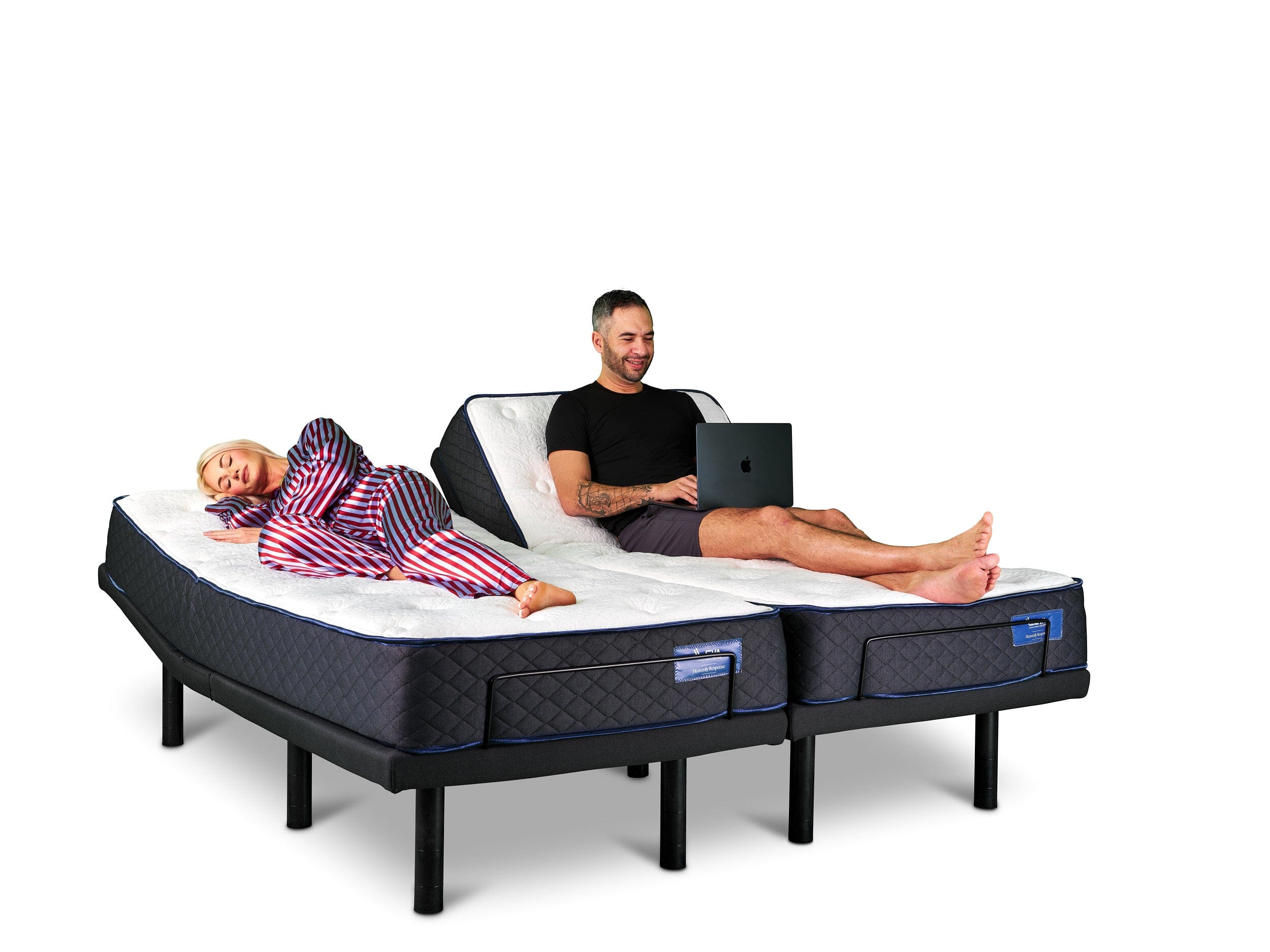
Leva Sleep’s adjustable bed systems approach the problem at the system level. Each side of a Split Queen or Split King base operates independently, with app-controlled heating and cooling pads that regulate temperature throughout the night instead of only during the first 90 minutes. Whisper-quiet German motors keep adjustments from waking the other partner, and the Leva Sleep app lets each person set their own temperature, elevation, and massage preferences.
More than 25,000 Canadian customers have used these systems, which have generated $50M in lifetime sales over eight years of adjustable sleep system experience. Leva Sleep designs and assembles its systems locally and delivers them with in-house white-glove service that includes setup, a product tutorial, and old-bed removal. The direct-to-consumer model keeps prices well below many comparable luxury competitors.
Split Beds, Toppers, and Couple Compatibility
Any shared topper, even a dual-zone model, still rests on a shared surface. One partner’s movement, body weight, and heat output affect the other side. The Chilipad 2.0 smart topper enables independent temperature settings on each side between 55°F and 115°F via water circulation, which comes close to true independence, but it still cannot change elevation, firmness, or anti-snore positioning.
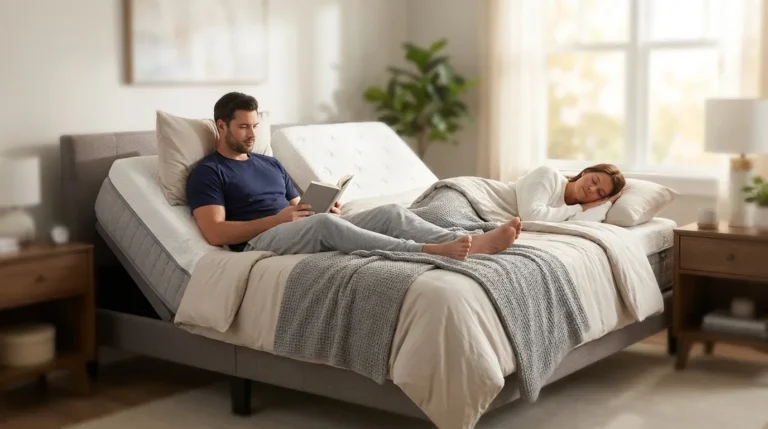
A Split Queen adjustable base with independent controls solves both the temperature problem and the broader compatibility problem at the same time. Each partner controls their own side’s temperature, elevation, and firmness. The Split Queen configuration mentioned earlier is particularly valuable for couples in smaller bedrooms who want split adjustability without a King footprint.
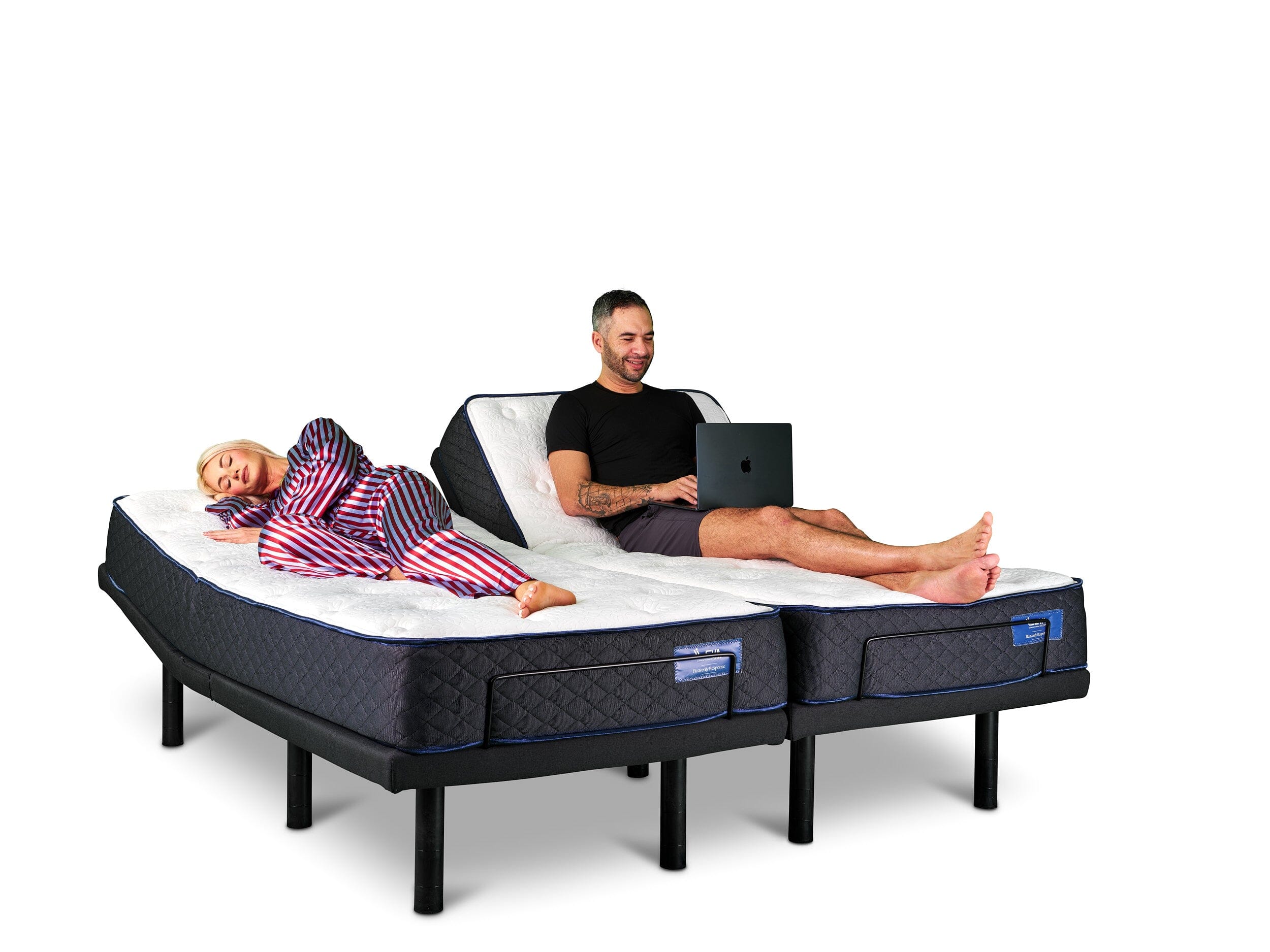
Couples using a split adjustable base and a topper get better results with two separate half-width toppers. Two separate toppers avoid the ridge that forms at the seam of a single full-width topper on independently moving sides.
Care, Lifespan, and Trial Periods
Gel toppers work as temporary cooling tools rather than permanent solutions. Gel-infused or latex toppers can help hot sleepers for a time, but their cooling properties often fade as materials age. Copper-infused foams face an extra durability concern because metal particulates can oxidize and speed up cellular degradation compared to non-infused foams.
PCM tends to last longer when it is embedded in foam rather than applied only as a surface coating. PCM applied as encapsulated microcapsules within fabric covers or foam layers in mattresses remains effective for 7–10 years but gradually loses efficacy.
Return policies also matter. Most Canadian topper retailers offer 30–100 night trials. Leva Sleep’s adjustable bed packages include a trial period with white-glove return handling, so customers do not have to manage disassembly on their own.
Frequently Asked Questions
How long does gel cooling in a mattress topper actually last?
Gel-infused foam usually delivers a cool-to-touch sensation for roughly 30 to 90 minutes after you lie down. After that window, the gel reaches thermal equilibrium with the body and stops absorbing additional heat, so the topper behaves like standard memory foam for the rest of the night. In warmer rooms or under heavy bedding, this saturation point can arrive even sooner. All passive technologies eventually reach equilibrium, even when they extend the effective window.
Are copper or graphite toppers worth the extra cost over gel for hot sleepers?
Copper and graphite move heat away through conduction rather than simple absorption, so they channel heat continuously instead of filling up like a heat sink. Graphite’s thermal conductivity is dramatically higher than standard foam, and copper adds antimicrobial benefits alongside its thermal properties. For sleepers who overheat in the second half of the night, after gel has already saturated, copper or graphite toppers usually perform better. The price premium over gel is modest, often around $40–$100 CAD more for a queen size. None of these materials fix the deeper issue of a dense all-foam mattress trapping heat in its core, and a breathable pocket-coil base beneath any cooling topper often makes a bigger difference than the choice of infusion material.
Can a cooling mattress topper work on an adjustable base?
A cooling topper can work well on an adjustable base when it meets a few key criteria. A 2–3 inch thickness in flexible memory foam or latex is the practical sweet spot for adjustable base compatibility. Toppers thicker than 4 inches risk creasing at the hinge points during elevation, particularly in head-up positions. On split adjustable bases, two separate half-width toppers perform better than a single full-width topper, which can create a ridge at the seam when the two sides move independently. Toppers with rigid internal structures or coil inserts do not suit adjustable bases, and an elasticized corner skirt helps keep any topper anchored during repeated position changes.
When does it make more sense to invest in an integrated system than a topper?
A topper makes sense as a short-term fix or modest upgrade when the underlying mattress feels comfortable and remains relatively new. An integrated system becomes the stronger choice when one or more conditions apply. These include a hot sleeper who wakes up multiple times per night despite trying a topper, partners with very different temperature preferences that a shared surface cannot accommodate, a mattress older than seven or eight years that sleeps hot no matter what sits on top, or a partner who also needs elevation for snoring, reflux, or sleep apnea. Active temperature regulation, where a system continuously heats or cools each side independently throughout the night, tackles the problem at its source instead of managing only surface symptoms.
Conclusion: Choosing Between a Topper and a Complete System
A cooling gel mattress topper can be a reasonable first step for a mildly warm sleeper on a budget. Evidence shows that gel provides real but time-limited relief and that copper, graphite, and PCM alternatives can extend that comfort window without changing the basic limit of passive technology. These materials cannot actively remove heat or manage two different temperatures on the same surface.
For couples in Ontario and Alberta where one partner overheats through the night, a more durable answer comes from a system that regulates temperature actively and independently on each side of the bed. Leva Sleep’s Split Queen and Split King adjustable bases with app-controlled heating and cooling pads are built for this scenario, combining individualized temperature control with whisper-quiet elevation, anti-snore positioning, and white-glove delivery.
The decision path stays simple. If the problem is mild and occasional, a 2–3 inch PCM or copper-infused topper in the $150–$280 CAD range is worth trying. If the problem disrupts sleep most nights and creates tension between partners, a topper delays the issue instead of resolving it.
Ready to solve the problem at the source? Browse Split Queen and Split King packages now.