
Written by: Matthew Timmins, Founder and Managing Director, Leva Sleep | Last updated: July 28, 2026
Key Takeaways
- Hypoallergenic bedding blocks dust-mite allergens with fabric pore sizes of 6 µm or less and independent certifications such as Oeko-Tex or GOTS.
- Adjustable-base bedding needs extra-deep pockets and all-around elastic so sheets stay secure through elevation cycles.
- Verifiable certifications (Oeko-Tex, GOTS, AAFA, ECARF, GREENGUARD Gold) matter more than the unregulated term “hypoallergenic.”
- Weekly hot washing at 55–60 °C, high-heat tumble drying, and humidity control between 30–50 % maintain allergen protection.
- Leva Sleep’s adjustable bed packages include hypoallergenic sheets and protectors designed for split adjustable bases.
How Hypoallergenic Bedding Is Defined in Canada
The term “hypoallergenic” has no regulatory definition in Canada. Health Canada does not regulate its use on bedding products, so any manufacturer can apply the label without independent verification. Buyers need to rely on measurable criteria and third-party testing instead of marketing language.
The certifications that carry genuine weight in the Canadian market include:
- Oeko-Tex Standard 100, which tests for harmful substances including formaldehyde, heavy metals, and pesticides
- GOTS (Global Organic Textile Standard), which certifies organic fibre production and chemical-free processing
- Asthma & Allergy Friendly® (AAFA), which evaluates allergen barrier performance, washability, breathability, and durability under repeated cleaning
- ECARF Seal, which is awarded after an independent scientific advisory board verifies through clinical studies that allergic reactions are very unlikely
- GREENGUARD Gold, which certifies low chemical emissions and VOCs that affect indoor air quality
These certifications matter because they confirm the physical and chemical properties that make allergen barriers effective in real bedrooms.
How Allergen-Barrier Bedding Works
Dust mite fecal particles average 10–40 µm in diameter. A fabric with pore sizes at or below 6 µm creates a physical barrier that blocks this primary allergen trigger. A clinical study published in Thorax reported a significant reduction in Der p1 allergen levels in mattresses covered with impermeable encasements. The 2011 systematic review in Allergy examined 9 trials of house dust mite avoidance measures (including impermeable bedding covers) and did not evaluate pore sizes of encasements.
Full six-sided encasements seal the mattress completely and can lead to a decline in existing mite populations over time by limiting their access to new skin cells. Five-sided protectors reduce new allergen accumulation on the sleeping surface but allow mites to exit from the uncovered bottom.
Who Benefits Most From This Guide
This guide speaks directly to Canadian couples aged 35–70 in Ontario and Alberta who live with dust-mite or asthma-related allergies and sleep on split adjustable bases. Standard bedding often fails this group twice. It does not block allergens effectively, and it does not stay secured through the elevation cycles that adjustable bases perform nightly.
Four Core Criteria Before You Buy
Evaluate any product against these four criteria, which together create a complete allergen-control system:
- Pore size: target fabrics with pore sizes below 6 µm to physically block allergen particles.
- Certification: look for Oeko-Tex, GOTS, AAFA, or ECARF on the product label or manufacturer website to verify claims instead of relying on untested marketing language.
- Washability: washing at 55–60 °C kills all dust mites in tested bedding samples; washing at 40 °C reduces but does not eliminate live mites, so the fabric must tolerate these higher temperatures.
- Adjustable-base fit: fitted sheets need extra-deep pockets (typically 40 cm or more) and all-around elastic. Sheets with elastic only at the corners provide less grip than those with all-around elastic, especially on articulating bases.
Trade-offs and Limitations of Allergen Barriers
Encasements alone may not produce meaningful symptom improvement for every dust mite allergy sufferer. They work best when paired with weekly hot washing and humidity control. It is impossible to eliminate house dust mites entirely; allergen barrier covers reduce exposure compared to untreated bedding but do not create a mite-free environment.
Tightly woven barrier fabrics can feel stiffer than standard percale. Bamboo and lyocell options provide a softer feel and moisture-wicking performance, but they still need verified pore-size data before you treat them as true allergen barriers. Understanding these trade-offs sets realistic expectations and prepares you to focus on long-term maintenance.
Care Routine for Long-Term Allergen Control
A consistent weekly care routine maintains hypoallergenic performance over time. These five steps form a layered defense system, with each one targeting a different part of the mite lifecycle or moisture load:
- Wash sheets and pillowcases weekly at 55–60 °C. Research published in the Journal of Allergy and Clinical Immunology found that washing at 55–60 °C killed all dust mites in tested bedding samples. Use a full cotton or whites cycle, not a quick express programme, so heat reaches the fabric centre.
- Tumble dry on high heat for at least 15 minutes. Thorough tumble drying at high heat is almost as effective as hot washing for dust mite elimination, and it prevents moisture retention that encourages mould.
- Wash the mattress protector monthly at 60 °C. Overnight sweat, roughly 200 ml per adult, collects in bedding and creates a breeding ground for dust mites and bacteria, so the protector needs its own hot wash cycle.
- Air the bedroom for about 10 minutes each morning. Opening a bedroom window for about 10 minutes allows humidity to settle near 45–55%, which sits below the level at which dust mites can thrive.
- Vacuum the mattress encasement every six months with a HEPA-filter vacuum. Mattresses and pillows should be thoroughly vacuumed every six months to remove accumulated debris, including dead mites and skin flakes.
Maintaining indoor humidity between 30% and 50% discourages dust mite and mould growth. A dehumidifier or HEPA air purifier helps keep levels stable between wash days.
Common Bedding Mistakes Allergy Sufferers Make
- Buying bedding labelled “hypoallergenic” without checking pore size or independent certification
- Washing at 40 °C and assuming allergens are controlled, even though washing at 40 °C kills less than 10% of dust mites
- Using a five-sided protector instead of a six-sided encasement on a mattress that already has a mite population
- Choosing standard-depth fitted sheets for an adjustable base, which allows sheets without extra-deep pockets and all-around elastic to pull free during elevation
- Using fabric softeners on moisture-wicking materials, even though fabric softeners can impair how moisture-wicking fabrics absorb sweat
- Skipping pillow encasements, even though pillow encasements help reduce surface levels of dust mite allergens
Hypoallergenic Bedding Features for Adjustable Bases
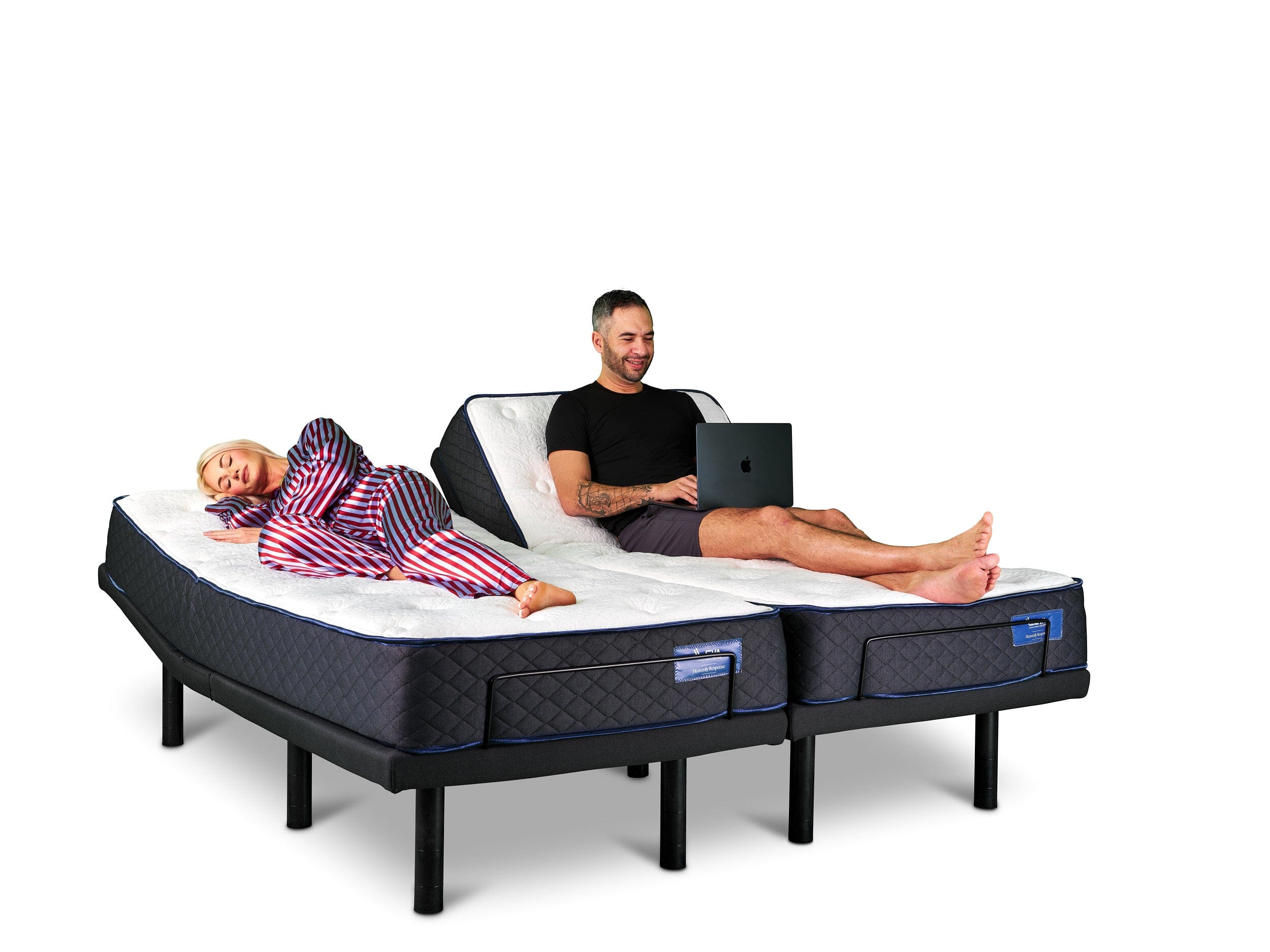
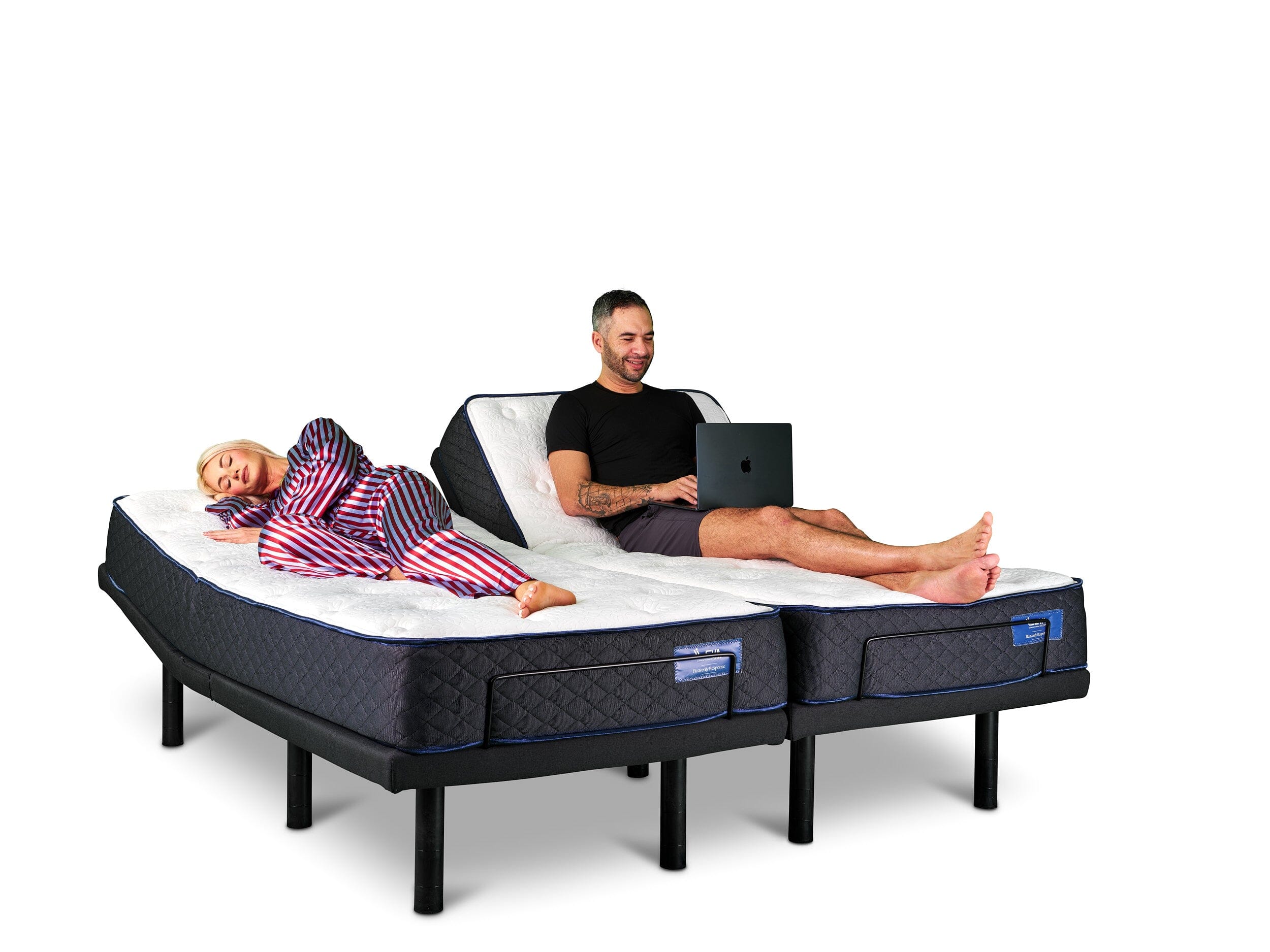
Split adjustable bases move in sections, so standard fitted sheets designed for flat bases often slip free. When the head and foot sections articulate independently, tension builds across the sheet and pulls the corners loose.
Two design features prevent this problem. Extra-deep pockets, typically 40 cm or more, accommodate thick foam or hybrid mattresses, and all-around elastic grips the full perimeter instead of just the corners. Together, these details keep the sheet anchored through nightly elevation cycles.
Side-remote pockets add practical convenience by keeping wireless remotes accessible at the bedside instead of on the mattress surface, where they can slide during movement. Leva Sleep designs its fitted sheets, mattress protectors, and accessories specifically for adjustable bases and includes these features as standard.
What Fabric Do Dust Mites Hate?
Dust mites need both moisture and organic material to survive, so fabrics that limit these conditions work best. The table below summarises key options against mite-resistance criteria from research literature.
| Fabric | Moisture Control | Mite-Resistance Mechanism | Washability at 60 °C |
|---|---|---|---|
| Organic cotton percale (200–300 TC) | Good, breathable, wicks moisture | Tightly woven one-over-one-under structure creates a denser barrier than sateen | Withstands repeated washing at 60 °C |
| Bamboo / Lyocell (Tencel) | Excellent, absorbs up to 40% more moisture than cotton and dries faster | Natural antimicrobial properties limit mite proliferation | Verify care label, some blends require lower temperatures |
| Linen | Excellent, dries faster than cotton and reduces the moisture mites require | Naturally antibacterial and antistatic, attracts less dust | Generally tolerates 60 °C, check manufacturer label |
| Tightly woven allergen-barrier encasement fabric | Moderate, breathable designs avoid moisture buildup | Pore size ≤6 µm physically blocks mite passage | Hot-water washing at 60 °C recommended for encasements |
The Mayo Clinic advises replacing wool or feather bedding with synthetic materials when allergy-proofing the bedroom, although research from the University of Otago found significantly lower dust mite populations in wool bedding compared to synthetic alternatives. The deciding factor is whether the material tolerates mite-killing wash temperatures and whether it sits inside a certified barrier encasement.
How to Confirm Bedding Is Truly Hypoallergenic
Use the following criteria to check any product before purchase:
- Pore size documentation: confirm the manufacturer states the 6 µm threshold discussed earlier for encasements and protectors, ideally with third-party verification.
- Independent certification: look for Oeko-Tex Standard 100, GOTS, AAFA Asthma & Allergy Friendly®, ECARF, or GREENGUARD Gold on the product page or packaging.
- Washability at 55–60 °C: the care label must confirm that the product tolerates hot-water washing, because items limited to 30–40 °C cannot be reliably decontaminated.
- Zipper quality on encasements: six-sided protection with tightly woven fabric and high-quality zippers is the standard for mattress encasements.
- No fragrance or dye additives: fragrance-free and dye-free detergent is recommended for sensitive skin; fabric softeners should be avoided entirely because they contain irritants.
Pillow Choices for Dust Mite Allergies
A certified allergen-barrier encasement with pore size under 10 µm is the single most important factor for blocking dust mite allergens, regardless of pillow fill. The AAAAI and NIAID recommend this as first-line environmental control.
When you compare fill materials, consider these options:
- Synthetic polyester fill in a zippered allergen-barrier encasement: ranks highest for dust-mite reduction, provides no organic food source, is machine-washable at 54 °C, and physically blocks Der p1 and Der f1 allergens.
- Latex or memory foam: ranks second because solid or moulded structures lack internal air pockets for mite colonisation, although surface allergens still accumulate and these materials usually cannot be washed at mite-killing temperatures.
- Down or feather: tightly woven down-proof casings can reduce allergen penetration from down and feather pillows to levels comparable to synthetic pillows, but the fill itself rarely tolerates 60 °C washing.
Pillows should be washed every three to six months if machine-washable, or replaced every one to two years, because they accumulate dust mites, oils, and moisture even under pillowcases.
Best Hypoallergenic Bedding for Canadians
Canadian buyers get the best results from products that meet all of the following at once. Encasements should have an independently verified pore size at or below 6 µm, at least one of the certifications listed earlier, confirmed washability at 55–60 °C, and, for adjustable base users, extra-deep pockets with all-around elastic.
The Asthma Society of Canada and Canadian Lung Association both recommend allergen-proof encasements as a primary strategy for reducing dust mite allergen exposure. Products that carry the AAFA mark meet the allergen barrier, washability, and durability criteria outlined earlier, which align closely with what Canadian allergy sufferers need.
Leva Sleep designs its sheets, protectors, and accessories for adjustable bases, with extra-deep pockets, all-around elastic, and side-remote pockets as standard features. Buyers evaluating Leva bedding can apply the pore-size and certification criteria above to confirm that each product meets their allergen-barrier requirements.
FAQ
Does hypoallergenic bedding actually reduce allergy symptoms?
Allergen-barrier encasements with pore sizes at or below 6 µm physically block dust mite fecal particles, which act as the primary trigger for dust mite allergies and asthma. Clinical evidence shows significant reductions in measurable allergen levels when encasements are combined with weekly hot washing at 55–60 °C. Encasements alone produce meaningful symptom improvement in roughly 30–40% of sufferers. The most reliable outcomes occur when encasements, hot washing, humidity control between 30–50% relative humidity, and HEPA vacuuming work together as a system.
Can hypoallergenic fitted sheets stay on an adjustable base?
Standard fitted sheets are not built for the articulation that adjustable bases create. When the head or foot section elevates, the sheet stretches across a curved surface and the tension dislodges corner pockets. Sheets designed for adjustable bases solve this with extra-deep pockets, typically 40 cm or more, and all-around elastic instead of corner-only elastic. All-around elastic spreads tension evenly across the mattress perimeter and maintains grip through elevation cycles. Buyers should confirm both pocket depth and elastic coverage, because a sheet labelled “deep pocket” may still use corner-only elastic.
What is the difference between a mattress protector and a mattress encasement for allergies?
A mattress protector is a five-sided cover that fits over the top and sides of the mattress like a fitted sheet. It reduces new allergen buildup on the sleeping surface but leaves the bottom of the mattress open, which allows existing dust mites to exit and new mites to enter from below. A mattress encasement is a six-sided cover with a zipper that fully encloses the mattress. Over 12–18 months, a sealed encasement starves the existing mite population by cutting off access to shed skin cells. For allergy sufferers with an established mite population in their mattress, a six-sided encasement delivers substantially greater long-term allergen reduction than a five-sided protector.
How often should allergy sufferers wash their bedding in Canada?
Health Canada guidance on reducing indoor allergen exposure recommends weekly hot washing of all bedding as a core strategy for dust mite allergy. For moderate to severe allergy sufferers, the suggested schedule is fitted and flat sheets every 3–4 days, pillowcases every 2–3 days, duvet covers weekly, and mattress protectors monthly. All washes intended to kill dust mites should reach 55–60 °C. Fabrics that cannot tolerate 60 °C water can be tumble dried on high heat for at least 15 minutes as an alternative mite-elimination step. Complete drying after every wash is essential because storing damp bedding promotes mould growth that undermines hypoallergenic performance.
Is Oeko-Tex the same as hypoallergenic certification?
Oeko-Tex Standard 100 and hypoallergenic certification address different types of risk. Oeko-Tex tests textiles for harmful chemical substances including formaldehyde, heavy metals, and pesticides, confirming that the product is safe for direct skin contact. It does not test allergen barrier performance or pore size. A product can carry Oeko-Tex certification and still allow dust mite allergens to pass through its fabric. In contrast, the AAFA Asthma & Allergy Friendly® certification and the ECARF Seal specifically evaluate physical allergen barrier performance, washability, and durability under repeated cleaning. For dust mite allergy sufferers, the most complete approach is to look for both Oeko-Tex for chemical safety and AAFA or ECARF for allergen barrier performance on the same product.
Bringing Your Bedding Decision Together
Selecting hypoallergenic bedding for a split adjustable base means weighing two sets of criteria at the same time. Allergen-barrier performance depends on pore size at or below 6 µm, independent certification, and washability at 55–60 °C. Adjustable-base fit depends on extra-deep pockets, all-around elastic, and side-remote pockets. Products that meet only one set of criteria either fail to block allergens or fail to stay on the base through nightly elevation cycles.
The weekly care checklist of hot washing at 55–60 °C, high-heat drying, monthly protector washing, daily airing, and biannual HEPA vacuuming keeps protection consistent. No fabric or encasement maintains its allergen-blocking performance without this ongoing maintenance.
Compare any bedding you currently use or plan to buy against the pore-size, certification, washability, and fit criteria in this guide before you commit. Leva Sleep’s adjustable bed packages include bedding accessories engineered specifically for split adjustable bases, with deep-pocket and elastic specifications that standard bedding usually lacks.