Written by: Matthew Timmins, Founder and Managing Director, Leva Sleep
Snoring affects about 40% of adults, often creating tension in relationships by disrupting sleep for both partners. Many couples face nightly struggles, with some even opting for separate beds or rooms, a trend called “sleep divorce.” This guide looks at how snore prevention pillows and adjustable beds can help couples sleep better together, offering practical ways to tackle sleep disturbances while staying close.
Snoring does more than just annoy. It fragments sleep, leading to tiredness, weaker immunity, and even arguments between partners. Common fixes like nasal strips or separate sleeping spaces often fall short or cause new issues. Pairing specialized pillows with adjustable beds, however, provides a well-rounded solution that prioritizes both comfort and connection. Leva Sleep offers these tailored options for couples looking to improve their rest.
Why Snoring Disrupts Couples’ Sleep and How It Affects You
Snoring starts with airflow making soft tissues in the throat vibrate, creating noise that can range from quiet hums to loud disturbances. This happens in the nasopharynx, often involving the soft palate.
Muscles relax during sleep, narrowing the airway as tissues like the tongue and soft palate loosen. Factors such as body position, weight, or alcohol use can make this worse. Sleeping on your back often adds to the problem by letting gravity pull tissues downward.
Constant snoring causes more than noise. It can damage airway tissues over time, worsening the condition. For the non-snoring partner, interrupted sleep brings fatigue and frustration. The snorer also suffers, missing out on deep, restorative rest due to partial airway blocks.
Relationships feel the strain too. Lack of sleep can spark arguments, reduce closeness, and build resentment. Both partners deal with stress, whether from guilt over snoring or irritation at being woken up. A combined approach with pillows and adjustable beds targets these root causes for lasting relief.
How Adjustable Beds Help Couples Sleep Better
Custom Comfort with Adjustable Beds
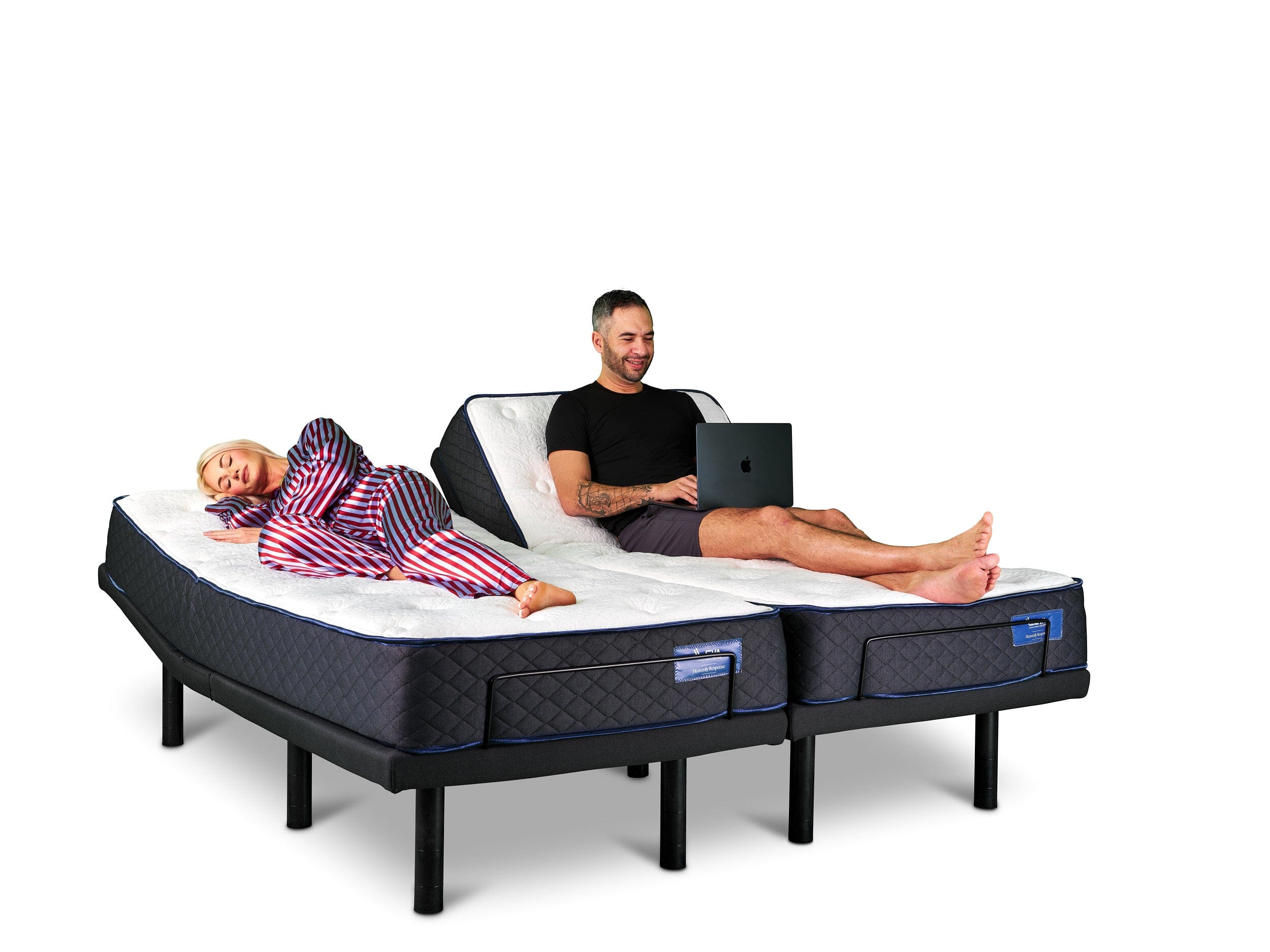
Adjustable beds have come a long way from clunky hospital models. Split designs, like Leva Sleep’s Split Queen and King options, let each partner adjust their side independently while sharing the same bed. This setup meets different sleep needs without forcing anyone to compromise.
These beds reduce snoring by slightly raising the head, which helps keep airways open. A subtle tilt uses gravity to stop soft tissues from blocking airflow. For many, this simple change cuts down snoring noticeably.
They also boost overall comfort. A zero-gravity position, raising both head and feet, supports the spine and eases joint pressure. Couples dealing with sleep apnea, reflux, or pain find added relief through these flexible positions.
With split controls, one partner can elevate their side for health reasons while the other stays flat. Unlike standard beds, this avoids the need for either person to sacrifice their ideal setup.
Targeted Support from Snore Prevention Pillows
Snore prevention pillows focus on keeping your head, neck, and jaw in positions that reduce airway blockage. Unlike regular pillows, they’re built for function over mere softness.
Cervical pillows support the neck’s natural curve, stopping the head from tilting into airway-closing angles. Contoured shapes hold the head steady and keep the spine aligned.
Positional therapy pillows encourage side sleeping with features like bolsters or wedges. This position often prevents the tongue from falling back and obstructing airflow.
Wedge pillows lift the upper body gradually, much like an adjustable bed, helping with mild sleep apnea or reflux alongside snoring.
Materials matter as well. Memory foam molds to your shape for steady support, while latex offers a firmer, cooler feel. Some include cooling features to manage heat, which can worsen snoring if tissues swell.
Explore how these pillows pair with adjustable beds. Check out Leva Sleep’s solutions for a combined approach.
Combining Pillows and Beds for Uninterrupted Sleep
Two Tools, Better Results
Adjustable beds and snore prevention pillows work best together, tackling snoring from different angles. The bed lifts your upper body to ease airway pressure, while the pillow keeps your head and neck perfectly aligned at any angle.
This duo targets the main causes of snoring. Airway narrowing happens when tissues can’t stay open during breathing. The bed’s tilt reduces this strain, and the pillow supports key muscles through every sleep stage.
Smart features in beds, like Leva Sleep’s anti-snore mode, detect snoring and adjust gently during the night. Paired with a pillow’s steady hold, this creates a responsive setup that adapts to your shifting positions.
Addressing snoring fully requires ongoing support. Effective solutions restore airway function and muscle tone. This combined system delivers both for consistent, quiet sleep.
Personalized Sleep Spaces for Two
Split adjustable beds let each partner customize their side, creating unique comfort zones in one shared space. You can pick your bed angle and pillow type without affecting the other person.
If only one partner snores, they can use elevation and a specialized pillow while the other keeps a flat setup. This avoids solutions that help one but bother the other.
Quiet motors and separate controls mean adjustments on one side don’t disturb the other. No more waking up from sudden shifts, as movements stay isolated to each half.
Temperature needs differ too. Cooling pillows for one partner pair with individual bedding choices, letting both enjoy their ideal sleep environment side by side.
Boosting Health and Connection
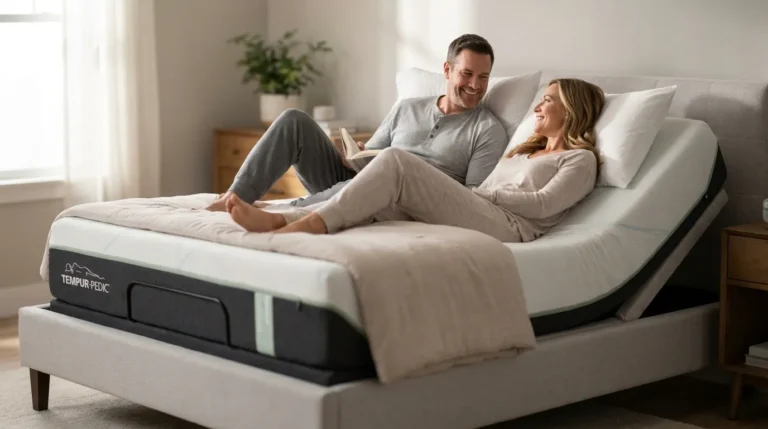
Solving sleep issues does more than improve rest. Couples often feel closer, argue less, and enjoy life more when sleep disruptions fade. Sharing a bed comfortably rebuilds emotional ties.
Health benefits show up fast with steady sleep. Better focus, stronger immunity, and lower stress follow. Snorers gain energy and heart health from open airways, while partners enjoy unbroken rest.
This approach also prevents worse problems down the line. Untreated snoring can lead to sleep apnea. Proper positioning helps stop this progression early.
Financially, good sleep pays off with higher productivity and fewer medical costs. Investing in quality sleep setups brings lasting value through better daily life.
What Sets Leva Sleep Apart for Couples
Built for Shared Sleep Needs
Leva Sleep designs products with couples in mind. Their Split Queen size offers personalized control in a compact footprint, ideal for smaller bedrooms.
Quiet German motors ensure adjustments don’t wake anyone, solving a common issue with older adjustable beds. Every movement stays smooth and silent for a calm sleep space.
App controls make it easy to save settings or adjust without fumbling for remotes. Features like silent alarms wake one partner without disturbing the other, adding practical convenience.
Canadian-made parts ensure durability and quality, keeping costs reasonable by cutting import fees while supporting local production.
Smart Anti-Snore Features
Leva Sleep’s Anti-Snore Mode actively cuts down snoring by detecting it and gently raising the head a few degrees. These small shifts open airways without waking the sleeper.
The system adapts over time, learning your patterns for fewer, more effective adjustments. This tailored response boosts results with minimal disruption.
Pairing with pillows enhances this. The pillow holds head and neck steady as the bed moves, keeping airways clear through every tweak.
A Full Sleep Setup
Leva Sleep goes beyond beds with bedding made for adjustable bases. Fitted sheets with deep pockets stay secure during position changes, avoiding nightly tugs and fixes.
Duvets with clips keep covers even when bed angles differ, ensuring both partners stay comfortable. Pillows match the bed’s tilt, maintaining support at any setting.
Quality at a Fair Price
Through direct sales, Leva Sleep cuts costs by 30-50% compared to retail stores, offering high-end features without the steep price. Strong steel frames and quality foams ensure long-term use.
Canadian manufacturing speeds delivery, lowers shipping fees, and maintains strict quality checks, adding value while reducing environmental impact.
Easy Delivery and Setup
Leva Sleep’s white-glove service handles everything from delivery to setup. Trained staff place the bed, assemble it, and remove old furniture, making the switch hassle-free.
They also teach you how to use every feature, ensuring you get the most from your new system. This full support cuts stress and sets you up for success.
Ready for better sleep? Explore Leva Sleep’s adjustable beds today.
Tips for Choosing and Using Your Sleep System
Finding the Right Snore Prevention Pillow
Picking a pillow means matching it to how you sleep, your body, and snoring habits. Side sleepers do well with contoured memory foam for neck support and spine alignment.
Back sleepers need slight lifts with firm support to stop airway blockage. Stomach sleepers might try low-profile pillows that ease them toward side sleeping over time.
Materials affect comfort too. Memory foam shapes to you but can trap heat. Latex stays cooler with similar support, while gel foams blend both benefits.
Firmness depends on weight and position. Heavier folks need sturdier pillows for alignment, while lighter sleepers might prefer softer options for ease.
Adjusting Your Bed for Best Results
Setting up an adjustable bed takes trial and error to find the right angle for snoring relief and comfort. Start with a small 3 to 7-degree tilt and increase slowly until snoring drops.
Some systems, like Leva Sleep’s, fine-tune pillow areas separately for precise neck positioning. Save custom settings via app for quick access to your favorite setups.
Timing matters. Test starting the night elevated or letting the bed adjust only when snoring starts. Work with your partner to keep adjustments quiet and smooth.
Steering Clear of Common Mistakes
Many couples focus on one person’s needs, ignoring the other’s comfort, which can create new issues. Solutions must balance both partners’ sleep.
Skimping on bedding is another error. Standard sheets slip on adjustable beds. Use fitted options and matching pillows to maintain benefits.
Give it time, about 2-4 weeks, to adapt to new positions. Rushing or ignoring other factors like temperature differences can limit success.
Choosing based only on cost often disappoints. Look for features suited to your specific sleep challenges for better long-term value.
Leva Sleep Compared to Standard Options
|
Feature |
Leva Sleep’s System |
Flat Bed with Regular Pillow |
Basic Adjustable Bed |
|
Snore Relief |
Custom tilt, smart mode, pillow support |
No positional help, may worsen snoring |
Simple lift, no pillow pairing |
|
Personal Fit |
Split controls, pillow choices, app use |
No adjustments, same for both |
Basic settings, no extras |
|
Airway Aid |
Bed and pillow combo keeps airways open |
Little help, can increase blockage |
Inconsistent without full support |
|
Relationship Impact |
Keeps bed shared, cuts disruption |
Often leads to separate sleep, strain |
Partial help, some discomfort |
Leva Sleep’s approach handles multiple sleep issues at once, unlike flat beds that offer no flexibility or basic adjustable models missing key features. The full system supports health and partnership over time.
Common Questions About Snore Prevention Tools
How do pillows enhance an adjustable bed’s anti-snore mode?
Pillows keep head and neck aligned for steady support, while the bed’s mode lifts dynamically to open airways. Together, they reduce tissue vibration more effectively than either alone.
Can an adjustable bed stop snoring without a special pillow?
An adjustable bed can lessen snoring by raising the head, but a pillow adds consistent support to prevent airway closure during shifts, especially for tougher cases.
Which pillows suit split adjustable beds for couples?
Cervical or side-sleeping pillows work well, letting each partner match their angle. Memory foam contours hold shape across tilts, aiding anti-snore effects.
How does Leva Sleep’s Anti-Snore Mode operate?
It raises the head slightly when snoring starts, manually or via sensors, opening airways. With a pillow, it ensures neck alignment through every small change.
What’s the adjustment period for a new sleep system?
Expect 2-4 weeks to get used to new positions. Start with small tilts, tweak settings gradually, and experiment. Most notice better sleep within a week if they stick with it.
Bring Back Restful Shared Sleep with Leva Sleep
Finding peaceful sleep as a couple takes more than quick fixes. Snore prevention pillows and adjustable beds together address snoring’s root causes, like blocked airways, while fitting each partner’s needs.
Leva Sleep stands out by focusing on shared sleep challenges with split designs, smart anti-snore tech, and matching accessories. This goes beyond comfort to improve health and strengthen bonds.
Better sleep means better days, stronger connections, and lasting wellness. Canadian quality, fair pricing, and full-service setup make this accessible to more couples.
Stop letting snoring or mismatched needs steal your rest. See how Leva Sleep’s adjustable beds can restore quiet, shared sleep to your bedroom now.