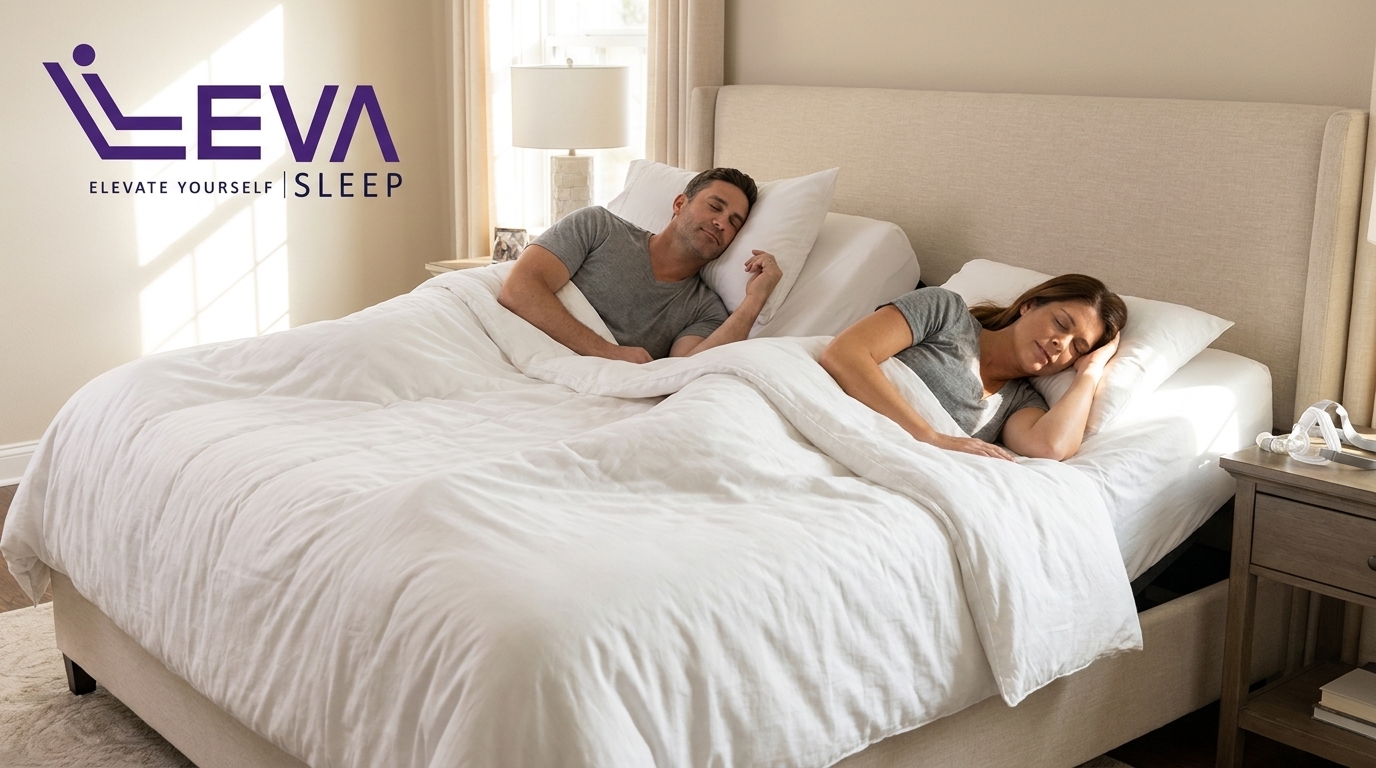
Written by: Matthew Timmins, Founder and Managing Director, Leva Sleep | Last updated: July 21, 2026
Key Takeaways for Sleep Apnea Shoppers
- Head-of-bed elevation between 20–30° can reduce the apnea-hypopnea index by up to 45% in positional obstructive sleep apnea cases.
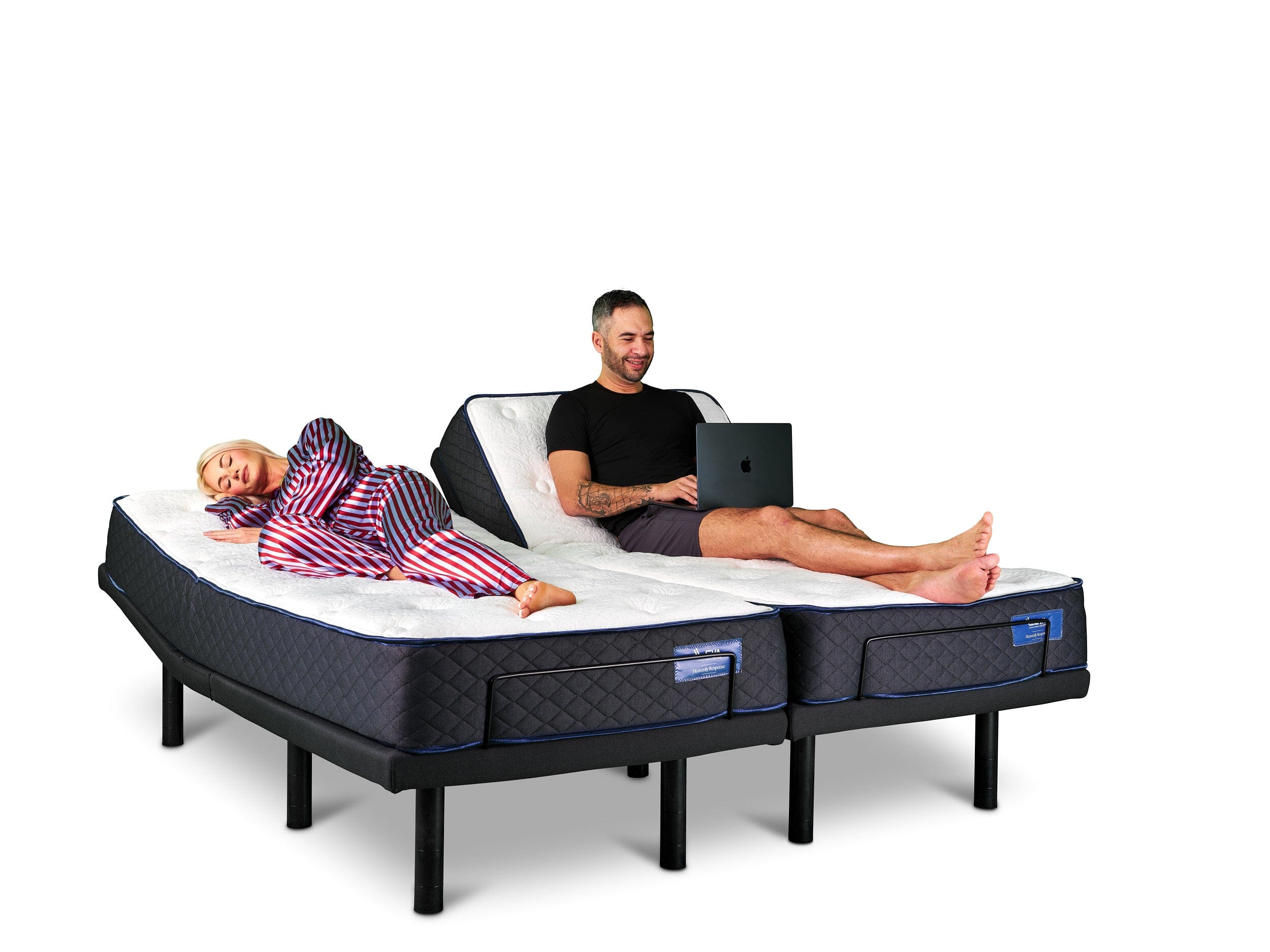
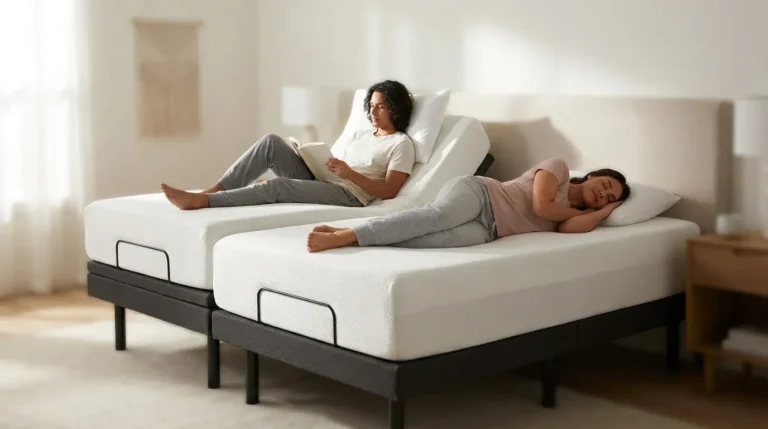
- Split Queen and Split King configurations give each partner independent elevation controls so one person can maintain a prescribed angle without disturbing the other.
- Leva Sleep specializes in Split Queen bases with whisper-quiet German motors and a 2026 app-controlled anti-snore mode that operates within the evidence-based elevation window.
- Adjustable beds complement, but do not replace, CPAP therapy for moderate-to-severe sleep apnea and should be used under physician guidance.
- Canadian couples can explore Leva Sleep’s adjustable bed packages to find a Split Queen or Split King setup that supports sleep apnea management.
Adjustable Bed Market for Canadian Sleep Apnea Buyers
The global adjustable bed base market is projected to grow from USD 3.81 billion in 2024 to USD 7.5 billion by 2035, driven by demand for sleep apnea and chronic pain solutions among Canada's aging population. A 2024 study of 51,337 Canadians aged 45–85 found that 28.1% had moderate-to-severe obstructive sleep apnea, yet 92.9% of high-risk individuals remain undiagnosed.
Queen adjustable bed bases in Canada in 2026 typically start at $700–$995 for entry-level models, with mid-range options $1,100–$2,000 and premium or medical-grade reaching $2,500–$4,500. Most couples managing sleep apnea land in the mid-range tier, where dual motors, zero-gravity presets, and anti-snore modes become standard.
Leva Sleep occupies a distinct position in this market as Canada's Split Queen specialist. The company's 8 years of experience and 25,000+ customers have highlighted two recurring complaints about basic adjustable bases: weak snoring response and disruptive motor noise. To address these gaps, Leva designs, assembles, and delivers its adjustable systems in-house, which supports pricing 30–50% below comparable luxury competitors while integrating whisper-quiet German motors and a 2026 anti-snore mode.
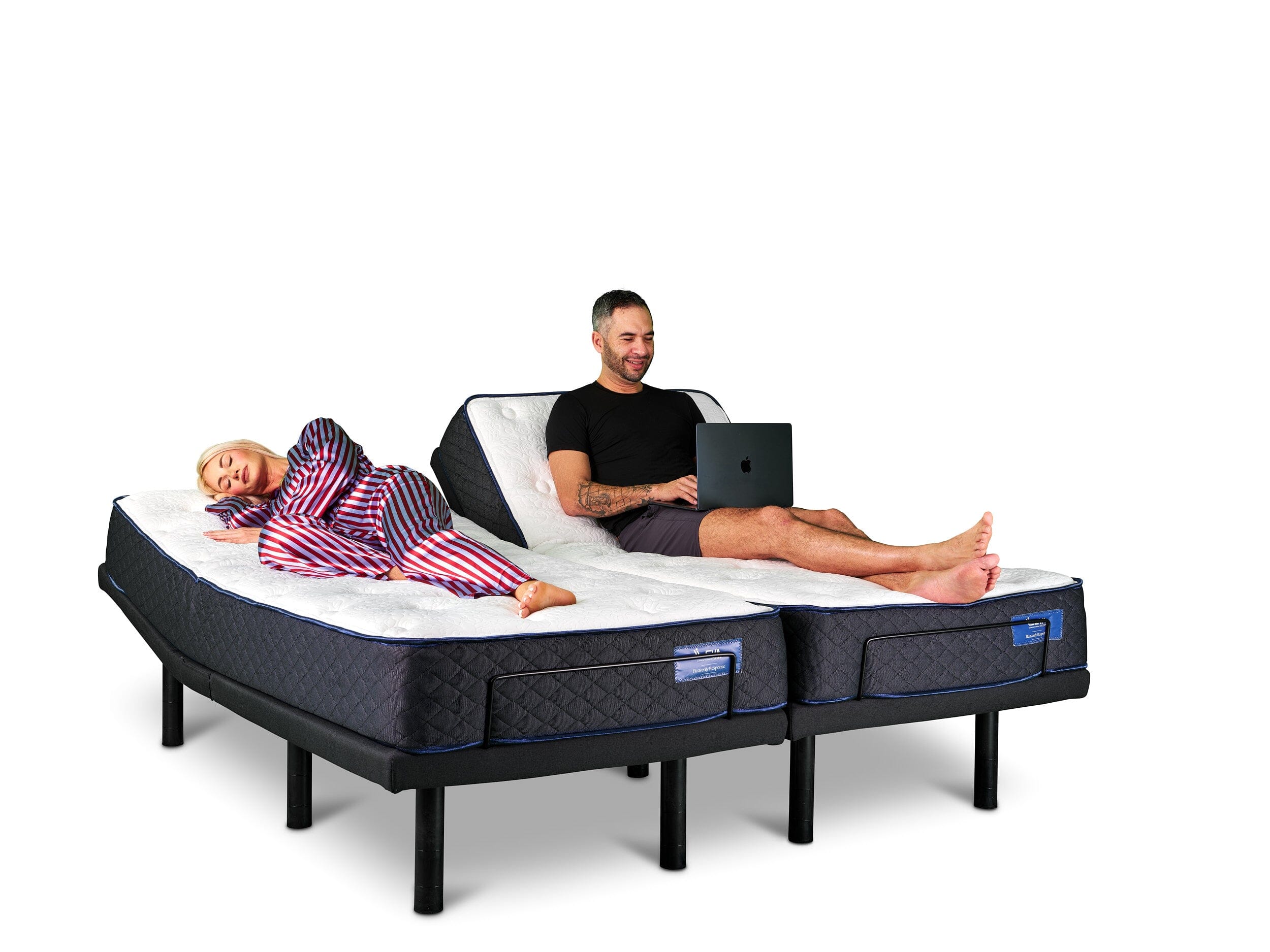
Browse Leva Sleep adjustable bed packages for Canadian couples
How Adjustable Beds Support Sleep Apnea Treatment
To understand why adjustable beds are recommended for sleep apnea management, it helps to look at the clinical evidence behind positional therapy. Souza et al. (2017) in Sleep & Breathing tested head-of-bed elevation of 7.5° on obstructive sleep apnea severity. Ravesloot et al. (2012) in Sleep and Breathing concluded that positional therapy is undervalued as a treatment for position-dependent snoring and obstructive sleep apnea.
Positional obstructive sleep apnea responds meaningfully to bed elevation, while central sleep apnea shows no benefit because the problem is not mechanical airway collapse. Elevation reduces the gravitational pull on soft tissue in the throat and helps keep the airway more open throughout the night.
The following table summarises the evidence-based elevation protocol for adjustable bed use in positional OSA management.
| Elevation Angle | Clinical Effect | Practical Notes |
|---|---|---|
| Below 15° | Insufficient gravitational effect on airway | Comparable to a standard wedge pillow, with minimal AHI reduction. |
| 15–20° | First-line clinical recommendation for mild OSA | Comfortable for most sleepers and a sensible starting point. |
| 20–30° | Evidence-based effective window (see the 45% reduction cited earlier) | Effective and tolerable range that matches most anti-snore presets. |
| Above 35–40° | Uncomfortable for sustained sleep; risk of sliding | Not recommended for nightly use. |
An adjustable bed's zero-gravity preset raises both the head and legs, providing moderate upper-body elevation that offers airway benefit for positional OSA while also reducing pressure on the lower back. Understanding this mechanism makes it easier to see which couples will benefit most from a split adjustable setup.
Which Couples Benefit Most from Split Adjustable Beds
Approximately 16% of Canadian adults have insomnia disorder; no data supports any percentage seeking beds that do more than lie flat. Adjustable beds with independent split controls are particularly relevant for the following couple scenarios.
- One partner has diagnosed positional OSA. A Split Queen or Split King allows the affected partner to maintain 20–30° elevation while the other sleeps flat, which removes the compromise that often drives sleep divorce.
- Both partners snore but at different intensities. Independent anti-snore presets let each side dial in the angle that works for their anatomy without waking the other.
- One partner uses CPAP. An adjustable base does not interfere with a CPAP mask or hose, and many CPAP users find an elevated position more comfortable to maintain throughout the night. A flat, stable head section on the adjustable base helps prevent the mask from shifting.
- Partners have different firmness preferences. Leva's Split Queen pairs two independently controlled bases under a single bed frame, so one side can use an all-foam mattress and the other a hybrid pocket coil.
- Couples facing sleep divorce. Numerous Leva Sleep customers who had been sleeping in separate rooms due to snoring or differing comfort needs report returning to the same bed after switching to a split adjustable configuration.
Key Considerations Before Choosing an Adjustable Base
Evaluating an adjustable bed for sleep apnea management means comparing several independent variables. The comparison table below covers the major Canadian options across six practical criteria.
| Brand | Budget Tier (CAD, Queen base) | Split Queen Available | Anti-Snore Feature | CPAP Compatibility | Delivery Option |
|---|---|---|---|---|---|
| Leva Sleep | ~$1,400 † | Yes, specialist offering | 2026 anti-snore mode (app-controlled micro-adjustments) | Flat stable head section; hose-friendly elevation | In-house white-glove (setup, tutorial, old bed removal) |
| Douglas | $1,299 (Queen base only) | Split King only (2× Twin XL) | Zero-gravity preset; no dedicated anti-snore mode listed | Compatible; no specific guidance published | Standard courier delivery |
| Tempur-Pedic | $1,800+ (Ease 4.0, Queen, without massage) | Split King configurations available | Refined automatic snore detection on select models | Compatible | Retailer-dependent (Sleep Country) |
| Orthex (Sophia 2) | $2,499.99 (Queen, base + mattress bundle) | Split King available | Anti-snore positioning preset | Compatible | White-glove at flat $400 nationwide |
| Ghostbed | Varies; broad distribution via Costco | Limited; single-model focus | Basic presets on select models | Compatible | Standard courier delivery |
| Sleep Country | $1,500–$2,000 entry tier in-store | Available via brand partners | Varies by brand carried | Compatible | Standard retail delivery |
Motor noise is a critical consideration but cannot be compared accurately across brands without standardized testing. Adjustable bases typically operate at 40–60 dB, which is comparable to a quiet conversation. Anything above 55 dB risks waking a light sleeper during a position change, so request decibel ratings from each manufacturer and test motors in-store when possible.
Trade-offs and Limitations of Adjustable Beds
Head elevation addresses positional OSA symptoms but does not cure the underlying condition. An adjustable bed with anti-snore presets is not a replacement for CPAP in diagnosed moderate-to-severe sleep apnea (AHI above 30); it complements prescribed therapy for mild positional cases but should follow a physician's treatment plan based on a sleep study.
- Automatic snore detection accuracy. Automatic sensors still produce frequent false triggers from coughing, traffic noise, or partner movement and add $500–$1,500 to the cost. Manual anti-snore presets usually deliver more reliable value at lower cost.
- Comfort ceiling. Angles above 35–40° are typically uncomfortable for sustained sleep and can cause sliding. Specialized sheets with deep pockets and extra elastic become necessary at higher elevations.
- Central sleep apnea. Elevation provides no benefit when the apnea is neurological rather than mechanical.
- Cost of a complete system. An adjustable base plus quality mattress setup typically costs $2,000–$4,000 CAD in Canada, which remains a significant investment even with Leva Sleep's pricing advantage versus luxury competitors.
Setup, Ownership, and Day-to-Day Use
Delivery and setup quality vary substantially between brands. Leva Sleep's in-house white-glove service includes bedroom delivery, full assembly, leg-height adjustment, a product tutorial, and old bed removal, which is either donated or recycled. This level of setup matters for adjustable bases because improper assembly can affect motor alignment and long-term noise levels.
How Leva Sleep's 2026 Anti-Snore Mode Works
Leva Sleep's 2026 anti-snore mode lets users make micro-adjustments to the head of the bed through the app to reduce or eliminate snoring without fully waking up to reposition. The system uses app-controlled Bluetooth and operates within the 20–30° evidence-based window, which avoids many of the false-trigger problems seen with fully automatic sensor-based systems on competing models. Whisper-quiet German motors help ensure that these micro-adjustments do not disturb the non-snoring partner.
CPAP Pairing Checklist for Adjustable Bases
Before pairing a CPAP machine with an adjustable base, confirm the following.
- The head section of the base is flat and rigid enough to prevent mask shifting at your prescribed elevation angle.
- The hose length on your CPAP is sufficient to accommodate head elevation without pulling the mask off during the night.
- The base has a USB port or nearby outlet for the CPAP humidifier.
- The remote or app allows quiet, one-touch return to your saved anti-snore position if you shift during the night.
- Your sleep specialist has reviewed the elevation angle you plan to use alongside your CPAP pressure settings.
Once you have confirmed these compatibility points, you can start comparing adjustable bases that match your medical positioning needs. Explore Leva Sleep adjustable bed packages for CPAP users
Common Buying Mistakes to Avoid
- Buying a single base for a couple. A single queen base elevates both sides simultaneously. If one partner needs 25° and the other prefers flat, a single base forces a compromise that defeats the purpose. A Split Queen or Split King is the correct configuration for couples with differing needs.
- Ignoring warranty and local service. Under-$500 CAD adjustable beds typically carry only a 1-year motor warranty. For a bed used nightly for medical positioning, a 5-year minimum motor warranty and a local service network are essential.
- Skipping a sleep study. An adjustable bed can reduce snoring symptoms, but snoring is sometimes a sign of obstructive sleep apnea with serious cardiovascular implications. A physician-ordered sleep study establishes whether elevation alone is appropriate or whether CPAP or other treatment is required.
- Choosing incompatible bedding. Standard fitted sheets often pop off adjustable bases at elevation. Leva Sleep designs its sheets with deep pockets and extra elastic specifically for adjustable use.
- Overlooking insurance and tax options. Many Canadian buyers pay full price without exploring the Medical Expense Tax Credit or employer extended health benefits, both of which may offset a portion of the cost when a physician prescription is in place.
Insurance, Tax Credits, and Funding Options
Canadians may be able to claim prescribed adjustable bed bases as eligible medical expenses under the Medical Expense Tax Credit when a medical practitioner prescribes them for a diagnosed condition such as obstructive sleep apnea. The requirements are a written prescription from an authorized medical practitioner, such as a physician, nurse practitioner, or specialist, that links the bed to the diagnosed condition, plus a detailed itemized receipt.
The Medical Expense Tax Credit provides a non-refundable tax credit of 15% federally plus the applicable provincial rate on eligible expenses that exceed the lesser of 3% of net income or the CRA's annual threshold ($2,759 for 2025). Some Canadian employer extended health benefit plans cover adjustable beds as durable medical equipment when a letter of medical necessity is obtained from a physician, though coverage varies significantly between plans. Veterans Affairs Canada may provide funding through its Treatment Benefits program for veterans with service-related medical conditions that require the equipment.
FAQ
What elevation angle should I use on an adjustable bed for sleep apnea?
The evidence-based effective range for positional obstructive sleep apnea is 20–30° of head elevation. Below 15° the gravitational effect on airway tissue is insufficient to produce a meaningful reduction in apnea events. Above 35–40° the position becomes uncomfortable for sustained sleep and increases the risk of sliding down the mattress. Most anti-snore presets on quality adjustable bases are calibrated to operate within the 20–30° window. Always confirm your target angle with the physician or sleep specialist who reviewed your sleep study results, because individual anatomy affects the optimal setting.
Can an adjustable bed replace my CPAP machine?
For mild positional obstructive sleep apnea, head elevation on an adjustable base can reduce apnea-hypopnea index scores meaningfully and may be used as a complementary or alternative approach under physician guidance. For moderate-to-severe OSA (AHI above 30), CPAP remains the standard of care for the reasons discussed in the limitations section above. Many CPAP users find that elevating the head improves positional comfort and reduces the number of events the CPAP must address during the night. Any change to a prescribed CPAP regimen should be made in consultation with a sleep specialist following a follow-up sleep study.
Is a Split Queen adjustable bed the right size for a couple managing sleep apnea?
A Split Queen is the correct configuration for couples who share a queen-size bedroom and need independent elevation control. It consists of two separate bases, each with its own motor, remote, and elevation settings, placed side by side within a shared frame. This layout allows one partner to maintain a 25° anti-snore angle while the other sleeps flat, without any mechanical linkage between the two sides. The Split Queen is a less common offering than the Split King, which uses two Twin XL bases, and Leva Sleep is one of the few Canadian specialists that builds it to customer specifications. Couples with a larger bedroom and no size constraint may prefer the Split King for the additional width each partner gains.
What should I look for in a warranty when buying an adjustable bed for medical use?
For a bed used nightly in a medical positioning role, prioritise a motor warranty of at least five years and a frame warranty of ten years or more. Confirm whether the warranty covers in-home service or requires the customer to ship components. Ask whether the warranty is voided by use with a CPAP machine or by operating the base at maximum elevation angles nightly. Local assembly and a domestic service network, rather than a drop-ship model, reduce the practical risk of a warranty claim going unresolved. Leva Sleep's vertical integration and in-house delivery team mean that service issues are handled by the same organization that built and installed the bed.
Conclusion: Choosing a Split Adjustable Bed for Sleep Apnea
For Canadian couples managing mild-to-moderate positional sleep apnea, the decision framework stays simple. Confirm the diagnosis with a sleep study, establish the target elevation angle with a physician, and then select a base that delivers independent split control, quiet motors, a reliable anti-snore preset in the 20–30° range, and CPAP compatibility. The Canadian Sleep Society recognises positional therapy as a legitimate adjunct to other treatments for obstructive sleep apnea, and the CRA's Medical Expense Tax Credit provides a partial offset when a physician prescription is in place.
Leva Sleep's Split Queen and Split King configurations, 2026 anti-snore mode, whisper-quiet German motors, and in-house white-glove delivery address the major gaps in the current Canadian market while maintaining a significant price advantage over many luxury competitors. With 15–20 adjustable models available versus the 3–5 found at general retailers, Leva offers the specialist depth that a medical-use purchase warrants.
Shop Leva Sleep's adjustable beds to compare Split Queen and Split King packages, review 2026 CAD pricing, and book a white-glove delivery consultation for Ontario or Alberta.