
Written by: Matthew Timmins, Founder and Managing Director, Leva Sleep | Last updated: July 17, 2026
Key Takeaways for Canadian Couples
- Sleep divorce, or sleeping apart to avoid disturbances, is increasingly common in Canada because of snoring and undiagnosed obstructive sleep apnea. Separate rooms can increase marital strain and reduce intimacy.
- Separate duvets, dual-zone temperature pads, positional therapy, mandibular devices, and CPAP therapy can reduce disruptions while couples stay in the same bedroom.
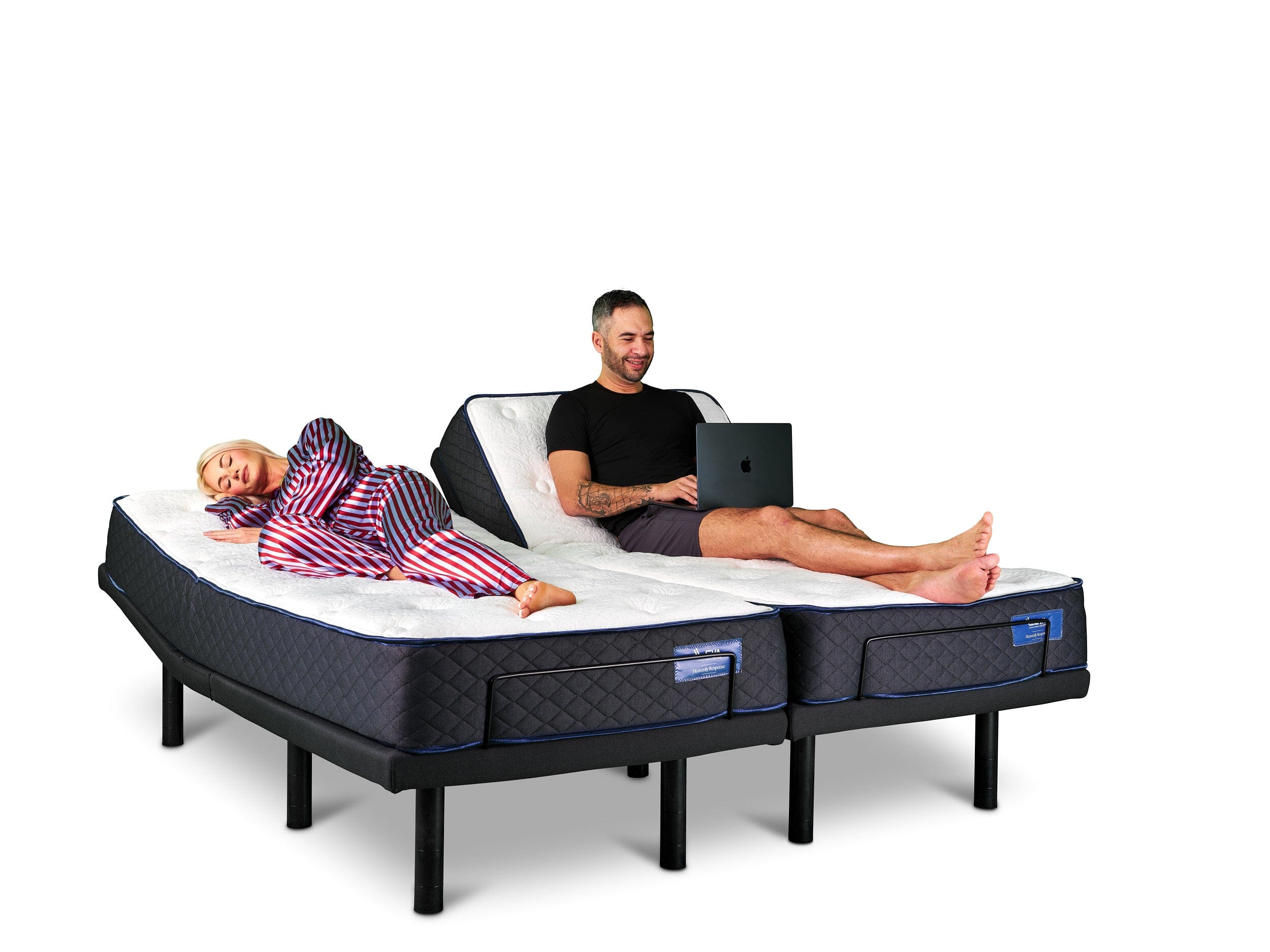
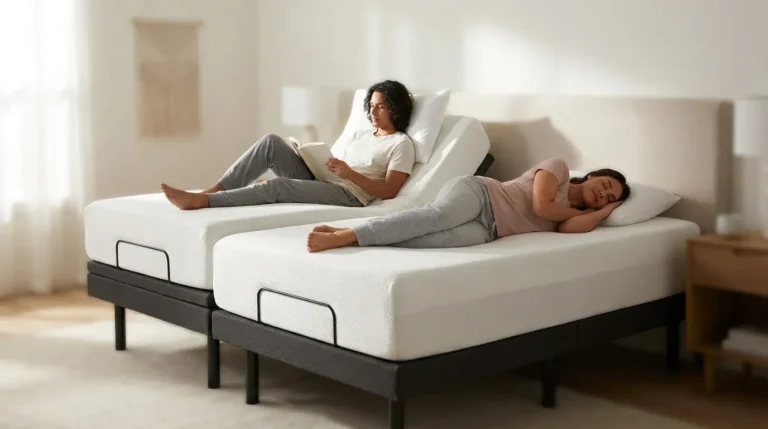
- Split adjustable beds, especially Leva Sleep’s Split Queen and Split King models, give each partner independent head and foot control, anti-snore automation, and per-side temperature regulation.
- These systems outperform flat beds, basic adjustable bases, Scandinavian duvets, and CPAP alone by addressing motion transfer, temperature clashes, snoring, and firmness mismatches at the same time.
- For Canadian couples who want to protect both their relationship and their sleep, explore Leva Sleep’s tailored adjustable bed packages with white-glove service.
Seven Practical Alternatives to Sleeping Apart
These seven options target the most common partner sleep disruptions while keeping couples in the same room.
- Separate duvets (Scandinavian Sleep Method): Each partner uses their own duvet, which reduces blanket hogging and thermal conflict. The Scandinavian sleep method is standard in Sweden, Denmark, and Norway and is also used in Germany. It serves as a practical alternative for couples considering sleep divorce.
- Dual-zone temperature pads: Active cooling and heating systems such as the Eight Sleep Pod or ChiliSleep OOLER provide independent per-side temperature control through water-based thermal regulation. These pads help couples with extreme thermal mismatches share one bed comfortably.
- Positional therapy and side-sleeping aids: Studies show that moving from supine to lateral sleeping can reduce the apnea-hypopnea index in positional OSA patients. Wedge pillows and bumper belts help maintain this position without medication.
- Mandibular advancement devices (MADs): MADs can significantly reduce snoring frequency and intensity compared to placebo devices. Custom-fitted versions often feel more comfortable and perform better than over-the-counter options.
- CPAP therapy: CPAP remains the clinical standard for moderate to severe OSA, and treating OSA can improve a bed partner’s sleep. However, some CPAP users report that the mask negatively affects physical intimacy.
- Split Queen adjustable beds: This space-conscious split configuration gives each partner independent head and foot elevation, firmness, and temperature control on a shared frame. Leva Sleep offers this format specifically for couples in smaller bedrooms.
- Split King adjustable beds with anti-snore mode: A Split King setup uses two Twin XL adjustable bases positioned side by side, giving each sleeper full control of head and foot sections. Anti-snore mode detects snoring and makes micro-adjustments to the head of the bed, which improves airway positioning without waking either partner.
Managing Blanket Hogging and Temperature Clashes
Temperature incompatibility ranks among the most common shared-sleep complaints. Research published in Indoor and Built Environment shows women tend to have cooler extremities and prefer higher ambient temperatures during sleep, while men have warmer extremities. When sleepers cannot control their temperature, insomnia can worsen and overall sleep quality can decline. Disagreement about mattress firmness can also disrupt sleep for many Canadian couples.
How Separate Rooms Affect Intimacy and Well-Being
Physical separation at night carries measurable relational costs. A meta-analysis of 62 studies found a moderate positive correlation (r=0.34) between relationship quality and sleep quality. A 2020 study in Frontiers in Psychiatry found that couples sleeping together showed increased REM sleep and greater synchronization of sleep stages compared to sleeping individually.
A study from the University of Toronto Mississauga reported that snuggling, caressing, and talking in bed supported a healthier sex life and higher relationship satisfaction. A 2025 study of 860 Taiwanese couples linked separate bedrooms to lower happiness, life satisfaction, and fulfilment. Together, these findings show that separate rooms can protect sleep in the short term while quietly eroding connection over time.
How to Stop Snoring Without Separate Beds
Mayo Clinic research indicates partners of snorers lose at least one hour of sleep per night, which compounds to about 365 hours annually. That loss equals nearly 15 full days of missed sleep each year. Snoring severity can correlate with the bed partner’s reported marital dissatisfaction.
Head elevation offers a well-documented, non-invasive intervention. Research shows that head-of-bed elevation can decrease the apnea-hypopnea index and improve minimum oxygen saturation in patients with mild to moderate OSA. Positional therapy, including head elevation, can work as a complementary approach for positional snoring and mild sleep apnea.
Why Common Workarounds Often Fall Short
Most familiar workarounds solve only part of the problem. Flat beds provide no positional adjustment, so couples cannot follow clinical recommendations for head elevation. Basic adjustable bases may offer elevation but often use noisy motors, lack independent split controls, and provide no anti-snore automation. One partner’s adjustment then forces the other into the same angle.
The Scandinavian Sleep Method resolves temperature and blanket conflicts but does not address snoring, motion transfer, or firmness mismatches. CPAP can transform sleep for moderate to severe OSA, yet some users report that the mask affects physical intimacy, and many patients struggle with nightly compliance. Research suggests that marital satisfaction can influence adherence to PAP therapy, which means relationship strain can undermine treatment success. None of these options tackles snoring, motion transfer, temperature, and firmness independence together while keeping both partners in the same bed.
Split Adjustable Technology as a Shared-Bed Solution
Split adjustable systems remove the core limitation of partial workarounds by giving each partner full control of their side of the bed. The adjustable bed market has grown substantially, partly because rising sleep divorce trends push consumers toward customizable solutions. Adjustable bases now hold a notable share of the United States mattress bases market and are projected to grow further, supported by anti-snore programs and wellness features.
For Canadian couples seeking a specialist in this growing category, Leva Sleep offers Split King and uniquely available Split Queen adjustable systems. These systems are built to customer specifications, assembled locally, and delivered with in-house white-glove service across Ontario and Alberta. With 15–20 adjustable models, compared to the 3–5 found at many general retailers, and pricing 30–50% below comparable luxury competitors through a direct-to-consumer model, Leva Sleep acts as a focused authority in split adjustable solutions.
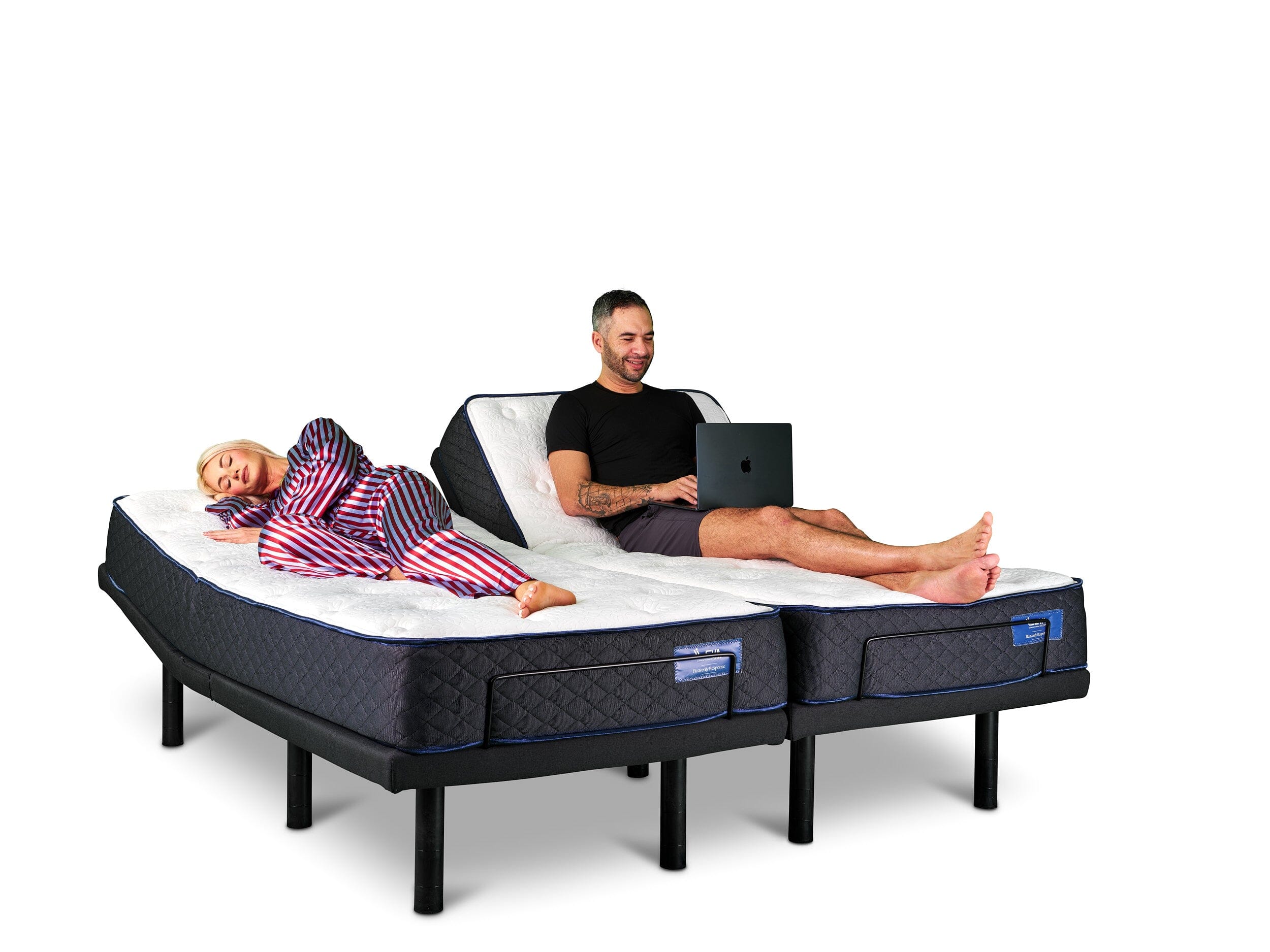
Review Leva Sleep’s split adjustable packages and direct-to-consumer pricing
Independent Controls and Anti-Snore Mode
Independent controls form the foundation of an effective split adjustable system. Each side should run on its own motor and controller, not a shared mechanism with limited presets. This independence matters because anti-snore mode must detect and respond to one partner’s snoring without disturbing the other.
Anti-snore mode should automatically raise the head of the snoring partner’s side in small increments, without manual input. Since earlier research supports head elevation for snoring relief, couples should confirm that the system can reach and hold appropriate angles on each side independently.
Targeted Support With Lumbar and Pillow-Tilt Motors
Lumbar support motors allow precise lower-back adjustment that does not depend on head or foot elevation. This feature helps partners with hip, knee, or back pain who need a different support profile than the snoring partner. Pillow-tilt motors adjust the head and neck zone separately from the main head section, which enables finer cervical alignment.
When assessing a system, couples should ask whether lumbar and pillow-tilt controls operate independently on each side or only as a shared feature. Independent operation keeps one partner’s therapeutic position from affecting the other’s comfort.
Temperature Regulation and Mattress Compatibility
Per-side heating and cooling pads address thermal mismatches that separate duvets alone cannot solve. Mattress compatibility matters just as much, because not all mattresses flex safely with an adjustable base. Pocket-coil mattresses and memory foam generally provide better motion isolation than open-coil designs. Leva Sleep designs its all-foam and hybrid pocket-coil mattresses specifically for use with its adjustable bases.
Noise Levels, Bedding Fit, and Delivery Experience
Quiet operation keeps adjustments from waking either partner. Couples should look for whisper-quiet motors rated for near-silent use, since audible mechanical noise can undermine a carefully planned sleep environment. Bedding fit also matters because standard fitted sheets often pop off elevated bases.
Sheets with deep pockets and reinforced elastic stay in place during articulation. The delivery model completes the experience. White-glove in-home setup by trained professionals removes the assembly burden and ensures correct calibration from the first night.
Neutral Comparison Checklist of Solution Types
The table below shows how each solution type performs across motion, temperature, intimacy, and medical suitability. It highlights that only split adjustable systems address all four areas at once while keeping couples in a shared bed.
| Solution Type | Motion Isolation | Temperature Control | Intimacy Preservation | Medical Suitability (Snoring / Mild OSA) |
|---|---|---|---|---|
| Flat bed (standard) | Low — open-coil designs transfer motion readily | None — shared surface, no zone control | High — no physical barrier | None — no positional adjustment possible |
| Basic adjustable base (single) | Moderate — depends on mattress type | None built-in | High — shared surface | Partial — elevation possible but forces both partners to the same angle |
| Scandinavian duvets | Low — bedding separation only, mattress motion unchanged | Moderate — each partner selects independent duvet weight | High — same mattress, physical closeness maintained | None — no positional or airway benefit |
| CPAP machine | None — addresses snorer’s airway, not motion | None | Reduced — mask concerns noted earlier | High for moderate–severe OSA; not replaceable by positional therapy for moderate–severe cases |
| Split adjustable system (Queen or King) | High — split configurations deliver better motion isolation than single kings | High — per-side heating and cooling pads available | Moderate — 2–4 inch centre gap is the main concern, bridging accessories reduce this | High for mild–moderate OSA — head elevation benefits discussed above; independent per-side control leaves the non-snoring partner undisturbed |
Protecting Relationship Satisfaction and Intimacy
A split adjustable system aims to keep couples close while removing the friction that pushes them apart. Studies show that couples can synchronize their sleep-wake cycles during the night, and greater sleep concordance links to higher marital satisfaction. Many couples who adopted sleep divorce later resumed sleeping together after the snoring partner received treatment.
A split adjustable system supports that return by easing disturbances even before medical treatment fully resolves the issue. Among adults in positive, meaningful relationships who consider themselves excellent sleepers, many report a strong relationship with their spouse or partner. Independent adjustability preserves the shared bed and the physical proximity, spontaneous contact, and co-sleeping benefits that come with it, while removing the specific disruptions that erode closeness over time.
Keep your relationship close with Leva Sleep’s split adjustable systems
Frequently Asked Questions
How long does setup take with white-glove delivery in Ontario and Alberta?
Leva Sleep’s in-house white-glove delivery service is available in Ontario and Alberta for a fee. A trained delivery team brings the system directly to the bedroom, assembles the adjustable base and mattress, adjusts leg heights to the customer’s preferred bed height, removes and donates or recycles the old bed, and provides a full product tutorial. Most setups finish in a single appointment. Because Leva Sleep manages delivery in-house rather than outsourcing to third-party carriers, scheduling and on-site adjustments are handled by staff who know the product well.
Are Leva Sleep systems available province-wide?
Leva Sleep currently delivers to Ontario and Alberta. Customers in both provinces can access the full range of Split Queen and Split King adjustable packages, including mattresses, bases, and specialized bedding accessories. Customers can confirm availability of specific models and delivery timelines directly with Leva Sleep at the time of purchase.
What maintenance is required for whisper-quiet motors and specialized bedding?
Leva Sleep’s adjustable bases use whisper-quiet motors engineered for low-noise, long-term operation. Routine maintenance stays simple: keep the area under the base clear of obstructions that could interfere with articulation, and periodically check that all cable connections remain secure. Leva Sleep’s specialized bedding, including fitted sheets with reinforced elastic and duvet clips, is machine washable.
Regular washing of duvet covers is recommended, especially when using the Scandinavian two-duvet setup without a top sheet. Mattress protectors designed for adjustable bases should be laundered according to the care label and replaced if elasticity degrades.
When should couples consult a doctor about snoring or mild sleep apnea?
Couples should seek a medical evaluation when snoring is loud and frequent, when the snoring partner experiences witnessed pauses in breathing, gasping, or choking during sleep, or when either partner reports excessive daytime sleepiness despite adequate time in bed. These signs often indicate obstructive sleep apnea, which requires formal diagnosis through a sleep study.
Head elevation on an adjustable base is recognized as a complementary positional therapy for mild to moderate OSA and can supplement CPAP therapy, but it does not replace CPAP in moderate to severe cases. A physician or sleep specialist can determine the appropriate treatment pathway. Sleep apnea clinics in Canada have referred patients to Leva Sleep when positional therapy and elevated sleeping form part of the recommended management plan.
Conclusion: Staying Together While Sleeping Better
Sleep divorce usually signals unresolved sleep incompatibility rather than an inevitable outcome. Snoring, temperature clashes, motion transfer, and firmness mismatches each have targeted solutions, and a split adjustable system addresses all of them at once within a shared bed. For Canadian couples in Ontario and Alberta, Leva Sleep provides Split Queen and Split King adjustable packages with independent controls, anti-snore mode, whisper-quiet motors, per-side temperature regulation, and purpose-built bedding, all delivered and assembled by an in-house white-glove team.
With over 8 years of expertise, $50M in lifetime sales, 25,000+ customers, and pricing 30–50% below comparable luxury competitors, Leva Sleep serves as a specialist resource for couples who want to stay together and sleep better. See why more than 25,000 couples chose Leva Sleep’s split adjustable beds