Written by: Matthew Timmins, Founder and Managing Director, Leva Sleep | Last updated: July 30, 2026
Key Takeaways
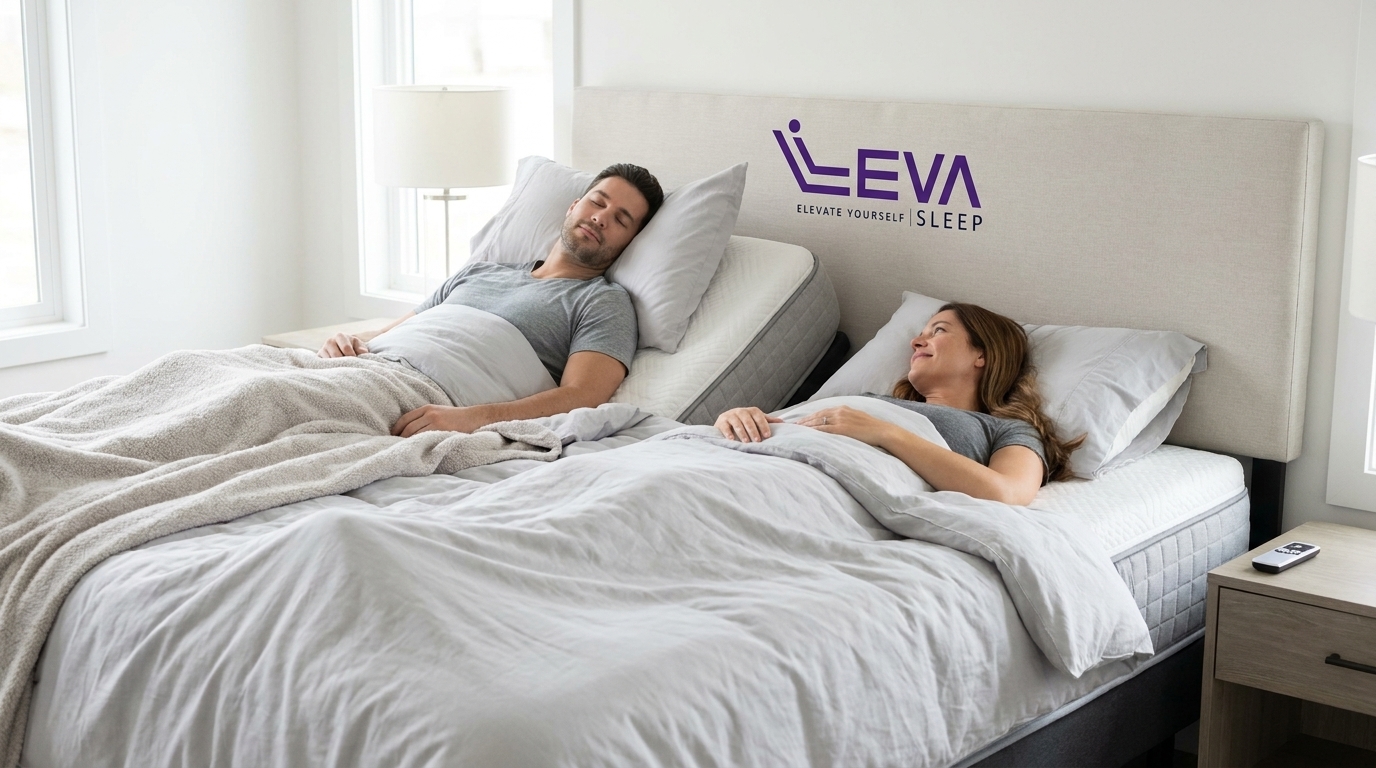
- Split adjustable beds let one partner raise their head section 10–20 degrees independently to reduce snoring without disturbing the other sleeper.
- Traditional flat beds and single-base adjustables force couples into compromises that often end with separate sleeping arrangements.
- Independent controls, quiet German motors, and app presets help each partner maintain a preferred sleep position throughout the night.
- Head elevation on a split base works better than pillows because the entire upper body shifts, and clinical research shows it can restore shared sleep for many couples.
- Leva Sleep offers Split King and Split Queen packages with independent anti-snore controls and white-glove delivery in Ontario and Alberta. Explore split adjustable bed packages that help both partners stay in the same bed.
The Problem: Why Snoring Disrupts Shared Sleep
Around one-third of adults snore habitually, so snoring affects millions of couples every night. The impact goes far beyond noise. Mayo Clinic Sleep Disorders Center research found that spouses lose at least one hour of sleep per night due to a snoring partner, which adds up to more than 15 full days of lost sleep each year.
The downstream effects touch daily life. A Sleep Foundation survey found that 75% of those sharing a bed with a snorer report sleep impacts and 44% feel tired the next day. Bed partners of heavy snorers are up to three times more likely to have difficulty falling or staying asleep.
Relationship strain often follows chronic sleep disruption. A British survey by 32Co and Aerox Health of 2,000 recently divorced Britons found that 47% cited snoring or sleep disorders as a contributing factor to their relationship breakdown. According to the American Academy of Sleep Medicine, 31% of U.S. adults reported sleeping separately to accommodate a bed partner in 2025 (with adults aged 35–44 most likely at 39%), compared with 20% occasional and 15% consistent separate sleeping in the 2023 survey. Given these pressures, many couples start looking for practical ways to stay in the same room without sacrificing sleep.
Why Flat Beds and Single-Base Adjustables Fall Short for Snoring
A flat mattress offers no positional help for snoring. Stacking standard pillows bends the neck instead of lifting the entire upper body, which experts do not recommend because this posture can worsen airway restriction instead of easing it.
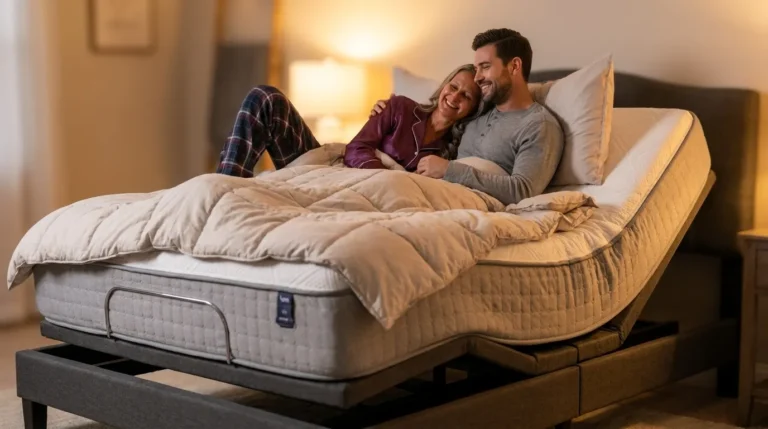
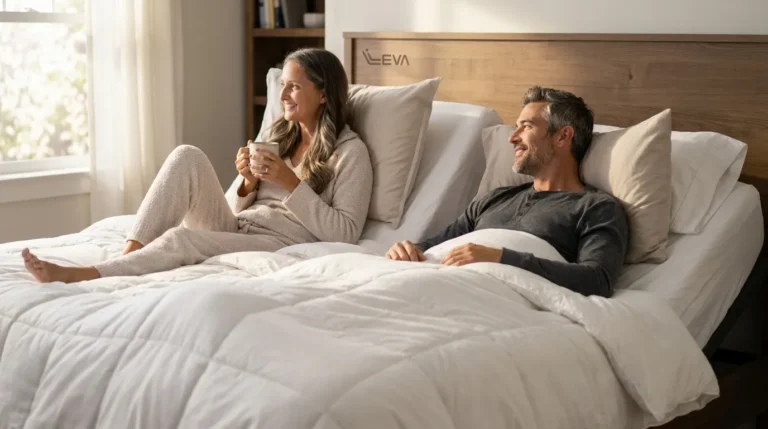
A single-zone adjustable base improves on a flat bed but introduces a new problem for couples. Any elevation change affects both sleepers at the same time. When the snoring partner raises the head section, the non-snoring partner rises too and loses a preferred position. That shared movement often turns into a nightly compromise that satisfies neither person and still pushes many couples toward separate rooms.
The Solution: Split Adjustable Beds with Independent Anti-Snore Features
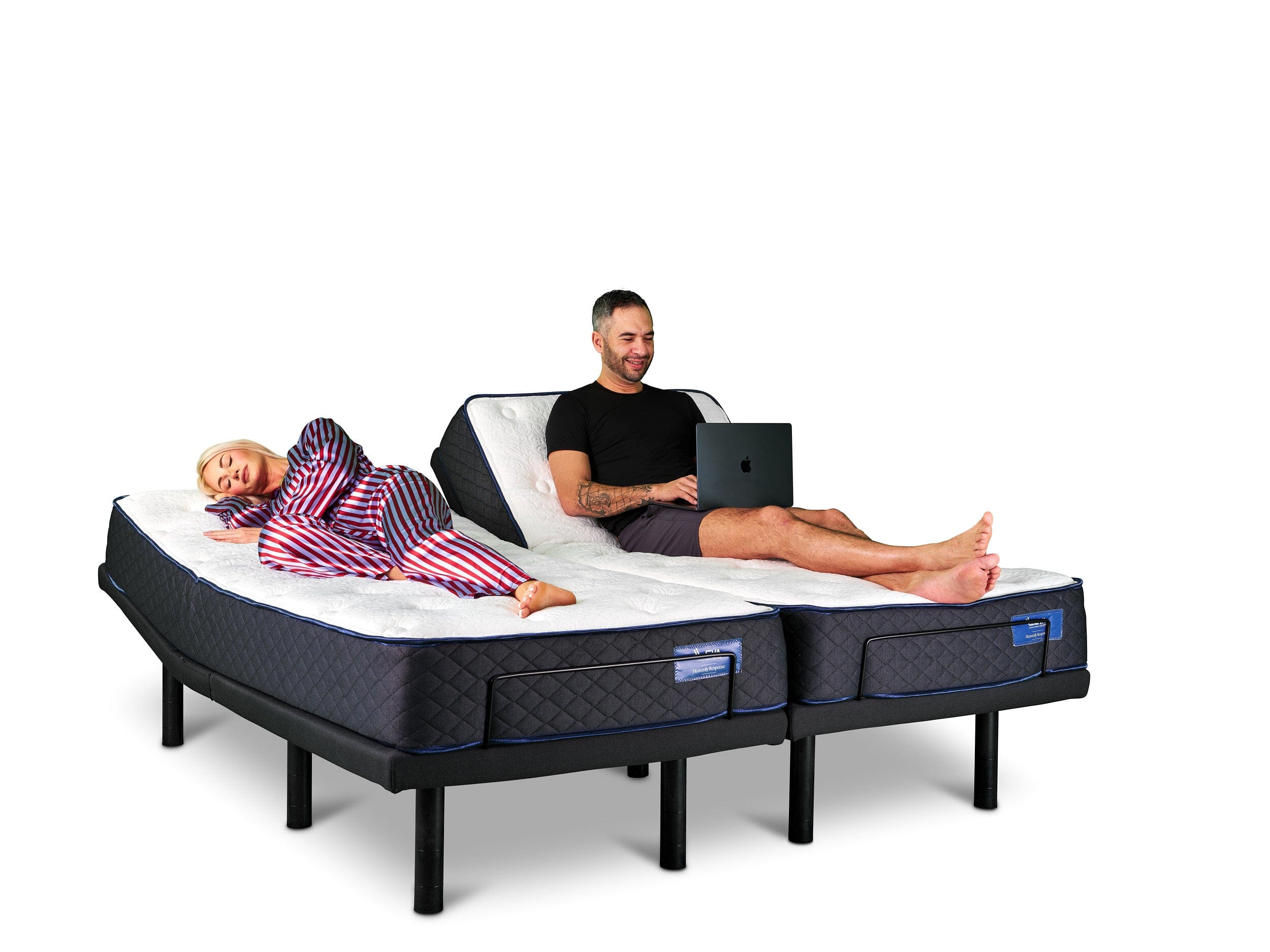
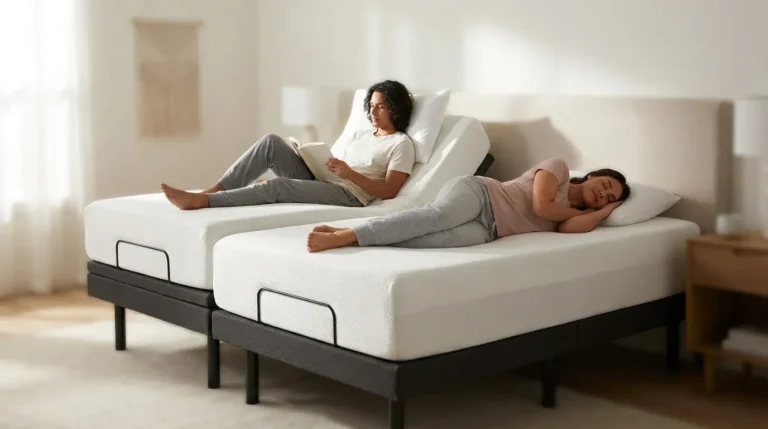
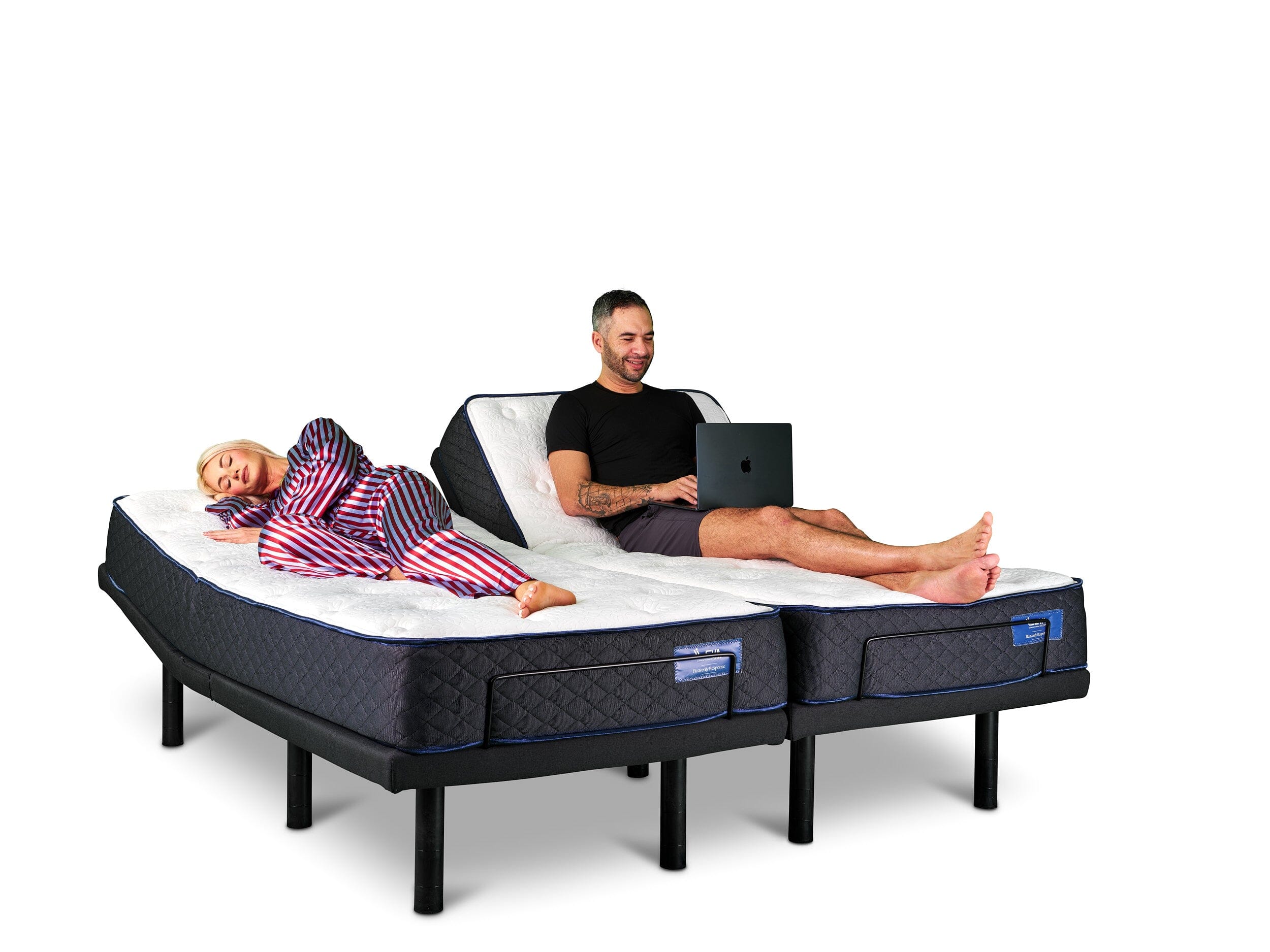
A split adjustable bed places two independent bases side by side inside one shared bed frame. Each side has its own motor, remote or app control, and elevation range. The snoring partner can elevate their head independently while the non-snoring partner remains flat and undisturbed.
Leva Sleep offers both Split King and Split Queen configurations, and Split Queen remains a rare format in Canada. Leva Sleep is a unique Canadian provider of Split Queen adjustable beds built to customer specifications. Both configurations use whisper-quiet German motors and full app control so couples can set anti-snore positions, custom sleep presets, and vibrating alarms independently on each side. With over 25,000 customers and $50M in lifetime sales, Leva brings eight years of adjustable bed specialization to every configuration.
How Anti-Snore Mode Works on Split Bases
Snoring occurs when air passes through a partially blocked airway during sleep, as relaxed muscles narrow the passage and soft tissues at the top of the airway flutter and vibrate. Head elevation on an adjustable base keeps the airway more open because gravity pulls the tongue and soft tissues less forcefully toward the back of the throat.
An anti-snore position on an adjustable base typically raises the head section to 10–20 degrees, and clinical recommendations for reducing snoring and mild obstructive sleep apnea support elevation of 15 to 30 degrees. On a split base, this adjustment applies only to the snoring partner’s side. On advanced models, sensors detect snoring automatically and trigger a micro-adjustment. Tempur-Pedic’s Sleeptracker-AI technology, for example, raises the head approximately 12 degrees when snoring is detected. Leva Sleep’s app-controlled detection mode, arriving in 2026, follows the same principle with independent per-side control.
How Couples Use Split Adjustable Beds When One Partner Snores
Independent controls change the nightly experience of sharing a bed. Picture a familiar situation: one partner falls asleep and begins snoring. With a split base, the non-snoring partner can use the app or remote to quietly raise the snoring partner’s head section without waking them. The motor runs at whisper-quiet levels, and the gradual movement usually lets the snoring partner stay asleep.
Each side of the bed can also store completely different presets. One partner might choose a zero-gravity position for back relief while the other remains flat. Leva’s app saves custom positions per user, so returning to a favourite setting takes a single tap. This independence removes the nightly negotiation that slowly erodes sleep quality and relationship harmony.
Do Anti-Snore Adjustable Beds Work in Real Life?
Independent head elevation on a split king outperforms an anti-snoring pillow because the entire upper body is repositioned, not just the head. Real-world outcomes support this approach. Among treated obstructive sleep apnea patients, 72.4% resumed sleeping together post-treatment compared to 41% before treatment, and 69% of patients and 74% of partners reported improved personal lives after treatment.
Positional snoring, which worsens when lying flat, responds most reliably to head elevation. Snoring caused by nasal obstruction, obesity, or alcohol use may respond less predictably. Head elevation can act as a supplementary intervention for mild obstructive sleep apnea but does not replace CPAP or other prescribed therapy.
Practical Downsides and Limits of Adjustable Beds
Adjustable beds come with practical considerations that couples should weigh before buying.
- Motor noise: Budget adjustable bases can have noticeably loud motors, which matters when adjusting position beside a sleeping partner. Leva Sleep uses whisper-quiet German motors to reduce this issue.
- Mechanical complexity: Motors are mechanical components that can eventually fail, and bases with massage features contain more parts that may need repair over time.
- Weight and portability: Adjustable bases are considerably heavier than a standard foundation, and moving one usually requires at least two people and sometimes partial disassembly.
- Medical limitations: An elevated position may feel more comfortable but does not treat apnea and cannot substitute for CPAP or other therapy prescribed by a doctor. The Mayo Clinic advises seeing a doctor when loud snoring comes with gasping, choking, breathing pauses, morning headaches, or daytime exhaustion.
Split King vs Split Queen for Canadian Bedrooms
| Feature | Split King | Split Queen |
|---|---|---|
| Dimensions | 76″ × 80″ (two Twin XL bases) | 60″ × 80″ (two 30″ bases) |
| Room footprint | Requires larger master bedroom | Fits standard Canadian bedroom sizes |
| Independent control | Full per-side head and foot elevation | Full per-side head and foot elevation |
Split King works best for couples with larger master bedrooms who want maximum width per person at 38 inches each. Split Queen fits standard Canadian bedroom sizes while still providing independent controls, so it suits couples who need a smaller footprint. As noted earlier, Leva is the only Canadian provider offering custom-built Split Queen configurations.
Checklist: Evaluating an Adjustable Bed Anti Snore Feature for Couples
Use the following criteria as a connected checklist when comparing adjustable bed anti snore feature for couples options.
- Independent controls: Confirm that each side has its own remote or app profile, because a single-zone base cannot deliver independent anti-snore elevation.
- Elevation range: After you verify split functionality, check that the head section reaches at least 15–20 degrees to align with clinical positioning guidance.
- Motor noise level: Next, request decibel specifications or ask about motor type, since even the right elevation range becomes less useful if adjustments wake your partner.
- Mattress compatibility: Confirm that the mattress is designed for adjustable bases. Leva Sleep designs all-foam and hybrid pocket coil mattresses specifically for its bases and also carries compatible options from Tempur-Pedic, Simmons, Beautyrest, Serta, and Kingsdown.
- Bedding fit: Standard fitted sheets often pop off elevated bases. Leva designs fitted sheets with deep pockets and extra elastic, plus duvet clips for split configurations.
- Temperature regulation: If one partner sleeps hot, look for integrated heating and cooling pad options that work independently on each side.
- Canadian pricing and delivery: Many adjustable bed articles reference U.S. pricing and retailers. Leva Sleep prices its split packages 30–50% below comparable luxury competitors and offers in-house white-glove delivery in Ontario and Alberta, including assembly, old bed removal, and a product tutorial.
Leva Sleep’s 2026 Anti-Snore Detection Mode
Leva Sleep’s upcoming app-controlled anti-snore detection mode, scheduled for 2026, uses sensor-based snoring detection to trigger automatic micro-adjustments on the snoring partner’s side of a split base. The system runs through the existing Leva Sleep app, which already supports custom sleep positions, vibrating alarms, and per-side control. The detection mode adds a passive layer so that when snoring is registered, the head section rises incrementally until the snoring subsides, without requiring either partner to wake and intervene.
This feature positions Leva alongside detection-based systems currently available at significantly higher price points, such as Tempur-Pedic’s Sleeptracker-AI bases, which use the same detection-based approach described earlier, while maintaining Leva’s significant pricing advantage and Canadian-specific split configurations.
Frequently Asked Questions
How long does it take to set up a split adjustable bed?
Setup time depends on the model and room layout, but a split adjustable base with two independent motors, app connectivity, and compatible mattresses usually takes one to two hours when handled by trained professionals. Leva Sleep’s white-glove delivery service manages the entire process, including delivery to the bedroom, full assembly, leg height adjustment, bedding setup, and a product walkthrough, so customers can sleep on the bed the same night. Old bed removal is also included.
Is a split adjustable bed suitable for all couples, or only those with snoring issues?
Split adjustable beds address many couple-specific sleep challenges beyond snoring. Independent controls let one partner elevate for acid reflux or back pain while the other sleeps flat. Separate firmness preferences, temperature needs, and different wake times all benefit from per-side independence. Anti-snore positioning becomes one feature within a broader system designed so that neither partner has to compromise their sleep environment.
Can a CPAP user share a split adjustable bed with a non-CPAP partner?
Yes. A split adjustable base works well with CPAP use. The CPAP user’s side can be elevated to a comfortable angle that supports both mask seal and airway positioning, while the other side stays at a different setting. Some CPAP users find that mild head elevation on an adjustable base reduces the pressure settings needed, although any changes to prescribed CPAP therapy should be discussed with a physician. The split configuration keeps CPAP equipment, tubing, and related movement confined to one side of the bed.
Do I need a special mattress for an adjustable base?
Standard innerspring mattresses with rigid coil systems do not suit adjustable bases because they cannot flex through the elevation range without damage. All-foam mattresses and hybrid mattresses with individually wrapped pocket coils work properly. Leva Sleep designs its own mattresses specifically for its adjustable bases and also carries compatible options from partner brands. Leva’s bedding accessories, including deep-pocket fitted sheets with extra elastic and duvet clips, are engineered for the movement and gap that appear between split sides during elevation.
When should a snoring partner see a doctor rather than rely on positional adjustment?
Head elevation on an adjustable base suits positional snoring, which becomes louder or more frequent when lying flat, but it does not count as medical treatment. A doctor should be consulted when snoring comes with gasping, choking, or pauses in breathing during sleep, when the snoring partner wakes with morning headaches, or when daytime exhaustion persists despite adequate sleep time. These symptoms may indicate obstructive sleep apnea, which requires clinical diagnosis and may need CPAP therapy or another prescribed intervention. An adjustable base can complement that treatment but cannot replace it.
Conclusion: Choosing the Right Anti-Snore Adjustable Bed as a Couple
The adjustable bed anti snore feature for couples that delivers consistent results combines independent per-side elevation, a head range of at least 15–20 degrees, quiet motors, and mattresses and bedding designed for the base. For Canadian couples in Ontario and Alberta, local white-glove delivery, Canadian pricing, and access to Split Queen configurations further narrow the options.
Leva Sleep meets these criteria with 15–20 adjustable models, in-house assembly, and the significant pricing advantage noted earlier. The 2026 app-controlled detection mode will add automatic snoring response to an already capable system. For couples currently sleeping separately, or thinking about it, a split adjustable base with independent anti-snore positioning offers a direct structural way to stay in the same bed.