Written by: Matthew Timmins, Founder and Managing Director, Leva Sleep
Choosing the right mattress for your adjustable bed is key for Canadian couples seeking personalized comfort. Memory foam and latex each offer unique benefits, and this guide provides a clear comparison to help you decide which works best for both partners on an adjustable base.
Why Mattress Choice Matters for Couples with Adjustable Beds
Sharing an adjustable bed often means balancing different sleep needs, from snoring issues to joint pain requiring specific positions. These differences can impact sleep quality for one or both partners. The right mattress material enhances the flexibility of an adjustable base, ensuring comfort through various angles and settings for each person.
Memory foam and latex stand out for their compatibility with adjustable beds. They adapt to movement and maintain support during positional changes. By understanding how these materials address specific sleep challenges, you can create a shared sleep space that suits both partners.
How Leva Sleep Supports Couples with Adjustable Bed Solutions
Leva Sleep specializes in adjustable bed systems tailored for couples in Canada, focusing on individual comfort without compromise. Their designs and local manufacturing prioritize quality and functionality for diverse sleep needs.
Here’s what sets Leva Sleep apart for mattress compatibility:
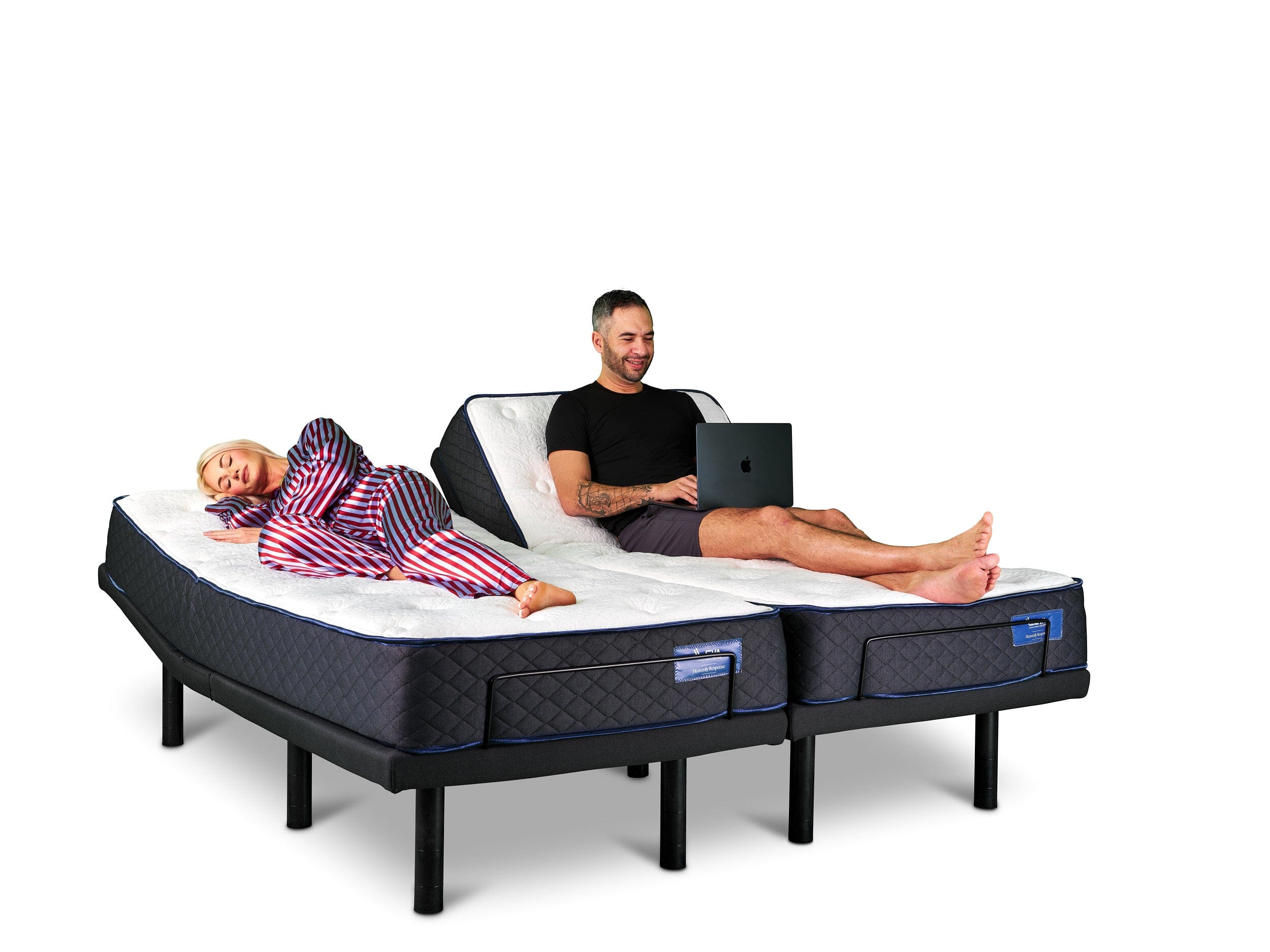
- Split King and Split Queen setups for independent position control.
- Silent German motors for smooth, quiet adjustments.
- Anti-snore technology with automatic head adjustments to reduce snoring.
- Custom bedding made for adjustable beds, including sheets and protectors.
- App-based controls for easy customization of sleep positions.
Leva Sleep’s direct-to-consumer approach offers high-quality systems at lower costs compared to many competitors, making comfort accessible for Canadian couples. Their bases work well with both memory foam and latex mattresses.
Explore Leva Sleep’s adjustable beds for tailored comfort solutions.
Memory Foam Mattresses: Contouring Comfort for Adjustable Beds
Understanding Memory Foam
Memory foam, or viscoelastic foam, softens with body heat and pressure, molding to your shape before slowly returning to form. This creates a close, supportive feel that adjusts to each person’s body, ideal for couples with varying builds or sleep styles on an adjustable base.
Key Advantages for Couples
Memory foam reduces pressure on joints, hips, and knees, offering relief for pain or discomfort. It contours closely to ease back and neck pain, especially for side sleepers. Paired with adjustable positions, it targets specific areas for added comfort.
It also minimizes motion transfer. When one partner moves or adjusts the bed, the other feels little disturbance, which helps if one is a light or restless sleeper.
Lastly, memory foam flexes easily with adjustable settings, from elevated head positions to full-body angles, maintaining its supportive structure at any angle.
Drawbacks and Leva Sleep Solutions
Some find memory foam traps heat due to its dense makeup. Newer designs like gel-infused foam improve airflow to manage temperature. Leva Sleep offers options with cooling features to keep the material comfortable.
Its slow response can also make changing positions harder, leaving a “sunk-in” feeling. Leva Sleep balances this with mattresses that support movement while preserving contouring benefits.
Latex Mattresses: Supportive Bounce and Lasting Quality
What Makes Latex Different
Latex comes from rubber tree sap, a natural material harvested sustainably. Many Canadian latex mattresses use 100% natural latex, though synthetic or blended versions exist. Production methods like Dunlop create denser foam for support, while Talalay offers softer layers for comfort. Unlike memory foam, latex bounces back quickly for a responsive feel.
Key Advantages for Couples
Latex supports spinal alignment by cushioning pressure points without deep sinking. It helps ease joint and back pain with balanced support. This works well across adjustable bed positions.
Its durability stands out, especially for adjustable beds under constant flexing. Natural latex resists compression far better than standard foam. Its higher density adds lasting support, making it a smart choice for long-term use.
Latex also stays cooler due to its breathable structure. Air-filled cells in latex help regulate temperature naturally. This benefits couples who overheat at night.
Finally, it’s naturally hypoallergenic and eco-friendly. Latex resists dust mites and mold without harsh chemicals. It’s less prone to allergens than many foams. This suits sensitive sleepers or those prioritizing sustainability.
Drawbacks and Leva Sleep Solutions
Latex can feel firmer at first, especially for those used to softer beds. Leva Sleep offers latex options with balanced firmness for adjustable bed comfort.
Natural latex often costs more upfront than memory foam. Through direct manufacturing, Leva Sleep keeps prices competitive while maintaining quality for Canadian couples.
Comparing Memory Foam and Latex for Adjustable Beds
Side-by-Side Breakdown for Couples
|
Feature |
Memory Foam |
Latex |
|
Feel |
Close contouring, body-hugging |
Bouncy, supportive surface |
|
Pressure Relief |
Top-tier, eases joint pain |
Strong, supports without sinking |
|
Motion Isolation |
Excellent, limits disturbance |
Decent, some transfer felt |
|
Temperature |
May retain heat, improved by gels |
Breathable, stays cooler |
|
Responsiveness |
Slower, can feel stuck |
Fast, easy to move |
|
Durability |
Good, depends on density |
Outstanding, resists wear |
|
Adjustable Fit |
Adapts smoothly to angles |
Handles flexing with resilience |
|
Hypoallergenic |
Possible with certifications |
Natural resistance to allergens |
|
Best For |
Side sleepers, pain relief needs |
Back/stomach sleepers, allergy concerns |
How to Pick the Right Mattress for Your Adjustable Bed
Focus on Your Main Sleep Issues
First, pinpoint the biggest sleep challenges for you and your partner. If joint pain or side sleeping is a priority, memory foam’s ability to contour and relieve pressure makes it a strong fit for hips, shoulders, or knees.
If you value quick response and easier movement, latex offers a supportive bounce. Latex recovers shape fast, avoiding a trapped feeling. This suits couples who shift positions often.
Temperature plays a big role. If overheating is an issue, latex’s airflow is ideal. Leva Sleep also provides memory foam with cooling features as an alternative.
For allergies or eco-conscious choices, latex has natural resistance to dust mites and mold, offering a healthier sleep surface without added chemicals.
Weigh Your Shared Preferences
Think about how much ease of movement matters. Latex helps with frequent position changes or differing sleep schedules due to its responsiveness. Memory foam shines for motion isolation, perfect if one partner wakes easily from movement.
Consider long-term needs too. Latex supports alignment while allowing slight sink for comfort. It adapts well as needs change over time.
Account for temperature differences between partners. Leva Sleep’s Split King and Queen bases let each side adjust independently for a personalized setup.
Pairing with Leva Sleep’s Bases
Both memory foam and latex work with Leva Sleep’s adjustable systems, built to support various mattress types. Their focus on bed mechanics ensures smooth interaction, maximizing comfort over years of use.
The quiet motors complement memory foam’s cushioning and latex’s bounce, allowing adjustments without waking your partner.
Find the right mattress match with Leva Sleep’s adjustable beds.
Common Questions for Couples
Which mattress helps with snoring on an adjustable bed?
Both memory foam and latex pair well with Leva Sleep’s anti-snore technology. The base detects snoring and adjusts head elevation to open airways, working with either material. Memory foam reduces motion if the snorer shifts often, while latex aids cooling if heat affects snoring.
Is latex too firm for adjustable beds?
Not always. Latex comes in various firmness levels. Leva Sleep offers options that balance support and comfort, with natural flexibility to handle adjustable positions effectively.
How do Leva Sleep’s beds boost mattress benefits?
Split King and Queen bases allow each partner to adjust their side. Memory foam enhances pressure relief through elevation tweaks, while latex fine-tunes support. App controls add further customization for both types, minimizing compromise in shared sleep.
Does quality differ among memory foam and latex for adjustable beds?
Yes, quality varies by maker and price. High-density memory foam and natural latex last longer under frequent flexing. Low-quality options wear out faster. Leva Sleep selects materials suited for adjustable use, focusing on durability and performance. Check for CertiPUR-US certification in foam and natural latex for best results.
Can a Split King or Queen have different mattress types?
Absolutely. Leva Sleep’s split systems let one side use memory foam for relief and the other latex for support. They provide bedding and guidance to ensure a cohesive experience despite mixed materials.
Find Your Ideal Sleep Setup with Leva Sleep
Deciding between memory foam and latex for an adjustable bed depends on your specific sleep challenges, preferences, and health needs as a couple. Each material offers benefits that improve with a well-designed base, helping you choose wisely for shared comfort.
Memory foam provides deep pressure relief and motion control, ideal for pain management or side sleepers. Latex offers responsive support, durability, cooling, and allergy-friendly properties, fitting those who value movement and long-term value.
Leva Sleep’s split designs and customizable features cater to individual needs while preserving a shared bed. Their expertise in adjustable systems ensures your mattress choice delivers lasting comfort.
Ready for better sleep together? Shop Leva Sleep’s adjustable beds now.