Written by: Matthew Timmins, Founder and Managing Director, Leva Sleep
Snoring is a common issue that disrupts sleep for many Canadian couples, impacting not just the snorer but their partner too. It can strain relationships and force tough choices, like sleeping apart. Sleep position plays a big role in how often and how loudly someone snores. Adjustable beds offer a practical way for couples to address this issue, helping both partners find comfortable positions that reduce snoring while staying in the same bed.
This guide explores how sleep positions affect snoring and why adjustable beds can make a real difference. These beds adapt to your needs throughout the night, offering a flexible solution that helps both of you sleep better together.
Why Sleep Position Impacts Snoring for Couples
Sleep position directly influences snoring for millions of couples across Canada. Sleeping on your back increases snoring because gravity pulls the tongue and soft palate into the throat, narrowing the airway. This creates the vibrations we know as snoring, turning quiet nights into a source of frustration.
Different positions produce clear results. Side sleeping keeps the airway more open, reducing the chance of snoring compared to back sleeping. For those with sleep apnea, the effect is even stronger. Over half of people with obstructive sleep apnea have twice as many breathing interruptions when on their back versus their side.
Body structure can make this worse. A receding chin can push airway tissues toward the throat while sleeping on the back, worsening snoring. For many, back sleeping isn’t just uncomfortable, it’s a key factor in louder snoring.
Sleep stages add another challenge. Deep sleep stages, like N3, often lead to louder snoring due to stronger breathing efforts. Also, slow wave sleep increases continuous snoring because of higher airway resistance. Even the best position might not fully stop snoring without ongoing adjustments.
Many couples turn to basic fixes like extra pillows, but these often fall short. Simple positional aids struggle to maintain the right alignment through changing sleep cycles or adapt to individual needs. A more effective approach is often necessary.
Top Sleep Positions to Reduce Snoring, Backed by Science
Finding the right sleep position is key to cutting down on snoring. The goal is to keep your airway open all night, which means going beyond just avoiding back sleeping.
Side sleeping stands out as a reliable option. Airway pressure is much lower on your side, at 0.3 cm H2O, compared to 2.5 cm H2O on your back, making collapse less likely. This leads to quieter, steadier breathing.
Raising your head can also help. Slight head elevation supports side sleeping and helps prevent airway blockages. However, using pillows alone often doesn’t provide steady support through the night.
Static positions have limits. Side sleeping reduces breathing issues but might not stop snoring during deep sleep phases. This shows the need for adaptable solutions over fixed setups.
Sleep stages and position interact in complex ways. These interactions affect snoring differently in adults and children. Also, non-back positions improve airway openness across all ages.
Loudness is another factor. Snoring is loudest during stable airflow limits, about 3.7 dB more than during shallow breathing events. Plus, breathing effort drives loudness, spiking 71% above normal during restricted airflow compared to 28% during lighter interruptions. Couples need a system that adjusts to these changing needs for consistent results.
How Adjustable Beds Support Snore-Free Sleep for Couples
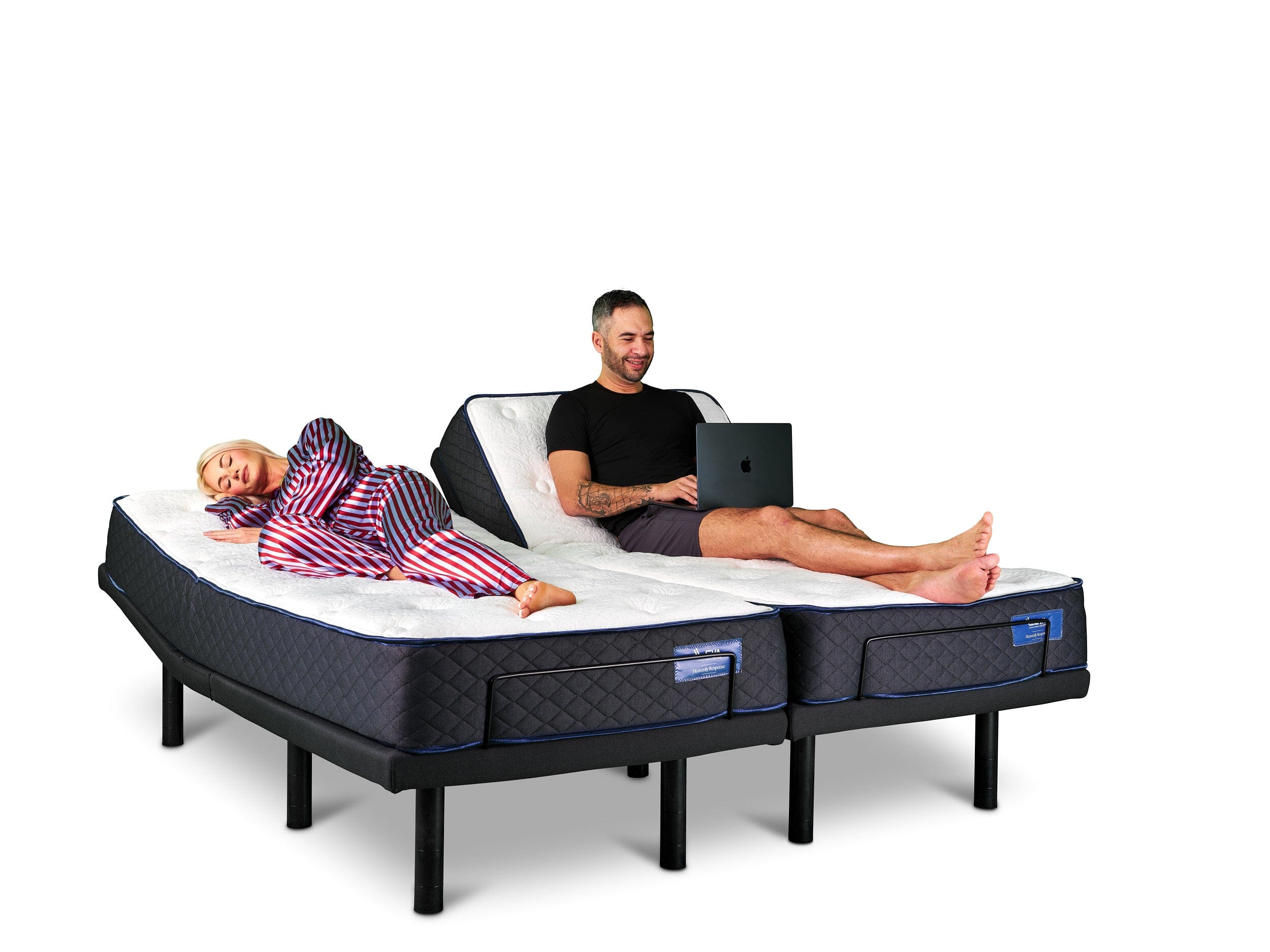
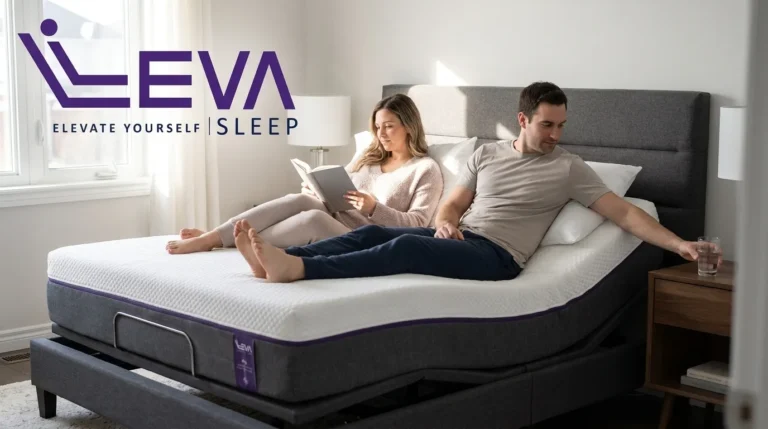
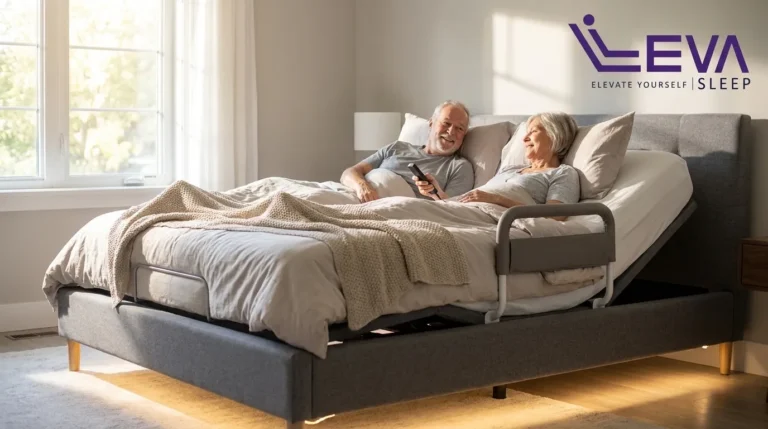
Adjustable beds provide a better way to manage snoring compared to basic fixes. Unlike flat beds that lock you into one position, these beds let you customize your setup to match your body’s needs, even as they change during the night.
They help maintain the best sleep positions for snoring through different sleep stages. Each partner can adjust their side to suit personal comfort, overcoming the limits of standard beds that can’t adapt to individual requirements.
Accurate Head Elevation for Better Breathing
Raising the head precisely can ease snoring. Adjustable beds offer stable elevation, unlike pillows that shift. This setup uses gravity to keep airway tissues in place, tackling a main cause of snoring.
Separate Controls for Each Partner
With Split King or Queen options, each person can set their ideal position without affecting the other. This matters because snoring solutions differ based on individual body structure and breathing patterns.
Silent Adjustments for Uninterrupted Sleep
Quiet motors make sure changes in position don’t wake anyone up. These silent adjustments let you tweak your setup throughout the night without disturbing your partner or breaking your sleep cycle.
Easy Customization with Presets and Apps
Modern adjustable beds save your favorite positions with presets. Apps let you make small tweaks for perfect comfort, ensuring you always return to the settings that work best for you.
Investing in an adjustable bed simplifies finding and keeping anti-snoring positions. Instead of relying on manual fixes, couples get a system that supports consistent alignment night after night.
Discover Better Sleep with Leva Sleep’s Canadian Adjustable Beds
Leva Sleep offers adjustable beds designed to help couples manage snoring by optimizing sleep positions. As a Canadian brand, they focus on quality materials, innovative features, and fair pricing to improve your rest.
Independent Control with Split King and Queen Options
Leva Sleep’s Split King and Split Queen bases let each partner adjust their side for elevation, massage, or firmness. German-made motors keep adjustments quiet, ensuring neither person wakes up during changes.
Targeted Anti-Snore Mode
The Anti-Snore Mode detects snoring and gently raises the head to help reduce it. This feature adapts to your sleep patterns, offering a customized solution without manual effort.
Convenient App for Personal Settings
Control your bed with the Leva Sleep app. Set custom positions, adjust settings precisely, and use extras like vibrating alarms or sleep tracking to enhance your experience.
High-Quality Canadian Design at Fair Prices
Leva Sleep manufactures key components in Canada, keeping quality high and costs down through a direct-to-consumer model. Couples get advanced sleep technology without excessive markups.
Complete Sleep System Accessories
Leva Sleep offers mattresses made for adjustable bases, bedding that stays secure during movement, and accessories like duvet clips. These elements work together to support your positioning needs.
Hassle-Free Setup with White-Glove Delivery
For an added fee, Leva Sleep’s white-glove service handles delivery, setup, and height adjustments, plus offers tutorials and old bed removal. This ensures you start enjoying your bed right away.
Ready to improve your sleep? Explore Leva Sleep’s adjustable beds for snoring solutions.
Weighing the Benefits: Should Couples Choose Adjustable Beds?
Deciding on an adjustable bed means comparing short-term fixes for snoring with a lasting solution for better sleep. Knowing the pros and cons helps you pick what fits your health and lifestyle goals.
Adjustable beds cost more upfront than flat beds, but they can save money over time. Ongoing expenses for anti-snoring gadgets, sleep clinics, or separate rooms add up, often with limited results. A good adjustable bed tackles multiple sleep issues, offering value through better rest and health.
Unlike single-focus snoring aids like nasal strips or mouth guards, adjustable beds adapt to various factors like position and sleep stage. This broader approach often works better than combining separate, less effective tools.
Leva Sleep stands out with direct pricing that cuts out middleman costs. Canadian production maintains quality while keeping prices reasonable, and their full sleep system adds extra value with compatible accessories.
Setup is straightforward with optional white-glove service, reducing hassle. Features like app presets and Anti-Snore Mode make adjustments easy, and many couples notice better sleep within days.
Beyond personal rest, addressing snoring improves relationship closeness and daily energy levels. Sleeping comfortably together can strengthen your bond and support overall wellness.
Common Mistakes Couples Make When Tackling Snoring
Couples often run into avoidable issues when trying to fix snoring. Recognizing these errors can save time, money, and sleepless nights.
- Depending on basic aids like pillows or wedges that don’t maintain position through sleep cycles or account for changing needs.
- Using disconnected solutions, such as nasal strips or separate beds, which can create new issues without solving the core problem.
- Focusing only on the snorer’s needs while ignoring the partner’s sleep quality, missing the goal of restful sleep for both.
- Choosing complex systems that need constant tweaking, adding stress instead of simplifying bedtime routines.
- Prioritizing low upfront costs over long-term benefits, leading to repeated spending on ineffective fixes.
Find a better way with a trusted Canadian brand. Check out Leva Sleep’s adjustable beds for snoring solutions.
Your Questions About Adjustable Beds and Snoring Answered
Do Adjustable Beds Help Most People with Snoring?
Adjustable beds can reduce snoring for many, especially when it’s tied to sleep position, a frequent cause. They support head elevation and side sleeping to ease airway blockages. Leva Sleep’s Anti-Snore Mode adjusts automatically when snoring starts, optimizing position all night. While not a fix for severe structural issues or central sleep apnea, they often help with positional snoring and mild to moderate obstructive sleep apnea.
Which Features in Adjustable Beds Target Snoring?
Key features include head elevation to keep airways open, split controls for individual positioning, silent motors to avoid disturbances, and snoring detection like Leva Sleep’s Anti-Snore Mode. Extras like lumbar support and pillow tilt maintain comfort during elevation, balancing snoring reduction with ease.
Are Adjustable Beds Right for All Snoring and Sleep Apnea Cases?
These beds suit positional snoring and mild to moderate obstructive sleep apnea, common in many cases. They help those whose snoring worsens on their back and improves with side sleeping or elevation. For severe sleep apnea, they can pair with CPAP for added comfort. However, they’re less effective for central sleep apnea or snoring from nasal issues or major structural traits. A sleep specialist can clarify if they fit your situation.
How Do Leva Sleep’s Split Beds Support Couples with Different Needs?
Leva Sleep’s Split King and Queen bases allow each partner to adjust their side independently for snoring relief without impacting the other. One might use elevation while the other keeps a flat position. Quiet German motors ensure adjustments don’t disturb, maintaining rest for both.
Is It Hard to Find the Right Sleep Position with an Adjustable Bed?
Most couples dial in their best position within a week using a Leva Sleep bed. Pre-programmed settings and app guidance simplify the process, and Anti-Snore Mode handles nighttime tweaks. White-glove delivery, available for a fee, includes setup and tips to get started right away.
Final Thoughts: Better Sleep Together with Leva Sleep
Snoring affects more than just your nights, it impacts relationships, health, and daily life. Sleep position influences snoring levels, and flat beds often can’t provide the flexible support needed to address it consistently.
Leva Sleep’s adjustable beds offer a practical way for couples to manage snoring. With Split King and Queen options, Anti-Snore Mode, silent motors, and app control, they allow tailored positioning for both partners.
Built in Canada with quality materials and priced fairly, Leva Sleep helps couples prioritize rest. Their full system, including mattresses and bedding, ensures everything works together for better results.
Choosing a Leva Sleep adjustable bed is a step toward shared wellness. Sleeping comfortably together while managing snoring turns nights into a chance for true rest.
Ready for quieter, shared nights? Visit Leva Sleep to find adjustable beds for snoring relief today.