
Written by: Matthew Timmins, Founder and Managing Director, Leva Sleep | Last updated: July 5, 2026
Key Takeaways
- Split-king mattresses on adjustable bases tend to separate because repeated head and foot elevation cycles push the twin XL sections outward. This movement creates gaps, ridges, and sheet slippage.
- Effective solutions must work through the full range of motion on an adjustable base. Standard flat-frame fixes like ordinary straps or sheets usually fail once the base flexes and tilts.
- Combining non-slip pads, purpose-built connector straps, base brackets, foam bridges, and deep-pocket split-king sheets delivers reliable long-term stability while preserving independent movement for each partner.
- Regular maintenance with monthly strap checks, quarterly frame tightening, and mattress rotation every three to six months prevents hardware loosening and uneven wear that make separation worse.
- Canadian couples who want a complete, professionally installed system can explore Leva Sleep’s adjustable bed packages at Leva Sleep.
The Problem: Split-King Separation on Adjustable Bases
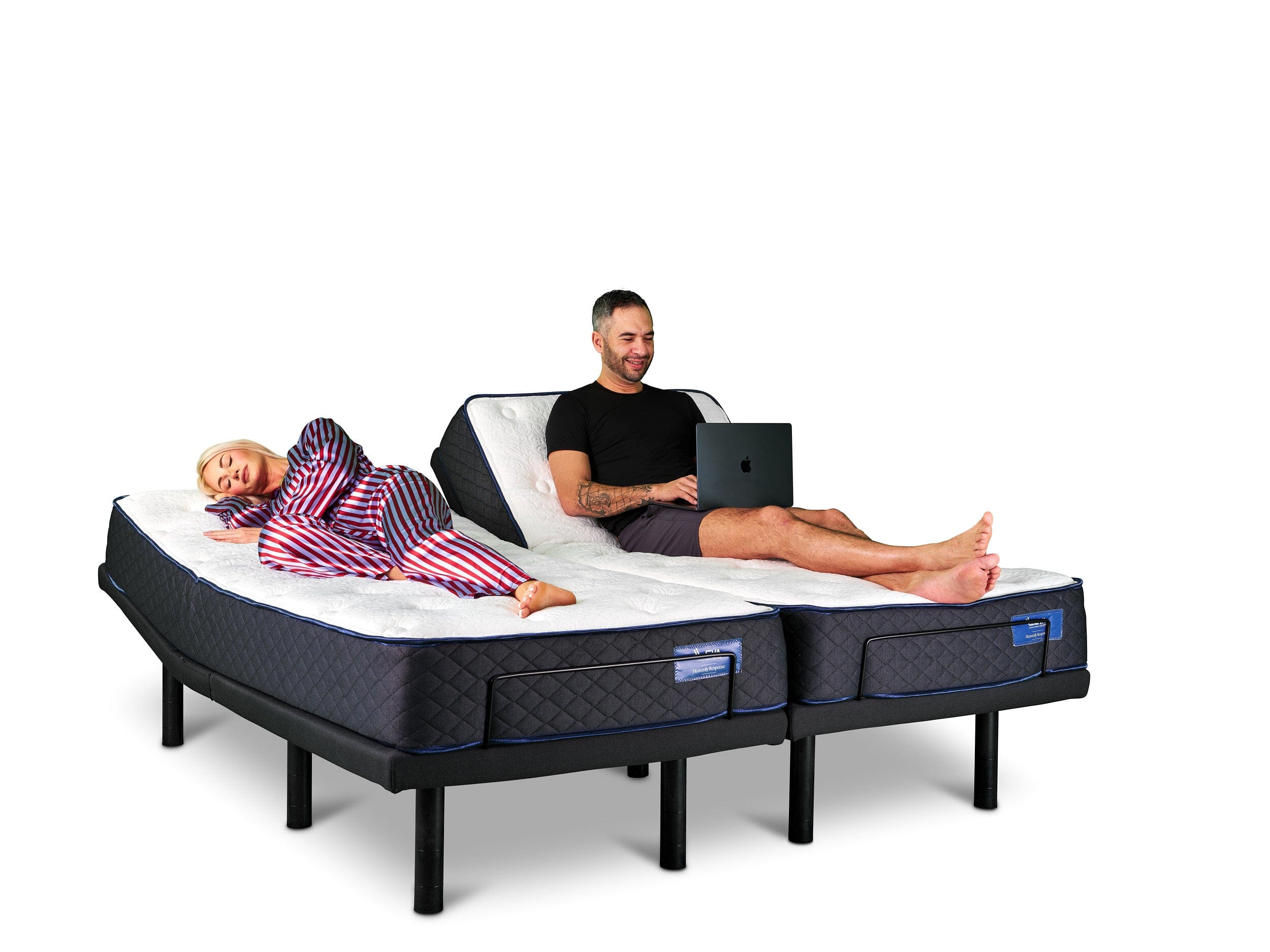
A split king pairs two twin XL mattresses on a single frame or on two independent articulating bases so each partner controls elevation, lumbar support, and massage settings independently. This configuration helps with snoring, different firmness preferences, and medical needs such as acid reflux or sleep apnea. The trade-off is a centre seam. On a flat frame that seam is minor, and most couples who sleep toward their own side never notice it. On an articulating base, repeated head and foot elevation cycles push the mattresses outward, widen the gap, and cause lateral sliding. The result is a ridge at the centre, sheets that pop free, and for couples in Ontario and Alberta during cold-season nights, a real disruption to shared warmth and comfort.
Standard fixes sold at general mattress retailers are designed for flat frames. They fail on adjustable bases because they cannot accommodate the flex and tilt of an articulating platform. Purpose-built solutions that match this movement pattern work far better.
Explore purpose-built adjustable bed systems
How to Keep a Split King Mattress from Sliding
Effective solutions fall into three main groups: friction-based stabilizers, physical connectors, and bedding-layer fixes. Each group targets a different failure point in the system so the mattresses stay aligned through nightly use.
Non-slip pads are the lowest-cost starting point. Placed between each twin XL mattress and its base, they create friction that resists lateral movement during articulation. Memory foam and latex mattresses grip the foundation better than innerspring models because of their weight and surface texture, so non-slip pads provide the greatest benefit under hybrid or innerspring mattresses. Noise level: silent. Sheet-change impact: none. Durability: pads compress over time and should be inspected every six months.
Connector straps wrap around both twin XL mattresses like belts with adjustable buckles. Most kits include two or three straps positioned at different points along the mattress length and can be installed without removing bedding by sliding them between the mattress and frame. Evaluate straps by material, because non-elastic materials resist stretching and maintain effectiveness over time, unlike elastic straps that lose tension. This material difference explains why low-cost connector straps frequently stretch or break within months, while products backed by multi-year warranties provide longer-term reliability. Even durable straps loosen with regular use, so monthly inspection and retightening keeps the connection secure. Noise level: silent. Sheet-change impact: minor, because straps must be loosened to change fitted sheets.
Base brackets and locking mechanisms stabilize the frame rather than the mattress. Adjustable bed frames experience hardware loosening over time due to repeated movement, so bolts and brackets need periodic tightening. Checking and tightening frame components at least once every three months maintains stability and reduces mattress shifting. Some premium split-king bases include raised inner edges that physically block outward movement and keep the mattresses aligned. Noise level: silent when properly tightened. Sheet-change impact: none. Durability: high when maintained on schedule.
Common Mistakes to Avoid: Using standard king sheets that lack centre straps or deep pockets causes the sheets to pull free as soon as the head section elevates. Overtightening connector straps compresses mattress foam and can create a permanent ridge. Ignoring lumbar tilt is another issue, because when the lumbar zone inflates it shifts mattress weight outward and accelerates separation if straps are already loose.
Split King Adjustable Bed Connector Choices
Most split king adjustable bases come with connector straps or non-skid surfaces that keep the two twin XL bases together and prevent the mattresses from falling through a gap in the middle of the night. When you evaluate aftermarket connectors, focus on three criteria: compatibility with the full articulation range, material durability under nightly flex cycles, and ease of removal for mattress rotation.
Integrated base connectors, which are hardware components built into the frame itself, outperform aftermarket straps on all three criteria. Leva Sleep’s split-king bases include connection solutions so the two twin XL platforms join at the frame level. This design removes the need for aftermarket straps and still preserves full independent elevation on each side. With 15–20 adjustable models available, Leva’s team can match the connector system to the specific articulation range a couple needs.
Best Gap Fillers for Split King Adjustable Beds
A bed bridge fills the centre seam and creates a more unified sleep surface. To install, push the twin XL mattresses as close together as possible, then press the bridge into the gap until it sits flush with the mattress tops. Placing a foam gap filler between the two mattresses and then laying a king-size mattress topper across both surfaces produces a smoother, more continuous sleeping experience.
A king-size mattress topper placed over both twin XL mattresses reinforces the bridge by distributing weight evenly across the seam. The topper must flex with the base, because rigid foam toppers crack at the fold point. Evaluate toppers by flex rating and thickness. A thickness of two inches or less usually articulates cleanly on most bases. Noise level: silent. Sheet-change impact: the topper must be removed or folded back to change fitted sheets. Durability: high when paired with a quality bridge.
Expert Tips: Rotate each twin XL mattress every three to six months to prevent uneven wear, sagging, and worsening of gaps between the twin XL sections. Pair gap fillers with Leva Sleep’s extra-elastic fitted sheets and duvet clips to keep bedding from migrating toward the centre seam during the night.
Keeping Twin XL Mattresses Together While Preserving Movement
The central challenge of a split king on an adjustable base is maintaining connection without limiting independent articulation. Mattress retainers and side bars mounted to the base frame prevent outward sliding without crossing the centre line, so each side remains mechanically independent. Some split king foundations include raised edges along the inner sides to physically block mattresses from sliding apart, which keeps the mattresses together at the frame level rather than at the bedding level.
Deep-pocket split-king fitted sheets with centre straps stabilize the bedding layer. Standard king sheets lack the pocket depth to stay anchored when the head section rises to 45 degrees or more. Leva Sleep designs its fitted sheets with extra elastic and deep pockets specifically for articulating bases, so the sheet remains taut through the full elevation range. Noise level: silent. Sheet-change impact: centre straps add about thirty seconds to the process. Durability: high when washed according to care instructions.
For best results, combine multiple methods. Start with non-slip pads under both mattresses, add connector straps to physically join them, use a bed bridge in the centre gap, and top everything with a single king-sized mattress topper to unify the sleep surface.
Get a complete system with all components included
What a Successful Split-King Setup Delivers
A properly configured split king on an adjustable base produces no perceptible gap during normal sleep, no lateral sliding when either partner shifts position, and no sheet displacement through a full elevation cycle. Each partner retains complete independent control of head elevation, foot elevation, lumbar support, and massage settings. The centre seam remains present but largely unfelt.
Leva Sleep’s white-glove delivery team provides complete setup and training before leaving. Couples in Ontario and Alberta receive a complete system rather than a collection of components to assemble and troubleshoot alone. With over 25,000 customers and eight years of adjustable-bed specialization, Leva’s installation process reflects detailed knowledge of where split-king setups fail and how to prevent those failures from the first night.
Book your white-glove installation
Frequently Asked Questions
Are Leva Sleep’s connector systems compatible with head and foot elevation?
Leva Sleep’s split-king bases support both head and foot elevation while the two twin XL bases remain linked. Each side articulates independently through its full head and foot elevation range. Leva’s installation team verifies compatibility during white-glove setup and demonstrates the full range of motion before completing the appointment.
How long does white-glove delivery take in Ontario and Alberta?
Delivery timelines vary by location and current scheduling, so the most accurate estimate comes directly from Leva Sleep at the time of purchase. White-glove service includes delivery to the bedroom, full assembly, leg-height adjustment, connector and accessory installation, a product tutorial covering the app and all base functions, and removal of the old bed. The appointment is scheduled in advance, and Leva’s team contacts customers to confirm timing before arrival.
Can I install gap fillers myself or should Leva’s team do it?
Foam bed bridges and king-size mattress toppers can be positioned without professional help. Push the twin XL mattresses together, press the bridge flush with the mattress surface, and lay the topper across both. Frame-level connectors and base brackets are more involved because they require locating mounting points on the articulating base and securing hardware correctly so that repeated elevation cycles do not loosen the connection. Leva Sleep’s white-glove team handles bracket and connector installation as part of the setup appointment, which removes the risk of improper fitment that can cause hardware loosening over time.
Do standard king sheets work on split-king adjustable beds?
Standard king fitted sheets lack the pocket depth and elasticity to remain anchored when an adjustable base elevates the head section. At moderate elevation angles, a standard sheet pulls free from the corners, bunches at the centre seam, and disrupts sleep. Leva Sleep designs its fitted sheets with extra-deep pockets and reinforced elastic specifically for articulating bases, so the sheet stays taut through the full elevation range. Duvet clips are also available to prevent the duvet from migrating toward the centre seam when partners use different elevation settings simultaneously.
Conclusion: Stable Split Kings with Full Adjustability
Keeping split king mattresses together on an adjustable base requires solutions designed for articulating platforms, not flat frames. Non-slip pads, purpose-built connector straps, base brackets, foam bridges, flexible toppers, deep-pocket sheets, mattress retainers, and professional installation each address a different failure point. The most durable outcome combines frame-level connectors with non-slip pads, a gap filler, and adjustable-bed-specific bedding, all installed and verified by a specialist team. Leva Sleep’s integrated system delivers this combination, with 15–20 adjustable models, whisper-quiet German motors, and white-glove setup available across Ontario and Alberta.