
Written by: Matthew Timmins, Founder and Managing Director, Leva Sleep
Key Takeaways
-
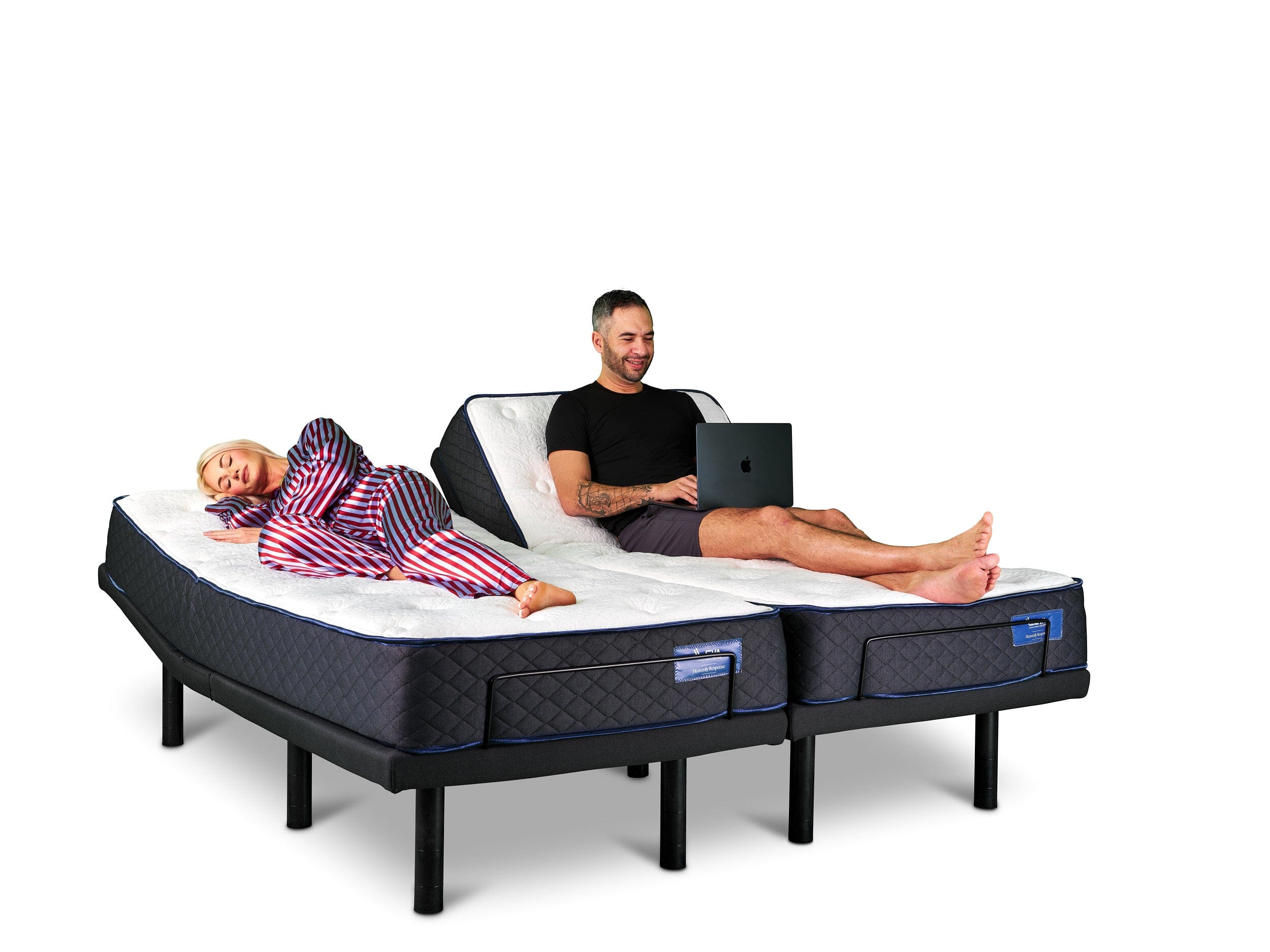
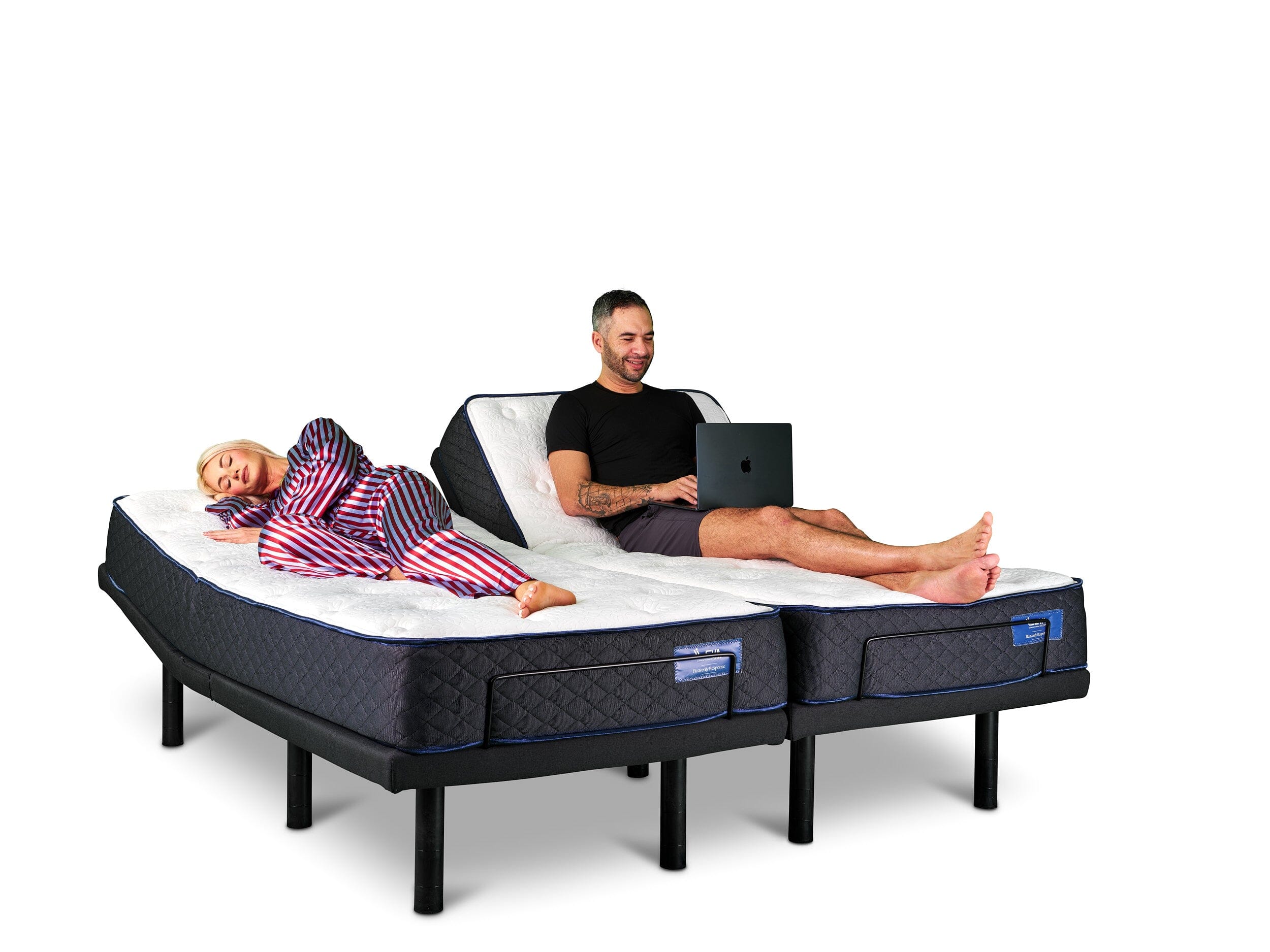
Split queen adjustable beds use two independent 30″×80″ bases so each partner can control elevation, firmness, and features.
-
Standard queen adjustable beds use a single 60″×80″ base, which keeps the surface seamless but requires shared settings.
-
Split setups suit couples with different sleep needs, snoring issues, medical positioning needs, or temperature preferences.
-
Key trade-offs with split systems include a center gap, specialized bedding, and slightly more complex setup.
-
Explore Leva Sleep’s adjustable bed packages to find a split or standard queen configuration that fits your relationship and your space.
Adjustable Beds for Canadian Couples: Market Snapshot
The Canadian adjustable bed market has grown quickly, especially for split configurations that support personalized sleep. Couples who cannot agree on mattress feel increasingly seek left- and right-side customization, driving demand for split and dual-zone adjustable sleep systems. This shift reflects a broader move toward treating sleep as a personal health investment instead of a one-size-fits-all purchase.
Leva Sleep focuses on this need with dedicated Split Queen options alongside traditional adjustable beds. With over 8 years of experience and 25,000+ customers, the company serves Canadian couples through locally assembled systems and comprehensive white-glove delivery in Ontario and Alberta.
Explore Leva Sleep’s split and standard queen adjustable bed packages designed for Canadian homes and lifestyles.
How Split Queen and Standard Queen Adjustable Beds Operate
To choose confidently, you first need a clear picture of how each configuration works in everyday use. Split queen adjustable beds use two separate 30″×80″ bases that operate independently through individual remotes or smartphone apps. Each partner can adjust head elevation, foot position, lumbar support, and massage settings without affecting the other side. The bases sit together to keep a standard queen footprint while still allowing full customization.
Standard queen adjustable beds use a single 60″×80″ base with one set of controls. Both partners share the same elevation angles, firmness settings, and positions. This design keeps the surface completely seamless but requires compromise when partners have different comfort needs.
Modern adjustable beds use whisper-quiet German motors that reduce sleep disruption during position changes. Zero-gravity positioning and automated anti-snore adjustment on adjustable bases are now viewed as real fixes for issues like back pain, acid reflux, and snoring rather than mere convenience features. Many advanced models add app control, preset positions, and anti-snore technology that detects snoring patterns and makes small automatic adjustments.
When a Split Queen Adjustable Bed Makes the Most Sense
A split queen adjustable bed works especially well for couples dealing with snoring. One partner can elevate their head to reduce snoring while the other stays flat. Back sleepers can address snoring and sleep apnea symptoms using the anti-snore settings on an adjustable base, which elevates the head above the chest while maintaining neck and spine alignment.
Couples managing medical conditions often treat split configurations as essential rather than optional. Sleep apnea patients may need head elevation, while partners with hip or knee pain might require different leg positions. Positional therapy through bed elevation can significantly reduce sleep apnea severity. Forcing both partners into the same position can create discomfort and reduce adherence to treatment.
Temperature-sensitive couples also benefit from independent control. Sleep Foundation recommends that couples who have different sleep temperature preferences purchase two smaller duvet inserts and covers so each person can have their own bedding. Split adjustable beds support this strategy by allowing different positions that influence airflow and body temperature.
Partners with very different firmness preferences or couples considering a “sleep divorce” often find that split systems let them share a bed again while still meeting individual comfort needs.
Key Factors to Weigh Before You Choose
The center gap between the two bases is the most noticeable trade-off with split configurations. Split configurations create a gap between the two bases, and most users adapt to the gap within a few nights, though a bed bridge or king-size mattress topper can be used to create a more unified surface and reduce the divide. Couples who cuddle in the middle of the bed should plan a gap-management solution from day one.
Bedding works differently on split systems. Split adjustable bed setups require two separate fitted sheets sized for each half rather than a single standard fitted sheet, while a king-size flat sheet and king duvet or comforter can still be used across both sides. This setup means investing in fitted sheets designed for adjustable bases that can handle frequent movement.
Noise levels also matter, especially for light sleepers. Modern systems use quiet motors, yet split configurations can create slightly more mechanical sound because two motors operate independently. Quality manufacturers reduce this difference through precise engineering so noise remains low in real-world use.
Delivery and setup become more involved with split configurations. Canadian buyers often rely on white-glove service to handle dual-base installation, gap alignment, and control synchronization. Professional setup becomes especially helpful when you combine split bases with specialized bedding and accessories.
Real Trade-offs Between Split and Standard Queen Beds
The core trade-off comes down to independence versus a single, unified surface. The small gap between split mattresses can be felt during intimacy or cuddling in the center of the bed, which may influence couples’ preference for independent adjustability versus a seamless sleeping surface. Some couples prioritize personalized comfort, while others value a completely smooth middle of the bed.
Split systems require more complex bedding and can increase long-term sheet and accessory costs. Many couples, however, find that bedding made for adjustable bases performs better and lasts longer than standard bedding forced to flex with elevation changes.
Standard queen beds keep the surface fully unified but limit individual control. Partners with very different needs may struggle to find a single position that feels comfortable for both, which can reduce sleep quality or push couples toward separate beds.
Maintenance can feel slightly more involved with split systems because they use dual motors and controls. Reputable manufacturers design these systems for long-term reliability and low service needs, which keeps ongoing effort manageable.
Setup, Ownership, and Long-Term Planning
Professional white-glove delivery becomes especially useful for split queen systems. Technicians manage bedroom delivery, dual-base alignment, height adjustments, gap solutions, and system synchronization. Leva Sleep’s white-glove service also includes product tutorials and old bed removal with donation or recycling options.
Long-term ownership means planning for bedding replacement and accessory compatibility. Split configurations require two fitted sheets per change, which adds cost over time. Many couples still view this as a fair trade for better sleep and fewer nighttime disruptions.
Room layout also plays a role. You need enough clearance for each side to move freely without hitting nightstands or walls. Split systems may need slightly more space because each base moves on its own path.
Warranty and service support matter for both configurations. Leva Sleep’s Canadian assembly and local service network help simplify repairs, parts replacement, and long-term maintenance.
Common Buying Mistakes You Can Skip
Many buyers focus only on sticker price and ignore long-term bedding and accessory costs. Split configurations need specialized fitted sheets and sometimes gap-management tools, which should factor into your total budget.
Couples also tend to underestimate the center gap. Skipping a bed bridge or topper can lead to frustration with cuddling or middle-of-the-bed comfort. Planning a gap solution at purchase usually prevents these complaints.
Some buyers overlook delivery and setup complexity, especially with split systems. Improper alignment or loose connections can affect performance. Professional installation helps avoid these issues and protects your investment.
Future needs often get ignored during the decision. Health changes, injuries, or evolving comfort preferences can make independent adjustability valuable later, even if both partners currently share similar needs.
What Canadian Couples Report After Switching
Many Canadian couples say split configurations helped them avoid “sleep divorce.” Partners dealing with snoring, medical positioning needs, or temperature differences often find that split systems let them share a bed again comfortably.
Feedback commonly mentions early concern about the center gap that fades within the first week. Most couples adapt quickly and focus instead on better sleep and fewer nighttime arguments about position or pillow height.
Temperature-sensitive couples often highlight the benefit of independent positioning for airflow and heat control. Keeping the bedroom around 63–67 degrees during sleep is often preferred, and cooling mattress pads that generate cool air or water through the pads may also help. Adjustable positioning adds another layer of temperature control on top of these tools.
Partners with medical conditions frequently report less pain and deeper sleep when they can fine-tune their own side without affecting their partner’s comfort.
Split Queen vs Standard Queen: Side-by-Side Comparison
The comparison below summarizes how split and standard queen adjustable beds differ so you can match features to your priorities quickly.
|
Feature |
Split Queen |
Standard Queen |
|---|---|---|
|
Individual Control |
Shared settings for both partners |
|
|
Surface Unity |
Center gap |
Seamless sleeping surface |
|
Bedding Requirements |
Two separate fitted sheets required |
Standard queen fitted sheet |
|
Snoring Solutions |
Shared elevation affects both partners |
|
|
Setup Complexity |
Dual-base installation with gap management |
Single-unit installation |
Compare Leva Sleep’s split and standard queen adjustable bed packages with Canadian delivery and white-glove setup options.
Decision Recap: Matching the Bed to Your Relationship
Choose a split queen adjustable bed if you and your partner have different comfort needs, medical positioning requirements, or snoring issues. For most couples in this situation, independent control and personalized positioning matter more than a small center gap.
Select a standard queen adjustable bed if you value a completely unified surface and share similar sleep preferences. This configuration suits couples who want adjustability without dual controls or specialized fitted sheets.
Think about long-term needs, including potential health changes and evolving comfort preferences. Split configurations offer more flexibility over time, while standard configurations keep things simple and streamlined.
Include total ownership costs in your comparison, such as bedding, delivery, and setup. Quality split systems from established manufacturers can deliver strong long-term value through better sleep and fewer relationship tensions around rest.
Find your ideal adjustable bed with Leva Sleep, including split queen and standard queen options for Canadian couples, plus expert guidance and white-glove delivery in Ontario and Alberta.
Frequently Asked Questions
What type of sheets work best with split queen adjustable beds?
Split queen adjustable beds require two separate 30″×80″ fitted sheets rather than a single queen fitted sheet. Look for sheets made for adjustable beds with deep pockets of at least 15 inches and strong elastic to prevent slipping during movement. You can still use a standard queen flat sheet and comforter across both sides. Many brands now offer adjustable bed sheet sets with features like side remote pockets and reinforced corners.
How do split queen beds affect intimacy compared to standard queen beds?
Split queen beds create a center gap that you can feel during cuddling or intimacy in the middle of the bed. Most couples adjust within a few nights and find that better individual sleep improves their overall relationship. Bed bridges or unified toppers reduce the gap sensation while keeping independent adjustability. The choice between perfect surface unity and personalized comfort depends on each couple’s priorities.
Are split queen adjustable beds more expensive than standard queen models?
Split queen adjustable beds usually cost more upfront because they use dual motors and more complex engineering. Total cost of ownership also includes specialized bedding, delivery, and setup. Leva Sleep offers split queen systems at 30–50% less than many luxury competitors through direct-to-consumer pricing and vertical integration. For couples with different needs, the improved sleep and reduced “sleep divorce” risk often justify the extra investment.
How effective are anti-snore features on split versus standard adjustable beds?
Split adjustable beds typically provide stronger anti-snore benefits because only the snoring partner needs elevation. Anti-snore features work by raising the head to open the airway and reduce snoring intensity. Standard queen beds require both partners to share the same elevation, which can bother the non-snoring partner. Advanced split models add automatic snore detection and independent micro-adjustments for each side.
What should I consider for delivery and setup of split queen adjustable beds in Canada?
Split queen adjustable beds involve more complex delivery and setup due to dual bases, gap alignment, and bedding configuration. Professional white-glove delivery handles alignment, height settings, and system synchronization. In Ontario and Alberta, Leva Sleep provides full white-glove service that includes bedroom delivery, complete setup, product walkthroughs, and old bed removal. Consider stairways, room access, and the value of expert installation when planning your purchase.