
Written by: Matthew Timmins, Founder and Managing Director, Leva Sleep
Key Takeaways
- A 15° head elevation gives most couples the easiest starting position to reduce snoring without stressing the lower back.
- Split adjustable bases let each partner control their own side, which helps prevent sleep divorce caused by snoring.
- Moving from 15° to 20–30° or using zero-gravity can further reduce snoring when the first angle only partly helps.
- Side sleeping plus 10–15° elevation and the right pillow often creates an extra reduction in snoring for many people.
- Explore customizable split bases designed for couples at Leva Sleep to improve sleep quality together.
1. How Snoring Strains Relationships and Leads to Sleep Divorce
Snoring affects both people in the bed, not just the person who snores. When one partner snores, both partners lose sleep and often wake unrefreshed. Over time, these disrupted nights build into chronic fatigue, irritability, and growing relationship tension. Many Canadian couples in their 40s, 50s, and 60s eventually reach a breaking point where one person moves to a spare room, a pattern now widely called sleep divorce.
Sleep divorce solves the immediate noise problem but creates new challenges. Couples often report reduced intimacy, a sense of disconnection, and the hassle of maintaining two separate sleep setups. Yet despite these costs, the underlying cause, airway obstruction during sleep, goes unaddressed, so the couple sacrifices togetherness without solving the health issue.
Snoring starts when relaxed throat tissues partly block the airway, which causes turbulent airflow and vibration. Gravity makes this worse when a person lies completely flat, because the tongue and soft palate fall backward. Elevating the head shifts those tissues forward and widens the airway, which reduces the vibration that creates snoring.
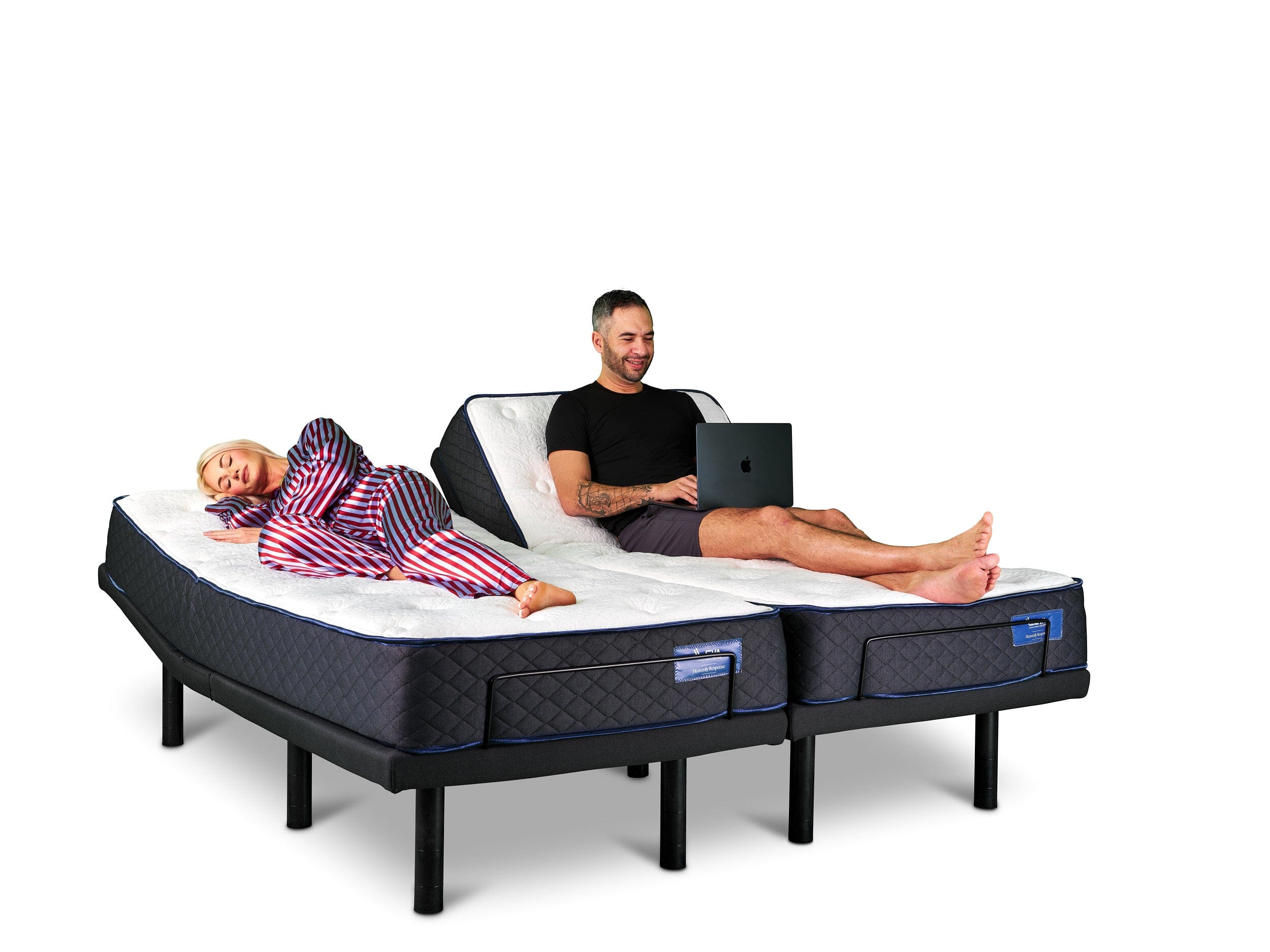
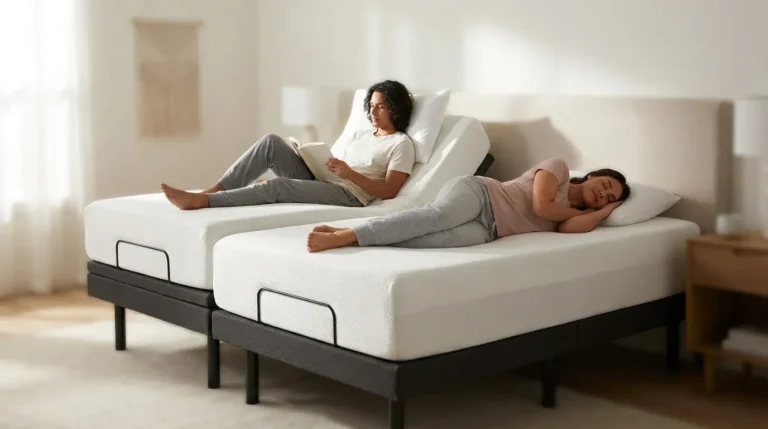
A split adjustable base tackles both the physical cause and the couple dynamic at the same time. Each partner controls their own side independently, so the snoring partner can elevate while the non-snoring partner stays flat or chooses a different angle. Neither person has to compromise on comfort to stay in the same bed.
2. Starting at 15°: Gentle Incline for First-Time Elevation
15° is the standard entry point for head-of-bed elevation to reduce snoring. At this angle, the head and upper torso rise enough to shift soft palate tissue forward and reduce airway narrowing. The spine usually stays comfortable at this incline, and most people do not feel like they are sliding down the mattress.
Most Leva Sleep adjustable bases reach this position with one or two presses of the head-elevation button. For couples trying elevation for the first time, staying at 15° for three consecutive nights gives the body time to adapt before moving to a steeper angle.
Pillow choice strongly affects results at this angle. A low-profile pillow or a contour pillow that supports the neck curve without pushing the chin toward the chest usually gives the best airway alignment. A pillow that is too thick at 15° can flex the neck forward and partly close the airway again, which reduces the benefit of the incline.
3. Moving to 20–30°: Moderate Incline for Stubborn Snoring
Some couples see clear improvement at 15° but still notice snoring. If 15° reduces but does not eliminate snoring after the initial three-night trial, moving into the 20–30° range is the logical next step. This range creates a stronger forward shift of the tongue base and soft palate and often helps people who snore heavily.
This moderate incline can also help people with mild acid reflux. Less reflux means less throat irritation, which can further reduce snoring intensity over time.
At 20–30°, lower body position starts to matter. Keeping the feet flat while the head is elevated at this angle can cause the sleeper to slide toward the foot of the bed during the night. A slight foot elevation of 5–10°, sometimes called a zero-gravity precursor position, creates a gentle knee bend that anchors the body and keeps the sleeper in place.
Mattress compatibility becomes more important at steeper angles. Leva Sleep’s all-foam and hybrid pocket-coil mattresses are built to flex with the base without forming pressure ridges at the bend point. Standard spring or low-flex foam mattresses often create these ridges on adjustable frames, which can cause discomfort and reduce sleep quality.
4. Zero-Gravity Position for Snoring and Back Relief
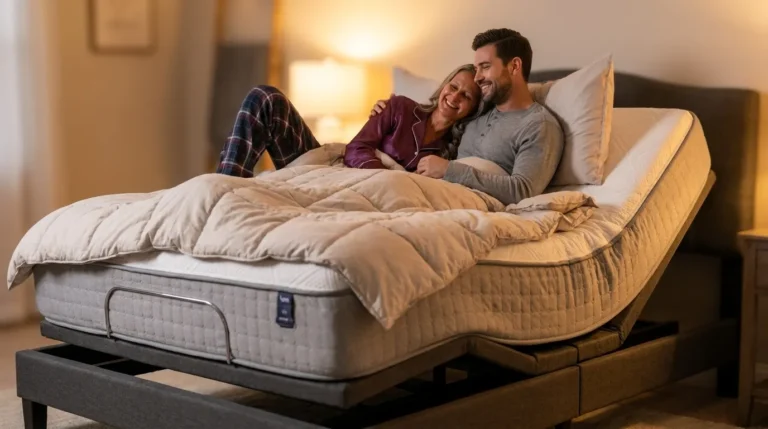
The zero-gravity position raises both the head and the knees at the same time. This posture spreads body weight more evenly across the mattress and reduces pressure on the lower back. The head usually rests at about 20–25° in this setup, which opens the airway while also easing back tension.
Zero-gravity often works well for couples where the snoring partner also has lower back pain or hip discomfort. This position can feel sustainable for long-term nightly use because it addresses snoring and musculoskeletal pain together. On a split base, the non-snoring partner can choose zero-gravity, a flat position, or any other angle on their own side.
Most Leva Sleep bases include a zero-gravity preset. The Leva Sleep app also lets users save this or any custom position, so the snoring partner can return to their preferred angle each night with a single button press instead of manual fine-tuning.
5. Side-Sleeping Adjustments for Shoulder and Hip Comfort
Side sleeping already helps reduce snoring because it keeps the tongue from falling straight backward. Combining side sleeping with a 10–15° head elevation often creates a compounding benefit and further quiets snoring.
Side sleeping on an adjustable base can introduce shoulder and hip pressure. When the head section rises, the shoulder of the lower arm can press into the mattress at an awkward angle and cause numbness or discomfort. A pillow-tilt adjustment, available on select Leva Sleep models, raises the pillow zone separately from the main head section. This keeps the head elevated while the shoulder rests in a more neutral, comfortable position.
A body pillow placed along the torso can also help maintain a side position throughout the night. This support reduces the chance of rolling onto the back and restarting louder snoring.
6. Setting Up a Split Base for Independent Control
A split base uses two independent frames placed side by side inside one shared bed frame. In a Split King setup, each side matches a standard Twin XL. Leva Sleep also offers a Split Queen, a less common configuration that fits a standard Queen frame and makes independent control possible in smaller Canadian bedrooms.
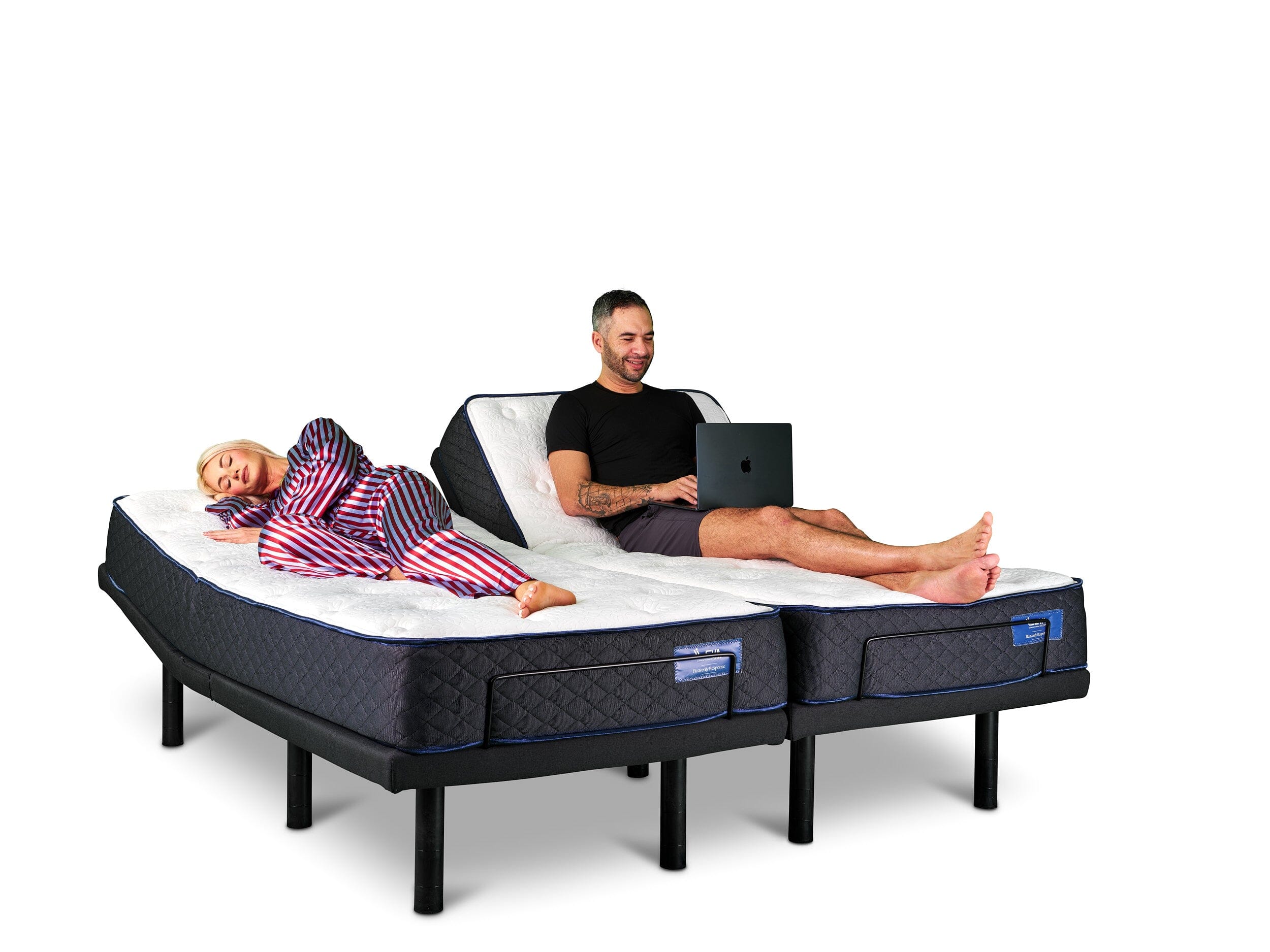
Each base connects to the Leva Sleep app through Bluetooth. This connection lets each partner adjust elevation, activate massage zones, set vibrating alarms, and save custom positions from their phone or the included remote. Motors use whisper-quiet German engineering, so one partner can adjust their position at 2 a.m. without waking the other.
Bedding on a split base works best with fitted sheets that have deep pockets and strong elastic. Leva Sleep designs its own sheets and duvet accessories for split configurations, including duvet clips that keep each side’s covering in place when the bases sit at different angles.
When Elevation Is Not Enough: Sleep Apnea Warning Signs
Head-of-bed elevation reduces snoring that comes from positional airway narrowing. It does not treat obstructive sleep apnea (OSA), a condition where the airway closes completely and repeatedly during sleep and lowers blood oxygen levels.
Consult a physician or sleep medicine specialist if the snoring partner also has gasping or choking sounds during sleep, witnessed breathing pauses, or excessive daytime sleepiness despite enough time in bed. Morning headaches and trouble concentrating also count as warning signs. These symptoms suggest that a formal sleep study may be appropriate.
Many customers referred from sleep apnea clinics use Leva Sleep’s adjustable bases alongside CPAP therapy or, in mild cases, under medical guidance as a supportive measure. An adjustable base is not a medical device and does not replace professional evaluation or prescribed treatment.
How to Test Positions at Home with a 3-Night Plan
Evaluate each position over at least three consecutive nights before deciding whether it works. One night rarely gives reliable feedback because the body needs several sleep cycles to adjust to a new angle.
- Nights 1–3: Set head elevation to 15° with feet flat. Note snoring frequency, using your partner’s feedback or a snoring-tracking app, along with sleep quality and any neck or back discomfort in the morning.
- Nights 4–6: If snoring continues, increase to 20–25° with a 5° foot lift. Reassess snoring, comfort, and how rested each partner feels.
- Nights 7–9: If back discomfort appears, switch to the zero-gravity preset. If snoring still persists at zero-gravity, add a side-sleeping body pillow and reassess.
Keep simple notes, such as a short entry on your phone each morning. This record helps you see patterns and can support a later medical visit if snoring remains a concern.
Common Adjustable-Bed Mistakes That Keep Snoring Loud
- Using too thick a pillow at elevation: Extra thickness pushes the neck into flexion, partly closes the airway, and cancels much of the incline benefit.
- Elevating only the head on a single base: This setup forces the non-snoring partner into the same angle, which often creates resentment and discomfort. A split base removes this conflict.
- Changing angles every night: Constant changes prevent the body from adapting. Stay with each configuration for at least three nights before judging results.
- Ignoring mattress compatibility: A standard spring mattress usually will not flex cleanly at the base’s hinge points and can create uncomfortable ridges. Use a mattress designed for adjustable bases.
- Relying on elevation alone: Alcohol use, nasal congestion, and body weight all affect snoring severity. Address these factors along with positional changes for the best outcome.
Key Buying Choices: Size, Noise, Delivery, and Budget
Size: A Split King fits a standard King frame and gives each partner a Twin XL surface. A Split Queen fits a standard Queen frame, a unique Leva Sleep option that suits couples in smaller bedrooms or those who prefer to sleep closer together.
Noise: Motor sound level strongly affects real-world comfort. Leva Sleep uses whisper-quiet German motors. Check motor noise specifications before buying any adjustable base, especially if one partner wakes easily.
Delivery: Adjustable bases are heavy and need careful setup. Leva Sleep’s white-glove delivery service, available for a fee in Ontario and Alberta, includes bedroom delivery, full assembly, leg-height adjustment, a product tutorial, and removal of the old bed.
Budget: Leva Sleep’s direct-to-consumer model and vertical integration support pricing that is 30–50% below comparable luxury competitors. Consider total package cost, including base, mattress, and compatible bedding, instead of focusing only on the base price.
Frequently Asked Questions
How to stop snoring with an adjustable bed?
Start with the 15° elevation described earlier and keep that angle for three nights. If snoring continues, increase gradually to the 20–30° range or try the zero-gravity preset, which raises both the head and knees. On a split base, only the snoring partner needs to adjust their side, so the other partner can keep their preferred position. Combine elevation with side sleeping and a low-profile pillow for the strongest combined effect.
What is the best bed position for snoring?
A 15–25° head elevation combined with side sleeping works well for most people. Head elevation reduces gravity’s pull on throat tissues, and side sleeping keeps the tongue from falling straight back into the airway. For people with lower back pain, the zero-gravity position, which raises both the head and knees, offers airway opening along with lumbar pressure relief. The ideal angle varies by person, so a structured three-night trial at each elevation gives the most reliable answer.
Do couples split up because of snoring?
Snoring often contributes to sleep divorce, where partners sleep in separate rooms to protect their sleep quality. This arrangement solves the noise problem but leaves the airway issue untreated and can slowly erode intimacy. A split adjustable base offers a practical alternative. The snoring partner elevates their side to reduce snoring while the non-snoring partner keeps a flat or custom position. Leva Sleep has helped many Canadian couples move back to a shared bed after periods of separate sleeping.
Is it better to sleep flat or elevated for snoring?
Elevated sleeping is usually more effective than flat sleeping for positional snoring. Lying flat lets gravity pull the tongue and soft palate backward and narrow the airway as much as possible. Even a modest 15° elevation shifts these tissues forward and reduces turbulent airflow and vibration. Flat sleeping suits people without snoring or airway issues, but anyone whose snoring worsens on their back or when fully flat often benefits from elevation as a simple, non-invasive change.
Conclusion
Snoring is a shared problem that responds well to thoughtful position changes. The right head-of-bed elevation, starting at 15° and adjusted through a structured three-night protocol, reduces airway obstruction at its source. A split adjustable base lets the snoring partner find their ideal angle without forcing the other partner into an uncomfortable position.
Leva Sleep’s Split Queen and Split King bases combine independent control, whisper-quiet motors, app-based position saving, and purpose-built bedding accessories in a single Canadian-designed system at the competitive pricing discussed earlier. White-glove delivery is available across Ontario and Alberta for a complete, setup-ready experience.