Written by: Matthew Timmins, Founder and Managing Director, Leva Sleep | Last updated: June 15, 2026
Key Takeaways for Reflux Relief and Shared Beds
- Medical guidance for acid reflux relief often calls for 6 to 8 inches of upper-body incline to keep stomach acid below the esophagus.
- Wedge pillows can provide short-term reflux relief but often cause sliding, shoulder strain, and sheet slippage during nightly use.
- Couples face extra challenges with wedge pillows because a single incline forces both partners into the same angle with no independent control.
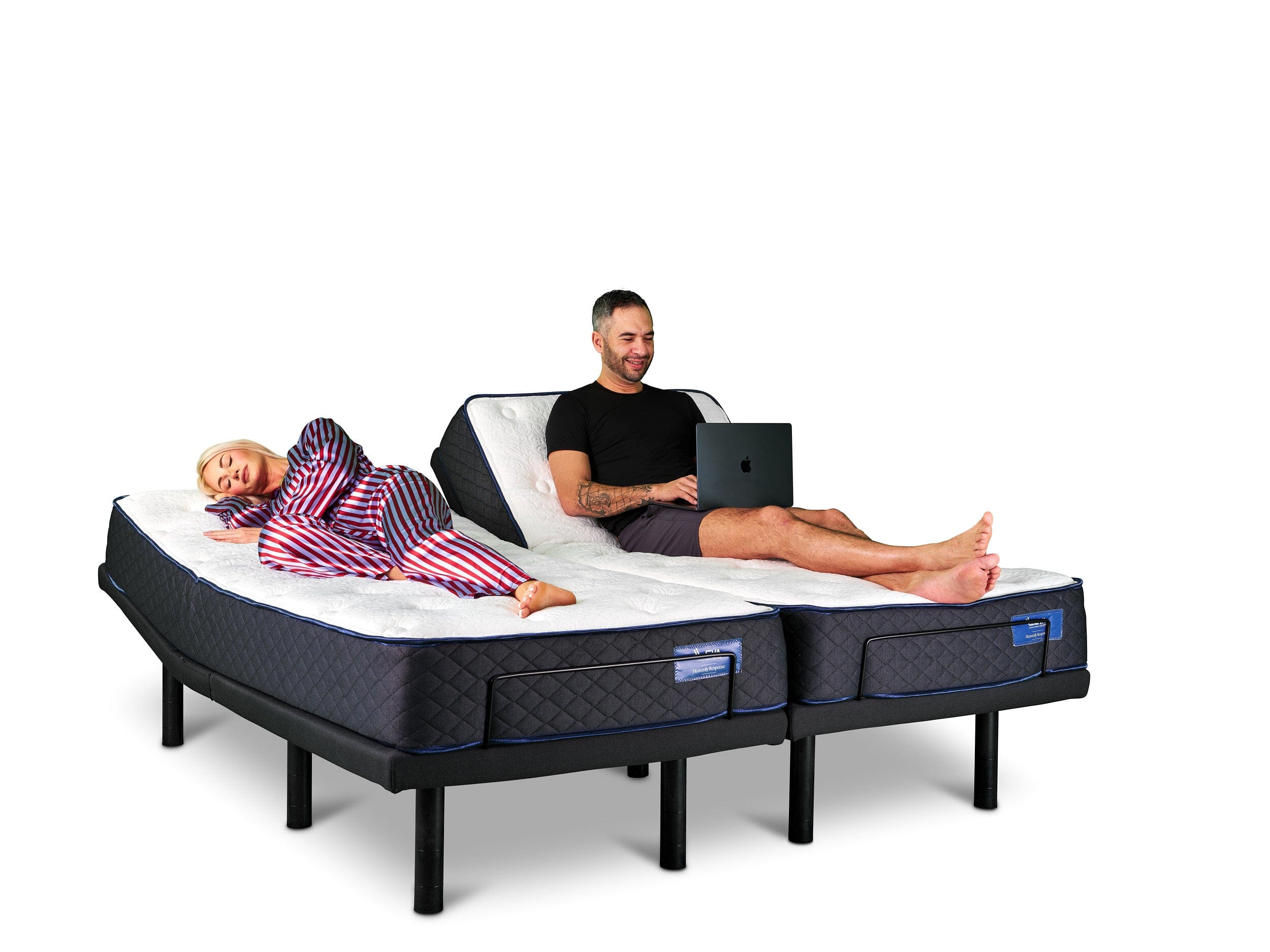
- Split adjustable bases deliver customizable head positioning for each sleeper along with quiet motors, lumbar support, and app control.
- Leva Sleep offers split adjustable bed packages designed for couples managing reflux and snoring—explore split configurations for couples to find the right setup for your household.
How Wedge Pillows Help Acid Reflux
Wedge pillows rely on a straightforward gravitational principle. Raising the upper body during sleep may help prevent acidic fluid from the stomach from entering the esophagus and causing heartburn symptoms, as supported by the National Institute of Diabetes and Digestive and Kidney Diseases. Clinical studies consistently show that elevating the head of the bed significantly reduces esophageal acid exposure time for GERD patients by keeping stomach acid from rising.
For short-term or single-sleeper use, a wedge pillow offers a low-cost entry point. Many people then discover that sustaining that elevation reliably, night after night, can create new discomfort, especially for couples sharing a bed.
Choosing Wedge Pillow Height for Reflux
Wedge pillows for acid reflux commonly range from 6 to 8 inches in height, with inclines described as 30 to 45 degrees. For people with acid reflux, a wedge pillow extending from the head to the hips to keep the entire upper body elevated may be most beneficial, while a short neck-only wedge usually falls short.
The table below shows how wedge height affects reflux relief and practical usability. Side sleepers in particular should pay attention to sliding risk and shoulder comfort at steeper angles.
| Wedge Height | Primary Material | Side-Sleeper Compatibility | Reflux Relief Level |
|---|---|---|---|
| 6 in / ~30° | Memory foam or polyfoam | Medium-firm suits side sleepers better | Minimum effective threshold |
| 7–8 in / ~35° | Memory foam or latex | Moderate, with increased sliding risk | Recommended general range |
| 9–10 in / ~40–45° | High-density polyfoam | Difficult, users tend to slide and experience shoulder or arm numbness | Above commonly recommended range |
| 11–12 in / ~45°+ | High-density polyfoam | Poor for side sleepers, suited mainly to back sleepers | Upper end of wedge range |
Disadvantages of Wedge Pillows in Nightly Use
Wedge pillows carry several documented limitations for nightly, long-term use.
- Sliding: Standard wedge pillows are difficult for side sleepers at higher inclines because users tend to slide down during the night, which reduces the effective elevation angle.
- Shoulder and neck strain: Standard wedge pillows can cause shoulder discomfort for side sleepers, and users experience shoulder and arm numbness from pressure against the incline.
- Sheet slippage: Standard fitted sheets are not designed for an inclined surface, so they often pop off the corners repeatedly through the night.
- Limited lifespan: Wedge pillows tend to wear out with consistent nightly use, which creates a replacement cycle over time.
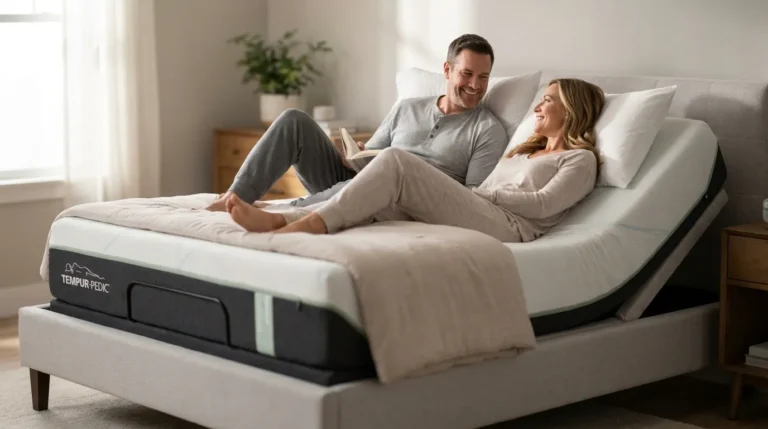
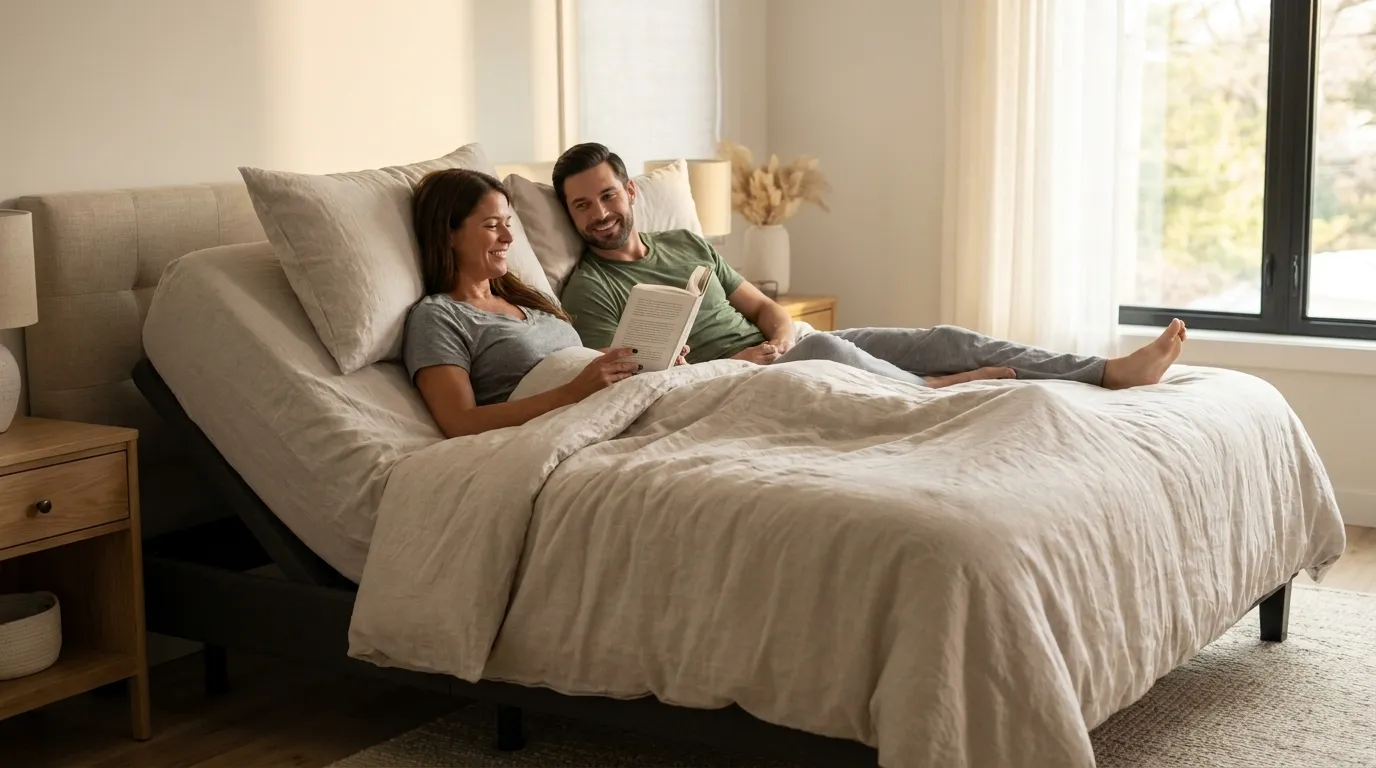
- No independent adjustment for couples: Sleeping on an incline with a whole-bed wedge or non-split adjustable bed may affect a bed partner. A single wedge forces both partners into the same angle or leaves one partner without elevation.
That last point matters most for couples. One partner’s medical need for 9 inches of elevation should not dictate the other partner’s sleep position. That shared-angle problem is exactly what Leva Sleep’s split adjustable bases are built to solve, since each partner controls their own side.
Adjustable Beds vs Wedge Pillows for Couples
An adjustable base raises the head of the mattress electronically and allows precise elevation adjustments that can change from night to night. This flexibility creates a more comfortable and sustainable solution for many GERD sleepers. For couples, a split configuration extends that benefit because each side of the bed operates independently.
Leva Sleep’s split Queen and King adjustable bases address every core limitation of a static wedge.
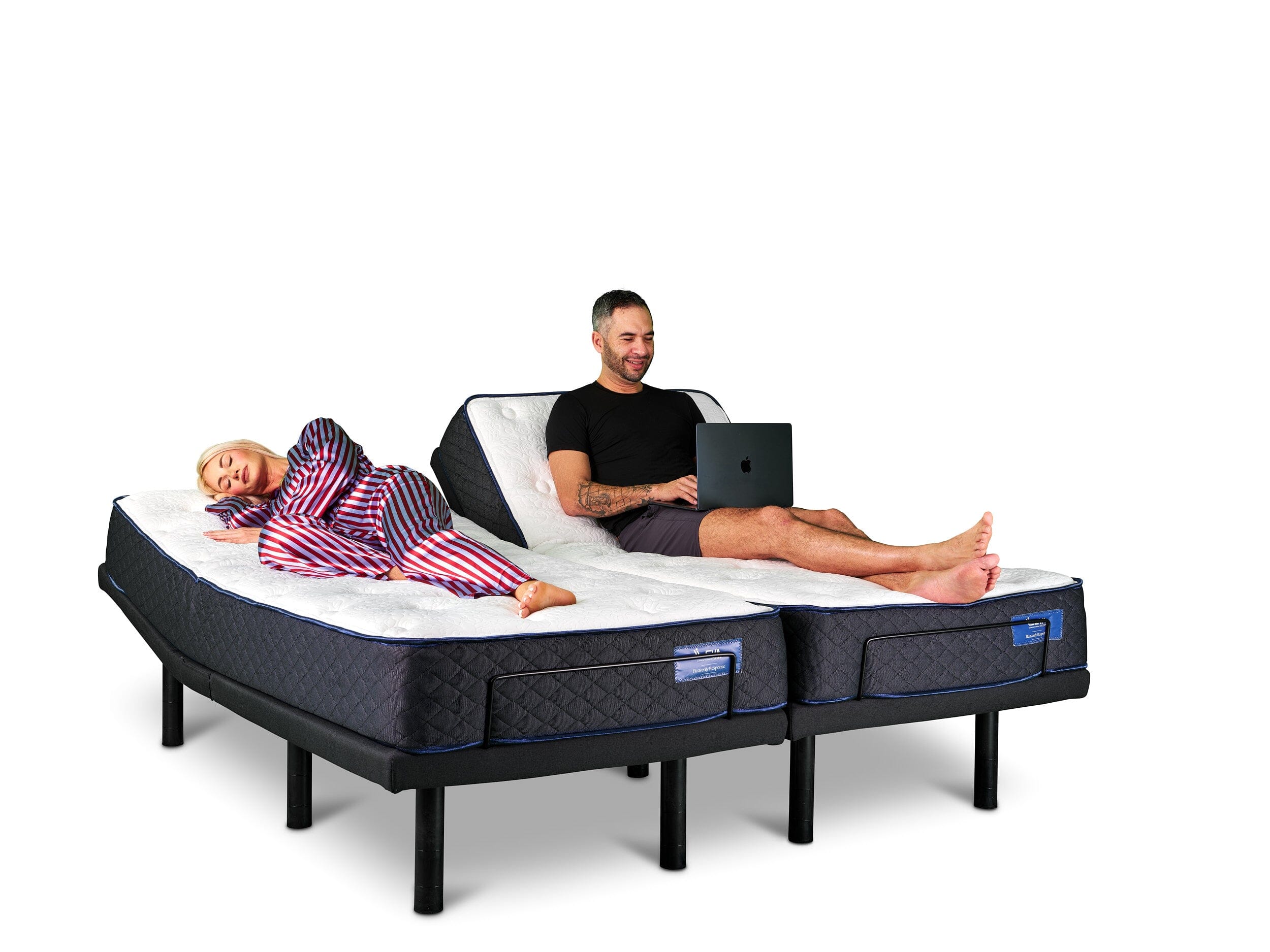
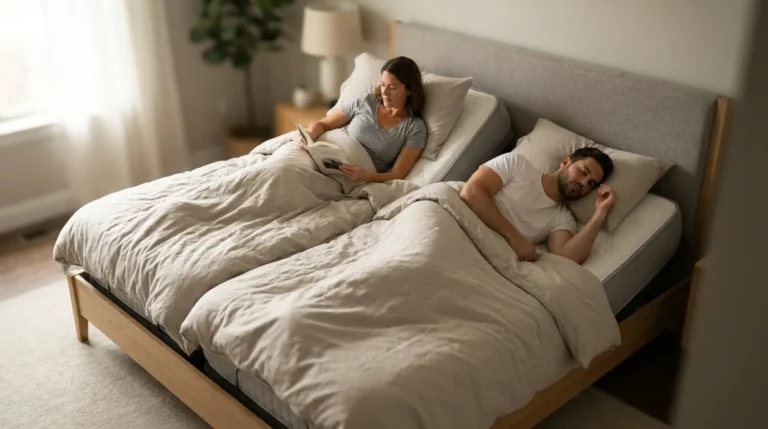
- Independent head elevation on each side, so one partner can sleep at 9 inches while the other stays flat.
- Whisper-quiet German motors that make micro-adjustments without waking either partner.
- Lumbar support and pillow tilt for full-torso positioning, not just head elevation.
- App-controlled settings via Bluetooth, including custom saved positions and vibrating alarms.
- Anti-snore mode that detects snoring and automatically adjusts head elevation to open the airway. Elevation pulls the jaw slightly forward and prevents the tongue from falling back, which makes inclined sleeping a first-line option for mild snoring and positional obstructive sleep apnea.
- Head-of-bed elevation for sleep apnea: Raising the head while sleeping may help prevent airway blockage in people with obstructive sleep apnea by keeping the airway open, as supported by experimental studies on positional OSA.
Leva Sleep carries 15 to 20 adjustable base models, compared to the 3 to 5 typically found at general mattress retailers. The company prices its systems 30 to 50% below comparable luxury imports through a direct-to-consumer, vertically integrated model.
Bedding Designed for Adjustable Bases
One practical concern couples raise when moving from a flat bed to an adjustable base is bedding. Standard fitted sheets are not engineered for elevation movement and often pull free at the corners. Leva Sleep designs its entire bedding suite specifically for adjustable bases, starting with the foundation layer and building upward.
- Deep-pocket fitted sheets with reinforced elastic address the corner-popping problem by gripping the mattress through repeated elevation cycles.
- Duvet clips maintain separation between the two sides when partners are at different angles, which prevents one partner’s covers from sliding onto the other’s side.
- Mattress protectors are cut and elasticized to flex with the base without bunching, so the protective layer moves with the mattress instead of fighting against it.
Purchasing bedding designed for the system removes the sheet-slippage frustration that often accompanies a first adjustable base purchase from a general retailer.
When a Wedge Works and When a Full System Makes Sense
A wedge pillow can serve as a reasonable starting point in specific situations.
- Single sleepers with mild, occasional reflux who need a low-cost, immediate solution.
- Post-surgery recovery situations where temporary elevation is prescribed for a defined period.
- Renters or travellers who cannot modify a bed frame.
A split adjustable base becomes the more practical choice in other scenarios.
- Two partners share a bed and have different elevation needs.
- Reflux coexists with snoring, positional sleep apnea, or lower back pain, which benefit from tailored lumbar and head positioning.
- Nightly use is expected long-term, so the wedge replacement cycle turns into a recurring cost instead of a one-time purchase.
- Side sleeping is the preferred position and shoulder strain from a wedge is already a problem.
Leva Sleep delivers to Ontario and Alberta with in-house white-glove service. Trained professionals bring the base to the bedroom, handle assembly, adjust leg heights, provide a full product tutorial, and remove the old bed. For couples in those provinces, that end-to-end experience removes the setup friction that often delays a purchase.
Frequently Asked Questions About Leva Sleep Adjustable Bases
How long does it take to set up a Leva Sleep split adjustable base?
Leva Sleep’s white-glove delivery team handles the full setup during a scheduled appointment. The process includes delivery to the bedroom, full assembly, leg-height adjustment, bedding fitting, and a hands-on product tutorial covering the app, remote, and all features. Customers finish the appointment ready to sleep that night.
Do Leva Sleep bases require special maintenance?
Leva Sleep adjustable bases are engineered for low-maintenance, long-term use. The whisper-quiet German motors are designed for durability and do not require lubrication or routine servicing under normal use. Keeping the base clear of debris around the motor housing and using Leva’s purpose-built bedding, which flexes with the base rather than straining against it, are the primary care steps. Leva Sleep’s direct-to-consumer model means customers can contact the team directly for any technical support without going through a third-party retailer.
Can adjustable elevation help mild sleep apnea as well as acid reflux?
Head-of-bed elevation is recognized as a supportive measure for both conditions. For acid reflux, it uses gravity to keep stomach acid below the esophagus. For positional obstructive sleep apnea, elevating the head keeps the airway more open by preventing the tongue from falling back and the jaw from dropping. Leva Sleep’s upcoming anti-snore mode (spring 2026) is designed to detect snoring events and make automatic micro-adjustments to head elevation. For diagnosed sleep apnea, elevation acts as a complement to treatment prescribed by a physician or sleep specialist.
What is Leva Sleep’s return policy for adjustable systems?
Leva Sleep encourages prospective customers to contact the team directly for current return and trial policy details, since terms can vary by product configuration and promotional period. Given the white-glove delivery model and the custom nature of split Queen builds, Leva Sleep’s team walks customers through compatibility, sizing, and feature selection before purchase to reduce the likelihood of a return. Reaching out via the website before ordering is the recommended first step for any policy questions.
The Bottom Line for Couples Managing Reflux
Wedge pillows deliver the gravity-based elevation that gastroenterologists recommend for acid reflux and do so at a low upfront cost. For couples, however, the static, one-size-fits-both design creates a new set of problems: sliding, shoulder strain, sheet slippage, and no way for each partner to choose a personal angle. A split adjustable base resolves all of these at once, since each partner controls their own angle with app-controlled precision, whisper-quiet operation, and purpose-built bedding that stays in place. For Canadian couples in Ontario and Alberta managing reflux, snoring, or differing comfort needs, Leva Sleep’s split systems provide a doctor-aligned, couple-friendly solution at 30 to 50% less than comparable luxury imports.
Find your split configuration — explore Leva Sleep’s adjustable bed packages.