Written by: Matthew Timmins, Founder and Managing Director, Leva Sleep
For couples sharing an adjustable bed, independent weight support on each side is essential for lasting comfort and durability. Many beds fail to address individual needs with shared weight systems, leading to uneven support, discomfort, and faster wear. This article explores the importance of per-side weight capacity and how Leva Sleep’s adjustable bases deliver tailored support for both partners, ensuring personalized comfort over time.
Why Shared Weight Capacity Falls Short for Couples
Total Weight Limits Can Be Misleading
Many adjustable beds advertise a combined weight limit, but this often hides the lack of independent support for each side. Most Canadian models support 700 to 1,000 lbs in total for better-quality options. However, this number reflects overall capacity, not how weight is handled per side.
When both partners use the bed, uneven weight distribution can occur. A heavier partner may affect the support on the other side due to a shared system, reducing comfort and stability for both. This setup overlooks the reality that couples have different weights and sleep needs, making individual support critical.
Drawbacks of Insufficient Individual Support
Lack of per-side weight capacity creates several issues for couples. Here are the key impacts:
- Uneven surfaces often result when partners differ in weight, causing the heavier side to sink more and disrupt spinal alignment for both. This can lead to pressure buildup and morning aches.
- Mechanical components face extra strain in shared systems, wearing out motors and frames faster. Warranties may not cover damage from improper weight distribution, leaving users unprotected.
- Over time, motors struggle, joints weaken, and frames may distort, reducing the bed’s functionality and turning advanced features into mere decoration.
- Some couples end up sleeping apart to avoid discomfort from uneven support, prioritizing individual rest over shared space.
How Leva Sleep Provides Independent Support for Couples
Leva Sleep focuses on genuine per-side weight capacity, moving beyond total weight figures to ensure each partner gets proper support. Their design prioritizes comfort without compromise. Explore Leva Sleep’s adjustable bed packages to see the difference independent support offers.
Dual-Zone Design for Customized Comfort
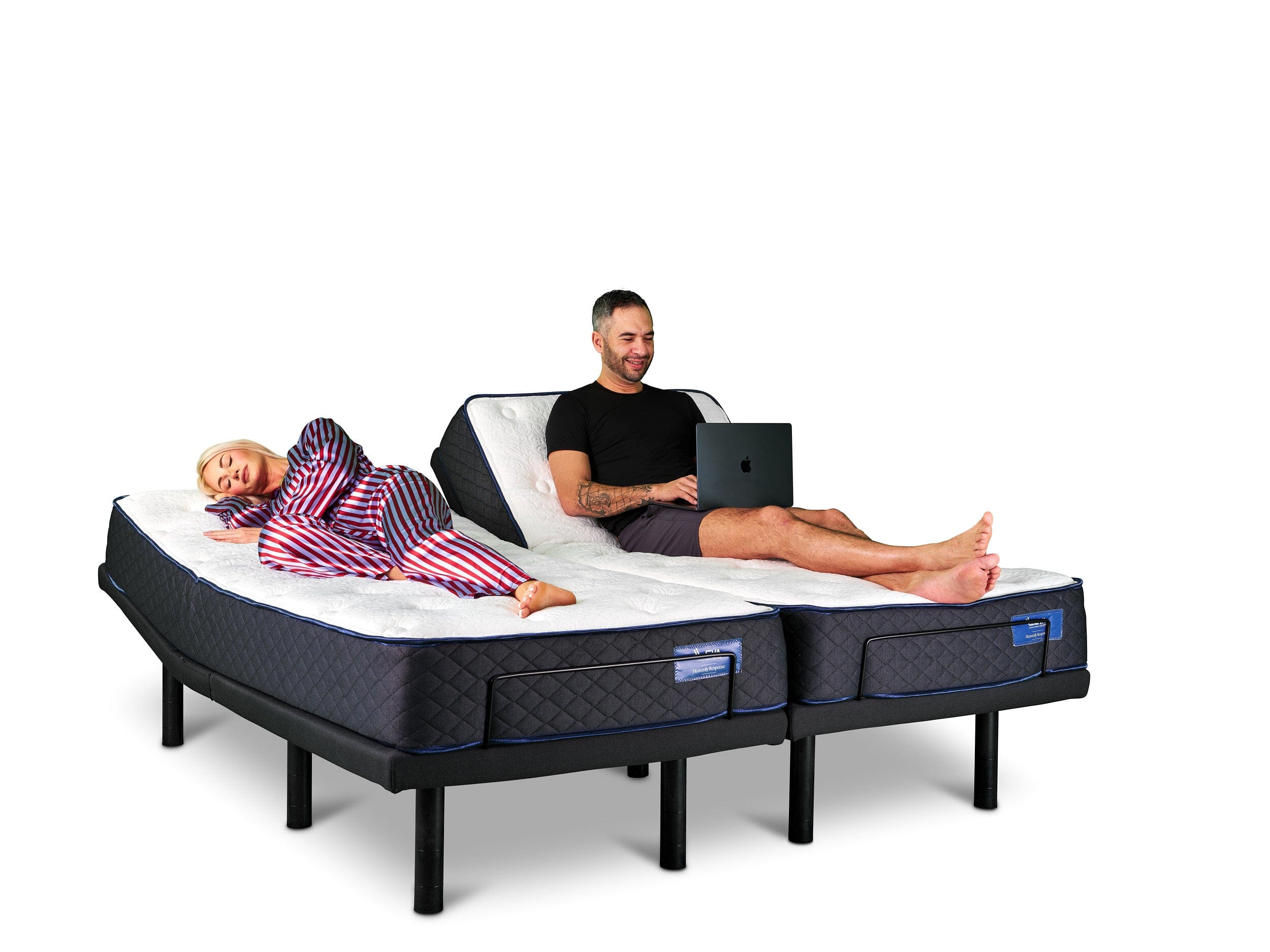
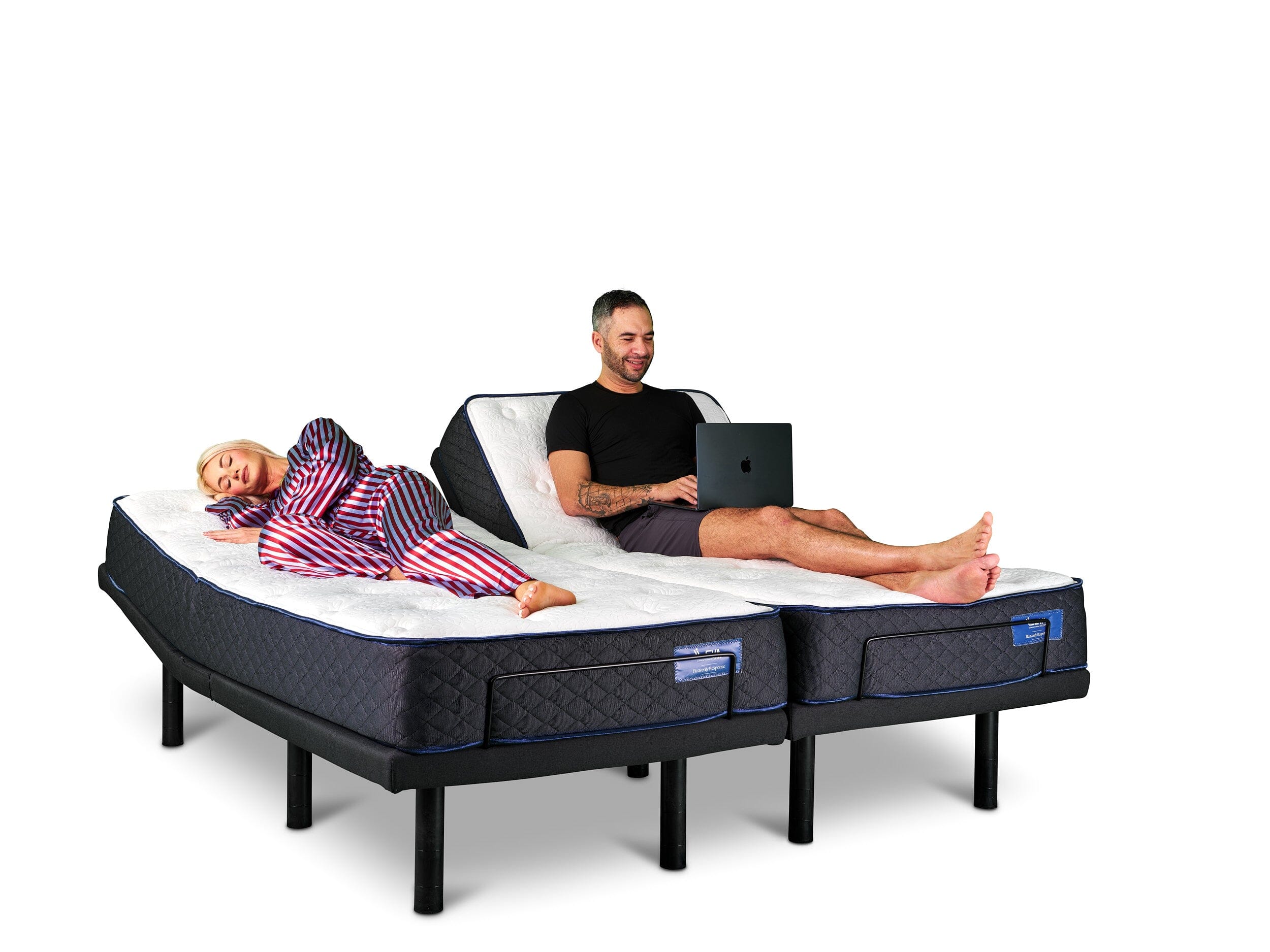
Leva Sleep’s Split King and Split Queen bases feature separate framing and quiet German motors for each side. Each section works independently, with its own support and controls, avoiding interference between partners. Quality bases often support up to 850 lbs per side, ensuring durability for individual needs.
This setup means one partner’s adjustments don’t disturb the other. Movement and weight stress stay isolated, preserving sleep quality and the bed’s structure over time.
Strong Build for Lasting Stability
Leva Sleep uses reinforced steel frames with multiple support legs to handle weight evenly on each side. Six steel legs provide solid floor loading. This design maintains capacity and stability for years. Sturdy steel frames are vital for long-term performance, addressing wear issues common in less robust beds.
With independent legs and strong frames, weight on one side doesn’t impact the other, offering consistent support regardless of differences between partners.
Individual Control for Precision
Leva Sleep’s per-side capacity allows for tailored adjustments through their app. Each partner can set elevation, massage, or position preferences without affecting the other. Features like anti-snore adjustments work reliably only when each side has enough independent support to handle frequent changes without strain.
Additional Benefits of Independent Support for Couples
Closing the Weight Gap for Better Rest
When partners differ significantly in weight, shared systems create an uneven surface, disrupting comfort. Leva Sleep’s design ensures each side supports the individual’s weight properly, maintaining a level surface and preventing sagging or tilting over time. This also helps mattresses perform as intended, avoiding early wear.
Meeting Medical Needs Without Compromise
For couples where one partner needs elevation for conditions like sleep apnea or reflux, shared systems often falter. Leva Sleep’s independent support lets one side adjust for medical needs while the other remains stable and flat, supporting both health and shared rest. Therapeutic features like massage also function effectively with this setup.
Enhancing Durability and Value
Independent capacity reduces stress on motors and frames by handling only the intended load per side. This extends the bed’s life and maintains performance. If one side needs repair, the other continues to work, preserving usability and protecting your purchase.
Optimizing Mattress Performance
Proper per-side support ensures mattresses deliver full benefits like pressure relief and temperature control. Most mattress types work with quality bases, though thicker options often perform best. Leva Sleep’s mattresses, designed for their bases, enhance this synergy for couples with varied needs. Discover Leva Sleep’s adjustable bed packages for integrated solutions.
|
Feature/Benefit |
Traditional Beds (Shared Capacity) |
Leva Sleep Beds (Independent Capacity) |
|
Weight Distribution |
Combined limit, uneven load |
Separate support per side |
|
Motor Longevity |
More strain, faster wear |
Less stress, longer life |
|
Partner Comfort |
Affected by uneven support |
Customized, stable for both |
|
Medical Adjustments |
Limited, impacts other side |
Full per-side elevation |
Common Questions About Adjustable Bed Weight Capacity
What Is the Typical Weight Capacity for Adjustable Beds in Canada?
Most adjustable beds in Canada handle 700 to 1,000 lbs total, but Leva Sleep focuses on strong per-side capacity. Total figures can mislead since they don’t ensure each side supports weight independently. Couples should look for beds that specify individual capacity for balanced comfort.
How Does Base Weight Affect Per-Side Capacity?
The base, weighing 150 to 250 lbs based on build and features, is part of total capacity. Leva Sleep’s steel construction ensures most capacity serves user weight per side, not just the frame. A heavier base improves stability and distribution for lasting support.
Why Does Individual Capacity Matter More Than Total for Couples?
Per-side capacity ensures each partner gets tailored support without impacting the other. High total limits don’t guarantee this independence, often leading to uneven comfort or stability issues. Leva Sleep’s dual design addresses varied weights and needs, reducing gaps and extending bed life.
Can Weight Capacity Impact Warranty Terms?
Exceeding limits or uneven distribution can void warranties, as they apply only under proper use. Shared systems under stress may be seen as misuse. Leva Sleep’s independent design keeps each side within limits, safeguarding coverage and your investment.
How Does Independent Capacity Help Couples With Medical Needs?
Per-side support allows one partner to adjust for conditions like apnea or recovery without disturbing the other. Shared systems can cause instability during such adjustments. Leva Sleep’s design supports medical needs while keeping shared sleep comfortable.
Improve Shared Sleep with Leva Sleep’s Independent Support
For couples, true comfort in an adjustable bed hinges on independent weight capacity per side. Many beds focus on total limits, overlooking the need for tailored support, which can reduce sleep quality or lead to early breakdowns.
Leva Sleep tackles this with dual-zone bases that provide separate support for each partner. Quiet motors, sturdy steel frames, and app-based controls create a system where individual needs don’t interfere with shared rest. This approach boosts immediate comfort and ensures long-term reliability.
Don’t let uneven support affect your sleep or relationship. Check out Leva Sleep’s adjustable bed packages today to enjoy customized support for both partners.