Written by: Matthew Timmins, Founder and Managing Director, Leva Sleep
Key Takeaways
- Traditional flat memory-foam mattresses like Tempur-Pedic cannot adjust head, foot, or lumbar elevation, which limits relief for back-pain sufferers.
- Medium-firm mattresses with adaptive contouring best support neutral spinal alignment, but couples often need independent firmness and position controls.
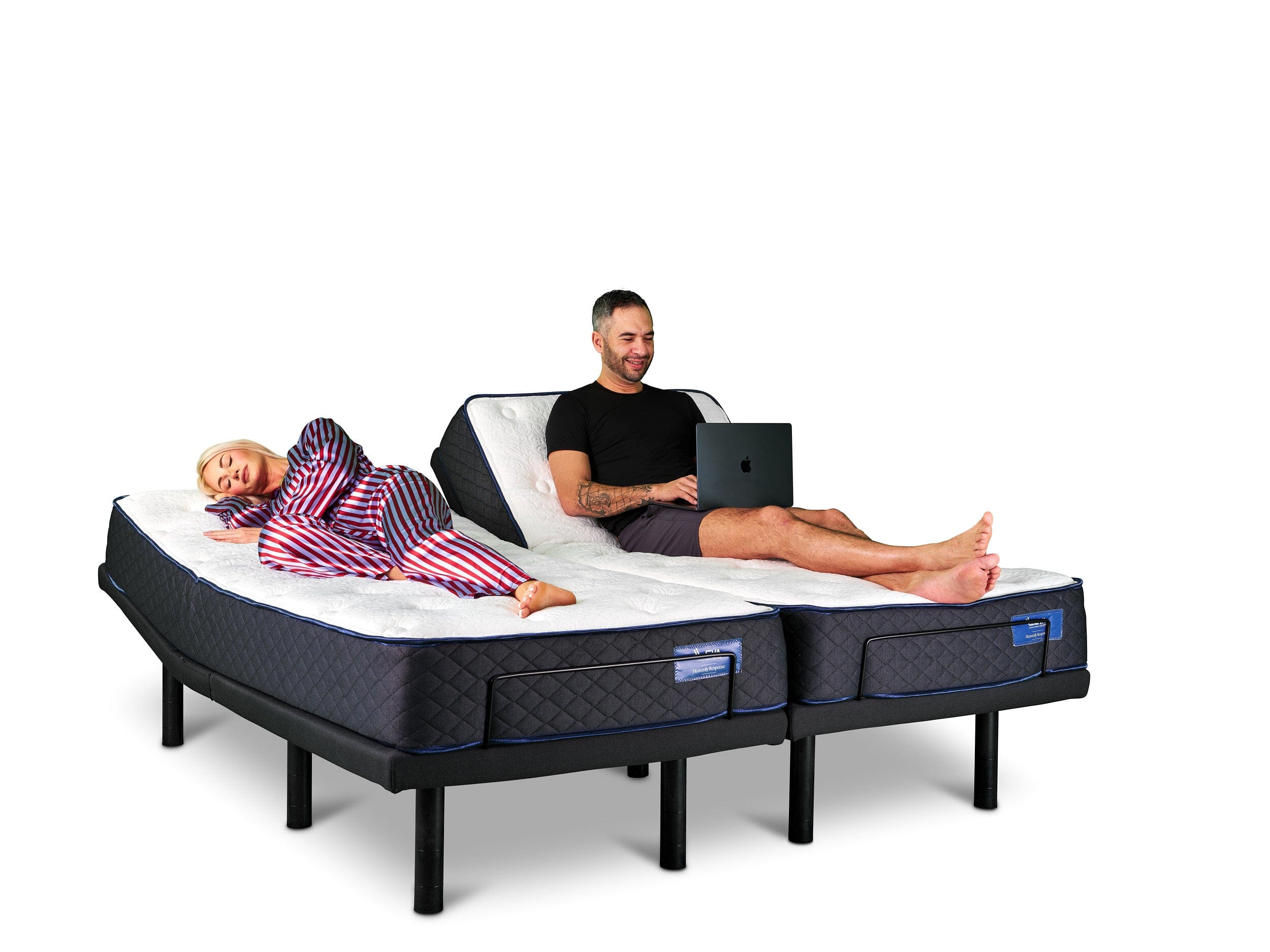
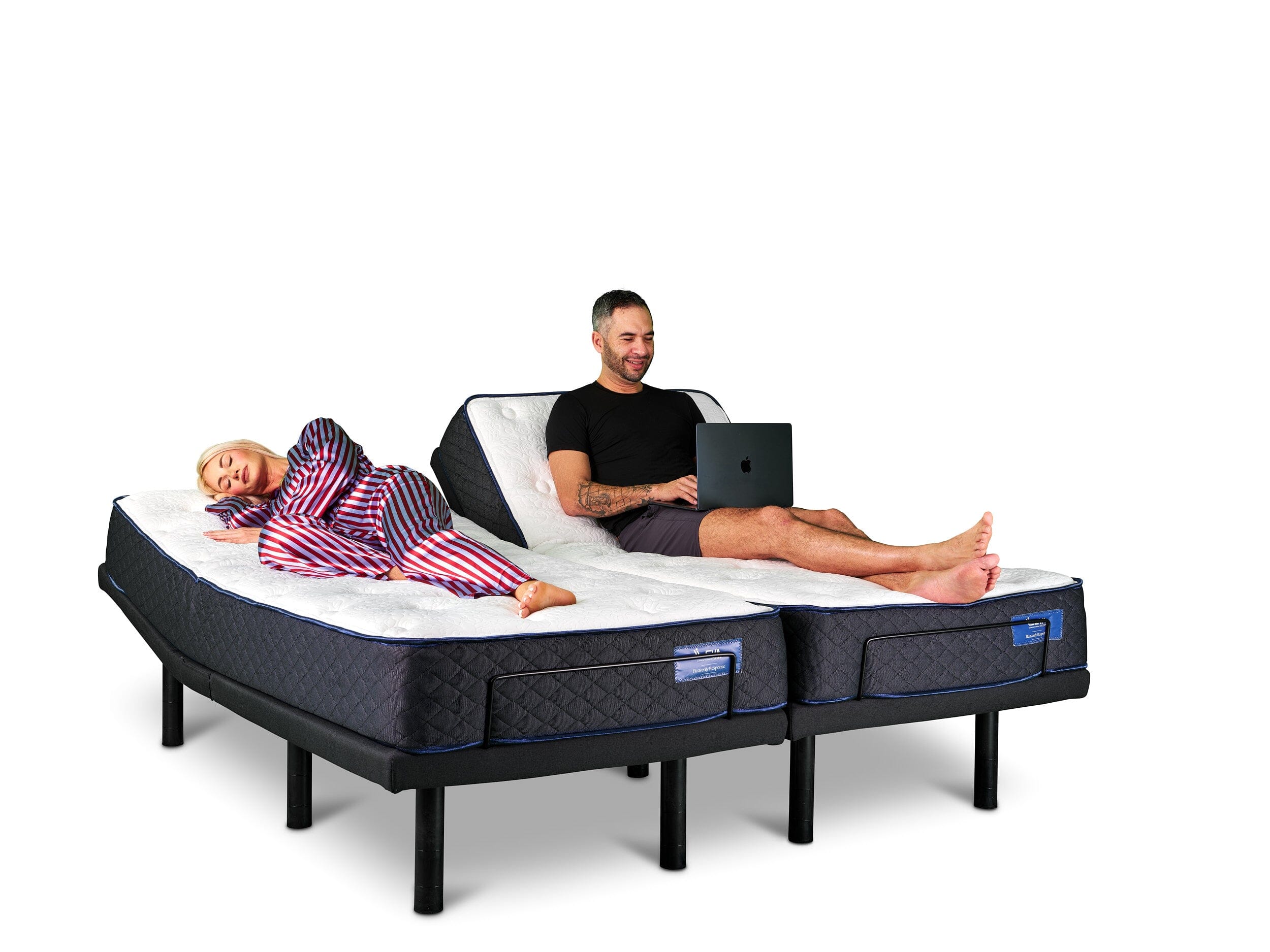
- Split adjustable memory-foam systems provide independent elevation and lumbar support per partner, solving the core limitations of fixed mattresses.
- Key evaluation criteria include dedicated lumbar zones, temperature regulation, quiet motors, and mattress compatibility with articulating bases.
- Leva Sleep offers locally assembled split adjustable systems with white-glove delivery in Ontario and Alberta. Shop Leva Sleep’s adjustable beds to find your ideal configuration.
The Right Firmness for Back-Pain Relief
Back-pain sufferers usually do best on a medium-firm mattress with adaptive contouring. This feel keeps the spine neutral while still relieving pressure at the hips, shoulders, and lumbar curve. Side sleepers often need a bit more surface give to accommodate hip and shoulder width. Back sleepers benefit from a flatter, more supportive feel that prevents the lumbar region from sinking out of alignment.
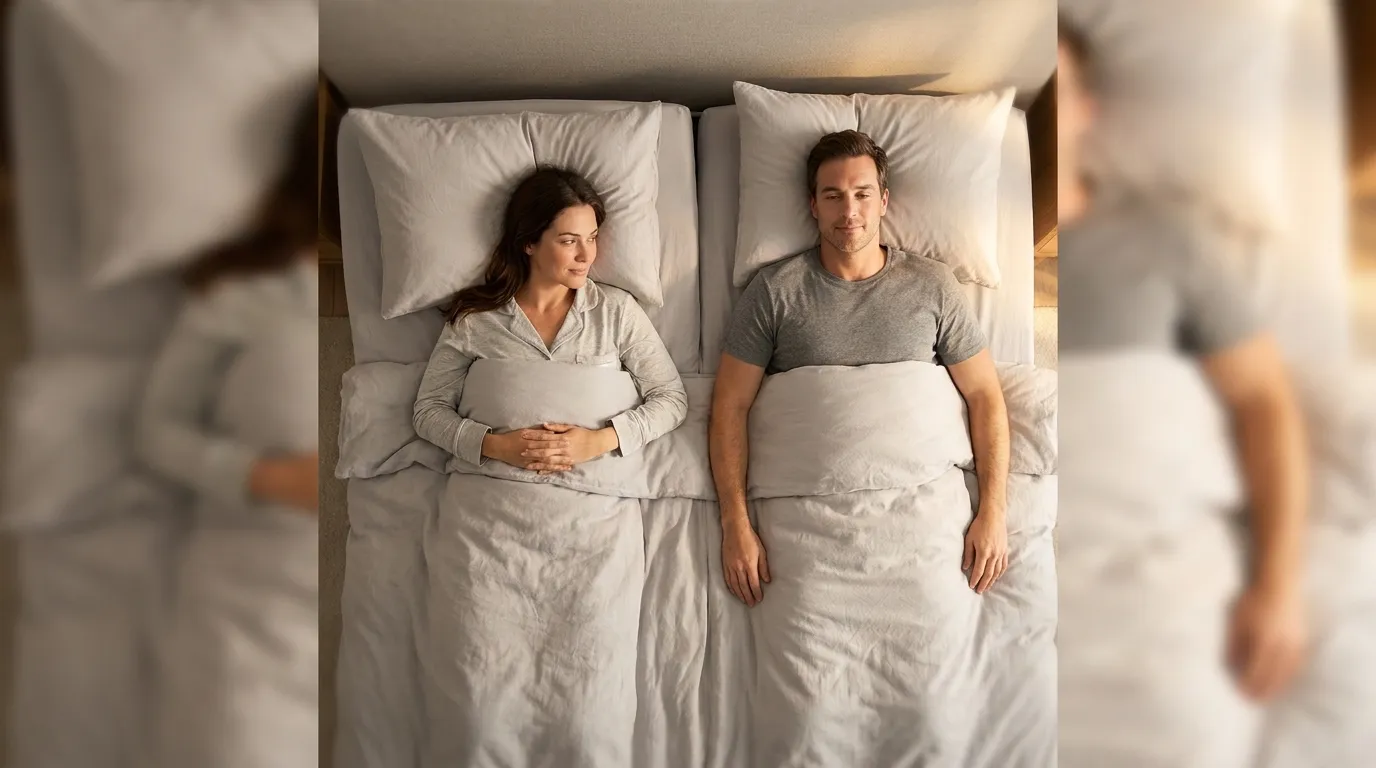
Meeting both needs on a single, flat mattress is difficult, especially for couples. A non-adjustable surface forces everyone into one compromise firmness and one fixed position.
Why Traditional Memory Foam Mattresses Like Tempur-Pedic Often Fall Short
Tempur-Pedic and comparable high-density memory-foam mattresses excel at pressure relief and motion isolation. Those properties matter, but several structural traits make these beds less suitable for people who need positional control for back pain.
- Fixed spinal geometry: A flat mattress holds the spine in one plane, even when a sleeper would benefit from head elevation, knee support, or lumbar lift. Only an adjustable base can change that geometry.
- Heat retention: Dense viscoelastic foam restricts airflow. Many adults over 40 run warm at night and experience disrupted sleep, which can heighten morning pain and stiffness.
- Initial firmness in cold conditions: Memory foam stiffens in cooler Canadian bedrooms before body heat softens it. The mattress can feel firmer than intended during the first hours of sleep, when the body is most vulnerable to pressure buildup.
- No lumbar customization: The lumbar region is the most common site of chronic back pain, yet a flat mattress cannot adjust support in that zone. Many sleepers resort to pillows as an imprecise workaround.
Side Sleepers with Back Pain
Side sleeping is the most common position among adults and places uneven load on the hip and shoulder. A mattress that is too firm pushes the hip upward, rotates the pelvis, and stresses the lumbar spine. A mattress that is too soft lets the hip sink and creates a lateral curve.
Neither pattern is correctable on a flat surface. An adjustable base with independent lumbar support lets the sleeper fine-tune the support under the lower back without changing the overall mattress feel.
How Flat Memory-Foam Beds and Basic Adjustable Bases Compare
Adjustable bases vary widely in capability. The table below shows how three common setups compare on features that matter most for back-pain relief and couples with different needs.
| Feature | Traditional Flat Memory Foam | Basic Adjustable Base + Standard Mattress | Split Adjustable Memory-Foam System (e.g., Leva Sleep) |
|---|---|---|---|
| Head/foot elevation | None | Single-zone, shared control | Independent per partner |
| Lumbar support adjustment | None | Rarely included | Dedicated lumbar control on select models |
| Couple compatibility | Compromise required | Limited, one setting affects both sides | Fully independent Split Queen or Split King |
| Motor noise | N/A | Often audible | Whisper-quiet German motors |
| Mattress compatibility | Any flat surface | Variable, standard mattresses may crack or gap | Mattresses designed specifically for flex articulation |
| Canadian white-glove delivery | Rarely included | Rarely included | Available in Ontario and Alberta |
Basic adjustable bases sold as add-ons at general mattress retailers usually offer shared head and foot elevation. For couples with different pain profiles or firmness preferences, one partner’s adjustment directly changes the other partner’s position. That shared control often cancels out the benefit of customization.
Why Adjustable Memory-Foam Sleep Systems Work Better
A purpose-built adjustable memory-foam sleep system pairs a flexible, articulating mattress with a motorized base that controls head, foot, and lumbar elevation. The mattress is engineered to bend without creating pressure ridges or gaps at the flex points. Most standard flat mattresses, including many Tempur-Pedic models, are not designed for this kind of movement.
Leva Sleep has focused on this category for more than eight years and has served over 25,000 customers with $50 million in lifetime sales. The company designs and assembles its systems locally in Ontario and Alberta and offers 15 to 20 adjustable base models. General retailers usually stock only three to five models.
This broader range lets back-pain sufferers match a base’s lumbar and elevation capabilities to their specific needs instead of accepting a single configuration. Leva also sells mattresses from brands such as Tempur-Pedic, Simmons, Beautyrest, Serta, and Kingsdown. Customers can pair these mattresses with Leva bases to get familiar foam technology in a fully adjustable system.
Shop Leva Sleep’s adjustable beds to compare Split Queen and Split King configurations side by side.
Key Features to Check for Back-Pain Relief
Lumbar Support Options
Start by confirming whether a base includes a dedicated lumbar zone that adjusts independently of head and foot elevation. This distinction matters because a general incline raises the entire torso and can help with issues like snoring or reflux. Most chronic back pain, however, centres on the lower back.
Targeted lumbar lift supports that specific region and provides a more clinically relevant adjustment for back-pain sufferers.
Temperature Regulation
Temperature control helps offset the heat retention of dense memory foam. Look for bases or accessories that provide active heating and cooling. Leva Sleep integrates a heating and cooling pad into its system so each partner can set a separate temperature zone.
Mattress Compatibility with Adjustable Bases
Always verify that the mattress is rated for use with an articulating base. All-foam and hybrid pocket-coil mattresses built for adjustable systems use flexible comfort layers and reinforced transition zones. Rigid high-density foams, including some Tempur-Pedic constructions, may resist bending or lose warranty coverage when used on a moving base.
Noise Levels
Motor noise often frustrates owners of entry-level adjustable bases. Check whether a base uses precision-engineered motors that are rated for quiet operation. Leva Sleep’s bases use whisper-quiet German motors, which matters for light sleepers who adjust positions during the night.
Bedding Retention
Standard fitted sheets tend to pop off the corners when the base moves. Leva designs bedding accessories such as deep-pocket sheets with reinforced elastic and duvet clips for adjustable beds. These details keep bedding in place and reduce nighttime disruptions.
Delivery and Setup Experience
Proper setup affects safety and comfort. Adjustable bases need accurate assembly, leg-height calibration, and app pairing. Leva’s white-glove delivery service, available for a fee, includes bedroom delivery, full assembly, height adjustment, a product tutorial, and removal of the existing bed.
Customers receive a complete handoff instead of a curbside drop.
How Split Adjustable Systems Help Canadian Couples
Split adjustable systems improve more than individual pain levels. Many couples who previously slept in separate rooms due to snoring, different firmness needs, or medical elevation requirements return to a shared bed after switching to independent split configurations.
Each partner controls elevation, lumbar support, massage, and temperature from a dedicated app profile without affecting the other side of the bed.
People managing sleep apnea, acid reflux, or post-surgical recovery often receive guidance to sleep with the head elevated between 30 and 45 degrees. An adjustable base makes that position precise and repeatable every night. Pillows no longer need to serve as a rough approximation.
Decision-Support Comparison
| Category | Approximate Price Range (CAD) | Adjustability | Canadian Service | Couple-Specific Options |
|---|---|---|---|---|
| Flat Tempur-Pedic-style memory foam (Queen) | $2,500–$6,000+ | None | Standard retail delivery | None |
| Basic adjustable base + standard mattress | $1,500–$4,000 | Shared head/foot only | Variable, often curbside | Limited split options |
| Leva Sleep split adjustable system | 30–50% below comparable luxury competitors | Independent head, foot, lumbar per partner | White-glove, Ontario & Alberta | Split Queen and Split King available |
Leva’s direct-to-consumer model removes retail markup by handling design, assembly, and delivery in-house. That structure supports the pricing shown above without cutting back on adjustability or service.
Frequently Asked Questions
Can I use my existing Tempur-Pedic mattress on a Leva Sleep adjustable base?
Some Tempur-Pedic mattresses work with adjustable bases, but compatibility depends on the specific model and foam construction. High-density, less flexible foam cores may resist articulation and could void the mattress warranty.
Leva Sleep’s team can review your mattress during a consultation. For customers who want a fully integrated setup, Leva also carries Tempur-Pedic mattresses that are paired with its own adjustable bases and warranted for use together.
Is a split adjustable bed practical for couples who share blankets?
Split configurations divide the mattress and base down the centre so each side elevates independently. Standard blankets and duvets can bunch or separate when positions differ.
Leva designs bedding for this scenario, including duvets with attachment clips that keep coverage consistent across both sides. Fitted sheets with deep pockets and reinforced elastic help prevent corners from slipping during adjustment.
What does Leva Sleep’s white-glove delivery include?
For a fee, Leva’s in-house delivery team brings the system to the bedroom, assembles the base and mattress, sets leg height to the customer’s preference, and pairs the app. The team also provides a full product walkthrough and removes the existing bed, donating or recycling it when possible.
This service is available in Ontario and Alberta, and customers do not need to handle any part of the setup.
How long does it take to notice back-pain improvement with an adjustable base?
Results vary based on the cause of back pain, sleep habits, and how consistently elevation settings are used. Many users report less morning stiffness within one to two weeks as the body adapts to supported positional sleep.
Customers who use medically recommended elevation for conditions such as acid reflux or sleep apnea often notice changes sooner because the position directly targets their symptoms. Leva Sleep suggests using lumbar and elevation controls consistently for at least 30 nights before judging outcomes.
Does Leva Sleep offer a trial period?
Leva Sleep offers trial and return policies, but terms can vary by product configuration. The process differs from standard mattress-in-a-box returns because white-glove delivery and custom assembly are involved.
Prospective customers should contact Leva Sleep before purchasing to confirm the exact terms for their chosen system.
Conclusion: From Flat Compromise to Personalized Relief
Flat memory-foam mattresses, regardless of brand, cannot adapt to the positional needs of a back-pain sufferer or two partners with different comfort requirements. The limitation is mechanical rather than a question of foam quality.
Adjustable memory-foam sleep systems solve this problem by adding targeted, repeatable elevation and lumbar support that each sleeper can control independently. For Canadian couples in Ontario and Alberta who have compared Tempur-Pedic and similar premium options, Leva Sleep offers a focused alternative with eight years of specialist experience, local assembly, and white-glove delivery.
Shop Leva Sleep’s adjustable beds and choose the Split Queen or Split King configuration that fits your needs.