
Written by: Matthew Timmins, Founder and Managing Director, Leva Sleep | Last updated: June 20, 2026
Key Takeaways for Canadian Couples
-
Brushless DC motors on quality adjustable bases operate at 30–40 dB, which keeps most partners asleep during nighttime adjustments.
-
Zero-gravity positioning with lumbar support can reduce spinal pressure by up to 75 %, offering meaningful relief for back pain, sciatica, and stenosis.
-
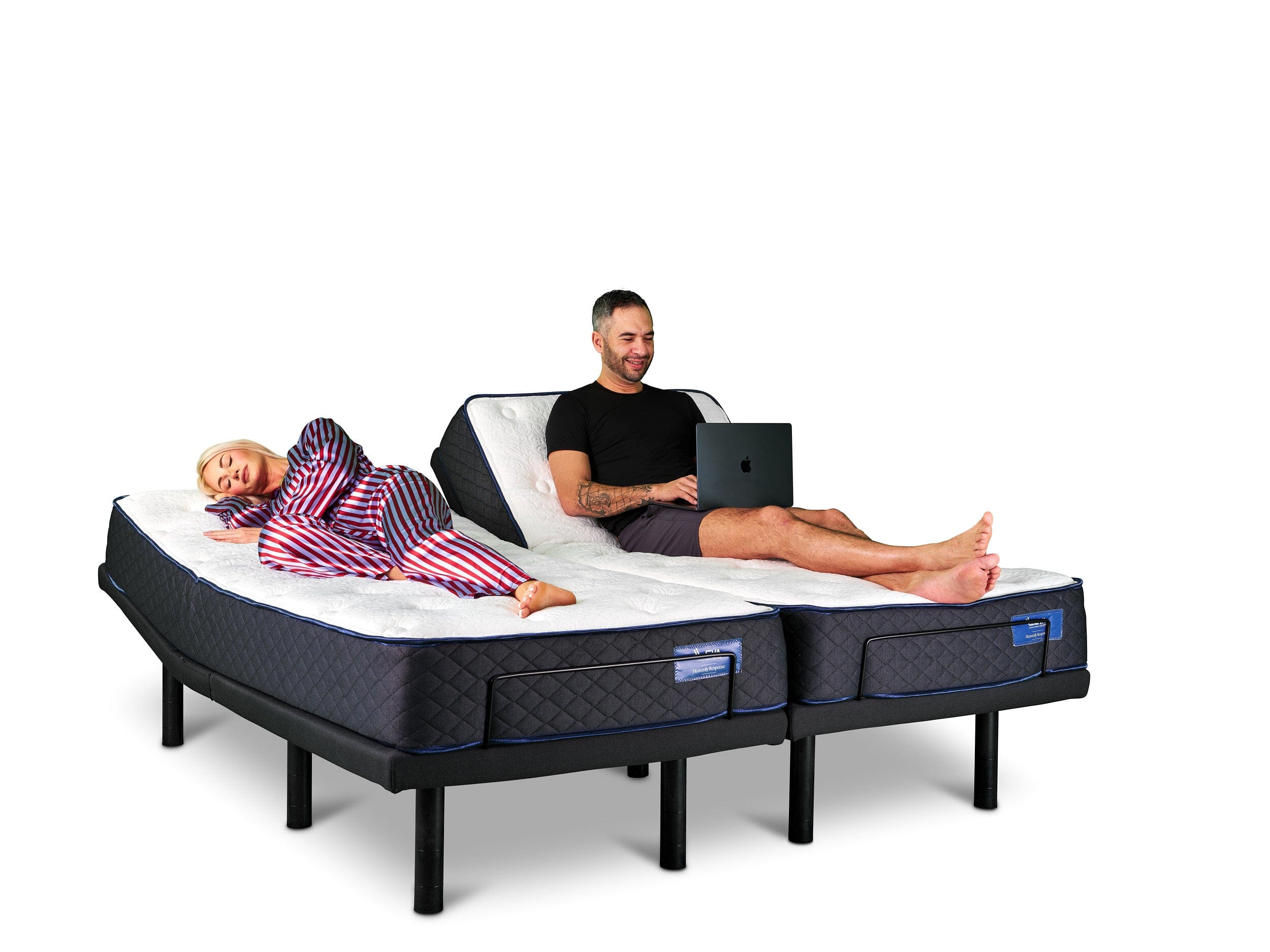
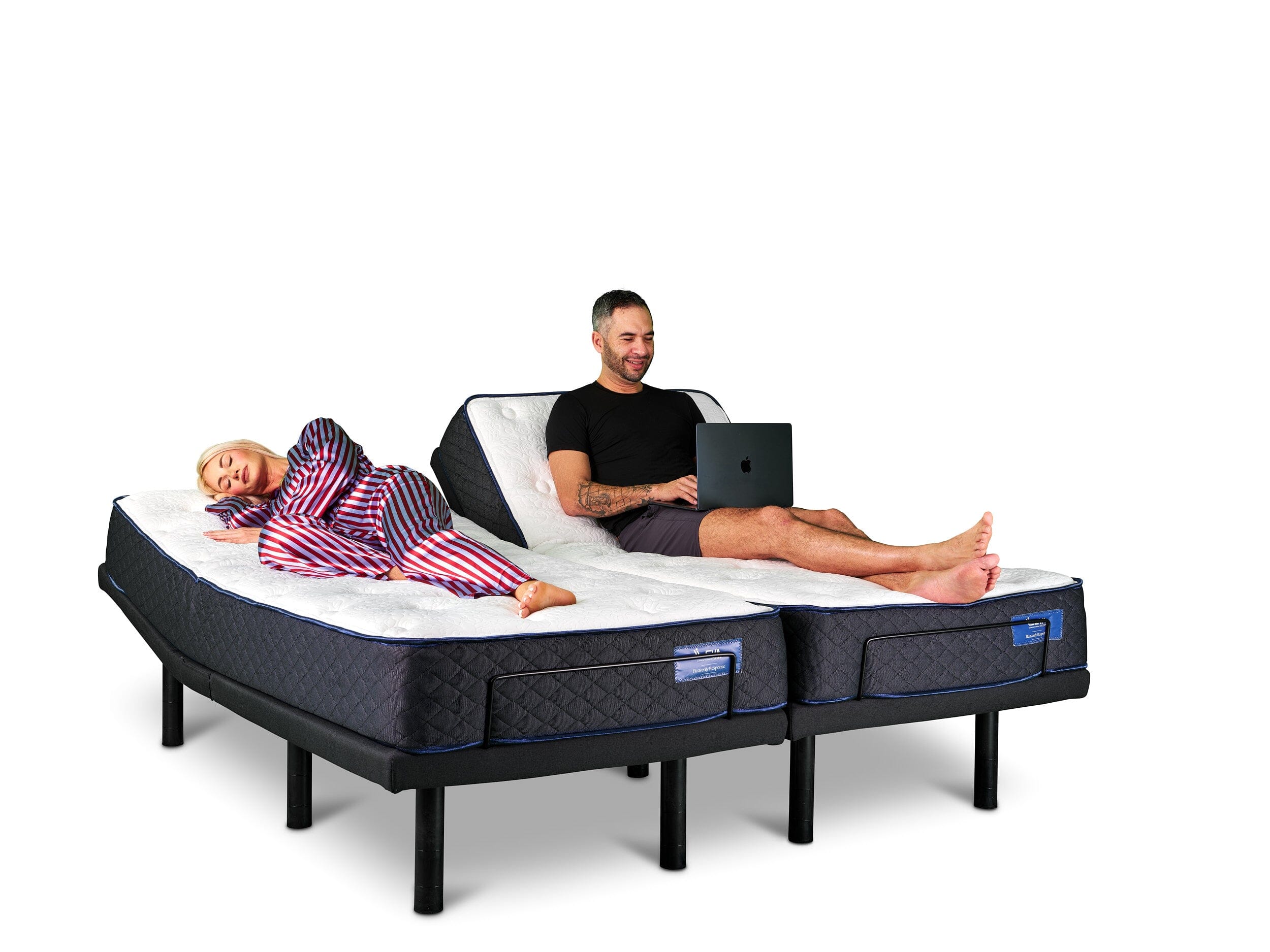
Split-queen and split-king systems with independent motors let each partner customize their position without affecting the other side of the bed.
-
Regular dust removal and sealed motor housings are the most effective ways to keep an adjustable base quiet over its lifespan.
-
Leva Sleep offers adjustable bed packages designed specifically for Canadian couples who want quiet, effective back-pain relief.
Why Noise and Back Pain Collide for Canadian Couples
Canadian couples who share a bed often face a clear dilemma. One or both partners need positional relief for back pain, yet neither wants a motor grinding away at 2 a.m. Online forums are full of similar complaints, such as “the motor got noticeably louder after about a year” or “every time I adjust, my partner wakes up.” These concerns reflect real engineering issues, not exaggerations.
Budget adjustable bases with AC motors commonly reach 50-60 dB, and lower-quality bases can be significantly louder, similar to a vacuum cleaner. At those levels, jerky, abrupt movement makes the problem worse. The mechanical lurch can wake a partner even before the sound fully registers. Many couples end up choosing between one partner tolerating pain to avoid disturbing the other, or moving toward separate beds.
How Loud Are Adjustable Beds in Real Life?
Noise levels on adjustable beds vary widely. Brushless DC motors typically sit in the 30–40 dB range, while the budget AC motors discussed earlier often climb into the 50–60 dB band or higher. The practical “whisper-quiet” threshold sits below 45 dBA for most bedrooms.
Independent testing shows that models in the 34–40 dB range are often described as sounding like “rainfall” or a “low-volume white noise machine.” These sounds blend into the sleep environment instead of cutting through it. That difference in perception matters more to couples than the raw numbers alone.
Long-term noise increase creates a separate challenge. Household dust is the single biggest enemy of adjustable bed mechanics, accumulating on motors and actuators to cause overheating and long-term noise failures, especially in homes with forced-air heating. A base that measures 40 dB at purchase can creep louder within 12–18 months if dust is not managed.
Whether Adjustable Bases Wake Your Partner
Partner disturbance depends on three main variables: motor dB output, movement speed, and whether the base uses independent split controls. Low noise levels can cause sleep disturbances in sensitive individuals, and 50–60 dB during nighttime adjustments can pull a sleeping partner from deep sleep into a lighter stage.
For couples, a split-queen or split-king configuration with independent motors on each side offers a practical answer. When one partner adjusts their position, only their motor activates. The other side of the bed remains still and quiet. Combined with gradual, smooth articulation instead of abrupt mechanical jumps, a brushless motor operating at 30–40 dB stays below the disturbance threshold for most sleepers.
Sleepopolis notes that adjustable base motor noise is particularly relevant for couples because partners may make small position tweaks during the night, and lower noise levels help avoid disturbing sleep. This aligns with what many Canadian couples report in day-to-day use.
Medical Perspectives on Adjustable Bases for Back Pain
Many orthopaedic specialists and sleep physicians recommend adjustable bases for specific conditions, with clear caveats. Dr. Harish Chafle states that the zero-gravity position reduces 75% of spinal pressure versus flat lying and is recommended by many orthopaedicians for lower back pain, sciatica, or post-surgery recovery. He presents it as supportive care rather than a cure.
Adjustable beds can significantly reduce discomfort and improve sleep for people with spinal stenosis, sciatica, and herniated discs by enabling customized spinal alignment and pressure relief, though they provide symptom management rather than a structural cure. For spinal stenosis specifically, a semi-Fowler position on an adjustable base mimics the forward-leaning flexion relief patients experience when using a walker by opening spaces between vertebrae.
For sciatica, knee elevation of 15 to 30 degrees relaxes the hamstrings, reduces posterior pelvic tilt, and relieves sciatic nerve pressure. These position guidelines highlight how precise adjustments can change symptoms from night to night.
Anyone managing a diagnosed spinal condition should consult their physician before selecting a specific base model or position protocol. A short discussion can prevent positions that aggravate symptoms.
Real Trade-Offs and Downsides of Adjustable Beds
Adjustable bases come with real trade-offs that buyers should weigh carefully. The motor noise concerns outlined earlier remain the most commonly cited complaint for budget models. Long-term wear creates a second issue. Performance deterioration after the first year typically manifests as slower articulation, louder motors, or inconsistent remote response rather than sudden failure, and without basic maintenance, a base’s lifespan can be significantly reduced.
Mattress compatibility adds a third consideration. Standard innerspring mattresses with rigid border wires do not flex properly on an adjustable base and can void the mattress warranty. Buyers need a mattress designed for articulation, such as all-foam or a flexible hybrid with individually wrapped pocket coils.
Delivery and assembly of a split system also introduce complexity. A split base is heavier, more technical, and more awkward to assemble than a standard frame. For many households, professional setup becomes a practical necessity rather than a luxury.
Shop Leva Sleep’s adjustable beds for purpose-built mattresses, white-glove delivery, and brushless motors included as standard.
How to Judge Whether a Motor Will Stay Quiet
Several engineering details predict whether an adjustable base will stay quiet over time. Start with motor type and quality. Confirm brushless DC, ideally German-engineered. Brushless DC motors cost more than comparable brushed models but last longer. This design choice affects both noise and durability.
Movement speed and profile come next. Ask whether articulation is gradual and continuous or abrupt. Smooth ramp-up and ramp-down reduce perceived noise and lower mechanical stress on components. That smoother motion often matters more to a sleeping partner than the raw decibel rating.
Warranty length reveals how confident a manufacturer feels about long-term quiet operation. A warranty of at least 10 years on the motor signals strong expectations for durability. Shorter coverage often signals expected wear and potential noise issues.
Dust management plays a major role in long-term sound. Common long-term motor sounds after the first year include clicking from failing capacitors, grinding from worn gears, and buzzing without movement from seized actuators, and dust accelerates each of these problems. Ask whether the motor housing is sealed or open, since sealed housings resist dust better.
Mattress compatibility and independent split controls round out the checklist. A mismatched mattress creates friction and resistance that forces the motor to work harder, which increases both noise and wear. Independent motors and controllers on each side prevent one partner’s adjustment from activating the other side’s mechanism.
Canadian Delivery Realities and White-Glove Setup
Buying a split adjustable system in Canada introduces more logistics than a simple “bed in a box.” A split-king or split-queen base arrives as multiple components, including two independent frames, two motors, and two control systems. These parts must be aligned, levelled, and calibrated before the first night’s sleep. Even leg height adjustment affects spinal alignment and the effectiveness of zero-gravity positioning.
Leva Sleep’s in-house white-glove delivery service, available in Ontario and Alberta, handles these details. The team removes the old bed for donation or recycling, completes full assembly in the bedroom, fine-tunes leg height to the customer’s preference, and walks through a complete product tutorial. They also make real-time adjustments before leaving. This setup process often separates a correctly functioning therapeutic system from a base that underperforms because it was never properly configured.
Comparing Basic, Mid-Tier, and Premium Split Systems
Basic single-motor adjustable bases offer head and foot elevation on a single frame. They suit solo sleepers with straightforward needs but provide no independent control for a partner. These models typically use brushed or AC motors that reach 50-60 dB or higher.
Mid-tier models add massage zones, USB ports, and sometimes a wall-hugger mechanism. Many still rely on a single motor per side and offer limited lumbar adjustment. The feature list looks longer, yet the core mechanics often remain similar to entry-level designs.
Premium split systems address every criterion in the quiet-performance checklist. They use brushless motors in the 30–40 dB range, independent controls per side, gradual articulation, dedicated lumbar support, zero-gravity presets, and mattresses built for articulation. Leva Sleep operates exclusively in this segment, offering 15–20 adjustable base models, compared to the 3–5 typically found at general mattress retailers.
This specialization means the motor, mattress, and bedding are engineered to work together rather than assembled from mismatched components. Couples receive a coordinated system instead of a mix-and-match setup.
Shop Leva Sleep’s adjustable beds, Canada’s split-system specialists, priced 30–50% below comparable luxury competitors.
Frequently Asked Questions
What noise level should I expect when first setting up an adjustable base?
A properly installed brushless DC adjustable base should produce a low hum in the 30–40 dB range during articulation. This sound level is roughly equivalent to a whisper or a quiet refrigerator. If a new base sounds louder than that at setup, check that all power connections are secure, the motor housing is free of packaging material, and the mattress is correctly positioned on the deck.
A base that sounds noticeably louder than expected from day one may have a motor type that does not match the specification. Confirm whether it uses brushless DC, brushed DC, or an AC motor, since each has a distinct noise profile. Leva Sleep’s in-house delivery team performs this verification during setup and adjusts leg height and mattress positioning before leaving.
Can a split adjustable base accommodate two partners with completely different back-pain needs?
Split-queen and split-king systems are built for couples with different needs. Each side of the base operates on its own motor and controller. One partner can hold a flat position while the other uses zero-gravity for lumbar decompression. One side can activate a lumbar support zone while the other remains neutral.
The Leva Sleep app allows each partner to save custom positions, including head angle, foot elevation, and lumbar height. Adjustments become a single tap instead of a manual process in the dark. For couples where one partner has sciatica and the other has no spinal issues, this independent control removes the compromise that often pushes couples toward separate beds.
How do I keep the motors quiet after the first year?
Dust management offers the biggest impact on long-term motor noise. In Canadian homes with forced-air heating, dust accumulates quickly under the bed frame and inside motor housings. This buildup causes overheating and gradual noise increase. Vacuuming the underside of the base every three to six months, including around actuators and motor housings, delivers the highest maintenance return.
Check all frame hardware connections annually, since vibration over time can loosen bolts at pivot joints. Loose joints create squeaks that many people mistake for motor noise. If the base uses pivot joints that require lubrication, consult the manufacturer’s manual for the approved lubricant type, because some models prohibit silicone-based products on plastic bushings.
Any grinding or stuttering noise that comes from inside the motor housing calls for professional service rather than DIY repair. Leva Sleep’s warranty covers motor performance, and the company’s specialist team can advise on maintenance schedules specific to each model.
Should I consult a doctor before using an adjustable base for back pain?
Most adults with general back discomfort and muscle tension can safely experiment with zero-gravity and lumbar support positions without medical clearance. People with diagnosed conditions such as spinal stenosis, herniated discs, sciatica, post-surgical recovery, or osteoporosis should ask a physician or physiotherapist which positions and elevation angles are appropriate before regular use.
Adjustable bases provide symptom management and positional support. They do not replace medical treatment for structural spinal conditions. Many orthopaedic specialists and sleep medicine physicians actively recommend adjustable bases as a complement to treatment. Leva Sleep has received referrals from sleep apnea clinics whose patients benefit from head elevation as an alternative or supplement to CPAP therapy.
Bringing the base’s specification sheet, including available elevation angles and lumbar adjustment range, to a medical appointment gives the physician the details needed for a specific recommendation.
Conclusion: Quiet Relief for Canadian Couples
Brushless DC motors operating at 30–40 dB provide a clear answer to the noise question. They stay quiet enough to avoid waking most sleeping partners, including light sleepers, while delivering the zero-gravity and lumbar support positions that reduce spinal pressure and ease symptoms of stenosis, sciatica, and chronic lower back pain. Budget AC motors at 50–60 dB do not meet that standard for many couples.
For Canadian couples in Ontario and Alberta, Leva Sleep’s split adjustable systems combine brushless German motors, independent per-side controls, purpose-built mattresses, and in-house white-glove delivery in a single integrated package. Pricing sits 30–50% below comparable luxury competitors, and every criterion in the quiet-performance checklist appears as a baseline feature, not an upgrade.
Shop Leva Sleep’s adjustable beds and choose the split system that lets both partners sleep through the night.