Written by: Matthew Timmins, Founder and Managing Director, Leva Sleep
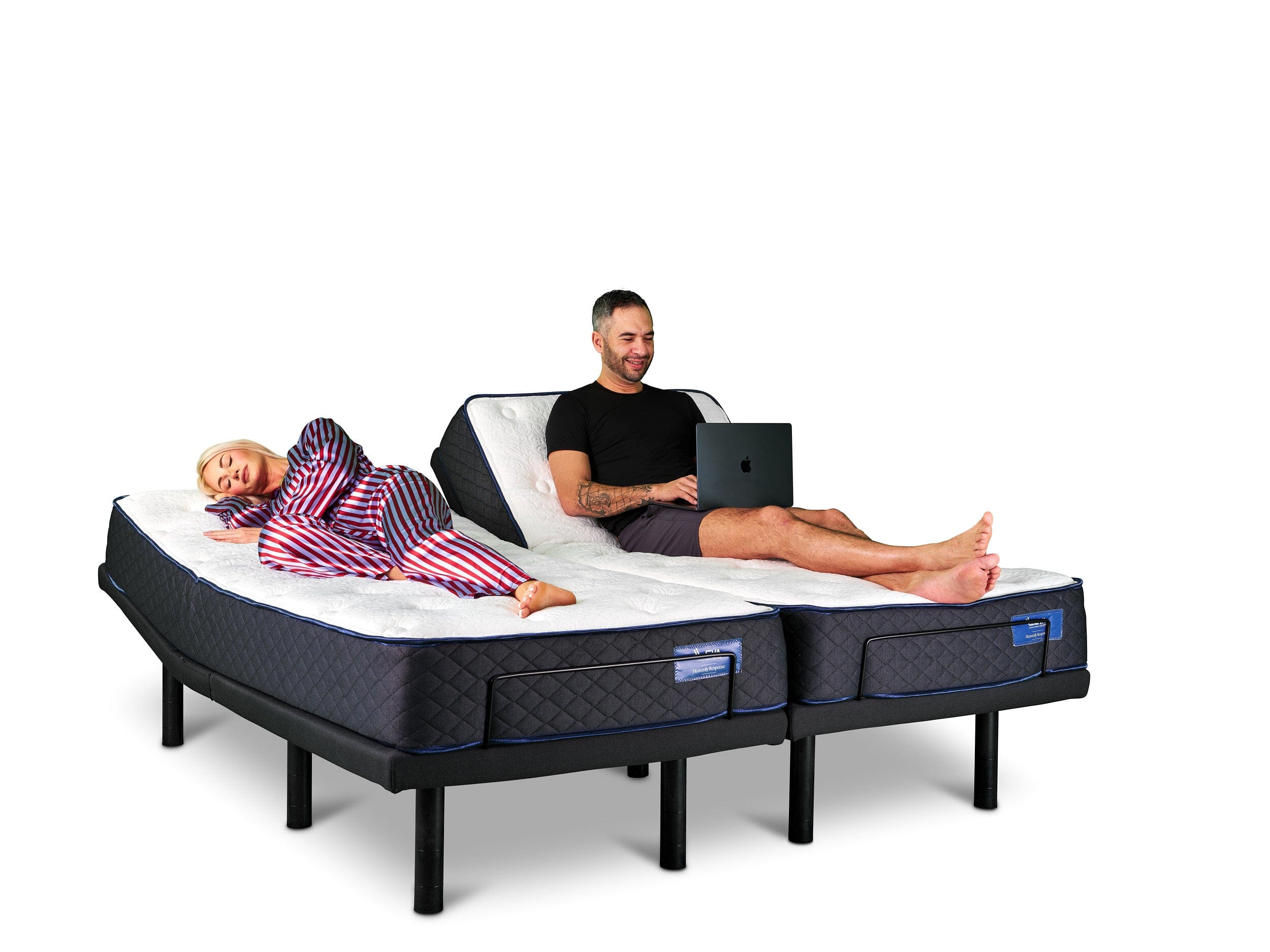
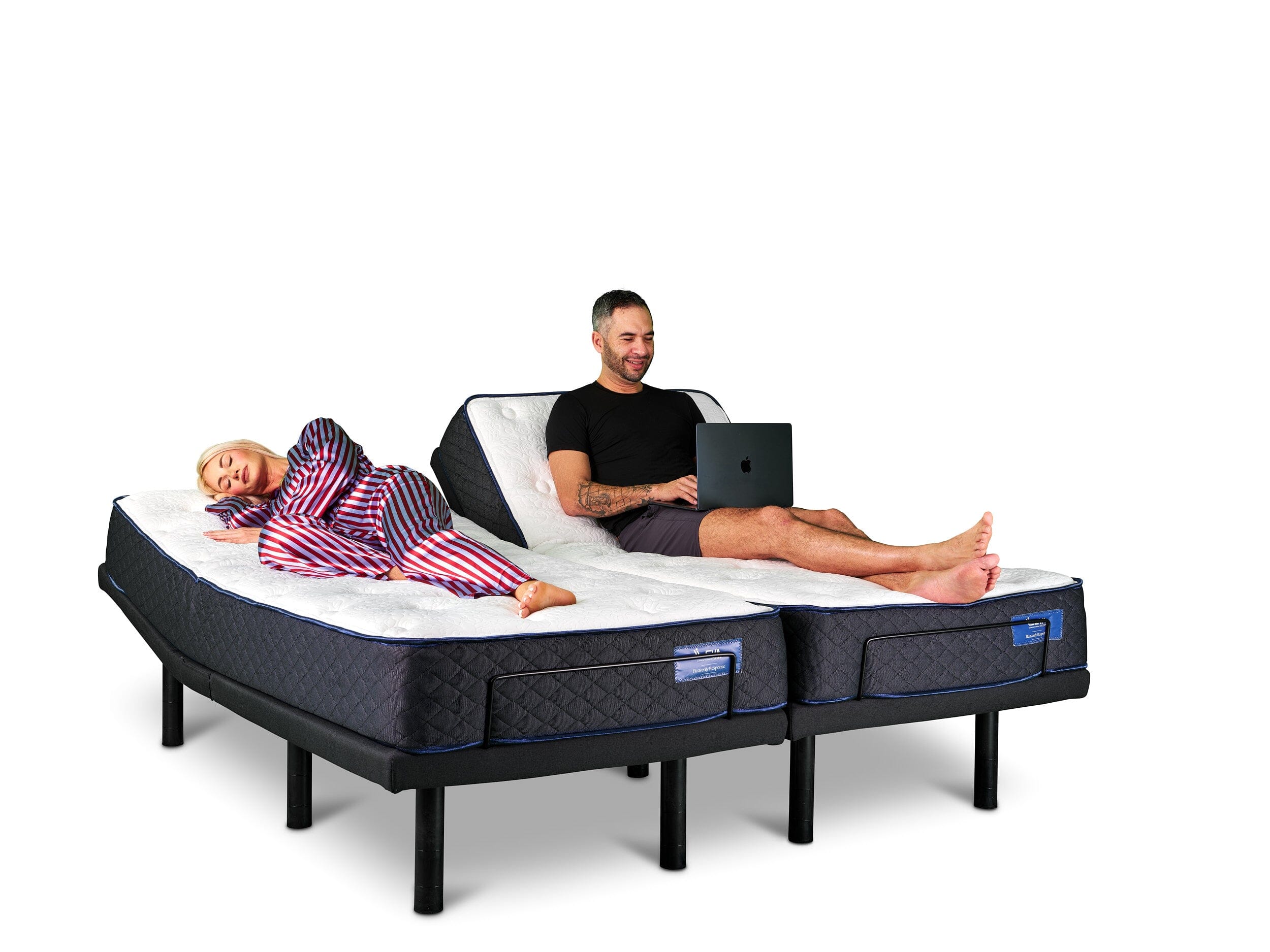
Split king mattresses, paired with adjustable bases, solve the challenge of differing sleep needs for couples. One partner might crave a soft, contouring surface, while the other needs firm support. Add in factors like temperature preferences or medical conditions, and a one-size-fits-all mattress often falls short. With a split king setup, you get two twin XL mattresses side by side, letting each person pick their ideal material and firmness. At Leva Sleep, we focus on matching quality materials with advanced adjustable technology to help Canadian couples create a sleep space that works for both.
Why Mattress Material Makes a Difference in Split King Beds
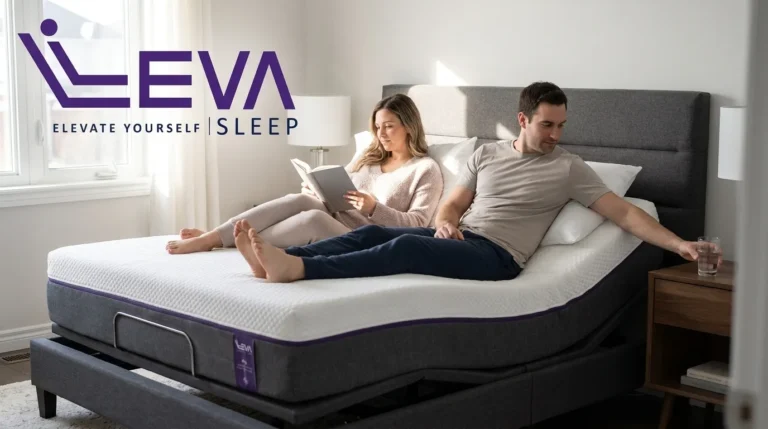
Couples rarely share the exact same comfort needs. One might sleep on their side, needing cushioning for hips and shoulders, while the other prefers a solid base for back support. Temperature can also clash, with one feeling overheated and the other always chilly. A split king setup lets each partner choose a mattress material tailored to their body and habits, enhanced by adjustable bases for personalized positioning.
Key factors to consider when picking a material include support for spinal alignment, pressure relief for joints, temperature control for consistent comfort, motion isolation to limit disturbances, durability for lasting value, and flexibility with adjustable bases. With a split king, you can mix materials. One side could be memory foam for deep cushioning, while the other is a hybrid for firm support and airflow. Explore Leva Sleep’s adjustable beds to see how our designs pair quality materials with quiet, precise motors for a customized sleep setup.
Breaking Down Split King Mattress Materials: What’s Right for You?
Each mattress material offers distinct benefits and fits different sleep styles. Knowing their strengths helps couples build a split king bed that meets both partners’ needs without guesswork.
Memory Foam: Deep Cushioning for Joint Relief
Memory foam molds to your body using heat and weight, creating a custom fit that eases pressure points. It’s a top pick for side sleepers or anyone with joint discomfort, as it cradles hips and shoulders effectively.
This material also blocks motion transfer, so one partner’s movements won’t wake the other. Memory foam stands out for reducing pressure on joints, especially for side sleepers. Older versions trapped heat, but newer designs use gel or open-cell technology to stay cooler. It flexes easily with adjustable bases, maintaining comfort whether you’re flat or elevated for reading or health needs like sleep apnea relief.
Memory foam suits side sleepers, those with chronic pain, or couples needing motion isolation. If you sleep hot, look for cooling features. Leva Sleep’s memory foam options are built for adjustable bases, blending responsive support with advanced cooling for consistent comfort across positions.
Latex: Bouncy Support with Natural Cooling
Latex delivers a lively, supportive feel, unlike the slower sink of memory foam. Its open-cell design promotes airflow, helping hot sleepers stay comfortable without extra cooling tech. Latex provides a responsive surface and cools naturally, appealing to eco-conscious buyers.
It adapts quickly to movement, making it great for restless sleepers who switch positions. Latex lasts longer than many materials and resists allergens like dust mites, a plus for sensitive sleepers. Latex bends easily with adjustable bases, keeping support intact during movement. It fits hot sleepers, eco-friendly buyers, combination sleepers, and those with allergies. Leva Sleep’s latex options ensure flexibility for smooth base adjustments while retaining natural comfort.
Hybrid: Balanced Comfort for Mixed Needs
Hybrid mattresses merge foam layers for cushioning with coils for structure, offering a mix of relief and support. They cater to varied preferences, ideal for couples who don’t agree on feel. Hybrids balance contouring and firm support, fitting many sleep styles.
Coils boost airflow for better temperature control, while foam dampens motion. Pocketed coils flex independently, ensuring hybrids work well with adjustable bases. Hybrids blend foam’s pressure relief with coil bounce for versatile comfort. They suit couples with different needs, hot sleepers, combination sleepers, or those wanting strong edge support. Leva Sleep’s hybrids pair pocketed coils with quality foam, designed for flawless base compatibility and lasting comfort.
Innerspring: Firm, Classic Support
Innerspring mattresses offer a traditional, bouncy firmness that appeals to back or stomach sleepers. They’re less common in split king setups but still have a place for specific tastes. Innersprings provide firm support and bounce for a classic mattress feel.
They promote cooling through coil airflow and often cost less than specialty materials. However, older coil designs don’t flex well with adjustable bases, limiting compatibility. Traditional innersprings may struggle with base adjustments due to stiff coils. They work for firm-support fans or hot sleepers. Leva Sleep offers hybrid alternatives with pocketed coils for those who like innerspring traits but need base flexibility.
Airbed: Total Control Over Firmness
Airbeds let you dial in firmness with inflatable chambers, giving each partner full control in a split king setup. Adjust levels instantly via apps or remotes for a personalized feel. Airbeds allow precise firmness tweaks for ultimate customization.
They adapt to changing needs, like injury recovery or preference shifts. Drawbacks include higher cost and potential maintenance for air systems. They’re best for couples with vastly different firmness needs or medical conditions requiring tailored support. Leva Sleep’s adjustable bases complement airbeds with quiet motors and features like anti-snore settings for a complete system.
How Leva Sleep Builds Your Ideal Split King Experience
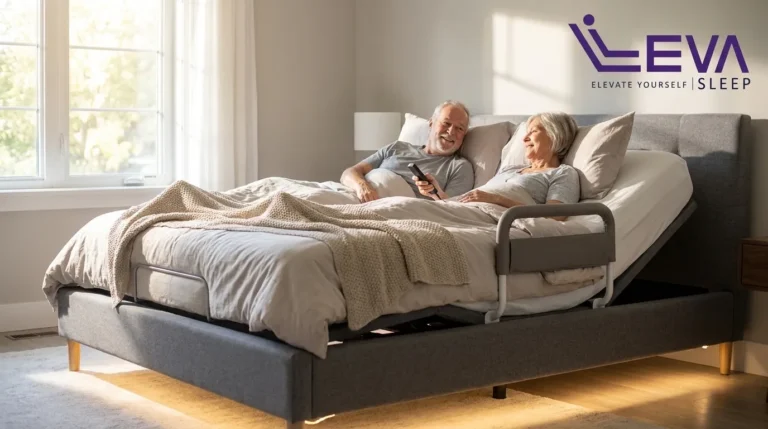
Choosing a mattress material is just the start. At Leva Sleep, we combine quality materials with cutting-edge adjustable tech to craft a full sleep solution for Canadian couples. Our foam and hybrid mattresses are designed for base compatibility, ensuring they flex without losing support. Quiet German motors adjust smoothly, and app controls let you fine-tune elevation or massage settings.
We tackle real sleep hurdles, from snoring to differing comfort needs, with split king setups. Our systems include practical extras like elastic bedding to prevent slipping and remote pockets for easy access. By cutting out middlemen, we deliver high-quality, Canadian-made components at 30-50% less than typical competitors. Discover personalized sleep with Leva Sleep’s adjustable beds.
Quick Comparison: Split King Mattress Materials at a Glance
This chart lays out how mattress materials stack up, helping you match features to your sleep priorities.
|
Feature / Material |
Memory Foam |
Latex |
Innerspring |
Hybrid |
|
Primary Feel |
Contouring/Hugging |
Responsive/Buoyant |
Bouncy/Firm |
Balanced/Combines |
|
Pressure Relief |
Excellent |
Very Good |
Moderate |
Excellent |
|
Support |
Good |
Excellent |
Very Good |
Excellent |
|
Motion Isolation |
Excellent |
Very Good |
Poor (traditional); Good (pocketed) |
Very Good |
|
Temperature Regulation |
May retain heat (newer cools better) |
Excellent (natural airflow) |
Good (airflow) |
Very Good (airflow, cool foams) |
|
Adjustable Base Fit |
Excellent |
Excellent |
Poor (traditional); Good (pocketed) |
Excellent |
|
Durability |
Very Good |
Excellent |
Good |
Excellent |
|
Ideal Sleeper |
Side, back, pain relief |
All positions, hot sleepers |
Back, stomach, firm fans |
All positions, varied needs |
Solving Sleep Challenges: Real Couples, Real Solutions with Leva Sleep
Seeing how materials and tech address specific issues can clarify your split king choice. These examples show how Leva Sleep creates targeted setups for common couple conflicts.
Case 1: Snoring Partner and Side Sleeper Needs
Sarah, a side sleeper, struggles with Mike’s snoring. A single mattress means one of them loses out on rest. Leva Sleep pairs Sarah’s side with memory foam for joint cushioning and Mike’s with a medium-firm hybrid for support. Our anti-snore tech subtly lifts Mike’s head when snoring starts, easing airway blockage without waking him. This setup lets both customize comfort without sacrificing closeness. Quiet motors and separate massage options ensure disturbances stay minimal.
Case 2: Clashing Temperature Needs
Jennifer overheats at night, while David feels cold. Leva Sleep sets Jennifer’s side with latex for natural cooling and David’s with memory foam for slight warmth retention. Material choice affects cooling, with latex and breathable hybrids excelling. Our bases support optional heating or cooling pads, letting each fine-tune their side for ideal comfort without room temperature fights.
Common Questions on Split King Mattress Materials
How Do I Pick Materials for Hot and Cold Sleepers in a Split King Setup?
For couples split on temperature needs, different materials per side often work best. A hot sleeper can choose latex, which breathes well to prevent overheating. A cold sleeper might pick memory foam or a hybrid with denser foam layers to hold warmth. Leva Sleep’s bases also support individual temperature pads, allowing precise control night after night, no matter the material.
Can Each Side of a Split King Have a Different Material?
Yes, that’s a key benefit of split king beds. Each twin XL side is independent, so one can be memory foam for cushioning, while the other is latex or hybrid for support. Firmness can vary too, even within the same material. Leva Sleep ensures all our materials flex smoothly with adjustable bases, so both sides perform well during position changes.
Which Materials Work Best with Leva Sleep’s Adjustable Bases?
Memory foam and latex are top choices for adjustable bases, bending easily without losing shape or comfort. Modern hybrids with pocketed coils also adapt well, maintaining support as the base moves. Traditional innersprings with rigid coils are less flexible and may not suit frequent adjustments. Leva Sleep designs materials for optimal base performance, ensuring a smooth experience.
Why Does Edge Support Matter in Split King Beds?
Edge support keeps the mattress stable right to the sides, critical in split king setups where the center seam can feel different. Weak edges mean less usable space and risk of sagging over time. It’s especially vital with mixed materials to avoid uneven transitions. Leva Sleep builds strong edges into all designs, from foam to hybrid, for consistent comfort across the bed.
Memory Foam or Hybrid: How to Choose for My Split King?
Memory foam is ideal if you want deep pressure relief, especially for side sleeping or joint pain. It excels at blocking motion but may feel warmer unless it has cooling features. Hybrids balance foam cushioning with coil support, offering better airflow for hot sleepers and quicker response for position changes. They also have stronger edges. With a split king, you can mix both. Leva Sleep guides you to the right combo for your needs and base setup.
Your Next Step to Better Sleep with Leva Sleep
Finding the right split king materials sets the stage for restful nights, whether you need memory foam’s contouring, latex’s bounce, hybrid’s balance, or airbed’s adjustability. At Leva Sleep, we go beyond materials, integrating them with quiet motors, precise controls, and practical accessories for a complete sleep system. Our focus on Canadian couples means solutions for real issues like snoring or comfort clashes, all at 30-50% less than typical prices due to direct delivery.
Stop settling for average sleep. Build a setup that fits both you and your partner. Shop Leva Sleep’s adjustable beds today to create a sleep space that prioritizes comfort and connection.