Written by: Matthew Timmins, Founder and Managing Director, Leva Sleep
For Canadian couples, finding the right sleep setup can be a challenge. Customer reviews offer real insights into adjustable bases, especially those with features like lumbar support and pillow tilt. This article outlines seven key reasons these firsthand accounts help couples make confident decisions for better rest.
Why Customer Reviews Matter for Canadian Couples Choosing Adjustable Beds
Canadian couples often struggle to find a bed that meets both partners’ needs. Flat beds rarely adapt to individual preferences or health issues like pain or sleep apnea, leading to compromise or even sleeping apart.
The adjustable bed market offers many choices, but quality varies. Basic models may have noisy motors or limited functions, while high-end options can be unaffordable for many. Customer reviews cut through the noise, showing how these beds perform in real life, from durability to comfort impact.
These reviews also clarify which features truly deliver. For example, some lumbar support systems provide genuine back relief, while others fall short. Feedback on pillow tilt reveals which models offer useful head and neck positioning for daily activities or medical needs.
For Canadians, reviews shed light on practical details like delivery, customer service, and how well products hold up in different climates or home setups. This direct perspective is vital for a purchase that often costs thousands of dollars.
Leva Sleep: Advanced Adjustable Bases Built for Canadian Couples
Leva Sleep stands out as a top choice for Canadian couples looking for adjustable beds with effective features. Our Split Queen and King models include lumbar support and pillow tilt, crafted to address diverse sleep needs.
We focus on creating a complete sleep solution, not just a bed. Here’s what makes our adjustable bases a preferred option:
- Independent controls on each side for personalized comfort without compromise.
- Quiet German motors for adjustments that don’t disturb your partner.
- Targeted lumbar support and pillow tilt for better spinal alignment.
- App-based control with anti-snore settings for automated comfort.
- Custom bedding accessories to fit elevated positions perfectly.
By managing our process from design to delivery, we offer high-quality features at 30-50% less than typical retail prices, making advanced sleep systems accessible to more Canadians.
Explore adjustable beds at Leva Sleep and see the difference for yourself.
7 Key Insights from Customer Reviews on Leva Sleep Adjustable Bases
1. Customized Comfort: Each Partner Gets Their Ideal Setup
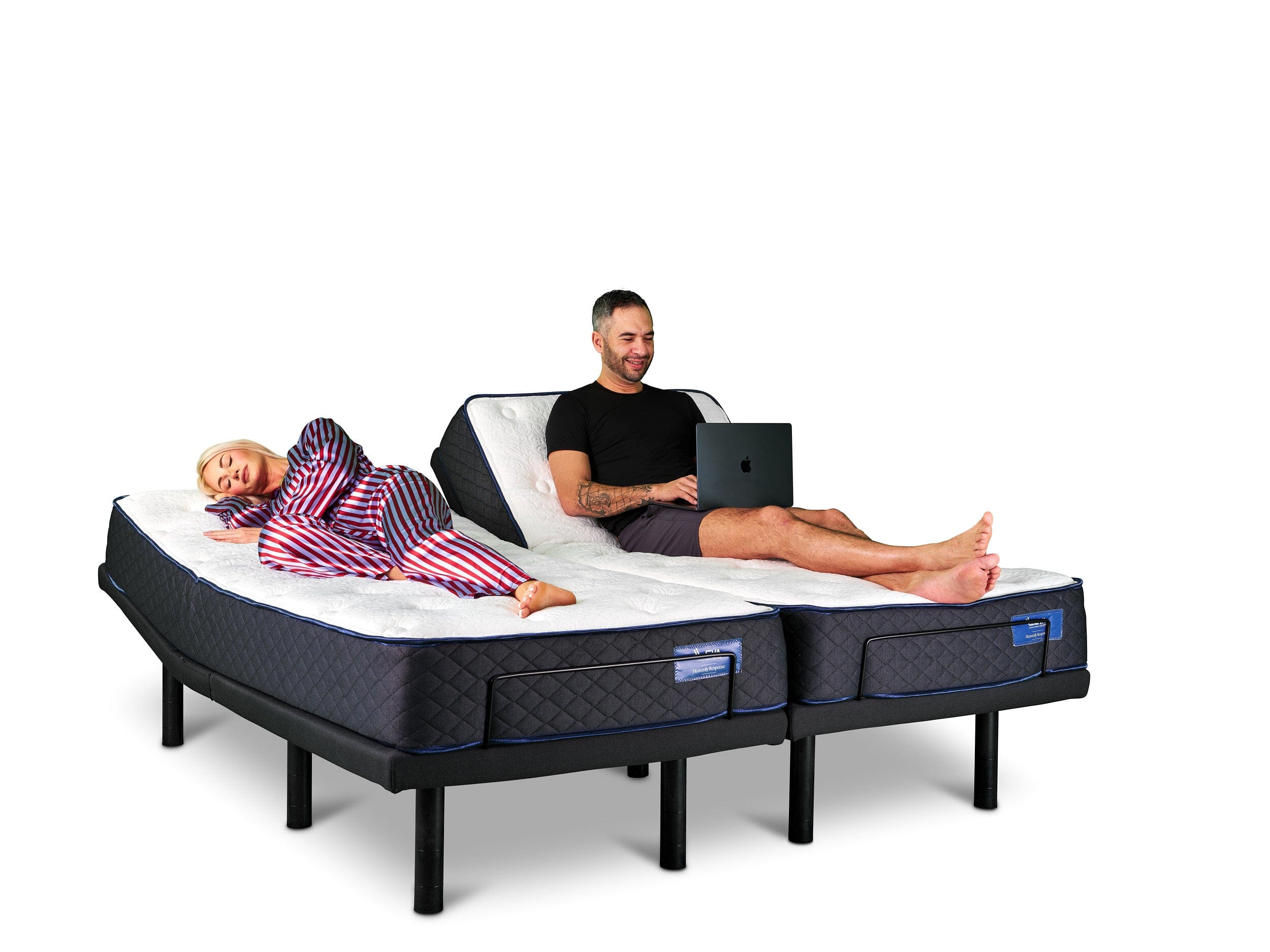
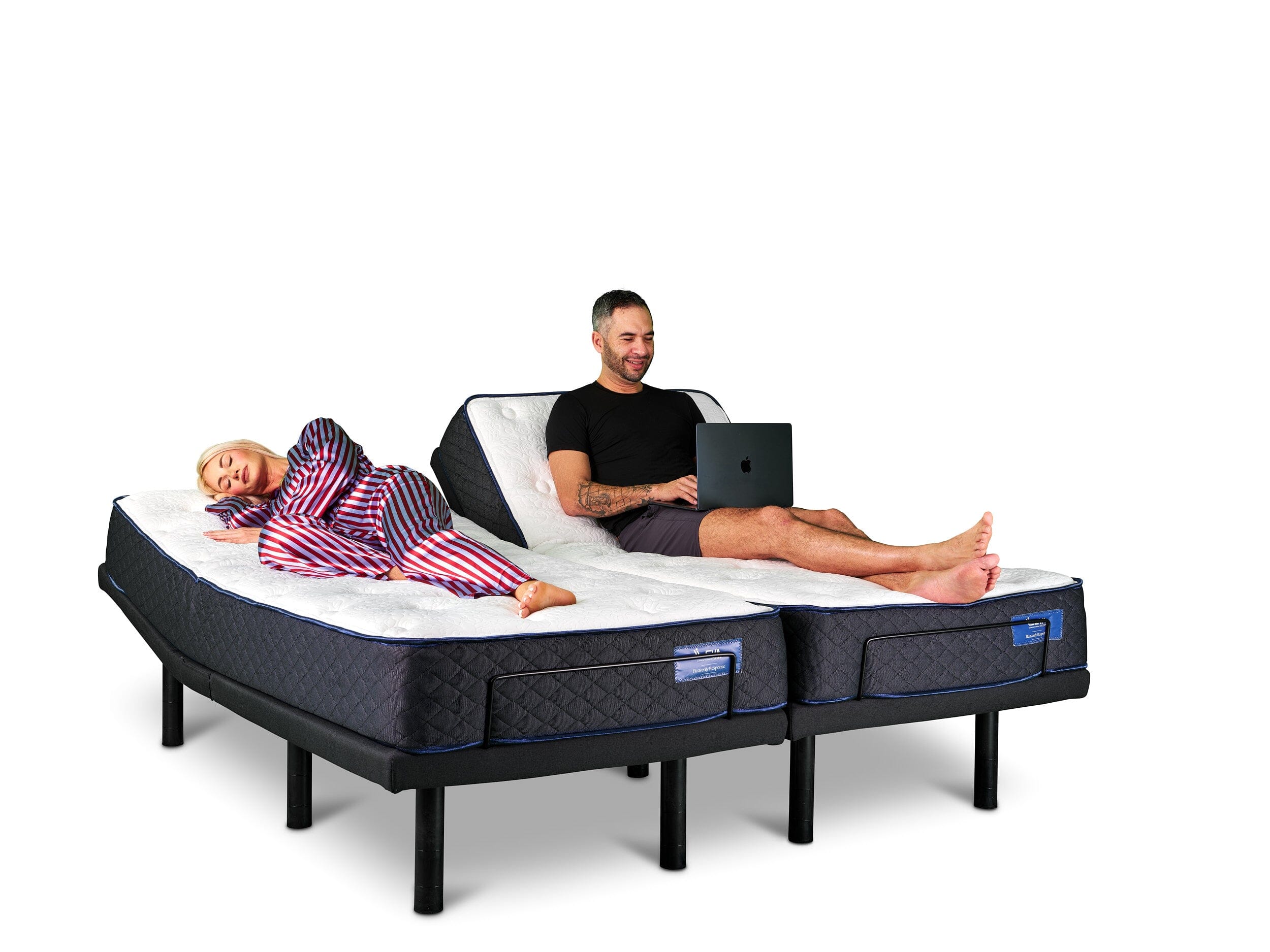
Customer reviews often point out how independent controls change the sleep game for couples. With adjustable bases, each side of the bed adapts to individual needs, ending the need for compromise.
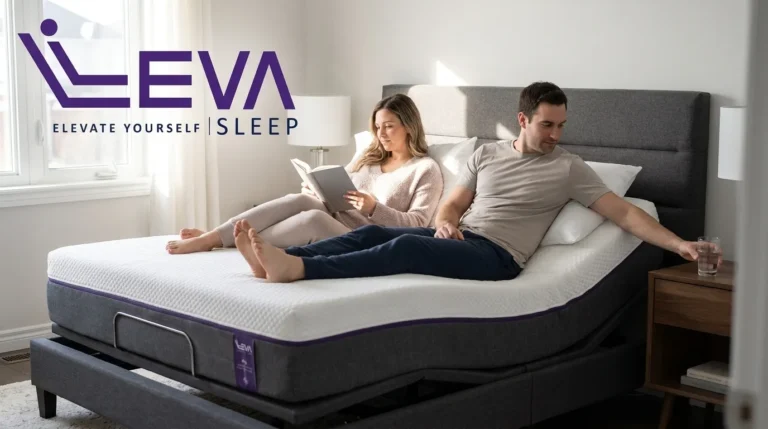
Many users note the freedom to adjust their side without bothering their partner. This is ideal for couples with different schedules or preferences, like one reading while the other sleeps.
Feedback shows this customization helps with varying firmness needs or specific elevation for health reasons. Couples no longer choose between personal comfort and sharing a bed.
Leva Sleep’s Split King and Queen bases take this further, with separate controls for lumbar support, pillow tilt, and even massage settings. The app ensures silent, precise tweaks, keeping the sleep environment calm for both.
Reviews often share emotional stories of couples reuniting in one bed after considering separate rooms. This highlights how adjustable bases improve not just sleep, but relationships too.
2. Effective Pain Relief: Lumbar Support Makes a Real Difference
Reviews frequently mention how lumbar support in adjustable bases eases back pain. Unlike basic models with limited elevation, advanced designs target the lower back for noticeable relief.
Users often say their back pain has lessened significantly. This helps those who sit for long hours, do physical work, or deal with age-related spine issues.
Modern lumbar systems use dedicated motors to create a supportive curve, aligning the spine and reducing pressure. Reviewers describe this as a gentle, steady support through the night.
Leva Sleep bases allow fine-tuned lumbar adjustments with quiet German motors. Preset positions save your ideal setup, so you can return to it easily without waking your partner.
Beyond comfort, feedback points to better circulation and less morning stiffness. Many users see improved sleep quality with proper spinal support, reinforcing the health value of these beds.
3. Ultimate Relaxation: Pillow Tilt and Massage Enhance Bedtime
Adjustable bases now offer features that turn your bedroom into a restful retreat. Customer reviews often praise extras like pillow tilt and massage for boosting comfort.
Many highlight how pillow tilt improves comfort for reading or sleeping. It adjusts head and neck positioning beyond basic elevation, perfect for bedtime activities without strain.
Massage settings also get strong feedback. Users value the ability to relax after a long day or ease minor aches with targeted vibration zones.
Leva Sleep includes multiple massage options with adjustable intensity, focusing on areas like the lumbar region or feet. These operate independently, so you can relax without changing your sleep position.
Reviewers often describe this combination as a daily luxury, helping with stress and overall well-being. It makes bedtime a highlight for both partners.
4. Health Solutions: Snoring and Other Issues Get Resolved
Customer reviews often focus on how adjustable bases tackle health challenges like snoring. For many couples, this feature preserves harmony in the bedroom.
Feedback shows that anti-snore modes significantly help couples. Elevating the head reduces snoring, often allowing partners to sleep together again.
Head elevation opens airways, cutting down on snoring vibrations. Advanced bases even auto-adjust when snoring starts, fixing it before it disturbs anyone.
Users also appreciate elevating just their side for relief, keeping the other partner comfortable. This helps with snoring, acid reflux, or other conditions.
Leva Sleep’s sensors detect snoring and make gentle adjustments automatically. The split design also limits motion transfer for less disturbance, addressing multiple sleep disruptions at once.
5. Easy Control: Smart Technology Simplifies Adjustments
Smart features in adjustable bases make them user-friendly, and reviews often praise this convenience. Couples value controls that match the ease of other home tech.
Feedback highlights wireless remotes with presets and Bluetooth connectivity for straightforward use. App control gets specific mentions for intuitive design, phone-based adjustments, and saving favorite settings.
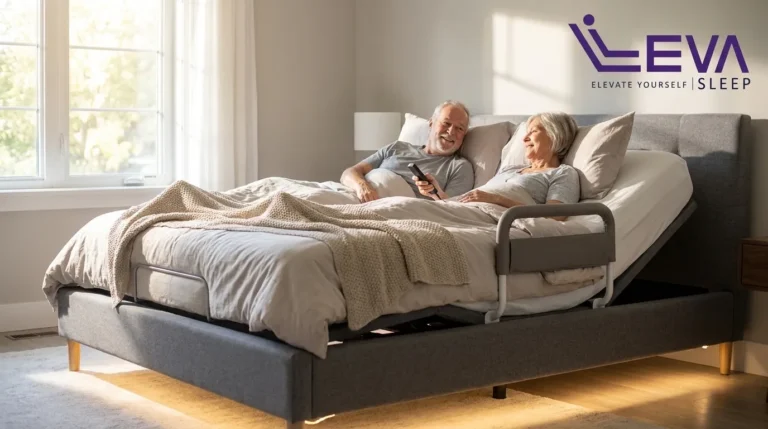
Leva Sleep’s app manages all functions, from position presets to anti-snore tweaks. It supports routines, like elevating for reading then lowering for sleep, all with a simple interface.
Smart home integration adds more flexibility, letting users sync beds with voice assistants or lighting. This creates a tailored sleep setup that adapts to your needs.
6. Smooth Delivery: Hassle-Free Setup Across Canada
The delivery and setup process can shape satisfaction with big purchases like adjustable beds. Reviews often emphasize the benefit of professional service for these complex systems.
Customers value white-glove delivery and setup, with comments like quick installation and no stress for us. This builds trust in the brand from the start.
Professional setup ensures motors, controls, and app pairing work correctly. Teams also explain features, helping users get the most from their bed right away.
Leva Sleep offers top-tier white-glove service in Canada, handling everything from tight spaces to complex setups. We remove old beds, calibrate systems, and provide tutorials, ensuring immediate use.
7. Great Value: High-End Features at a Fair Price
Adjustable beds are a significant investment, and reviews often focus on getting quality features without overpaying. This balance matters to Canadian buyers.
Feedback points out how Leva Sleep delivers full features at better prices compared to other brands with similar offerings. Durability and warranty support add to long-term worth.
Leva Sleep’s direct approach cuts out extra costs, offering advanced lumbar support and app control at 30-50% less than competitors. Strong warranties and updates ensure lasting value.
For Canadians, avoiding high import fees and currency markups is a plus. Our model provides access to quality sleep tech at prices that make sense locally.
Frequently Asked Questions About Leva Sleep Adjustable Bases
How Do Reviews Describe Relief from Snoring or Sleep Apnea?
Customer feedback often highlights major improvements in snoring with elevation features. Raising the head section helps, letting couples sleep undisturbed without affecting the other side.
For sleep apnea, users report better breathing in elevated positions, sometimes relying less on CPAP machines. Reviews also note relief from acid reflux and circulation issues with precise positioning.
What Do Reviews Say About Lumbar Support and Pillow Tilt for Comfort?
Feedback praises lumbar support for reducing back pain and stiffness through better alignment. Users can tweak settings independently for tailored relief.
Pillow tilt earns positive comments for neck support during activities like reading. Small adjustments make a big difference, offering comfort flat beds can’t match.
How Do Reviews Rate the Ease of Using Advanced Features?
Customers appreciate the simple tech in adjustable bases, especially app and wireless controls. Saving presets and adjusting in the dark without disturbance stands out.
While some note a brief learning curve, most find the systems intuitive. Support during setup helps users fully use their bed’s capabilities quickly.
Final Thoughts: Let Reviews Guide Your Sleep Upgrade with Leva Sleep
Customer reviews offer honest insights into how adjustable bases with lumbar support and pillow tilt perform for real couples. They confirm the benefits for sleep, health, and relationships across Canada.
The seven points above show why feedback is a trusted resource for choosing a bed. From custom comfort to smart controls and fair pricing, reviews reflect genuine experiences.
Leva Sleep’s focus on quality features at reasonable costs resonates with Canadian customers. Our design and support ensure a purchase that improves life night after night.