Written by: Matthew Timmins, Founder and Managing Director, Leva Sleep | Last updated: July 13, 2026
Key Takeaways for Canadian Couples
- Adjustable beds reduce acid reflux, snoring, and sleep apnea symptoms by elevating the head and decompressing the spine, according to multiple clinical studies.
- Canadian couples often struggle with mismatched sleep needs, snoring, and acid reflux on flat mattresses, which can push partners toward separate bedrooms.
- Zero-gravity positioning and targeted elevation angles provide measurable relief for back, hip, and knee pain while improving airway openness for snorers and mild apnea sufferers.
- Drawbacks such as motor noise and sheet slippage can be minimized by choosing premium models with quiet motors and bedding made for adjustable bases.
- Leva Sleep offers split adjustable bed packages with independent controls designed specifically for Canadian couples; explore Leva Sleep’s adjustable bed packages to find a setup tailored to shared sleep challenges.
The Problem: Real Frustrations Keeping Couples Awake
Snoring is the most common reason Canadian couples consider separate bedrooms. One partner’s airway collapses during sleep, and the other lies awake counting ceiling tiles. This single issue often exposes a deeper structural problem: a flat mattress cannot adapt to different positional needs.
Add mismatched firmness preferences, one person running hot while the other is cold, or a hip or knee condition that demands a specific sleeping angle, and the limitation becomes clear. A flat surface forces both partners into the same sleeping plane, which turns every night into a negotiation neither partner wins.
Acid reflux often makes things worse. A survey of heartburn sufferers found that 79% experienced nighttime symptoms, 75% said those symptoms disrupted their sleep, and 63% reported that nighttime heartburn affected their ability to function the next day. A flat mattress offers no positional remedy. Doctors recommend sleeping at an incline, yet a standard bed frame cannot create that angle.
Sleep apnea adds a medical layer. Sleeping flat on the back pulls the jaw and tongue backward, narrows the airway, and worsens apnea events. Couples dealing with diagnosed or suspected sleep apnea must combine CPAP, positional strategies, or both, and a flat mattress does not support those approaches well.
These are not minor inconveniences. They are the conditions that push couples into separate rooms and slowly erode both sleep quality and relationship quality.
Explore split adjustable bed systems designed for couples facing these challenges and see how independent controls can keep both partners in the same room.
How Adjustable Beds Target Specific Sleep Conditions
Back, Hip, and Knee Pain Relief With Zero-Gravity
The zero-gravity position, with the head elevated 30–45 degrees and knees slightly above heart level, decompresses the spine and redistributes weight away from the heels, sacrum, and shoulder blades. For spinal stenosis patients, the slightly flexed spinal posture reduces nerve compression and is clinically documented to alleviate pressure on herniated discs.
Adjustable bases also provide stable motorized leg elevation and easier bed entry and exit for people with limited mobility. Adults over 50 who manage hip or knee conditions often describe this as the most practical day-to-day benefit.
Clinical guidance confirms that adjustable beds provide symptom management rather than structural correction. Johns Hopkins orthopaedic surgeon Dr. Jay Khanna notes that adjustable beds “may have some benefit” for spine patients but are “certainly not necessary,” and that many patients do equally well on a quality flat mattress. The benefit depends on mattress compatibility and consistent use of therapeutic angles.
Acid Reflux and GERD Relief Through Elevation
A clinical trial found that elevating the head of the bed improved esophageal acid clearance time by 67% but did not change the frequency of reflux episodes in patients with GERD. A systematic review in BMC Family Practice evaluated five controlled trials with 228 participants and concluded that head-of-bed elevation is “a cheap, relatively safe, and promising alternative to drug interventions” for GERD management.
The target elevation is 6 to 8 inches of upper-body incline, not just neck elevation from stacked pillows. The key is to elevate the entire torso from the waist up, which an adjustable base achieves with precise angle control that pillows cannot replicate. Combining left-side sleeping with head-of-bed elevation provides the strongest protection; left-side sleeping alone reduces reflux episodes by up to 71% compared to right-side sleeping.
Snoring and Sleep Apnea: Using Gravity to Open the Airway
Most sleepers find snoring relief with a head elevation of 10 to 30 degrees, with 20–30 degrees as the target range for moderate to heavy snorers. Elevation uses gravity to prevent the collapse of soft tissues in the throat that cause snoring and airway obstruction.
For sleep apnea specifically, a study by Souza et al. (2017) of 52 OSA patients found that 7.5-degree head-of-bed elevation reduced the apnea-hypopnea index by an average of 31.8%. Adjustable bases complement but do not replace CPAP for moderate to severe cases. Changes in elevation may require CPAP pressure adjustments under medical supervision.
What Do Doctors Say About Adjustable Beds?
These clinical findings align with broader medical guidance on adjustable bed use. Specialist advice is consistent: elevation is a recognized, evidence-backed positional strategy for GERD, snoring, positional sleep apnea, and spinal decompression. Sleep medicine physician Dustin Cotliar, M.D., emphasizes that the entire upper body must be raised to effectively use gravity and reduce backflow of stomach contents toward the esophagus, which supports the elevation targets described earlier.
The NCOA explains that adjustable beds are often marketed as solutions for sleep apnea, acid reflux, COPD, or chronic pain. Some symptoms may ease with incline, but many conditions still require other treatment. The appropriate framing is clear: adjustable bases are a complementary tool, not a standalone medical device, and buyers should discuss them with their doctor.
How Side Sleepers Use Adjustable Beds Comfortably
Side sleepers generally adapt well to adjustable bases, especially for acid reflux management where left-side sleeping plus head elevation is the clinical gold standard. The main requirement is a flexible mattress. Memory foam, latex, and pocketed-coil hybrid mattresses flex with the base without damaging internal components.
Innerspring mattresses with rigid border wires are not compatible and degrade quickly under repeated articulation. Side sleepers should confirm that the mattress is rated for adjustable use, that the base’s articulation points align with the body’s natural bend points at the hips and knees, and that head elevation does not push the shoulder into a compressed position.
Starting at a low elevation of 10 to 15 degrees and adjusting gradually over several nights works best. This approach lets the body adapt while still gaining the benefits of elevation.
Disadvantages of Adjustable Beds for Seniors
Owners and forum communities consistently report several recurring drawbacks that seniors should weigh carefully before purchasing.
- Sheet slippage: Standard fitted sheets often pop off when the base articulates. This is the most frequently cited complaint. Sheets with deep pockets and reinforced elastic, or sheets designed for adjustable bases, usually solve the problem.
- Motor noise: Basic or older adjustable bases use motors that are clearly audible during position changes, which can wake a light-sleeping partner. Whisper-quiet motor engineering becomes a meaningful differentiator rather than a marketing phrase.
- Cost: Quality adjustable bases represent a significant investment. The price gap between entry-level and premium models is substantial, and the cheapest options often generate the most complaints about noise and durability.
- Mattress incompatibility: Not every mattress works with every base. Seniors replacing an existing mattress must verify compatibility before purchasing a base, or buy both together from a specialist.
- Angle discomfort: More than 30 degrees of head elevation can cause the sleeper to slide down the mattress. Elevations between 15 and 30 degrees usually provide optimal benefit while avoiding this issue.
Find adjustable beds engineered to avoid these drawbacks, with whisper-quiet German motors, split configurations, and bedding designed for adjustable bases, delivered and set up by Leva’s own team across Ontario and Alberta.
Split Adjustable Beds: A Practical Answer for Couples
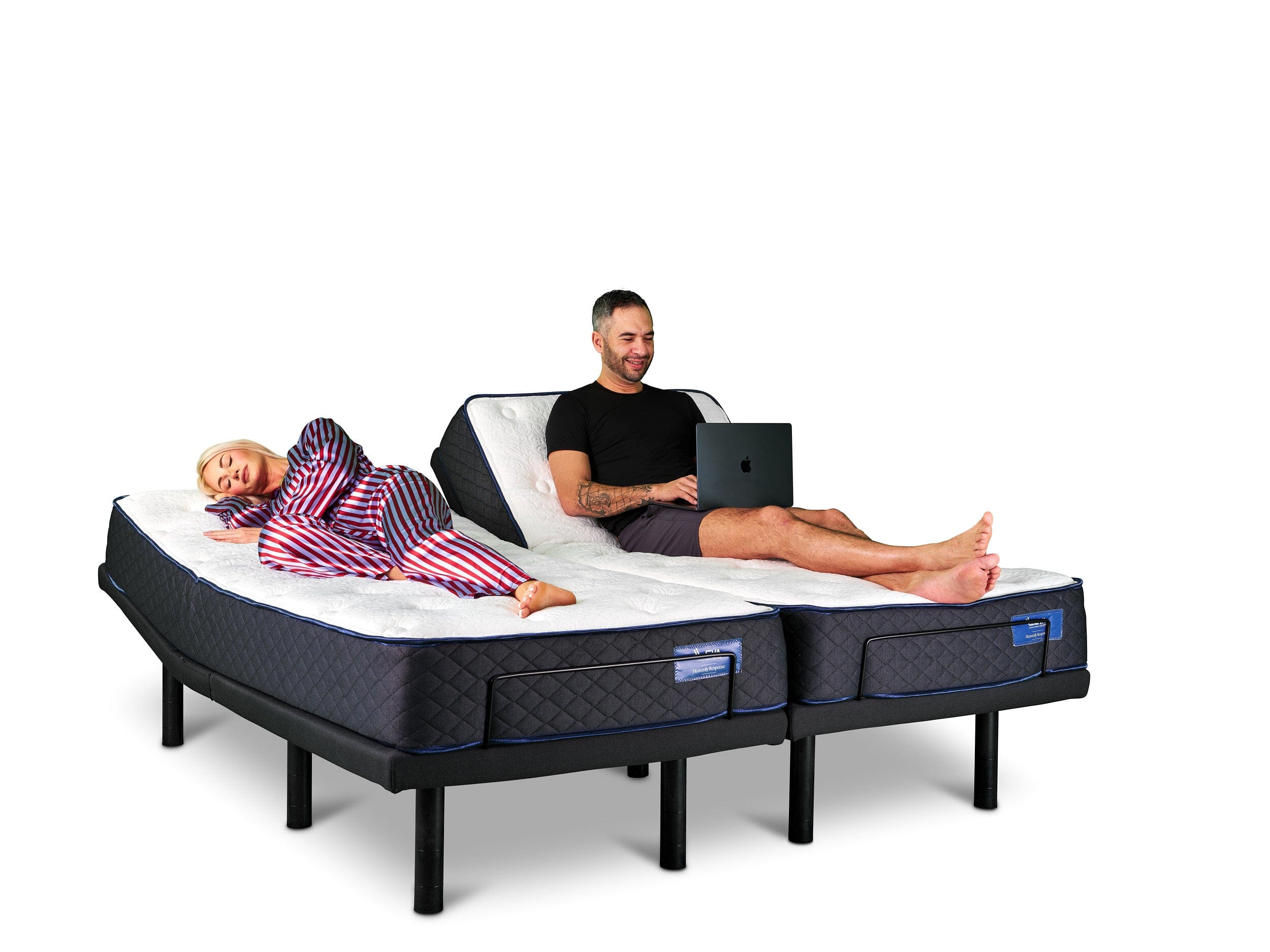
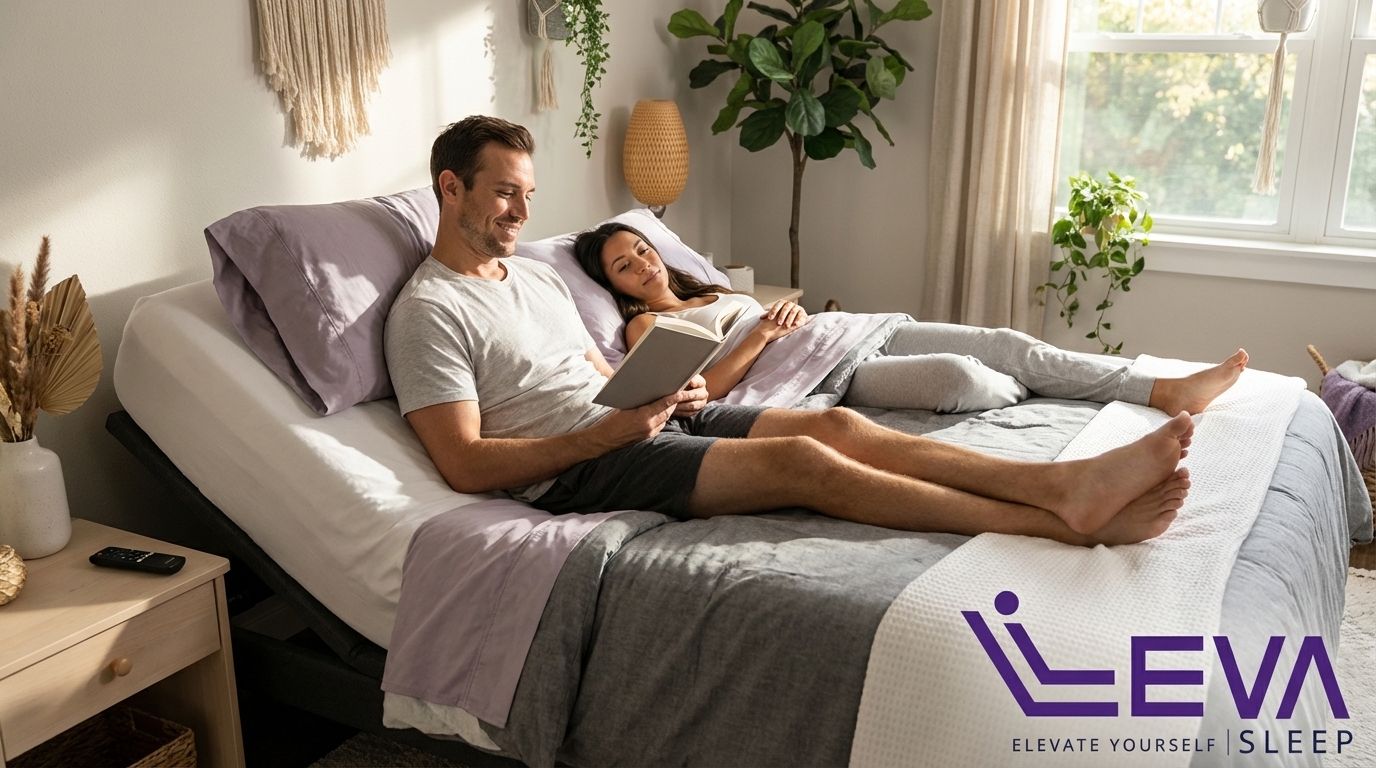
A split adjustable system gives each partner independent control over elevation, massage, and firmness without affecting the other side of the bed. The snorer can sleep at a 20-degree incline while their partner sleeps flat. The partner with acid reflux can maintain a 30-degree elevation while the other lies in zero-gravity for back decompression.
Leva Sleep offers both Split King and Split Queen configurations. Split Queen is a rare format that provides split adjustability in a smaller footprint, built to customer specifications. Leva’s anti-snore mode, arriving spring 2026, detects snoring through the base and makes micro-adjustments to the head position automatically, without requiring the snorer to wake up.
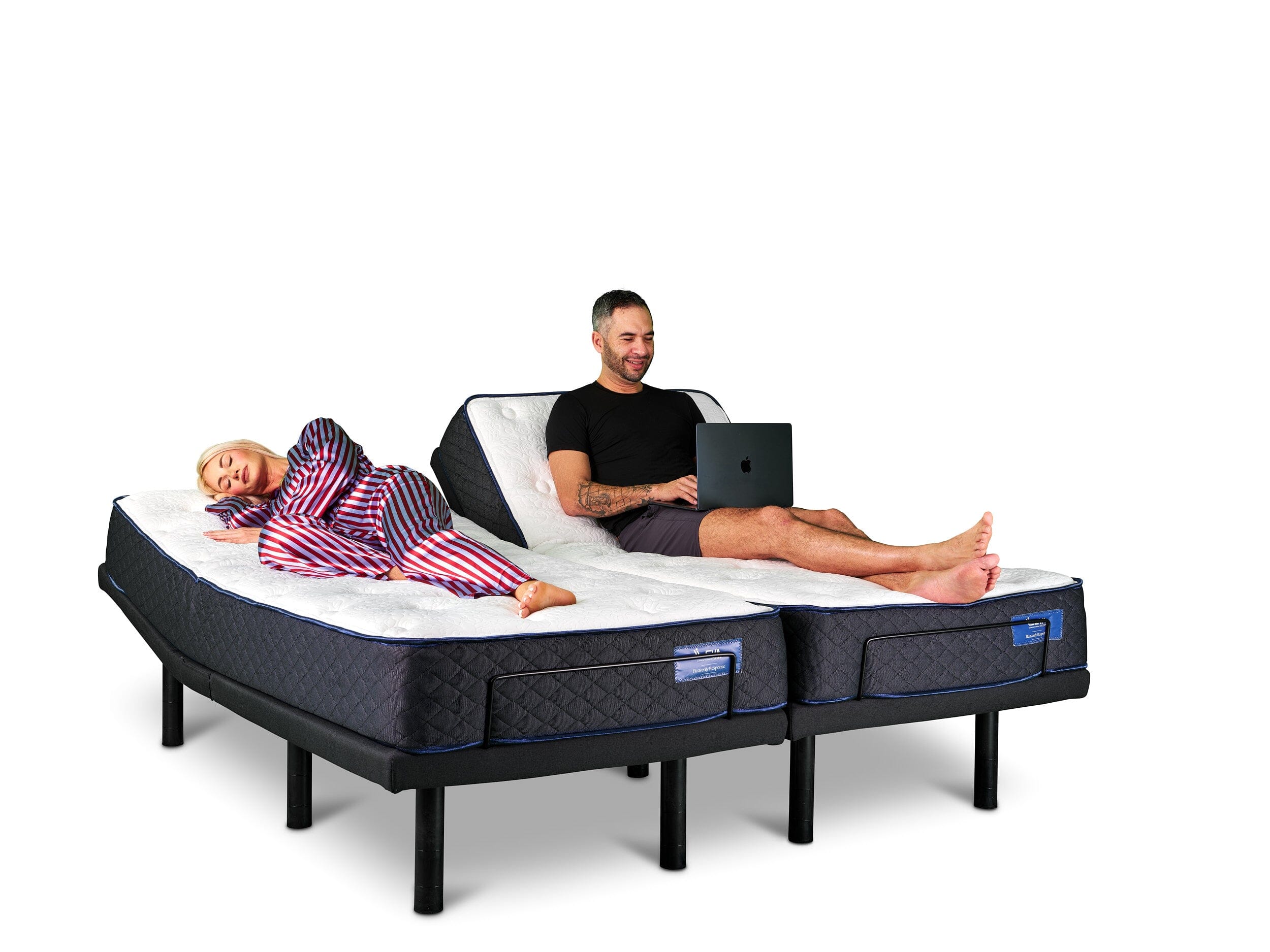
Motion isolation between the two sides means that one partner’s position change does not transfer to the other. For couples who have considered or are already sleeping in separate rooms, a split adjustable system offers a structural solution that a flat bed cannot provide.
Pros and Cons: What Adjustable Bed Owners Report
- Pro: Significant reduction in snoring complaints from partners after switching to head elevation of 20+ degrees.
- Pro: Acid reflux symptoms reduced or eliminated for many users within the first week of consistent elevation.
- Pro: Zero-gravity position frequently cited as the reason owners say they would never return to a flat mattress.
- Pro: Easier bed entry and exit for users with hip, knee, or post-surgical mobility limitations.
- Con: Fitted sheets often require replacement with adjustable-bed-specific versions.
- Con: Motor noise on lower-quality bases disrupts light sleepers.
- Con: Adjustment period of several nights required to find optimal therapeutic angles.
- Con: Incompatible mattresses degrade faster and reduce the therapeutic benefit.
Canadian Buying Checklist for Adjustable Beds
Before purchasing an adjustable bed in Canada, review each of the following criteria so the system works as expected from day one.
- Motor noise level: Ask specifically about decibel ratings or request a demonstration. Whisper-quiet motors are a non-negotiable for couples, since any motor activation during the night can wake a light-sleeping partner and cancel out the sleep benefits you are seeking.
- Mattress compatibility: Once you confirm quiet operation, verify that the mattress is rated for adjustable use. All-foam, latex, or pocketed-coil hybrid constructions are the standard compatible formats.
- Split configuration availability: Check that Split Queen is available if your room size does not accommodate a Split King. Many Canadian retailers do not carry Split Queen.
- Delivery and setup: Confirm whether delivery includes in-room setup, assembly, height adjustment, product tutorial, and old bed removal. “Curb drop” delivery is not adequate for adjustable bases.
- Warranty terms: Review motor warranty separately from frame warranty. Confirm the warranty is honoured in Canada without cross-border service requirements.
- Bedding compatibility: Make sure compatible fitted sheets, mattress protectors, and duvet accessories are available from the same supplier to avoid sheet slippage from the first night.
- Specialist expertise: A retailer carrying 15–20 adjustable models can provide more specific guidance than a general furniture store carrying only a few.
See how Leva Sleep’s adjustable bed packages address every item on this checklist, with specialist guidance, white-glove delivery across Ontario and Alberta, and pricing 30–50% below comparable luxury competitors.
Frequently Asked Questions
Will an adjustable bed actually reduce my partner’s snoring, or is that just marketing?
Head elevation between 20 and 30 degrees uses gravity to keep the airway more open and reduce snoring. As explained earlier, this elevation range addresses the primary mechanical cause of snoring by limiting airway collapse. Clinical research on positional therapy confirms meaningful reductions in snoring frequency and airway obstruction at these angles.
Results vary by individual anatomy and snoring severity. Adjustable beds are not a substitute for CPAP in diagnosed moderate-to-severe sleep apnea. For positional snoring and mild sleep apnea, however, consistent elevation is one of the most effective non-invasive interventions available. Leva Sleep’s anti-snore mode, arriving spring 2026, adds automated micro-adjustments that respond to detected snoring without waking the user.
Can two people with completely different sleep needs use one adjustable bed?
A split adjustable system, either Split King or Split Queen, gives each partner fully independent control over head elevation, foot elevation, massage, and firmness settings. Split systems deliver the independent control described earlier, which lets partners with conflicting needs each fine-tune their side of the bed without compromise.
The two sides operate independently with no motion transfer between them. This design is the core purpose of Leva Sleep’s split configurations and often allows couples who moved to separate rooms to return to sharing a bed.
Is an adjustable bed suitable if I have been diagnosed with sleep apnea and already use a CPAP machine?
Adjustable bases and CPAP therapy work well together. Elevation reduces the number of apnea events by limiting airway collapse, which can complement the pressure delivered by a CPAP machine. Some users find that elevation allows their CPAP to work effectively at lower pressure settings, although any pressure changes should be made under the supervision of a sleep medicine physician.
Leva Sleep’s adjustable bases are used by customers referred directly from sleep apnea clinics. The base does not replace CPAP for moderate-to-severe OSA but functions as a meaningful adjunct therapy.
What are the most important things to check before buying an adjustable bed in Canada?
Motor noise is the first priority for couples, because a loud motor that activates at 2 a.m. defeats the purpose of the investment. Mattress compatibility is the second, since only all-foam, latex, or pocketed-coil hybrid mattresses flex correctly with an adjustable base.
Third, confirm that Split Queen is available if your room cannot accommodate a Split King footprint. Fourth, verify that delivery includes full in-room setup, not just curb drop. Fifth, check that the warranty is serviced in Canada.
Purchasing a complete system, including base, compatible mattress, and adjustable-bed-specific bedding, from a single specialist removes compatibility guesswork. This approach also prevents the sheet-slippage problem that frustrates buyers who source components separately.
How long does it take to notice a difference after switching to an adjustable bed?
Most users report noticeable changes within the first one to two weeks of consistent use at therapeutic angles. Acid reflux relief often appears within the first few nights of maintaining 6 to 8 inches of head elevation. Snoring reduction is typically observed by the non-snoring partner within the first week.
Back and hip pain relief from zero-gravity positioning usually requires a short adaptation period. Starting at a gentle elevation and increasing gradually over several nights helps the body adjust to the new sleeping posture. This adaptation period is normal and reflects the body recalibrating after years of flat-surface sleeping.