Visit One Of Our 6 Showrooms Located Across Canada!
No Payments, No Interest Until 2027
Free Delivery & In-Home Set Up
7 Habits to Limit Screen Time for Better Sleep
Content
Written by: Matthew Timmins, Founder and Managing Director, Leva Sleep | Last updated: July 13, 2026
Digital Sunset Habits: Key Takeaways for Couples
A digital sunset routine limits blue light and emotionally charged content that disrupt melatonin and circadian rhythm.
Seven practical habits, from fixed sunset alarms to analogue wind-down activities, help couples reduce screen time and improve sleep quality.
Tracking sleep latency, partner disturbances, and weekly adherence provides clear data to refine habits over time.
Two to four weeks of consistent habits usually lead to faster sleep onset and fewer awakenings caused by devices or partner movement.
Once habits are established, an adjustable bed system can further reduce motion transfer and temperature conflicts. Explore Leva Sleep’s adjustable bed packages for split configurations that support independent comfort.
Habit 1: Set a Fixed Digital-Sunset Alarm 90 Minutes Before Bed
For couples, each partner sets a personal sunset alarm if bedtimes differ by more than 30 minutes. Research links chronotype mismatches with relationship conflict, yet practical accommodations can neutralise most negative effects.
Set a recurring alarm labelled “Digital Sunset” on your phone, then place the phone face-down to remove visual temptation. Choose a cutoff time that falls 90 minutes before your target sleep time, not your current average bedtime, so your body has time to produce melatonin. Use a dedicated alarm clock for morning wake-ups so the phone can stay out of reach overnight. Agree on the alarm time together at the start of each week to create shared accountability and reduce the urge to override it.
Common pitfalls: Overriding the alarm “just this once” quickly erodes the habit. Treat the alarm as a non-negotiable appointment, not a suggestion.
For couples, a shared charging station in the hallway or kitchen removes temptation for both partners at once. This also prevents one person from scrolling while the other tries to fall asleep.
Install a power strip with USB ports in a hallway or living room and treat it as the permanent charging station. Enable Do Not Disturb on all devices before placing them on the charger so notifications stay silent. Replace the bedside phone with a battery-powered analogue clock to avoid the “I need it for my alarm” loophole. When a phone must stay in the bedroom for safety, place it screen-down in a drawer with all notifications silenced to keep the room dark and quiet.
Expert tip: Healthline’s sleep hygiene guidance recommends turning off unnecessary devices overnight and using device settings to limit noise, light, and notifications. Moving the charger out of the bedroom makes this protection automatic instead of willpower-based.
Habit 3: Turn On Night Modes and App Limits Across Devices
For couples, synced app-limit schedules keep social media and news apps locked at the same time for both partners. This removes the temptation to pass a phone across the bed after the cutoff.
Schedule Night Shift on iOS or Night Light on Android to turn on automatically at sunset so every screen shifts to warmer tones. Set a Screen Time or Digital Wellbeing downtime window that begins at your digital-sunset alarm time, creating a clear boundary between online and offline hours. Add social media, news, and streaming apps to the restricted category during downtime so they require extra effort to access. Allow only essential apps such as phone calls, alarms, and health tools during the wind-down window to keep the routine calm and predictable.
Habit 4: Build a 30-Minute Analogue Wind-Down Routine
For couples, the specific activity can differ for each partner. One person might read while the other stretches. The shared rule is that the activity stays screen-free and low-stimulation.
Choose one analogue activity from the ritual table below and stick with it for seven consecutive nights before judging its impact. Prepare materials such as a physical book, journal, or yoga mat before the digital-sunset alarm sounds so the transition feels easy. Keep overhead lights dim and switch to warm-toned lamps during the wind-down period to support melatonin production. Avoid news podcasts or true-crime audio during this window and use ambient sound or instrumental music instead to keep arousal levels low.
Common pitfalls: Swapping phone scrolling for tablet streaming does not count as an analogue wind-down. The presence of a lit screen, not only the genre, disrupts melatonin production.
Habit 5: Use Separate Reading Lights or Clip-On Amber Lamps
Sleep Foundation recommends a dim warm-hue night light positioned away from the bed, ideally with a timer, when complete darkness is difficult. Amber or red-spectrum light affects melatonin far less than bright blue-spectrum overhead lighting.
For couples, separate clip-on lamps let one partner read while the other sleeps, which removes the common “overhead light” argument. Sleep Foundation also notes that an eye mask can improve sleep quality when a partner keeps a light on.
Purchase clip-on book lights with amber or warm-white LEDs rated below 3,000K colour temperature to keep light gentle. Position each lamp so the beam falls only on the page, not toward your partner’s face. Set a timer on the lamp to shut off automatically after 30–45 minutes to avoid waking up to a bright room. Keep a sleep mask on the non-reading partner’s nightstand as a simple backup when one person wants more light.
Habit 6: Track Sleep Latency and Partner Disturbances on Paper
For couples, each partner keeps a separate column or page. A weekly comparison shows whether one person’s habits affect the other’s sleep latency, which is easy to overlook in daily life.
Record three metrics every night: estimated time to fall asleep, number of awakenings, and a 1–5 quality rating. Note any partner disturbances such as movement, light, or sound without blame so the data stays neutral. Log the time your digital-sunset alarm sounded and whether you followed it. Review entries together every Sunday evening before choosing the next week’s habit focus.
Habit 7: Run a Weekly Review and Adjust One Habit at a Time
Behaviour change research shows that adjusting one variable at a time creates more durable results than overhauling everything at once. Use your journal data from Habit 6 to find the habit with the weakest adherence and focus there before adding new changes.
For couples, research in the Journal of Marital and Family Therapy links relationship satisfaction to shared quality time rather than identical sleep schedules. Spending 20–30 minutes together in bed before the earlier sleeper drifts off protects that connection, and the weekly review helps you guard this window.
Score each of the seven habits on a 0–7 adherence scale, giving one point for each night you followed it. After scoring, identify the lowest-scoring habit and brainstorm one specific change that would make it easier to maintain in the coming week. Celebrate habits that score 6 or 7 as “locked in” so you can shift attention to the next weakest link instead of trying to perfect everything. Revisit your target bedtime and digital-sunset alarm time seasonally, because shifting daylight across Canadian provinces can slowly pull your routine out of alignment.
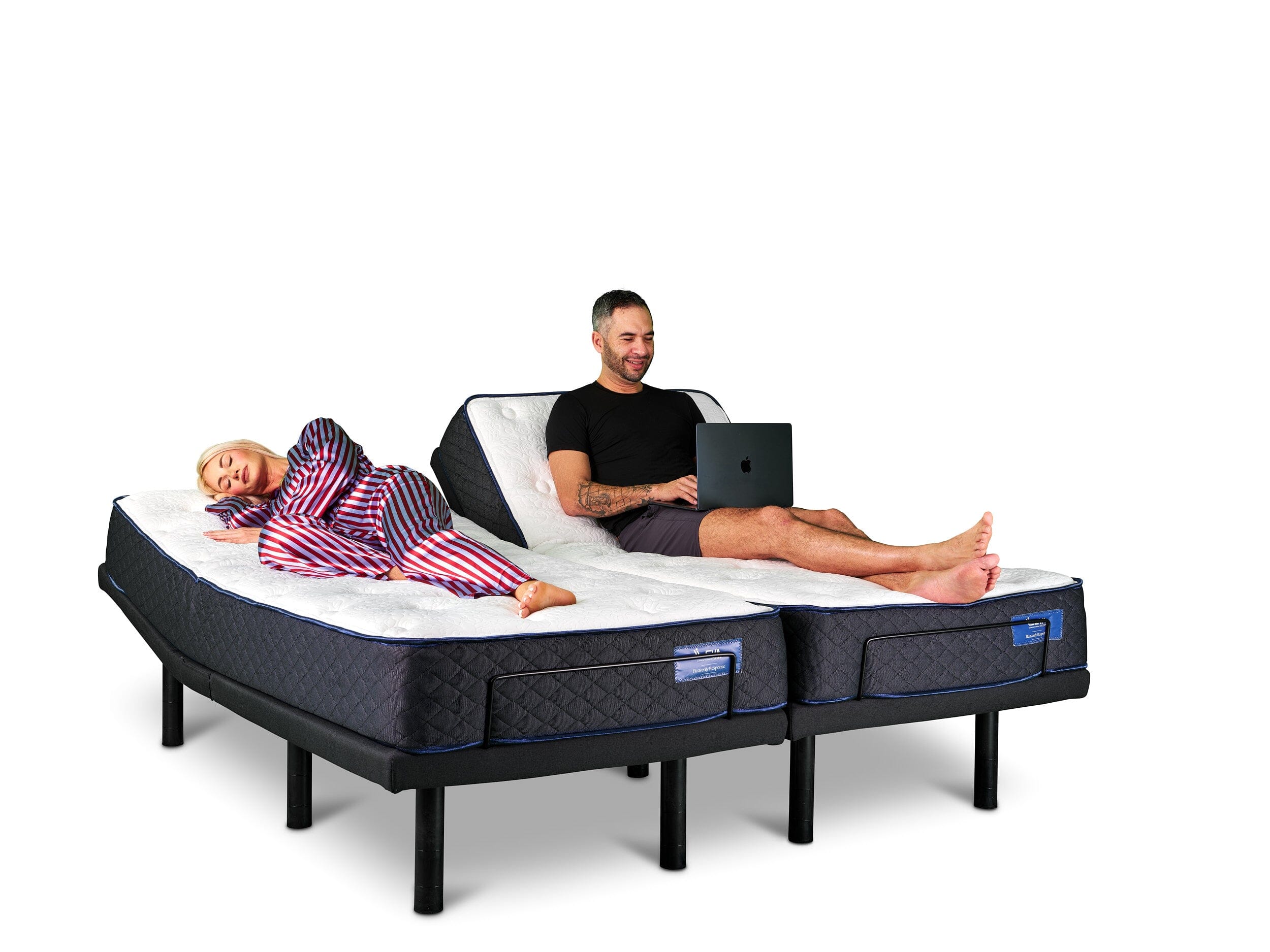
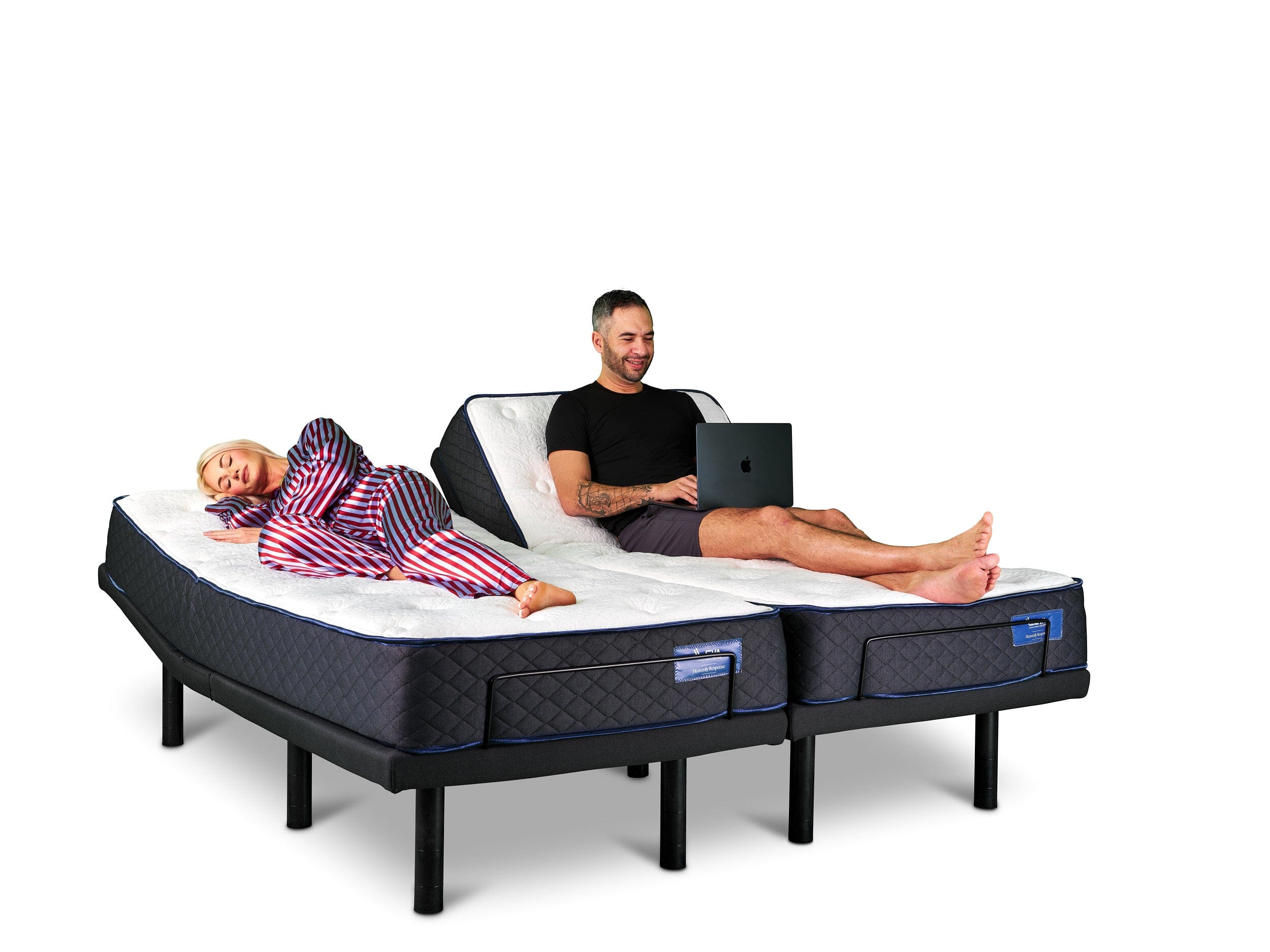
Once your digital sunset routine feels consistent, the next barrier for many couples is the bed itself. Research shows that bed partner movements can trigger brief arousals throughout the night, fragmenting sleep architecture even when those awakenings are not remembered. Leva Sleep’s split adjustable bases use whisper-quiet motors and independent controls so each partner can set their own elevation, firmness, and temperature without disturbing the other. Explore split adjustable configurations available across Ontario and Alberta to complement the habits you have built.
Leva Sleep Split Queen Bed
What to Do an Hour Before Bed Instead of Scrolling
Passive body cooling after bathing can speed sleep onset
Sequential
Schedule 60–90 min before target sleep time
Listening to ambient or instrumental audio
20–30 min
Bluetooth speaker (not earbuds in bed)
Masks environmental noise without blue-light exposure
Yes, with agreed playlist
Avoid news, ads, or narrative podcasts
7-Day Progress Tracker
Log your adherence each evening so you can see patterns instead of guessing. A downloadable CSV version of this tracker is available; search “Leva Sleep digital sunset tracker” to find it. Score each habit Y (yes) or N (no) per night, then calculate your weekly percentage at the end of Sunday.
When your habits feel solid and sleep latency still sits above 30 minutes, the remaining variable is often the bed itself. Explore Leva Sleep’s adjustable bed packages to find split systems with independent elevation and temperature controls designed for this situation.
Frequently Asked Questions
Are these habits suitable for couples with very different bedtimes?
These habits work even when partners keep different bedtimes. Each habit functions independently per person, including the digital-sunset alarm, charger placement, app limits, and reading light setup. Each partner sets a personal 90-minute cutoff based on their own target sleep time, not a shared household schedule. Research suggests that chronotype differences are largely genetic and unlikely to disappear, so the goal becomes accommodation rather than full synchronisation. Spending 20–30 minutes together in bed before the earlier sleeper drifts off preserves connection without forcing identical schedules.
How do I set app limits on Canadian carriers and devices?
App limits live in your phone’s operating system, not with your carrier. On iPhone, open Settings, then Screen Time, then App Limits, and add a downtime schedule. On Android, open Settings, then Digital Wellbeing, then Bedtime Mode or Dashboard. Both systems let you set category-level restrictions such as Social, Entertainment, and News that activate automatically at your chosen time. Your carrier, whether Rogers, Bell, Telus, or a regional provider, does not control these tools. If you share a family plan, Screen Time on iOS also lets you set limits for family members’ devices through Family Sharing.
When should a couple consider an adjustable base in addition to these habits?
Habits address behavioural causes of poor sleep, while an adjustable base targets physical and environmental factors that habits cannot change. These factors include motion transfer from a partner’s movement, snoring that wakes a lighter sleeper, different firmness preferences, or medical needs such as elevated head position for acid reflux or sleep apnea. When you have followed the seven habits consistently for four weeks and one or both partners still wake frequently, partner movement often becomes the main remaining variable. A split adjustable base with independent controls reduces motion transfer and lets each side choose its own position and temperature without compromise.
How should shift workers adapt the digital sunset timing?
Shift workers should anchor the digital sunset to their target sleep window instead of the clock. If your sleep runs from 8 a.m. to 4 p.m., your digital sunset starts at 6:30 a.m. The melatonin response to blue light follows your circadian phase, not the time on the clock. Blackout curtains are essential for daytime sleep, and the analogue wind-down activities in Habit 4 remain effective at any hour. The weekly review in Habit 7 becomes especially important for shift workers because rotating schedules require more frequent adjustment of the sunset alarm time.
How do couples maintain these habits long-term without backsliding?
Long-term success depends more on environment design than on willpower. Once chargers move permanently out of the bedroom and app limits run on a schedule, the default behaviour becomes screen-free. The weekly review in Habit 7 acts as a maintenance check, catching backsliding within days instead of months. Seasonal recalibration, such as adjusting the digital-sunset alarm as Canadian daylight shifts between summer and winter, keeps the routine aligned with natural light cycles. Couples who track and review together usually report higher adherence, because shared accountability reduces the social permission to ignore the alarm.
Building a digital sunset routine is one of the most evidence-supported, zero-cost ways to improve sleep latency and reduce partner disturbances. Once your habits feel consistent, the next step is a sleep environment that matches the effort you have invested. Leva Sleep’s split adjustable bases, with whisper-quiet motors, independent temperature regulation, and anti-snore mode arriving spring 2026, are designed for Canadian couples who want to share a bed and still sleep well. View packages with white-glove delivery across Ontario and Alberta.