Written by: Matthew Timmins, Founder and Managing Director, Leva Sleep | Last updated: July 15, 2026
Key Takeaways for Couples Considering Adjustable Beds
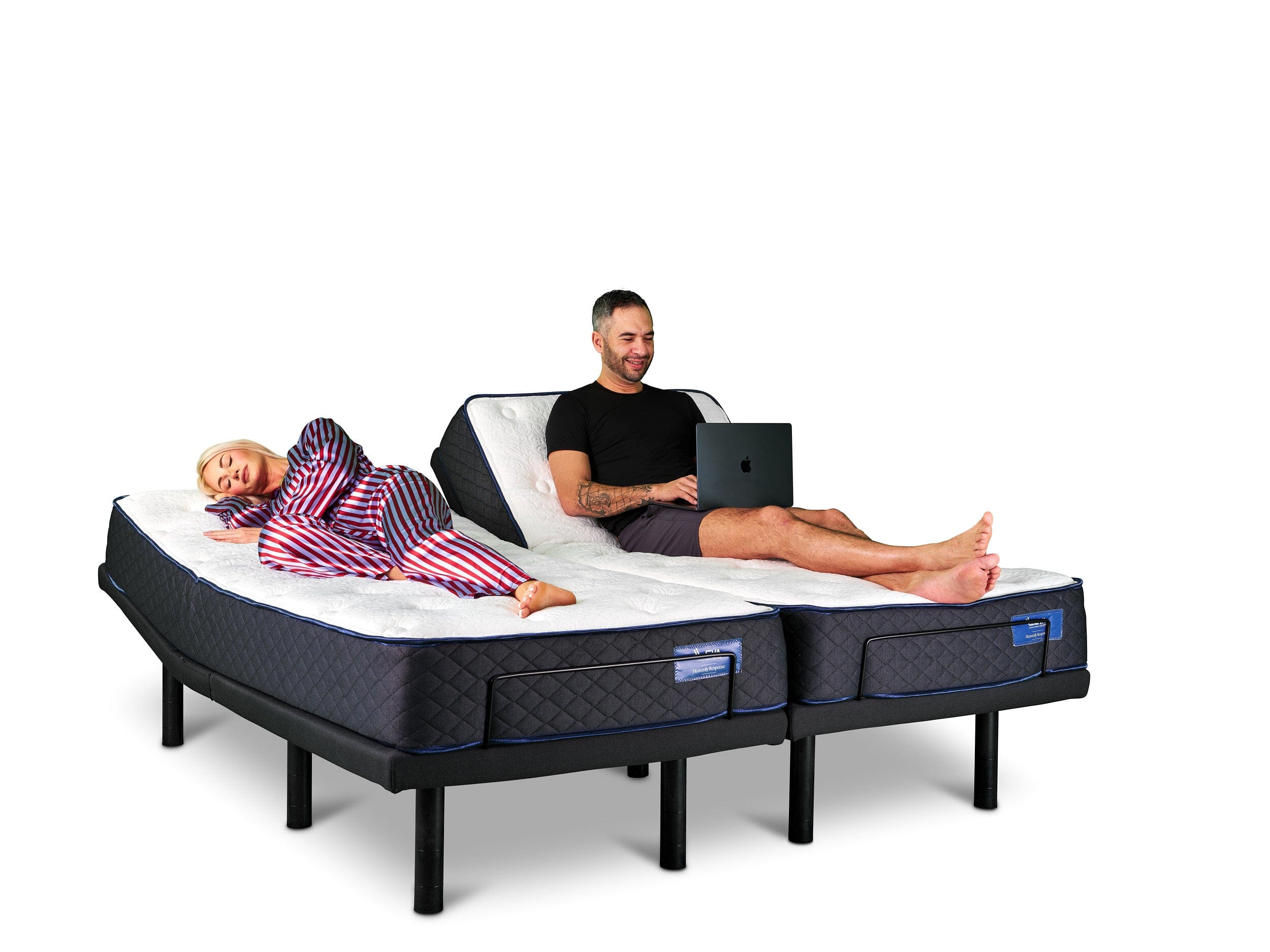
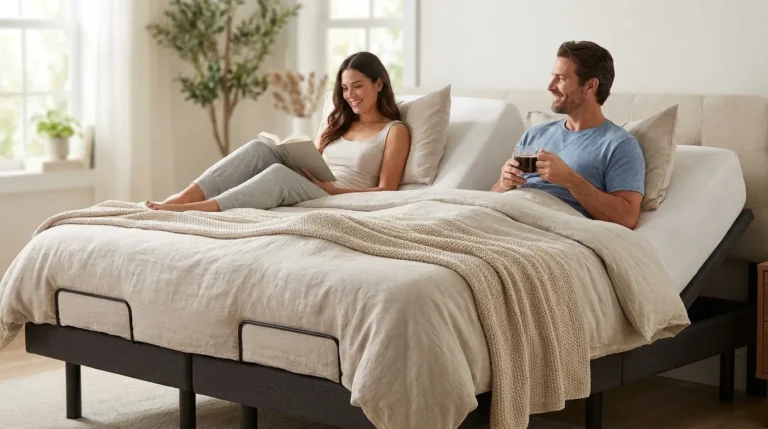
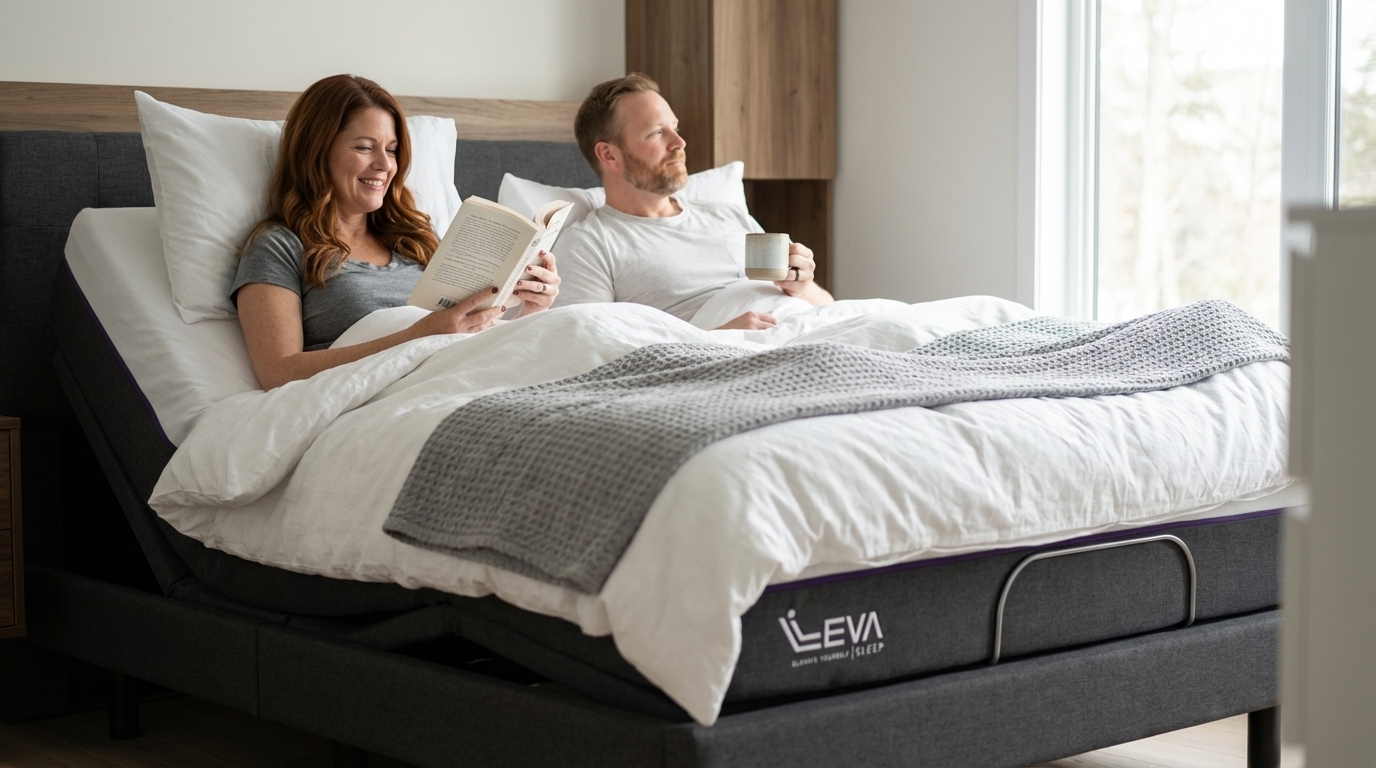
- Adjustable beds with independent controls let each partner set their own head and foot elevation, which reduces motion disturbance and improves shared sleep quality.
- Quiet brushless DC motors operating at 30–45 dB allow nighttime adjustments without waking a light-sleeping partner, so they suit couples who keep different schedules.
- Zero-gravity positioning and lumbar support reduce spinal pressure, back pain, and fluid pooling, while anti-snore presets help keep airways open for easier breathing.
- Split Queen and Split King configurations deliver strong motion isolation and support different firmness, temperature, or medical needs within typical Canadian bedroom sizes.
- Explore Leva Sleep’s adjustable bed packages for Split Queen and Split King setups with independent controls, quiet motors, and white-glove delivery across Ontario and Alberta.
How Adjustable Beds Help Reduce Snoring
Head elevation is the most evidence-supported positional change for snoring. Raising the upper body reduces the chance that the airway will collapse during sleep. Studies suggest that mild head elevation can lower snoring frequency in people with positional snoring. Some research also shows that head-of-bed elevation can reduce obstructive sleep apnea severity in certain patients, although it does not replace CPAP therapy.
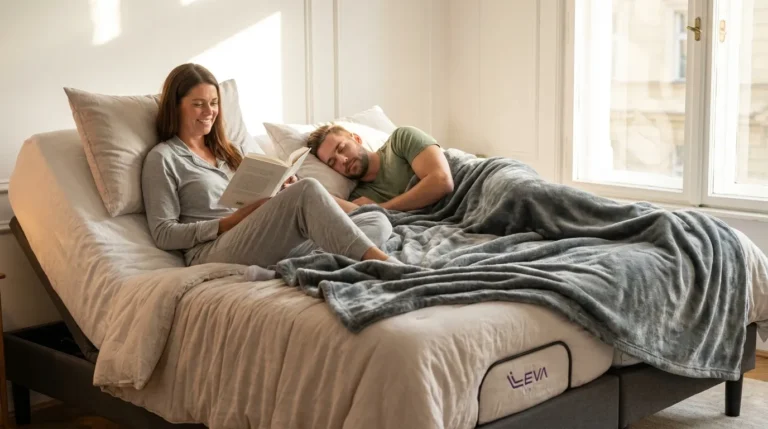
Anti-snore presets on modern adjustable bases automate this head elevation. Premium bases with automatic snore response detect snoring vibrations and raise the head section a few degrees. These small changes often occur without fully waking the sleeper. On a split configuration, the non-snoring partner’s side stays flat and undisturbed.
Leva Sleep’s anti-snore mode, arriving spring 2026, uses sensor-detected snoring triggers to make micro-adjustments to the head of the bed. These small movements aim to open the airway while keeping both partners’ sleep cycles as stable as possible. This approach goes beyond static anti-snore presets that apply a fixed elevation regardless of snoring intensity.
Quiet Adjustable Bed Motors and Sleep Quality
Research published in the Japanese Journal of Hygiene found that 60 dB(A) noise changed some sleep parameters in one subject, while 40 dB(A) produced results similar to quiet control nights. Motor noise therefore affects sleep quality for couples, not just comfort.
The decibel ranges for adjustable bed motors typically look like this:
- Brushless DC motors (premium): 30–40 dB, similar to a whisper, so most partners sleep through adjustments.
- Brushed DC motors (mid-range): Moderate noise levels that many couples find acceptable.
- AC motors (budget): 50–60 dB, which is more likely to wake a light-sleeping partner.
Adjustable bases with motors below 45 dB provide whisper-quiet performance that avoids disturbing a sleeping partner during position changes. When you compare bases, ask the retailer for the motor’s dB rating under load, not just at idle. Noise usually increases once the frame supports both partners’ body weight, especially on budget models.
Zero Gravity Position Benefits for Couples
Zero-gravity positioning places the torso and legs at a total angle of roughly 120–128°, with both the head and knees elevated above heart level. Research has shown that adjustable bed users can experience longer total sleep time, fewer awakenings, and better sleep maintenance. A 2017 study found that mild head-of-bed elevation of 7.5° reduced obstructive sleep apnea severity by 31.8% on average in patients with positional obstructive sleep apnea.
For couples, these clinical benefits touch several common conditions:
- Back pain: Zero-gravity positioning reduces spinal pressure compared with lying flat, which can ease lower back discomfort.
- GERD: Head-of-bed elevation can shorten esophageal acid exposure time and reduce nighttime reflux symptoms.
- Circulation: Leg elevation lowers venous pressure and can reduce fluid pooling in the lower legs overnight.
On a split base, one partner can use zero-gravity while the other sleeps flat. A single-piece flat foundation cannot provide this level of independent positioning.
Split Queen Adjustable Beds in Canada: Space-Saving Independence
The Split King, which uses two Twin XL bases side by side, is the most common independent-control setup in Canada. Split King configurations provide excellent or near-complete motion isolation between sides because each partner uses a separate base and mattress. However, a standard King footprint of 76 × 80 inches does not fit every Canadian bedroom.
The Split Queen offers independent controls within a 60 × 80-inch footprint. This smaller size matters for couples in condos, townhouses, or older Ontario and Alberta homes with compact primary bedrooms. Split Queen models exist but are less common than Split King configurations in Canada. Leva Sleep is one of the few Canadian specialists that builds Split Queen systems to customer specifications, which helps couples gain independent positioning without moving to a King-sized room.
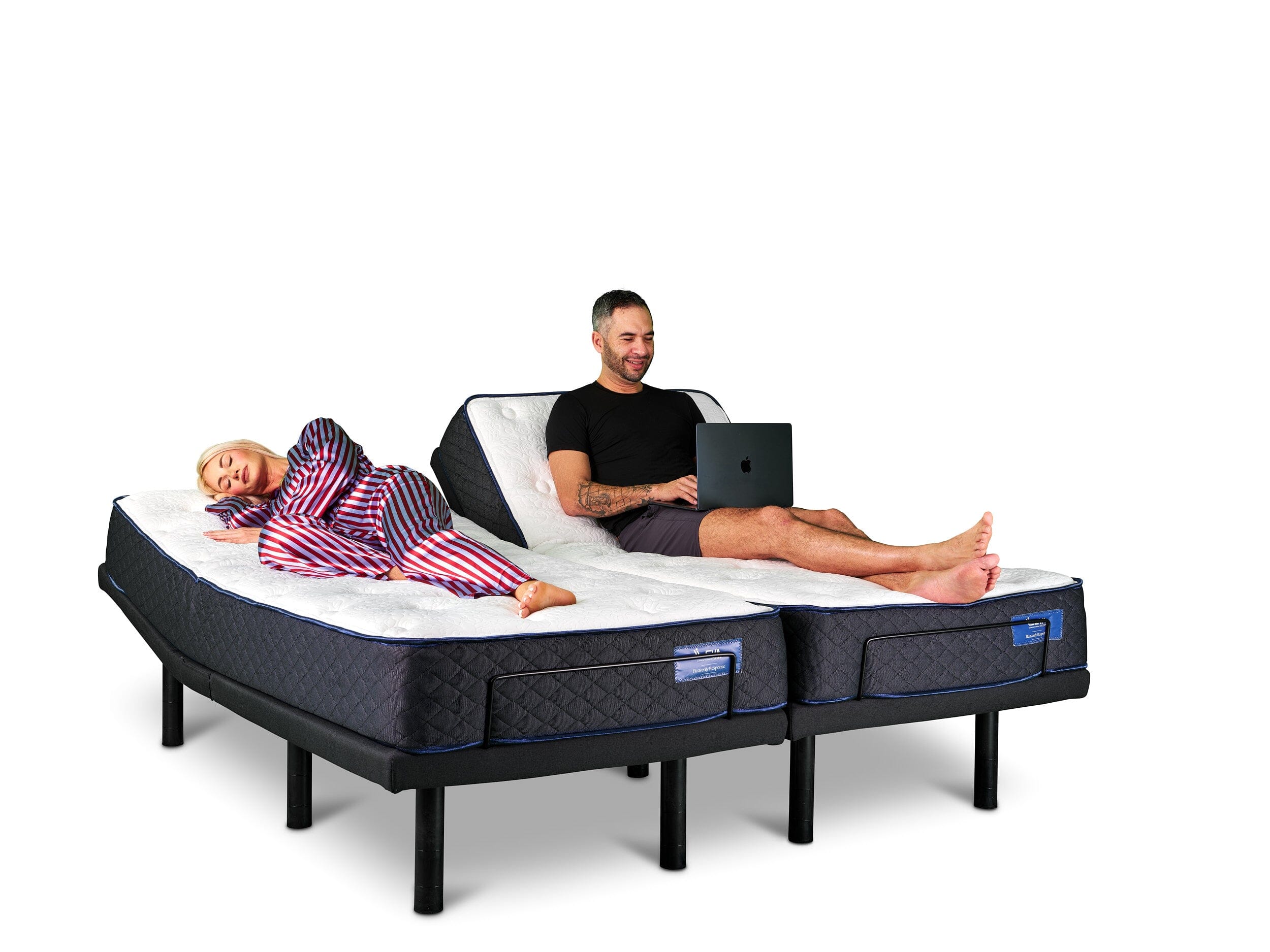
Browse Leva Sleep’s Split Queen options designed for Canadian bedroom dimensions, with app control and independent elevation on each side.
Trade-Offs of Adjustable Beds for Couples
Adjustable beds introduce trade-offs that couples should weigh before buying. Clear awareness of each limitation, along with practical fixes, supports a confident decision.
| Limitation | Impact on Couples | Mitigation |
|---|---|---|
| Centre gap (Split configurations) | A gap between Twin XL mattresses can feel noticeable for couples who prefer to sleep close together. | A $30–$60 foam gap filler pad, a king-size fitted sheet, or a mattress connector strap reduces the gap’s effect. |
| Sheet slippage | Standard fitted sheets can pop off during elevation changes. | Leva Sleep designs fitted sheets with deep pockets and extra elastic specifically for adjustable bases. |
| Motor noise | Budget AC motors at 50–60 dB can pull a partner from deep sleep into lighter stages. | Leva Sleep uses whisper-quiet German motors to keep adjustments discreet. |
| Higher cost than flat beds | Split configurations require two bases and two mattresses. | Leva Sleep’s vertical integration delivers pricing that is 30–50% lower than comparable luxury competitors. |
Doctor-Recommended Uses for Adjustable Beds in Canada
Dr. Raj Dasgupta, a quadruple board-certified physician in pulmonary and sleep medicine, notes that an adjustable base can align the spine, reduce joint pressure, and help keep airways open by elevating the upper body, which may reduce snoring and ease mild sleep apnea symptoms.
Physician guidance on specific conditions highlights several evidence-based uses:
- Sleep apnea: A 2017 study found that mild head-of-bed elevation (7.5°) reduced obstructive sleep apnea severity by 31.8% on average in patients with positional obstructive sleep apnea. This reduction helps explain why sleep apnea clinics in Canada often refer patients to adjustable bed specialists as a complementary measure.
- Chronic back pain: Roughly 89% of people with chronic back pain reported less pain when using an adjustable bed.
- Post-surgical recovery: Dr. Joe Tedesco, DPT, OCS, notes that raising the head or feet on an adjustable base can improve comfort and spinal alignment for people with pressure buildup or inadequate mattress support.
Adjustable head elevation does not replace CPAP therapy in diagnosed obstructive sleep apnea. Couples where one partner has a confirmed diagnosis should speak with a physician before relying on positional therapy alone.
Real-World Couple Sleep Scenarios and Feature Matches
The scenarios below connect common couple-sleep problems with specific adjustable bed features and explain how each feature helps.
- Snoring partner: When one partner snores, the airway often narrows or collapses during sleep. An anti-snore preset or manual head elevation of 7–10 degrees changes the angle of the throat and helps keep the airway open. On a split configuration, the non-snoring partner’s side stays flat, so their comfort and position do not change.
- Differing firmness preferences: A 2019 Better Sleep Council of Canada survey found that 26% of Canadian couples reported mattress firmness disagreement as a source of sleep disruption. A Split King or Split Queen lets each partner choose a different mattress on their own base, which removes the firmness conflict without forcing compromise.
- Sleep apnea: Head elevation of about 30 degrees on the affected partner’s side changes upper airway geometry and can ease positional apnea. Added lumbar support helps maintain spinal alignment in this raised position. The other partner can remain in their preferred flat or slightly elevated posture.
- Hip and knee pain: Zero-gravity positioning reduces lumbar and joint pressure by distributing body weight more evenly. Leg elevation also limits fluid pooling around the knees and ankles. The pain-free partner can keep their side flat or choose a different preset.
- Temperature mismatch: Dual-zone heating and cooling pads give one partner a warmer surface and the other a cooler one. Both partners share the same bed while still sleeping at their preferred temperature.
Split vs Single Adjustable Bases for Couples
| Feature | Split Base (King or Queen) | Single Base | Best For |
|---|---|---|---|
| Motion isolation | Excellent or near-complete motion isolation between sides. | Depends on mattress material, and memory foam isolates motion about three times better than springs. | Split: light sleepers and couples with restless partners. |
| Independent elevation control | Full independence, since each side adjusts separately. | No independence, since one position applies to both partners. | Split: couples managing snoring, apnea, GERD, or pain on one side. |
| Price range (CAD) | About $2,200 for two entry bases up to $12,000+ with premium mattresses. | About $995 for an entry single base up to $3,700+ for a premium single. | Single: couples with similar sleep needs and tighter budgets. |
| Centre gap | A noticeable gap that you can soften with a gap filler or connector strap. | No gap. | Single: couples who value a seamless sleeping surface. |
Adjustable Bed Price Tiers in Canada
| Tier | Price Range (CAD, single base) | Key Features | Motor Noise |
|---|---|---|---|
| Entry | $995–$1,500 | Head and foot elevation, basic remote, German-engineered motor. | About 40–45 dB. |
| Mid-range | $1,500–$3,000 | Programmable memory positions, massage modes, USB ports, and app control. | Around 40–50 dB. |
| Premium | $3,000+ and up to $12,000+ for full split packages | Lumbar control, pillow tilt, anti-snore mode, temperature regulation, and AI sleep tracking. | About 30–40 dB with brushless DC motors. |
Leva Sleep’s vertically integrated model, which covers design, assembly, and local delivery without retail markup, keeps its packages about 30–50% below comparable luxury competitors across all three tiers.
Canadian Delivery and White-Glove Setup for Couples
Adjustable bed bases typically weigh 90–250 lbs depending on size and model, so they need careful handling. Adjustable bed bases are heavier and more mechanically complex than standard foundations, which makes professional white-glove delivery a practical choice for many households.
Leva Sleep’s in-house white-glove delivery service in Ontario and Alberta includes several steps that reduce setup stress for couples.
- Delivery directly to the bedroom.
- Full assembly and leg-height adjustment.
- Product tutorial and app setup.
- Old bed removal, with donation or recycling where available.
This end-to-end service contrasts with freight-only shipping that leaves customers with a 150-lb box and a lengthy assembly process. For couples buying a Split King or Split Queen, which involves two bases, two mattresses, and coordinated accessories, professional installation becomes a meaningful convenience.
Leva Sleep also designs all bedding accessories, including fitted sheets with deep pockets and extra elastic, duvet clips, mattress protectors, and remote pockets, specifically for adjustable bases. This approach helps the complete sleep system work smoothly from the first night.
See Leva Sleep’s complete adjustable bed packages with white-glove delivery, local assembly, and specialized bedding included.
Frequently Asked Questions
Is a Split Queen adjustable bed available in Canada?
Split Queen adjustable beds are available in Canada, although they remain far less common than Split King configurations. Most Canadian retailers stock only Split King setups, which use two Twin XL bases side by side, because Twin XL is a standard mattress size. A Split Queen uses two 30 × 80-inch bases within a 60 × 80-inch Queen footprint, so it requires custom manufacturing. Leva Sleep is one of the few Canadian specialists that builds Split Queen systems to customer specifications, which makes this format practical for couples who need independent controls but cannot fit a King-sized bed.
How long is the warranty on Leva Sleep adjustable beds?
Warranty terms differ by model and tier. Leva Sleep’s adjustable bed packages include manufacturer warranties that cover the motor, frame, and electrical components. Prospective buyers should confirm the exact warranty length and coverage, including whether it covers parts only or includes labour, directly with Leva Sleep at purchase. As a general reference, multi-year split warranties that cover full service, parts, and pro-rated parts are standard in the Canadian adjustable bed category.
How noisy are adjustable bed motors during nighttime adjustments?
Motor noise depends on motor type and build quality. Brushless DC motors in premium bases operate at about 30–40 decibels, similar to a quiet library. Brushed DC motors in mid-range bases produce moderate noise. Budget AC motors reach 50–60 dB and are more likely to disturb a light-sleeping partner. Research published in the Japanese Journal of Hygiene found that 60 dB(A) noise altered some sleep parameters in one subject, while 40 dB(A) produced results similar to control nights. Leva Sleep uses whisper-quiet German motors that aim to keep adjustment noise low for shared sleeping.
Are adjustable beds medically suitable for sleep apnea and back pain?
Adjustable beds are not medical devices and do not replace prescribed therapies such as CPAP for diagnosed obstructive sleep apnea. However, clinical evidence supports head elevation as a complementary positional intervention, and a 2017 study found that mild head-of-bed elevation (7.5°) reduced obstructive sleep apnea severity by 31.8% on average. For back pain, about 89% of people with chronic back pain have reported less pain when using an adjustable bed. Couples where one partner has a diagnosed sleep or musculoskeletal condition should consult their physician before treating positional therapy as a primary treatment.
Are adjustable beds compatible with side sleepers?
Adjustable beds work for side sleepers, although the strongest benefits of head and foot elevation appear for back sleepers. Side sleepers benefit most from mattress compatibility. Memory foam, latex, and flexible hybrid mattresses with pocket coils contour to the shoulders and hips while still bending with the base. Mattresses between 10 and 14 inches thick usually provide the best balance of flexibility and pressure relief for side sleepers on an adjustable base. Mattresses thicker than about 13–14 inches may feel too rigid to articulate fully. On a split configuration, a side-sleeping partner can stay flat while the other partner uses elevation, which suits couples with mixed sleeping positions.
Conclusion: Choosing an Adjustable Bed as a Couple
Evidence across several research areas supports adjustable beds as a couple-sleep solution. Head elevation can reduce snoring and apnea severity, zero-gravity positioning can lower lumbar pressure and improve total sleep time, quiet DC motors can prevent partner disturbance during adjustments, and split configurations provide strong motion isolation. For Canadian couples dealing with snoring, firmness disagreements, temperature mismatch, or medical positioning needs, these features address underlying causes of poor sleep instead of masking symptoms.
With more than eight years of adjustable bed specialization, $50M in lifetime sales, and over 25,000 Canadian customers, Leva Sleep delivers these capabilities at 30–50% below comparable luxury competitors. The lineup includes the rare Split Queen configuration, upcoming 2026 anti-snore technology, and in-house white-glove delivery across Ontario and Alberta. The vertically integrated model keeps every component, from the motor to the fitted sheet, working together from the first night.
Find your ideal Leva Sleep adjustable bed in a Split Queen or Split King package that fits your bedroom, budget, and both partners’ sleep needs.