Written by: Matthew Timmins, Founder and Managing Director, Leva Sleep | Last updated: June 22, 2026
Key Takeaways for Canadian Couples
-
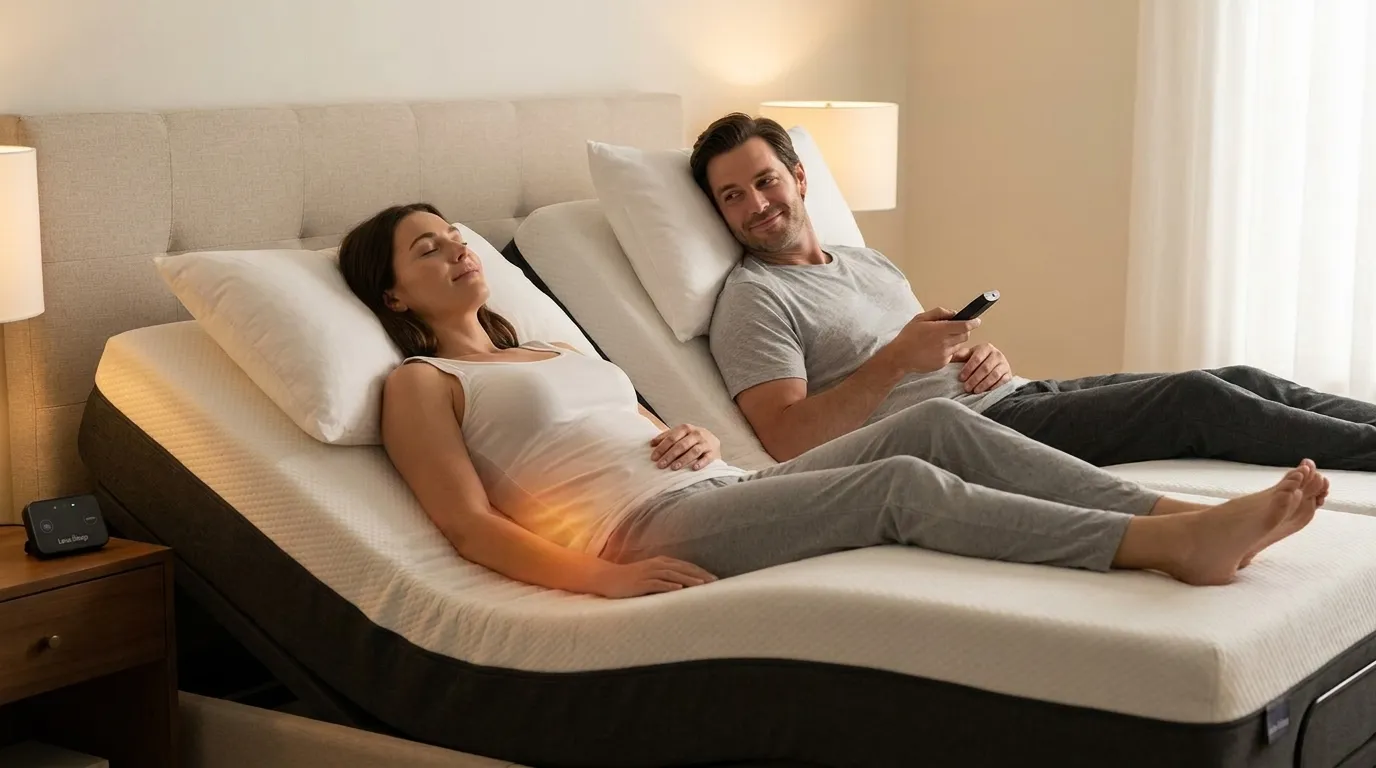
Back pain often pushes Canadian couples toward separate beds, yet a therapeutic adjustable base with independent controls can keep both partners together.
-
Zero-gravity positioning, targeted lumbar support, integrated heat, and quiet massage work together to reduce spinal pressure and morning stiffness.
-
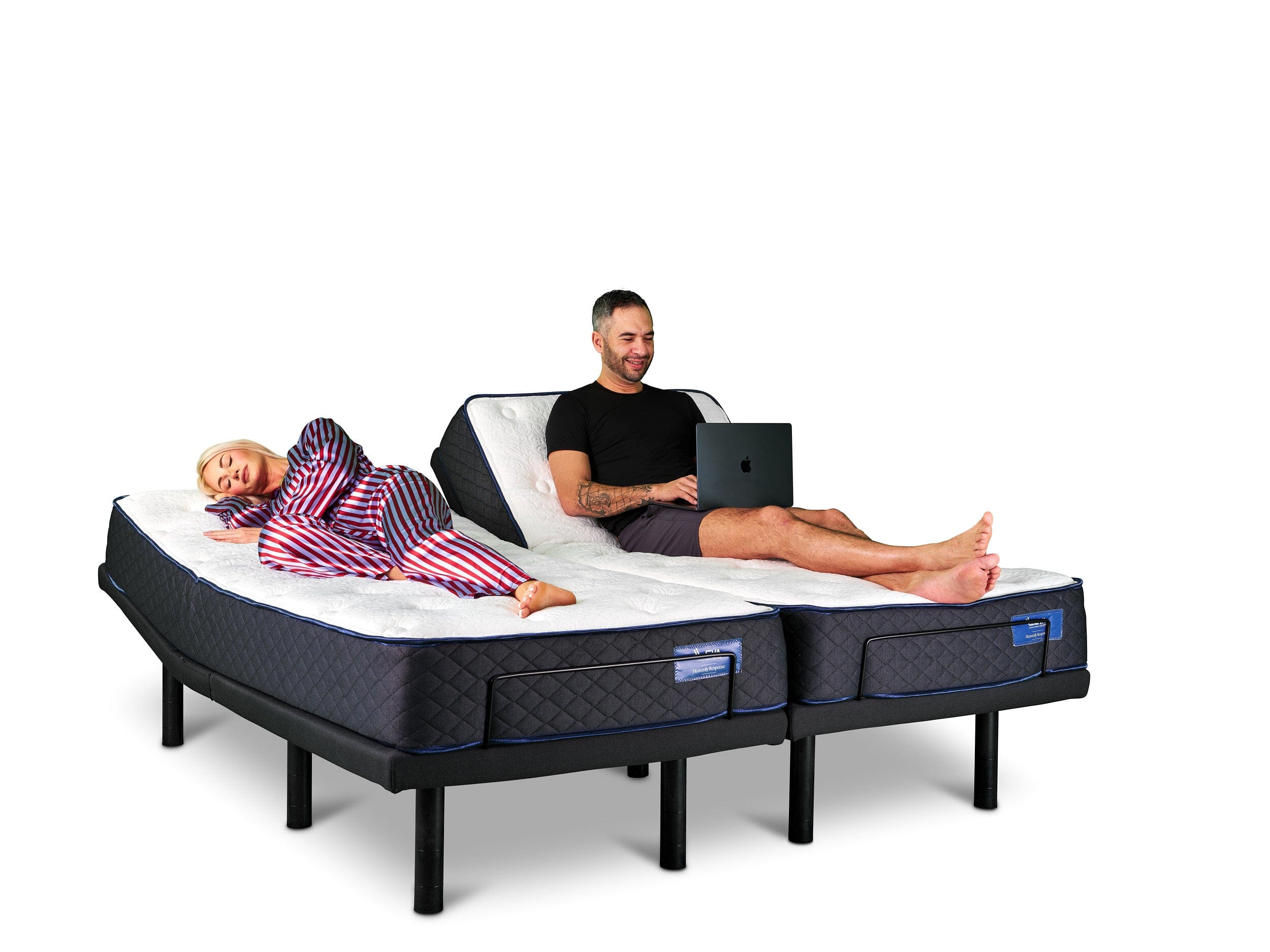
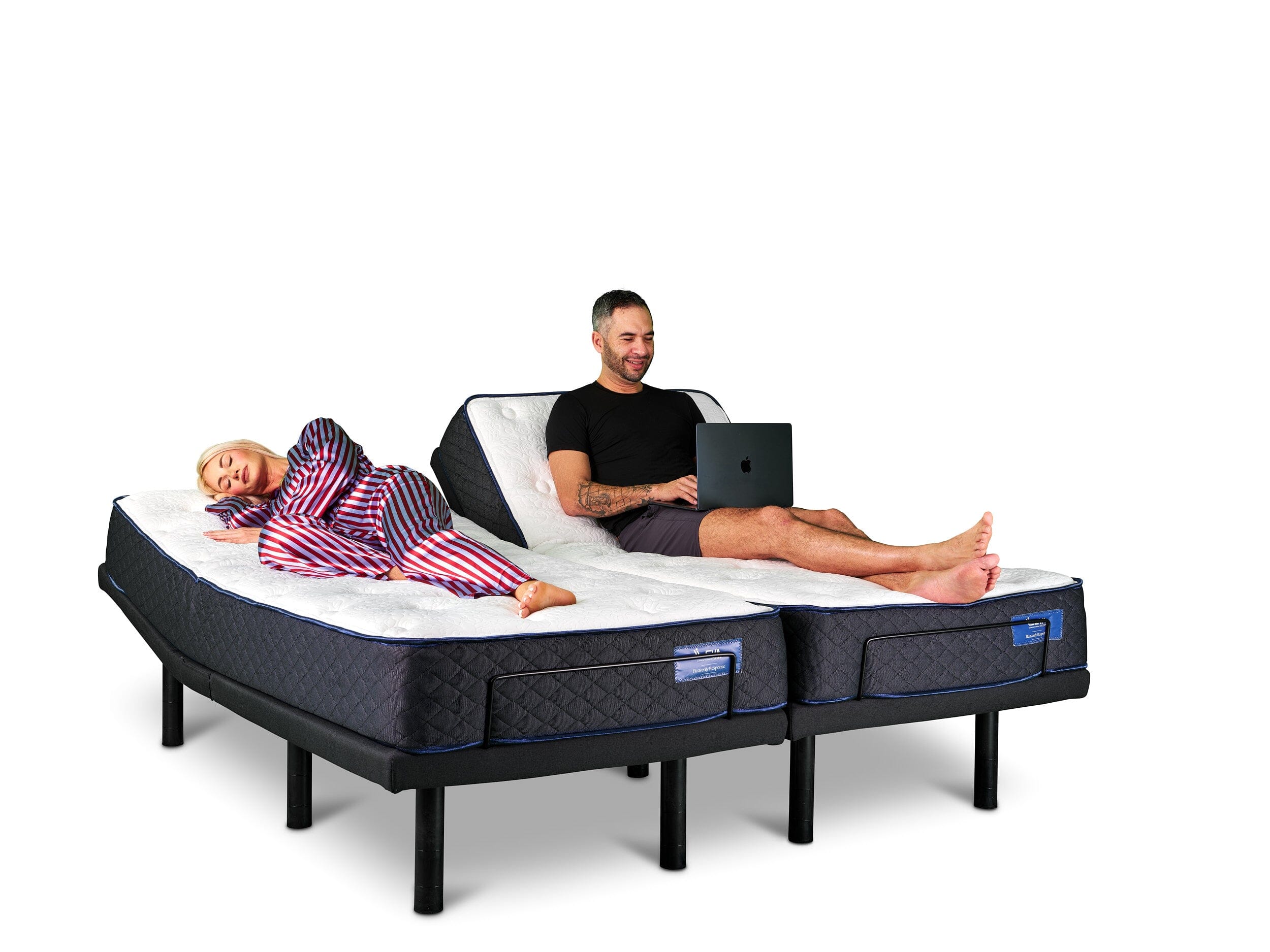
Split queen and split king configurations let each partner adjust head, foot, lumbar, heat, and massage settings independently without disturbing the other.
-
When shopping, confirm motor noise levels, heat safety features, Canadian delivery options, and mattress compatibility to protect comfort and long-term value.
-
Couples ready to improve sleep quality together can explore Leva Sleep’s adjustable bed packages designed specifically for Canadian bedrooms.
How Zero-Gravity, Heat, and Massage Relieve Back Pain
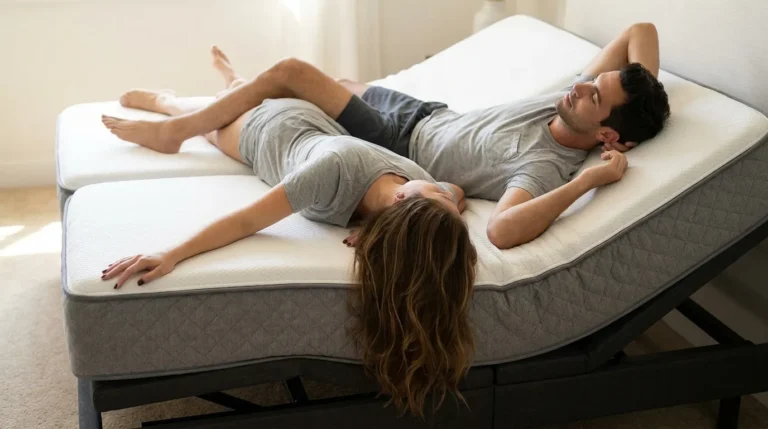
Zero-gravity positioning places the thighs at approximately 128° to the torso, which decompresses the spine, elevates the legs above the heart, and reduces compressive lumbar loading. Biomechanical research has shown reductions in intradiscal pressure and paraspinal muscle activity in reclined versus seated positions. These changes can correlate with lower pain for people with chronic back pain. Dr. Harish Chafle, Senior Consultant and Sleep Disorders Specialist at Gleneagles Hospitals, notes that for lower back pain, sciatica, or post-surgery recovery, zero-gravity positioning reduces approximately 75% of spinal pressure versus flat lying.
Heat therapy compounds these benefits through vasodilation and improved circulation. Heat increases blood flow to deliver oxygen and nutrients to tissues while removing metabolic waste products that contribute to pain and inflammation. Research suggests that heat applied to the lower back can reduce stiffness, muscle spasm, and pain. Medical reviews have discussed continuous low-level heat as a way to help reduce pain and disability in people with low back pain. One safety detail matters here. Medical professionals advise against falling asleep with a standard heating pad turned on, so purpose-built, thermostatically controlled sleep-system heat pads, rather than standalone pads, are the appropriate format for overnight use.
Vibration massage adds a third therapeutic layer that focuses on relaxation and muscle release. Vibration massage promotes relaxation before sleep by reducing perceived stress and activating the parasympathetic nervous system. It can also ease local muscle tension in the lower back and legs for people who carry tightness after a long day.
Flat beds and single-motor bases rarely meet these therapeutic needs for couples. A single-motor base raises both sides simultaneously, so one partner must compromise. US-market models often carry significant cross-border shipping costs, import duties, and limited Canadian service coverage. These formats do not solve the core problem of two people with different therapeutic needs sharing one surface.
Explore Leva Sleep’s split adjustable bases in split queen and split king configurations with independent app-controlled positioning, heat, and massage for each partner.
Evaluation Criteria for Therapeutic Adjustable Bases
Now that zero-gravity positioning, heat, and massage are clear, the next step is choosing a base that delivers those benefits reliably. Not every adjustable base offers the same therapeutic value. The following criteria highlight which features matter most and which details to confirm with the retailer before purchasing.
1. Independent Split Configuration for Each Partner
A split queen or split king base gives each partner fully independent head and foot control, which helps when one partner needs therapeutic positioning and the other does not. Split king configurations enable fully independent positioning for each partner, but they create a centre gap where the two twin XL mattresses meet. Some couples find this gap uncomfortable, while others barely notice it. Test whether the gap affects your shared comfort before committing to a split king. If space is limited or you prefer to avoid the gap entirely, a split queen offers the same independent controls in a smaller footprint, and Leva Sleep is one of the few Canadian retailers offering this configuration.
2. Lumbar and Pillow-Tilt Motors for Targeted Support
A dedicated lumbar motor allows targeted lower-back support that does not depend on head or foot elevation. Pillow tilt adjusts the top of the head zone to fine-tune neck alignment. Confirm that both functions are present and independently controllable on each side of a split base so each partner can dial in their own support.
3. Massage Programs and Intensity Controls
Vibration from adjustable base motors can reduce local muscle tension in the lower back and legs. Look for multiple intensity levels, clear zone targeting for head and foot, and a sleep timer so massage shuts off automatically rather than running all night.
4. Safe Heat Integration at the Lumbar Zone
Integrated or paired heating pads designed for adjustable bases use thermostatic controls and automatic shut-offs that address safety concerns associated with standard heating pads. Confirm that the heat zone covers the lumbar region and that each side of a split base operates independently so one partner can use heat while the other does not.
5. Noise and Motion Isolation During Adjustment
Quality adjustable bases produce only a quiet mechanical hum during operation, not grinding or strained sounds. Ask for motor decibel ratings or request a live demonstration. Whisper-quiet German motors provide a useful benchmark for smooth, low-noise performance.
6. Mattress and Bedding That Flex with the Base
Mattress compatibility directly affects comfort and durability on an adjustable base. All-foam and hybrid pocket-coil mattresses generally flex best and maintain support. In contrast, many traditional innerspring models struggle to bend without damage. Confirm that fitted sheets, mattress protectors, and duvets have deep pockets and extra elastic, because standard bedding often pops off when the base elevates.
7. Total Cost of Ownership for Canadian Buyers
US-sourced bases can attract import duties and brokerage fees that raise the final price beyond the sticker cost. Confirm whether white-glove delivery, in-room setup, old-bed removal, and a product tutorial are included or available as an add-on from a Canadian provider. These services affect both convenience and long-term satisfaction.
Side-by-Side Comparison Checklist
|
Criterion |
What to Verify |
Minimum Acceptable |
Premium Standard |
|---|---|---|---|
|
Split configuration |
Independent head/foot per side |
Split king available |
Split queen option available |
|
Lumbar support |
Dedicated lumbar motor per side |
Head + foot only |
Lumbar + pillow tilt per side |
|
Massage |
Zones, intensity levels, timer |
Single-zone, 3 speeds |
Multi-zone, variable, sleep timer |
|
Heat |
Thermostat, auto shut-off, per-side |
Paired pad, manual control |
Integrated, per-side, app-controlled |
|
Motor noise |
Decibel rating or demo available |
Audible hum only |
Whisper-quiet, no vibration transfer |
|
Canadian delivery |
White-glove, setup, old-bed removal |
Threshold delivery |
In-room setup + tutorial included |
Real Couple Scenarios with Split Adjustable Bases
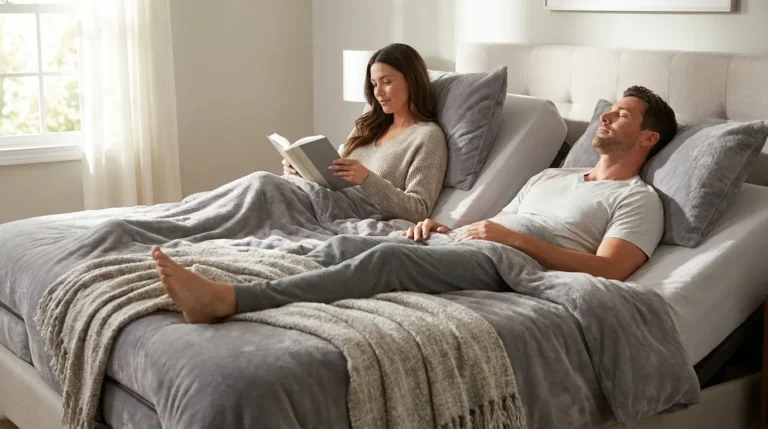
Scenario A: One partner has chronic lumbar pain, the other sleeps comfortably. On a flat bed, the partner with back pain compromises position all night. On a split adjustable base, that partner activates zero-gravity and lumbar support while the other stays flat. Both sleep undisturbed. The earlier zero-gravity position allows the partner with back pain to decompress their spine overnight, which can reduce morning stiffness without disturbing the other partner.
Scenario B: Both partners have back pain but prefer different firmness levels. A split queen base with independently adjustable firmness on each side, paired with a heat pad on the stiffer side, supports both partners without forcing either to sleep on a compromise surface. This scenario reflects exactly what Leva Sleep’s split configurations address and shows why the split queen option matters in smaller Canadian bedrooms where a split king is too wide.
People Also Ask
Which massage modes best relieve back pain?
Wave and pulse modes that travel from the foot zone toward the head zone tend to work well for lower back tension because they follow the direction of lymphatic drainage and encourage progressive muscle relaxation. A foot-zone pulse setting before sleep can address the leg tension discussed earlier, which often radiates into the lumbar region. Look for a base with at least three distinct programs and an independent intensity dial for each zone. A sleep timer set to 20–30 minutes prevents the motor from running through the night and disturbing deep sleep stages.
Do chiropractors recommend adjustable bases?
Many chiropractors recommend adjustable bases for patients with chronic low back pain, disc herniation, or spinal stenosis because the zero-gravity position reduces compressive loading on lumbar vertebrae and allows intervertebral discs to rehydrate overnight. Chiropractors at Comprehensive Chiropractic & Wellness note that heat therapy integrated into a sleep system increases blood flow, relaxes tight muscles, and reduces stiffness, which complements in-office spinal adjustments. A medium-firm mattress paired with an adjustable base is generally recommended because it maintains neutral spinal curves without excessive sinking. Always consult your own chiropractor or physician before changing your sleep position for a medical condition.
Are heat and massage features worth the added cost?
For people with chronic back pain or morning stiffness, heat and massage features often provide meaningful value rather than simple luxury. Many people with chronic pain who use heat therapy find it helpful, and some report it to be more effective than cold therapy. When heat is integrated into a sleep system with thermostatic control and automatic shut-off, it can be used safely overnight, which a standard heating pad cannot offer. Massage features add parasympathetic activation that shortens sleep-onset time and reduces perceived stress. Together, these effects can improve sleep quality and morning pain levels for the right user.
Canadian Buyer Checklist for Adjustable Bases
|
Consideration |
What to Confirm |
|---|---|
|
Import duties and brokerage |
Ask whether the base ships from a Canadian warehouse or crosses the US border, because cross-border shipments may attract duties and brokerage fees. |
|
Ontario delivery zones |
Confirm white-glove service covers your municipality, including in-room setup and old-bed removal. |
|
Alberta delivery zones |
Confirm the same coverage as Ontario and verify that rural postal codes are included and that setup is performed by trained staff, not a third-party courier. |
|
White-glove service inclusions |
Look for delivery to the bedroom, full assembly, leg-height adjustment, app pairing, product tutorial, and old-bed disposal or donation. |
|
Warranty and service |
Confirm the warranty is honoured in Canada without requiring cross-border returns and ask about local service contacts. |
|
Split queen availability |
Verify the retailer stocks split queen, because most Canadian retailers carry split king only. |
Leva Sleep delivers to Ontario and Alberta with in-house white-glove service, local assembly, and no cross-border import complications. This approach clearly differentiates Leva Sleep from US-based brands shipping into Canada.
Browse Leva Sleep’s Canadian-assembled adjustable bases with white-glove delivery and competitive pricing against comparable luxury competitors.
Making Your Decision as a Couple
The therapeutic case for zero-gravity positioning, lumbar support, integrated heat, and quiet massage rests on a mix of biomechanical and clinical evidence. The practical case for a split configuration is equally clear. Two people with different bodies and different pain patterns rarely sleep well on a single fixed surface.
Use the seven criteria above as your framework when evaluating any base. Verify motor noise, split configuration type, heat safety controls, and Canadian delivery terms directly with the retailer. Give preference to providers who specialize in adjustable bases rather than treating them as a secondary product. A deeper model selection, such as 15–20 models instead of the 3–5 found at general retailers, often signals stronger expertise.
For Ontario and Alberta couples ready to stop compromising, Leva Sleep offers split queen and split king adjustable bases with independent app control, whisper-quiet motors, integrated heat and massage, and full Canadian white-glove delivery at a price point that keeps therapeutic sleep within reach.
Find your Leva Sleep adjustable base and choose the configuration that fits your bedroom, your budget, and both of your backs.
Frequently Asked Questions
What is the difference between a split queen and a split king adjustable base?
A split king consists of two twin XL mattresses side by side on independent bases, which makes it the most common couple’s adjustable configuration. A split queen divides a standard queen-size footprint into two independently adjustable halves, which suits smaller Canadian bedrooms where a king-size frame would not fit. Leva Sleep is one of the few Canadian retailers that offers split queen adjustable bases built to customer specifications, giving couples in tighter spaces access to the same independent positioning, heat, and massage features available in larger configurations.
How does zero-gravity positioning specifically help chronic lower back pain?
Zero-gravity positioning, discussed earlier in the context of spinal decompression, works by elevating the head and knees so that the thighs sit at approximately 128° to the torso. This specific angle supports the therapeutic benefits chiropractors recommend, including reduced compressive load on lumbar vertebrae, improved disc rehydration overnight, and lower paraspinal muscle activity. For people with disc herniation, spinal stenosis, or chronic lumbar tension, this decompression can meaningfully reduce morning stiffness and pain. Discuss the specific elevation angle with your chiropractor or physician to confirm it is appropriate for your diagnosis.
Is Leva Sleep’s white-glove delivery available across all of Ontario and Alberta?
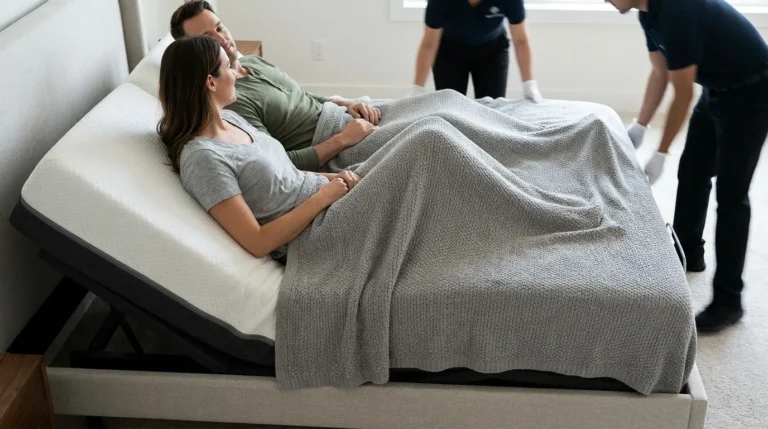
Leva Sleep’s in-house white-glove delivery covers Ontario and Alberta delivery zones and is performed by trained Leva staff rather than third-party couriers. The service includes delivery to the bedroom, full assembly, leg-height adjustment, app pairing and tutorial, and removal of the old bed through donation or recycling. Specific rural postal codes should be confirmed directly with Leva Sleep at the time of purchase to verify coverage and scheduling timelines.
Can I use any mattress with a Leva Sleep adjustable base?
Adjustable bases require mattresses that flex without damage, so all-foam and hybrid pocket-coil mattresses are usually the most compatible formats. Innerspring mattresses with rigid border wires are generally not suitable. Leva Sleep designs its own all-foam and hybrid mattresses specifically to work with its adjustable bases and also pairs its bases with mattresses from brands including Tempur-Pedic, Simmons, Beautyrest, Serta, and Kingsdown. Standard bedding typically does not accommodate the elevation range of an adjustable base, so Leva also offers fitted sheets with deep pockets and extra elastic, duvet clips, and mattress protectors engineered for adjustable use.
What should I look for in a massage feature if my primary concern is lower back pain?
Focus on a base with independently controllable massage zones, with at least a separate lumbar or lower-back zone distinct from the foot zone. Variable intensity levels let you start gently and increase as muscle tension decreases. A wave or pulse program that moves progressively from foot to head usually works better for lumbar tension than a constant vibration setting. A built-in sleep timer is essential, so set it to 20–30 minutes and let the motor stop before you enter deep sleep stages. Confirm that each side of a split base has its own massage controls so one partner’s session does not transfer vibration to the other side.