
Written by: Matthew Timmins, Founder and Managing Director, Leva Sleep | Last updated: June 26, 2026
Key Takeaways for Medical Adjustable Beds
- Medical-grade Hi-Lo adjustable beds raise and lower the entire platform height for safer transfers, while standard lifestyle bases only change head and foot angles.
- Condition-specific features such as low platform height, Trendelenburg positioning, side-rail compatibility, and quiet motors support conditions like Parkinson’s, MS, stroke recovery, and sleep apnea.
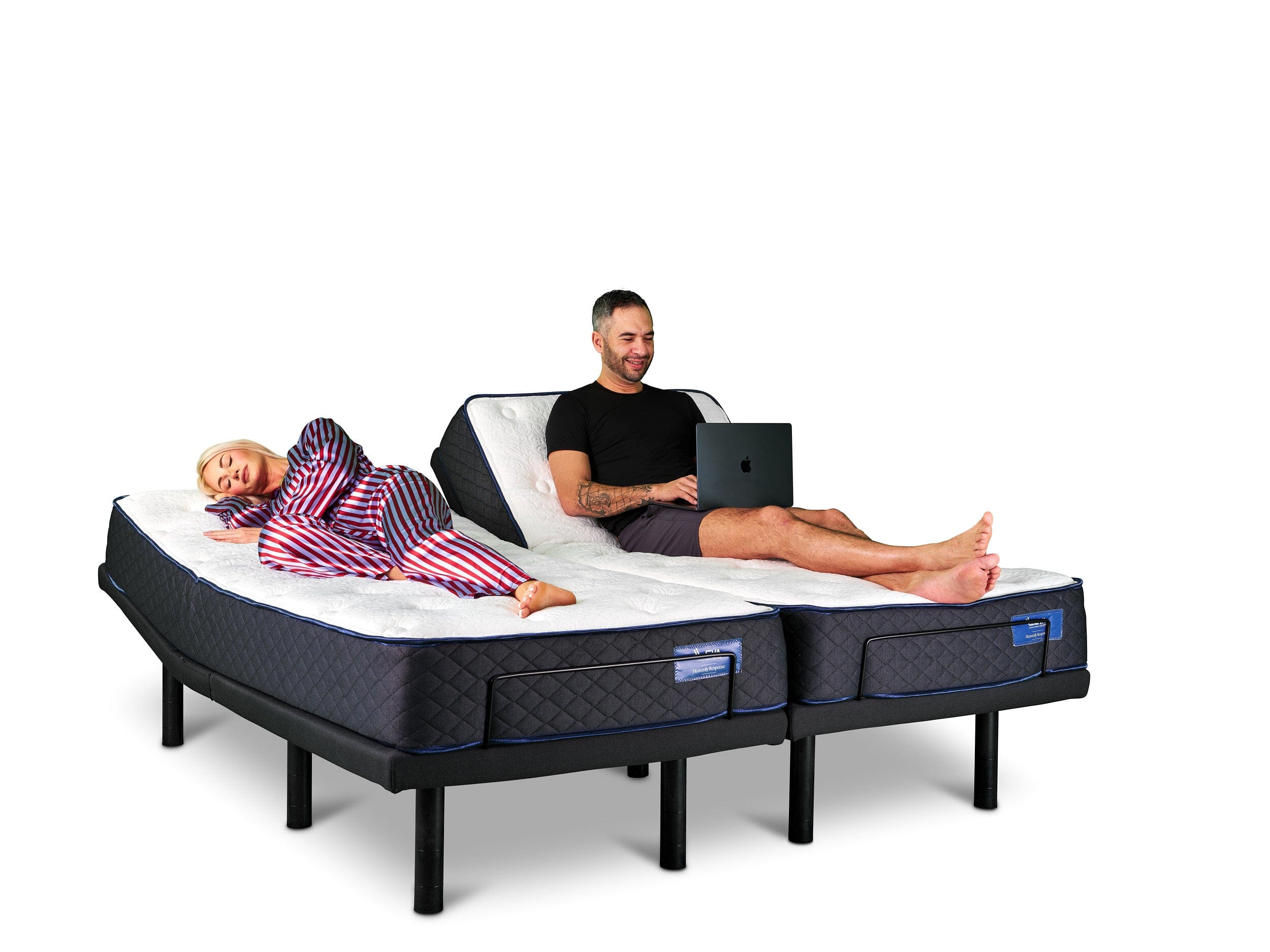
- Split Queen and Split King configurations let couples keep independent elevation and comfort settings without sacrificing either partner’s medical needs.
- Health Canada classifies many Hi-Lo beds as medical devices, so buyers should verify licensing, warranty length, and financing options before purchase.
- Leva Sleep offers purpose-built adjustable bed packages with white-glove delivery and competitive pricing, so you can explore Leva Sleep’s medical-grade adjustable bed packages and match them to your medical requirements.
Condition-Specific Features for Seniors and Medical Users
Different medical conditions require different clinical features. The table below outlines the minimum recommended features caregivers and patients should verify before purchasing any adjustable bed for home medical use in Canada.
| Condition | Essential Features | Helpful Add-Ons |
|---|---|---|
| Parkinson’s Disease | Low platform height for safe exit, locking casters, side rail compatibility | Wireless remote, vibration massage to reduce rigidity |
| Multiple Sclerosis | Variable height range, zero-gravity positioning, quiet motor | App control for limited hand dexterity, lumbar support |
| Stroke Recovery | Hi-Lo height range, caregiver-accessible transfer height, side rails | Trendelenburg positioning, pillow tilt motor |
| Sleep Apnea | Head elevation (minimum 30–45°), anti-snore mode | CPAP-compatible positioning, app-controlled micro-adjustments |
| Hip/Knee Pain | Foot elevation, zero-gravity preset, adjustable lumbar support | Massage zones, pressure-relieving mattress pairing |
| Post-Surgery Recovery | Trendelenburg and reverse Trendelenburg, low exit height, side rail mounts | Independent head/foot control, quiet motor for night adjustments |
When you evaluate any model, ask the retailer to confirm the exact height range in centimetres, the motor decibel rating, and whether side rails are included or sold separately. These specifications are not standardized across brands and must be verified directly.
Hi-Lo Beds vs Lifestyle Bases for Mobility Challenges
The core mechanical difference between a Hi-Lo bed and a standard adjustable base is platform height travel. A true Hi-Lo bed lowers to approximately 15–20 cm from the floor to reduce fall risk during unassisted transfers and raises to approximately 70–80 cm to allow caregivers to assist without bending. A standard lifestyle adjustable base sits at a fixed frame height, typically 30–40 cm, and adjusts only the head and foot articulation angles.
For mobility-impaired users, apply the following evaluation criteria.
- Height range: Confirm the lowest and highest platform positions in centimetres, not just a vague “adjustable” label.
- Trendelenburg capability: Verify whether the entire platform tilts head-down and feet-up or only the foot section elevates.
- Side rail compatibility: Confirm whether the frame accepts standard homecare side rails and whether rails are included.
- Safe-transfer height: The raised position should align with the user’s knee height to allow a standing transfer without a step.
- Motor noise: Request a decibel rating. Whisper-quiet German motors, such as those used in Leva Sleep bases, minimize sleep disruption during night adjustments.
- Locking casters: Locking casters are essential for preventing bed movement during transfers.
Standard lifestyle bases from brands like Endy or Silk & Snow do not meet Hi-Lo clinical criteria. They work for comfort elevation but not for safe transfers or caregiver-assisted positioning.
Compare Leva Sleep’s Hi-Lo models using the feature checklist above to verify they meet your condition requirements.
Adjustable Bed Solutions for Couples with Medical Needs
The clinical features outlined above become more complex when two people share a bed. When one partner requires clinical elevation settings and the other does not, a split configuration usually keeps both partners in the same bed comfortably.
Split Queen and Split King adjustable bases divide the mattress surface into two independently controlled zones, each with its own motor, remote, and articulation range. A Split King uses two Twin XL mattresses on two independent bases pushed together. A Split Queen, a configuration Leva Sleep specializes in, uses two narrower mattresses on two independent bases, offering the same independent control in a more space-efficient footprint suited to standard Canadian bedrooms.
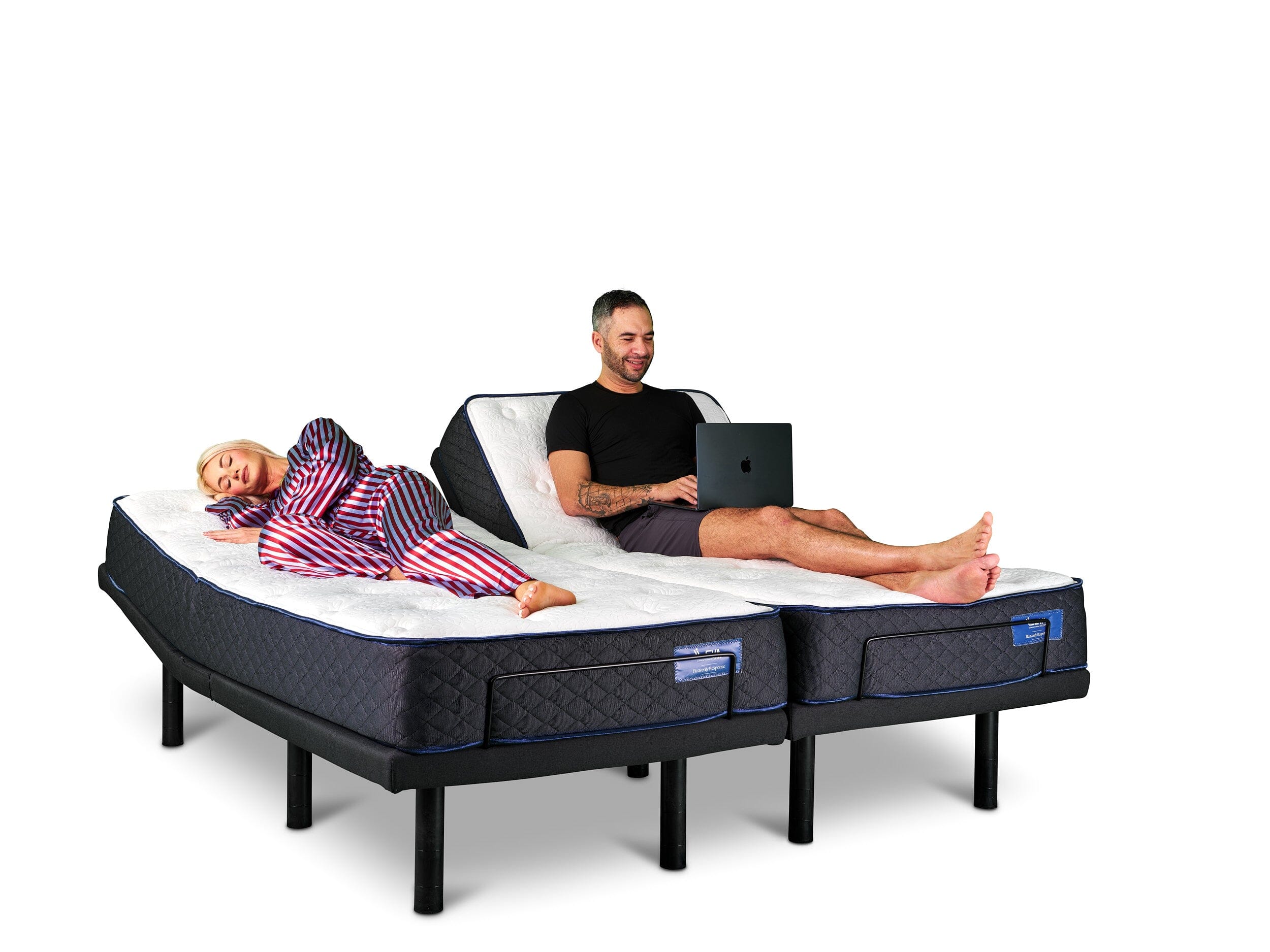
For couples where one partner manages sleep apnea and the other has hip pain, each side can be set to a different elevation, firmness pairing, and massage zone without any mechanical compromise to the other side. Leva Sleep’s app-controlled bases allow custom sleep position presets, so a partner can return to their therapeutic position after a night-time adjustment without waking the other.
When you evaluate split systems, confirm that the gap between the two mattresses is minimized by the manufacturer’s design, that the bases can be synchronized for couple-friendly features like a simultaneous flat position, and that the app supports individual profiles per side.
Transfer Safety and Caregiver Support Features
Safe patient transfer is the most critical functional requirement for home medical beds. Caregivers should evaluate the following features before purchase, focusing on getting into bed, repositioning while in bed, and getting out safely.
- Safe-transfer height: The raised platform should align with the patient’s knee height, typically 50–55 cm for average adults, to allow a standing pivot transfer during entry and exit.
- Side rails: Half-length assist rails mounted at the upper third of the bed allow patients to reposition independently without full caregiver assistance, which reduces risk during in-bed repositioning.
- Locking casters: Four-point locking casters prevent lateral movement during transfers and protect both the entry and exit moments.
- Motor response time: Slow, smooth motor travel reduces the risk of sudden positional changes that could destabilize a patient mid-transfer, especially while repositioning.
- Emergency flat function: A one-touch return to flat is essential for emergency repositioning across all three transfer stages.
White-glove delivery services, such as those offered by Leva Sleep in Ontario and Alberta, include on-site height adjustment to the patient’s specific transfer height, which is not possible with drop-shipped or self-assembled beds.
Mattress Choices that Support Pressure Relief
An adjustable base requires a mattress that flexes without damaging its internal structure. Innerspring mattresses with rigid border wires are incompatible with articulating bases. The following mattress types are appropriate for medical adjustable bed use.
- All-foam mattresses: These offer the highest flexibility and suit full articulation ranges, including Trendelenburg. Leva Sleep’s all-foam models are designed specifically for their bases.
- Hybrid pocket coil mattresses: Individually wrapped coils flex independently, which makes them compatible with most adjustable bases. Leva Sleep’s hybrid models and partner brands including Simmons, Beautyrest, Serta, and Kingsdown are validated for use with articulating frames.
- Tempur-Pedic: Tempur material is inherently flexible and pressure-relieving, which suits users with hip, knee, or post-surgical pressure sensitivity. Leva Sleep carries Tempur-Pedic mattresses paired with its own adjustable bases.
For pressure injury prevention in immobile or post-surgical patients, confirm that the mattress carries a pressure-redistribution specification from the manufacturer. Pair this with Leva Sleep’s purpose-designed fitted sheets with deep pockets and extra elastic, which prevent sheet slippage during elevation changes and reduce skin friction in medical home settings.
Canadian Homecare Rules and Bed Financing
In Canada, Health Canada classifies medical devices into four risk classes under the Medical Devices Regulations. Homecare Hi-Lo beds with powered height adjustment may be classified as Class I or Class II devices depending on their intended clinical use. Buyers should ask retailers whether their product carries a Health Canada medical device establishment licence number, particularly if the purchase is intended for insurance reimbursement or tax credit purposes.
Financing options vary by retailer. Leva Sleep offers direct-to-consumer pricing that is 30–50% below comparable luxury competitors, which reduces the financing burden for a $3,000–$5,000+ purchase. Verify current financing terms, insurance reimbursement eligibility, and any applicable provincial assistive device program coverage directly with Leva Sleep at the time of purchase, because program criteria change.
Pricing and Delivery Options Across Retailers
The table below compares the general market positioning of adjustable bed categories available to Canadian buyers. All figures are approximate CAD ranges, so verify current pricing directly with each retailer.
| Category | Approx. CAD Price Range | White-Glove Delivery | Split Configuration Available |
|---|---|---|---|
| Medical Hi-Lo (e.g., Orthex) | approx. $3,700–$4,300 | Varies; often third-party | Limited |
| Lifestyle bases (e.g., Endy, Silk & Snow) | Varies by model | Curbside or threshold only | No |
| General retailers with adjustable add-ons (e.g., Sleep Country) | from $800 to $4,000+ CAD | Varies by location | Limited models |
| Leva Sleep | Varies by model | In-house white-glove, includes old-bed removal, Ontario & Alberta | Split Queen & Split King |
Leva Sleep’s in-house white-glove delivery, detailed in the Transfer Safety section above, is performed by trained Leva staff rather than third-party contractors and covers bedroom delivery, full assembly, height adjustment, product tutorial, and old-bed removal.
Review Leva Sleep’s current pricing and delivery coverage in your province before you finalize your purchase.
Frequently Asked Questions
What warranty length should I expect on a medical adjustable bed in Canada?
Warranty terms vary significantly between medical suppliers and consumer brands. For home medical use, a minimum of three to five years on the motor and frame is a reasonable baseline to request. Leva Sleep offers warranty coverage on its bases and motors, so confirm the specific terms for the model you select directly with the company, because coverage can differ between entry-level and premium configurations. Always ask whether the warranty covers in-home service or requires the unit to be returned.
How loud are the motors on adjustable beds, and does noise matter for medical users?
Motor noise matters for medical users who adjust their position multiple times per night, for example to manage sleep apnea or relieve hip pressure. Loud motors disrupt both the user and their partner. Leva Sleep uses the German motors mentioned earlier, which are engineered for low decibel output during articulation. When you evaluate any adjustable bed, request the motor’s decibel rating and, where possible, observe a demonstration before purchasing.
Can I use a CPAP machine with an adjustable bed?
Yes. An adjustable bed with head elevation is compatible with CPAP therapy and can complement it. Elevating the head of the bed between 30 and 45 degrees reduces airway collapse, which may lower the pressure settings required by a CPAP machine for some users. Leva Sleep’s anti-snore mode, launching spring 2026, makes automatic micro-adjustments to head elevation in response to detected snoring, which offers an additional layer of airway management. Always consult your sleep physician before modifying CPAP settings based on positional changes.
What is the return policy for adjustable beds purchased for medical use?
Return policies for adjustable beds vary by retailer and are more complex than standard mattress returns because of the mechanical components involved. Confirm the trial period length, whether returns are accepted after the bed has been assembled and used, and who bears the cost of return shipping or pickup. Leva Sleep’s return terms should be confirmed directly at the time of purchase. Given the white-glove delivery model, returns are handled by Leva’s own team rather than a third-party carrier.
Is a split adjustable bed practical for a couple where only one partner has a medical condition?
A split configuration is the most practical solution in this scenario. It allows the partner with a medical condition to use clinical elevation settings, such as head elevation for sleep apnea or foot elevation for post-surgical swelling, while the other partner sleeps flat or at a different angle entirely. Leva Sleep’s Split Queen and Split King bases use independent motors and app profiles for each side, so neither partner’s therapeutic or comfort settings interfere with the other’s.
Conclusion: Using This Guide to Choose Your Bed
Selecting the best adjustable bed in Canada for a medical condition requires careful evaluation of platform height range, Trendelenburg capability, side rail compatibility, motor noise, mattress flexibility, and delivery logistics, not just head and foot articulation angles. For couples where one partner has clinical needs, a Split Queen or Split King configuration is usually the only solution that avoids separate sleeping arrangements.
Leva Sleep’s 15–20 model lineup, the low-noise motors discussed above, and in-house white-glove delivery across Ontario and Alberta build a strong value proposition for Canadian caregivers and patients. The pricing advantage mentioned earlier further strengthens this position. Use the condition-to-feature matrix and pricing table in this guide as your evaluation checklist, then verify each specification directly with the retailer before committing.
Start your search with Leva Sleep’s condition-specific bed selector and verify each specification against your medical checklist today.