
Key Takeaways
- Mattress compatibility affects comfort, durability, and warranty coverage when you use an adjustable bed.
- Memory foam, latex, and many pocketed-coil hybrids flex well on adjustable bases, while traditional innerspring, water, and many air or pillow-top mattresses often do not.
- Factors like thickness, firmness, flexibility, and material quality all influence how smoothly a mattress works on an adjustable frame.
- Split configurations and thoughtfully designed mattresses help couples with different sleep needs share one adjustable bed comfortably.
- Leva Sleep offers Canadian-focused adjustable bed packages with mattresses and bases designed to work together for reliable comfort and value, available here.
Why Choosing a Compatible Mattress Protects Your Adjustable Bed Investment
Mattress compatibility affects how well your adjustable bed performs and how long both products last. Many popular mattresses are not built to flex repeatedly with an articulating base.
Incompatible mattresses often include inflatable beds, interconnected innerspring coils, water beds, and some pillow tops that lack flexibility. These options can wear out quickly, bend awkwardly, or even void manufacturer warranties when used on adjustable frames.
For Canadian sleepers dealing with back pain, circulation issues, snoring, or different firmness needs, an incompatible mattress can reduce the benefits of an adjustable bed. Climate factors such as temperature swings and humidity also make durable, well-engineered materials important, especially when those materials flex every night.
Mattress Types that Work Best on Adjustable Bed Frames
Memory Foam Mattresses: Close-Conforming Support
Memory foam and latex mattresses tend to be the most compatible with adjustable beds because they mould and adapt without losing shape. Memory foam bends easily with the base and returns to its original form, even after many position changes.
This contouring support helps reduce pressure points when you elevate your head or feet. It also limits motion transfer, which benefits partners sharing a bed when one person changes position more often.
Latex Mattresses: Responsive and Long-Lasting
Latex mattresses usually work well on adjustable bases because the material springs back after compression. The surface feels more responsive than classic memory foam and often provides strong edge-to-edge support.
Natural latex has antimicrobial and hypoallergenic qualities, with more temperature-neutral performance than many foams. These traits appeal to Canadians who want a durable, lower-maintenance mattress that still flexes safely on an adjustable frame.
Hybrid Mattresses with Pocketed Coils: Balance of Support and Flexibility
Hybrids that use individually pocketed coils can also pair well with adjustable beds. Each coil moves independently, so the mattress can bend without creating large stress points.
The combination of coils for support and foam for comfort can suit couples with different preferences. The coil core also encourages airflow, which helps with temperature regulation while the comfort layers provide pressure relief and motion control.
Mattress Types to Avoid on Adjustable Bases
Traditional innerspring mattresses with interconnected or Bonnell coils are generally least compatible because they are too rigid. Bending these systems can damage the coils, reduce comfort, and strain adjustable bed motors.
Water beds, inflatable air mattresses, and many conventional pillow-top designs also lack the structural flexibility needed for repeated articulations. Using these mattresses on an adjustable base can limit your positioning options and shorten the lifespan of both products.
Key Factors Beyond Mattress Type for Adjustable Bed Compatibility
Flexibility and Construction Quality
Mattress flexibility determines whether it can bend and return to shape repeatedly without damage. The internal design must allow the mattress to move at the head, foot, and middle without creating weak points.
Mattresses built for adjustable bases typically use layered foams, latex, or pocketed coils arranged so stress is spread out, not concentrated at a single bend line. This design helps maintain comfort and structure over years of daily use.
Mattress Thickness and Height on Adjustable Bases
A thickness of about 10 to 14 inches usually offers the best balance of comfort and flexibility for adjustable beds. Thicker mattresses can limit how far the base can move and may put more strain on the motors.
Very thin mattresses may not provide enough cushioning at higher angles. Leva Sleep designs mattress options in this ideal range to support pressure relief while still allowing full motion on adjustable frames, available in their adjustable bed packages.
Firmness and Comfort on an Adjustable Frame
Ultra firm or extra firm mattresses often prove too rigid for adjustable beds. Very firm models can create internal gaps or cracks in foam layers when bent.
Medium and medium-firm mattresses usually offer a more practical mix of support and give. This range helps maintain spinal alignment in both flat and elevated positions while still allowing the mattress to move smoothly with the base.
Durability and Weight Distribution Over Time
Durable materials matter more on adjustable beds than on fixed frames, because the mattress flexes repeatedly. High-density foams, quality latex, and robust pocketed coils handle this movement better and keep their shape longer.
Well-designed mattresses also manage weight distribution so pressure is not focused at the hinges of the base. Features like reinforced edges and transition zones can improve stability and comfort whether the bed is flat, partially raised, or in a zero-gravity-style position.
How Leva Sleep Aligns Mattresses and Adjustable Bases for Canadians
Leva Sleep builds its adjustable bed systems so the mattress and base work as one unit. The company focuses on all-foam and hybrid mattresses with pocketed coils that are engineered to move cleanly with their adjustable frames and motors.
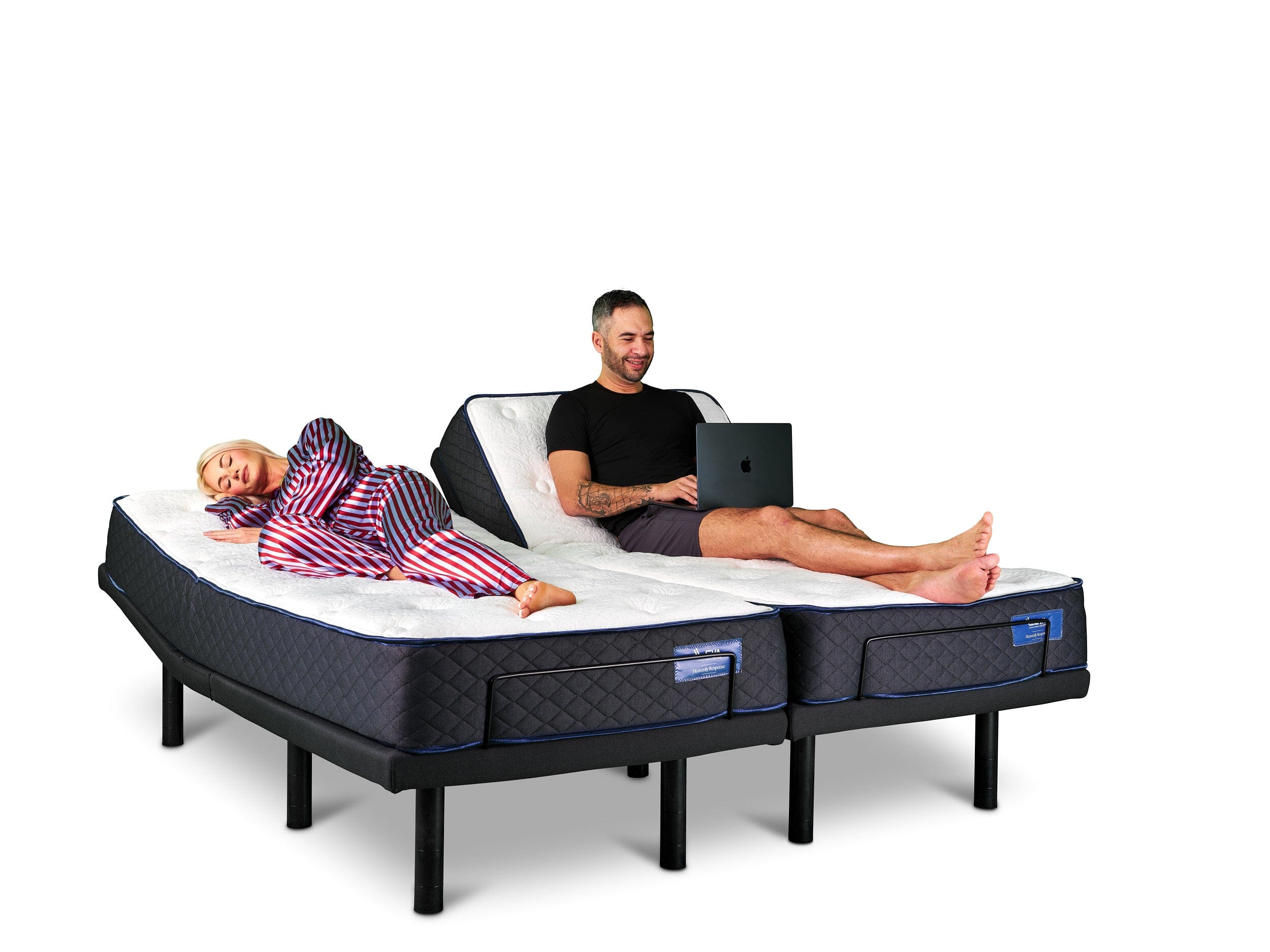
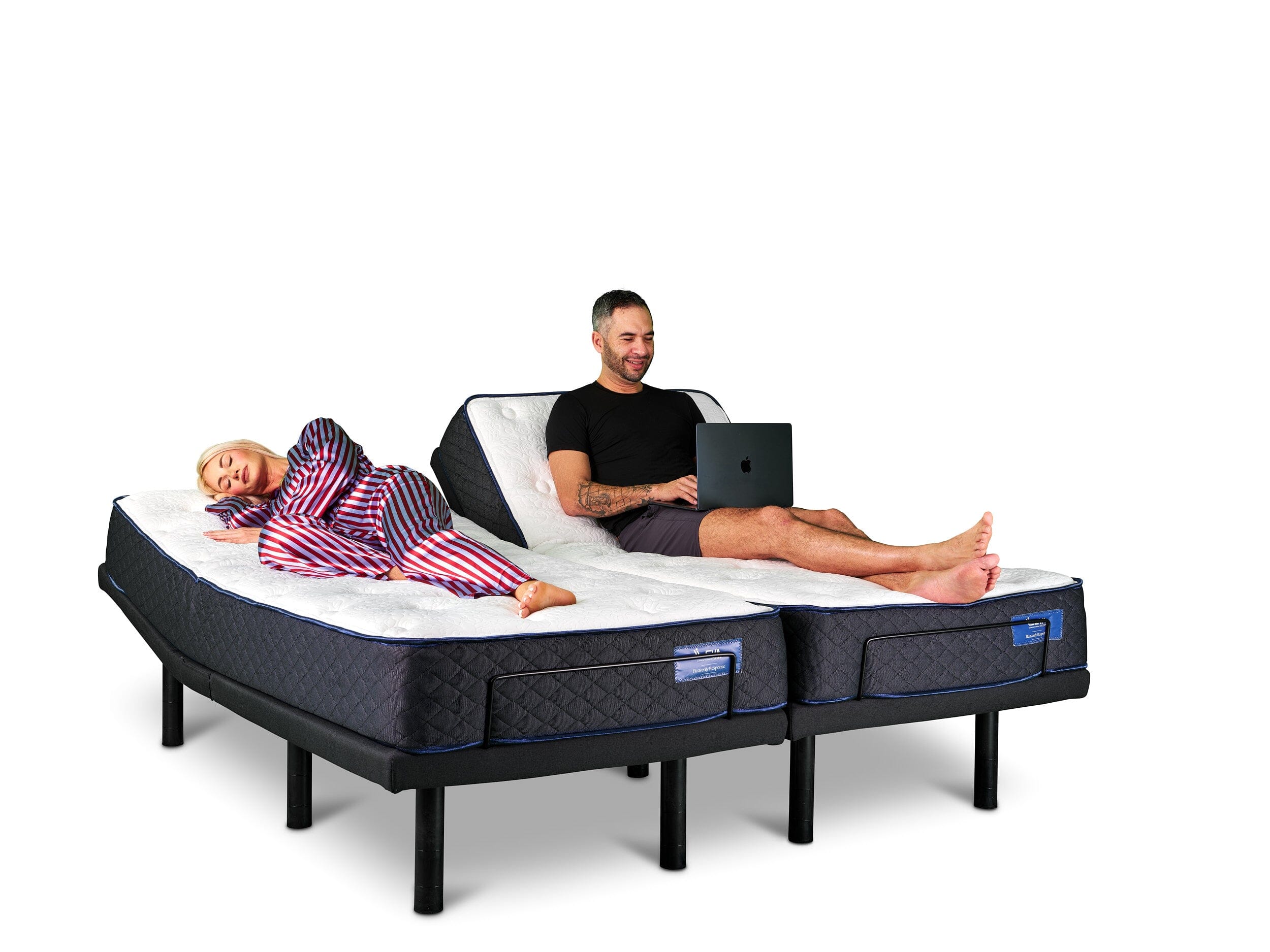
Split King and Split Queen options allow each partner to choose their own position while still sharing one overall bed size. The mattresses are designed so each side supports the sleeper comfortably, even when one person is sitting up and the other is lying flat.
Features like lumbar control, pillow tilt, and a planned anti-snore mode expected in spring 2026 are paired with mattresses that can handle frequent micro-adjustments. This alignment helps protect both the mattress and base while improving everyday usability.
|
Feature |
Leva Sleep Mattresses |
Generic Adjustable-Friendly Mattress |
Traditional Mattress |
|
Flexibility testing |
Designed and tested for adjustable use |
General flexibility claims |
Not tested for adjustable use |
|
Thickness optimisation |
Kept within ideal range for articulation |
Highly variable |
Often too thick or too thin for flexing |
|
Split system design |
Built for independent controls and shared use |
May fit splits but not tailored |
Usually not designed for split setups |
|
Durability on adjustable bases |
Warranty supports adjustable bed use |
Limited or conditional coverage |
Often excludes adjustable frames |
Canadian shoppers who want fewer compatibility concerns can select packages where the base and mattress are already matched, as offered by Leva Sleep.
Supporting Different Comfort Needs for Couples
Many couples in Canada share a bed but have different sleep needs. One partner may need more elevation for snoring or mild sleep apnea, while the other prefers a flatter surface and different firmness.
Leva Sleep addresses this with Split King and Split Queen systems that combine separate adjustment zones with compatible mattresses. Each person can set their own angle for head and feet while the mattress still supports both sleepers without a large ridge or gap in the middle.
For people managing hip or knee pain, circulation issues, or post-injury recovery, these adjustable positions can make it easier to get comfortable. Feedback from customers and referrals from sleep clinics help guide ongoing refinements to these systems.
Frequently Asked Questions About Adjustable Bed Mattress Compatibility
Can I use my existing mattress with an adjustable bed?
Compatibility depends on how your current mattress is built. Memory foam, latex, and many pocketed-coil hybrids often flex well on adjustable bases. Traditional innerspring mattresses with connected coils, water beds, and very firm models usually do not perform well and may be damaged when bent repeatedly. Mattresses designed and warranted for adjustable use, such as those in Leva Sleep packages, provide more predictable performance.
What thickness works best for adjustable bed mattresses?
Most people do well with a mattress between 8 and 14 inches thick, with 10 to 12 inches as a common sweet spot. This range offers enough comfort layers to cushion joints without making the mattress so tall that it restricts movement of the base. Very thick models can limit articulation and stress the motors, while very thin ones may feel too firm at higher angles.
Are firm mattresses a good match for adjustable beds?
Moderately firm mattresses can work, but extremely firm ones are usually not a good fit. Mattresses that barely bend can create internal stress points and may not contour well in raised positions. Medium or medium-firm options tend to provide a better mix of support, flexibility, and comfort on an adjustable frame.
Conclusion: Setting Up an Adjustable Bed System that Works Long Term
A compatible mattress makes an adjustable bed more comfortable, more reliable, and easier to live with over the long term. Material type, thickness, firmness, and durability all influence whether your mattress and base will keep performing well together.
Canadian couples who want a straightforward path to compatibility can pick an integrated system where the mattress and base are already engineered to match. Leva Sleep focuses on this approach with Canadian homes in mind, offering split and standard sizes, tested flexibility, and warranty coverage for adjustable use.
Browse Leva Sleep adjustable bed packages to compare mattress types, sizes, and features that can support better sleep in 2026 and beyond.