Key takeaways
- Partner disturbance includes snoring, movement, bathroom trips, and different comfort needs, and often affects both sleep and relationship quality.
- Snoring, sleep apnea, and restless movement are major causes of fragmented sleep for couples, and they can increase stress and conflict.
- Adjustable beds create independent sleep zones so each partner can choose their own position and support without disturbing the other.
- Leva Sleep adjustable beds add quiet motors, anti-snore settings, and specialized bedding to reduce night-time disruptions for couples.
- Couples across Canada can explore Leva Sleep adjustable bed packages to support more restful, shared sleep together, with flexible split configurations for partners.
The problem: How partner disturbance affects sleep and relationships
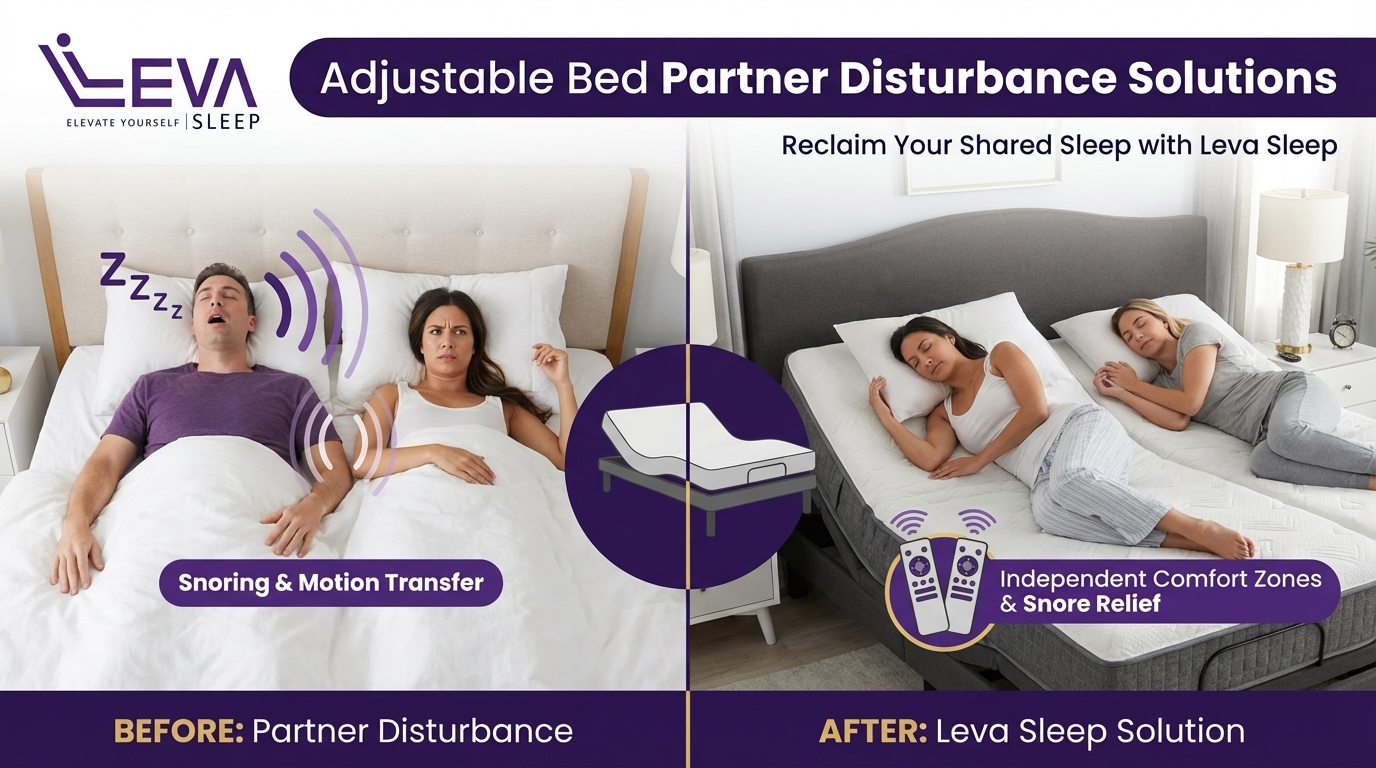
Partner disturbance affects many couples in Canada, and goes far beyond the occasional elbow or late-night return to bed. Multiple issues often occur at the same time, and together they can lead to persistent sleep loss and ongoing tension.
Snoring and sleep apnea are among the most common and disruptive issues. Many people share a bed with a partner whose breathing changes during the night, which can wake both partners and reduce deep, restorative sleep. Sleep-disordered breathing such as obstructive sleep apnea often appears alongside relationship strain, and partners of snorers report higher rates of insomnia and unhappiness.
Night-time movement and frequent bathroom trips add more disturbance. One partner may toss and turn or shift positions often, while the other wakes repeatedly when the mattress moves. Common partner-related sleep disruptions include insomnia, repeated bathroom visits, and restless movement, and these patterns can fragment sleep throughout the night.
Different comfort preferences and schedules can make things harder. One person may prefer a firm surface while the other wants more cushioning. One might sleep hot while the other feels cold. Light use, device screens, reading in bed, or early alarms can disrupt a partner whose schedule or sleep style is different.
The impact reaches beyond feeling tired. More than half of people with ongoing sleep issues report relationship stress, and many report arguments linked to poor sleep. Sleep loss can increase emotional reactivity and reduce patience, which raises the risk of conflict between partners.
Many couples eventually sleep apart when these issues pile up. Nearly one third of couples report sleeping separately because of partner-related sleep issues, a trend often called “sleep divorce.” Chronic poor sleep in relationships increases conflict frequency and reduces empathy, which can affect the relationship well beyond bedtime.
How adjustable beds reduce nightly partner disturbance
Adjustable beds give couples a way to share a bed while still meeting different sleep needs. Traditional flat beds offer a single position and surface, so one or both partners often compromise on comfort or health needs.
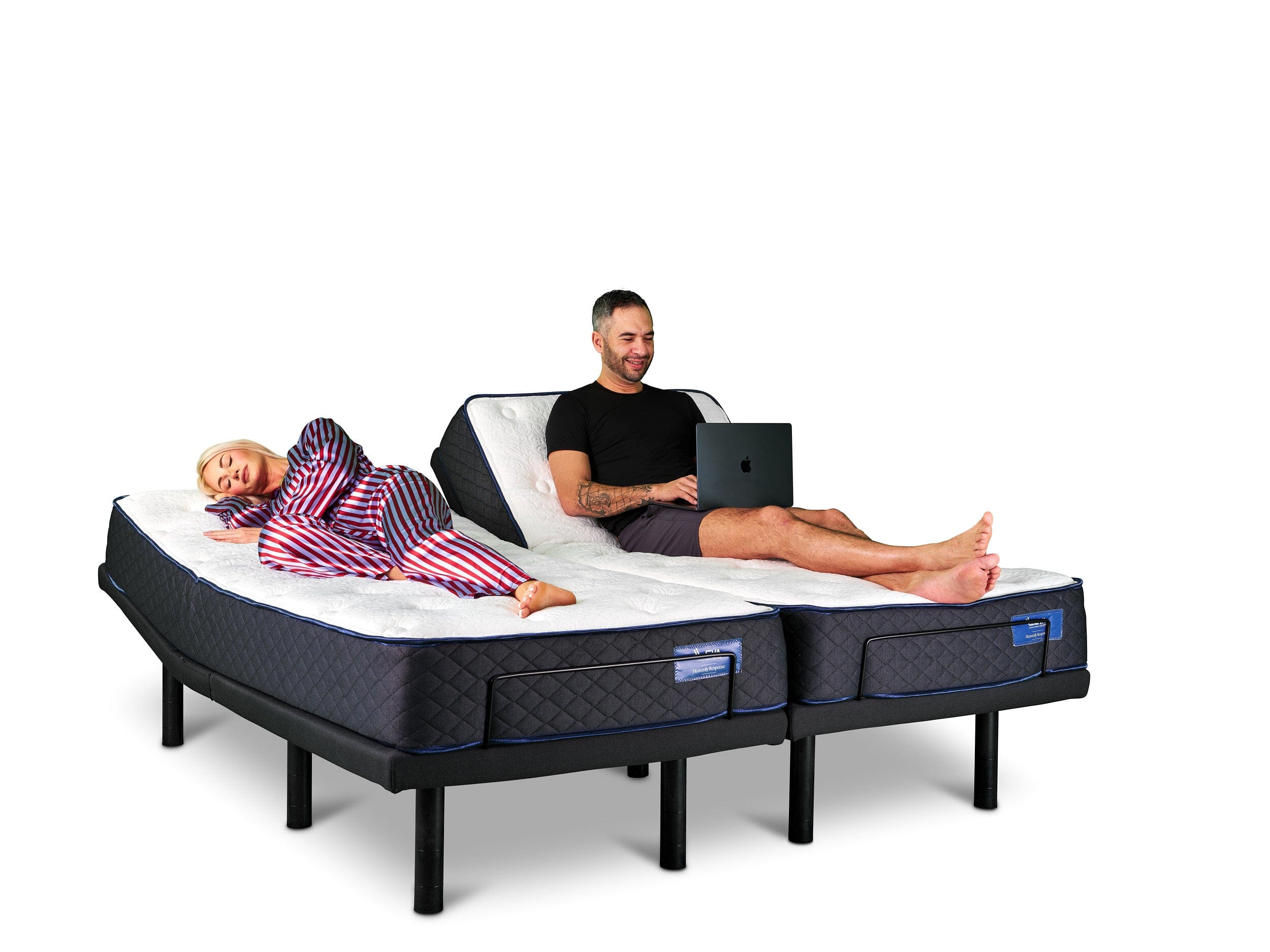
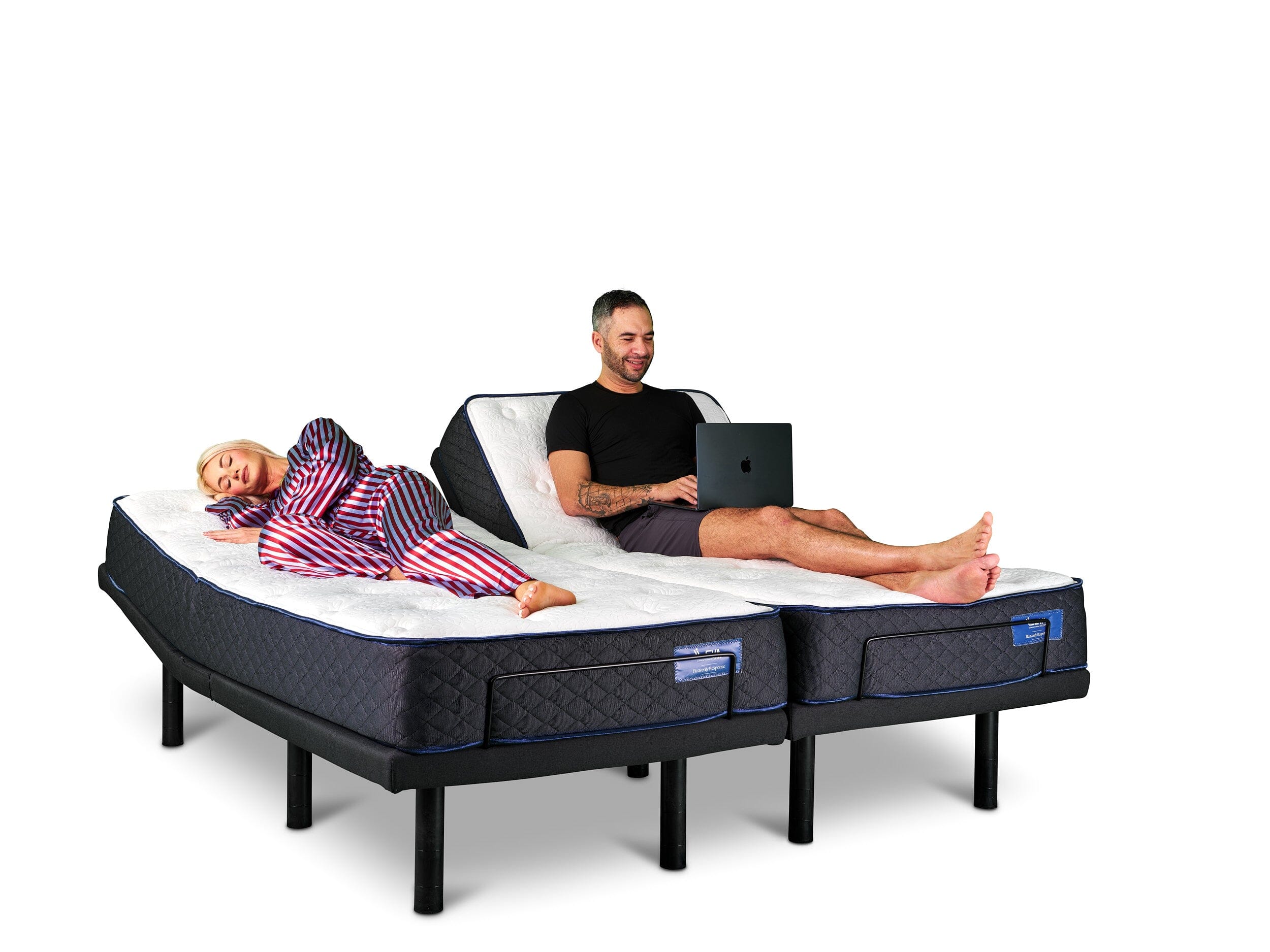
Adjustable bases allow each side of the bed to move independently. One partner can raise the head to ease snoring or reflux, while the other remains flat. Each person can choose a position that supports their body and medical needs without affecting the other side.
Current adjustable systems use quiet motors, smooth movements, and preset positions to support quick changes during the night. Couples can make these adjustments with minimal noise and motion, which helps protect a partner’s sleep.
Couples who want to explore this option can review the full range of Leva Sleep adjustable packages at Leva Sleep adjustable bed bundles.
Leva Sleep adjustable bed features that help couples sleep better
Leva Sleep focuses on adjustable bed packages that address the most common partner disturbance issues while still supporting shared sleep and connection.
Key features that help couples manage disturbance include:
- Split King and Split Queen adjustable bases with independent controls, so each partner can adjust elevation, massage, and position on their own side. The Split Queen offers these benefits in a space-saving size.
- Whisper-quiet German motors that limit operational noise, so night-time position changes are less likely to wake a partner.
- Anti-snore settings that provide gentle head elevation to help reduce snoring and support more stable breathing patterns.
- Adjustable-bed-specific accessories, including fitted sheets with extra elastic, duvet clips, and remote pockets, designed to stay in place while the base moves.
- A direct-to-consumer model that offers advanced features and Canadian-made structural components with strong value for Canadian households.
Couples can review complete bed packages, including bases and compatible mattresses, at Leva Sleep adjustable bed packages.
How Leva Sleep adjustable beds improve the shared sleep experience
Leva Sleep designs its adjustable beds to target the main sources of partner disturbance, from snoring to motion transfer, while supporting each partner’s comfort and health needs.
Reducing snoring and supporting sleep apnea
The anti-snore position gently raises the head area to help keep airways more open. Treating sleep-disordered breathing improves both sleep quality and marital satisfaction, so even small reductions in snoring can benefit both partners.
For people with sleep apnea, an elevated upper body can support recommended positions and work alongside medical therapies. This approach can make it easier for couples to remain in the same bed while managing symptoms.
Giving each partner an independent comfort zone
Split King and Split Queen bases let each partner fine-tune their side of the bed. One person can elevate the head and legs, choose a favourite preset, or use massage, while the other keeps a different position. This flexibility reduces the need to compromise on comfort or medical positioning.
This setup often helps couples stay in the same room and bed, even when one partner needs special positioning for back pain, reflux, or circulation concerns.
Limiting motion transfer between partners
Leva Sleep adjustable bases focus on motion isolation so that movement on one side affects the other side less. When one partner gets in or out of bed, or changes position, the motor action and mattress movement stay more localized. Quiet motors further limit sound-related disturbance.
Supporting health needs for both partners
Adjustable bases can support a variety of health-related goals that otherwise might push partners into separate beds. Positions such as gentle leg elevation or zero-gravity style setups can help with back pressure, swelling, or circulation. When each partner can select their own health-focused position, overall movement and discomfort tend to drop, which benefits both people.
|
Feature |
Leva Sleep adjustable bed |
Traditional flat bed |
|
Partner disturbance |
Reduced through independent zones and motion isolation |
Often high, both partners share every movement |
|
Personalized comfort |
Side-by-side, independently adjusted positions |
Single shared surface and position |
|
Snoring support |
Anti-snore head elevation and flexible positioning |
Limited options without extra equipment |
|
Motion transfer |
Engineered to limit transfer between sides |
Movement often spreads across entire bed |
Answers to common questions about adjustable beds for couples
Adjustable bed impact on snoring
Leva Sleep adjustable beds use controlled head elevation to help reduce snoring for many users. The anti-snore position raises the upper body slightly, which can support clearer breathing and quieter nights for both partners. Results vary from person to person, but even modest improvements can make shared sleep more manageable.
Comfort options for partners with different preferences
Split King and Split Queen models give each partner independent control of their side using a remote or app. One partner can choose a flatter, firmer-feeling position, while the other selects more elevation or massage. This independence helps couples with very different comfort preferences share the same bed.
Noise level and ease of use at night
Leva Sleep beds use quiet German motors and simple controls so that adjustments are straightforward and discreet. Preset buttons for positions such as zero gravity and anti-snore reduce the need for trial and error. Couples can make changes during the night with minimal noise and disruption.
Support for medical conditions that affect sleep
Adjustable beds can complement medical guidance for issues such as sleep apnea, acid reflux, snoring, swelling, and some types of back or joint pain. The ability to lift the head, raise the feet, or choose a zero-gravity style position may ease symptoms for some people, which can reduce tossing, turning, and night-time discomfort that might otherwise disturb a partner.
Reclaim shared sleep with an adjustable bed from Leva Sleep
Partner disturbance can cause ongoing fatigue, stress, and emotional distance, especially when snoring, movement, or medical needs make it hard to share a flat bed. Addressing these issues in a practical way helps protect both sleep quality and relationship health.
Leva Sleep adjustable beds offer split configurations, quiet operation, anti-snore support, and purpose-built bedding that aim to reduce common triggers for night-time conflict. Couples gain more control over their own comfort while still sharing the same bed.
Couples ready to explore a more flexible shared sleep setup can review current packages and configurations at Leva Sleep adjustable bed packages.