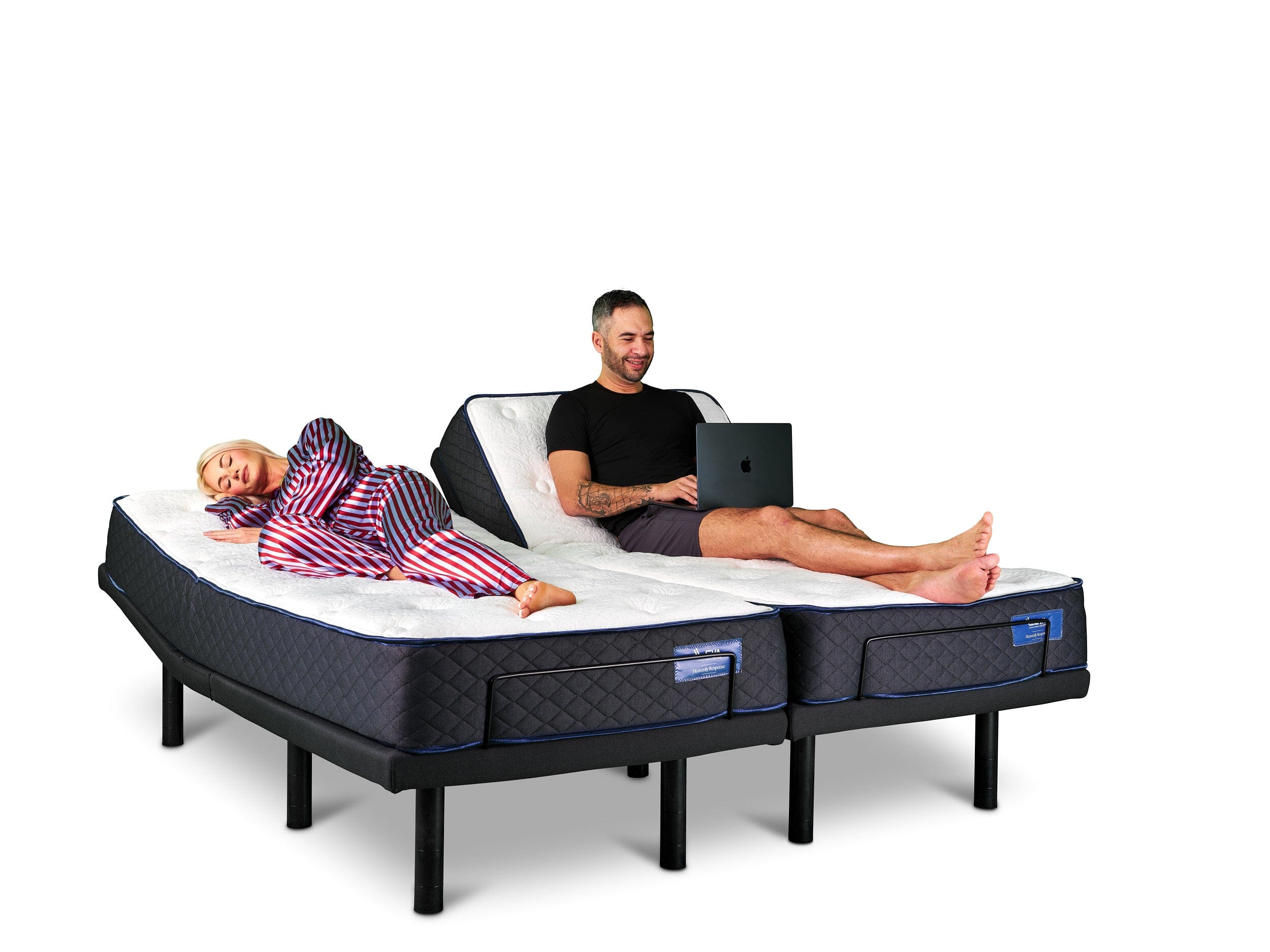
Adjustable bed weight capacity is a key factor for Canadians comparing modern bed bases. It affects comfort, safety, and how long your investment will last. Weight limits depend on how the frame distributes load, how the motors are engineered, and how the base is tested for safety. For couples, understanding these limits helps match a base to real-world use so the bed performs well for years.
Why Adjustable Bed Weight Capacity Matters for Long-Term Comfort and Safety
Weight capacity is more than a simple number on a spec sheet. It reflects the strength of the frame, the power of the motors, the safety margin built into the design, and how well the bed will hold up over time. Weight capacity is an often-overlooked but critical factor when buying an adjustable bed, as the total weight on the base (users, mattress, bedding) must not exceed the manufacturer’s limit, or it could void the warranty and compromise performance and safety.
Weight limits influence three main areas:
- Warranty protection, since using a bed above its rated limit can void coverage
- Mechanical longevity, because motors and joints work harder under heavier loads
- User safety, as overloaded frames and mechanisms are more prone to failure
Unlike traditional flat beds that support a stable load, adjustable bases must lift and hold weight through repeated movements. They raise and lower the head and foot sections while maintaining structural integrity and smooth motion under mechanical stress.
Higher weight capacity often reflects stronger frame materials, better motor systems, and more precise engineering. A robust adjustable base relies on high-strength frame materials, motor design, and engineering, all of which contribute to higher weight capacity and long-term durability.
Exceeding the rated limit can lead to early motor failure, bent or cracked frames, and lost warranty protection. For couples investing in an adjustable bed, understanding capacity helps protect comfort, safety, and the value of the purchase over time.
Understanding Adjustable Bed Weight Capacity: Static vs. Dynamic Load
Clear weight capacity labelling helps buyers compare bases and avoid overload. Capacity includes more than the simple maximum number listed in the product details.
Static vs. Dynamic Weight Ratings
A common maximum recommended load, including the mattress, is about 700 lbs, with weight spread evenly across the frame. This is the static rating. It describes how much weight the base can hold when it is flat and not moving.
Dynamic weight capacity describes how much weight the base can safely lift and move during adjustments. When the motors raise the head or foot, the load shifts and can place more stress on specific sections of the frame. The base is not intended to lift the full maximum static load on one section or at a steep angle.
This difference matters for split adjustable beds, where each side moves independently. Each side may carry a different load while the motors operate. Well-engineered bases are designed with these changing loads in mind and include safety margins to handle real-world use.
Calculating Your Total Weight Requirement
Accurate planning starts with a full picture of everything that will sit on the base. The total load typically includes:
- Combined user weight
- Mattress weight
- Bedding and accessories, such as pillows, toppers, or weighted blankets
- A safety buffer for future changes
Advertised weight limits usually cover all of these combined. That means mattress choice plays a major role. Heavier mattresses (like thick memory foam and latex) consume more of the weight limit, leaving less for user(s).
Mattress weight varies by construction. In a queen size, many memory foam models weigh about 80 to 120 pounds, while some latex and hybrid designs can reach 150 pounds or more. Mattresses made specifically for adjustable beds may weigh extra due to flexible cores and reinforced edges.
Consumers are advised to select a model with a weight capacity that exceeds their calculated requirement to ensure longevity and peace of mind. Choosing a base with about 15 to 20 percent extra capacity helps account for weight changes, added accessories, and long-term wear.
Shop Leva Sleep’s adjustable beds engineered with high-quality components for lasting durability.
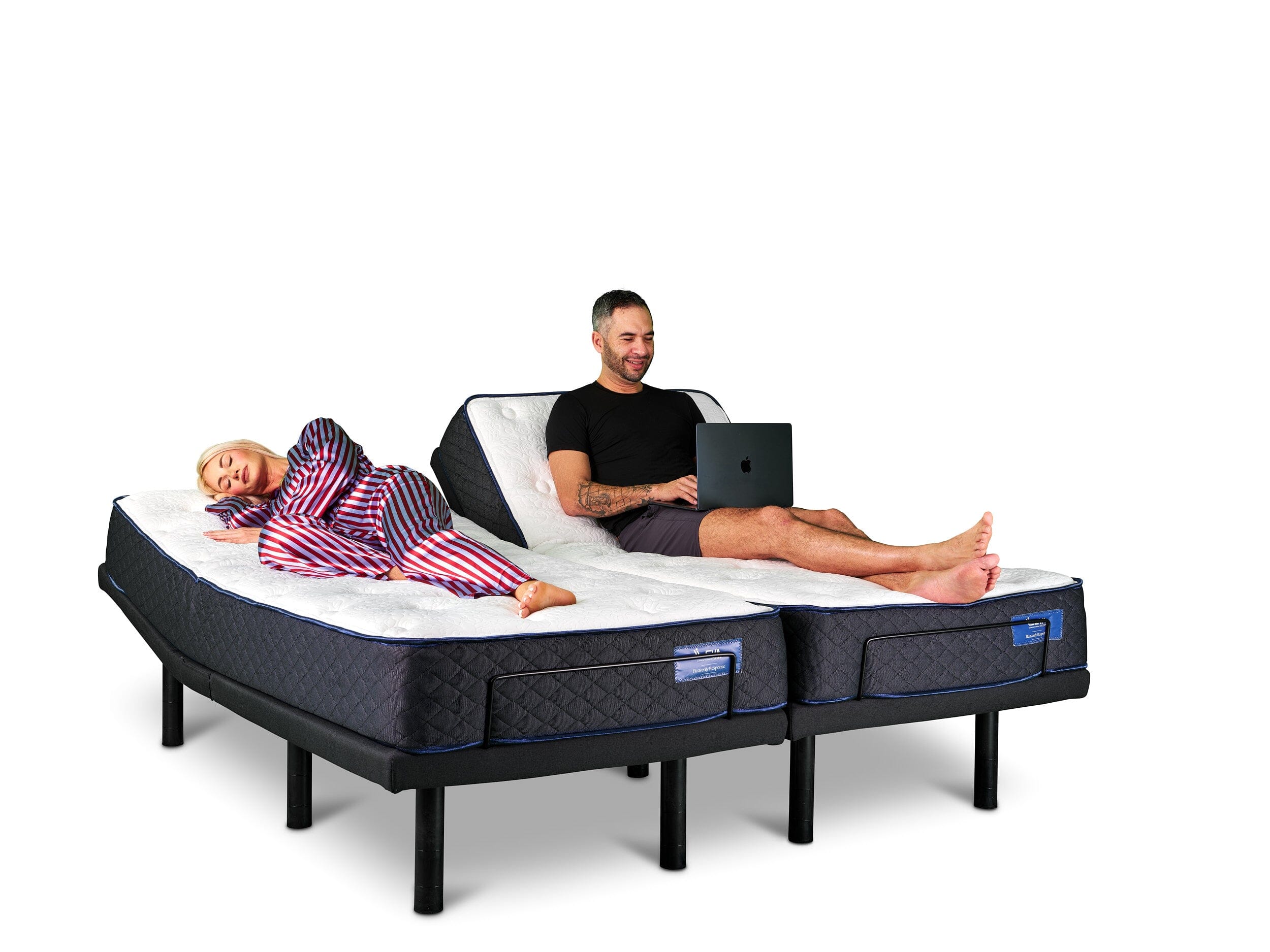
How Leva Sleep Engineering Supports Higher Weight Capacity
Engineering quality is a key difference between basic adjustable beds and premium systems. Understanding how a base is built makes it easier to compare options and judge long-term value.
Leva Sleep’s Robust Frame Construction
Premium frames can support up to 750 lbs or more on their own, before accounting for the mattress weight. Leva Sleep places strong focus on frame design, using durable materials and structural reinforcement to support regular use.
The company’s integrated approach to design and production allows tight control over frame specifications and quality checks. This reduces the risk of weak points that can occur when components are sourced from multiple suppliers without unified standards.
Canadian manufacturing standards further support consistent build quality. The result is a frame designed for stable support and smooth, quiet operation across the full range of adjustment.
Advanced Motor Systems for Reliable Support
Motor design is central to how an adjustable bed performs. Reliable motors must lift and lower the load many times over the life of the bed without strain. Leva Sleep uses whisper-quiet German motors that provide accurate movement and stable support under different conditions.
Using the bed beyond its rated weight can shorten motor life, reduce performance, and void the warranty. Leva Sleep selects motors with durability and load handling in mind, supporting consistent operation over years of use.
These motor systems help the base move smoothly under load. This combination of strength and control is a key difference between entry-level products and higher-quality adjustable beds.
Integrated Design for Lasting Performance
Superior engineering translates to better support, less mechanical wear, and lasting performance even under frequent use and higher loads. Leva Sleep focuses on how the frame, motors, and controls work together as a complete system.
This specialization in adjustable beds supports thoughtful design decisions, such as reinforcement in high-stress areas and reliable control systems. These details help maintain alignment, reduce noise, and extend the life of moving parts.
Quality control at each stage of production helps ensure that each bed performs as expected in real homes, not just in testing environments.
What To Expect From Adjustable Bed Weight Limits in Canada
Most adjustable beds sold in Canada fall within a fairly consistent range of weight capacities. Understanding these ranges makes it easier to see whether a particular base suits your needs.
The weight capacity for most adjustable beds on the North American market ranges from 600 to 1,000 lbs, which accounts for both mattress and users.
Quality queen-sized adjustable beds in Canada typically support a total weight of 700 to 1,000 lbs, accommodating most couples. This range balances cost, materials, and performance for many households.
Well-known brands often list total capacity, including mattress and users, around 650 lbs for standard models. Premium bases may be rated up to about 850 lbs, assuming the weight is spread evenly.
The Canadian regulatory environment also shapes how some adjustable bases are built and tested. In Canada, adjustable bases for beds used in medical or hospital settings must minimize hazards such as patient entrapment, side rail failure, and other risks, though most are regulated as Class I medical devices and do not require a device licence.
While residential adjustable beds are not classified as medical devices, many leading manufacturers apply similar testing and safety principles to home products. This practice has raised overall product quality and safety expectations in the Canadian market.
How To Balance Weight Capacity, Features, and Cost
Choosing an adjustable bed involves more than matching a capacity number. It also means balancing price, features, space, and long-term expectations.
For some couples with higher combined weight or specific health needs, it may be tempting to look at separate twin XL bases rather than a shared system. Separate bases can offer more individual capacity, but an integrated split system can provide similar support along with a shared look and easier setup.
Split king and California king models often state per-side weight capacities, enabling individual customization for each user. This can help when partners have noticeably different body weights or prefer different mattress types while still sharing one frame footprint.
Total cost of ownership should include more than the initial purchase price. It also covers potential repair or replacement costs if a base is undersized for the load, as well as any warranty issues that could arise from exceeding the stated capacity. Using a base at or near its maximum rating on a constant basis is not recommended.
It can also help to consider the benefits that are harder to quantify, such as changes in sleep quality, snoring, or comfort when reading or recovering from illness. In many cases, a base with a higher weight rating will also include stronger materials and longer warranties, which can offset a higher initial price over time.
How To Choose the Right Adjustable Bed Weight Capacity in Canada
A structured approach makes it easier to choose an adjustable bed that fits both current needs and future changes. The steps below help guide capacity planning for Canadian couples.
Step 1: Assess Your Combined User Weight
Begin by listing the weight of everyone who will regularly use the bed, including any frequent guests. Consider how weight may change over the next 7 to 10 years, which is a common lifespan for a quality adjustable base.
If you are considering a split configuration, record each person’s weight separately. This makes it easier to match each side of the bed to the person using it and to evaluate bases that list per-side capacity.
Step 2: Factor in Your Mattress Weight
Mattress type significantly affects the remaining capacity available for users. In a queen size, many memory foam mattresses weigh about 60 to 120 pounds, latex models about 90 to 150 pounds, and hybrid mattresses roughly 100 to 180 pounds.
Mattresses designed for frequent position changes on adjustable bases may include flexible support zones and reinforced edges, which add weight. It is also helpful to think ahead to future mattress replacements so that the base will remain suitable even if you switch to a heavier model later.
Step 3: Understand Split Adjustable Bed Capacities
Split adjustable beds add flexibility but also introduce some extra planning. Each side has its own motors and may have individual weight ratings, even though both sides share a common frame or platform.
Leva Sleep’s Split Queen and Split King systems distribute capacity in a way that supports two users with independent control. The Split Queen design is useful for smaller rooms, while still allowing each partner to adjust their side without affecting the other.
Step 4: Add a Safety Buffer
Industry practice supports choosing a base with at least 15 to 20 percent more capacity than your calculated total. This extra margin allows for weight changes, additional bedding, and long-term wear on components.
Think about seasonal bedding such as heavy duvets, use of weighted blankets or toppers, and occasional guests who may sleep on the bed. All of these add to the total system load over time.
Shop Leva Sleep’s adjustable beds designed with expert engineering for steady performance and peace of mind.
|
Bed Size |
Typical Weight Range |
Leva Sleep Capacity |
Recommended Users |
|
Split Queen |
600-750 lbs total |
Contact Leva Sleep for specific capacity details |
Couples, smaller bedrooms |
|
Split King |
700-900 lbs total |
Contact Leva Sleep for specific capacity details |
Couples, maximum space |
|
Standard Queen |
650-800 lbs |
Contact Leva Sleep for specific capacity details |
Individual users, couples |
|
Standard King |
750-950 lbs |
Contact Leva Sleep for specific capacity details |
Individual users, couples |
How To Prepare Your Home for an Adjustable Bed
Preparing your space before delivery helps you get the most out of your adjustable bed from day one. A short checklist can prevent delays and avoid extra work on delivery day.
First, review bedroom dimensions, doorways, and stairways to confirm that the base and mattress can be moved into the room safely. Make sure there is a suitable electrical outlet near the bed location and consider surge protection for the motor and control system.
Next, decide what will happen to your existing frame or box spring. Planning removal in advance keeps the installation area clear and reduces setup time.
Finally, consider who in the household will use the bed and who may assist with setup and adjustments. Their input on accessibility, remote placement, and preferred settings can help configure the base in a way that works for everyone involved.
Coordinating mattress choice, frame removal, and delivery timing can simplify the changeover from a traditional bed. Leva Sleep’s white-glove delivery service, available for a fee, can assist with placement and setup to help ensure the base operates as intended.
Common Adjustable Bed Weight Capacity Mistakes to Avoid
Many buyers, including those who have used adjustable beds before, encounter similar issues when they do not fully account for weight capacity. Being aware of these patterns can reduce risk and improve satisfaction with the final setup.
A frequent mistake is underestimating the total weight on the base. This usually happens when mattress weight or accessories such as toppers, weighted blankets, or heavy bedding are not included in the calculation. Users should also avoid placing excessive weight on just one part of the frame, such as sitting on the raised foot or head section for long periods.
Another common issue is focusing only on the purchase price, without considering the potential costs of operating the bed at or above capacity. Overloading can cause damage or injury and may not be covered by warranty, which can make repairs or replacement more expensive in the long run.
Some couples also run into challenges when they have not discussed comfort settings, usage habits, or positioning needs in advance. This can lead to frustration if one partner prefers frequent adjustments or different positions, especially on a non-split base.
Complex controls or smart home features can introduce additional learning. Underestimating the time needed to understand and configure these options can affect how easily users take advantage of the bed’s full capabilities, including safe operation within the intended load range.
How Leva Sleep Supports Better Weight Capacity Decisions
Many Canadian couples now look beyond basic features and place more weight on engineering quality and reliability when choosing an adjustable bed. Leva Sleep’s approach is built around these priorities.
The company’s integrated design and production model helps maintain control over material selection, testing, and final assembly. This focus supports consistent performance and clear weight capacity expectations.
Canadian manufacturing standards and local quality checks contribute to reliable operation and responsive customer support. This foundation helps ensure that the weight limits printed on the product are realistic for long-term home use.
By specializing in adjustable beds instead of general furniture, Leva Sleep builds expertise in frame design, motor selection, and control systems. This allows the company to offer models and sizes tailored to different room layouts, user weights, and comfort needs.
A direct-to-consumer pricing structure reduces the added costs of multiple retail markups. This makes it easier to invest in stronger materials and better engineering while keeping pricing competitive.
Shop Leva Sleep’s adjustable beds to compare models designed with Canadian households, weight capacity, and long-term performance in mind.
Frequently Asked Questions about Adjustable Bed Weight Capacity
What exactly does weight capacity include in an adjustable bed system?
Weight capacity describes the total load that the base is designed to support and move safely. This includes all users, the mattress, pillows, bedding, and any regular accessories such as toppers, mattress pads, or weighted blankets. It applies to both static loads when the bed is flat and dynamic loads while the bed is moving. Most manufacturers state a single total capacity number that should not be exceeded to maintain warranty coverage and safe operation. It is important to calculate your complete load, including periodic guests and seasonal bedding changes, to stay within that limit.
How do I calculate if my current setup exceeds the weight capacity?
To estimate your total load, start by adding the weight of everyone who regularly uses the bed. Then add the mattress weight, which you can usually find on the product label or manufacturer website. Include an estimated 20 to 30 pounds for bedding, pillows, and small accessories. Compare this total to the capacity listed for your adjustable base. If the total is at or below about 80 percent of the rated limit, there is a comfortable safety margin. If it is above about 90 percent, it may be wise to consider a higher-capacity base to protect performance and warranty coverage. For split beds, calculate the load on each side separately if per-side limits are specified.
Do split adjustable beds have different weight capacity considerations?
Split adjustable beds often list weight capacity per side, since each half of the bed has its own motor and support structure. This can benefit couples with different body weights or mattress preferences, because one partner’s weight does not directly reduce the capacity available on the other side. The overall frame still has a maximum limit, but the per-side ratings help ensure that each user is within a safe range. When choosing a split system, check that each side comfortably meets the combined weight of the user, mattress, and bedding on that half of the bed.
What happens if I exceed the weight capacity of my adjustable bed?
Operating an adjustable bed above its rated capacity can lead to several problems. Motors may strain, overheat, or fail earlier than expected. Frame components can bend, crack, or loosen over time, which may affect stability and cause noise or sudden failures. Movement may feel uneven or jerky, especially when raising or lowering the head or foot sections. There is also increased risk of damage to electrical components if they are forced to work under higher loads than intended. Most manufacturers exclude damage caused by overloading from warranty coverage, which means repairs or replacement would be at your expense.
How does mattress type affect available weight capacity?
Mattress type directly affects how much of the total capacity remains available for users and bedding. In queen sizes, memory foam models often range from 60 to 120 pounds, latex mattresses from 90 to 150 pounds, and hybrids with coils can reach 180 pounds or more. Mattresses built specifically for adjustable bases may include reinforced edges or multiple comfort layers that add weight. Thicker and more complex designs tend to be heavier. To find your available user capacity, subtract the mattress weight from the base’s total rating, then factor in bedding and accessories. If you expect to change mattresses once or twice over the life of the base, choose a capacity that can handle possible heavier models in the future.
Conclusion: Choosing Durable Comfort with Leva Sleep
Weight capacity is a core element of adjustable bed performance, safety, and overall value. For Canadians who view sleep as an important part of health and well-being, learning the basics of weight limits is a practical step toward making a confident purchase.
The guidance in this article supports careful evaluation of total load, engineering quality, and long-term costs. Couples who match capacity to their real needs are more likely to enjoy consistent comfort, stable operation, and fewer unexpected expenses over the life of the bed.
Leva Sleep focuses on engineering quality, specialized adjustable bed design, and clear capacity expectations. This combination helps buyers choose bases that are suited to their home, body weight, and comfort goals.
Because adjustable beds include motors, electronics, and moving joints, specialist support can be helpful at the research and shopping stage. Leva Sleep’s direct-to-consumer model and focus on adjustable beds make it easier to find a package that aligns with your space, load requirements, and budget.
Selecting an adjustable bed with the right weight capacity can help you achieve more comfortable rest and protect your investment over time. Shop Leva Sleep’s adjustable beds to explore options built for durability, support, and everyday use in Canadian homes.