Written by: Matthew Timmins, Founder and Managing Director, Leva Sleep | Last updated: July 10, 2026
Key Takeaways
- Standard fitted sheets fail on split adjustable beds because they lack the pocket depth and perimeter elastic needed to stay secure when the mattress bends during elevation.
- Deep-pocket and extra-deep-pocket sheets (15–24 inches) suit thicker mattresses and those with toppers, which prevents riding up or seam damage.
- Full-perimeter (all-around) elastic is essential for adjustable bases, because corner-only elastic cannot handle the dynamic tension created when the head or foot section rises.
- For split-king or split-queen adjustable beds, two separate Twin XL fitted sheets with stretch fabrics and full elastic outperform a single standard king sheet.
- Leva Sleep offers deep-pocket sheets engineered specifically for adjustable beds, and exploring Leva’s integrated bedding systems helps ensure your bedding stays put through every position change.
Deep Pocket Sheet Sizes for Thicker and Adjustable Mattresses
A deep pocket fitted sheet uses a taller pocket depth so it can fit thicker mattresses without riding up or pulling free at the corners. Regular sheets typically fit standard mattresses, deep pocket sheets work with thicker models, and extra-deep pocket sheets accommodate the thickest mattresses and those with added layers.
The table below summarizes the three standard pocket-depth categories and the mattress profiles they are designed to fit.
| Category | Pocket Depth | Mattress Thickness Accommodated | Typical Use Case |
|---|---|---|---|
| Standard | 7–14 in | Up to 14 in | Traditional flat beds, slim mattresses |
| Deep Pocket | 15–17 in | Up to 15–16 in | High-profile mattresses, light toppers |
| Extra-Deep Pocket | 18–24 in | 16–24 in | Thick mattresses with toppers, adjustable bases |
Standard sheets on a mattress 13 inches or thicker tend to ride up and can stretch and damage seams over time. For adjustable bed owners with any kind of topper, extra-deep pocket construction functions as the practical baseline, not an upgrade.
How to Measure Mattress-Plus-Topper Height Correctly
Accurate measurement before purchasing is the single most effective way to avoid ill-fitting sheets. Now that the pocket-depth categories are clear, use these steps to determine which one your setup requires.
- Flatten the bed completely. Keep the head and foot fully lowered, because elevation stretches the mattress and produces incorrect numbers. A flat, neutral surface gives the true mattress dimensions.
- Strip all layers except the topper. Remove pads and protectors so the measurement reflects the mattress alone. If a topper will remain permanently, measure the combined mattress-plus-topper stack instead.
- Measure vertically from bottom seam to top surface. Hold the tape measure straight against the mattress side. Even a slight angle overstates the true depth and causes poorly fitting sheets.
- Round up and add a buffer. Specialists recommend selecting sheets with a pocket depth that exceeds the combined measurement by at least 1–2 inches for a comfortable fit.
- Account for topper thickness. A mattress topper can add 1 to 4 inches to mattress height. A 4-inch topper on a 15-inch mattress creates a 19-inch total height, which often makes standard deep-pocket sheets too shallow.
A common and costly error is purchasing sheets without measuring first, which is the most frequent reason bedding fails to fit properly over a topper. This problem compounds over time because cotton sheets can shrink after repeated washing, often causing deep-pocket claims to become invalid so the sheets no longer fit the mattress. Building extra depth into the initial selection protects against both immediate fit issues and long-term shrinkage.
Why All-Around Elastic Matters for Adjustable Bases
Pocket depth alone does not keep a sheet in place on a moving bed, because elastic construction is equally critical. Fitted sheets for adjustable beds need full elastic all the way around the perimeter, not just corner elastic, and a pocket depth of at least 15–18 inches to handle elevation changes without pulling free.
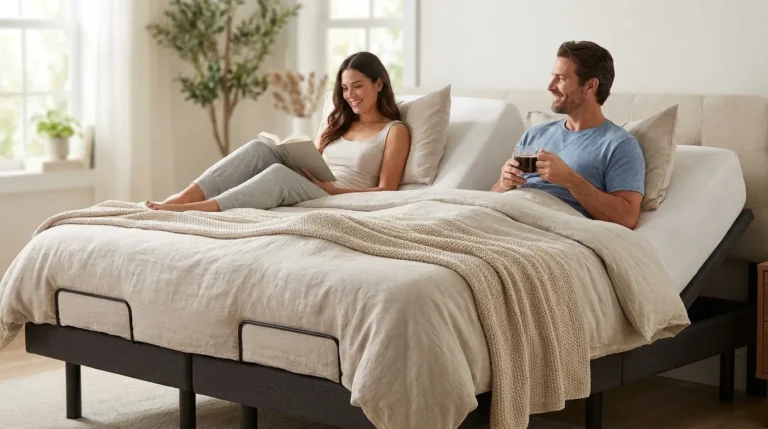
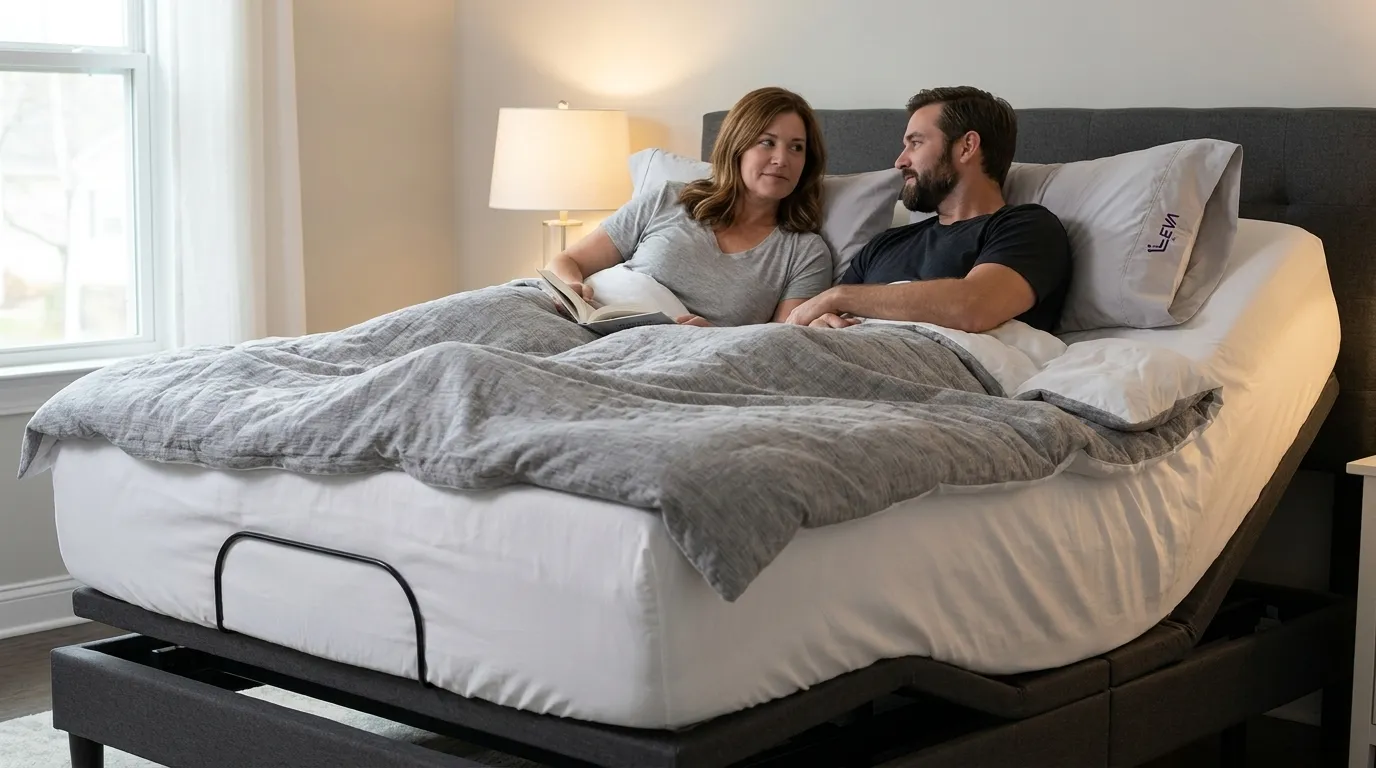
Corner-only elastic relies on tension at four fixed points. When a head section rises to 45 degrees, the mattress surface lengthens along the top and compresses along the bottom, which creates dynamic tension across the entire sheet perimeter. Corner bands cannot distribute that load evenly, which is why all-way (360-degree) elastic is essential. It encircles the entire fitted sheet edge and maintains even tension as the mattress bends, instead of concentrating stress at four corners that eventually fail under the weight and leverage of 14-plus-inch mattresses.
Experts recommend prioritising fitted sheets with thicker elastic bands for a stronger, more secure hold on adjustable beds. This thicker elastic serves a dual purpose. It provides immediate grip when paired with sufficient pocket depth for your mattress height, and it resists the gradual stretching that occurs with repeated elevation cycles over months of use.
Deep Pocket Fitted Sheets for Split Adjustable Beds
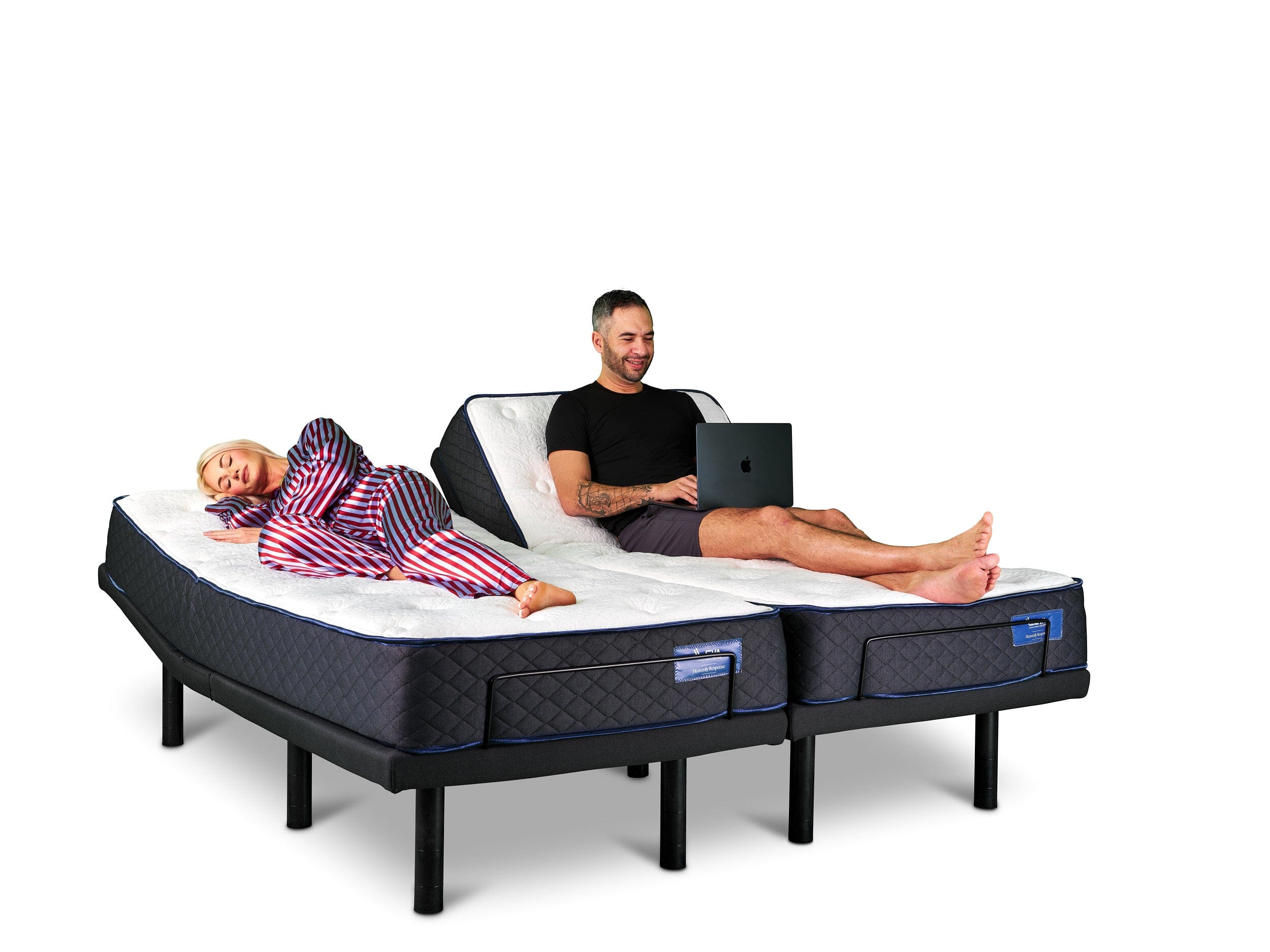
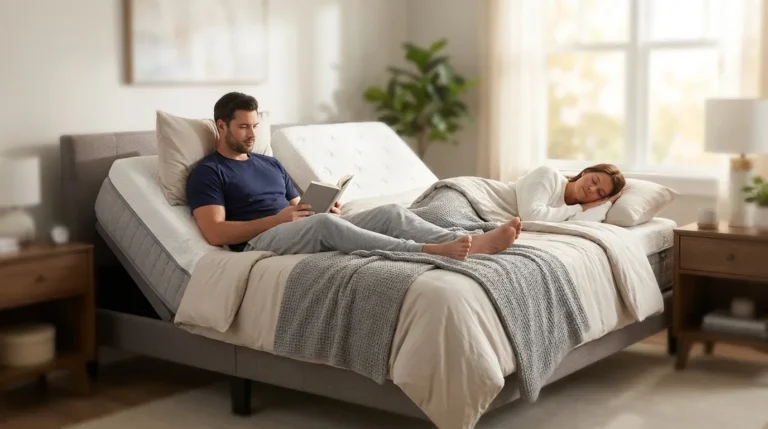
Split adjustable beds introduce a specific challenge that standard king or queen sheets cannot address, because each side of the bed moves independently. When one partner elevates their head section while the other lies flat, a single fitted sheet spanning both mattresses will bunch, pull, or tear at the centre seam.
The correct solution for a split king configuration is two separate Twin XL fitted sheets. A split king bed uses two Twin XL mattresses (38 inches by 80 inches each) side by side, often on separate adjustable bases, which gives each partner independent control over firmness, head elevation, and foot elevation. Each Twin XL fitted sheet needs the same deep-pocket and full-perimeter elastic specifications as any other adjustable-bed sheet.
For split-king adjustable beds, standard fitted sheets often snap off the corners during elevation. Twin XL sheets with built-in corner anchor straps or extra-deep elastic rims keep fabric pinned securely as the mattress pivots. Look for sheets specifically labelled “adjustable bed compatible,” “split king,” or “adjustable base compatible,” because these designations typically indicate full-perimeter elastic construction designed to handle the dynamic tension created during independent elevation.
Material Performance on Moving Beds
The fabric composition of a deep pocket fitted sheet strongly affects how well it performs on an adjustable base over time. Three properties matter most: stretch, breathability, and durability under repeated mechanical stress.
Jersey knit fitted sheets work well for adjustable beds because the natural stretch of the knit fabric flexes with mattress movement during elevation changes and helps prevent pop-off. Rigid percale cotton resists movement and often pops off adjustable beds, while jersey knit and microfiber with spandex stretch with the bed during articulation.
Fitted sheets made with a small percentage of elastane or spandex provide the flexibility needed to adapt to bed adjustments without stretching out or tearing. For long-term durability, long-staple cotton (Egyptian, Pima, or Supima) offers strong durability and strength under tension in deep-pocket sheets because its longer fibers resist breaking when stretched over thick mattresses. Bamboo-derived fabrics offer a strong durability-to-breathability ratio: Cozy Earth bamboo sheets feature a sateen weave that resists pilling, are backed by a 10-year manufacturer warranty against pilling and defects, and have 20-inch deep pockets.
When evaluating any sheet set for an adjustable base, look for full-perimeter elastic made from high-grade material, a fabric blend that includes some stretch content, and a pocket depth with at least 1–2 inches of buffer above the measured mattress-plus-topper height.
The Solution: Leva Sleep Deep-Pocket Sheets
Leva Sleep designs its fitted sheets specifically for the demands of split adjustable bases as an integrated component of the complete sleep system. The sheets use extra-elastic construction around the full perimeter, which helps the sheet contour with the mattress through every elevation position instead of pulling free at the corners.
For couples using a Split Queen or Split King configuration, Leva’s bedding works alongside the base rather than against it. Remote pockets keep the wireless controller accessible without displacing the sheet, and duvet clip compatibility keeps the top layer separated and aligned even when each side is elevated to a different position. These features rarely appear in standard retail sheet sets.
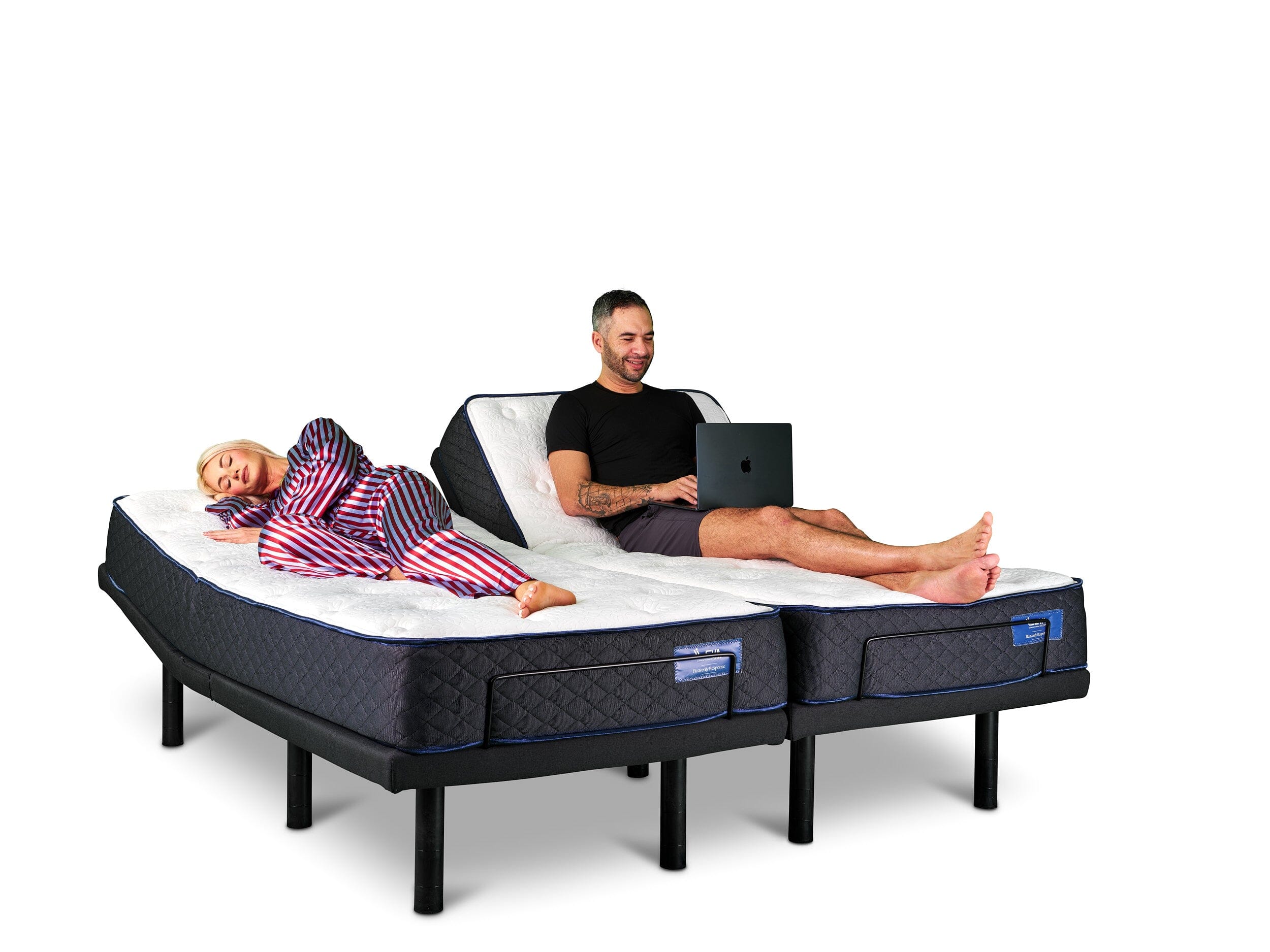
Leva Sleep’s direct-to-consumer model, with local design, assembly, and in-house white-glove delivery across Ontario and Alberta, brings the complete sleep system to your bedroom already set up and ready to use. That integrated approach arrives at 30–50% below comparable luxury competitors while still preserving the engineering that keeps the bedding functional on a moving base.
Browse Leva’s complete sleep systems, including the base, mattress, and deep-pocket bedding designed to work together.
Decision Checklist for Canadian Couples
Before purchasing deep pocket fitted sheets for an adjustable base, confirm each of the following criteria is met.
- Measure the mattress height with the bed completely flat, including any permanent topper, and add 1–2 inches to determine the minimum pocket depth required.
- Select extra-deep pocket sheets (18–24 inches) if the combined mattress-plus-topper height exceeds 16 inches.
- Confirm the sheet features full-perimeter elastic, not corner bands only, to maintain grip through head and foot elevation cycles.
- For split king or split queen configurations, purchase two separate Twin XL fitted sheets rather than a single king fitted sheet.
- Choose a fabric with some stretch content (jersey knit, bamboo, or a cotton-spandex blend) to accommodate the dynamic tension of elevation changes.
- Verify the elastic is high-grade and wide enough to resist gradual stretching over months of repeated use.
- Look for sheets labelled “adjustable bed compatible” or “split king compatible” as a baseline indicator of appropriate construction.
- Consider an integrated bedding solution from the same supplier as the adjustable base to ensure compatibility across all components.
Sheets that meet all of these criteria stay in place through independent elevation, protect the mattress surface, and support uninterrupted sleep for both partners. That outcome reflects the core purpose of a split adjustable system.
Find your complete split adjustable system, including deep-pocket, full-elastic bedding delivered with white-glove service across Ontario and Alberta.
Frequently Asked Questions
What pocket depth do I need for a split adjustable bed with a mattress topper?
Most split adjustable bed setups with a topper need an extra-deep pocket depth of 18 to 24 inches. A typical adjustable bed mattress sits between 10 and 14 inches thick, and a topper adds another 2 to 4 inches or more. Adding the recommended 1 to 2 inch buffer on top of that combined measurement brings the minimum pocket depth requirement to about 15 inches at the low end and 20 inches or more for thicker configurations. When uncertainty remains, choose a sheet with more depth than you expect to need. Excess fabric tucks neatly under the mattress, while insufficient depth causes the sheet to pop off every time the base moves.
Can I use a standard king fitted sheet on a split king adjustable bed?
No. A standard king fitted sheet is a single piece of fabric designed to cover one continuous mattress surface. A split king adjustable bed uses two separate Twin XL mattresses on independent bases. When one side elevates and the other remains flat, a single king sheet gets pulled in two directions at once, which causes bunching at the centre, strain at the seams, or corners pulling free entirely. The correct approach is two separate Twin XL fitted sheets, one for each mattress, each with full-perimeter elastic and enough pocket depth for the individual mattress-plus-topper height on that side. A standard king flat sheet and comforter can still cover both sides together for a unified look.
What is the difference between corner elastic and full-perimeter elastic on a fitted sheet?
Corner elastic uses elastic bands sewn only at the four corners of the fitted sheet. This construction works adequately on a flat, stationary mattress because the corners are the primary points where the sheet tends to slip. On an adjustable base, however, the mattress bends along its length when the head or foot section rises, which creates tension across the entire perimeter of the sheet, not just at the corners. Full-perimeter elastic, also called all-around elastic, runs continuously around the entire bottom edge of the fitted sheet. This distributes tension evenly across the whole circumference and lets the sheet contour around the bend of an elevated mattress section without pulling free. For adjustable bed use, full-perimeter elastic functions as a requirement, not a premium feature.
How does Leva Sleep’s bedding differ from standard deep-pocket sheets sold at general retailers?
Standard deep-pocket sheets sold at general retailers are designed for stationary mattresses and may offer adequate pocket depth but often use corner-only elastic and fabrics that resist rather than flex with movement. Leva Sleep designs its fitted sheets specifically for adjustable bases, incorporating full-perimeter extra-elastic construction, remote pockets for wireless controller access, and duvet clip compatibility for split configurations where each side elevates independently. Because Leva operates a direct-to-consumer model with local assembly and white-glove delivery across Ontario and Alberta, the bedding is sold as part of an integrated sleep system tested and matched to the specific base and mattress configurations Leva offers, rather than as a generic accessory. This integration means the sheets are engineered to work with the base’s range of motion from the outset, not adapted to it after the fact.
Will deep-pocket sheets stay in place if I use the anti-snore or zero-gravity position on my adjustable base?
Deep-pocket sheets stay in place during anti-snore mode, zero-gravity positioning, and other elevation presets when two conditions are met. Pocket depth must match or exceed the mattress-plus-topper height, and the sheet must use full-perimeter elastic. A sheet with sufficient pocket depth but only corner elastic will likely slip during full elevation because the corners cannot hold the sheet against the dynamic tension created as the mattress bends. A sheet with full-perimeter elastic and a pocket depth that exceeds the mattress-plus-topper height by at least 1 to 2 inches maintains grip through the full range of motion. For Leva Sleep’s adjustable bases, which use whisper-quiet motors to move through positions including anti-snore and zero-gravity, the matching deep-pocket sheets with full-perimeter elastic are designed to remain secure throughout those position changes without manual readjustment.