
Written by: Matthew Timmins, Founder and Managing Director, Leva Sleep
Key Takeaways
- Head-of-bed elevation at 7.5–12° has strong support for reducing snoring duration. Elevation of 15–20 cm offers modest but measurable relief for nocturnal acid reflux.
- Zero-gravity positioning with the head at 10–15° and knees at 10–20° reduces lumbar disc compression and can ease back, hip, and knee pain when lying flat worsens symptoms.
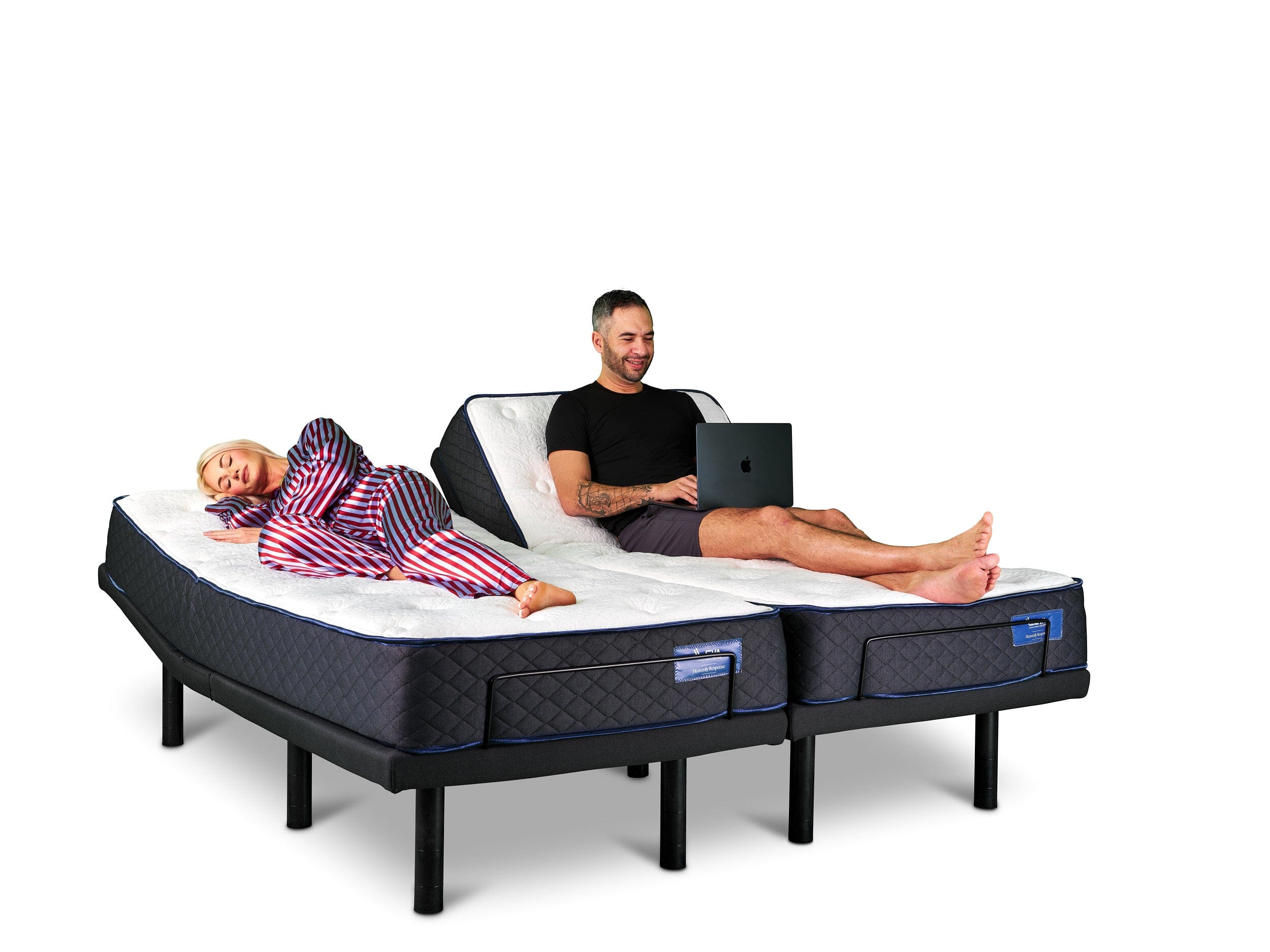
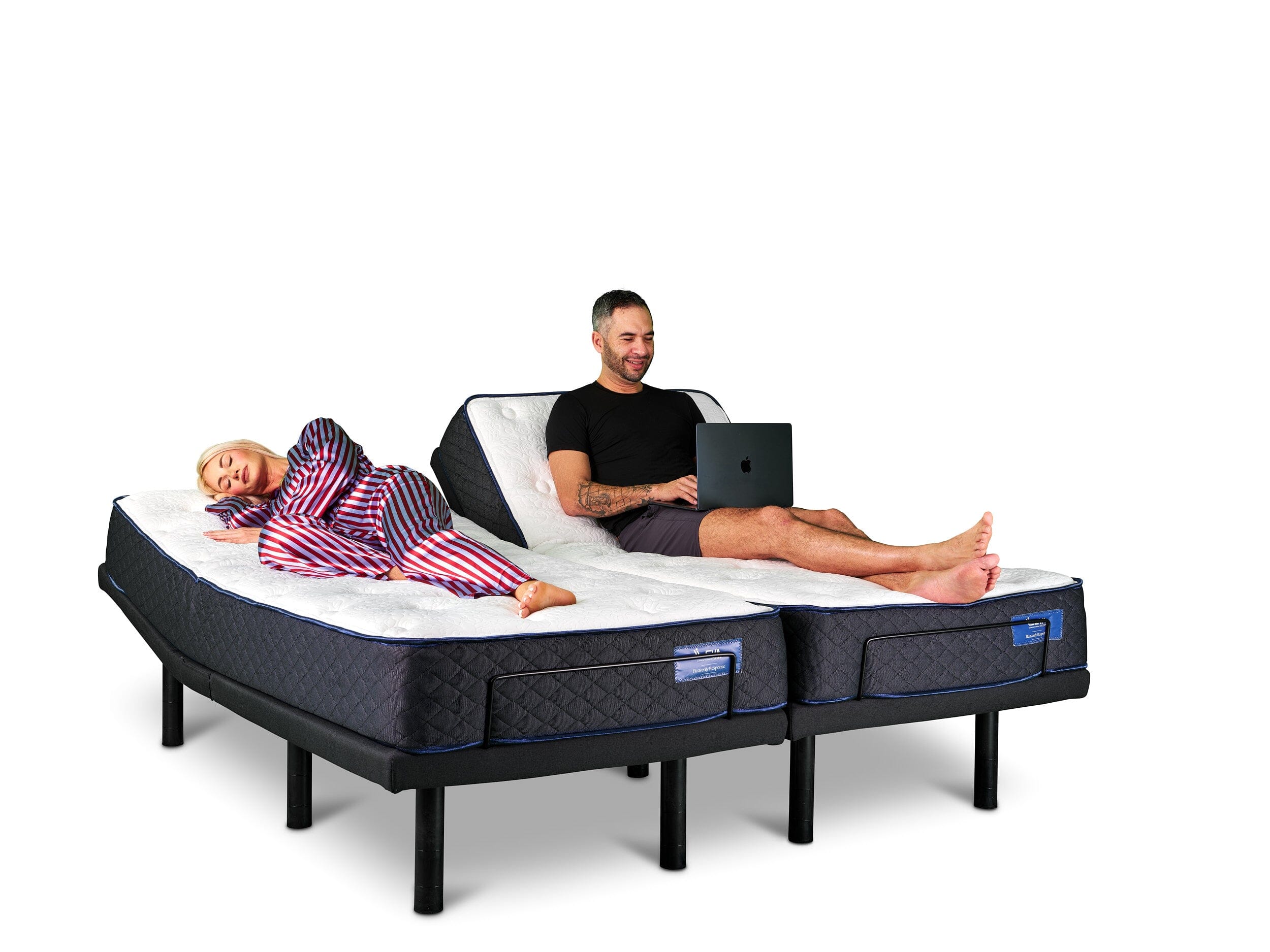
- Split adjustable bases give each partner independent angles, so couples with different health needs can both sleep in positions that work for their bodies.
- Adjustable bases complement CPAP and other prescribed therapies for obstructive sleep apnea. They change sleep position but do not treat the underlying airway disorder.
- Leva Sleep focuses on Canadian buyers with a wide model range, Split Queen options, quiet motors, and white-glove delivery in Ontario and Alberta at pricing below many luxury brands.
Browse Leva Sleep Adjustable Bases
The Problem: Why A Flat Bed Fails When You Have A Health Condition
Traditional flat beds cannot support the elevated sleep positions doctors recommend for snoring, acid reflux, back pain, and post-surgery recovery. Many couples end up in separate rooms, one partner sacrifices sleep quality, or the person with the health condition lies awake in discomfort.
Stacking pillows creates new problems instead of solving old ones. Pillows bend the body at the waist, which increases abdominal pressure and often worsens reflux symptoms. They also shift during the night, so any benefit usually disappears by morning. An adjustable bed base elevates the torso from the hips and lets you move the head and foot sections independently, creating a smoother, more stable incline.
Explore Adjustable Bed Packages
The Solution: How An Adjustable Bed Base Works In Daily Life
An adjustable bed base uses motorized joints to raise and lower the head and foot sections on command. The head section lifts the upper torso from the hips, which keeps the spine in a clean incline instead of folding at the waist. The foot section can rise to ease pressure on the lower back and support circulation in the legs. Together, these movements create a relaxed “zero-gravity” position with gentle elevation at both ends and body weight spread across a larger surface.
Split configurations such as Split King and Split Queen place two independent bases side by side. Each side has its own head and foot movement, so one partner can sit up while the other lies nearly flat. Leva Sleep’s Split Queen offers this independence in a footprint that fits better in many Canadian condos and smaller bedrooms than a Split King.
The Evidence: How Adjustable Bases Support Specific Health Goals
1. Reduced Snoring And Mild Sleep Apnea Symptoms (Well-Supported)
Mechanism: Lying flat on the back lets gravity pull the tongue and soft tissue toward the airway, which increases vibration and snoring. Elevating the head helps keep the airway more open.
Evidence: A peer-reviewed study indexed on PubMed examined head-of-bed elevation and snoring duration. An elevation of about 12° produced measurable reductions. Separate PubMed-indexed research on positional therapy and the apnea-hypopnea index (AHI) found that positional therapy reduced supine AHI compared with placebo, although overall AHI changes were more modest. A systematic review of positional snoring studies identifies mild head-of-bed elevations of 7.5° (Lee 2024) and 12° (Danoff-Burg et al.) as tested starting inclines. The 7.5° trial showed a trend toward improvement, but the result did not reach statistical significance (p = 0.065).
Realistic expectation: An adjustable base can reduce snoring and improve comfort but does not replace CPAP or other medical treatment for diagnosed obstructive sleep apnea. The American Academy of Sleep Medicine (AASM) publishes formal clinical practice guidelines for OSA treatment, including a guideline on Positive Airway Pressure (PAP) therapy. Elevated sleeping can feel more comfortable but does not replace a CPAP or other prescribed therapy. Leva Sleep’s upcoming anti-snore mode (planned for spring 2026) will detect snoring and make small head adjustments as a comfort feature rather than a medical device.
2. Relief From Acid Reflux / GERD At Night (Well-Supported)
Mechanism: Torso elevation lowers the chance that stomach acid will travel upward into the oesophagus during sleep. Stacked pillows bend the body at the waist and increase abdominal pressure, which can worsen reflux. An adjustable base lifts the entire torso from the hips and keeps a steady incline that supports gravity-based drainage.
Evidence: A PubMed-indexed clinical trial (Pöllmann et al., 2011) tested a 20 cm head-of-bed elevation for six nights. The study found a statistically significant but small reduction in supine oesophageal acid exposure in patients with documented nocturnal GERD. Mean supine reflux time fell from 15.0 ± 8.4% to 13.7 ± 7.2% (P = 0.001). A subsequent systematic review concluded that head-of-bed elevation has minimal to no effect on oesophageal pH-reflux parameters, although some patients still report symptom relief. Canadian sleep retail data notes that a 6-inch head elevation often reduces nighttime acid reflux for customers, especially older adults taking medications that irritate the stomach. Leva Sleep’s adjustable bases allow precise, repeatable head elevation so users can maintain a comfortable angle every night.
3. Back, Hip, And Knee Pain Relief (Moderately Supported)
Mechanism: The zero-gravity position spreads body weight over a larger surface and lowers compressive force on the lumbar discs, especially at L4-L5 and L5-S1 where many lower back problems start. This position lets the muscles that usually brace the lower back relax.
Evidence: A physical therapy clinical guide reviewed by Christina Bentrewicz, PT, DPT, OCS, notes that a reclined position can help when lying flat worsens back pain. The guide explains that an adjustable bed can support the back while keeping the hips and knees slightly bent. A randomized controlled trial in The Lancet (Kovacs et al., 2003) found that medium-firm mattresses reduced back pain intensity and disability more than firm mattresses over 90 days. Leva Sleep pairs adjustable lumbar support and pillow tilt with mattresses designed to flex smoothly on a base.
4. Improved Circulation (Mostly Anecdotal)
Mechanism: Elevating the legs above the heart can improve blood return to the chest. This reduces pooling in the lower legs and may decrease swelling.
Evidence: Research on general circulation improvement from adjustable bases remains limited, and most claims rely on user reports. Canadian retail data notes that many seniors choose adjustable bases to help with ankle swelling and circulation concerns, particularly when they take certain heart medications. Foot elevation on Leva Sleep bases can ease leg fatigue and swelling, but buyers should not expect proven cardiovascular outcomes.
5. Better Neck Alignment (Moderately Supported)
Mechanism: Gentle head elevation with the right pillow can reduce cervical strain compared with flat sleeping. The goal is a neutral neck position that stays in line with the chest and upper spine.
Evidence: Ergonomic guidance for cervical spondylosis recommends a cervical pillow that maintains 15–25 degrees of neck flexion to reduce overnight facet joint loading. Clinical guidance on reclined sleeping advises keeping the neck level with the thoracic spine by using a contour pillow that supports this alignment. Leva Sleep’s pillow tilt motor lets users fine-tune head and pillow position to match these recommendations.
6. Enhanced Comfort For Couples With Different Needs (Well-Supported)
Mechanism: Split adjustable bases give each partner independent control of head and foot angles. This setup prevents one person’s health needs from dictating the other’s sleep position.
Evidence: Split configurations appeal to couples because each partner can choose a different angle without disturbing the other. This removes the need for a compromise that leaves both sleeping poorly. Leva Sleep’s Split Queen and Split King bases include independent controls, whisper-quiet German motors, and full app control so each partner can save custom positions, set vibrating alarms, and adjust quietly during the night.
See Split Queen And Split King Options
What Doctors And Chiropractors Say About Adjustable Beds
Many physicians recommend elevated sleeping for nocturnal acid reflux, snoring, and post-surgery recovery. The AASM evaluates non-PAP alternatives for snoring and obstructive sleep apnea, including oral appliances, medications, and surgical referral. Positional strategies may still help some patients, especially those with positional OSA whose AHI falls sharply when they avoid sleeping on their back.
The Canadian Chiropractic Association recommends medium-firm mattress support with pressure-relieving comfort layers for older adults. Chiropractors often suggest zero-gravity positioning for spinal decompression, particularly for lumbar disc issues or stenosis. Sleep apnea clinics in Canada refer patients to Leva Sleep as a comfort-focused complement that can improve positional compliance and overall sleep quality while patients continue prescribed therapy.
Talk To Leva Sleep About Clinical Use Cases
The Honest Downsides Of Adjustable Bed Bases
Adjustable bases offer real benefits, and they also come with trade-offs that buyers should weigh carefully.
- Cost: Quality adjustable bases require a meaningful investment. Leva Sleep uses a direct-to-consumer model with local assembly to keep pricing below many luxury competitors.
- Mattress Compatibility: Most foam, gel, and hybrid mattresses work well on adjustable bases, while pure innerspring mattresses usually do not flex safely. Leva Sleep designs its all-foam and hybrid pocket-coil mattresses to bend and recover with repeated adjustment.
- Motor Noise In Budget Models: Lower-cost bases often use louder motors that can disturb a partner during adjustments. Leva Sleep specifies whisper-quiet German motors to keep sound to a minimum.
- CPAP And Medical Treatment: An adjustable base does not treat sleep apnea and does not replace CPAP or other prescribed therapy. Meta-analytic evidence shows that CPAP outperforms positional therapy for reducing overall AHI and improving oxygenation. Anyone with diagnosed OSA should continue medical treatment and view positional changes as a supplement.
- Not Ideal For Every Back Condition: Zero-gravity positioning does not suit every type of back pain. Some facet joint problems respond better to gentle extension than to the flexed posture that zero gravity creates.
Review Leva Sleep Base Specifications
Best Sleeping Position On An Adjustable Bed For Common Conditions
Specific starting positions help most people test whether an adjustable base eases their symptoms.
- Snoring: Elevate the head 7.5–12°. Research supports this range for reducing snoring duration. Side sleeping often adds further improvement.
- Acid Reflux / GERD: Raise the head 6–8 inches, or about 15–20 cm. Clinical evidence supports head-of-bed elevation for lowering nocturnal acid exposure. Combine this with avoiding meals for two to three hours before bed.
- Lower Back Pain: Try a gentle zero-gravity position with the head at 10–15° and knees at 10–20°. This setup reduces lumbar disc compression and lets supporting muscles relax. Increase angles gradually and stop at the point that feels easiest on your back.
- Hip And Knee Pain: A zero-gravity position with head elevation of 20–30° and knee elevation of 10–15° often helps lumbar and hip osteoarthritis by reducing spinal loading and hip-joint pressure.
- Neck Pain: Use a low head elevation of about 5–10° with a contoured cervical pillow. Leva Sleep’s pillow tilt motor lets you fine-tune the angle so the neck stays neutral.
Leva Sleep’s app lets each partner save custom sleep positions and set vibrating alarms. This makes it easy to return to a therapeutic position every night without guessing or manual fine-tuning.
Set Up Your Ideal Sleep Position
Choosing An Adjustable Bed In Canada For Seniors And Couples
Canadian seniors and couples benefit most from brands that focus on health needs, split options, and hands-on delivery support.
- Model Selection: Leva Sleep offers a broad range of adjustable bed models, while many standard mattress retailers carry only a few add-on bases. This variety helps buyers match features such as lumbar support, pillow tilt, and split configurations to specific health goals.
- Split Queen Availability: Leva Sleep provides a Split Queen configuration with two fully independent bases and full head and foot articulation on each side. This layout gives couples independent adjustability in rooms that cannot comfortably fit a Split King.
- White-Glove Delivery In Ontario And Alberta: Leva Sleep’s in-house delivery team brings the base to the bedroom, assembles it, adjusts leg heights for the user, provides a tutorial, and removes the old bed. In Canada, some specialty brands offer white-glove delivery for accessible sleep equipment such as Orthex Sophia adjustable beds at a flat rate. These services usually include bedroom delivery, full assembly, function testing, and positioning instruction, with hi-low height ranges such as 10 to 30 inches that support safe wheelchair transfers and caregiver access.
- Proven Canadian Track Record: Leva Sleep has operated for more than eight years, generated over $50M in lifetime sales, and served more than 25,000 Canadian customers. This history provides a documented record of performance and service.
- Value: Leva Sleep’s direct-to-consumer approach and local assembly deliver luxury-level engineering at pricing below many established luxury competitors.
The table below summarizes how Leva Sleep compares with general retailers and luxury brands on selection, split options, and delivery experience.
| Feature | Leva Sleep | General Mattress Retailers (e.g., Sleep Country) | Luxury Brands (e.g., Tempur-Pedic) |
|---|---|---|---|
| Adjustable Base Model Selection | Broad range of models | Typically a small add-on range | Several proprietary models designed to pair with in-house mattresses |
| Split Configuration Options | Split Queen and Split King with full independent articulation | Split King widely available, Split Queen rarely offered | Split King and Split Queen available as standard sizes |
| Delivery And Setup Experience | In-house white-glove delivery with bedroom setup, leg-height adjustment, tutorial, and old bed removal in Ontario and Alberta | Third-party delivery partners with in-home setup as a paid upgrade in many regions | White-glove delivery often included on select direct purchases, with surcharges for some remote locations |
Frequently Asked Questions
Are Adjustable Beds Good For Your Back?
Zero-gravity positioning can reduce compressive load on the lumbar discs, especially at L4-L5 and L5-S1. Physical therapy guidance supports a reclined position when lying flat increases back pain and notes that adjustable bases help by supporting the back while keeping hips and knees slightly bent. This approach offers symptom relief while you are in position but does not correct the underlying cause of back pain. Some back conditions, including certain facet joint problems, respond better to extension, so a physiotherapist or physician should guide long-term use.
What Are The Downsides Of Adjustable Beds?
Buyers most often mention cost, mattress compatibility, motor noise in lower-priced models, and the need to continue medical treatment for sleep apnea. Quality bases cost more than standard frames. Foam and hybrid mattresses usually work well, while pure innerspring designs often do not. Budget motors can sound loud during adjustment. People with diagnosed OSA still need CPAP or other prescribed therapy and can treat positional changes as a comfort upgrade rather than a cure.
Are Adjustable Beds Good For Your Neck?
Head elevation paired with a well-fitted cervical pillow can support neck health. Ergonomic guidance recommends a cervical pillow that maintains 15–25 degrees of neck flexion for back sleepers and keeps the neck aligned with the chest and spine. The key is choosing a pillow that avoids pushing the chin toward the chest or letting the head fall back. A pillow tilt motor, such as the one on Leva Sleep’s higher-end bases, helps fine-tune this alignment.
What Is The Best Adjustable Bed In Canada For Seniors?
Canadian seniors benefit from a wide model range, reliable delivery and setup, and split configurations for couples. Leva Sleep offers multiple adjustable base models, in-house white-glove delivery in Ontario and Alberta with bedroom setup and leg-height adjustment for safer transfers, and a Split Queen option for couples who want independent control without a king-size footprint. Seniors should also confirm that their mattress works with an adjustable base, since foam and hybrid models usually flex well while pure innerspring mattresses generally do not.
Conclusion: Making An Evidence-Based Decision
Adjustable bed bases provide real health and comfort benefits, although the strength of the evidence varies by claim. Head-of-bed elevation for snoring and nocturnal acid reflux has solid support from peer-reviewed research at specific incline angles. Zero-gravity positioning for back, hip, and knee pain draws moderate support from ergonomic and clinical guidance, while circulation claims remain mostly anecdotal. Adjustable bases improve comfort and positioning but do not replace CPAP or other prescribed treatments for sleep apnea.
For Canadian couples and seniors who understand these limits, an adjustable base, especially in a split configuration, solves problems that flat beds cannot. Leva Sleep’s Split Queen and Split King bases, quiet German motors, compatible mattresses, and in-house white-glove delivery in Ontario and Alberta bring these evidence-backed benefits within reach at pricing below many luxury competitors.
Get Started With A Leva Sleep Adjustable Base