
Key Takeaways
- Partner snoring is a major reason many Canadian couples choose separate bedrooms, often at the cost of shared closeness and rest.
- Snoring often results from airway obstruction when lying flat, and targeted head elevation can reduce both snoring volume and frequency for many people.
- Adjustable beds with independent controls allow each partner to set their own position, which supports both snoring relief and personal comfort.
- Features such as preset anti-snore modes, app controls, and professional setup make it easier to adopt adjustable beds as a long-term sleep solution.
- Leva Sleep offers adjustable bed packages with anti-snore technology that help couples stay in the same bed while improving sleep quality for both partners, with options available online.
The Snoring Dilemma: Why Many Couples Sleep Separately
Snoring often leads couples to sleep in separate rooms, which can affect emotional connection and daily life. Many partners report less intimacy, reduced relationship satisfaction, and growing frustration when nighttime noise becomes a constant source of conflict.
Snoring occurs when airflow through the mouth and nose is partially blocked during sleep. A flat sleeping position can worsen this by allowing the tongue and soft tissues in the throat to fall backward and narrow the airway.
Basic remedies such as nasal strips, mouth guards, and throat sprays can sometimes help but often provide only short-term or partial relief. These options do not change body position, which is a key factor in how much the airway collapses at night.
Traditional flat beds also limit how precisely you can adjust your position. Without reliable, gentle head elevation, many couples feel stuck between sleepless nights together or separate bedrooms that slowly change how they relate to each other.
How Adjustable Beds Support Partner Snoring Relief
Targeted elevation helps reduce snoring by improving airflow. Gravity pulls the tongue and soft palate backward when you lie flat, which narrows the airway and increases snoring volume.
Sleeping with the head raised 4 to 6 inches can lessen snoring in a high percentage of positional snorers. This approach focuses on the airway itself rather than only treating symptoms.
Adjustable beds provide consistent, repeatable elevation that is difficult to achieve with stacked pillows or wedges. Motors lift the upper body at controlled angles, so the snoring partner can find a comfortable position that opens the airway without straining the neck.
Quiet operation and smooth movement also matter. Modern adjustable bases use low-noise motors and gradual adjustments that limit disturbance, so snoring management does not become another source of sleep interruption.
Leva Sleep Adjustable Beds: Designed for Couples Who Share a Bed
Leva Sleep offers adjustable bases and mattresses that focus on shared sleep for couples who need snoring support but still want to sleep together.
The Anti-Snore Mode feature on select bases can respond to snoring by slightly adjusting head elevation. This process uses small, automatic changes to raise the upper body and help clear the airway, while keeping movement gentle enough to avoid waking either partner.
Head and foot elevation controls let each partner adjust their side into positions that support easier breathing, circulation, and spinal alignment. Snoring relief can combine with comfort settings such as light knee bend or raised feet for pressure relief.
Quiet German-made motors keep night-time adjustments subtle. Small changes in angle occur with minimal noise, which is especially helpful when anti-snore mode activates while one partner is still asleep.
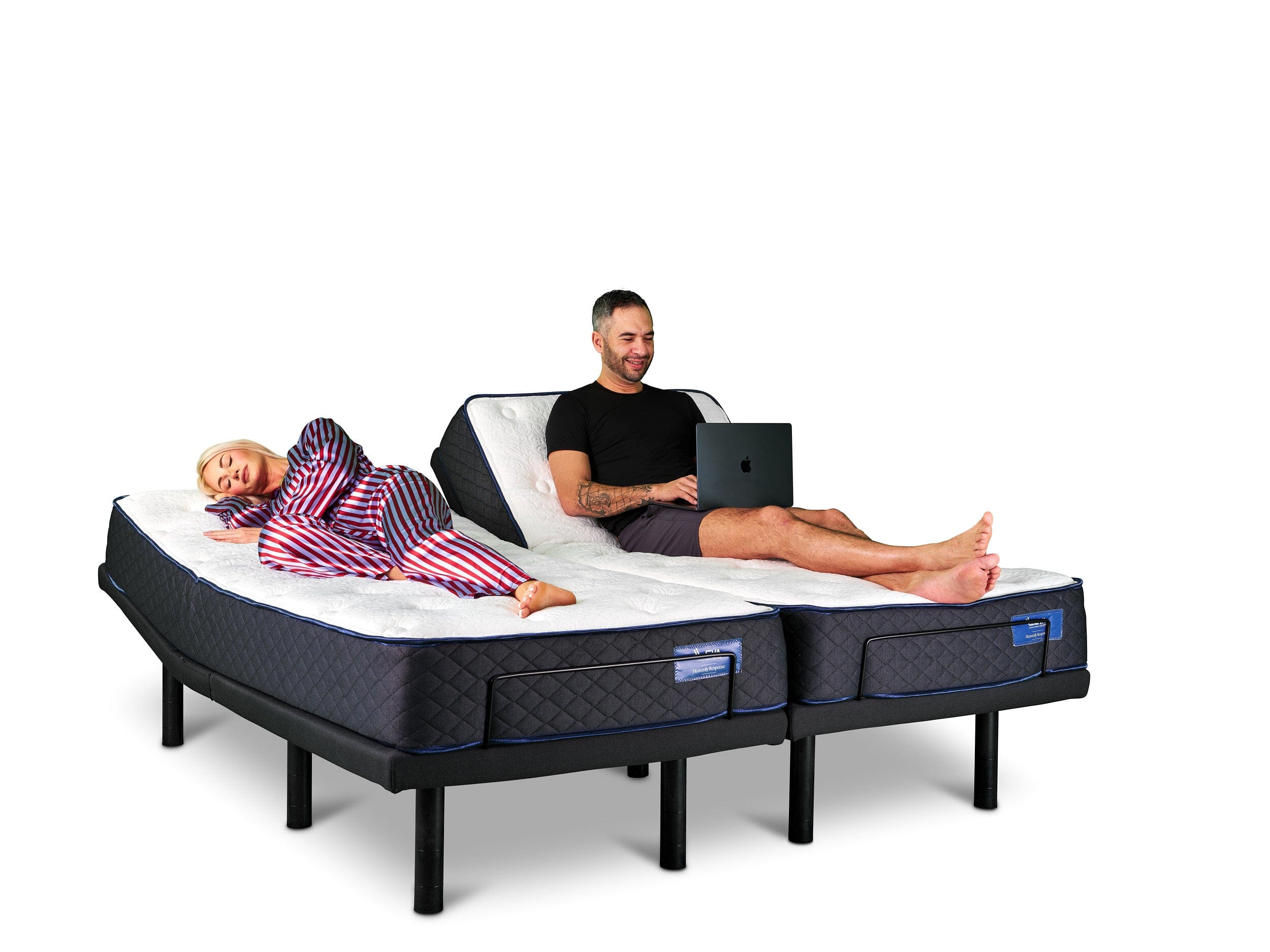
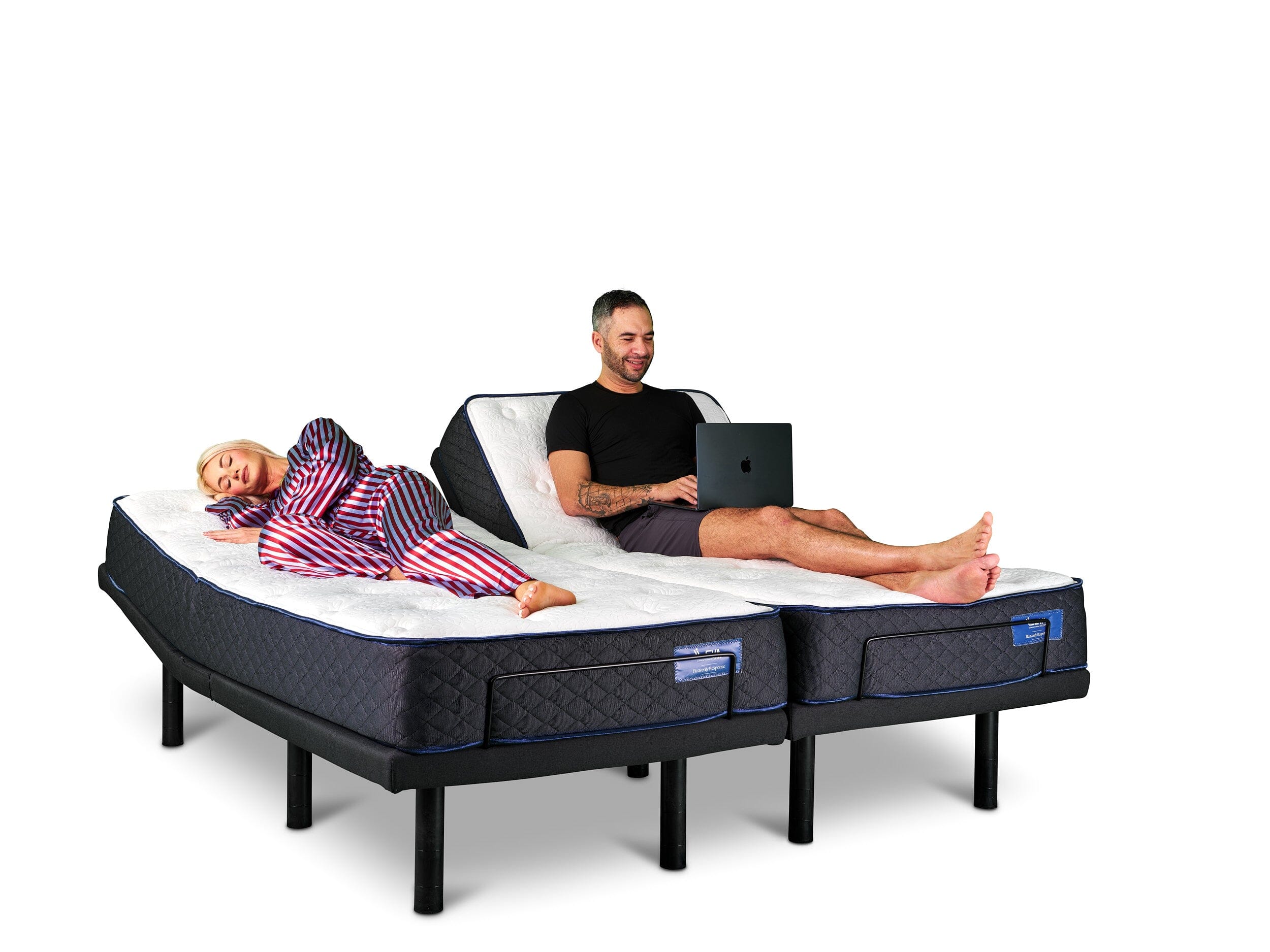
Split king and split queen options give each partner independent control. The snoring partner can use more head elevation and anti-snore presets, while the non-snoring partner can stay flatter or choose their own preferred position.
Explore Leva Sleep adjustable bed packages that include anti-snore features and split configurations.
Choosing a Leva Sleep Anti-Snore Setup That Fits Your Space
Split King vs. Split Queen for Independent Control
Split king setups suit couples who want maximum space and full independence. Each person has a twin XL mattress and base, so one side can move or adjust without affecting the other.
Split queen setups offer many of the same benefits in a smaller footprint. This design works well in Canadian homes where bedroom space is limited but shared sleep remains a priority.
Mattress Pairings That Support Elevation
Leva Sleep mattresses are built to flex with adjustable bases while still supporting the spine. All-foam models give even support at every angle, while hybrid pocket-coil options add contouring for those who prefer a slightly bouncier feel.
Flexible construction helps prevent pressure points when the head is raised. This design makes it easier to maintain anti-snore positions for the full night instead of returning to a flat, snore-prone posture.
Extra Positioning Features for Snoring and Comfort
Some Leva Sleep bases include pillow tilt, which fine-tunes neck and head angle beyond standard head elevation. This can help people who need a specific chin or neck position to keep their airway open.
Lumbar support features help maintain lower back alignment while the upper body is elevated. This is important for people who have back discomfort or who previously found that sleeping propped up led to stiffness.
Making the Most of Your Leva Sleep System
Using the Leva Sleep App to Personalise Anti-Snore Settings
The Leva Sleep app allows you to save favourite anti-snore positions, create presets, and adjust elevation from your phone. Couples can store individual profiles so each person can return to their preferred settings with one tap.
Gradual adjustment schedules can shift you into a slightly elevated position over time. This helps people who are used to flat sleeping adapt to new angles more comfortably.
Accessories That Support Adjustable Bed Sleeping
Fitted sheets and bedding designed for adjustable beds help keep everything in place as the bed moves. Deep-pocket sheets and extra elastic reduce slipping when the head or feet raise.
Simple add-ons, such as duvet clips or separate top covers for each partner, can also prevent blanket tug-of-war when one side of the bed is elevated higher than the other.
White-Glove Delivery for a Low-Stress Setup
Leva Sleep offers white-glove delivery and setup in many areas. Technicians assemble the base, position it in your room, and can help with basic feature orientation, so you can start with working presets from the first night.
This service reduces the effort of moving heavy bases, connecting parts, and troubleshooting, which can be especially helpful for people who live in condos or homes with stairs.
Browse Leva Sleep adjustable bed packages and arrange delivery that suits your schedule.
How Leva Sleep Compares to Other Snoring Remedies
Seeing how adjustable beds line up against other common snoring aids can clarify what to expect from each option.
|
Feature |
Leva Sleep Adjustable Bed |
Flat Bed + Nasal Strips |
Basic Medical Devices |
|
Snore Reduction |
Elevation-based support that can reach high effectiveness for positional snorers |
Often modest and short term |
Variable, sometimes uncomfortable |
|
Partner Independence |
Split control and separate presets |
Both partners affected by noise and movement |
Focuses on the snorer only |
|
Comfort Integration |
Built into everyday sleep surface |
Relies on flat posture and add-on products |
Devices may feel intrusive |
|
Long-Term Use |
Durable home fixture that supports ongoing sleep health |
Requires regular purchase of strips or sprays |
Often used only when symptoms feel severe |
An adjustable bed does more than limit snoring noise. It also supports comfortable positions for reading, relaxing, and recovering from illness, which adds value beyond night-time snoring relief.
Conclusion: A Practical Path Back to Shared Sleep
Many couples in 2026 want to stay in the same bed but feel stuck between loud snoring and separate rooms. Leva Sleep adjustable beds offer a practical way to address positional snoring while preserving personal comfort and shared routines.
Consistent head elevation, split configurations, and optional anti-snore modes give couples tools to reduce snoring and improve sleep quality for both partners. Features such as quiet motors, flexible mattresses, and white-glove setup help turn these tools into a daily habit instead of a short-lived experiment.
Explore Leva Sleep adjustable bed packages to support shared, quieter sleep in your home.
Frequently Asked Questions about Partner Snoring Solutions
Why might my partner still snore even with head elevation?
Some people need a higher or more precise elevation angle before snoring improves. Factors such as back sleeping, weight, evening alcohol use, or medical conditions can also contribute to ongoing snoring, so many couples adjust angle gradually and track changes over several nights.
Can an adjustable bed completely stop snoring?
An adjustable bed can significantly reduce or sometimes eliminate snoring that is mainly positional. Snoring linked to structural airway issues or moderate to severe sleep apnoea may still require assessment and care from a health professional in addition to elevation.
How long does it take to get used to sleeping on an adjustable bed?
Most people adapt within one to two weeks. Many start with a small incline and increase it little by little until they find a balance between snoring relief and comfort.
Is Leva Sleep anti-snore technology compatible with any mattress?
The elevation functions work best with mattresses designed for adjustable bases. Leva Sleep foam and hybrid mattresses are built to bend and recover smoothly, while some traditional innerspring mattresses may feel stiff or develop pressure points when used at higher angles.
Will anti-snore adjustments disturb the non-snoring partner?
Split bases limit movement to one side, and quiet motors keep sound low. When anti-snore mode makes small adjustments, many partners either do not notice or are not fully woken by the change.