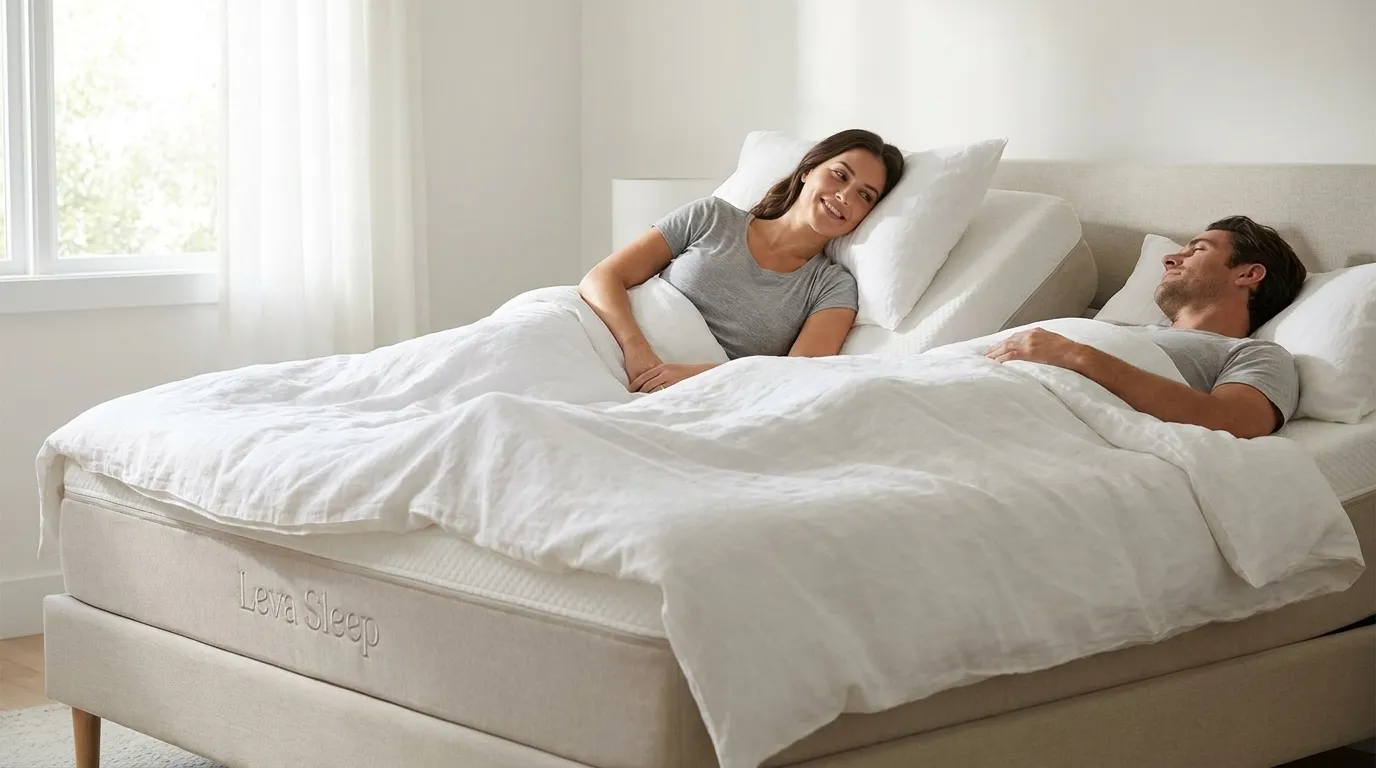
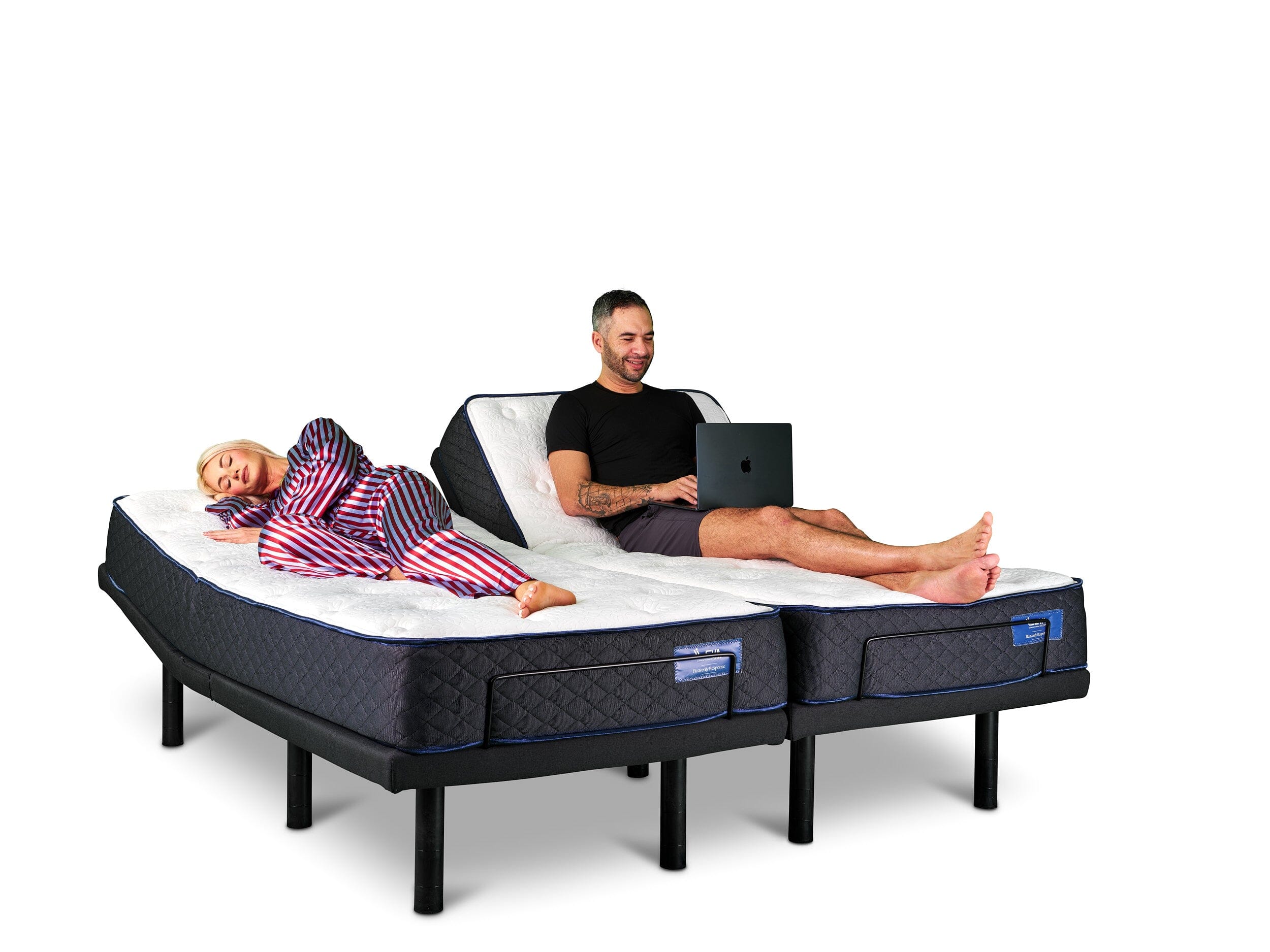
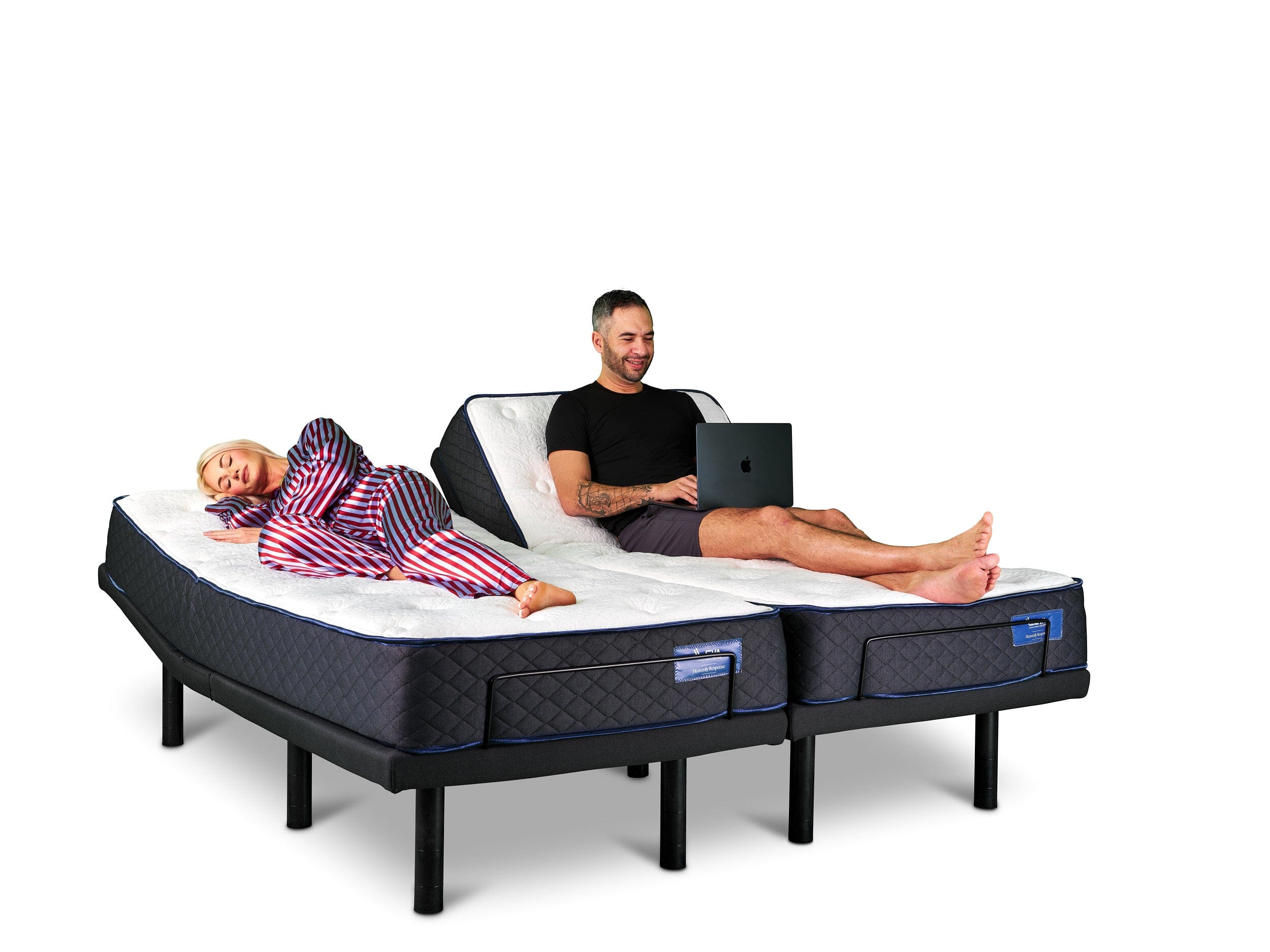
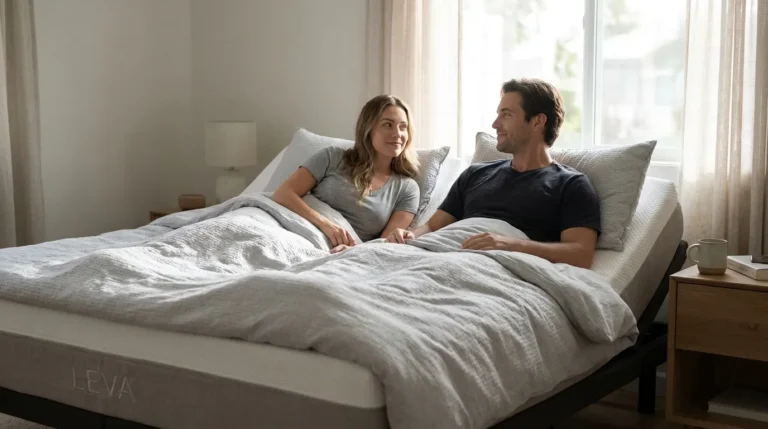
Visit One Of Our 6 Showrooms Located Across Canada!
No Payments, No Interest Until 2027
Free Delivery & In-Home Set Up
How to Improve Sleep Quality for Couples Sharing a Bed
Content
Written by: Matthew Timmins, Founder and Managing Director, Leva Sleep | Last updated: July 30, 2026
Key Takeaways for Couples Sharing a Bed
Sleep quality for couples is often disrupted by snoring, mismatched temperatures, sleep apnea, and partner movement, which can push partners into separate rooms.
Evidence-based strategies such as consistent sleep schedules, light management, and temperature control improve shared sleep while keeping couples in the same bed.
Partner movement and snoring are major causes of nighttime awakenings, and split adjustable systems with independent controls reduce motion transfer and airway obstruction.
Adjustable beds with head elevation, quiet motors, and app-based tracking address structural sleep issues while supporting both partners’ preferences at the same time.
Leva Sleep’s split adjustable bed packages offer independent controls, whisper-quiet motors, and app-based sleep tracking designed for Canadian couples. Shop Leva Sleep’s adjustable beds to improve your shared sleep experience.
Seven Ways Couples Can Sleep Better Tonight
These seven steps draw on the strongest research for improving sleep quality. Each step includes a practical way couples can use it without adding new tension.
Anchor your schedule. Go to bed and wake up at the same time every day, including weekends, to stabilise your circadian rhythm. Couples with different chronotypes can agree on a shared lights-out window, even if one partner reads quietly in bed. This shared window reduces the disruption of one person entering a dark room hours after the other has fallen asleep.
Manage light exposure. Bright morning light advances the circadian clock and builds sleep pressure earlier in the evening. Couples can take a short outdoor walk together after breakfast to synchronise their rhythms. In the evening, dim overhead lights and use warm-toned bulbs in shared spaces to reduce the alerting effect of blue light for both partners.
Reduce pre-sleep stress. Elevated cortisol delays sleep onset and fragments deep sleep. Couples can create a shared wind-down routine with dimmed lights, no work screens, and light stretching to signal the nervous system to slow down. Avoiding conflict conversations in the bedroom keeps it associated with sleep for both partners.
Track sleep objectively. Wearables and app-connected bed systems reveal patterns that subjective recall often misses, such as which partner’s movements trigger the other’s wakings. Research published in Sleep Health found that about one in three awakenings during the night in bed-sharing couples is caused by the other partner. Once couples identify the source of disruption, they can fix it structurally instead of relying on ongoing compromise.
Shop Leva Sleep’s adjustable beds, which include split systems with independent controls, whisper-quiet motors, and app-based sleep tracking designed for Canadian couples.
Why Deep Sleep Breaks Down for Couples
Deep sleep, also called slow-wave sleep or N3, is the most physically restorative stage of the sleep cycle. Disruption of this stage is linked to fragmented sleep architecture, elevated stress hormones, poor sleep environment, and medical conditions. Diets low in fibre, high in saturated fat, or high in sugar have been linked to less restorative sleep. Alcohol, though it may initially speed sleep onset, ultimately reduces sleep quality and increases nighttime awakenings.
Beyond these dietary and lifestyle factors, couples face a structural challenge that single sleepers do not. Partner movement can be a significant and underappreciated cause of deep sleep disruption. Bed partners of people with sleep apnea often experience substantial sleep loss, and treating the condition can improve the partner’s sleep. Mismatched sleep schedules, such as one night owl and one early riser, create repeated micro-arousals as the later sleeper enters the room, turns on lights, or adjusts the bedding. A split adjustable base with independent head and foot elevation lets each partner find a comfortable position without disturbing the other’s mattress surface.
How to Stop Waking Up Every Two Hours
Waking every two hours often lines up with the end of a 90-minute sleep cycle, when the brain briefly moves into lighter sleep. Common triggers include a full bladder, blood sugar fluctuations from late eating, sleep apnea events, and environmental noise or movement. Eating close to bedtime can increase the likelihood of waking during the night.
The partner-caused awakenings discussed earlier are most likely to occur at these natural arousal points. For couples, snoring and differing firmness preferences frequently tip the brain from light sleep into full waking. Surveys indicate that snoring is often considered one of the most annoying bed-sharing habits. A partner who sleeps on a mattress that is too soft will shift positions repeatedly throughout the night, which sends motion across a shared surface. Split adjustable systems with independent firmness settings remove cross-partner motion transfer at its source.
Foods That Help Couples Get More Deep Sleep
Dietary patterns have a measurable relationship with sleep quality, and couples can use shared meals to support both partners. Greater adherence to the Mediterranean diet has been associated with better sleep in some studies.
Specific foods with evidence for sleep support include the following options, which couples can build into shared evening meals to benefit both partners at once:
Tart cherry juice: A pilot study of older adults with chronic insomnia found that tart cherry juice increased total sleep time and improved sleep efficiency compared with placebo.
Kiwifruit: Eating green kiwifruit before bed has been studied in athletes for its potential to reduce the time to fall asleep.
Tryptophan-rich foods: Some research suggests combining tryptophan-rich foods such as poultry, eggs, milk, or yoghurt with carbohydrates may help the body absorb tryptophan more effectively.
Walnuts: A randomised crossover trial of young adults found that eating walnuts with dinner increased urinary melatonin markers and can improve sleep quality.
Fatty fish: Omega-3 polyunsaturated fatty acids, vitamin D, tryptophan, zinc, and antioxidants can support sleep in men and women with sleep disorders.
For couples, a shared Mediterranean-style evening meal built around vegetables, whole grains, legumes, and lean protein supports both partners’ sleep at the same time. Processed meat consumption has been linked with increased risk of obstructive sleep apnea and snoring, which makes dietary choices directly relevant to shared-sleep quality.
Bouncing Back After a Bad Night
Recovery from a poor night of sleep works best when you keep your regular wake time instead of sleeping in, which preserves circadian stability. A short nap of 20 minutes before 3 PM can reduce acute sleepiness without harming the following night’s sleep pressure. Moderate exercise, hydration, and avoiding a high-carbohydrate lunch help reduce the afternoon energy crash that often follows a disrupted night.
For couples, a bad night often leads to blame, with one partner holding the other responsible for snoring or movement. This pattern adds pre-sleep anxiety on top of fatigue. Independent adjustment on a split base lets each partner fine-tune their own side without negotiation, which removes a common source of bedroom conflict. Reviewing the previous night’s data in the app shifts the conversation from blame to joint problem-solving.
Natural Snoring Relief Through Head Elevation
Head-of-bed elevation is one of the most evidence-supported non-pharmacological approaches for snoring and mild to moderate obstructive sleep apnea. Research indicates that head-of-bed elevation can be effective for reducing airway obstruction associated with snoring, as adjustable beds allow positioning of the upper body on an incline, which reduces the likelihood that soft tissues will fall back and block the airway. A 2022 experimental study by Iannella et al. in the Journal of Clinical Medicine examined head-of-bed elevation as a method for improving positional obstructive sleep apnea.
Leva Sleep’s adjustable bases provide precise, quiet head elevation in small increments controlled through the app. The anti-snore mode detects snoring acoustically and makes micro-adjustments to the head position automatically, without waking either partner. This setup addresses the airway mechanics of snoring structurally, instead of relying on earplugs or positional pillows that shift during the night.
Choosing an Adjustable Sleep System When Habits Are Not Enough
Lifestyle steps address the behavioural and dietary contributors to poor sleep. When the root cause is structural, such as a partner’s snoring, incompatible firmness needs, or a medical requirement to sleep elevated, a flat bed cannot provide a lasting solution even when other habits are excellent.
The following criteria are worth evaluating when considering an adjustable sleep system for couples. These seven features separate systems that truly solve couple-specific sleep problems from those that simply add motorised adjustment.
Independent controls: Each side of the bed must be adjustable without affecting the other. A single-base purchase, even a wide adjustable base, does not provide this. Split Queen and Split King configurations are the correct format for couples.
Motor noise: Loud or jerky motors undermine quiet adjustment. Whisper-quiet German motors, as used in Leva Sleep’s systems, allow position changes without waking a sleeping partner.
Lumbar support: Adjustable lumbar zones address lower back pain independently of head and foot elevation, which matters for partners with hip, knee, or back conditions.
Temperature regulation: A split-temperature heating and cooling pad lets each side of the bed maintain a different thermal environment. This approach is the most reliable option when the preference gap between partners exceeds the range that passive bedding can cover.
Split Queen availability: Most adjustable base retailers stock Split King only. Leva Sleep builds Split Queen configurations to customer specifications, which makes independent control possible in smaller room footprints.
White-glove delivery and setup: Adjustable bases require professional installation, height calibration, and a product tutorial. Bed-in-a-box delivery does not suit this category. Leva Sleep’s in-house white-glove service covers delivery to the bedroom, assembly, old bed removal, and real-time adjustments.
Canadian pricing: Leva Sleep’s direct-to-consumer, vertically integrated model delivers systems at 30–50% below comparable luxury competitors, with local design and assembly in the regions it serves.
Common mistakes to avoid:
Purchasing a single adjustable base for a couple and assuming it provides independent control. It does not.
Using standard fitted sheets on an adjustable base. Sheets without deep pockets and reinforced elastic pull free during elevation and disrupt sleep. Leva Sleep designs bedding specifically for adjustable bases.
Skipping professional setup. Incorrect leg height, poor mattress alignment, or unconfigured app settings reduce the system’s effectiveness and can create new discomfort.
What Success Looks Like for Couples Using Leva Sleep
Couples who combine consistent sleep hygiene with a properly configured split adjustable system often report fewer nighttime wakings within the first two to four weeks. Many describe the ability to keep sharing a bed after previously considering separate rooms. Reduced morning pain in the back, hips, and knees is also common. The non-snoring partner can regain sleep time that had been lost to airway disruption. Both partners keep independent control over their sleep environment without negotiation, which lowers bedroom conflict and the sleep anxiety that comes with it. The clinical validation from sleep apnea clinic referrals reflects how head elevation integrates naturally into shared sleep without the disruption of CPAP equipment.
Shop Leva Sleep’s adjustable beds, trusted by over 25,000 Canadian customers, with $50M in lifetime sales and 15–20 adjustable models available in Split Queen and Split King configurations.
Frequently Asked Questions
Can an adjustable bed help with diagnosed sleep apnea, or is a CPAP machine still required?
As discussed in the snoring section, head elevation addresses the positional component of obstructive sleep apnea by keeping soft tissues from collapsing into the airway. For mild to moderate positional sleep apnea, this mechanical intervention alone can meaningfully reduce apnea events. For moderate to severe sleep apnea, a CPAP machine remains the clinical standard of care, and elevation works as a complementary measure. Leva Sleep’s adjustable bases are not a medical device and do not replace a physician’s recommendation. Patients referred by sleep apnea clinics typically use Leva Sleep’s systems alongside, or as a step-down from, CPAP therapy. Anyone with a suspected or diagnosed sleep disorder should consult their physician before changing their treatment plan.
Does Leva Sleep deliver to all Canadian provinces?
Leva Sleep currently offers in-house white-glove delivery in Ontario and Alberta. This service includes delivery to the bedroom, full assembly, leg height adjustment, old bed removal, and a product tutorial. Customers outside these provinces should contact Leva Sleep directly to discuss available options, as service areas may expand. The white-glove delivery model is central to Leva Sleep’s experience. It is not a bed-in-a-box brand, and professional setup helps ensure the system performs as intended from the first night.
What warranty and trial period does Leva Sleep offer?
Leva Sleep offers warranty coverage on its adjustable bases and mattresses, with specific terms that vary by model and component. Prospective customers should review the current warranty details directly on the Leva Sleep website or by contacting the team, as terms can change. Leva Sleep’s direct-to-consumer model means warranty service is handled in-house rather than through a third-party retailer, which typically results in faster resolution. Trial period availability should also be confirmed at the time of purchase, as Leva Sleep’s offering may include a sleep trial that lets customers test the system in their own home.
Is a Split Queen adjustable bed the right choice for a smaller bedroom?
A Split Queen consists of two 30-inch-wide bases placed side by side, which totals the same 60-inch width as a standard Queen mattress. It provides full independent control for each partner, including separate head elevation, foot elevation, lumbar support, massage, and temperature settings, within the same footprint as a conventional Queen bed. This format suits couples in rooms that cannot accommodate a King. Leva Sleep is one of the few Canadian providers that builds Split Queen configurations to customer specifications instead of stocking only Split King. For couples in Ontario and Alberta who have been told a split system requires a King-sized room, the Split Queen removes that constraint.
Leva Sleep Split Queen Bed
What bedding works with an adjustable base, and does Leva Sleep supply it?
Standard fitted sheets are not designed for adjustable bases and often pull free when the head or foot section is elevated. Leva Sleep designs and sells a full suite of bedding accessories specifically for adjustable bases, including fitted sheets with deep pockets and reinforced elastic, duvets with clips that maintain separation when each side is at a different angle, mattress protectors, and pillows shaped for spinal alignment at elevated positions. Purchasing bedding from a general retailer and pairing it with an adjustable base is one of the most common sources of post-purchase frustration. Using Leva Sleep’s purpose-built accessories helps the entire system function as designed from the first night.