Written by: Matthew Timmins, Founder and Managing Director, Leva Sleep
Key Takeaways
- Consistent wake time every day, including weekends, anchors your circadian rhythm and supports deeper, more restorative sleep.
- Shared habits such as a joint caffeine cutoff, afternoon movement, and a common wind-down routine reduce misalignment between partners and improve sleep quality.
- Temperature conflict and snoring are the most common co-sleeping disruptions. Dual-zone temperature control and independent head elevation help couples stay in the same bed comfortably.
- The 10-3-2-1-0 rule (no caffeine 10 hours before bed, no alcohol or food 3 hours before bed, no work 2 hours before bed, no screens 1 hour before bed, and 0 snooze presses) targets specific physiological barriers to falling asleep.
- Leva Sleep offers adjustable bed packages with split configurations, anti-snore technology, and dual-zone temperature control designed specifically for couples.
Explore Leva Sleep Adjustable Beds
Morning Habits For Deeper, Higher Quality Sleep (6:00 AM – 12:00 PM)
Consistent Wake Time And Morning Light Exposure
A consistent wake time forms the foundation of circadian health. Mayo Clinic identifies sticking to a consistent sleep schedule — going to bed and getting up at the same time every day, including weekends — as its first step to better sleep and a core sleep hygiene practice. Wake time consistency anchors the timing of downstream biological events such as melatonin onset, core temperature decline, and the cortisol awakening response.
Within 30–60 minutes of waking, 10–30 minutes of outdoor light exposure is enough to anchor the circadian rhythm for most people. Morning light is the dominant zeitgeber, the strongest daily cue that keeps the circadian rhythm synchronised to the outside world and exceeds food timing, temperature, or exercise. Intrinsically photosensitive retinal ganglion cells in the retina detect bright light and send a signal directly to the suprachiasmatic nucleus, the brain’s master pacemaker, which halts melatonin production and drives the cortisol awakening response.
A bright office sits around 300–500 lux, while an overcast morning outdoors can still deliver 1,000–10,000 lux, which sits well above the circadian threshold. Window glass filters a portion of light and reduces intensity, so light through a window is far weaker than the same light outdoors and often falls below the threshold needed for a meaningful circadian signal. In Canadian winter, when mornings are darker and shorter, a 10,000-lux light therapy lamp used within the first hour of waking is a well-researched alternative.
Hydration And Delayed Caffeine
Overnight fasting of 7–9 hours typically results in measurable fluid loss through respiration and perspiration, sufficient to impair cognitive performance and mood even without physical thirst. Drinking 400-600 mL of water within about 10 minutes of waking rehydrates plasma and improves cognitive performance on vigilance tasks.
Some sources suggest delaying caffeine to 90-120 minutes after waking to let the cortisol awakening response peak develop, though direct evidence that this improves alertness is lacking. Caffeine’s primary mechanism is non-selective antagonism of adenosine receptors, with a typical elimination half-life of 5–6 hours in healthy adults. This timing means a cup consumed at 9:00 AM still carries roughly half its stimulant load into the early afternoon. Adenosine itself clears during sleep, not after waking, so delaying caffeine lets the cortisol awakening response peak fully before caffeine extends alertness.
Couples Angle: If one partner wakes earlier, a vibrating alarm through the Leva Sleep app avoids the sound disruption that cuts into the late riser’s final REM-heavy sleep period. The early riser then leaves the bedroom before beginning their morning routine. The quality of how the early-rising partner wakes matters more than the timing itself: an early riser who wakes abruptly, immediately turns on lights, and moves loudly through the bedroom causes more disruption than one who wakes silently and exits.
Afternoon Habits For Deeper, Higher Quality Sleep (12:00 PM – 6:00 PM)
Caffeine Cutoff And The 10-3-2-1-0 Rule
The 10-3-2-1-0 rule is a sleep hygiene framework in which each number represents a cutoff before bedtime: no caffeine for 10 hours before bed, no alcohol or food for 3 hours before bed, no work for 2 hours before bed, no screens for 1 hour before bed, and 0 snooze button presses. Each cutoff works through a distinct mechanism.
- Caffeine (10 hours): A 2023 meta-analysis of 24 studies found that caffeine reduced total sleep time by 45 minutes, decreased sleep efficiency by 7%, and increased light sleep while decreasing deep sleep duration. A standard 107 mg coffee dose should be consumed at least 8.8 hours before bedtime to prevent measurable sleep disruption, which aligns closely with the 10-hour guideline.
- Alcohol (3 hours): Alcohol suppresses REM sleep, delaying REM onset and reducing REM duration in a dose-response manner. It also fragments sleep architecture in the second half of the night, even when it appears to help you fall asleep more quickly at higher doses.
- Food (3 hours): Heavy, spicy, or high-fat meals close to bedtime raise core temperature through digestion and delay sleep onset, with substantial meals best finished at least 3 hours before bed.
- Work (2 hours): Chronic or frequently recurrent exposure to psychological stressors at work is linked to allostatic overload of the hypothalamic-pituitary-adrenal axis, characterized by a flatter morning-to-evening cortisol slope and higher evening cortisol concentration, which is associated with impaired sleep initiation.
- Screens (1 hour): Bright light in the evening phase-delays the circadian rhythm, pushing sleep onset later by suppressing melatonin. Screen light in the last hour before bed contributes to this effect.
Daytime Movement
Intense exercise, but not moderate exercise, increases brain adenosine concentrations in rats, which may contribute to homeostatic sleep regulation. A walk after lunch, especially in Canadian daylight, reinforces the circadian rhythm through both light exposure and physical activity. Intense exercise within 3 hours of bedtime delays sleep onset by 22–45 minutes due to sustained core body warmth, so earlier timing works better for sleep.
Couples Angle: A 2023 study in the Journal of Sleep Research on 143 bed-sharing couples found that mismatched sleep hygiene habits between partners were related to poorer sleep quality, emotional distress, and higher conflict frequency. A shared afternoon walk or a jointly agreed caffeine cutoff time reduces this misalignment while keeping both partners on a realistic schedule.
Evening Habits For Deeper, Higher Quality Sleep (6:00 PM – 9:00 PM)
The Couples Temperature Problem
Sleep Foundation recommends keeping the bedroom temperature between 65 and 68°F (18–20°C) to support sleep quality. The reason is physiological. To initiate sleep, core body temperature must drop by approximately 1°C (2°F). Peripheral vasodilation, where heat radiates from the hands and feet to the environment, drives this drop. A warm room slows that process.
For couples, temperature often becomes a point of conflict. Temperature mismatch is a common reason co-sleeping hurts sleep: a partner radiating heat can prevent both partners from reaching restorative deep and REM sleep. Room temperature alone cannot resolve a situation where one partner sleeps hot and the other cold. Practical solutions include separate blankets, a standard practice in Scandinavian countries, and dual-zone temperature control such as Leva Sleep’s Heating & Cooling Pad, which lets each partner set an independent thermal environment while the other side remains unchanged.
Dim Lights And A Warm Bath Or Shower
Dimming lights 2–3 hours before bed reduces melatonin suppression. Bright overhead light in the evening phase-delays the circadian rhythm, pushing sleep onset later. Warm lamps and avoiding overhead lights in the hours before bed support the natural melatonin rise.
A 2019 systematic review and meta-analysis of 17 studies found that a 10–15 minute shower or bath at 40°C taken 60–90 minutes before bedtime reduced sleep onset latency by approximately 10 minutes and improved sleep quality ratings. The mechanism feels counterintuitive. Warming the skin causes vasodilation, which accelerates the release of core body heat and produces a steeper temperature drop by bedtime than would occur without the shower.
Couples Angle: Agree on a shared wind-down time. If one partner wants to watch television and the other prefers to read, dimmed screens with blue-light filters or separate wind-down routines that converge at a consistent bedtime keep both partners’ sleep preparation on track.
Bedtime Habits For Deeper, Higher Quality Sleep (9:00 PM – Sleep)
Consistent Bedtime And The 1-Hour No-Screens Rule
A consistent bedtime reinforces circadian rhythm, although wake time consistency remains the stronger anchor. A 1-hour screen-free wind-down reduces melatonin suppression and lets cortisol fall to levels that support sleep onset. Morning light fixes the timing of evening melatonin release, producing faster sleep onset, often 15 to 30 minutes faster versus a no-morning-light baseline. Morning and bedtime routines therefore work together.
Optimise The Sleep Environment
Temperature, darkness (light), and noise are among the best-evidenced environmental variables for sleep quality, with air quality (ventilation/CO2) also identified as a relevant parameter. Evidence-based targets include noise reduced below 35 dB, ambient temperature between 17 and 28 °C at 40–60% relative humidity, and complete darkness. For couples, two additional variables matter: snoring and movement.
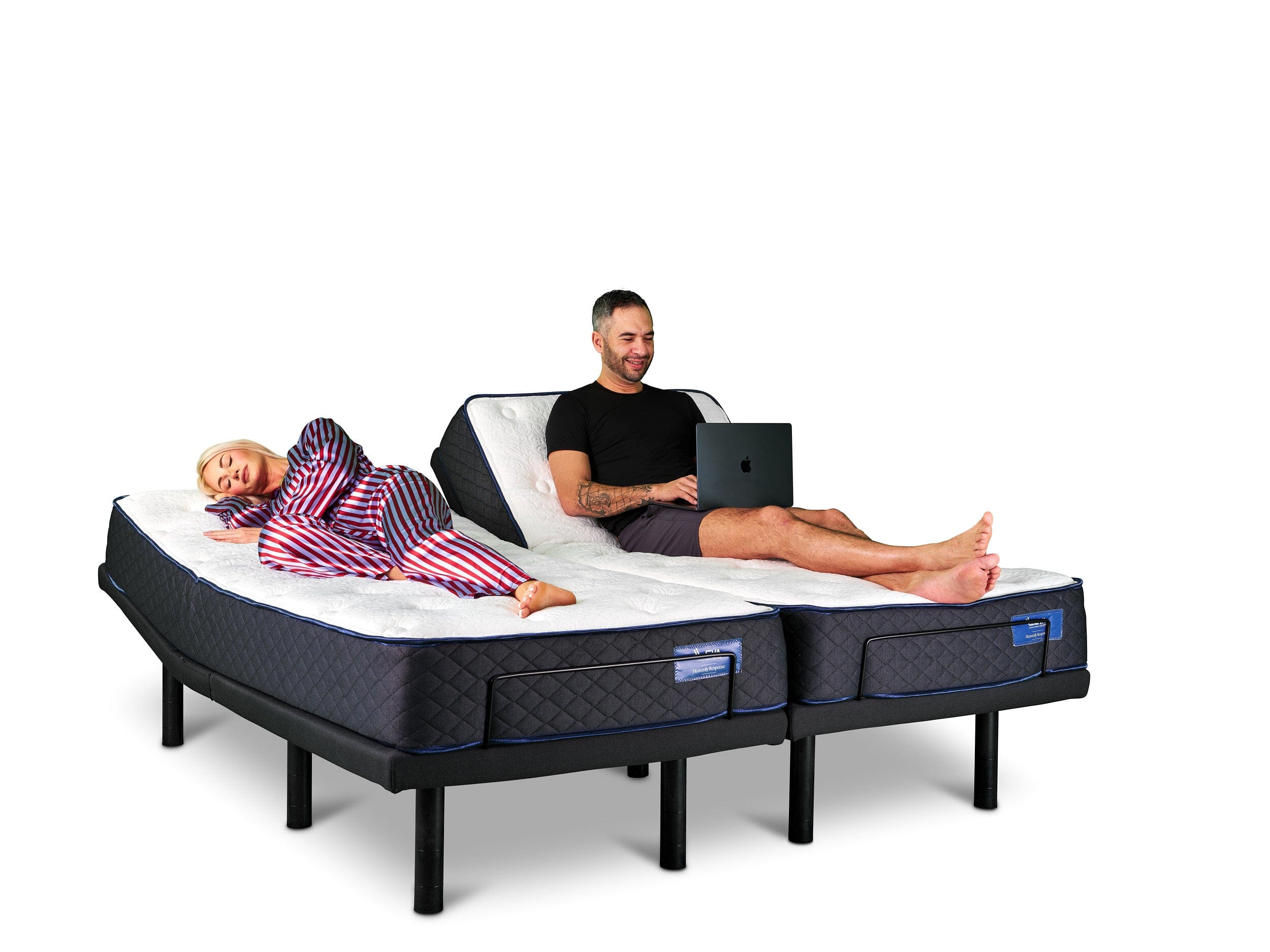
Sleep-disordered breathing affects approximately 26% of adults aged 30–70, and a snoring or apnea partner is one of the most significant sources of sleep disruption reported by couples, one that does not habituate and remains even after years of exposure. Leva Sleep’s adjustable bases address this directly. The anti-snore mode (coming spring 2026) detects snoring and makes micro-adjustments to the head of the bed to potentially reduce or eliminate snoring. For partners with different comfort needs, Split King and Split Queen adjustable bases provide fully independent head and foot articulation on each side, powered by whisper-quiet German motors, with individual settings controlled through the Leva Sleep app.
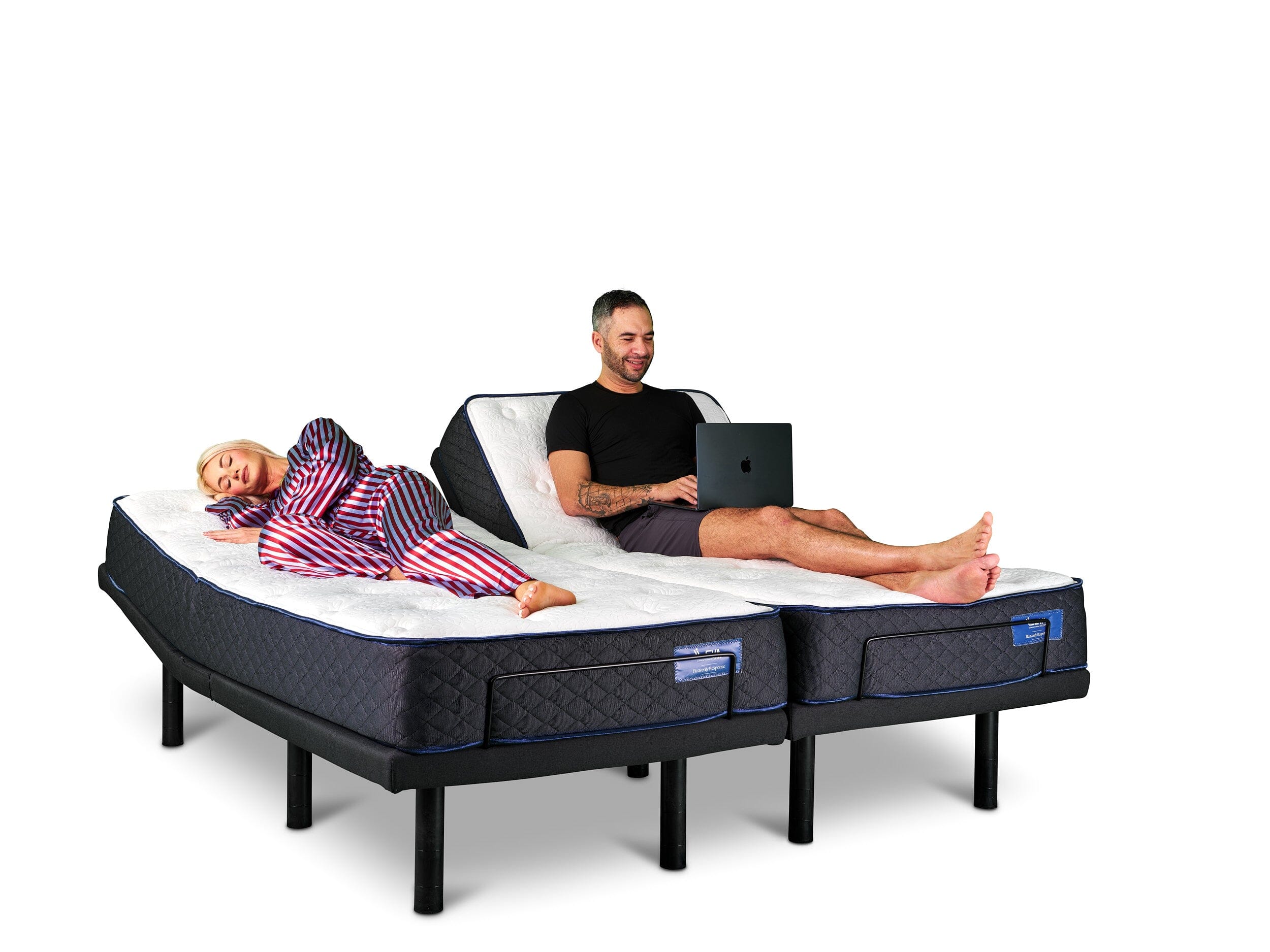
Couples Angle: Independent head elevation lets one partner raise their head position to open airways while the other side of the bed remains unchanged. A split configuration means each partner keeps their preferred sleep position.
Find Your Split Adjustable Base
Why Your Sleep Quality May Still Feel Poor
Poor sleep quality in otherwise healthy adults often traces to a few common failure points.
- Inconsistent wake time: Variable wake times prevent the circadian rhythm from anchoring and disrupt the timing of melatonin, cortisol, and core temperature decline.
- Alcohol within 3 hours of bed: Alcohol suppresses REM sleep in a dose-response manner, with REM disruption occurring even at low doses (≤0.50 g/kg, about two standard drinks) and worsening at higher doses, even when it appears to aid initial sleep onset.
- Late meals: Heavy, spicy, or high-fat meals close to bedtime raise core temperature through digestion and delay sleep onset, with substantial meals best finished at least 3 hours before bed.
- Partner disturbance: Adults sharing a bed experience significantly more movement-related awakenings than solo sleepers, awakenings that are often brief and not consciously remembered but fragment sleep architecture and reduce slow-wave sleep.
- Underlying medical issues: Sleep apnea, acid reflux, and hip or knee pain all fragment sleep through mechanisms that daily habits cannot resolve. Undiagnosed obstructive sleep apnea carries real cardiovascular and metabolic risks independent of whether a partner is in the room and warrants a sleep study rather than a room change.
When these failure points have been addressed and sleep quality remains poor, the sleep surface often becomes the limiting factor. A flat bed cannot easily accommodate independent comfort needs, temperature differences, or positional adjustments that reduce snoring.
When Habits Are In Place: The Leva Sleep Solution
Daily habits resolve a significant portion of sleep disruption. They do not resolve a partner’s snoring, a 3°C temperature preference gap, or the need for medically recommended head elevation. For couples who have refined their routines and still face these issues, the sleep surface becomes the remaining variable.
Leva Sleep is a Canadian adjustable sleep system specialist with over 8 years in business, $50M+ in lifetime sales, and 25,000+ customers. Its product line focuses on couples with differing sleep needs, and its direct-to-consumer model delivers luxury-grade systems at 30–50% less than comparable competitors.
Key features relevant to couples include:
- Split King and Split Queen adjustable bases: Two fully independent bases with head and foot articulation on each side. Each partner sets their own elevation, massage, and position, and the other side stays put. Leva Sleep offers a Split Queen adjustable bed package in a queen footprint.
- Anti-snore mode (coming spring 2026): Detects snoring and makes micro-adjustments to the head of the bed to potentially reduce or eliminate snoring.
- Heating & Cooling Pad: Individual temperature control for each side of the bed, which resolves the temperature conflict that room temperature alone cannot address.
- Whisper-quiet German motors: Adjustments occur with minimal noise so a sleeping partner stays undisturbed.
- App control: Custom sleep positions, vibrating alarms, and AI-powered sleep tracking accessible from a smartphone.
- White-glove delivery: In-house delivery and setup in Ontario and Alberta, including old bed removal, assembly, leg height adjustment, and a product tutorial.
- Specialist depth: A range of 15–20 adjustable bed models compared to the 3–5 typically found at general mattress retailers.
When evaluating an adjustable base for couples, focus on several criteria. Confirm that the split configuration provides truly independent head and foot articulation on both sides. Check that the motors run quietly enough not to wake a sleeping partner. Look for app control that allows individual settings per side. Verify that the delivery service includes in-home setup rather than curbside drop-off. The table below maps these criteria against a flat bed and the Leva Sleep adjustable base.
| Feature | Flat Bed | Leva Sleep Adjustable Base |
|---|---|---|
| Independent head elevation | Not available | Available on each side independently (Split King and Split Queen) |
| Temperature control | Not available; temperature mismatch between partners is a documented co-sleeping disruption | Heating & Cooling Pad provides individual temperature regulation per side |
| Snoring intervention | Not available | Anti-snore mode (coming spring 2026) detects snoring and makes micro-adjustments to head position |
| Motion isolation | Varies by mattress type; traditional innerspring mattresses transfer movement freely | Whisper-quiet German motors; compatible with motion-isolating foam and hybrid mattresses |
Compare Leva Sleep Adjustable Packages
Frequently Asked Questions
What Is The 10-3-2-1-0 Rule For Sleep?
The 10-3-2-1-0 rule is a sleep hygiene framework in which each number represents a cutoff before bedtime: no caffeine for 10 hours before bed, no alcohol or food for 3 hours before bed, no work for 2 hours before bed, no screens for 1 hour before bed, and 0 snooze button presses. Each cutoff targets a specific physiological mechanism. Caffeine blocks adenosine receptors and has a 5–6 hour half-life. Alcohol suppresses REM sleep. Digestion raises core body temperature. Work keeps cortisol elevated. Screens suppress melatonin. The caffeine and alcohol components are well supported by clinical research. The work and screen cutoffs are evidence-informed conventions rather than precisely tested thresholds, but both address real physiological barriers to sleep onset.
What Foods Help You Sleep Better?
Tryptophan is an essential amino acid that the body converts to serotonin and then to melatonin. For melatonin synthesis in the brain, tryptophan must cross the blood-brain barrier, where it competes with large neutral amino acids. A higher plasma tryptophan/LNAA ratio favours this transport and is increased by intake of tryptophan-rich protein and carbohydrates. Other nutrients such as vitamin B6 and omega-3 fatty acids also play roles, and the exact timing of dietary tryptophan conversion to melatonin remains unclear.
Examples of foods that support sleep include tryptophan sources such as turkey, eggs, dairy, nuts, and seeds, as well as oats, whose complex carbohydrates increase serotonin and lower cortisol. Pairing tryptophan-rich foods with a small amount of complex carbohydrate helps tryptophan cross the blood-brain barrier and promote drowsiness. The more important dietary rule for sleep concerns what to avoid. Heavy, spicy, or high-fat meals close to bedtime raise core temperature through digestion and delay sleep onset, with substantial meals best finished at least 3 hours before bed. A light snack inside the 3-hour window is generally acceptable, while a full meal is better scheduled earlier. Alcohol consumed before bed suppresses REM sleep in a dose-response manner, with REM disruption occurring even at low doses (≤0.50 g/kg, about two standard drinks) and worsening at higher doses; shortened sleep onset latency (drowsiness) occurs only at high doses (≥0.85 g/kg, about five standard drinks), which likely exacerbates the subsequent REM sleep disruption.
How Can Couples Sleep Better Together?
Couples sleep better together when they align on the habits that have the largest physiological impact and choose a sleep setup that respects individual needs. Shared priorities include consistent wake times, a joint caffeine cutoff, a cool bedroom, and a wind-down routine that converges at a consistent bedtime. A split adjustable base with independent head and foot articulation on each side lets one partner elevate their head to reduce snoring while the other sleeps flat. Dual-zone temperature control addresses the thermal conflict that a single room thermostat cannot. Separate blankets eliminate the cover-pulling disruption while both partners remain in the same bed. For couples where snoring is the primary issue, a sleep study to rule out obstructive sleep apnea is the appropriate first step, because positional adjustment and anti-snore technology work best alongside a medical evaluation.
Conclusion: Sleep Better Together
The daily routine framework for deeper, higher quality sleep follows a clear logic from morning to night. A fixed wake time and morning light anchor the circadian rhythm. A caffeine cutoff protects adenosine buildup. A cool bedroom and an evening warm shower support the necessary temperature decline. A wind-down with reduced light and no screens prepares the brain for sleep. Each habit works through a specific physiological mechanism, and each becomes more powerful when both partners follow it together.
Consistent wake time forms the foundation. Everything else, including melatonin timing, cortisol rhythm, temperature decline, and sleep pressure, builds on that anchor. For Canadian couples in their 40s and 50s who have already tried these habits and still wake unrefreshed, the remaining variable often becomes the sleep surface. A flat bed cannot easily accommodate independent elevation, temperature preferences, or snoring intervention.
When daily habits are in place and partner-related sleep disruption continues, a Split King or Split Queen adjustable base from Leva Sleep addresses the gaps that habits cannot close. Couples stay in the same room while each partner finally gets the support they need.
Start Building Your Leva Sleep Setup