Written by: Matthew Timmins, Founder and Managing Director, Leva Sleep | Last updated: July 28, 2026
Key Takeaways
- Hi-lo height adjustment is the top safety feature because it lets seniors place both feet flat on the floor for steadier entry and exit.
- Reverse-Trendelenburg tilt, battery backup, zero-clearance design, and under-bed lighting each target common fall and entrapment risks for adults 65 and older.
- Quiet motors, locking casters, and integrated side rails support independent repositioning and stable transfers without waking partners or creating trip hazards.
- Professional white-glove delivery that includes leg-height adjustment and entrapment-gap inspection is essential to get the full safety benefit from any adjustable bed system.
- Leva Sleep offers adjustable bed packages with these safety features and professional setup across Ontario and Alberta. Explore Leva Sleep’s adjustable beds for aging in place.
Eight Adjustable Bed Safety Features That Matter Most for Seniors
- Hi-Lo Height Adjustment. A true hi-lo base moves the entire sleep surface vertically, not just the head and foot sections. The low position lets users place both feet flat on the floor for safer entry and exit, while the high position reduces caregiver bending during transfers. Keeping the bed in a low position during rest can help reduce fall risk. Adjust the height before any transfer begins.
- Trendelenburg / Reverse-Trendelenburg Tilt. The reverse-Trendelenburg position, with the head up and feet down, reduces pressure on the diaphragm and improves lung expansion. This setting can help seniors with reflux or mild respiratory concerns. The head-down classic Trendelenburg tilt increases cardiac and pulmonary workload in older adults and is contraindicated in those with glaucoma, decompensated heart failure, or severe COPD. For home use, reverse-Trendelenburg is the broadly appropriate option for seniors.
- Battery Backup. Power outages can leave a senior stuck in an elevated position that makes safe exit impossible. A battery backup system lets the base lower to a safe height during an outage. Verify that any Canadian model’s backup system works with standard 120V household wiring and that the backup engages automatically rather than relying on a manual switch.
- Zero-Clearance Design. Zero-clearance frames sit low to the floor or fit inside an existing bed frame without exposed moving parts, which minimizes trip hazards for seniors. Equally important, gaps between the mattress edge and frame can widen during head or foot articulation, creating an entrapment risk that seniors with reduced sensation should check before use. Health Canada enforces entrapment hazard mitigation under the Canada Consumer Product Safety Act. Confirm that any model meets current CCPSA requirements.
- Under-Bed Lighting. Soft LED lighting that activates via remote reduces fall and trip risks during nighttime bathroom trips. Motion-activated lighting adds another layer of safety for users who may not reach for a remote when groggy.
- Safety Locks / Locking Casters. Locking casters prevent unintended bed movement during transfers and position changes. This stability is critical when a senior shifts weight from seated to standing. Confirm that locks engage independently on each wheel and that the mechanism is reachable without deep bending.
- Side-Rail Compatibility. A built-in side rail is safer than a standalone add-on because it is less likely to shift out of position. A 2025 retrospective quality-improvement study found that height-adjustable beds did not significantly reduce fall incidence without bundled protocols that include consistent siderail use and patient-specific fall risk assessment. Specify side rails at purchase rather than retrofitting them later.
- Quiet Motors. Quiet motors enable frequent nighttime position changes without waking a sleeping partner or discouraging independent use. Loud or jerky motors cause seniors to avoid repositioning. That avoidance increases pressure injury risk and removes much of the safety benefit of adjustability.
Explore Leva Sleep’s whisper-quiet adjustable bed models, engineered with German motors and available with white-glove delivery across Ontario and Alberta.
With these eight safety features in mind, the next step is choosing specific models that deliver them for Canadian seniors.
Best Adjustable Bed Features for Canadian Seniors
No single model works for every senior, because the right choice depends on height range, weight capacity, couple configuration, and professional setup. A bed suited to aging in place should offer a true hi-lo height function and a weight capacity that exceeds the combined sleep weight by at least 30 percent. This margin supports age-related weight fluctuations from medication side effects or fluid retention while reducing long-term motor strain. Professional installation should verify leg height and gap clearances.
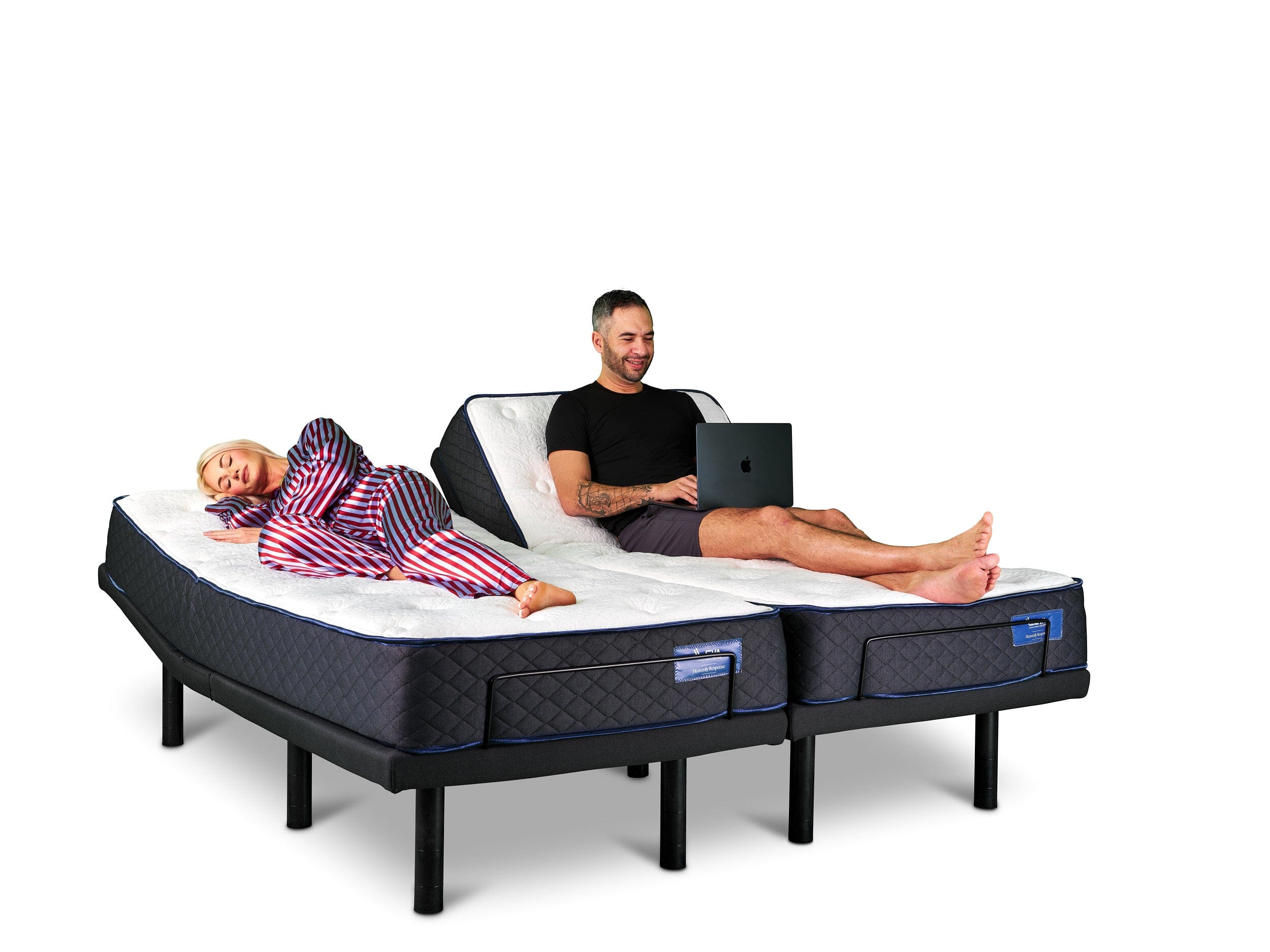
Leva Sleep offers 15–20 adjustable base models, compared to the 3–5 typically found at general mattress retailers. Pricing runs 30–50% below comparable medical-grade system pricing, achieved through vertical integration and direct-to-consumer distribution. In-house white-glove delivery includes bedroom setup, leg-height adjustment, and a product tutorial, which all function as safety measures.
How Clinicians View Adjustable Beds for Seniors
Clinicians recommend elevated head positioning for conditions including acid reflux, mild sleep apnea, and post-surgical recovery. Transfer safety is the other primary clinical reason. The National Library of Medicine notes that safe transfers may require bed-height adjustment before the move begins, and that some situations call for additional assistance or mechanical lift support. Physicians and occupational therapists usually recommend adjustable beds as one part of a broader fall-prevention plan rather than as a standalone fix.
Trendelenburg Function and Breathing in Older Adults
When adjustable bed listings mention a “Trendelenburg function,” buyers need to distinguish between two opposite positions. Reverse Trendelenburg, with the head elevated and feet lowered, reduces aspiration risk, lowers gastroesophageal reflux, and is used in cardiology and pulmonology to improve respiratory mechanics in elderly patients with heart failure or advanced COPD. Classic Trendelenburg, with the head down, decreases functional residual capacity and lung compliance while increasing the work of breathing, and should be performed only by healthcare professionals in monitored settings and is not recommended for routine home repositioning of seniors. For home adjustable beds, confirm that any tilt function defaults to reverse Trendelenburg and that the head-down angle is limited or locked out for unsupervised use.
Battery Backup Adjustable Beds in Canada
A power outage that leaves a senior’s head elevated at 45 degrees creates an immediate fall risk when the person tries to exit without motor assistance. Battery backup systems address this risk by letting the base lower to a safe exit height without grid power. When evaluating Canadian models, confirm that the backup activates automatically, because manual activation forces the user to remember a procedure during a stressful outage. The battery should provide enough charge for at least one full lowering cycle and should be user-replaceable so that worn-out cells do not require replacing the entire base. Finally, verify compatibility with Canadian electrical standards of 120V and 60Hz, and ask whether the backup is included or sold separately, because pricing varies significantly between models.
Zero-Clearance Beds and Entrapment Prevention for Seniors
Zero-clearance adjustable bed frames provide a safety advantage for seniors by minimizing trip hazards through low floor profiles and no exposed moving parts. The entrapment risk on articulating bases is distinct. As the head or foot section rises, the entrapment gap mentioned earlier can widen. Seniors with reduced sensation should check these gaps before use. Health Canada’s enforcement of the Canada Consumer Product Safety Act covers entrapment hazard criteria for consumer products. Request written confirmation from any retailer that the model meets current CCPSA entrapment requirements.
Mattress Pairing and Edge Support for Older Adults
According to the Public Health Agency of Canada, falls are the leading cause of injury-related hospitalization among Canadians over 65, with one in three falling at least once per year, and a significant portion occurring during sit-to-stand transfers from the bed edge.
Hybrid mattresses with individually wrapped pocket coils and reinforced foam perimeter encasement at 1.8 lb/ft³ density or higher are recommended over all-foam or non-reinforced innerspring models for seniors. They combine resilient coil support with stable edge construction that resists compression during prolonged sitting or transfers. The ideal total bed height, measured from floor to top of mattress, is 20 to 23 inches, allowing knees to form approximately 90 degrees when seated with feet flat on the floor. A hi-lo base paired with the correct mattress thickness makes this target height realistic for a wide range of body types.
View adjustable bed and mattress packages, paired with purpose-built hybrid mattresses designed to maintain edge integrity through full articulation.
To see how these safety specifications appear in real products, review the comparison table below for four representative models available in Canada.
Comparison of Leading Adjustable Bed Models (2026 CAD)
The table below compares four models on specifications relevant to senior safety. Every figure is drawn from the cited source. Where a specification was not published by the manufacturer or a verifiable retailer, the cell is marked N/P (not published).
| Feature | Orthex Sophia 4 | Flexabed Hi-Low SL | Leva Sleep (flagship split base) | Standard Lifestyle Base (category average) |
|---|---|---|---|---|
| Hi-Lo vertical range | N/P | 13.25 in – 20.75 in | Adjustable via white-glove leg-height setup, hi-lo range confirmed at delivery | Fixed height, head and foot articulation only |
| Reverse Trendelenburg | N/P | N/P | Available on select models | N/P |
| Battery backup | N/P | N/P | Available on select models | N/P |
| Weight capacity | 800 lbs (Twin XL), 900 lbs (Double/Queen) | 400 lb (single); 700 lb (dual king) | Varies by model, confirm at purchase | Varies, typically 500–750 lb |
| Zero-clearance design | N/P | N/P | Available on select models | N/P |
| Motor noise | N/P | N/P | Whisper-quiet German motors | N/P |
| Starting price (CAD) | $3,689.99 | N/P (USD pricing, verify CAD with retailer) | 30–50% below comparable medical-grade systems, verify current pricing at levasleep.com | N/P |
Note: Specifications for models not fully published by verifiable Canadian sources are marked N/P. Contact each retailer directly to confirm current Canadian pricing, warranty terms, and feature availability before purchase.
Published specifications offer a starting point, but in-person or specialist-assisted evaluation is essential to confirm that a model fits the user’s specific safety needs.
Checklist for Evaluating an Adjustable Bed for Aging in Place
Use the following checklist when comparing models in person or with a sales specialist. Work through each point to confirm safety and fit.
- Confirm the lowest platform height and verify it allows both feet to rest flat on the floor at the user’s specific leg length.
- Measure total bed height, including base and mattress, and confirm it falls within the target range described earlier for safe sit-to-stand transfers.
- Sit directly on the mattress edge for 30 seconds to assess compression and tilt before committing to a mattress pairing.
- Operate the motor at its slowest and fastest settings to evaluate noise level in a quiet room.
- Confirm that battery backup is included, activates automatically, and covers at least one full lowering cycle.
- Inspect the gap between mattress perimeter and frame at maximum head and foot elevation to check for entrapment risk.
- Verify that the weight capacity exceeds combined sleep weight, including mattress, sleepers, and bedding, by at least 30 percent.
- For couples, confirm that split-side independent controls are available and that each side can be adjusted without disturbing the other.
- Ask whether white-glove delivery includes leg-height adjustment and a product tutorial, not just placement.
- Request written confirmation that the model meets current CCPSA entrapment requirements.
Conclusion: Matching Bed Features to Safety and Independence Goals
The eight features above, including hi-lo height, reverse-Trendelenburg tilt, battery backup, zero-clearance design, under-bed lighting, locking casters, integrated side rails, and quiet motors, form the engineering base of a safe aging-in-place sleep system. No single feature removes fall risk on its own. Evidence points to bundled protocols that combine the right hardware with professional setup and consistent daily use.
For Canadian buyers in Ontario and Alberta, Leva Sleep’s vertically integrated model delivers these features at the pricing advantage described earlier, with in-house white-glove delivery that includes the setup steps most retailers leave to the customer. Verify current 2026 CAD pricing and white-glove availability directly with Leva Sleep before purchase, because configurations and regional availability can change.
Request a consultation to confirm the right model, mattress pairing, and delivery option for your specific safety and comfort needs.
Frequently Asked Questions
What is the difference between a medical-grade hi-lo bed and a standard adjustable base for seniors?
A medical-grade hi-lo bed moves the entire sleep surface up and down vertically using a dedicated motor, in addition to adjusting the head and foot sections. This design allows the platform to lower close to the floor during rest, which reduces fall distance if a senior rolls or shifts. It can also rise to a transfer height that supports safe sit-to-stand movement without excessive caregiver bending. A standard lifestyle adjustable base only articulates the head and foot sections, and the overall height stays fixed at whatever the leg length allows. For seniors with meaningful mobility limitations, the vertical hi-lo function is the single most important safety difference between the two categories. Lifestyle bases with adjustable legs can approximate a safe static height, but they cannot be raised or lowered dynamically during use.
Is a split adjustable bed safe for an elderly couple when one partner has mobility limitations?
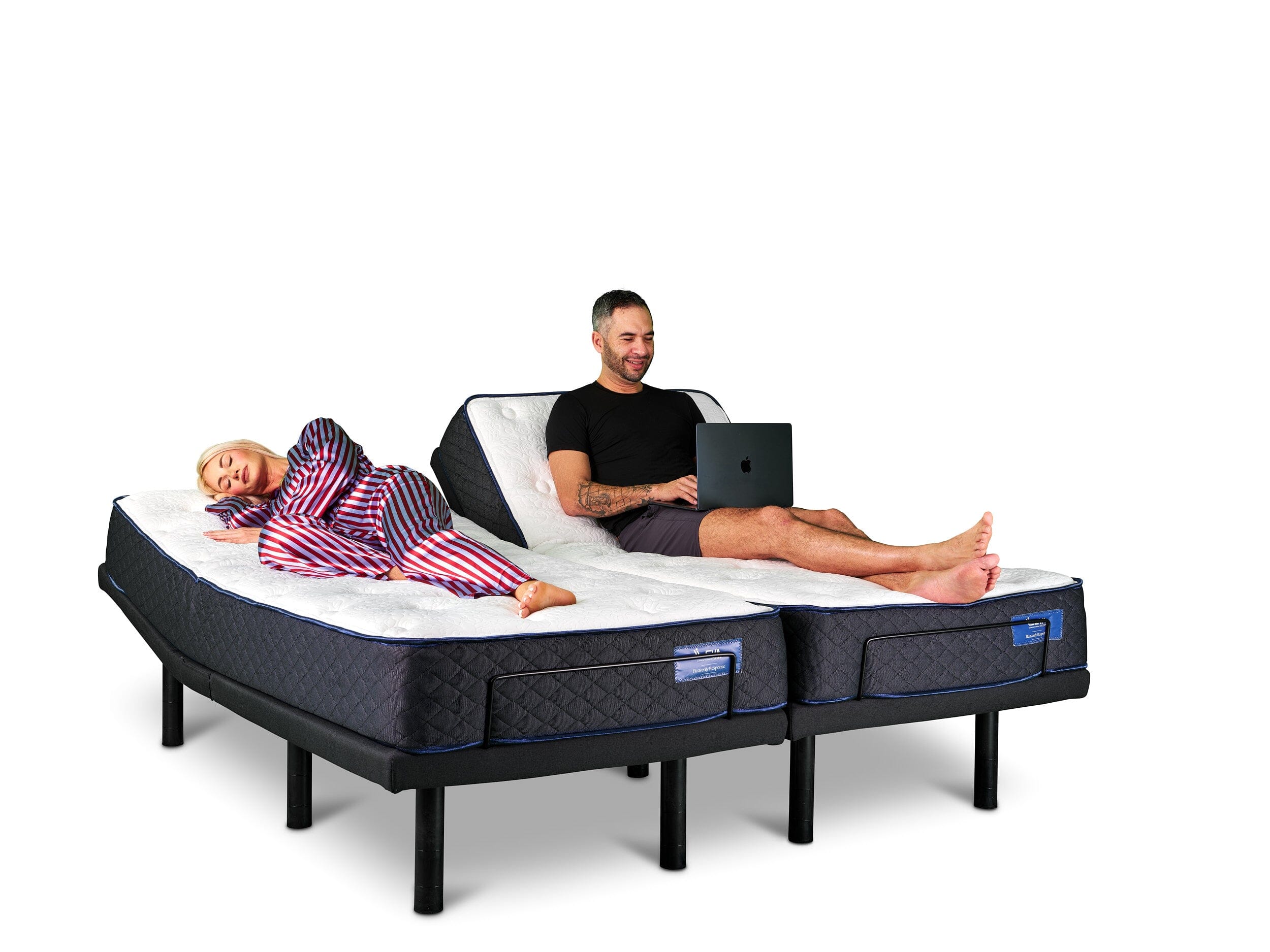
A split adjustable bed, where each side operates independently, usually works well for couples with differing needs, including situations where one partner has mobility limitations. Each side can be set to an appropriate height, elevation angle, and firmness without affecting the other. Key safety checks include ensuring the gap between the two mattress halves does not create an entrapment or roll-off risk, confirming that the remote or app controls are accessible and intuitive for the user with limited mobility, and verifying that the weight capacity of each side independently meets the requirement. Professional white-glove setup is especially important in this configuration to confirm leg heights, gap clearances, and control accessibility before the first night of use.
How important is professional delivery and setup for an adjustable bed purchased for fall prevention?
Professional setup functions as a direct safety factor, not just a convenience upgrade. The leg height of an adjustable base determines the total bed height, which must fall within the 20–23 inch range for most seniors to achieve a safe sit-to-stand transfer position. An improperly set leg height, either too high or too low, undermines the fall-prevention benefit of the entire system regardless of how many safety features the base includes. White-glove delivery that includes leg-height adjustment, gap inspection, side-rail installation, and a product tutorial helps ensure the bed is configured correctly from the first night. It also gives the senior or caregiver a trained point of contact to ask questions about safe operation before problems arise.
What mattress firmness is recommended for seniors using an adjustable bed for safe transfers?
A medium-firm hybrid mattress with individually wrapped pocket coils and a reinforced foam perimeter is the most broadly recommended pairing for seniors using adjustable beds. The pocket coil construction provides enough resilience to make rolling, repositioning, and reaching the bed edge physically manageable. The reinforced perimeter resists compression during prolonged sitting, which is the scenario most associated with edge-related falls. All-foam mattresses, including memory foam, tend to compress more at the edge and can make sit-to-stand transfers less stable. Select mattress thickness together with the base leg height so that the total floor-to-mattress-top measurement falls within the 20–23 inch target range for the specific user’s leg length.
Does Leva Sleep deliver and set up adjustable beds in Canada?
Leva Sleep currently offers in-house white-glove delivery in Ontario and Alberta. The service includes delivery to the bedroom, full assembly, leg-height adjustment to the user’s specific needs, a product tutorial covering all remote and app functions, and removal of the old bed through donation or recycling. Trained Leva Sleep staff handle this end-to-end process rather than third-party couriers, which matters for seniors and caregivers who need the bed configured correctly and safely from day one. Availability and scheduling should be confirmed directly with Leva Sleep, because service areas and lead times can change.