
Written by: Matthew Timmins, Founder and Managing Director, Leva Sleep
Key Sleep Benefits for Canadian Couples
- Zero-gravity posture raises the head and knees into a gentle V-shape, which distributes weight and eases lower-spine pressure.
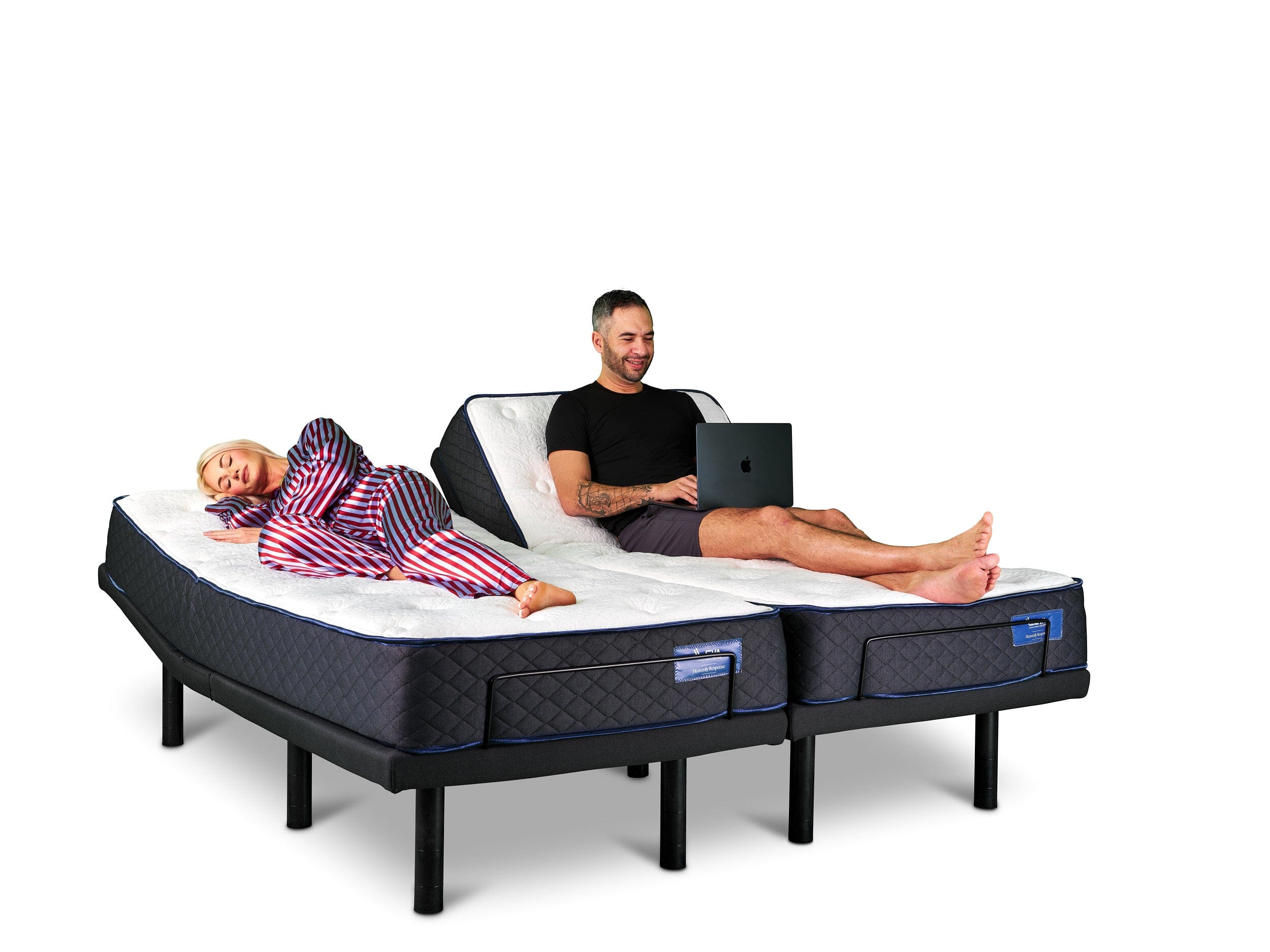
- Independent controls on split bases let each partner set a different angle, so one can elevate for reflux or apnea while the other stays flat.
- Head elevation helps keep airways open, reduces snoring, and can limit stomach acid from rising, which eases nighttime reflux.
- Knee elevation can reduce lumbar arch and leg swelling, easing back tension and improving circulation for many sleepers.
- Leva Sleep’s Split Queen and Split King adjustable bases deliver these benefits with whisper-quiet motors and white-glove delivery. Explore Leva Sleep’s Split Queen and Split King packages to see what fits your space and budget.
Quick-Read Overview of Zero-Gravity Health Effects
Zero-gravity positioning supports several specific outcomes backed by clinical and observational evidence.
- Head elevation can reduce snoring by helping keep the upper airway open.
- Raising the upper body makes it harder for stomach acid to travel upward, which can ease nighttime reflux.
- Slight knee elevation can reduce lumbar arch and lower-back tension.
- Leg elevation above heart level can help drain fluid and ease mild swelling.
- Independent controls on a Split Queen or Split King base let each partner choose a different angle that suits their body.
Leva Sleep’s Split Queen and Split King bases bring these benefits together with whisper-quiet motors, local assembly, in-house white-glove delivery, and pricing that runs 30–50% below comparable luxury competitors. An anti-snore mode adds automatic micro-adjustments when snoring is detected.
After reviewing these core benefits, you can shop Leva Sleep’s adjustable beds to compare models and features.
Clinical Evidence Behind Zero-Gravity Sleep Positions
The table below summarises the clinical basis for each benefit. Every figure is drawn from a cited source and builds on the outcomes introduced above.
| Condition | Mechanism | Evidence | Limitation |
|---|---|---|---|
| Snoring | Head elevation helps keep the upper airway open | Sleep Foundation lists head elevation as a practical positional strategy | Does not resolve every cause of snoring, positional therapy only |
| Acid reflux / GERD | Upper body above stomach can limit upward acid travel | Elevating the head of the bed can help reduce nighttime heartburn | Lifestyle change, not a substitute for medical treatment of severe GERD |
| Lower back pain | Knee elevation reduces lumbar arch toward neutral | Slight knee elevation eases lower back tension by reducing the lumbar arch | Benefit varies by pain aetiology, consult a physiotherapist for chronic conditions |
| Leg swelling / circulation | Legs above heart level help drain built-up fluid | Cleveland Clinic recommends elevating legs above heart level to ease mild swelling | Not appropriate for some cardiovascular conditions without physician guidance |
| Obstructive sleep apnea (OSA) | Head-of-bed elevation reduces airway collapse | Head-of-bed elevation can reduce the Apnea-Hypopnea Index in some OSA patients | Positional therapy is adjunctive, moderate-to-severe OSA requires physician-directed treatment |
How Zero-Gravity Adjustable Bases Support Couples
A split adjustable base uses two independent frames side by side under a shared mattress size. Each partner controls their own head-of-bed elevation, so one can raise the head for sleep apnea or reflux while the other remains flat.
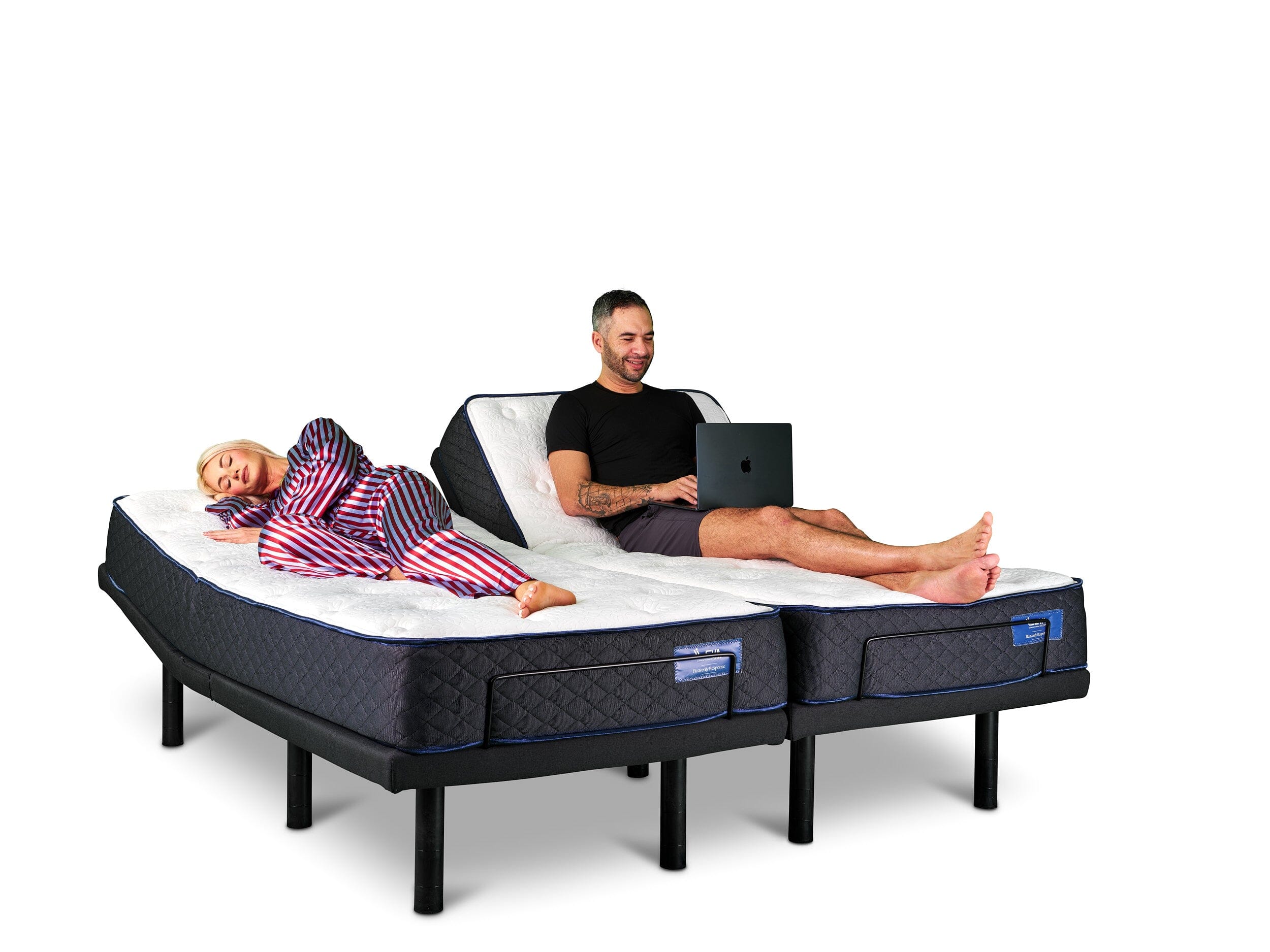
Leva Sleep’s bases use whisper-quiet motors so position changes during the night are less likely to wake a sleeping partner. Because couples often adjust at different times, the Leva Sleep app provides full Bluetooth control from each partner’s phone, with custom saved positions and vibrating alarms that stay discreet. The app’s anti-snore mode detects snoring and makes small automatic head adjustments, which can address the issue before it wakes either partner.
For sleepers who need more targeted support, lumbar control and pillow tilt refine lower-back and neck alignment beyond the standard zero-gravity preset. Couples can also choose different zero-gravity angles on a split base, so one partner enjoys more knee elevation while the other prefers a flatter feel, without either person compromising their therapeutic position.
Couples Who Benefit Most from Zero-Gravity Beds
Several groups see consistent benefits from zero-gravity positioning on a split adjustable base.
- Snorers and their partners: About 40% of adult men and 24% of adult women snore regularly. Head elevation can address positional snoring without a mask or medication.
- GERD sufferers: GERD affects 1 in 6 adult Canadians, and lifestyle recommendations include raising the head of the bed or elevating the upper body. Nighttime elevation is a standard first-line lifestyle measure.
- Back and hip pain: Individuals with lower-back tension or hip discomfort often benefit from the neutral spinal position created by simultaneous head and knee elevation.
- Sleep-divorce couples: The AASM 2025 Sleep Prioritization Survey found that 31% of adults have opted for a sleep divorce at some point. Independent controls help many of these couples return to the same bed with personalised positions.
- Side sleepers: Side sleepers can use zero-gravity positioning with a shallower 10–15° head elevation and minimal knee lift to maintain neck, hip, and shoulder alignment.
Buying Checklist: Zero-Gravity, Sleep Apnea, Reflux, and Back Pain
Before purchasing, match the features of any adjustable base to your household’s specific needs.
- Medical conditions present: Confirm with a physician whether positional therapy suits your situation alongside existing treatment such as CPAP for OSA or proton pump inhibitors for GERD.
- Sleep position: If a side sleeper’s shoulder feels jammed or hip feels compressed in zero-gravity positioning, the angle is too aggressive. Start with shallower angles and adjust slowly.
- OSA severity: Head-of-bed elevation is adjunctive for OSA, so work with a physician before reducing or replacing CPAP therapy.
- Canadian pricing range: Quality split adjustable base packages in Canada span several price points. Leva Sleep’s direct-to-consumer model prices its Split Queen and Split King systems 30–50% below comparable luxury competitors.
- Delivery and setup: Confirm whether the retailer offers in-home assembly, old-bed removal, and a product tutorial. Leva Sleep’s in-house white-glove delivery service covers all of these for a fee in Ontario and Alberta.
- Motor noise: Check that the base uses quiet motors. Loud actuators can defeat the purpose of independent adjustability if position changes wake a sleeping partner.
- Mattress compatibility: Earlier we noted that a mattress must stay genuinely supportive as it bends, or the incline may cause the spine to sag out of alignment. Leva Sleep designs its all-foam and hybrid pocket-coil mattresses specifically for adjustable bases.
Once you have this checklist in mind, you can find the right adjustable base for your health needs and compare detailed specifications.
Split Queen vs Split King: Space and Comfort Tradeoffs
The table below compares Split Queen and Split King configurations for Canadian bedrooms. Measure room dimensions and doorway clearance before ordering.
| Feature | Split Queen (2 × 30″ wide) | Split King (2 × Twin XL, 2 × 38″ wide) | Consideration |
|---|---|---|---|
| Total width | 60 inches | 76 inches | Split King requires a larger bedroom footprint |
| Total length | 80 inches | 80 inches | Same length for both |
| Per-partner width | 30 inches | 38 inches | Split King gives each sleeper more personal space |
| Independent controls | Yes, each side adjusts separately | Yes, each side adjusts separately | Both configurations support personalised zero-gravity settings for each partner |
| Room suitability | Smaller master bedrooms, easier doorway clearance | Larger master bedrooms, standard king frame | Measure doorways and hallways before ordering |
| Leva Sleep availability | Unique offering, built to specification | Standard offering | Split Queen is a rare configuration, and Leva Sleep is a specialist provider |
| Bedding | Requires split-queen-specific fitted sheets | Requires split-king-specific fitted sheets | Leva Sleep designs bedding accessories for both configurations |
Planning Delivery and Daily Use in Canadian Homes
Careful planning before delivery makes setup smoother and daily use easier.
- Measure the bedroom floor space and all doorway and hallway widths the base must pass through.
- Confirm the retailer’s delivery scope. Leva Sleep’s white-glove service delivers to the bedroom, assembles the base, adjusts leg heights, provides a product tutorial, and removes the old bed.
- Check whether the mattress is designed for an adjustable base. Standard innerspring mattresses can crack or delaminate when repeatedly flexed.
- Download the control app before delivery and confirm Bluetooth compatibility with your devices.
- Ask about anti-snore mode availability and whether a firmware update is required on existing units.
- Verify the warranty terms for both the base and the mattress, and confirm that the retailer services Ontario and Alberta.
Leva Sleep has served more than 25,000 customers over 8 years and assembles its systems locally, which supports quality control and shortens lead times compared to internationally drop-shipped products.
Common Buying Mistakes Couples Can Avoid
- Buying a single adjustable base for two people: A single base cannot provide independent positioning. Only a split configuration lets each partner set their own angle.
- Ignoring motor noise specifications: A base that sounds quiet in a showroom may seem louder in a silent bedroom at 2 a.m. Ask about decibel ratings or whisper-quiet motor certification.
- Using an incompatible mattress: As noted earlier, a mattress that does not stay supportive as it bends can cause the spine to sag out of alignment on an incline.
- Treating positional therapy as a cure: Head elevation is a positional therapy option, not a cure for all snoring phenotypes. Consult a physician for diagnosed OSA or severe GERD.
- Overlooking bedding compatibility: Standard fitted sheets often pop off adjustable bases during elevation. Purpose-built sheets with deep pockets and extra elastic stay in place more reliably.
- Skipping the delivery and setup assessment: A bed-in-a-box drop-ship model leaves assembly to the buyer. Large split bases usually need professional setup for correct leg height and safe operation.
- Choosing a generalist retailer over a specialist: General furniture stores typically carry 3–5 adjustable base models. Leva Sleep carries 15–20 models and focuses exclusively on adjustable sleep systems.
Once you understand these pitfalls, you can browse Leva Sleep’s specialist adjustable bed collection with more confidence.
Frequently Asked Questions
Is zero-gravity positioning safe for side sleepers?
Side sleepers can use zero-gravity positioning with a shallower incline, typically 10–15° head elevation and minimal knee lift, to avoid shoulder or hip compression. The practical test is whether the shoulders soften, the lower back feels less pinched, and the neck stays neutral. Individuals with spinal conditions should consult a clinician before changing their sleep angle.
Can an adjustable bed replace a CPAP machine for sleep apnea?
No. Head-of-bed elevation is an adjunctive positional strategy, not a replacement for physician-directed OSA treatment. Studies show that head-of-bed elevation may reduce the Apnea-Hypopnea Index in some OSA patients. Moderate-to-severe OSA still requires medical management, so always work with a sleep physician before changing or discontinuing CPAP therapy.
What is the difference between a Split Queen and a Split King adjustable base?
A Split Queen measures 60 inches wide, with two 30-inch sides, and suits smaller master bedrooms. A Split King measures 76 inches wide, with two 38-inch Twin XL sides, and provides more personal space per partner. Both configurations offer fully independent controls so each partner sets their own elevation. Leva Sleep is one of the few Canadian retailers that builds Split Queen bases to specification.
How does GERD prevalence in Canada relate to adjustable bed use?
The 1-in-6 prevalence mentioned earlier shows how common GERD is among Canadian adults, and lifestyle guidelines include raising the head of the bed as a first-line measure. An adjustable base allows precise, repeatable head elevation without stacking pillows, which can shift during the night. This makes it a practical tool for managing nighttime reflux symptoms alongside any physician-recommended treatment.
What should Canadian couples look for in white-glove adjustable bed delivery?
A genuine white-glove service delivers to the bedroom rather than the doorstep, assembles the base, adjusts leg heights to the customer’s preference, provides a full product tutorial, and removes the old bed. Confirm that the retailer employs its own delivery team rather than subcontracting, and verify that the service area covers your province. Leva Sleep provides this service in Ontario and Alberta.
Conclusion: Bringing Couples Back to the Same Bed
Zero-gravity positioning on a split adjustable base addresses several of the most common reasons Canadian couples compromise their sleep or move to separate rooms, including positional snoring, nighttime acid reflux, lower-back and hip tension, and mismatched elevation preferences. The clinical basis for each benefit is well documented, and independent controls on a Split Queen or Split King base mean neither partner must accept a position that does not suit their needs.
Evaluate any purchase against your bedroom dimensions, the medical conditions present on each side of the bed, motor noise specifications, mattress compatibility, and the retailer’s delivery and support model. Couples who weigh those criteria carefully are well positioned to choose a system that improves sleep quality for both partners without requiring separate rooms.