Written by: Matthew Timmins, Founder and Managing Director, Leva Sleep | Last updated: July 28, 2026
Key Takeaways
- Standard adjustable beds push sleepers away from nightstands when the head rises. This shift creates reach issues that can worsen mobility challenges and contribute to sleep divorce in couples.
- Wall-hugger adjustable beds use a dual-rail sliding mechanism that keeps the upper body close to the wall and nightstand, so phones, water, CPAP equipment, and lamps stay within reach.
- Key benefits include reduced reach strain, a bedroom layout that stays consistent, easier Split King and Split Queen use, and better CPAP compatibility for couples managing pain, snoring, or sleep apnea.
- Wall-hugger bases cost more and may produce slightly more noise. Brushless DC motors and a typical 10-year lifespan help make the premium manageable for nightly users.
- Leva Sleep offers wall-hugger adjustable beds with whisper-quiet motors, Split Queen options, and white-glove delivery in Ontario and Alberta. Explore configurations for your bedroom.
The Problem: How Standard Adjustable Beds Create a Nightstand Gap
Standard adjustable beds pivot at a fixed hinge near the head. When you raise the head, your upper body moves away from the headboard and nightstand. This shift creates a gap that makes it harder to reach your phone, water, lamp, or CPAP equipment.
That gap can feel minor at first. Over time, it can strain shoulders and backs, especially for people with mobility issues or chronic pain. For couples, it can also add frustration when one partner relies on elevation every night and the other does not.
The Solution: How a Wall-Hugger Sliding Mechanism Keeps You Close
Wall-hugger adjustable beds replace the simple hinge at the head section with a dual-rail system. When the motor raises the head, the rail also moves the entire mattress platform forward toward the foot of the bed. Your upper body stays in roughly the same position relative to the wall and nightstand throughout the adjustment.
This movement keeps the nightstand within normal reach instead of creating a gap. Standard motorised adjustable beds move the sleeper away from the headboard and adjacent nightstand when the head section elevates, which breaks that easy reach.
Wall-hugger mechanisms rely on robust linear actuators because they must move the combined weight of the mattress and users horizontally along the glide track. Manufacturers build these frames from steel tubing and validate them through extensive articulation cycles under full load. This testing helps prevent track warping or roller derailment. The added engineering explains why the wall-hugger feature appears mainly on mid-range and premium models.
How Wall-Hugger Adjustable Beds Help in Everyday Use
The wall-hugger mechanism delivers several concrete advantages for couples sharing a bedroom:
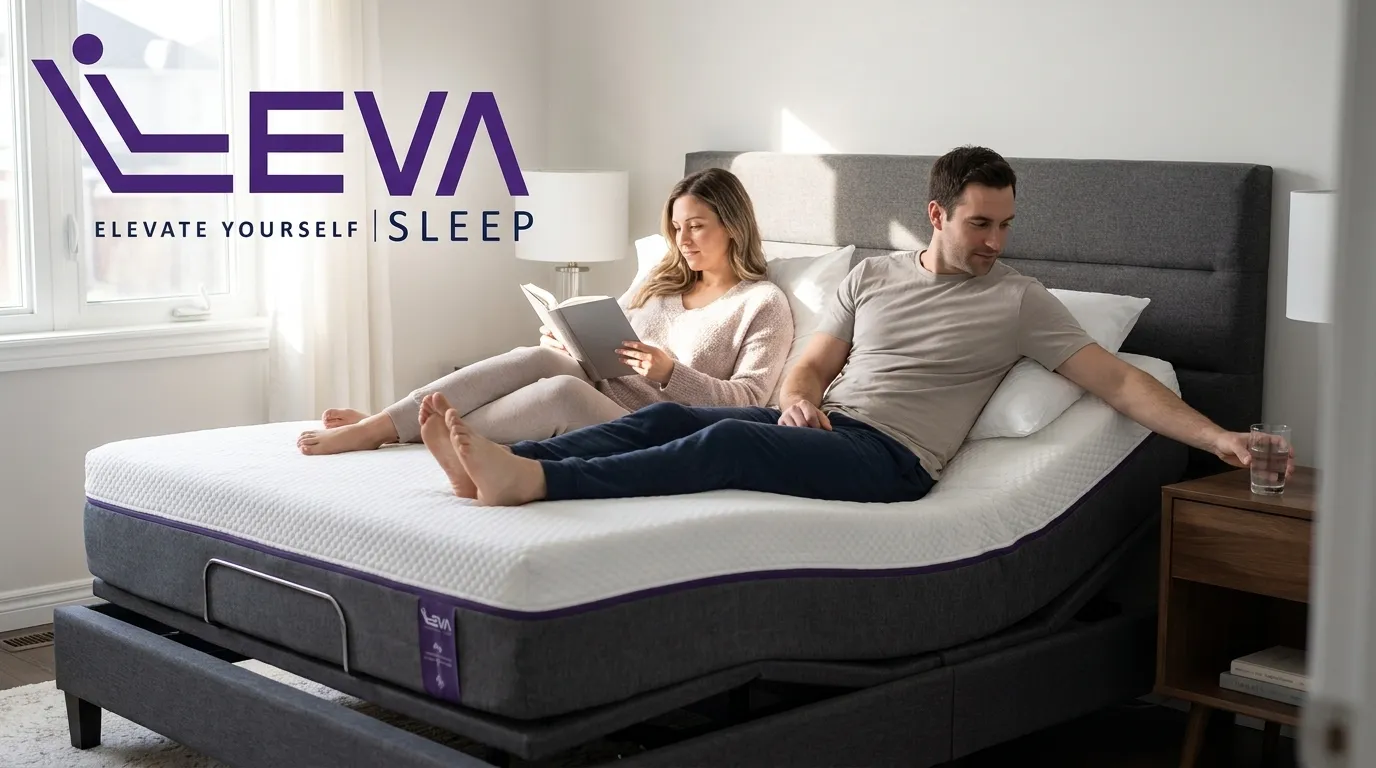
- Preserved nightstand access: The wall-hugging mechanism removes the nightstand gap that appears on standard adjustable beds during head elevation. Water, phones, CPAP equipment, and reading lamps stay within arm’s reach.
- Stable room layout: In a tight bedroom where the bed sits flush against the wall, a wall-hugger base keeps the headboard close to the wall. A standard base creates a visible gap behind the user, which can make the room feel smaller and less polished.
- Reduced reach strain: Keeping bedside items close reduces the need to lean sideways or forward. This reduction in awkward reaching can ease shoulder and back strain, especially for users managing chronic pain.
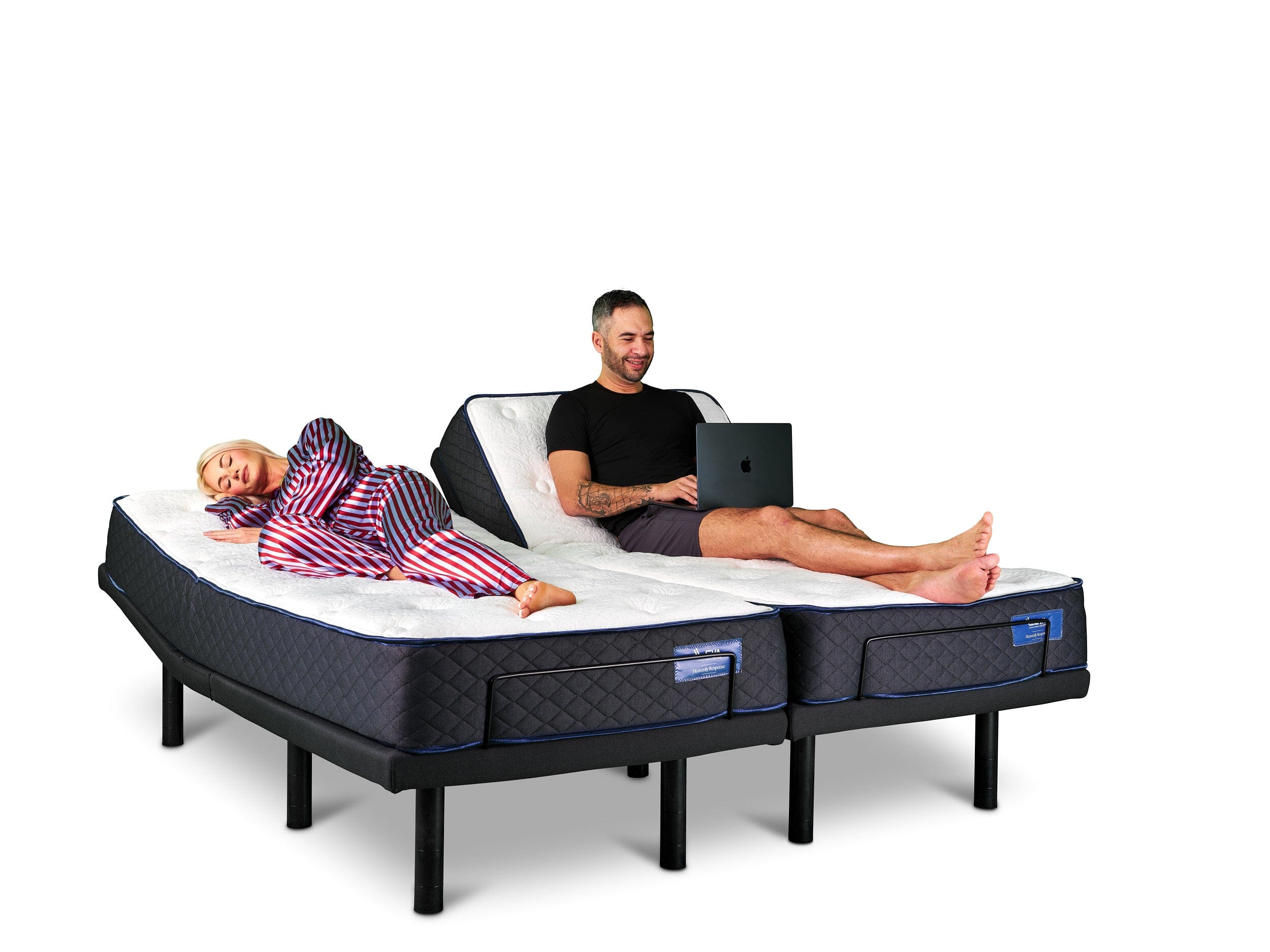
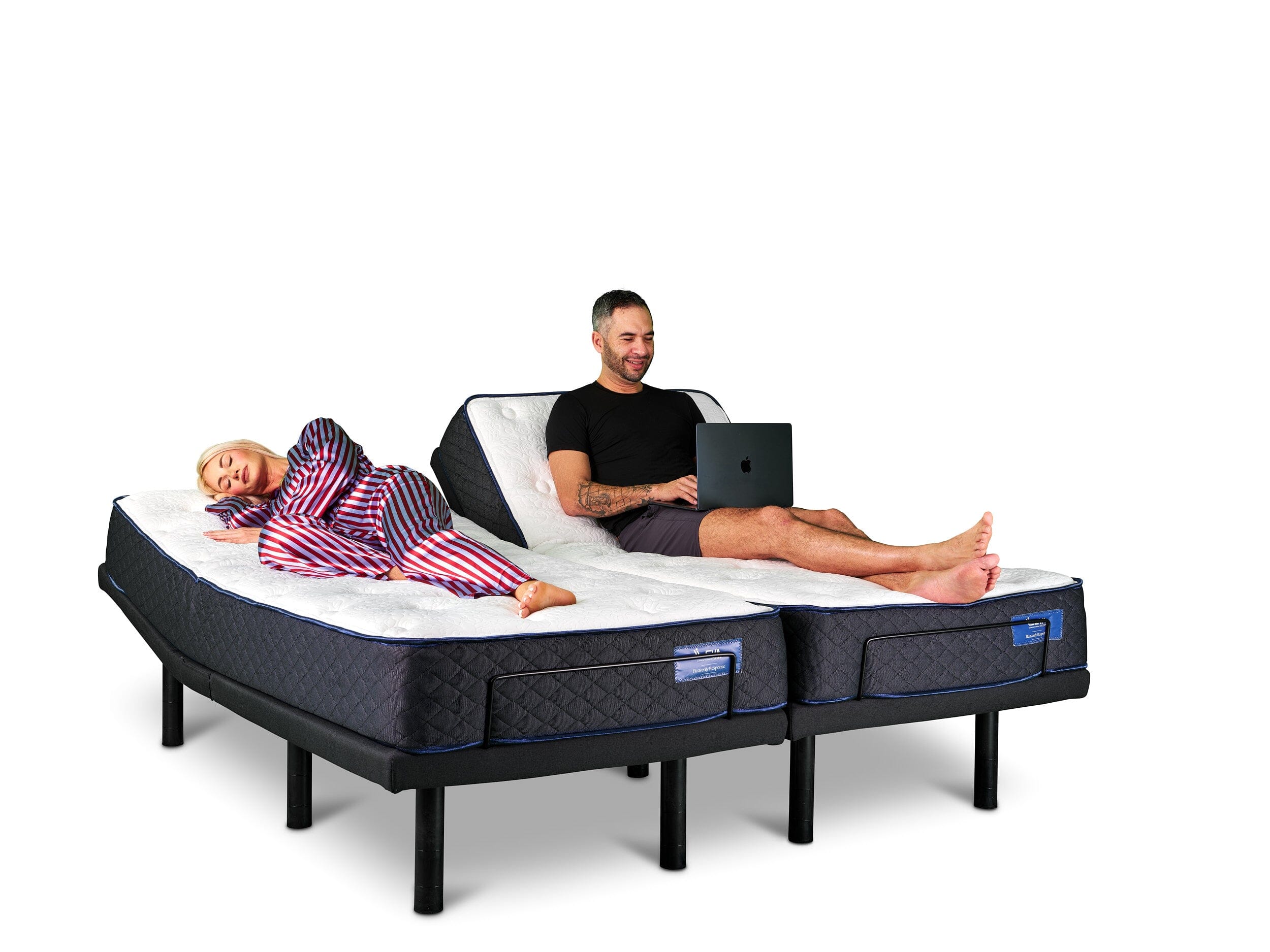
- Easier Split King and Split Queen use: A Split King with two Twin XL wall-hugger bases lets one person sit up while the other remains flat. Both partners retain access to their own nightstands, even with very different positions.
- CPAP compatibility: The wall-hugging movement keeps CPAP machines, hoses, and masks within reach on the nightstand. The hose stays slack instead of pulling tight when the head elevates.
Wall-Hugger vs Standard Adjustable Bases: A Side-by-Side Comparison
| Feature | Standard Adjustable Base | Wall-Hugger Adjustable Base | Notes |
|---|---|---|---|
| Reach distance at head elevation | Moves sleeper away from headboard | Keeps sleeper close to wall | Wall-hugger preserves nightstand access |
| Mattress compatibility | Memory foam, latex, compatible hybrids | Memory foam, latex, and many hybrids; some innersprings if labelled compatible | Both types require flexible mattress construction |
| Motor noise | Single motor assembly | Slightly more noise due to combined motor and rail movement | Premium brushless DC motors reduce this difference |
| Price premium (queen, CAD) | $1,000–$1,400 | $1,500–$1,900 | About $800–$1,000 premium for wall-hugger mechanism in Canada |
The comparison above highlights several trade-offs that deserve a closer look. Three concerns come up most often in buyer conversations.
Real User Concerns: Noise, Mattress Thickness, and Price Premium
Motor noise is the most commonly cited trade-off. The added slide mechanism on wall-hugger bases produces slightly more noise than a standard adjustable base because the motor and rail move together. Brushless DC motors operate at 30–40 decibels, which is whisper level, while budget AC motors reach 50–60 dB. Choosing a base with brushless DC motors largely removes the noise concern for most bedrooms.
Mattress thickness is the second practical consideration. A thickness of 10–12 inches works well for many adjustable bases. Mattresses over 14 inches can be too stiff and heavy for full articulation on many mechanisms. Traditional innerspring mattresses with interconnected coils often do not work with adjustable bases. Many modern pocketed-coil or hybrid innersprings are compatible if the manufacturer labels them as such. Memory foam, latex, and compatible hybrid mattresses remain the most reliable choices.
Cost is the third factor. Brad Grose, owner of Mattress Miracle with more than 40 years of experience, offers a simple frame: “For someone who reads in bed every night with a glass of water and a phone nearby, it is worth it. For someone who just raises the head slightly for acid reflux, probably not.” The higher upfront cost spreads across a typical 10-year lifespan, which works out to only a few cents per day for improved daily accessibility.
How Leva Sleep Serves Couples with Wall-Hugger Designs
Leva Sleep is one of the few Canadian retailers offering wall-hugger engineering across a range of couple-focused configurations, including the Split Queen, a size that most general mattress retailers do not stock. With more than 8 years in business, $50M in lifetime sales, and over 25,000 customers, Leva focuses on adjustable beds rather than general bedding. The company offers 15–20 adjustable models, compared to the 3–5 typically found at standard retailers.
Key differentiators for couples include:
- Split Queen and Split King bases with independent controls for each side. Partners can set different head and foot elevations, massage settings, and firmness preferences without compromise.
- Whisper-quiet German motors that operate at brushless DC noise levels, which addresses the primary trade-off associated with wall-hugger mechanisms.
- Anti-snore mode that detects snoring and makes small adjustments to the head of the bed. This feature keeps CPAP equipment and masks within reach on the nightstand without the hose pulling tight, which pairs well with the wall-hugger design.
- Lumbar support and pillow-tilt motors for precise lower-back and head positioning. These features help users who manage chronic pain in elevated or zero-gravity positions.
- In-house white-glove delivery in Ontario and Alberta, including bedroom setup, old bed removal, product tutorials, and real-time adjustments. This service removes the assembly burden common with many “bed in a box” competitors.
- 30–50% lower pricing than comparable luxury competitors, achieved through a direct-to-consumer, vertically integrated model.
Ready to experience these features in your own bedroom? Browse Leva Sleep’s wall-hugger collection to find the right Split Queen or Split King setup.
Buyer Checklist: Questions to Ask Before Choosing a Wall-Hugger Base
Before committing to a wall-hugger adjustable base, walk through these questions in order. Start with the mechanism that defines the category and finish with the total cost.
- Mechanism quality: Does the base use a dual-rail system with precision rollers? This feature defines a true wall-hugger. Ask about actuator ratings and cycle testing.
- Mattress compatibility: Once the mechanism checks out, confirm that your current or planned mattress is around 10–12 inches thick and made from memory foam, latex, or a compatible hybrid. Verify the base’s maximum mattress weight rating.
- Motor noise specification: After confirming mattress fit, look at noise. Does the base use brushless DC motors rated at 30–40 dB? Request this specification directly from the retailer.
- Split configuration availability: If you share the bed, confirm whether a Split Queen or Split King option with independent controls on each side is available.
- Anti-snore and health features: Next, match features to your health needs. Does the base include an anti-snore preset, lumbar support, or zero-gravity mode that fits your situation?
- Delivery and setup: Clarify logistics. Does the retailer offer in-home white-glove setup, or will you handle assembly yourself?
- Total cost of ownership: Finally, compare the wall-hugger premium against the expected 10-year lifespan of the base. Confirm whether the Canadian retailer’s pricing reflects direct-to-consumer savings.
Conclusion: Matching a Wall-Hugger Base to Your Bedroom
A wall-hugger adjustable base directly solves two common complaints about standard adjustable beds. It removes the nightstand gap that appears during head elevation and prevents bedroom layout disruption. For Canadian couples managing snoring, pain, or independent positioning needs, the mechanism’s ability to preserve bedside reach, while supporting Split Queen and Split King configurations with independent controls, addresses several drivers of sleep divorce.
The trade-offs remain real but manageable. Noise drops with brushless DC motors. Mattress compatibility stays simple with flexible construction in the recommended thickness range. The price premium, spread across a decade of improved sleep, becomes modest. The key is choosing a specialist who can deliver the right configuration at a fair price and provide the setup support that a complex sleep system requires.
Leva Sleep offers wall-hugger bases with whisper-quiet German motors, Split Queen availability, anti-snore mode, and in-house white-glove delivery across Ontario and Alberta, at significantly lower pricing than many luxury competitors. Find your wall-hugger solution today.
Frequently Asked Questions
What is the difference between a wall-hugger adjustable bed and a standard adjustable bed?
A standard adjustable bed raises the head section by pivoting at a fixed hinge point, which pushes the sleeper’s upper body away from the headboard and nightstand. A wall-hugger adjustable bed adds a dual-rail sliding mechanism that moves the entire mattress platform forward as the head rises. This movement keeps the sleeper’s shoulders and head in roughly the same position relative to the wall. Nightstands, lamps, water glasses, and CPAP equipment remain within arm’s reach throughout the adjustment. The more complex motor and rail assembly usually appears on mid-range and premium models and carries a higher price than standard bases.
Is a wall-hugger adjustable bed worth it for couples?
For couples who regularly use head elevation for reading, managing snoring, treating sleep apnea, or relieving back pain, a wall-hugger base offers clear daily benefits. Both partners retain access to their nightstands, CPAP hoses stay slack rather than pulling tight, and the bedroom layout stays consistent. When paired with a Split Queen or Split King configuration, each partner can adjust their side independently without disturbing the other. The value depends on how often you elevate. Couples who elevate nightly notice the difference quickly, while those who raise the head only occasionally for acid reflux may find a standard base sufficient. Leva Sleep’s Split Queen option suits couples in smaller bedrooms who want independent adjustment without the footprint of a Split King.
What mattress works best with a wall-hugger adjustable bed?
Memory foam and latex mattresses work especially well because they flex repeatedly without internal structural damage and return to their original shape when the base flattens. Hybrid mattresses with individually pocketed coils also perform well, provided they are labelled as adjustable-base compatible and do not use rigid perimeter edge support systems. Traditional innerspring mattresses with interconnected coils often do not pair well with adjustable bases, while many modern pocketed-coil or hybrid innersprings are compatible if the manufacturer labels them as such. A thickness of around 10–12 inches usually balances comfort and flexibility. Leva Sleep designs its mattresses, both all-foam and hybrid pocket-coil models, to work with its adjustable bases, which removes most compatibility guesswork for customers.
How noisy are wall-hugger adjustable beds?
Wall-hugger bases produce slightly more noise than standard adjustable bases because the sliding rail mechanism operates alongside the head-lift motor. The level of noise depends mainly on motor quality. Brushless DC motors operate at approximately 30–40 decibels, similar to a quiet library, while budget AC motors can reach 50–60 decibels, which is loud enough to disturb a sleeping partner. Leva Sleep uses whisper-quiet German motors in its bases, which places them at the quieter end of the range. Over time, structural components in any adjustable base can develop minor play that creates creaking sounds. Periodic bolt tightening and lubrication help maintain quiet performance across the base’s lifespan.
Does Leva Sleep offer wall-hugger adjustable beds in Canada with white-glove delivery?
Yes. Leva Sleep delivers and sets up its adjustable bed systems in Ontario and Alberta through an in-house white-glove service. This service includes delivery to the bedroom, full assembly, leg-height adjustment, a product tutorial, and removal of the old bed. Because Leva operates a direct-to-consumer, vertically integrated model and designs and assembles its systems locally, the direct-to-consumer approach mentioned earlier delivers substantial savings compared with many luxury competitors. The company offers Split Queen and Split King wall-hugger configurations with independent controls, whisper-quiet German motors, lumbar support, pillow-tilt motors, and a 2026 anti-snore mode, making it one of the more comprehensive couple-focused adjustable bed specialists available in Canada.