Visit One Of Our 6 Showrooms Located Across Canada!
No Payments, No Interest Until 2027
Free Delivery & In-Home Set Up
What Does a Wall Hugger Adjustable Bed Actually Do?
Content
Key Takeaways
A wall-hugger adjustable bed uses a dual-rail system that slides the platform forward as the head rises, keeping nightstands and accessories within reach.
The synchronized mechanism offsets the rearward lean of standard bases, eliminating the nightstand gap that occurs when the head section is elevated.
Wall-hugger bases reduce the rear clearance needed behind the headboard, which suits smaller Ontario and Alberta bedrooms.
The feature helps couples who elevate the head nightly for snoring, sleep apnea, reflux, or reading maintain easy access to CPAP machines and personal items.
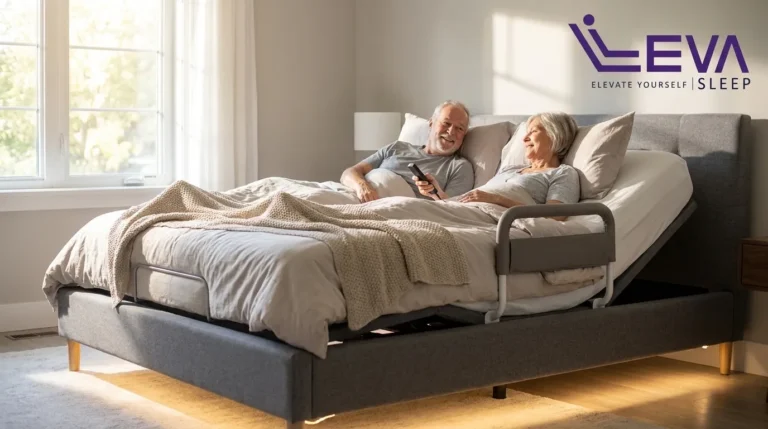
A wall hugger is an adjustable bed base engineered so that the sleeper does not drift away from the wall or their nightstand when the head section is raised. On a standard adjustable base, elevating the head section creates a reach gap to the nightstand. A wall-hugger base eliminates or substantially reduces that gap by sliding the platform forward the same distance the head rises rearward.
Feature
Standard Adjustable Base
Wall-Hugger Adjustable Base
Nightstand reach gap at head elevation
Significant
Reduced to near zero
Clearance needed behind headboard
at least 10–12 inches (25–30 cm)
Minimal
Foot-of-bed clearance required
Minimal
Additional space needed
How the Wall-Hugger Mechanism Keeps You Close to Your Nightstand
The mechanism relies on synchronized coordination between the head-lift motor and the forward-slide rail system. Instead of hinging upward from a fixed point, which pushes the sleeper away from the wall, the dual-rail assembly moves the entire sleeping surface forward in tandem with the head rise. This forward slide offsets the rearward lean that a standard hinge would otherwise create. Because the platform extends forward when elevated, clearance at the foot of the bed is required to accommodate the travel.
How Ontario and Alberta Room Sizes Affect Wall-Hugger Performance
Most secondary bedrooms in Ontario measure roughly 10 to 12 feet across. In those rooms, a standard adjustable base demands the rear clearance noted in the comparison above, space that many layouts simply cannot spare once a bed frame, headboard, and baseboard heater are accounted for. A wall-hugger base reduces that requirement significantly, which makes it easier to position the bed against a wall without mechanical interference.
The trade-off appears at the foot of the bed, where forward travel space is needed when the head is elevated. Before purchasing, measure from the foot of your current bed frame to the nearest obstruction, such as a dresser, TV stand, or closet door, and confirm sufficient clearance exists.
Why Nightstand Reach Matters for Reading, CPAP, and Mobility
Couples managing sleep apnea, hip or knee pain, or acid reflux often elevate the head of the bed nightly. At that angle, a standard base creates a gap to nightstand items such as glasses, water, a remote, or a CPAP mask. Reaching sideways and downward from an elevated position places strain on the shoulder and lumbar spine, particularly for adults over 50 with reduced flexibility.
Common misconception: “It only saves a few inches, that cannot matter much.” In practice, that distance represents the difference between a comfortable reach and a strained lateral lean repeated dozens of times per night. For CPAP users who must handle equipment in low light, that gap becomes a genuine safety and usability concern.
A wall-hugger base keeps the sleeper aligned with the nightstand throughout the adjustment cycle, so glasses, phones, lamps, and medical devices remain accessible without repositioning. Explore Leva Sleep’s wall-hugger bases designed specifically for CPAP users and couples who elevate nightly.
Mechanical Differences Between Wall-Hugger and Standard Bases
The core mechanical difference is the rail assembly. Standard bases use a single head-hinge point, while wall-hugger bases use a dual-rail system with synchronized motor coordination that moves the platform forward as the head rises. This added complexity is the primary reason wall-hugger models carry a price premium.
On noise and motion quality, the synchronized dual-motor and rail assembly must operate in coordinated motion to prevent jerking or uneven shifting. Leva Sleep addresses this with whisper-quiet German motors that drive both the head-lift and forward-slide functions without the mechanical grinding associated with lower-cost bases.
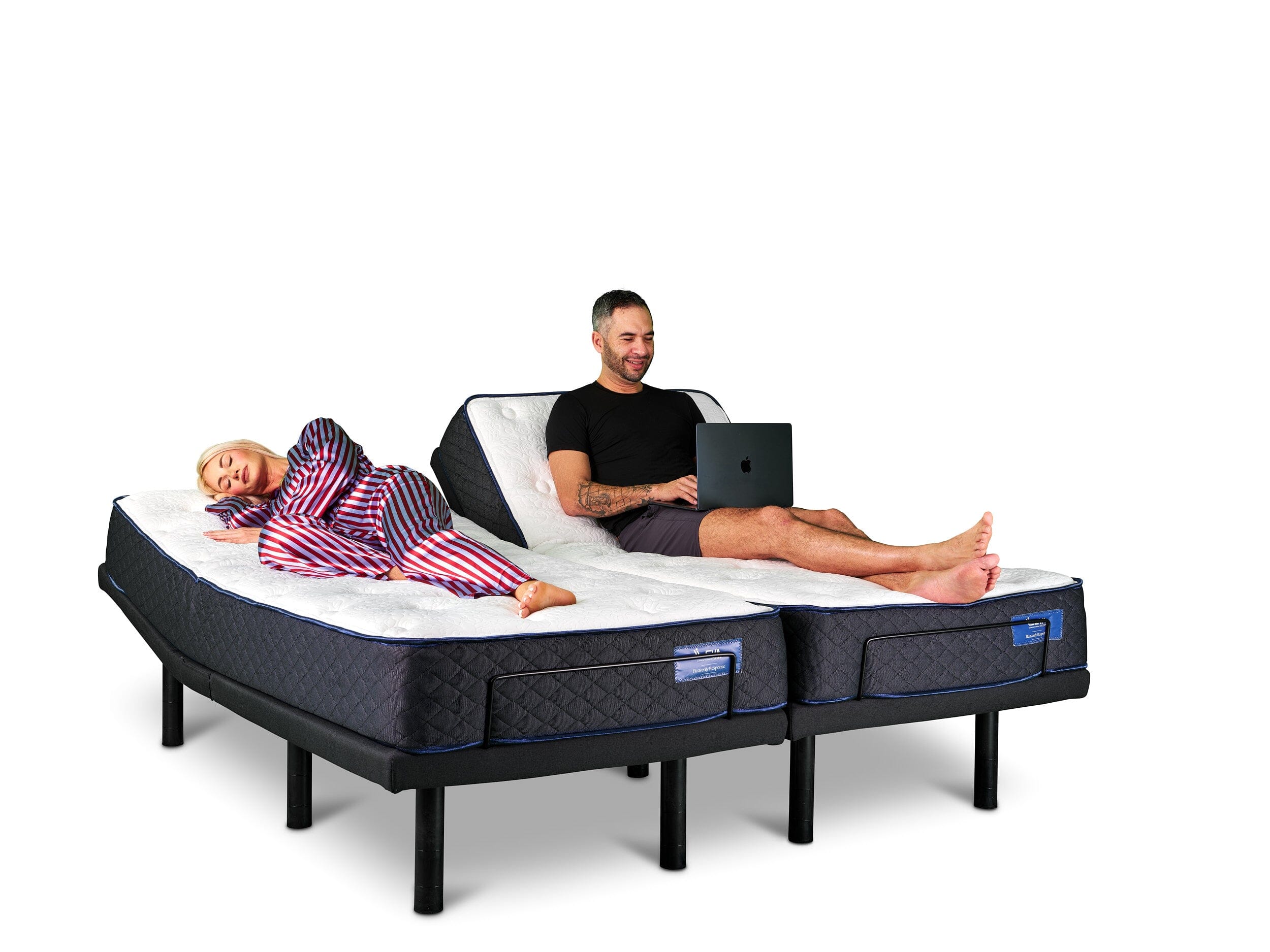
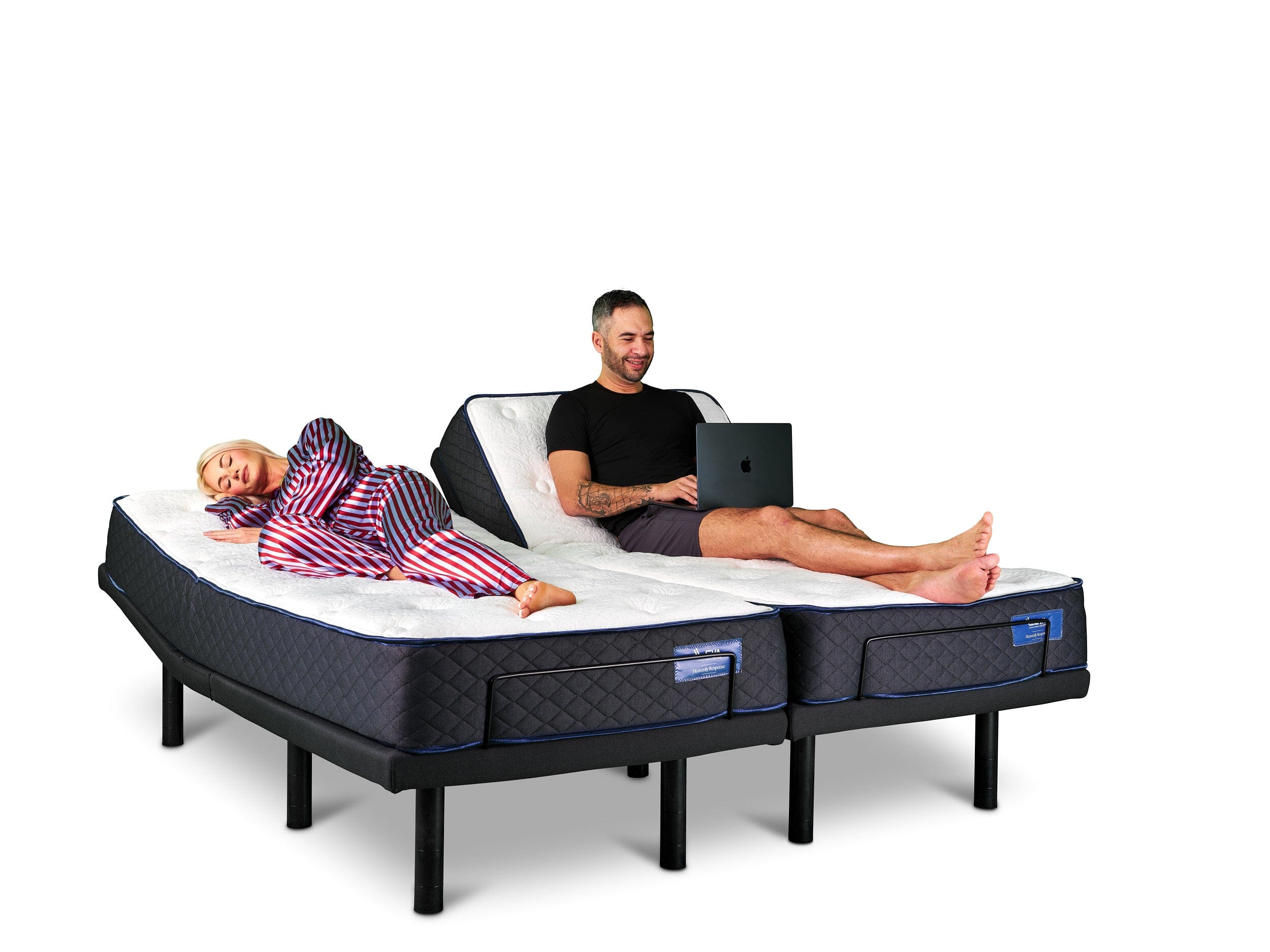
For split configurations, where two independent bases sit side by side, the wall-hugger feature becomes especially valuable. Each side adjusts independently, and without the forward-slide mechanism, one partner’s elevation change would push them away from shared nightstand space. Leva’s Split Queen adjustable beds, a configuration rare among Canadian retailers, incorporate wall-hugger mechanics on each independent base.
Leva Sleep Split Queen Bed
Deciding If the Wall-Hugger Premium Makes Sense for Split Bases
The added mechanical complexity of wall-hugger mechanisms is the primary reason these bases carry an $800–$1,000 price premium over comparable non-wall-hugger models at standard retail. The feature justifies that premium when one or both partners elevate the head regularly for snoring, sleep apnea, reflux, or reading, and when nightstand access to medical devices or personal items is a nightly requirement.
Leva Sleep’s vertical integration and direct-to-consumer model makes wall-hugger bases more affordable than comparable competitors. That affordability matters even more when you consider future features. The app-controlled anti-snore mode arriving spring 2026 will detect snoring and make micro-adjustments to the head position throughout the night. Because these adjustments happen multiple times per night on each side of a split base independently, the wall-hugger mechanism becomes essential, since each micro-adjustment would otherwise push the sleeper farther from their nightstand.
Before purchasing, evaluate four criteria that directly affect wall-hugger performance and long-term satisfaction. First, confirm the slide distance specification, because insufficient travel means the mechanism will not fully eliminate the nightstand gap. Second, verify motor origin and noise rating, since the dual-rail system requires motors that operate quietly through frequent adjustments. Third, check whether a Split Queen configuration is available if you need independent control in a smaller footprint than Split King. Finally, ask whether the retailer offers in-home demonstration or white-glove setup, because improper rail calibration can cause uneven travel or mechanical noise from the first night.
How Online Misconceptions Shape Canadian Wall-Hugger Decisions
Misconception 1 — “Wall-hugger motors are louder because of the extra mechanism.” The additional rail system does add mechanical complexity, but German-engineered motor systems are specifically designed to run the dual-rail assembly quietly and without jerking. The motor system described earlier powers both functions simultaneously without audible disruption.
Misconception 2 — “Wall huggers are a luxury-only feature.” The premium mentioned earlier exists at standard retail pricing. Through Leva Sleep’s direct-to-consumer model, wall-hugger bases are available more affordably than those reference prices, which places the feature within reach for couples who elevate the head regularly for medical or comfort reasons.
Canadian Pricing, Local Assembly, and White-Glove Delivery
Most Canadian couples evaluating wall-hugger bases encounter U.S.-focused pricing pages that do not reflect cross-border duties, delivery logistics, or local service. Leva Sleep designs and assembles its systems locally, serving Ontario and Alberta with in-house white-glove delivery that includes removal of the old bed, full assembly, leg-height adjustment, accessory setup, and a product tutorial, all performed by trained professionals.
That delivery model matters specifically for wall-hugger split bases, which involve two independent rail assemblies, two motor connections, and split mattress positioning. Improper setup of the forward-slide rails can cause uneven travel or mechanical noise. Leva’s in-house team calibrates both sides on-site, with special attention to the dual-rail assemblies on split bases, so the slide distance operates correctly from the first night.
Planning for Temperature Control and Future Mobility Needs
Beyond the mechanical setup, couples planning for long-term use should consider how their sleep system will adapt to changing needs. Two features become particularly relevant for wall-hugger bases: temperature control and future mobility requirements.
Leva Sleep’s heating and cooling pads integrate directly with its adjustable bases, including wall-hugger models. On a split base, each pad operates independently, so one partner can sleep cool while the other sleeps warm without any mechanical interference from the forward-slide mechanism. The pad’s flexible design accommodates the full range of head and foot elevation without bunching or disconnecting.
For couples in the 35–70 age range, mobility needs change over time. A wall-hugger base purchased today for snoring management may serve a different function in five years, such as post-surgical recovery, progressive joint pain, or worsening sleep apnea. Choosing a base with a robust dual-rail system and German motor quality helps the mechanism remain reliable across years of nightly use and changing elevation requirements.
Frequently Asked Questions
Is a wall-hugger base compatible with Leva Sleep’s specialized bedding?
Yes. Leva Sleep designs all its fitted sheets, mattress protectors, and duvet accessories specifically for adjustable bases, including wall-hugger models. The fitted sheets use deep pockets and reinforced elastic to stay anchored through the full forward-slide travel. Duvet clips maintain separation between split sides regardless of independent elevation changes.
How much clearance do I need at the foot of the bed in a typical Ontario bedroom?
A wall-hugger base requires clearance at the foot of the bed to accommodate the forward travel of the platform when the head is elevated. Before delivery, measure from the foot of your existing bed frame to the nearest obstruction, such as a dresser, closet door, or wall, and confirm that gap exists. Leva Sleep’s white-glove delivery team can advise on room layout during the pre-delivery consultation.
Does Leva Sleep deliver and set up Split Queen wall-hugger bases in Alberta?
Yes. Leva Sleep’s in-house white-glove delivery service covers both Ontario and Alberta. The delivery team handles full assembly of both independent base units, calibrates the forward-slide rail systems, adjusts leg heights, connects app controls, and removes the old bed. Split Queen is a configuration Leva offers that most Canadian retailers do not carry.
Can the anti-snore mode work on a split base?
Yes. Leva Sleep’s anti-snore mode, arriving spring 2026, operates independently on each side of a split base. Each base has its own motor and sensor system, so one partner’s snoring detection and micro-adjustment does not affect the other side’s position. On a wall-hugger split base, those micro-adjustments occur within the forward-slide travel range, which keeps both sleepers aligned with their respective nightstands throughout the night.
Conclusion: Choosing a Wall-Hugger Adjustable Bed for Your Canadian Home
The engineering described throughout this article addresses a specific, measurable problem for Canadian couples who elevate the head nightly. The mechanism, a synchronized dual-rail system with a forward slide, requires minimal rear clearance while demanding space at the foot of the bed. For couples in Ontario and Alberta who manage snoring, sleep apnea, reflux, or nightly reading, that design directly affects comfort, safety, and access to medical devices.
The feature carries a retail premium, but Leva Sleep’s vertical integration and direct-to-consumer model delivers wall-hugger bases, including the rare Split Queen configuration, at a lower price than comparable competitors, with in-house white-glove delivery that ensures correct rail calibration from the first night.