Written by: Matthew Timmins, Founder and Managing Director, Leva Sleep
Key Ways Adjustable Bases Change Your Sleep
- Adjustable bed bases improve sleep through four mechanisms: head elevation opens the airway to reduce snoring, torso elevation reduces reflux, zero-gravity redistributes spinal pressure, and leg elevation eases lumbar load and swelling.
- Evidence is strongest for head-of-bed elevation in nocturnal acid reflux, with moderate support for snoring reduction and mixed results for back pain where perceived improvements occur without objective sleep-staging changes.
- Adjustable bases help positional issues such as reflux, positional snoring, and some back pain. They do not address insomnia, central sleep apnea, or snoring driven by anatomy or obesity.
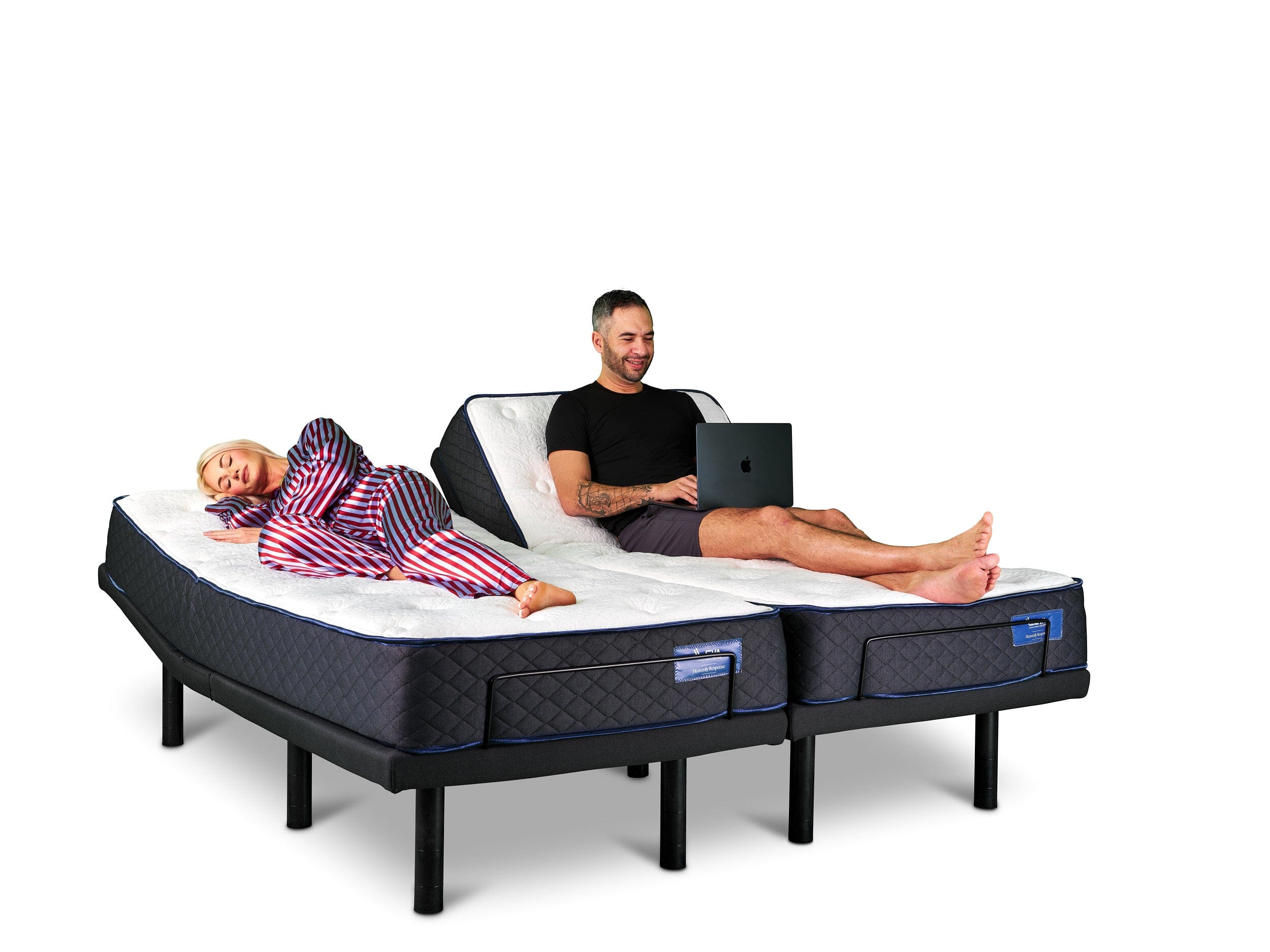
- Split king and split queen configurations let couples independently control each side, so partners with different positional needs avoid the compromise of a shared flat bed.
- Leva Sleep specializes in adjustable bed bases with split options, in-house delivery in Ontario and Alberta, and a direct-to-consumer model that delivers premium systems at 30 to 50% less than comparable competitors.
Explore Leva Sleep Adjustable Bases
The Four Core Positions And What They Do For Your Body
Zero-Gravity Position: Pressure Off Your Spine and Hips
The zero-gravity position raises both the head and legs to roughly heart level. This distributes body weight across the full sleep surface instead of concentrating it at the lumbar spine and hips. The mechanism is pressure redistribution across the musculoskeletal system. A controlled study published in Sleep (2025, Oxford Academic, Vol. 48, Supplement 1, A593) tracked 1,298 nights across 42 participants and found that the back-pain subgroup reported a 27% decrease in back pain and a 20% improvement in morning restfulness after switching from a flat bed to an adjustable base. Objective sleep-staging measures did not change.
Anti-Snore / Head Incline: Opening the Upper Airway
Head and upper-body elevation increases the cross-sectional area of the upper airway and raises the pressure required to collapse it. Soft tissues then become less likely to vibrate or obstruct breathing. Danoff-Burg et al. (2022), published in JMIR Formative Research, tracked 25 snorers over more than 1,000 nights and found that sleeping at a 12-degree incline reduced snoring duration by approximately 7%, reduced nighttime awakenings by 4%, and increased time in deep sleep by 5%.
Upper-Body Incline for Reflux: Letting Gravity Do the Work
Raising the torso above the level of the stomach lets gravity work against the upward movement of stomach acid. The 2026 VNAGE guideline on GERD management identifies head-of-bed elevation as a key non-pharmacologic measure for nocturnal reflux symptoms. It cites a study of 204 patients in which elevating the head of the bed by 20 cm reduced acid exposure time, and a randomized trial of 39 patients in which nocturnal reflux improved with a relative risk of 2.08 (95% CI 1.19–3.61).
Leg Elevation: Circulation and Lumbar Relief
Elevating the leg above heart level (to 33–35 cm) reduces abnormally increased intramuscular pressure in the anterior compartment of the leg by about 40 percent in cases of venous stasis. It does not significantly reduce such pressure when the venous stasis occurs in a casted leg. Leg elevation also takes compressive load off the lumbar vertebrae by slightly flattening the natural lordotic curve. This position targets the circulatory and lumbar systems and is particularly relevant for people who stand for long periods or experience end-of-day leg heaviness.
Evidence Grade By Condition: What The Research Actually Shows
Acid Reflux at Night: Best-Supported Use Case
Head-of-bed elevation for nocturnal acid reflux has the strongest evidence base among adjustable-base use cases. A recent GERD guideline review states that elevating the head of the bed modestly reduces the time spent supine with acid exposure compared with lying flat and classifies positional elevation as a recognized non-pharmacologic option in guideline-based management. The 2026 VNAGE guideline reinforces this, with randomized trial data showing clinically meaningful benefit in selected patients. Elevation reduces reflux burden rather than eliminating it.
Snoring: Moderate Evidence
The Danoff-Burg study mentioned earlier followed 25 habitual snorers over eight weeks. The authors concluded that a modest incline can meaningfully improve sleep quality without medication or a device. These are real but moderate gains and do not replace a clinical assessment when breathing pauses accompany snoring.
Back Pain and General Sleep Quality: Mixed Evidence
The 2025 Sleep journal study (Oxford Academic, Vol. 48, Supplement 1, A593) tracked 1,298 nights across 42 participants who switched from a flat bed to an adjustable base. The same study reported broader sleep-quality gains: participants felt 15% better and 18% more well-rested, with back pain decreasing by 28% in the full sample. Objective sleep-staging measures showed no measurable change.
Participants felt better and reported less pain, yet the adjustable base did not produce a detectable change in objective sleep architecture such as sleep staging.
A separate Sleep journal abstract cited in Tyner Furniture’s 2026 buyer’s guide reported 21 more minutes of total sleep time and 5 more minutes of REM sleep in adjustable-base users. These findings contrast with the 2025 field report above and show that results vary with study design and sample size. Buyers should treat the perceived-versus-objective distinction as the current state of the evidence.
Mild Positional Sleep Apnea: Complementary Aid
Head-of-bed elevation can reduce apnea severity in some patients with positional obstructive sleep apnea. A 2026 study by Maniaci et al. found that a 30-degree head-of-bed elevation reduced the average apnea-hypopnea index from 22.6 to 16.4 events per hour, a 31% reduction. An AHI of 16.4 still indicates moderate OSA, so elevation acts as a complement rather than a cure.
The table below summarizes how each condition compares on a flat bed versus an adjustable base and how strong the supporting evidence is.
| Condition | Flat Bed | Adjustable Base | Evidence Quality |
|---|---|---|---|
| Nocturnal acid reflux | Supine position increases acid exposure time | 20 cm elevation reduced acid exposure in 204 patients; RR 2.08 in 39-patient RCT | Guideline-supported non-pharmacologic intervention |
| Snoring (habitual) | Flat supine position increases airway collapse risk | 12-degree incline: ~7% snoring reduction, 4% fewer awakenings, 5% more deep sleep (Danoff-Burg et al., 2022) | Moderate, single study, 25 participants |
| Back pain / general sleep quality | Fixed position; no pressure redistribution | 28% perceived back-pain reduction; 15% better perceived sleep quality; no objective sleep-staging change (Sleep, 2025) | Mixed, perceived improvement without objective change |
| Mild positional sleep apnea | Supine gravity worsens airway collapse | 30-degree elevation reduced AHI by 31% but did not resolve moderate OSA (Maniaci et al., 2026) | Complementary aid, not a standalone treatment |
Compare Leva Sleep Adjustable Models
Who an Adjustable Bed Base Will Not Help
Those evidence grades also define the limits of what an adjustable base can do. An adjustable bed base is a positional tool that changes the angle of your body relative to gravity. That mechanism does not apply to every sleep problem.
People who already sleep comfortably flat, with no reflux, snoring, or positional back pain, are unlikely to notice meaningful benefit. The base changes your position, and a comfortable flat sleeper already has a workable position.
People whose primary issue is insomnia, such as difficulty falling asleep, staying asleep, or waking too early due to anxiety, circadian disruption, or hyperarousal, generally do not find relief from elevation. Insomnia is a neurological and behavioural condition rather than a positional one. Cognitive behavioural therapy for insomnia (CBT-I) remains the evidence-supported first-line treatment.
People whose snoring or apnea is driven by anatomy, obesity, or central nervous system factors rather than sleep position may see little or no improvement. Head elevation does not correct central sleep apnea, which occurs when the brain fails to signal the breathing muscles rather than from gravity-driven airway collapse.
Across these cases, the common thread stays consistent. An adjustable base only helps when position is the source of the problem. For everything else, it is the wrong tool.
Adjustable Base vs. CPAP for Mild Sleep Apnea
An adjustable bed base acts as a positional and comfort aid, not a medical device or CPAP replacement. A 2026 study by Maniaci et al., published in Laryngoscope, found that raising the head of the bed 30 degrees reduced the average apnea-hypopnea index from 22.6 to 16.4 events per hour, a 31% reduction, in obstructive sleep apnea patients. An AHI of 16.4 still indicates moderate OSA, so elevation reduces severity rather than resolving the condition.
A 2026 narrative review by Prabakar et al. in J Otorhinolaryngol Hear Balanc Med notes that positional therapy can be highly effective for exclusive positional OSA, where the AHI is at least twice as high in the supine position as in any other position. It fails to yield significant improvements for non-positional OSA patients. For moderate-to-severe OSA, CPAP remains the standard of care because it acts as a continuous air splint regardless of sleep position.
Leva Sleep’s adjustable bases gently elevate the head to open airways, and sleep apnea clinics do refer patients to Leva as a comfort and positional complement to their treatment plan. Anyone with a diagnosed sleep apnea condition should follow their clinician’s advice on primary treatment. An adjustable base can make that treatment more comfortable and address the positional component, while the clinical intervention addresses the underlying disorder.
The Couple Dimension: Split King And Split Queen
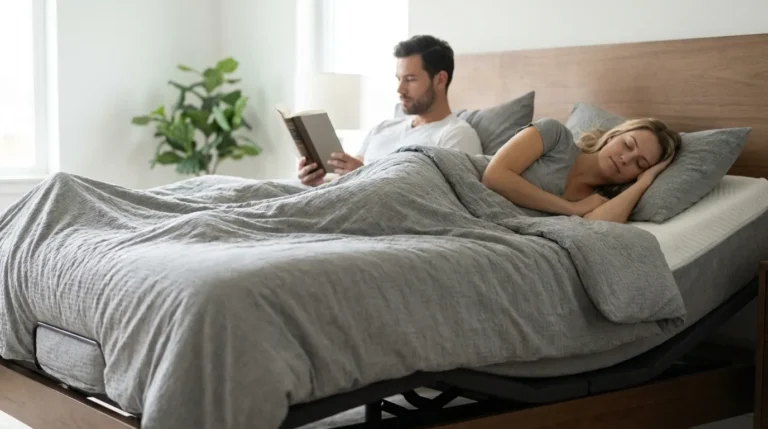
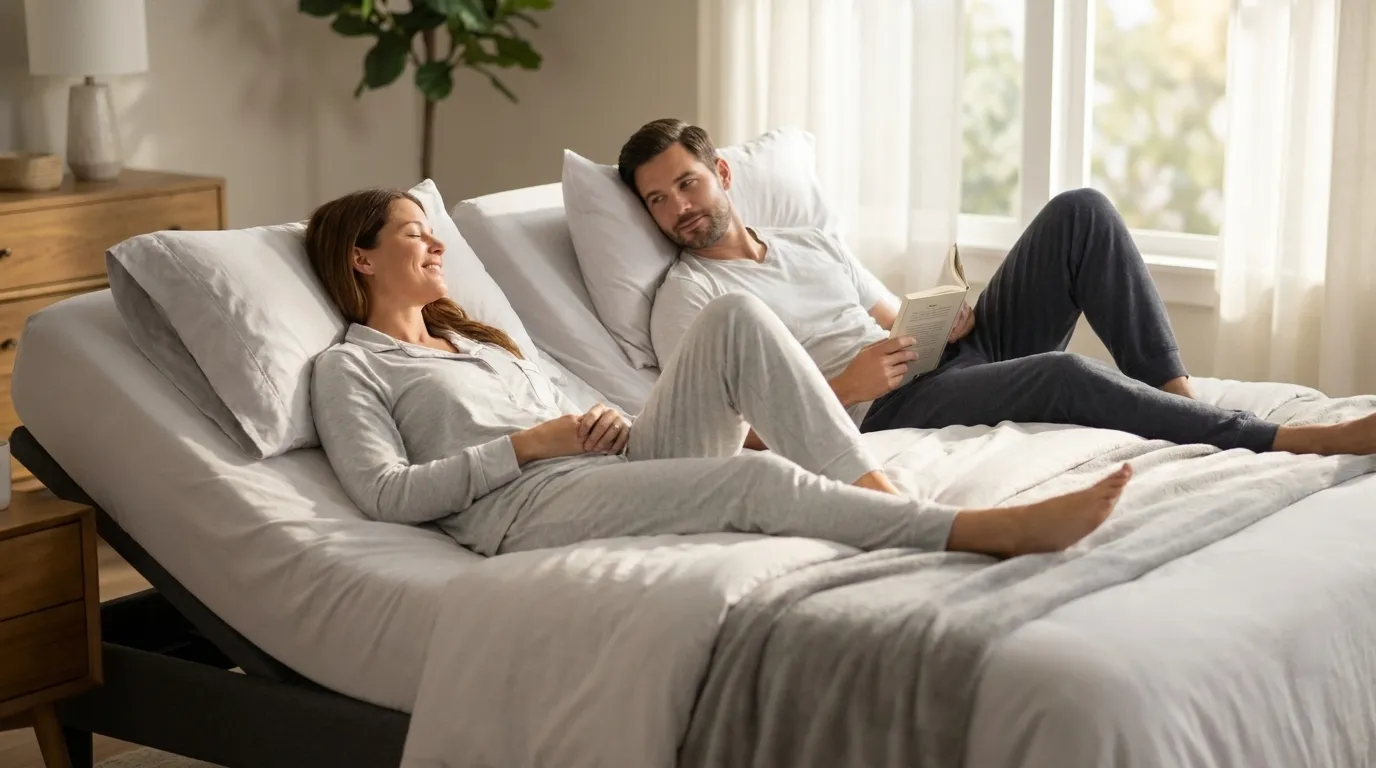
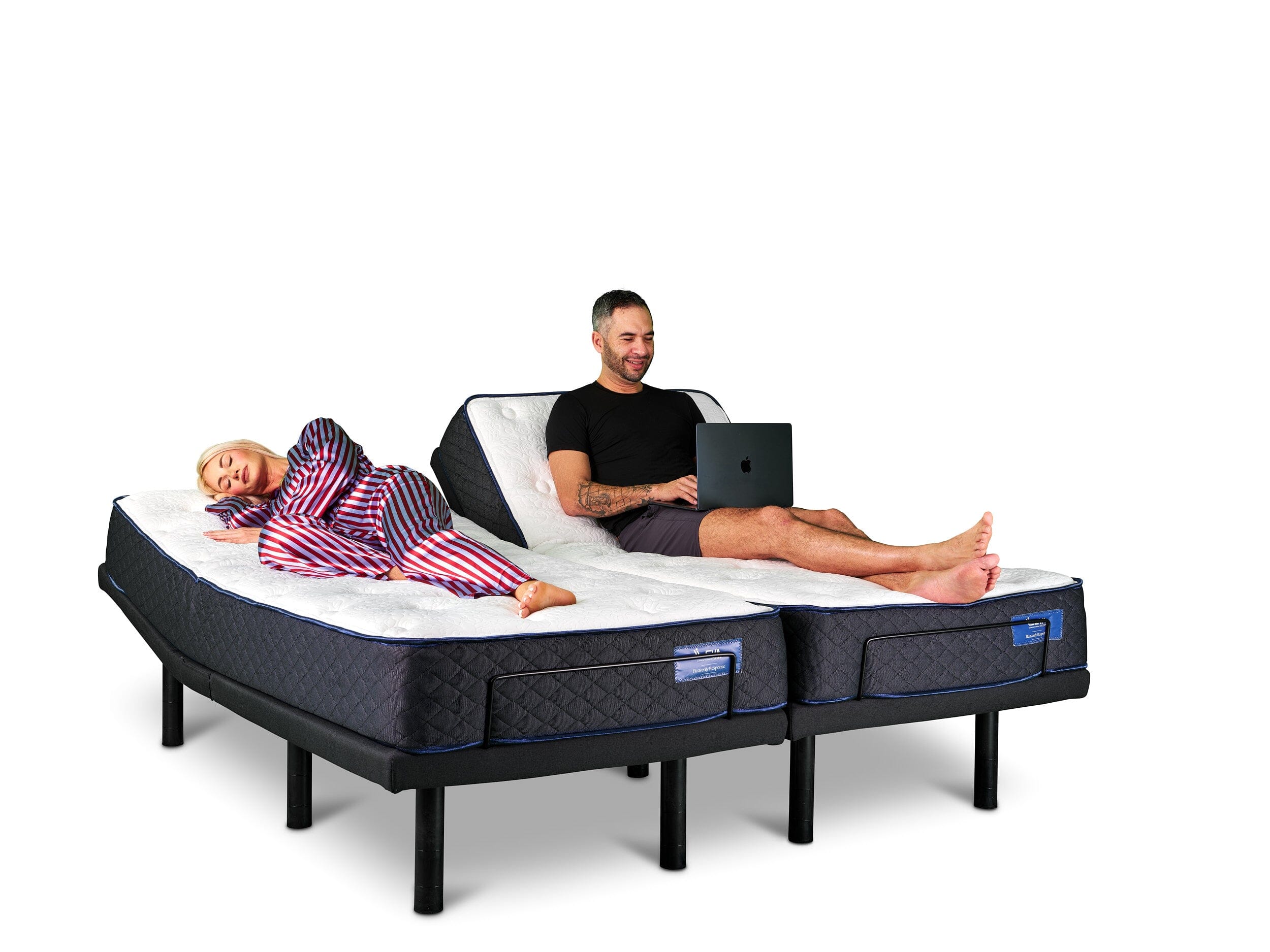
Couples often have different positional needs, such as one partner needing head elevation for reflux or snoring while the other sleeps flat. A shared flat bed forces a compromise that serves neither person well. Leva Sleep’s split king and split queen adjustable bases solve this by giving each partner a fully independent base with its own head and foot articulation. Both partners control their own side without affecting the other.
One person can sleep in zero-gravity while the other lies flat. Leva’s split queen uses two complete independent bases side by side rather than a single mattress with a split head section. For couples navigating different sleep needs, this configuration removes the compromise entirely.
Find Your Split Adjustable Base
Ownership Reality: Sheets, Mattress Wear, Lifespan, and Motor Noise
Once you have chosen a configuration, practical ownership questions start to matter more than specs on a product page. Here are the main points to evaluate.
Sheets keep coming off. Standard fitted sheets are cut for flat mattresses and lose their grip when the base articulates. Look for sheets with deep pockets and reinforced elastic that wraps the full perimeter. Leva Sleep designs its fitted sheets specifically for adjustable bases with deep pockets and extra elastic to prevent slippage. This feature is worth confirming with any supplier before buying.
Do adjustable bases wear out mattresses faster? Traditional interconnected-coil innersprings are generally unsuitable for adjustable bases because the connected coil unit can be permanently bent as the base articulates. All-foam, memory foam, latex, and most hybrids with pocketed coils are the compatible options. Mattresses in the 10 to 12 inch thickness range tend to flex best, while mattresses 14 inches or thicker can resist bending. A compatible mattress used correctly does not wear faster than it would on a flat base.
Lifespan. A quality adjustable base with a robust motor and frame typically lasts 8 to 15 years with normal use, though the frame often exceeds 15 years while mid-range motors commonly last only 7 to 10 years before needing service or replacement. Evaluate the motor warranty and frame warranty separately, because they often have different terms.
Motor noise. Older or budget bases can produce grinding or clicking sounds that wake a light sleeper. Whisper-quiet motors, such as the German motors Leva Sleep uses, offer a clear comfort advantage. This becomes especially important for couples when one partner is a light sleeper.
Frequently Asked Questions
Is It Healthy to Sleep on an Adjustable Bed Base?
For most adults, sleeping on an adjustable base is safe and can be beneficial when the elevated position addresses a specific positional condition such as acid reflux, snoring, or lower-limb swelling. The 2025 Sleep journal study found that participants reported improved perceived sleep quality and reduced back pain after switching to an adjustable base, with no measurable change in objective sleep staging across 1,298 nights. People with spinal conditions or post-surgical restrictions should confirm appropriate positioning with their clinician before using an adjustable base, because some positions may be contraindicated depending on the procedure or diagnosis.
What Do Doctors and Chiropractors Say About Adjustable Bed Bases?
Physicians and gastroenterologists commonly recommend head-of-bed elevation as a first-line non-pharmacologic measure for nocturnal acid reflux, though the American College of Gastroenterology’s recommendation for nighttime GERD symptoms is conditional and based on a low level of evidence. Sleep medicine specialists recognize positional therapy, including head elevation, as a useful complement to CPAP for patients with positional obstructive sleep apnea, though it does not replace prescribed treatment. At least one chiropractor (Dr. Donald A. Ozello, DC) recommends the zero-gravity position for patients with low back pain, and physical therapists often recommend elevating the legs to reduce spinal pressure, a core feature of zero-gravity chairs. The 2025 Sleep journal data show that the benefit for back pain is primarily perceived rather than objectively measurable in sleep architecture.
Do Adjustable Bases Wear Out Mattresses Faster?
An adjustable base does not accelerate mattress wear when paired with a compatible mattress. The key factor is mattress type. All-foam, memory foam, latex, and pocketed-coil hybrids flex without structural damage, while traditional interconnected-coil innersprings can be permanently deformed by repeated articulation. Mattress thickness also matters. Models in the 10 to 12 inch range flex most reliably, while very thick mattresses of 14 inches or more may resist the base’s movement and place additional stress on the motor over time.
Conclusion: The Honest Verdict and Recommendation
An adjustable bed base works through four mechanisms: airway opening, gravity-assisted reflux control, pressure redistribution, and leg elevation. The evidence supporting each mechanism varies by condition. Acid reflux has the strongest clinical backing. Snoring has moderate support from a well-designed eight-week study. Back pain shows meaningful perceived improvement without objective sleep-staging change. Mild positional sleep apnea shows a real but partial reduction in severity. For insomnia, non-positional snoring, and central sleep apnea, other treatments provide the primary benefit.
For readers whose problem is positional, Leva Sleep is the specialist to consider. Leva has been in business for over 8 years, with $50M+ in lifetime sales and 25,000+ customers. It offers delivery in Ontario and Alberta and specializes in adjustable bases rather than carrying a few as an add-on. The lineup includes 15 to 20 adjustable models compared to the 3 to 5 typically found at a standard retailer, and its split king and split queen bases, two fully independent bases with head and foot articulation on each side, give couples genuine independent control. Its vertically integrated, direct-to-consumer model delivers a luxury sleep system at 30 to 50% less than top comparable competitors. In-house white-glove delivery and setup is available in Ontario and Alberta, with local design and assembly built into the model.
Start Your Leva Sleep Adjustable Base Setup