
Written by: Matthew Timmins, Founder and Managing Director, Leva Sleep
Key Takeaways
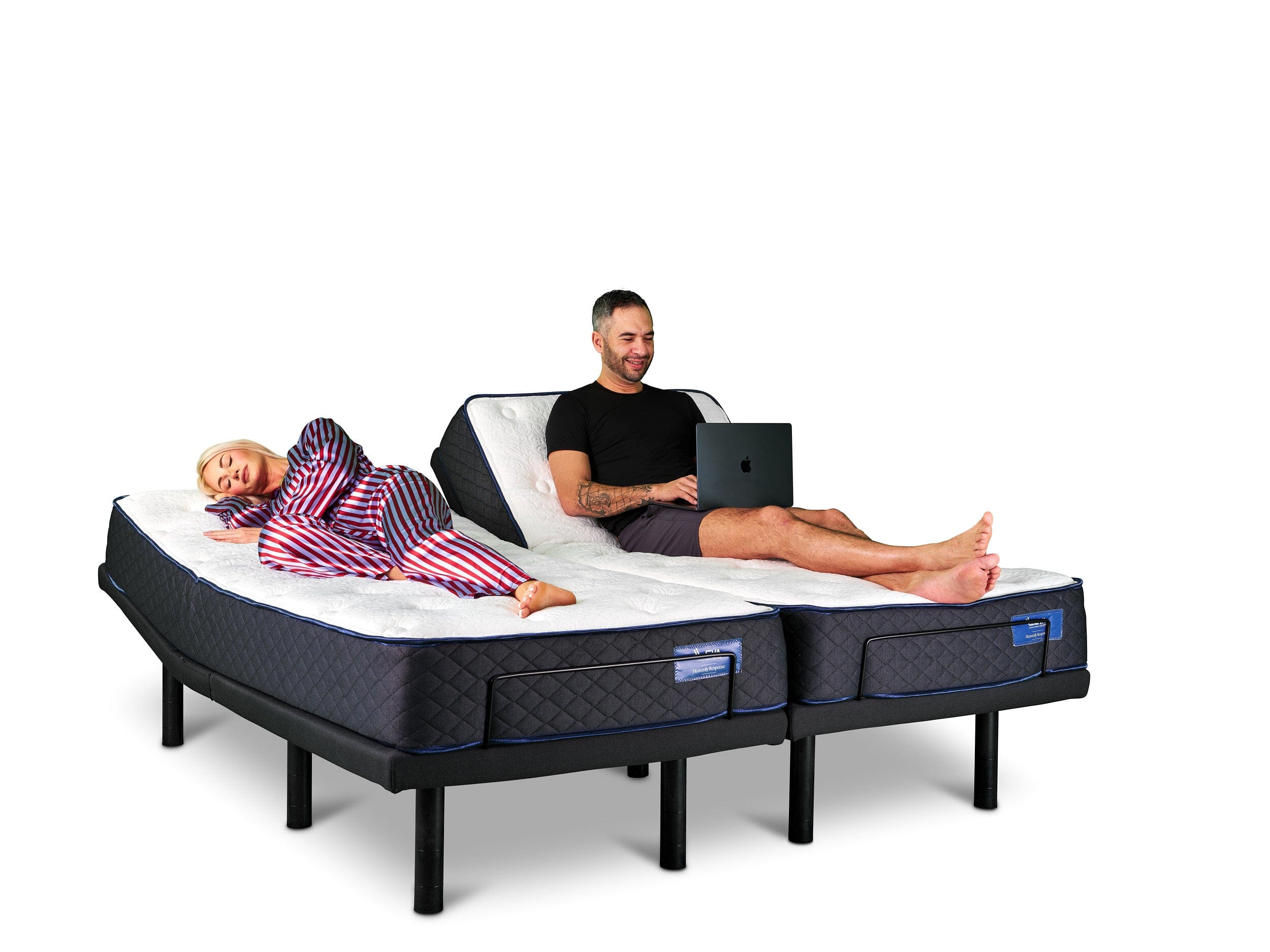
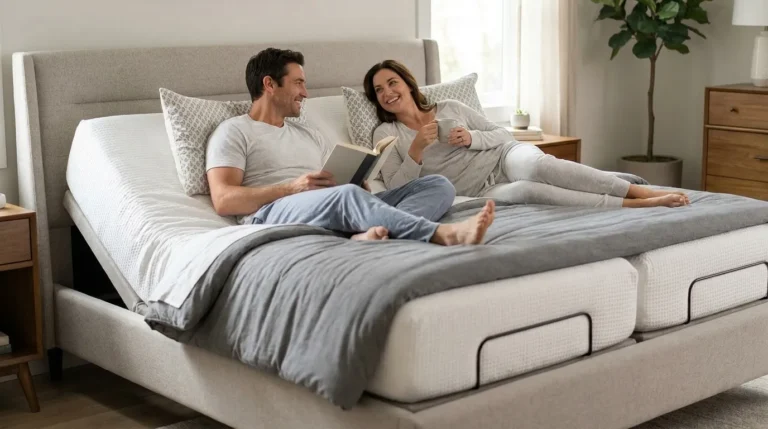
- Adjustable bed bases with independent per-side control let each partner change head and foot elevation without disturbing the other. This setup directly targets partner sleep disturbances.
- Head-of-bed elevation is well-supported for reducing positional snoring and nighttime acid reflux by using gravity to open the airway and keep stomach acid contained.
- Back and hip pain relief, circulation support, and perceived sleep quality gains are plausible based on body mechanics and consistent user reports, although direct research remains limited.
- Split King and Split Queen configurations both provide full independent control. Split Queen offers a space-conscious option that few Canadian retailers carry.
- Leva Sleep designs quiet adjustable beds with compatible mattresses and offers local assembly plus white-glove delivery for couples in Ontario and Alberta.
Find Your Split Adjustable Bed Package
The Problem: How One Partner’s Sleep Issue Disrupts Both
When one partner snores, the other often lies awake listening. When one wakes at 3 a.m. with hip pain and shifts position, the other frequently wakes too. This pattern affects a significant portion of Canadian couples, and research shows it is more than a minor annoyance.
A 2026 systematic review published in Sleep Health found that all four studies examining partner disturbance during co-sleeping documented disruption. One author was affiliated with Sealy of Australia, a mattress manufacturer, which represents a conflict of interest. Even so, the findings align with independent research. A 2020 actigraphy study by Walters et al., also in Sleep Health, monitored 55 couples for seven nights and found that about 18.9% of awakenings immediately followed the bed partner being awake.
Snoring is the most common trigger. A 2023 prospective study of 70 people with obstructive sleep apnea and their partners found that 41% slept separately at least once or twice monthly. Among those couples, 86% named snoring as the disturbance. After treatment began, 72.4% started sleeping together again, which represented a statistically significant shift.
A 2025 American Academy of Sleep Medicine Sleep Prioritization Survey of 2,007 US adults reported that 31% had slept in another bed or area to accommodate a bed partner, with adults aged 35 to 44 reporting this most often at 39%. This was commissioned polling rather than peer-reviewed research, but the trend matches clinical observations.
An adjustable base with independent per-side control targets this shared problem. Each partner can change their own sleep position without forcing the other to compromise. The rest of this guide evaluates that promise against the available evidence.
Evidence-Graded Health Benefits Of Adjustable Bed Bases For Couples In Canada
The benefits below are graded by the strength of current evidence. Adjustable bed marketing often groups many claims together. This section separates well-supported effects from plausible but less-studied ones.
- Snoring Reduction: Well-Supported For Positional Snoring. Head-of-bed elevation uses gravity to help keep soft throat tissues from collapsing into the airway. The MSD Manuals professional snoring monograph, reviewed July 2026 and authored by Richard J. Schwab, MD, with peer review by Michael C. Levin, MD, lists sleeping with the head elevated as a general measure for primary snoring. It recommends bed- or body-positioning devices such as wedges and warns against using pillows to raise only the head. Research cited by Avocado Green Mattress reports about a 7% reduction in snoring duration at a 12° incline. Grade: Well-supported for positional snoring. It does not treat sleep apnea.
- Back And Hip Pain Relief: Plausible, With Consistent Reports. Lumbar support and zero-gravity positioning can reduce spinal pressure by spreading body weight more evenly. Mayo Clinic recommends placing a pillow under the knees when sleeping on the back to relax back muscles and maintain the lower back’s natural curve. Adjustable bases recreate this mechanically. A 2025 systematic review linked supported supine and side-lying postures with fewer low back pain symptoms than prone sleeping, although it included only six observational studies. Grade: Plausible, with limited observational evidence.
- Acid Reflux (GERD) Relief: Well-Supported For Nighttime Symptoms. Elevating the head of the bed reduces esophageal acid exposure by keeping stomach acid in the stomach through gravity. The RACGP clinical guideline for GERD management recommends elevating the head of the bed by 10 cm initially, increasing to 20 cm if symptoms persist. The American Gastroenterological Association’s 2008 position statement gives head-of-bed elevation a Grade B recommendation for selected patients troubled by recumbent heartburn or regurgitation. A 2012 randomized trial in the Journal of Gastroenterology and Hepatology using 20 cm of elevation found a 67% improvement in acid clearance time and reduced supine reflux time, with 65% of patients reporting better sleep disturbances. The 2020 IBELGA randomized trial reported symptom improvement of at least 10% in 69% of participants but no quality-of-life improvement and a 54% adverse event rate, mainly discomfort. Grade: Well-supported for nocturnal reflux in selected patients.
- Circulation And Swelling: Plausible Mechanism, Limited Direct Data. Elevating the legs above heart level can improve venous return and reduce fluid pooling in the feet and ankles. Cleveland Clinic recommends leg elevation as part of edema management to help fluid drain. Direct studies on adjustable bases remain sparse. Grade: Plausible mechanism, without proof of disease modification.
- Perceived Sleep Quality: Plausible And Consistently Reported. A 2021 scoping review found that people often reported better sleep while sharing a bed, even when objective measures showed more disruption. This gap between perception and measurement appears again with adjustable positioning. Users frequently describe better comfort and sleep quality, even when formal sleep metrics show mixed results. Grade: Plausible and consistently reported, though subjective.
- Partner Disturbance Reduction: Strong Mechanism For Independent Control. The 2026 partner-disturbance systematic review in Sleep Health confirms that partner disturbance during co-sleeping appears across multiple studies. Independent per-side control lets one partner adjust their side without moving the other. Quiet motors reduce noise disruption, and isolated movement design limits motion transfer. A 2020 polysomnography study by Henning Drews and colleagues in Frontiers in Psychiatry found that co-sleeping produced about 10% more REM sleep but also more limb movements. Independent adjustability helps manage movement disturbance while preserving co-sleeping benefits. Grade: Well-supported mechanism, with limited direct trials on adjustable bases.
Explore Evidence-Backed Adjustable Bases
Adjustable Beds, Snoring, And Sleep Apnea
The evidence above supports head-of-bed elevation for positional snoring. Sleep apnea requires a separate discussion because it involves disordered breathing, not just noise. Head-of-bed elevation can reduce positional airway obstruction and mild snoring, but an adjustable base does not replace CPAP or medical care for apnea.
A 2026 narrative review in MedComm by Thuy et al. at the University of Sassari concludes that positional therapy works best as a phenotype-guided adjunct to first-line PAP therapy. It can serve as a stand-alone option only in carefully selected positional OSA phenotypes.
A 2026 study led by Dr. Antonio Maniaci in Laryngoscope found that 30-degree head-of-bed elevation reduced average AHI from 22.6 to 16.4 events per hour, a 31% drop. The post-elevation AHI of 16.4 still reflected moderate OSA. The authors recommended 30-degree elevation as a low-cost complement to CPAP or an oral appliance.
A 2017 study by Souza FJFB et al. in Sleep & Breathing reported that a mild 7.5-degree head-of-bed elevation reduced AHI from an average of 15.7 to 10.7 and improved minimum oxygen saturation in obstructive sleep apnea patients.
Any snoring that comes with gasping, choking, or pauses in breathing needs medical evaluation. Snoring apps cannot diagnose sleep apnea or confirm safe breathing. Elevation helps most when symptoms clearly change with position. A follow-up sleep study remains the right way to confirm improvement.
How Doctors And Chiropractors Use Adjustable Positions
Clinicians often recommend elevated or supported sleeping positions for specific conditions. Doctors may suggest elevation for acid reflux, post-surgery recovery, and some respiratory issues. Chiropractors may recommend adjustable support for spinal alignment and lumbar comfort. These recommendations apply to particular diagnoses rather than everyone.
The RACGP GERD guideline includes head-of-bed elevation as part of standard management. The American Gastroenterological Association’s 2008 statement gives head-of-bed elevation a Grade B recommendation for selected patients with recumbent heartburn or regurgitation and notes insufficient evidence for universal lifestyle prescriptions. The National Institute of Diabetes and Digestive and Kidney Diseases (NIDDK) recommends elevating the head of the bed about 6 to 8 inches for reflux treatment.
The 2026 MedComm review by Thuy et al. reinforces positional therapy as a phenotype-guided adjunct. Insurance coverage for home adjustable bases in Canada remains uncommon, since they are usually treated as comfort or lifestyle products. Some private plans and programs, such as ODSP, Veterans Affairs, or WSIB, may cover an adjustable base when a clinician prescribes it as medically necessary. Many people still choose to self-fund after medical approval. Anyone with a diagnosed condition should confirm position changes with their clinician.
Real-World Downsides Of Adjustable Beds For Couples
Adjustable beds solve specific problems, but couples still raise practical concerns. Noise, mattress compatibility, cost, and bedroom fit all matter in daily use.
“Will it wake my partner?” Motor noise can interrupt sleep. Cheaper adjustable bases often use louder motors that whine during adjustment, which matters if one partner is asleep. As the Walters et al. study mentioned earlier found, roughly one in five awakenings follows a partner being awake, and motor noise can add to that risk. Leva Sleep uses whisper-quiet German motors to reduce this disruption.
“Will my mattress work on it?” All-foam, latex, and foam-coil hybrid mattresses, along with most modern bed-in-a-box models, usually work with adjustable bases. They bend without damage and return to shape when flat again. Traditional innerspring mattresses with continuous coils often do not work well, because coils can break or take a permanent set when bent. Heavy pillow-top mattresses with rigid border rods can crack along the seam, and mattresses thicker than about 14 inches may be unsuitable. Most modern Canadian mattresses are designed for adjustable bases, but warranty terms typically require explicit manufacturer approval. Leva Sleep designs its mattresses specifically for adjustable use.
“Is this just an expensive gimmick?” An adjustable base acts as a comfort and positioning tool and cannot repair a worn-out mattress. The 2020 IBELGA randomized trial found no quality-of-life improvement for reflux patients, even though 69% reported symptom gains and 54% experienced discomfort-related adverse events. In Canada in 2026, typical queen adjustable base prices range from $500–$800 for entry-level models to $2,500–$4,500 for medical-grade systems. Leva Sleep delivers premium features at 30–50% lower prices than comparable luxury competitors through vertical integration and a direct-to-consumer model.
“Will it fit my bedroom?” A Split King uses two Twin XL bases, each 38″ x 80″, for a combined footprint of 76″ x 80″. That matches the width of a standard King. Split Queen uses a standard Queen footprint and suits smaller rooms. Leva Sleep focuses on both configurations for Canadian couples.
Compare Split King And Split Queen Packages
Split King Vs. Split Queen For Canadian Couples
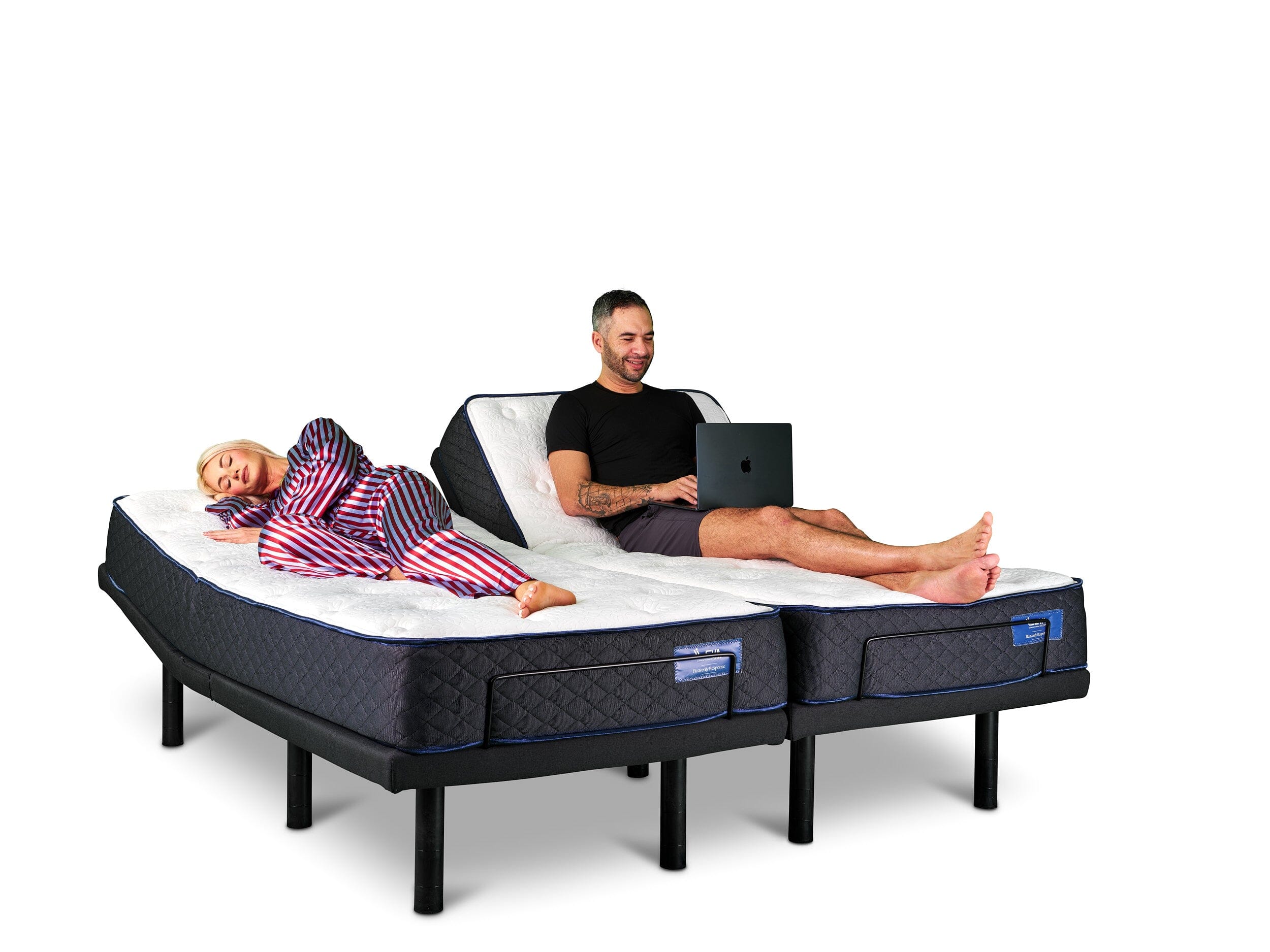
Split King and Split Queen adjustable bases both provide two independent sides with head and foot articulation. Each partner controls elevation, massage, and firmness on their own side. The main differences involve space and availability.
In Canada, adjustable frames are most common in twin XL, queen, and king sizes, with queen leading overall sales. A Split King uses two Twin XL bases placed side by side, each with independent controls, and suits couples who want maximum space and independence. A Split King footprint of 76″ x 80″ matches a standard King width. Split Queen offers independent per-side control in a standard Queen footprint. It uses two independent bases with head and foot articulation in a smaller space. Leva Sleep offers Split Queen adjustable beds built to customer specifications, which remain rare among Canadian retailers. The table below compares the two configurations across the features that matter most to couples.
| Feature | Split King | Split Queen |
|---|---|---|
| Configuration | Two Twin XL bases side by side | Two independent bases in Queen footprint |
| Independent head/foot control | Yes, per side | Yes, per side |
| Independent firmness | Yes, with two mattresses | Yes, with two mattresses |
| Space requirement | Same width as a standard King | Standard Queen footprint |
| Availability in Canada | Common | Rare — Leva Sleep differentiator |
Mattress Compatibility And Firmness For Adjustable Bases
The base controls movement, while the mattress controls support. A compatible mattress bends smoothly and still supports the body at every angle. An incompatible mattress can suffer damage or lose support at the bend point, which cancels out the benefit of elevation.
All-foam and flexible coil hybrid mattresses bend without damage and recover their shape. Traditional innerspring models with continuous coils can break or take a permanent set when bent. If a mattress sags where the base bends, the incline flattens out, which reduces head elevation and snoring or reflux benefits. A surface that stays supportive through the bend matters for maintaining the angle you choose.
Leva Sleep designs its all-foam and hybrid pocket-coil mattresses specifically for adjustable bases. The company also carries mattresses from Tempur-Pedic, Simmons, Beautyrest, Serta, and Kingsdown, pairing them with its own adjustable bases and advising on compatibility.
The Canadian Buying Reality: Delivery, Assembly, And Trial
Most online adjustable bed advice targets US shoppers. Couples in Ontario and Alberta often face fewer specialist retailers, limited floor models, and more complex delivery logistics.
Leva Sleep designs its systems in-house and assembles them locally in Ontario and Alberta. This approach supports quality control without adding a manufacturing markup. Adjustable bases should clear at least 4 inches off the floor for cleaning and air circulation. Leva Sleep offers 15–20 adjustable bed models, compared with the 3–5 models typical at many retailers.
For couples who prefer a hands-off experience, Leva Sleep’s in-house white-glove delivery service, available for a fee, sends trained professionals to assemble the bed and accessories. They adjust leg heights, provide a product walkthrough, and remove the old bed through donation or recycling.
Why Leva Sleep Stands Out For Canadian Couples
Leva Sleep focuses on adjustable beds rather than general furniture. The company has spent more than 8 years building a Canadian adjustable bed specialty business, reaching over $50M in lifetime sales and serving 25,000+ customers. It offers Split Queen and Split King adjustable bases with independent per-side control, alongside other Canadian retailers such as Mattress Miracle and Orthex.
- Whisper-Quiet German Motors that reduce noise so one partner can adjust without waking the other.
- Anti-Snore Mode (Arriving Spring 2026) that detects snoring and makes micro-adjustments to the head of the bed.
- App-Based Per-Side Control with custom positions, vibrating alarms, and subtle snoring adjustments.
- Lumbar Control And Pillow Tilt on higher-end models for targeted lower-back and head support.
- Heating And Cooling Pad Options so each partner can set their own temperature.
- AI-Powered Sleep Tracking that enables real-time micro-adjustments based on sleep data.
- Prices 30–50% Lower Than Comparable Luxury Competitors through vertical integration and direct-to-consumer sales.
- Local Assembly In Ontario And Alberta to keep quality control close to home.
- White-Glove Delivery that covers old bed removal, assembly, tutorials, and on-the-spot adjustments.
See Leva Sleep Packages For Couples
Frequently Asked Questions
Is It Healthy To Sleep On An Adjustable Bed Every Night?
Most people can safely sleep on an adjustable bed every night. The base lets you choose positions that support spinal alignment and reduce pressure points. The zero-gravity preset, usually around 15 degrees at the head and foot, distributes body weight evenly. This position often helps with back pain and post-surgery recovery. Anyone with a diagnosed medical condition should confirm specific angles with their clinician. An adjustable base supports comfort and positioning and does not replace therapies for conditions such as obstructive sleep apnea or GERD.
What Is The Best Adjustable Bed Setup For Couples In Canada?
Couples with different sleep needs usually do best with a Split King or Split Queen adjustable base that offers independent per-side control. In Canada, adjustable frames are most common in twin XL, queen, and king sizes. A Split King uses two Twin XL bases placed side by side, each with its own controls, and suits couples who want maximum space and independence. Split Queen provides two fully independent bases with head and foot articulation in a standard Queen footprint, which works well in smaller rooms. Leva Sleep offers Split Queen adjustable beds built to customer specifications. Both configurations let each partner control elevation, massage, and firmness without disturbing the other.
Do Adjustable Beds Help With Snoring?
Adjustable beds can help with positional snoring by elevating the head and opening the airway. Research documents about a 7% reduction in snoring duration at a 12° incline. Clinical guidance from MSD Manuals, reviewed July 2026, lists head-of-bed elevation as a general measure for primary snoring and recommends bed- or body-positioning devices rather than extra pillows. An adjustable bed does not treat sleep apnea, though. Snoring that comes with gasping, choking, breathing pauses, morning headaches, or persistent daytime fatigue needs medical assessment. A snoring app cannot diagnose sleep apnea or confirm safe breathing.
Will An Adjustable Bed Work With My Existing Mattress?
Most modern Canadian mattresses, including all-foam, latex, and flexible coil hybrids, work with adjustable bases. They bend without damage and return to shape when flat. Traditional innerspring mattresses with continuous coils, heavy pillow-top models with rigid border rods, and mattresses thicker than about 14 inches often do not pair well. Coils can break or take a permanent set, and pillow tops can crack along seams. Always check your mattress warranty, since many manufacturers require explicit approval for adjustable use. Leva Sleep designs its own mattresses for adjustable bases and can advise on third-party brands it carries.
Can Both Partners Use Different Settings At The Same Time?
Split King and Split Queen bases allow fully independent settings on each side. One partner can elevate their head to read, reduce snoring, or manage reflux while the other sleeps flat. Independent per-side control is the key feature that makes adjustable bases work for couples with different needs. Leva Sleep’s app-based control lets each partner save and adjust their favourite positions without disturbing the other side.
Conclusion: A Practical, Evidence-Graded Path To Sleeping Together Again
Evidence for adjustable bed bases is strongest where the mechanism is clear. Positional snoring often improves with airway opening through head elevation. Nocturnal reflux frequently responds to gravity-assisted elevation. Partner disturbance decreases when each side moves independently. Back and hip pain relief and circulation support remain plausible benefits based on physiology and user reports, although direct trials on adjustable bases are still limited.
Sleep apnea requires medical care. Head-of-bed elevation can reduce AHI in selected positional OSA phenotypes, yet post-elevation averages in clinical studies still fall in the moderate range. Anyone with suspected sleep apnea needs physician-guided diagnosis and treatment.
Real-world downsides such as motor noise, mattress compatibility, cost, and bedroom fit can be managed with the right system. Leva Sleep’s quiet motors, purpose-built mattresses, broad model range, local assembly, and white-glove delivery help Canadian couples address these concerns.
Couples choosing between configurations can use a simple rule of thumb. Split King suits those who want maximum space and independence. Split Queen suits space-conscious couples who still want full per-side control. Leva Sleep remains the only Canadian specialist offering both configurations at prices 30–50% lower than comparable luxury competitors.
Start Building Your Leva Sleep Adjustable Bed